Best Soil for Vegetable Gardens: What to Use
Learn what makes the best soil for vegetable gardens, how to test it, which amendments to choose, and how to avoid compost, manure, and drainage mistakes.
The best soil for a vegetable garden is fertile, crumbly, well-drained, and able to hold steady moisture. It should give roots air as well as water, contain enough organic matter to form stable crumbs, and have a pH and nutrient level that suit the crops you plan to grow.
That description does not point to one magic bag. For an in-ground bed, your existing soil is usually the best base because it is already adapted to the site. A new raised bed needs a blended growing medium that will not collapse or stay waterlogged. A container needs potting mix, not a shovelful of dense garden soil. In every setup, a soil test is more useful than a dark color or a product label that simply says “garden soil.”
The Short Answer: Build Soil, Don’t Chase a Magic Mix
Start with the soil you have, identify its limiting problem, and add finished organic matter in modest amounts. Compost is usually the most broadly useful amendment because it can improve structure in clay, increase water-holding capacity in sandy soil, and contribute slow-release nutrients. It is not a substitute for testing, drainage, or a crop-appropriate fertilizer plan.
The sequence matters. Test first, amend second, observe third. If the report says phosphorus is already high, more manure or compost may move you in the wrong direction even if the bed looks hungry. If the problem is standing water, adding fertilizer will not repair the root zone. If a raised bed is filled with straight compost, adding still more compost is not the answer.
Think of good soil as a system that has to keep working after planting. Roots, fungi, bacteria, earthworms, water, air, minerals, and decomposing organic matter all interact. The goal is not the fluffiest soil on planting day; it is a root zone that stays open, moderately fertile, and manageable through the whole season.
What Great Vegetable Soil Does
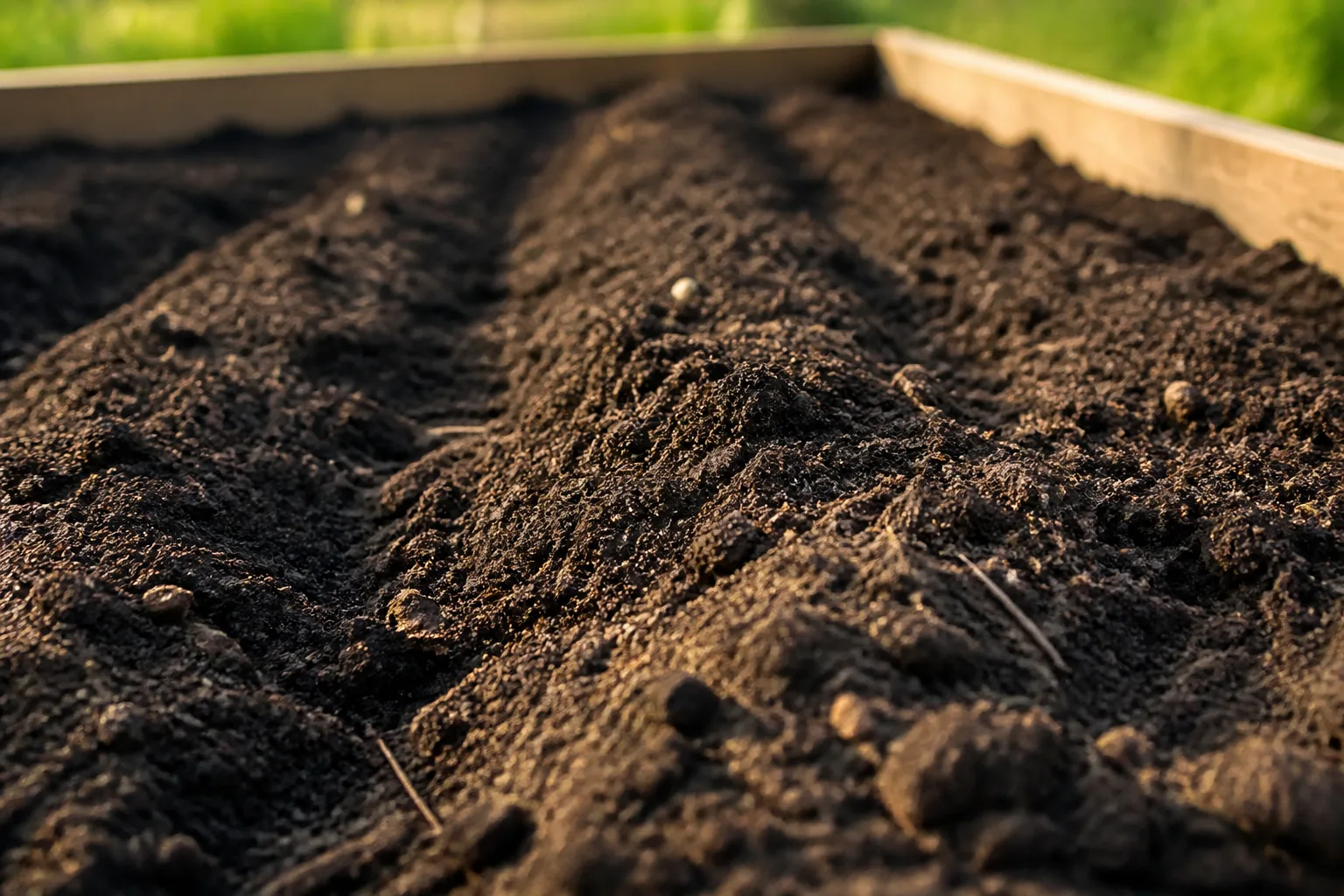
Soil quality is easier to judge by behavior than by appearance. Squeeze a handful of slightly moist soil: it should hold together briefly and then break apart with a light touch, rather than forming a sticky ribbon or falling through your fingers like dry sand. Dig a small hole and look for roots, worms, foul odor, standing water, hard layers, or a sharp boundary between the imported soil and the ground below.
Drain and hold water at the same time
Vegetable roots need a difficult combination: water must be available, but excess water must have somewhere to go. A soil that drains instantly can leave lettuce and cucumbers stressed between irrigations. A soil that stays saturated can suffocate roots and create the same wilt that a thirsty plant shows.
Organic matter helps create a range of pore sizes. Larger pores let air and excess water move; smaller pores hold water that roots can access later. BBC Gardeners’ World describes the practical effect well: organic matter helps heavy soils drain and aerate while helping light soils conserve moisture (BBC Gardeners’ World on improving soil).
Drainage is also a site problem, not only a soil problem. A low spot beside a downspout, a compacted construction layer, or a raised bed sitting on hard-packed ground can stay wet even when the imported blend looks excellent. Before changing the recipe, watch the bed after a heavy rain and check whether water disappears within a reasonable period. Do not build a raised bed over a drainage failure and assume height alone will solve it.
Build crumbly texture and living structure
Good garden soil is not just a mixture of sand, silt, and clay. It also contains organic material and the stable aggregates formed when roots and soil organisms bind particles together. Those crumbs create both air space and moisture-holding space, which is why a healthy bed can feel loose without being powdery.
Finished compost, leaf mold, and well-decomposed plant residues can build this structure over time. A surface mulch also protects it from pounding rain, rapid drying, and temperature swings. Savvy Gardening’s review of common amendments identifies the same practical jobs: increasing organic matter, improving texture and aeration, increasing moisture-holding capacity, and supporting the soil food web (Savvy Gardening on garden soil amendments).
Avoid confusing “dark” with “finished.” A black material can be decomposed and stable, or it can be a wet, fine product that shrinks, repels water when dry, or contains more soluble nutrients than your plants need. Smell and texture matter: finished compost should smell earthy, not sour or ammonia-like, and should not contain recognizable piles of undecomposed waste.
Keep pH and fertility in the useful range
Soil pH affects how available several nutrients are to roots. Most vegetables tolerate a slightly acidic to near-neutral root zone, but the exact target depends on the crop, local soil, and test method. Do not apply lime because a neighbor does, or sulfur because a bagged mix claims it is “balanced.” Use the soil report and its crop recommendation.
Fertility is not the same as maximum nutrient concentration. Nitrogen supports leafy growth, phosphorus is important for roots and reproduction, potassium helps with many plant processes, and micronutrients are needed in smaller amounts. Excess fertilizer can produce lush leaves without better fruit, increase salt stress, and move nutrients into waterways. A productive bed is moderately fertile and replenished at a rate that matches crop removal and the test report.
Choose Soil by Growing Setup
The phrase “vegetable garden soil” covers three very different environments. Use the wrong material in the right-looking place and you can create compacted roots, perched water, or a bed that shrinks dramatically after one season.
In-ground beds
For an in-ground bed, improve native soil rather than replacing it by default. Remove perennial weeds, loosen compacted areas when the soil is moist but not wet, and spread a modest layer of finished compost over the surface. Work it into the root zone only as deeply as needed; repeated deep tilling can break aggregates and disturb soil life.
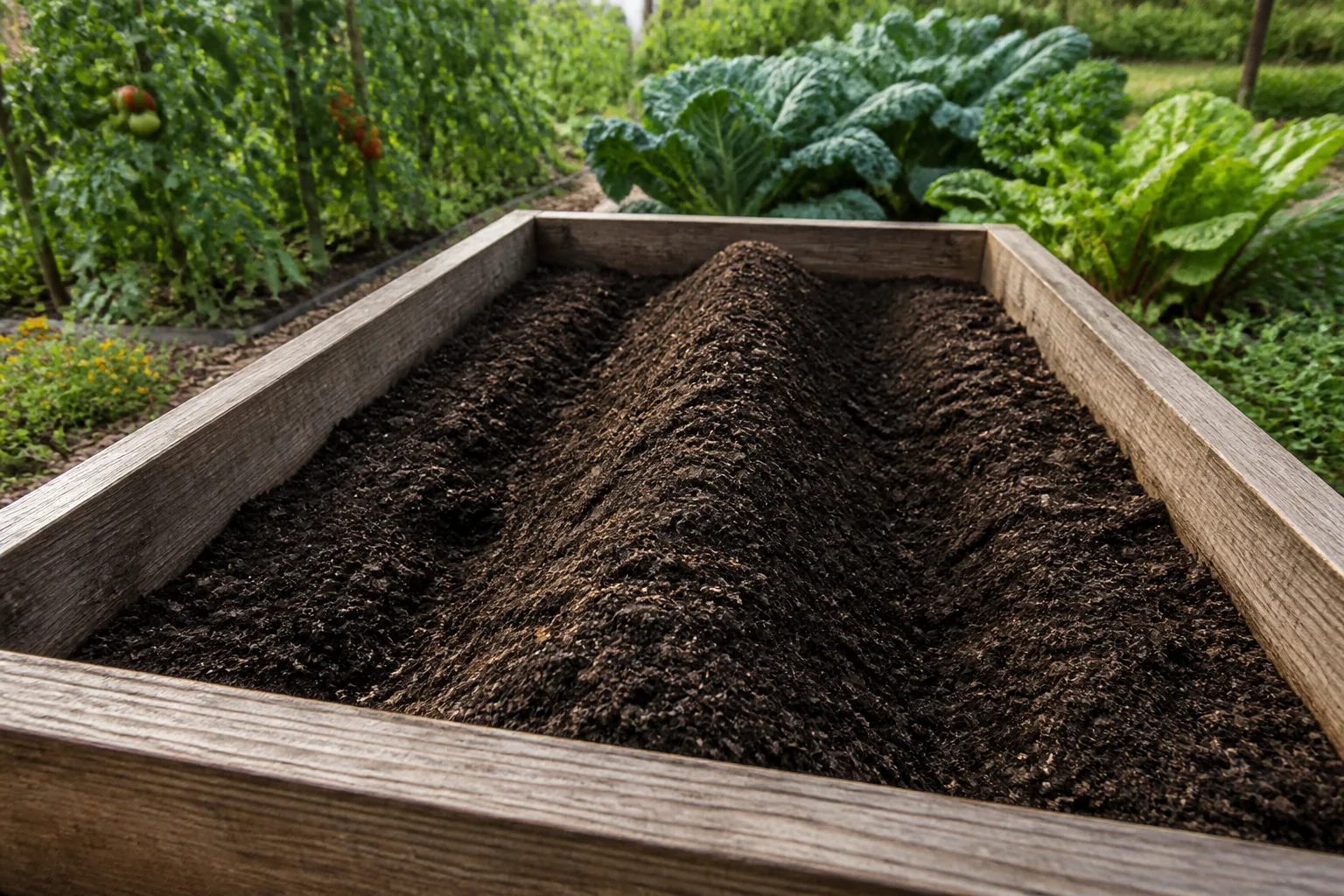
The University of Connecticut recommends sampling vegetable and small-fruit soil to about 6 to 8 inches, using at least 10 random subsamples from a uniform area, mixing them, and submitting a representative portion. Its sampling guidance also stresses separating areas with different drainage, slope, treatments, or intended use (UConn guidance on collecting a soil sample). That is a useful model for deciding whether one large yard really needs one test or two.
Do not add a thin layer of purchased soil on top of a compacted subsoil and call the bed fixed. Roots eventually reach the boundary. If water sits there, loosen or drain the site, use a deeper raised bed, or choose crops suited to the conditions while the soil improves.
Raised beds
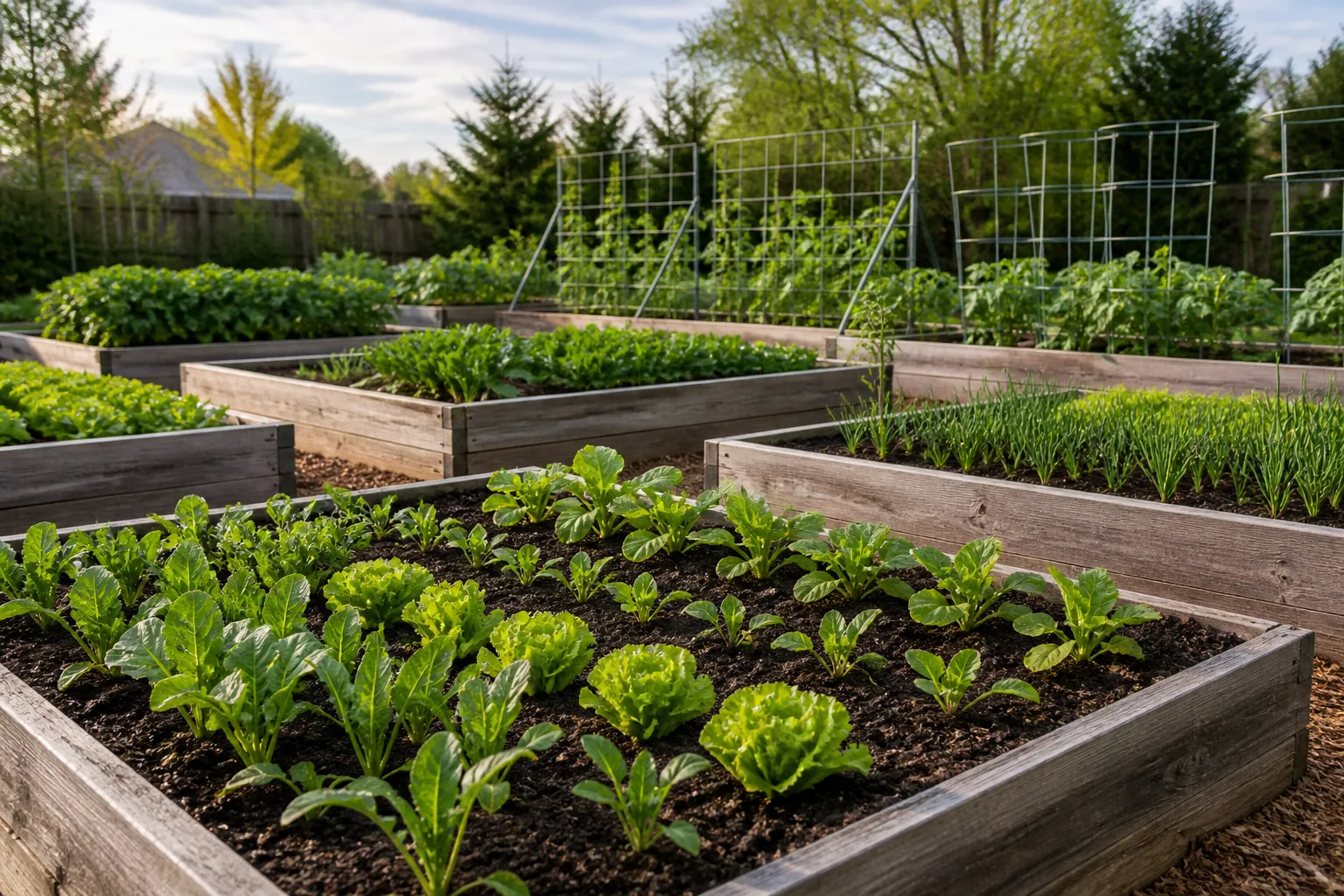
Raised beds give you more control over the root zone and reduce foot traffic, but they also make you responsible for the entire soil volume. They are useful where native soil is shallow, rocky, contaminated, heavily rooted, or difficult to work. They are not automatically better if the fill is cheap, fine, salty, or mostly unfinished organic material.
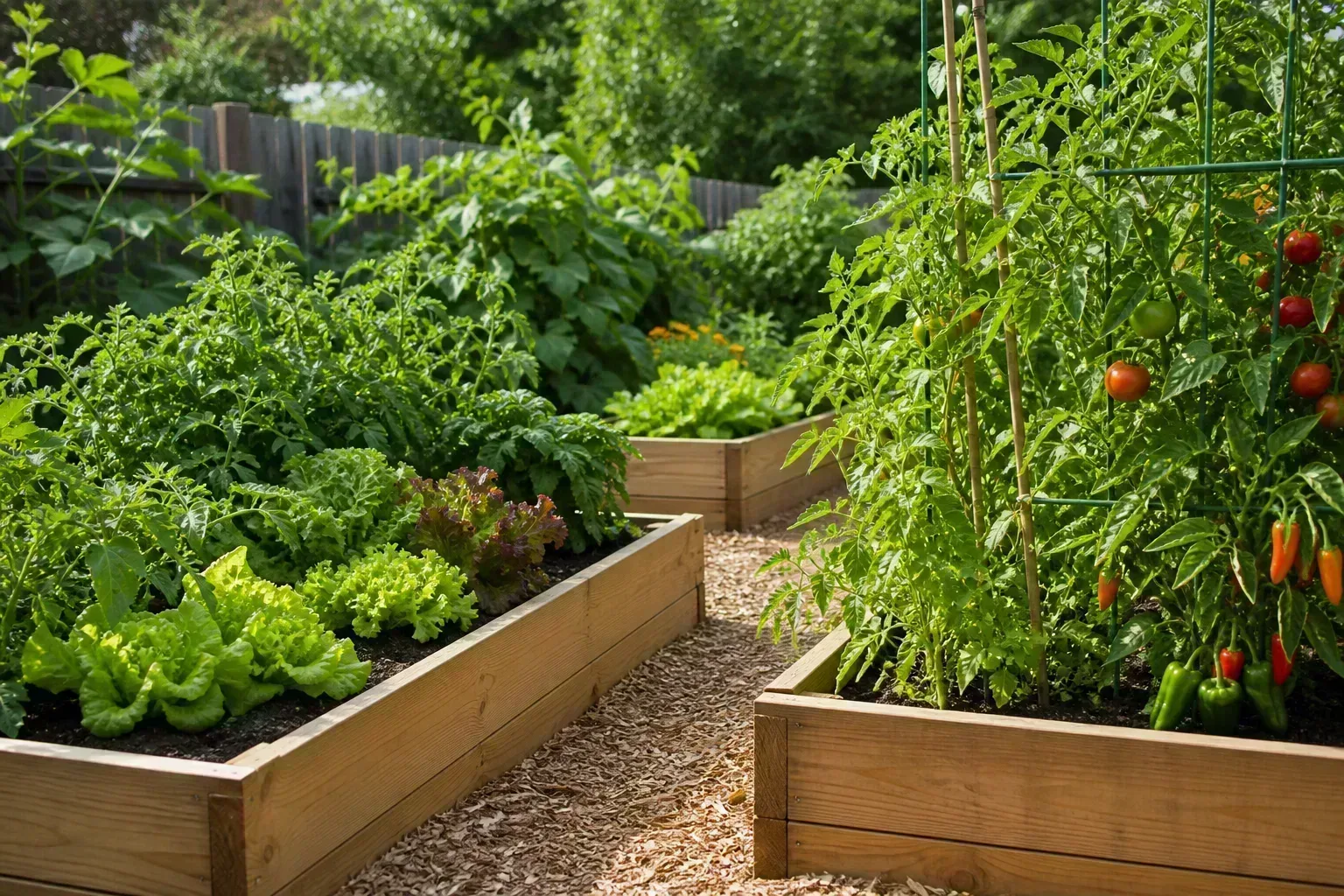
Choose a screened, known-source topsoil or raised-bed blend with a pleasant earthy smell and a texture that is not sticky when wet. Ask the supplier what the material contains, whether it has been tested, and whether it includes composted manure, wood fines, biosolids, or other inputs that may affect fertility and safety. If the source is unknown or the bed will grow food, testing is worth the expense.
An open-bottom bed can interact with the soil below, which is useful for drainage and root depth. A bed on concrete or a sealed surface behaves more like a very large container and must drain freely from the bottom. Line a bed only to keep soil from escaping or to separate it from a known contaminant; do not create a watertight box.
Containers and grow bags
Vegetables in pots and grow bags need a container potting mix, not ordinary garden soil. Garden soil is often too dense in a container, where there are no earthworms and little surrounding soil to absorb excess water. It can compact around roots, dry unevenly, and block drainage.
Use a quality potting mix that contains a moisture-holding base and an aerating fraction such as perlite, pumice, bark, or coarse fiber. Add compost sparingly because too much fine organic material can reduce air space as it decomposes. Pick a container with open drainage holes, then water deeply enough to wet the mix and allow excess to escape.
The same rule applies to grow bags: their fabric sides improve air exchange, but they do not make a poor mix good. They often dry faster than plastic pots, so match the mix and irrigation to the crop. A tomato in a large grow bag and a shallow tray of salad greens should not receive the same soil depth or watering rhythm.
The Best Starting Mix for a New Raised Bed
There is no universal raised-bed recipe, but a sensible starting point is about 60% quality screened topsoil or raised-bed soil and 30% finished compost, with the remaining 10% reserved for a compatible structural ingredient only when the supplier or soil test indicates it is useful. In many beds, simply using a good loamy soil and finished compost is enough; do not add sand to clay just to complete a ratio.
The reason for limiting compost is stability. Straight compost can stay too wet, shrink as it decomposes, and carry more soluble salts or phosphorus than a vegetable bed needs. Straight topsoil may be heavy and low in organic matter. Blending them gives you a workable base, but the blend still needs a test and a season of observation.
If you are filling a tall bed, do not put a separate gravel layer at the bottom to “improve drainage.” Abrupt layers can hold water above them rather than sending it away. Fill the bed with one continuous, well-mixed medium, ensure the base is open to drainage, and settle it with water before final leveling.
For a large volume, calculate cubic feet before buying. Multiply the bed’s length by width by the average depth in feet. A 4-by-8-foot bed filled 12 inches deep contains 32 cubic feet, or a little over one cubic yard. Buy a small sample first if possible; a beautiful product description is not a substitute for holding the material in your hand.
Test Before You Amend
Start a new bed by testing the native soil or the finished fill before adding lime, manure, or a high-nitrogen fertilizer. A laboratory test is more useful than a decorative color-changing probe because it can report pH, organic matter, and nutrient levels together and provide recommendations for the crop code you choose.
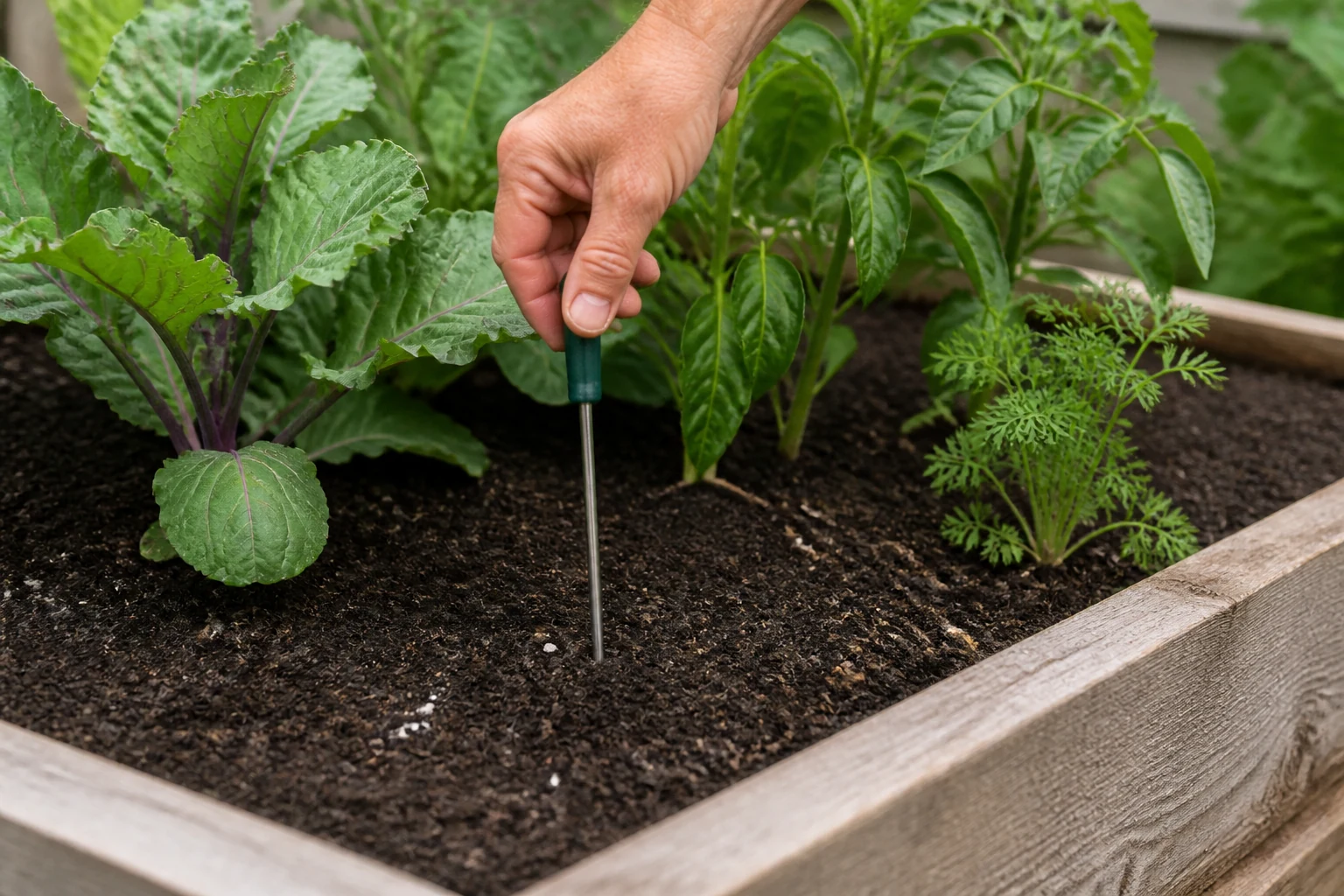
Collect samples from one uniform area. Avoid the edge of a compost pile, fertilizer spill, path, or recently amended patch. Use a clean tool and bucket, take multiple vertical subsamples from the working root zone, mix them thoroughly, remove stones and plant debris, and send the lab the amount it requests. Do not sample saturated soil or soil immediately after fertilizer or lime; UConn advises allowing several weeks after those applications so the sample represents the bed rather than a recent concentrated input.
Test in fall if you need to correct pH before spring, or in spring before planting if that is when your local lab is available. Sandy soils change more quickly and may deserve more frequent testing than clay soils. If the report calls for a major correction, test again after the recommended interval instead of applying more material because the first change is not visible.
What the soil report means
Read the recommendations as a package, not as a hunt for the lowest number. pH tells you about acidity or alkalinity. Organic matter gives context for structure and water behavior but is not a stand-alone fertility score. Phosphorus and potassium can accumulate, especially when manure or compost is applied repeatedly. Nitrogen is often more mobile and may need a crop-specific plan rather than a single permanent number.
The report should also tell you what to do. If it recommends no lime, do not add lime “just in case.” If phosphorus is high, choose a fertilizer with little or no phosphorus and stop using manure until the level comes down. If organic matter is low, use compost or stable plant residues while protecting the bed from compaction.
Home pH strips can be a rough clue, but they cannot diagnose salt buildup, nutrient imbalance, contamination, or physical drainage. Treat a home test as a screening tool, not a replacement for a laboratory report when you are building a food garden or correcting a persistent problem.
Match the Amendment to the Problem
Every amendment should have a job. Write the soil problem at the top of the bag or delivery ticket before you buy anything: “low organic matter,” “acidic pH,” “slow drainage,” or “container mix.” If you cannot name the job, wait for the test.
Clay and compaction
Clay is not bad soil; it is soil with very small particles that can hold water tightly and become sticky when wet. The worst time to dig it is when it forms a shiny ribbon or clings to the tool. Walking or tilling wet clay destroys structure and leaves hard clods when it dries.
Add finished compost or other stable organic matter over time, keep traffic out of the bed, and use mulch to reduce the pounding of rain. For a badly compacted layer, loosen it once under workable moisture conditions, then rely on roots and organic inputs to maintain pores. Do not mix a small amount of fine sand into a clay bed; without enough coarse mineral material, the blend can become denser rather than looser.
If water still stands after organic matter and traffic control, investigate grade, downspouts, hardpan, and the bed’s outlet. Soil amendment cannot solve a blocked drainage path.
Sandy or low-organic-matter soil
Sandy soil warms quickly and drains quickly, which can be helpful for early planting and root crops. Its weakness is that water and mobile nutrients can move beyond the root zone faster than plants can use them. Add finished compost, leaf mold, or well-decomposed plant material in repeated modest applications rather than one enormous load.
Cover the surface with a breathable mulch and irrigate deeply enough to wet the root zone. Drip irrigation or a soaker line can reduce the boom-and-bust cycle. If the soil test shows a nutrient shortage, use a measured fertilizer alongside the organic matter; compost improves the medium but may not supply enough immediately available nitrogen for hungry crops.
pH or nutrient imbalance
Use lime only when a test calls for it and follow the recommended rate. Lime acts gradually, so adding a second dose before the first has had time to work can overshoot the target. Elemental sulfur also needs time and the correct soil conditions; it is not an instant rescue for yellow leaves.
Fertilizer should match the deficiency and the crop. If the report shows adequate phosphorus, a high-phosphorus “bloom” product is unnecessary for vegetables. If a bed has received years of manure, a test may show excess phosphorus or salts even though the plants look vigorous. Pause the amendment that is accumulating and choose a lower-input approach until the report changes.
Use Compost, Manure, and Fertilizer Safely
Finished plant compost is the default amendment for most beds. Apply a modest surface layer before planting or between crops, rake it into the top few inches when appropriate, or leave it as a surface dressing for soil organisms and roots to incorporate. Savvy Gardening describes spring, between-crop, and fall applications as practical times to refresh a bed, while also warning that the amount should depend on the soil’s condition and the material used (Savvy Gardening’s amendment timing and rates).
Manure needs a higher safety bar. Never use dog or cat waste in a vegetable garden. Do not apply raw manure to growing food crops or use it as a side-dress. University of Georgia Extension notes that composting can heat manure to roughly 140–160°F and reduce many pathogens, while aging alone does not actively kill pathogens; it also gives conservative pre-harvest intervals of at least 90 days for crops not touching the soil and 120 days for crops that do (UGA Extension on using manure safely).
University of Wisconsin–Madison Extension adds two details gardeners often miss: manure nutrient content varies widely, and composted manure can have more concentrated salts even though it is safer and more stable than fresh manure (Wisconsin Extension on manure in the home garden). Use a known, properly composted product, follow its label, keep it away from children and pets, and do not assume a strong smell or dark color proves quality.
If you buy bulk compost or manure, ask what went into it and whether herbicide residues, biosolids, or persistent weed-control products are possible. If the supplier cannot answer basic questions, choose a different source. For a food bed, traceability is part of soil quality.
Fertilizer fills the nutrient gap that compost cannot always fill. Use the soil report and the product label, measure rather than scatter, and keep granules off foliage and crowns. Plants that look pale are not automatically hungry; waterlogged roots, cold soil, pests, and poor light can all reduce nutrient uptake. Diagnose the root zone before increasing the dose.
Prepare and Maintain the Bed Without Overworking It
For a new in-ground bed, remove weeds, test, correct obvious compaction at the right moisture level, add the recommended amendment, and level the surface. For a new raised bed, mix the selected materials before planting, wet the blend to settle air pockets, and top it up only after you see how much it shrinks. Do not walk inside the growing area; use paths or reach from the edge.
Root depth should match the crop. Shallow-rooted lettuces and many herbs can grow in less soil than carrots, parsnips, potatoes, or large tomato plants. A raised bed does not need to be two feet deep everywhere, but it does need enough loose, unobstructed soil for the crop’s mature root system. If a tall plant will be supported, count the root space and the anchoring strength of the soil, not just the volume shown on the bed’s outside dimensions.
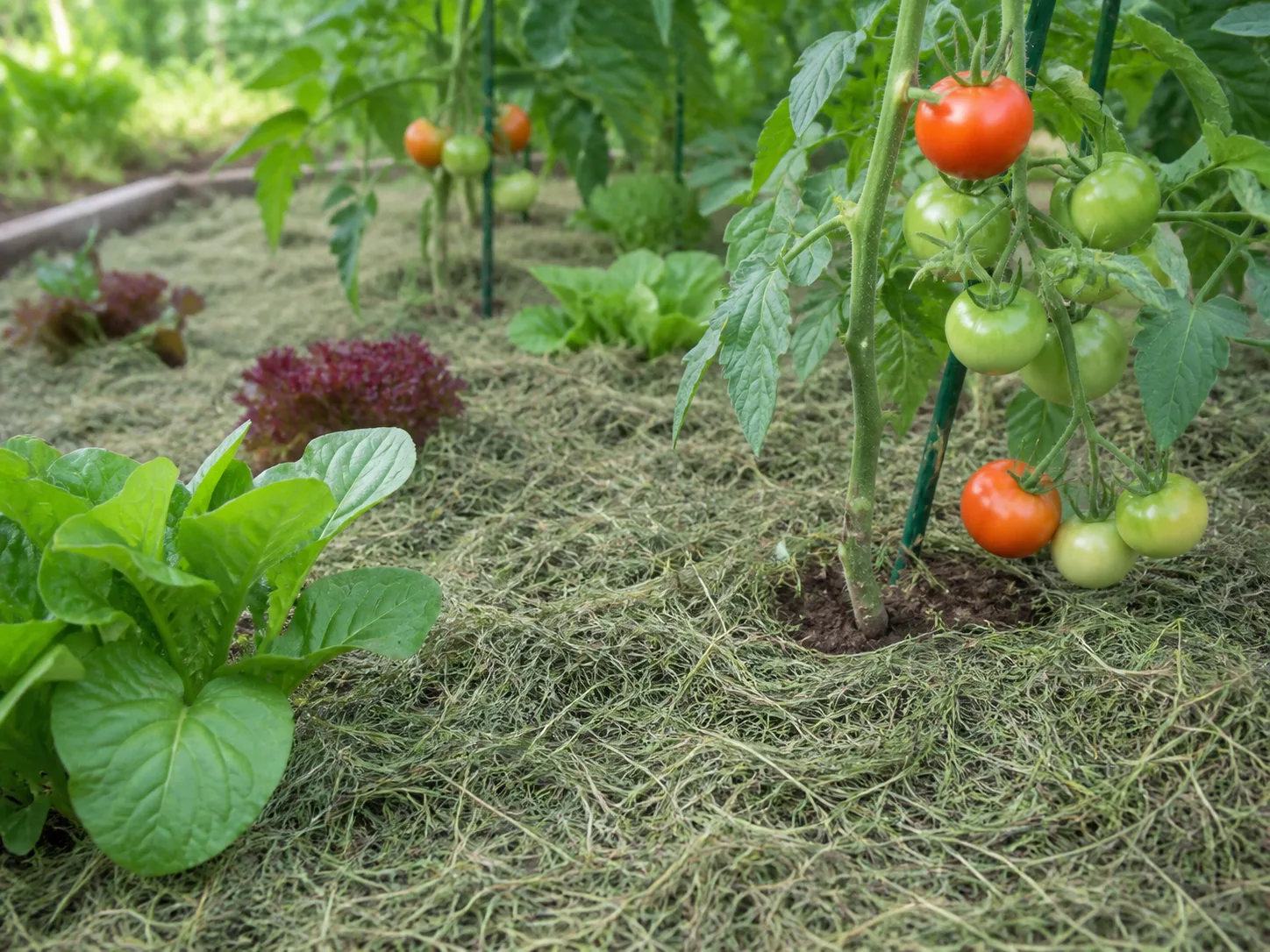
Keep the surface covered with clean straw, shredded leaves, or another suitable mulch, leaving a small gap around stems. Mulch reduces evaporation, buffers temperature, and limits splash onto leaves, but a thick wet layer against a stem can invite rot and rodents. Remove diseased plant debris and do not return plants with severe soil-borne disease to the same bed without a plan.
After harvest, record what grew, where it struggled, and how long the bed stayed wet. Add compost based on the test and the crop load, not by habit. Rotate crop families when practical, keep living roots or a cover crop in unused beds, and retest on a schedule that reflects your soil: more often for fast-changing sandy beds or after a major correction, less often when a stable clay soil is performing well.
If a crop fails, check in this order: soil moisture, drainage, root depth, light, pests, pH, and nutrients. That order prevents a common mistake—adding fertilizer to a plant whose roots cannot breathe. The next useful action is usually a small measurement, not another bag.
Conclusion
The best soil for vegetable gardens is not a fixed brand or a three-part recipe. It is a root zone that drains excess water, holds enough moisture for steady growth, contains stable organic matter, and has pH and fertility that match the crops.
For most gardeners, the best first move is simple: test the bed, add finished compost only as needed, protect the surface with mulch, and resist dramatic corrections. Use a raised-bed blend for a new box, potting mix for containers, and extra caution with manure and unknown bulk soil. Good soil is built through small, informed adjustments—and it gets more reliable every season you keep measuring what your plants and soil are telling you.