8 Types of Bird of Paradise Plants Explained
Compare eight bird of paradise types across Strelitzia and Caesalpinia—size, flowers, zones, indoor fit, and toxicity—so you buy the right plant the first time.
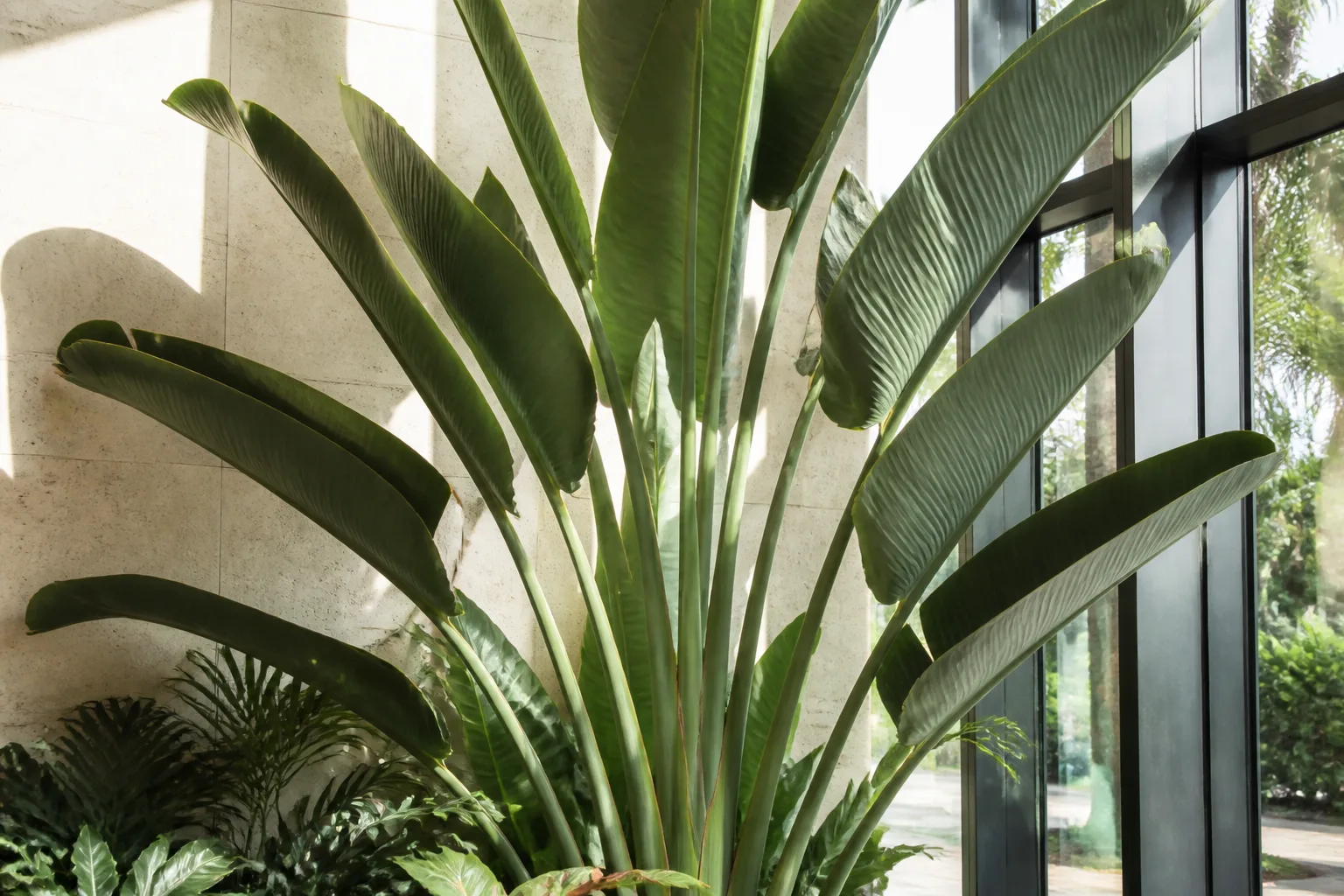
Walk into a nursery asking for a bird of paradise and you might leave with an orange crane flower in a 10-inch pot, a ceiling-scraping white Strelitzia, or a thorny desert shrub that has nothing in common with the florist’s bloom except the name. That confusion is not your fault. Retail tags recycle one common name across two plant families—tropical Strelitzia in the banana-relative Strelitziaceae, and drought-tough Caesalpinia legume shrubs from the Americas. The eight types below are the ones you are most likely to encounter in U.S. gardens and houseplant aisles. Match the botanical name to your goal before you commit floor space, water, or a south window.
For day-to-day care after you have the right plant, see the Bird of Paradise care hub and the deeper indoor care guide.
Why “Bird of Paradise” Names Two Unrelated Plant Families
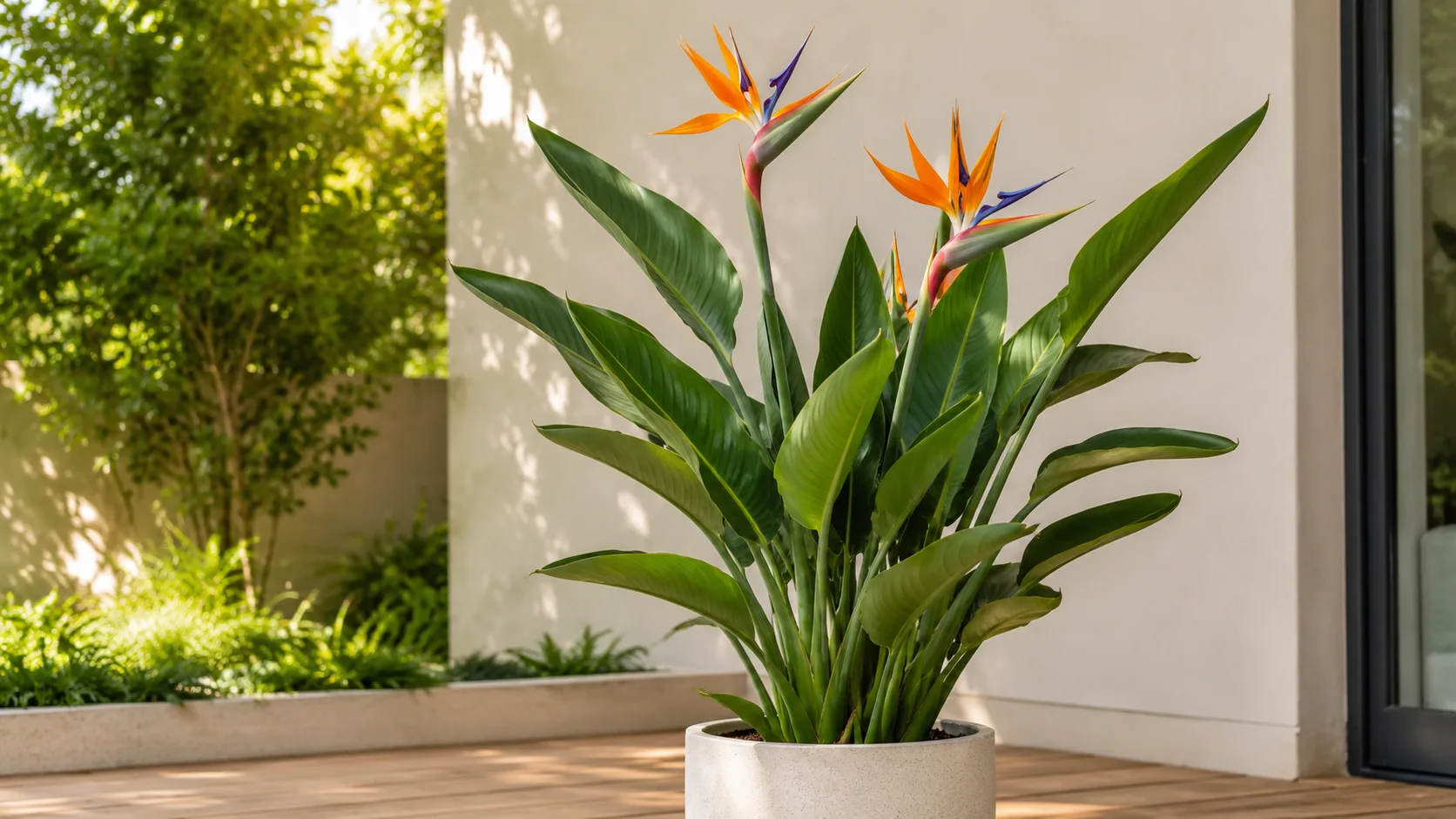
Strelitzia species are clumping or tree-form tropical perennials from southern Africa. Their famous inflorescence—a stiff spathe with orange, blue, or white “petals” that looks like a bird’s head—earned the crane-flower nickname. Caesalpinia species are broad-leaved flowering shrubs or small trees from arid tropical America. Their blooms are smaller, clustered, and azalea-like, with no bird-head silhouette at all.
The practical split: if you want the iconic tropical cut-flower look indoors or in frost-free coastal gardens, you are shopping Strelitzia. If you want a heat-loving landscape shrub for full sun and lean soil in the Southwest or Gulf Coast, you are shopping Caesalpinia. Mixing them up leads to the two most common buyer regrets—bringing a desert shrub into a humid living room, or planting a moisture-loving Strelitzia in alkaline desert gravel.
Strelitzia vs Caesalpinia at a Glance
| Trait | Strelitzia (crane flowers) | Caesalpinia (desert birds) |
|---|---|---|
| Native range | Southern Africa | Tropical Americas |
| Flower shape | Large bird-head inflorescence on a stalk | Small clustered blooms on branch tips |
| Leaf type | Broad banana-like paddles or rush-like reeds | Fern-like or oval compound leaves |
| Typical indoor use | Common houseplant (S. reginae, S. nicolai) | Poor fit—needs intense sun and dry winters |
| Outdoor culture | Frost-free, humid or irrigated beds | Full sun, heat, drought once established |
| Family | Strelitziaceae | Fabaceae (legume) |
If you can see the flower, identification is easy: bird-head = Strelitzia. If you are buying foliage only, read the tag for the genus before you check out.
How to Choose the Right Bird of Paradise Type
Start with three filters—space, climate, and whether you need flowers indoors—then pick a species from the list below.
Indoor vs Outdoor Decision Rules
Buy Strelitzia reginae if you have a bright room, standard ceiling height, and you want the classic orange-and-blue crane flower eventually. It is the most realistic indoor bloomer of the group, though flowering still demands maturity, strong light, and a slightly snug pot.
Buy Strelitzia nicolai only if you have vertical space—atrium, double-height foyer, or a frost-free patio that can host an 8–10 ft indoor specimen. NC State Extension notes mature outdoor plants can reach 20–30 feet with leaves up to 6.5 feet long. Indoors it is usually a foliage statement, not a reliable bloomer.
Skip Caesalpinia for houseplant culture. These shrubs want full sun, warm roots, and dry winter rest. A dim apartment with forced-air heat is the opposite of their native desert edge habitat. Grow them outdoors in zones 8–11 depending on species.
Summer outdoors: Most Strelitzia houseplants benefit from a warm, sheltered patio June through early fall—more light often supports bud formation. Harden off gradually and bring plants in before nights drop below about 50°F (10°C). NC State Extension on S. reginae recommends moving plants to a sunny outdoor spot when temperatures rise above 70°F.
Climate and USDA Zone Filters
Use zones as a ceiling, not a promise—microclimate, drainage, and winter wet matter as much as the map color.
| Species | USDA zones (typical) | Best regional fit |
|---|---|---|
| S. reginae | 10–12 (houseplant elsewhere) | Coastal South, SoCal, bright indoor rooms |
| S. nicolai | 9–11 | Frost-free landscapes, large containers |
| S. alba | 10–12 | Rare; mild coastal collections |
| S. juncea | 9–11 | Warm dry gardens, designer containers |
| S. caudata | 10 | Specialist collectors; needs sharp drainage |
| C. pulcherrima | 9–11 | Desert Southwest, Gulf Coast, Hawaii |
| C. mexicana | 8–11 | Texas, inland Southwest, mild deserts |
| C. gilliesii | 8–11 | Arid and semi-arid full-sun beds |
Five Strelitzia Species Commonly Sold as Bird of Paradise
These are the African crane flowers—the ones with paddle or rush leaves and the bird-shaped bloom when conditions align.
1. Strelitzia reginae — Orange Bird of Paradise (Crane Flower)
This is the plant behind most “bird of paradise” houseplant searches. NC State Extension describes S. reginae as a clumping tropical from South Africa with gray-green leaves from underground rhizomes and a large inflorescence that resembles a bird’s head. It blooms intermittently through the growing season when mature, well lit, and slightly pot-bound.
Size: About 3–4 feet tall indoors; similar clump height in the landscape. Light: Full sun to partial shade outdoors; indoors, the brightest spot you have—south or west window with direct sun for several hours. Soil: Fertile, loamy, well-drained mix. Standout trait: Orange sepals and blue petals on a rigid stalk—the florist’s bird.
A yellow-flowered cultivar, ‘Mandela’s Gold’, trades orange for yellow tepals with gray-green foliage; NC State lists it as a named variety worth seeking if you want a different color without changing genus.
Buy this if: You want the classic crane flower in a pot that still fits a normal room. Skip if: Your only light is a north window far from glass—you will get slow growth and almost no flowers.
2. Strelitzia nicolai — Giant White Bird of Paradise
Retail tags often shorten this to white bird of paradise, which causes endless confusion with S. alba (below). S. nicolai is the large species sold for tropical drama: white sepals, blue tongue, and banana-scale leaves.
NC State Extension documents outdoor heights of 20–30 feet, aggressive roots near buildings, and leaves that shred along veins in wind—normal, not disease. Indoors, expect 8–10 feet over time in a bright room. Flowers are possible after several years but are uncommon on typical houseplant specimens. UF/IFAS Gardening Solutions positions white/giant bird of paradise as a 20–30 ft landscape plant in zones 9B–11.
Buy this if: You have height, light, and accept a foliage-first indoor plant. Skip if: You are in a standard 8-foot ceiling apartment and expected orange blooms.
3. Strelitzia alba — True White Bird of Paradise
Strelitzia alba is a separate species—not a nickname for S. nicolai, though nurseries blur the two. It forms an evergreen perennial with large white flowers and petals that can reach a foot long, blooming mainly mid-summer through winter in mild climates. It is less common in mass retail than S. nicolai and is mainly a collector’s or mild-coastal landscape plant in zones 10–12.
Size: 12–15 feet in favorable outdoor conditions. Light: Full sun to partial shade. Soil: Well-drained; tolerates less irrigation than S. reginae once established in mild coastal sites.
Buy this if: You are deliberately collecting Strelitziaceae species and can verify the botanical tag. Skip if: A big-box label just says “white bird of paradise” without a species name—you are probably getting S. nicolai.
4. Strelitzia juncea — Narrow-Leaved Bird of Paradise
S. juncea is the minimalist of the genus. Its leaves are rush-like and cylindrical—almost leafless reeds—while flowers keep the familiar orange and blue crane form. It is slow-growing and can take three to four years to flower from a young plant, but once established it blooms from late fall through spring in warm climates. Low water needs compared with other Strelitzia species make it popular in Mediterranean-climate gardens.
Size: 4–6 feet. Zones: 9–11. Light: Full sun to partial shade. Soil: Well-drained; avoid soggy winter beds.
Buy this if: You want Strelitzia flowers with sculptural, narrow foliage in a warm dry garden or large container. Skip if: You need fast fill or instant tropical bulk—choose S. nicolai instead.
5. Strelitzia caudata — Wild Banana / Mountain Strelitzia
Also called wild banana or mountain strelitzia, S. caudata is a rarer species native to mountain forests in southern Africa. It reaches about 6 feet, blooms in early spring with white petals tinged purple, and sets fruit by summer. It demands sharp drainage—soggy roots are a fast failure mode.
Zones: 10. Light: Full sun in mild coastal sites; protect from cold wet winters outside its range.
Buy this if: You are an experienced collector with excellent drainage. Skip if: You have pets or children who might chew fallen seed—treat all Strelitzia as toxic (see below).
Three Caesalpinia Shrubs Also Called Bird of Paradise
These are legume-family shrubs for sun-baked yards, not humid living rooms. Flowers are showy but small; hummingbirds and butterflies are the usual audience.
6. Caesalpinia pulcherrima — Red Bird of Paradise (Pride of Barbados)
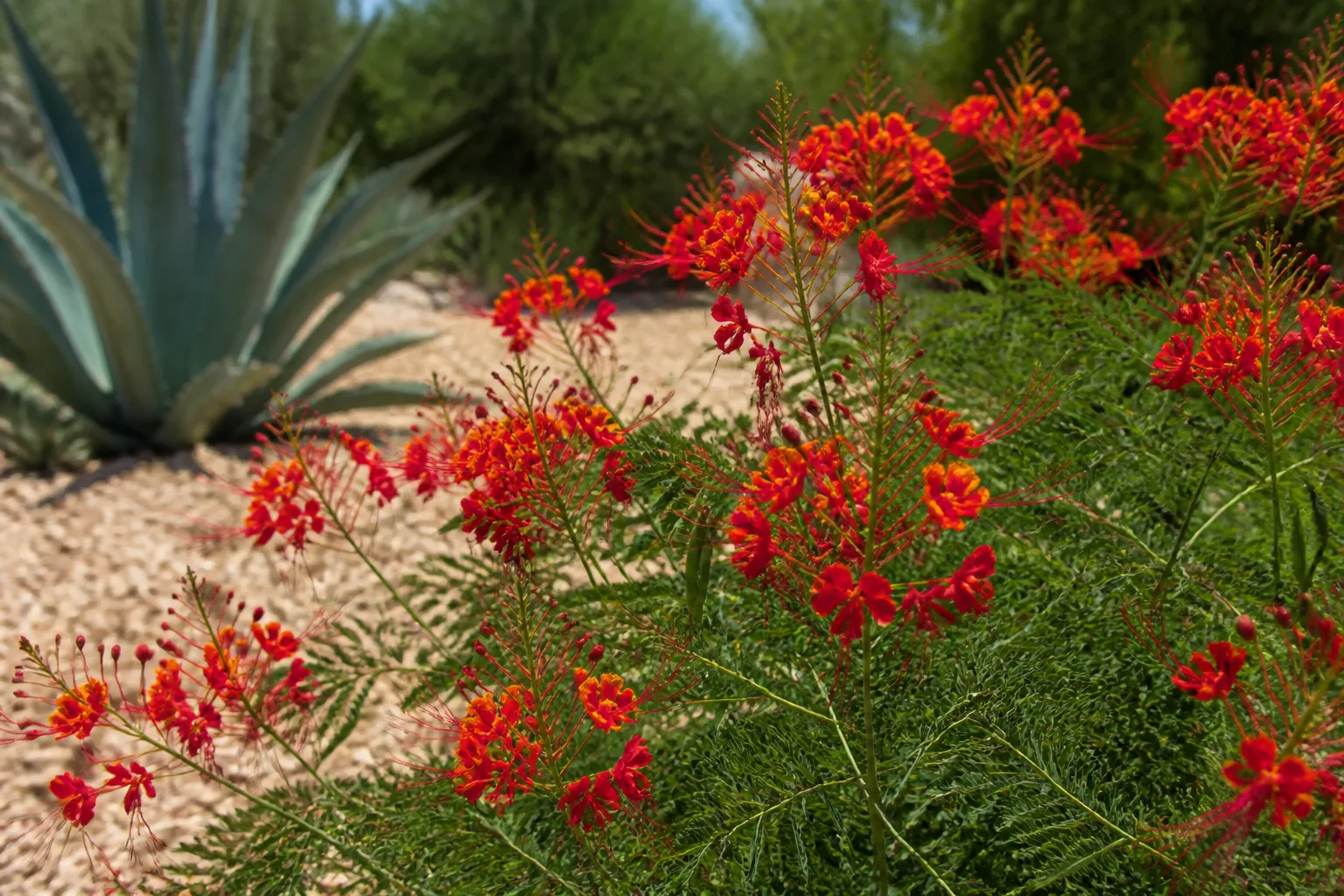
The most widely planted Caesalpinia in warm U.S. landscapes. C. pulcherrima is a fast-growing evergreen shrub (deciduous in zone 9) with red-orange flowers in clusters, prickly stems useful as an informal barrier, and repeated bloom through warm months. Native to tropical America, it thrives in desert-like heat and full sun.
Size: 10–20 feet if unpruned. Zones: 9–11. Soil: Well-drained; tolerates lean soil. Note: Smaller flowers than any Strelitzia; ferny legume leaves, not banana paddles.
Buy this if: You want a heat-proof flowering shrub for a sunny fence line or xeric bed. Skip if: You wanted the orange bird-head houseplant.
7. Caesalpinia mexicana — Mexican Bird of Paradise
Closely related to the red species but with yellow flower clusters and somewhat better cold tolerance—often remaining evergreen down to about 15°F once established. Northern Mexico native; tolerates poor soil and drought after establishment. Bean-like seed pods follow summer bloom and can self-sow in warm climates.
Size: 10–15 feet. Zones: 8–11. Light: Full sun.
Buy this if: You need a yellow-flowering desert shrub with hardiness into zone 8. Skip if: Your site is shade or heavy clay that stays wet in winter.
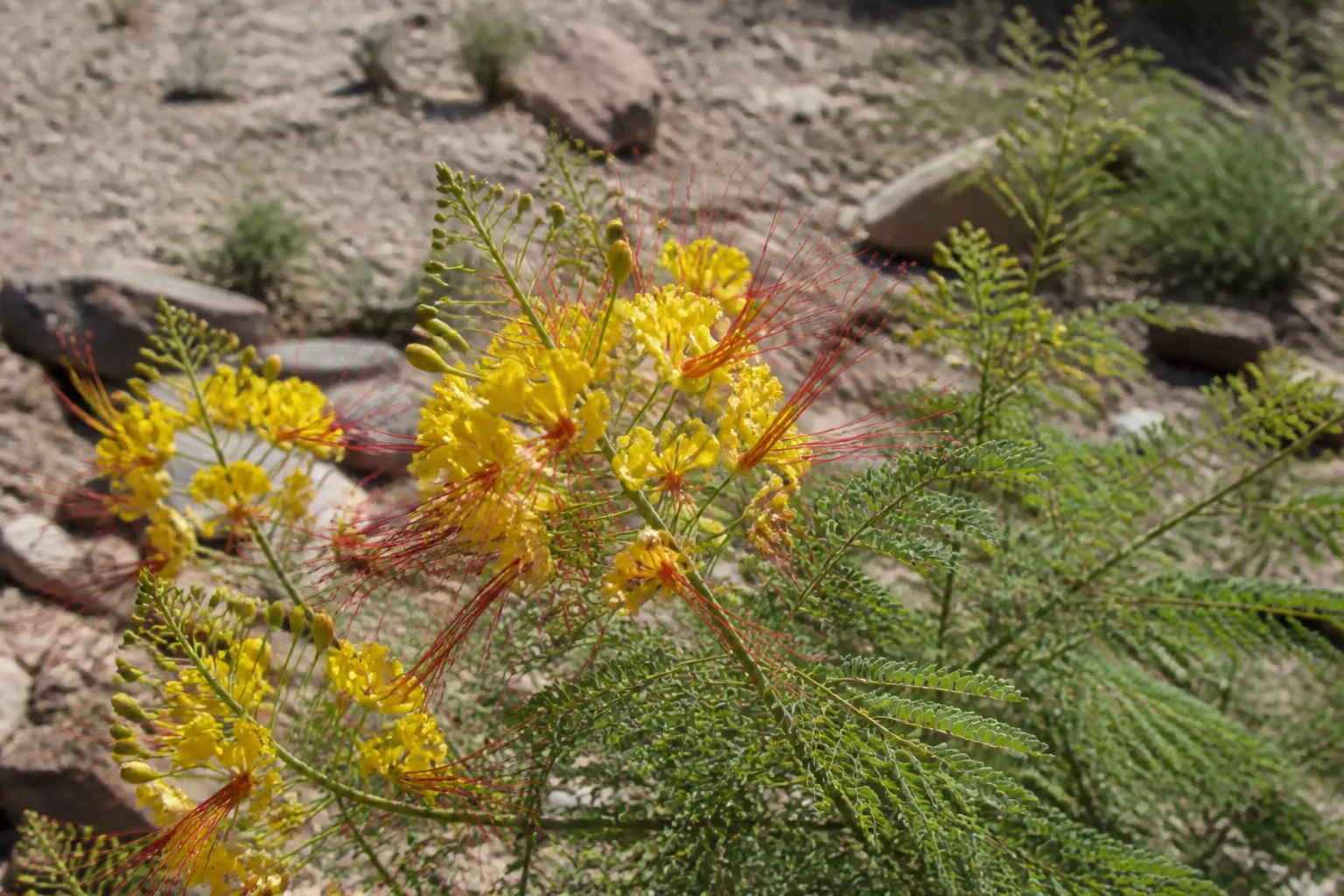
8. Caesalpinia gilliesii — Yellow Bird of Paradise (Desert Bird of Paradise)
Now often sold as Erythrostemon gilliesii, this Argentina and Uruguay native is a shrubby Caesalpinia with yellow flowers and prominent red stamens, blooming in summer. Fern-like leaves mark it as a legume. It self-seeds freely when pods dry and can naturalize outside its planting area in warm dry regions—check local guidance before planting near open desert or rangeland.
Size: 7–10 feet. Zones: 8–11. Light: Full sun; tolerates some shade but blooms less. Soil: Well-drained; rocky soil acceptable.
Buy this if: You want airy yellow summer bloom in a hot, dry garden. Skip if: You have curious pets—the ASPCA specifically warns that Caesalpinia / Poinciana gilliesii bird of paradise is more toxic than Strelitzia reginae and should not be confused with it.
Shared Care Principles and Where They Diverge
Despite the shared common name, watering and light schedules are not interchangeable across genera.
Watering, Light, and Soil Differences That Matter
Strelitzia (tropical crane flowers): Water when the top couple inches of mix are partly dry—roughly 50% dry-down for potted plants. NC State on S. reginae advises free watering in spring and summer, drier winters, and night temperatures around 55–65°F indoors. They appreciate humidity in heated homes; misting helps only if air is very dry. Fertilize regularly in active growth; ease off in winter. Bloom failure on mature S. reginae usually traces to low light, young age, or a recent repot into an oversized pot—not “bad luck.”
Caesalpinia (desert shrubs): Establish with regular water the first season, then irrigate deeply and infrequently. They tolerate—and often prefer—lean, well-drained soil and full sun. Overwatering in clay or shade produces weak growth and root issues. They are poor houseplants because they need intense light and cool, dry winter rest unlike central-heating interiors.
Outdoor summer for potted Strelitzia: Moving indoors-only plants to a bright patio for summer often improves vigor and bud set. Acclimate over a week, stake tall pots in wind, and return indoors before cold nights.
Toxicity, Pets, and Common Retail Label Mistakes
All eight types discussed here should be treated as unsafe around pets and children who chew plants, but severity and ASPCA listings differ by species.
ASPCA lists Strelitzia reginae (bird of paradise flower / crane flower) as toxic to dogs, cats, and horses, with mild nausea, vomiting, and drowsiness linked mainly to fruit and seeds. NC State Extension tags low-severity poison characteristics for the species. Foliage contact can irritate skin on S. nicolai—wear gloves when pruning large plants.
The critical mistake: assuming every “bird of paradise” shares the same toxicity profile. ASPCA explicitly states Strelitzia reginae should not be confused with Caesalpinia or Poinciana gilliesii, which is also called bird of paradise and is more toxic. Keep seed pods and fallen fruit off floors where pets forage.
Label mistakes to watch for:
- “White bird of paradise” on a 6-foot houseplant → almost always S. nicolai, not S. alba.
- “Bird of paradise” on a thorny yard shrub in the Southwest → Caesalpinia, not Strelitzia.
- “Giant bird of paradise” outdoors in Florida → S. nicolai with wind-shredded leaves that are normal, not a disease sign per UF/IFAS.
When in doubt, photograph the tag’s Latin name and compare it to the eight entries above before you repot, prune, or place the plant within pet reach.
Conclusion
Eight plants share the bird of paradise name, but only five are African Strelitzia crane flowers—and only Strelitzia reginae is a realistic choice if you want the classic orange bird bloom in a normal indoor room. Strelitzia nicolai wins on foliage scale; Strelitzia juncea wins on sculptural leaves; Strelitzia alba and S. caudata are specialist species. The three Caesalpinia shrubs are entirely different desert legumes for full-sun yards in zones 8–11, not houseplant substitutes.
Match genus to your climate and ceiling height, verify the botanical name on the tag, and carry species-specific expectations for water, light, and bloom. Once you have the right plant, continue with the Bird of Paradise care hub for watering, light, splits, and flowering troubleshooting tailored to Strelitzia.