Should You Take Down Lawn Flamingos?
Neighbors complain about lawn flamingos? Learn when taste is just opinion, when HOA or local rules matter, and how to keep the peace without giving up your style.

Two pink flamingos in a front yard can be cheerful, nostalgic, funny, or—depending on the viewer—an eyesore. That split reaction is exactly why a neighbor complaint can feel more personal than it deserves to be. The useful question is not whether everyone on the block shares your taste. It is whether the display breaks a written rule, creates a real nuisance or hazard, or can be adjusted enough to stop a manageable conflict.
If the flamingos are on your property, no association rule applies, and they do not block access, damage anything, create a nuisance, or violate a local ordinance, a neighbor’s dislike is generally an opinion rather than an order. You can still choose a compromise because living beside people is different from winning an argument. But you should make that choice with clear information, not because someone says the birds are “lowering property values.”
The short answer: taste is not a rule
Start by separating three different kinds of complaint. “I think they look cheap” is an aesthetic opinion. “The HOA rule says no front-yard ornaments” is a possible enforcement issue. “One is in the sidewalk, blows into the street, or creates a trip hazard” is a concrete property or safety issue. Those deserve different responses.
The absence of an HOA is helpful, but it does not create a universal right to place anything anywhere. A city or county may regulate obstructions, signs, public rights-of-way, nuisance conditions, or structures. An easement may cross part of a yard. A lease, condo declaration, historic-district rule, or recorded covenant may also matter. The point is not to assume the flamingos are forbidden; it is to verify the small set of rules that could actually apply.
If the complaint is only that the flamingos are “gauche,” you have three reasonable options: keep them as they are, improve the composition, or move them to a less prominent spot. None of those choices admits that your neighbor was right about the law or property value. They are simply different ways to balance self-expression with the daily cost of an ongoing dispute.
Start with the four questions that actually decide the issue
Before you argue, spend ten minutes gathering facts. This is faster and safer than trading opinions over the fence, and it gives you something concrete to say if the complaint returns.
Is there an HOA, condo board, or deed restriction?
Find the actual governing documents rather than relying on a neighbor’s summary. In an HOA, the relevant language may be in the declaration of Covenants, Conditions, and Restrictions, the bylaws, architectural-review standards, or a later rule about seasonal decorations. Rules vary widely: one community may regulate only maintenance and safety, while another may require approval for visible front-yard objects.
The National Association of REALTORS® explains that CC&Rs can cover property use, maintenance, enforcement, and dispute resolution, while rules and regulations can be updated separately. It also notes that landscaping rules can reach front-yard features and that enforcement commonly starts with a notice or hearing process rather than a neighbor personally issuing an order.
Look for the exact terms “lawn ornaments,” “yard art,” “decorations,” “objects visible from the street,” “architectural change,” and “seasonal display.” Check whether the rule applies year-round, whether it has a time limit, and whether the board has applied it consistently. A rule that is written but never enforced may still matter, but selective enforcement can be a separate issue worth discussing with a local professional.
If you received a written violation notice, save the envelope, notice, photographs, deadline, and the cited section. Do not ignore it because the original complaint sounded petty. The association’s process, not the neighbor’s tone, is what determines what you need to do next.
Does a local ordinance or public easement apply?
Local rules are not one national list. The simplest way to research them is to search your city or county website for the municipal code, property-maintenance code, nuisance code, sign rules, right-of-way rules, and zoning or land-use office. The Library of Congress guide to current municipal codes points researchers to online code publishers, municipality websites, and clerk’s offices as places to find the law that applies locally.
For a pair of small ornaments, the most relevant terms are usually not “flamingo.” Search for obstruction, encroachment, sidewalk clearance, visibility at driveways or intersections, signs, abandoned property, outdoor storage, and public right-of-way. Some codes regulate where objects can sit even when they do not care what the objects look like.
Pay attention to the strip between the sidewalk and the street. It may look like part of your lawn while being a public right-of-way or an area with a maintenance easement. Do not assume that mowing it gives you the same control over it as the area behind your property line. If a flamingo is near a curb ramp, sidewalk, mailbox route, hydrant, utility access, or sightline, move it while you verify the rule.
Is there a concrete safety, access, or nuisance problem?
Ask the complainant to identify a specific effect. Are the birds blocking a walkway? Are sharp stakes exposed? Do they fall into the street during wind? Does a rotating or illuminated version shine into a bedroom? Are they placed where a lawn service cannot safely mow? Is the display attracting repeated trespass, litter, or conflict?
A concrete answer gives you something you can fix. “I dislike pink plastic” does not. If the issue is a hazard, fix it promptly even if the complaint was delivered rudely. Shorten or remove unstable stakes, use a stable base, keep the ornament away from mowing routes, and preserve clear passage. Do not wait for a formal complaint to discover that a child, delivery worker, wheelchair user, or snow-removal crew cannot navigate the edge of the yard.
The nuisance question is narrower than “does this annoy someone?” Ordinary residential life contains sounds, colors, lights, pets, plants, and decorations that another person may not choose. A nuisance claim generally needs more than a dislike, and the legal test depends on where you live. Treat the word as a prompt to check the rule, not as proof that one exists.
Why “lowering property value” is not enough by itself
Property value is often used as a conversation-stopper because it sounds objective. In reality, a neighbor’s prediction that a display will hurt resale value is not an appraisal, market study, code provision, or HOA rule. It may reflect a genuine concern about a highly visible, poorly maintained display—or it may simply mean “I would not buy a house with that in front.” Those are not the same claim.
Even professionally designed landscapes do not appeal to every buyer. A tidy, deliberate display can read as personality to one person and visual clutter to another. The fair standard is not universal approval; it is whether the yard is maintained, the display is safe, and any community rules are being followed.
That does not mean appearance is irrelevant. If you may sell soon, a crowded or damaged display can add friction during photographs and showings, particularly when it competes with the entrance or makes the yard look neglected. A temporary edit can be a sensible selling decision without conceding that the flamingos damaged the neighborhood. Put them in storage, photograph the house cleanly, and bring them back after the listing period if the rules allow.
A 10-minute display audit before you defend or remove them
Take a photograph from the sidewalk and from across the street. Then look at the display as if you were seeing the house for the first time. Your goal is not to talk yourself into loving it or hating it; your goal is to notice whether the birds look intentional and whether anything around them creates a practical problem.

Check scale, sightlines, and quantity
Two flamingos in a small planting bed create a different visual effect from twenty flamingos scattered across open turf. Count the objects, note their height, and check whether the brightest color pulls attention away from the doorway, house number, driveway, or a corner where drivers need visibility. An ornament can be legally allowed and still look accidental because it is too small to read as a focal point or too numerous to give the eye a place to rest.
Gardening Know How’s practical guidance on using lawn ornaments effectively makes the same design case in useful terms: have fun, keep the display simple, think carefully about placement, match style and color to the setting, and respect proportion. Those are not rules you must obey. They are tests that help you decide whether a neighbor is reacting to the flamingos themselves or to a display that genuinely feels scattered.
Try a reversible edit. Put all but one or two flamingos away for a week. If the complaint disappears, the issue may be visual intensity rather than the subject. If the complaint continues unchanged, adding more birds as a joke will probably turn a solvable disagreement into a neighborhood performance.
Check weather, lawn care, and maintenance
Plastic yard art ages quickly when it is faded, leaning, cracked, dirty, or surrounded by untrimmed grass. Inspect the stakes after storms. Make sure the ornaments cannot become windborne debris, scrape a car, snag a mower, or hide a damaged sprinkler head. If you use solar lights, check that they do not shine directly into a neighbor’s window or create a confusing glow near the road.
The most persuasive defense of an unusual display is ordinary care around it. Keep the lawn edged, remove dead leaves from the base, straighten the birds, and store damaged pieces. If the flock is the only maintained part of an otherwise neglected front yard, neighbors may be reacting to the overall condition rather than to the birds alone.
Make lawn flamingos look deliberate if you keep them
You do not have to turn a playful yard into a formal landscape. You only need to give the display a visual reason for being there. A small bed, repeated color, a clean edge, or a relationship to the entry can make the same object feel chosen rather than abandoned.
Use repetition or a simple theme
Repetition is a design tool, not a demand for matching furniture. Two flamingos can read as a pair. A small group can read as a flock. A single bird can work as a surprise accent if it is placed where the eye naturally pauses. What tends to look chaotic is a collection of unrelated objects competing at the same height and spacing.
Fine Gardening’s discussion of garden ornaments offers a helpful way to think about this: themes can create continuity, and an ornament can act as an anchor, focal point, or complement to plants. Adapt that idea to your taste. Repeat pink in a flower bed, use a curved edge that makes the birds feel nested, or pair them with one other playful detail instead of adding a new object for every season.
Color matters because bright pink reads from a long distance. Let the birds be the accent rather than asking them to compete with a dozen other saturated decorations. A calmer background of green, mulch, gravel, or a simple foundation bed can make the whimsy clearer and reduce the feeling of visual noise.
Place them in a bed or edge, not the travel path
Keep the walking surface and the turning space clear. A bird tucked into a planting bed is easier to maintain and less likely to be interpreted as an obstruction than one planted beside the mailbox, in the middle of a narrow sidewalk, or directly at the driveway edge. Leave enough room for lawn equipment, snow shovels, utility workers, delivery carts, and people who need a wider path than you do.

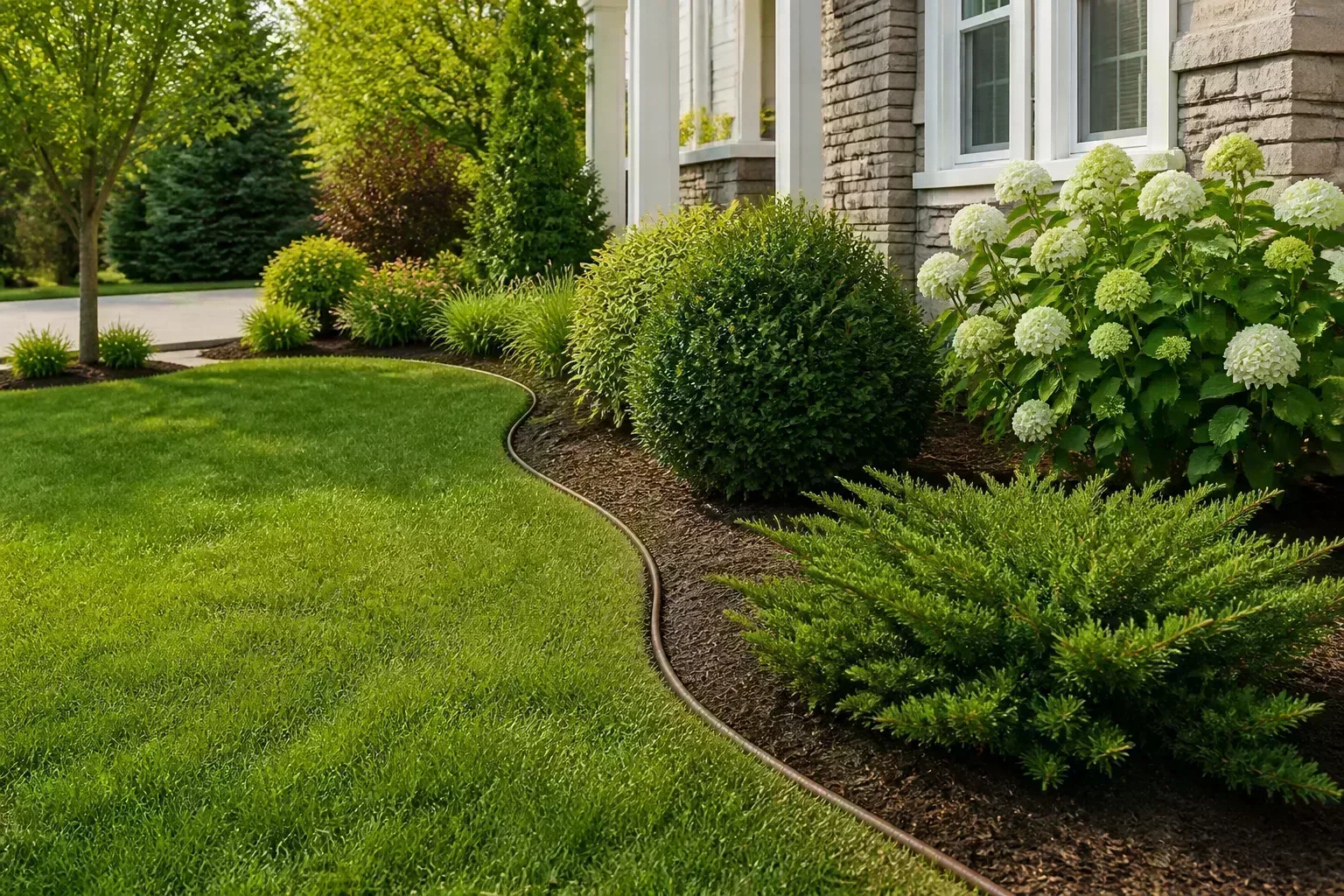
If the front yard is mostly open lawn, create a visual landing place without permanently remodeling it. A shallow bed, a few compatible plants, or a stable low border can define where the display belongs. Do not dig or build in a utility easement until you know what is allowed, and do not use a border as an excuse to narrow a public or shared path.
The best location also depends on who sees the display. A front-facing flock is public-facing decoration; a bird near a porch or side garden is more personal. Moving the birds five feet toward the house can preserve the joke while reducing how much of the neighborhood has to look at it every time they drive past.
When taking them down is the smart choice
Keeping the flamingos may be allowed and still not be worth the cost. Consider taking them down, at least temporarily, if an HOA rule clearly covers them, a code officer identifies a violation, a public path is blocked, a bird is unstable, or the display has become a repeated flashpoint that is affecting your sleep and use of the yard. That is not surrender. It is choosing where your attention goes.
Removal is also sensible when the birds are damaged, the display was meant to be temporary, or you have a near-term home sale and want a neutral first impression. Store them carefully, photograph the original arrangement if you want to recreate it later, and set a date to reassess instead of treating the change as permanent.
You can also offer a narrow compromise: fewer birds, a defined bed, no lights, a seasonal window, or a move from the public-facing edge to a backyard. Avoid promising a compromise you cannot maintain. A vague “I’ll think about it” invites repeated negotiation; a clear “I will move them away from the sidewalk this weekend” solves a concrete issue.
How to respond without turning decor into a feud
Use one calm conversation if the neighbor is safe to approach and the relationship is not already hostile. Start with curiosity: “I heard the flamingos are bothering you. Is the concern a rule, access, safety, lighting, or mainly the look?” That question forces the complaint into a category without calling the person unreasonable.
If the answer is taste, you can say: “I understand they are not your style. I checked the applicable rules, and I’m going to keep them, but I’ll make sure they are stable and out of the way.” If the answer is a real hazard, thank them for identifying it and fix the hazard. If they will not name a specific concern, you do not need to debate the aesthetic verdict for an hour.
Do not retaliate by multiplying the flock, placing signs aimed at the neighbor, shining lights at their house, or posting their home online. A joke that feels funny from your lawn can look like harassment in a screenshot, and it makes it harder for a neutral board member or code officer to see who is acting reasonably.
If the neighbor has already posted photos or rallied others, save the posts and stop arguing in public threads. Do not contact the poster’s employer, publish their address, or encourage strangers to pile on. Keep communication brief and factual, and move formal questions to the relevant association or local office.
If the complaint becomes formal
Read the notice carefully and identify who sent it. A neighbor’s letter, an HOA violation notice, a city code notice, and a court filing are four different things. Each has a different deadline and a different response path.
For an HOA notice, ask for the exact rule, the evidence of the alleged violation, the correction deadline, and the hearing or appeal process. Photograph the display from the same angle used in the notice. If the rule is ambiguous, ask the board to interpret it in writing. If fines or litigation are threatened, consult a lawyer licensed where the property is located rather than relying on internet summaries.
For a city or county notice, use the contact information on the notice and ask what condition must be corrected. Do not assume that paying a fine ends the issue, and do not move the ornament onto a sidewalk, neighbor’s property, or another restricted area. If the notice is about an actual obstruction or hazard, correct that first while you investigate whether the underlying rule was applied properly.
For a dispute with no formal authority behind it, mediation can be useful if both sides want a durable relationship. A neutral third party can help with a narrow trade—such as moving the birds away from a bedroom window—without requiring either person to declare the other’s taste correct. If the interaction includes threats, stalking, property damage, or trespass, stop treating it as a décor disagreement and contact the appropriate local authority.
Conclusion: keep the fun, remove the friction
Lawn flamingos are not a referendum on your character or an automatic threat to the neighborhood. Check the written rules, verify local code and easement concerns, remove anything unsafe, and assess the display with an honest eye for scale and maintenance. If the only objection is that a neighbor dislikes pink birds, you can keep them, edit them, relocate them, or remove them—but the decision is yours to make unless a real authority says otherwise.
The strongest approach is both confident and neighborly. Protect your right to enjoy your yard, take concrete complaints seriously, and refuse the bait of a public feud. A tidy, stable, deliberately placed flock gives you the best chance of keeping the humor without making the disagreement bigger than the lawn.