Does Cinnamon Repel Ants? What the Evidence Says
Does cinnamon repel ants? Learn what lab research shows, why ground spice is unreliable, and the safer steps that actually reduce trails and colonies.
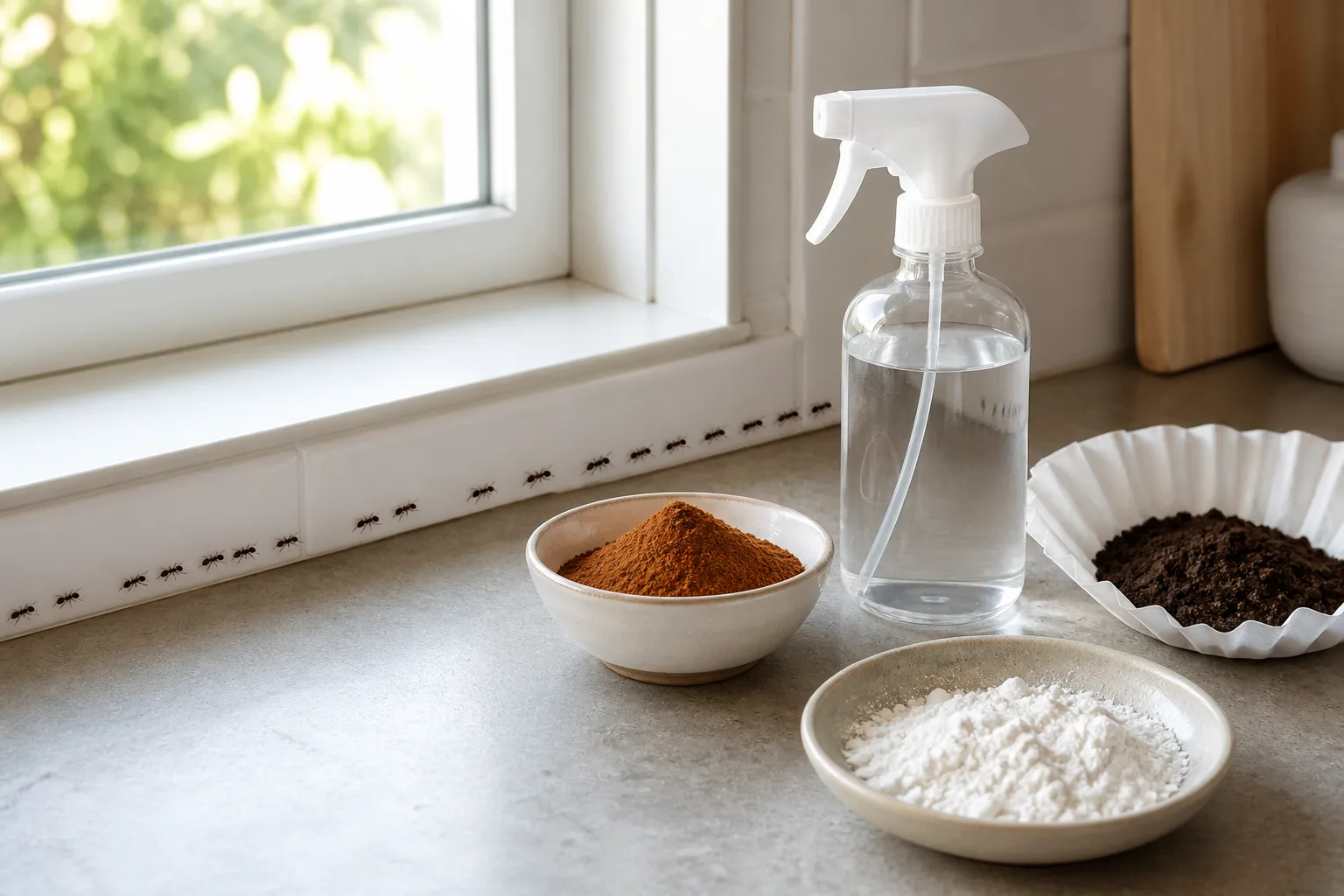
If you are watching ants file across a counter, windowsill, or patio, cinnamon is an appealing first move. It is inexpensive, already in the pantry, and less intimidating than reaching for a pesticide. The honest answer is more limited: cinnamon may discourage or redirect some ants for a short time, but a line of ground spice is not a dependable way to kill a colony or stop an infestation from returning.
The important distinction is between cinnamon essential oil or purified cinnamaldehyde tested at a measured concentration and the ground cinnamon you sprinkle on a trail. A laboratory study found strong activity from concentrated cinnamon oil and trans-cinnamaldehyde against red imported fire ants, but that does not prove that pantry cinnamon works the same way against the small ants in a kitchen. If ants keep returning, the fix is usually to remove the food and water they are following, seal the entry, and use a slow-acting bait when the colony needs to be controlled.
Quick answer: cinnamon may deter, not reliably control
Think of cinnamon as a temporary scent barrier, not an ant exterminator. Its strong aroma can make a crack, threshold, or trail less attractive to some foragers. The ants may turn around, choose a nearby route, or appear to vanish because they have shifted to another entrance. None of those outcomes proves that the nest is gone.
Ground cinnamon is especially unpredictable because its strength depends on the species of cinnamon, how fresh it is, how thickly it is applied, airflow, cleaning, humidity, and the ant species involved. It also loses volatile compounds as it sits open. A barrier that seems effective for an afternoon can fail after a draft, a damp mop, a rainstorm, or a new trail around the edge.
The most useful way to test it is low-stakes and time-limited: use a thin line at a dry entry point, watch whether ants cross it, and then move to a more reliable control if they do. Do not use a short-term detour as evidence that cinnamon killed ants or reached a queen.
| What you want | Does cinnamon fit? | Better next step |
|---|---|---|
| Discourage a few ants from a clean, dry threshold | Maybe, briefly | Wipe the trail and seal the crack |
| Kill ants you can see | Not reliably with ground spice | Remove the trail or use a labeled contact product if needed |
| Eliminate a recurring indoor colony | No | Use slow-acting bait plus exclusion |
| Protect a plant from ants | Not as a stand-alone treatment | Check for aphids, scale, honeydew, or a nest in the pot |
| Treat fire-ant mounds | No pantry shortcut | Use local extension guidance for the species and site |
Why ants keep following a trail
Foraging ants are not wandering randomly. Workers that find sugar, grease, pet food, water, or a suitable nesting route can lay a chemical trail that helps nestmates follow the same path. The visible line is a symptom of a larger system: food or moisture at one end, an entry route in the middle, and a nest or colony somewhere beyond it.
That is why simply killing the ants on the counter often produces a fresh line later. The colony keeps sending workers, and the original scent route may remain on the surface. The UC Statewide Integrated Pest Management Program recommends wiping invading ants with soapy water, locating the entry point, and combining sanitation, exclusion, and baiting rather than relying on indoor sprays alone. (UC IPM)
Ants can also be useful outdoors. They feed on other insects, recycle dead material, and aerate soil. An outdoor trail is not automatically a plant emergency. The decision changes when ants are entering the house, tending honeydew-producing pests on a valuable plant, nesting in a building, or stinging people and pets.
The difference between trail disruption and colony control
Trail disruption changes what workers do right now. Wiping the trail, using a scent barrier, vacuuming, or blocking a crack can reduce visible traffic. These methods are useful when you need immediate relief or are identifying where ants enter, but they do not necessarily affect the queen, larvae, or nest structure.
Colony control uses a slow-acting bait that workers accept and carry back to the nest. The bait must not kill the first worker instantly; it needs time to move through the colony. UC IPM explains that workers transfer bait to other workers, larvae, and queens, which is why a bait program can do what a surface barrier cannot. Expect a delay, and do not spray over the trail while baiting because that can keep workers from carrying the bait home.
This distinction prevents a common mistake: using a strong repellent at the exact place where you need ants to pick up bait. If the goal is to eliminate a colony, attraction and patience are usually more useful than a powerful smell.
What research says about cinnamon oil versus ground spice
The evidence is not a simple yes-or-no verdict because “cinnamon” describes several very different materials. A pantry powder, a cinnamon stick, a water-based homemade spray, cinnamon bark oil, and purified trans-cinnamaldehyde differ in concentration, chemistry, evaporation, and how much active compound reaches an ant.
What the lab study actually tested
A study indexed by PubMed tested leaf essential oil from Cinnamomum osmophloeum and its dominant compound, trans-cinnamaldehyde, against the red imported fire ant (Solenopsis invicta). The researchers identified trans-cinnamaldehyde as about 79.85 percent of the leaf oil and tested a 2 percent oil preparation and a 2 percent trans-cinnamaldehyde preparation under open and close exposure conditions.
The measured results were substantial: the reported median lethal times for the 2 percent leaf oil were 105 minutes with open exposure and 18.5 minutes with close exposure; the corresponding results for 2 percent trans-cinnamaldehyde were 32.2 and 21.2 minutes. Those numbers show that a concentrated cinnamon-derived compound can be toxic to a particular ant species under controlled conditions.
They do not tell you that a dusting of grocery-store cinnamon will kill pavement ants, odorous house ants, Argentine ants, or a hidden colony in a wall. The study used a defined material, a defined dose, direct exposure, and one target species. It was not a test of cinnamon powder scattered along a kitchen baseboard, and it did not establish a household application rate.
Why ground cinnamon is a weaker comparison
Ground cinnamon contains aromatic compounds, but the amount released into the air or onto a surface is not standardized. Much of the material remains as plant tissue rather than becoming a concentrated film of cinnamaldehyde. A thin line may smell strong to a person while delivering too little active compound, for too short a time, to change the behavior of every ant in the trail.
Species matter too. A remedy that affects red imported fire ants in a lab may have little effect on a tiny indoor species with a different food preference, nesting habit, or tolerance for the scent. A practical review by horticulture writer Robert Pavlis at Garden Myths makes the same lab-versus-field distinction: it reports no observable effect from cinnamon in a fire-ant test while noting that concentrated essential-oil research cannot be used to prove that cinnamon powder works outdoors.
The safest interpretation is modest: cinnamon chemistry is worth studying, but the household hack has not earned the certainty often attached to it. If you see a temporary drop in traffic, call it a temporary deterrent—not proof that the nest has been eliminated.
If you try cinnamon, use it as a short-term test
There is little downside to a small, controlled test on a dry, nonporous threshold if you keep the material away from food, children, pets, and sensitive surfaces. The point is to learn whether it changes the path while you work on the real entry and attractant. It should never delay action when the ants are stinging, damaging wood, contaminating food, or returning in large numbers.
How to place ground cinnamon without making a mess
First, photograph or observe the trail before changing it. Note whether ants are coming from a window gap, baseboard, pipe opening, door threshold, potted plant, or crack in the foundation. Then use a small amount of fresh ground cinnamon as a narrow line across the suspected route—not a thick pile scattered over the whole room.
Check the line after a few hours and again the next day. If ants cross it, go around it, or build a parallel route, the test has answered your question: cinnamon is not controlling that trail. If traffic drops, still clean the surface and seal the opening. A barrier that works only until the aroma fades is not a replacement for exclusion.
Avoid putting powder inside electrical outlets, appliance motors, HVAC vents, food drawers, or a child’s play area. Do not mix it into potting soil as a supposed ant cure. Cinnamon is an aromatic kitchen ingredient, not a labeled soil treatment, and adding powder to a pot can create a damp organic residue without addressing a nest or the aphids that may be attracting ants.
What not to spray or diffuse
Do not assume that a “cinnamon spray” made by floating essential oil in water is evenly diluted or safe for every surface. Essential oil and water separate, so the first spray and the last spray can carry different amounts of oil. Concentrated oils can irritate skin, eyes, airways, or pets, and a pleasant smell is not a safety assessment.
Never spray cinnamon oil on food-preparation surfaces without a product label that allows that use, and do not fog a room to reach ants in a wall. If you use a commercial essential-oil product, follow its label exactly and keep the concentrate and treated surfaces inaccessible to children and pets. For pesticide products, Purdue University Extension emphasizes reading and following the label, keeping treatments away from food, and using only products labeled for the specific site and pest. (Purdue University Extension)
The same caution applies to homemade mixtures that add vinegar, soap, alcohol, or other ingredients. They may clean a trail or kill an individual ant on contact, but that does not make the mixture a tested colony treatment. On marble, limestone, or other acid-sensitive surfaces, vinegar can also damage the finish.
A better first response to indoor ant trails
When the goal is to stop ants in a kitchen or bathroom, start with a five-part sequence. It works whether or not cinnamon has a role in the short-term test.
Clean the trail and remove the attractant
Vacuum the ants or wipe the trail with soapy water, then dry the surface. Pay attention to the full route rather than only the most crowded spot: baseboards, the underside of a counter edge, the back of a pet bowl, and the seam beside a sink can hold residue that keeps recruiting workers.
Next, remove what brought them in. Seal sugar, syrup, fruit, grains, grease, and pet food in clean containers; rinse sticky recycling; empty food waste; and repair dripping faucets or plumbing leaks. Ants can enter for water or shelter even when a counter looks clean, so inspect bathrooms, laundry rooms, and areas under sinks as well as the pantry.
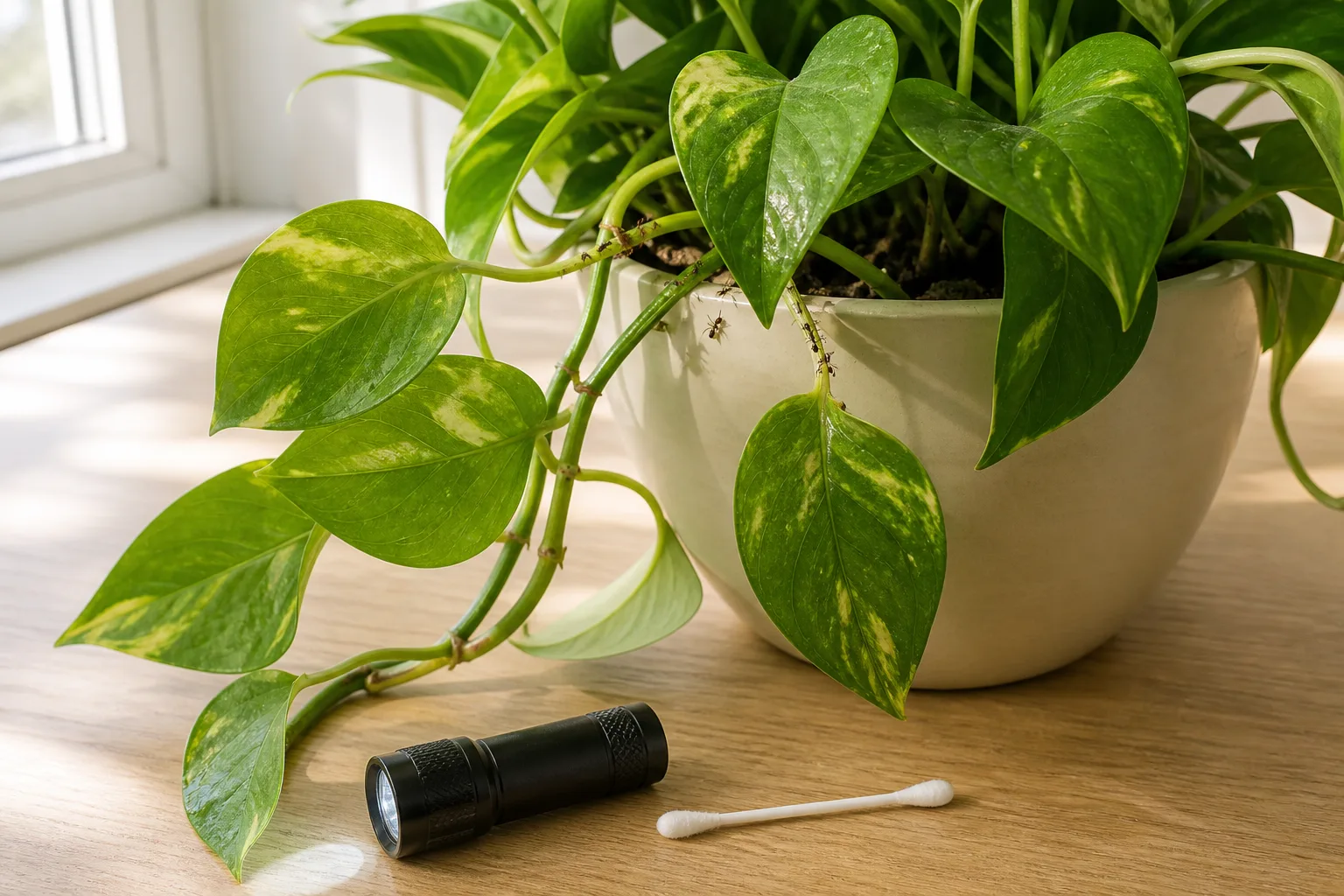
If activity is concentrated around a houseplant, move the pot away from food-preparation areas and inspect stems and leaf undersides for aphids, scale, whiteflies, or sticky honeydew. Do not treat the plant with a cinnamon remedy until you know whether the ants are simply harvesting honeydew or nesting in the pot.
Find and seal the entry point
Follow a few ants instead of sweeping the whole room. Trace them toward the nearest crack, pipe, wire, window frame, door sweep, or foundation gap. Once traffic is gone from the surface, caulk or otherwise seal the opening with a material suited to that location. Recheck the area after the next warm or wet weather change because ants often use more than one route.
Outside, cut back branches that touch the house and keep mulch, dense vegetation, and damp debris from forming a bridge to the foundation. UC IPM recommends reducing food, water, and nesting opportunities near buildings, including fixing leaks and keeping plants and mulch back from the foundation. This is more durable than renewing a cinnamon line every time someone mops.
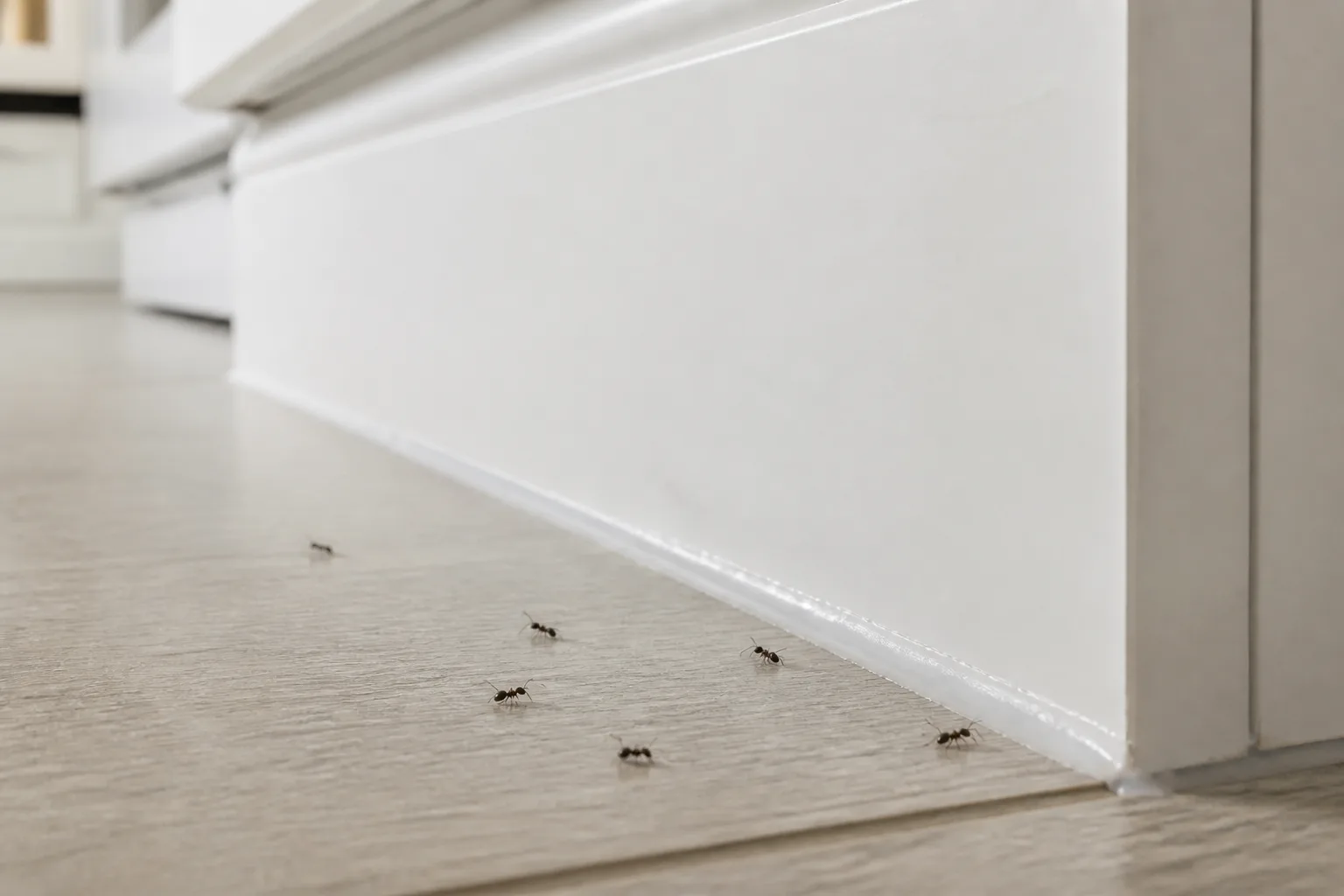
If you cannot find the entry point, do not compensate by placing loose powders everywhere. Monitor at a few likely locations, clean trails consistently, and place a labeled bait station where workers are active if the problem persists.
When bait beats a barrier
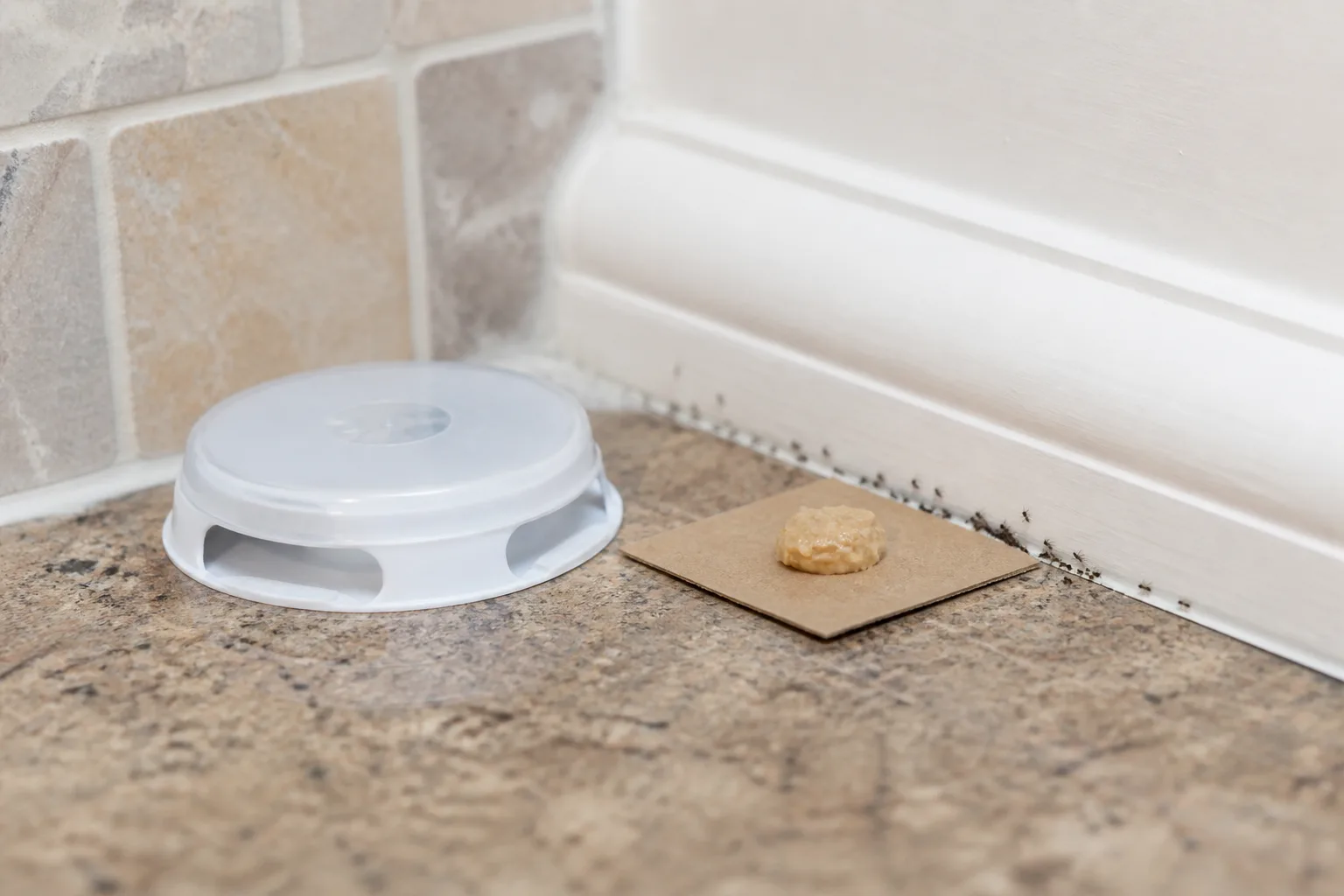
Use bait when ants return after cleaning and exclusion, when the trail is steady, or when you want to reduce the source rather than merely redirect workers. The right bait is a food-based product with a slow-acting insecticide, placed where ants can find it and children or pets cannot.
The first sign that bait is working may be more visible ants, not fewer. Workers need to discover the bait and carry it away. Do not kill the foragers at the station, spray the trail, or move the bait every hour. Give the product time to circulate, and follow the label for replacement and placement.
UC IPM notes that ant preferences vary: some species favor sweet bait, while others prefer protein, grease, or oil. If ants ignore one labeled formulation, try a different formulation rather than covering the trail with a repellent. The program also cautions that results can take five to ten days to become noticeable and longer for complete colony control.
Choose slow-acting bait and protect kids and pets
Prepackaged stations or refillable stations are easier to contain than a loose pile of homemade bait. Put them beside an active trail or near an outdoor nest, but not on a food-preparation surface and not where a child, dog, cat, or wildlife can reach them. Keep the packaging and label available so you know the active ingredient, site restrictions, and first-aid directions.
Do not treat “natural,” “organic,” or “food-grade” as a synonym for harmless. Borate baits, essential oils, and diatomaceous earth still require careful placement and handling. Never scatter borax, insecticidal dust, or a homemade sugar mixture where a pet or child can lick it, and do not apply outdoor dust to flowers that pollinators are visiting.
If bait fails after correct placement, reassess the ant rather than escalating blindly. Food preferences change by species and season, competing food can make the bait unattractive, and a colony may be outside or inside a wall. Multiple trails in different rooms, repeated swarms, or ants emerging from electrical or plumbing voids are good reasons to consult a licensed professional.
What to do about ants on plants and around the yard
A trail on a plant does not automatically mean the ant is eating the plant. Ants are often drawn to honeydew, the sweet liquid produced by aphids, soft scale, mealybugs, and whiteflies. UC IPM lists these relationships as a reason ants can be abundant on otherwise healthy trees and shrubs.
Inspect the undersides of leaves, tender shoots, and stem joints. Look for clusters of small insects, sticky leaves, black sooty mold, curled new growth, or ants moving repeatedly between the plant and soil. If you find a sap-feeding pest, controlling that pest is more direct than dusting the foliage with cinnamon. Avoid spraying essential oil or vinegar on leaves unless a product is labeled for the plant; “natural” mixtures can scorch foliage.
Check aphids, honeydew, moisture, and plant bridges
For a potted plant with ants, move the container away from other plants and food areas while you inspect it. Ants may be nesting in the potting mix, using the pot as a highway, or visiting because of aphids. A cinnamon ring around the pot may divert a few workers, but it will not correct any of those causes.
In the garden, ask whether ants are actually causing damage. Many outdoor ants aerate soil and prey on other insects. Purdue Extension notes that ants can be valuable in turf and that treating a lawn for ants is rarely advisable unless there is a specific nuisance, safety, or structural reason. Target the nest or the plant-pest relationship instead of broadcasting a powder across the bed.
Fire ants are the important exception to a casual “leave them alone” approach. Their mounds can pose a sting risk, and the appropriate control depends on the species, region, weather, and product label. Texas A&M AgriLife Extension describes several fire-ant approaches, including the two-step method, and recommends choosing the method that fits the situation rather than assuming there is one universal treatment. (Texas A&M AgriLife Extension)
Cinnamon, vinegar, coffee grounds, and DE: what each can and cannot do
The internet often bundles several pantry remedies together as if they have the same evidence. They do not. Treat each one according to its actual job, and do not let a list of “natural” ingredients blur the difference between cleaning, repelling, killing individual ants, and eliminating a colony.
| Method | What it may do | What it will not reliably do | Main caution |
|---|---|---|---|
| Ground cinnamon | Make a dry route less attractive for a short time | Kill a hidden colony or work on every species | Reapply only as a small test; keep powder off food and out of eyes and airways |
| Cinnamon essential oil | Show stronger contact or repellent activity in some lab studies | Prove a household dose or replace bait | Concentrated oil is not pantry powder; follow a label and protect people and pets |
| Vinegar or soapy water | Remove a scent trail; vinegar or soap may kill exposed ants | Reach a queen or prevent a new trail | Vinegar can damage acid-sensitive stone; never mix cleaners |
| Coffee grounds | Add organic matter to compost when used appropriately | Provide dependable ant control | Common anecdotes are not colony evidence; damp grounds can mold |
| Diatomaceous earth | Kill some insects that contact a dry, labeled dust | Guarantee whole-colony control | Avoid breathing dust and applying it to blooms or pollinator routes |
| Ant bait | Move a slow-acting toxicant through the colony | Work instantly or suit every ant species | Do not spray around bait; keep stations away from children and pets |
The Farmers’ Almanac is one example of a practical gardening publication that lists cinnamon sticks and other household scents as deterrents. That kind of advice is useful as a clue to what people try, not as proof that a cinnamon barrier has a reliable duration or kills a nest. Its best-supported practical lesson is also the simplest: choose a method based on whether you need a clean surface, a blocked entry, or colony control.
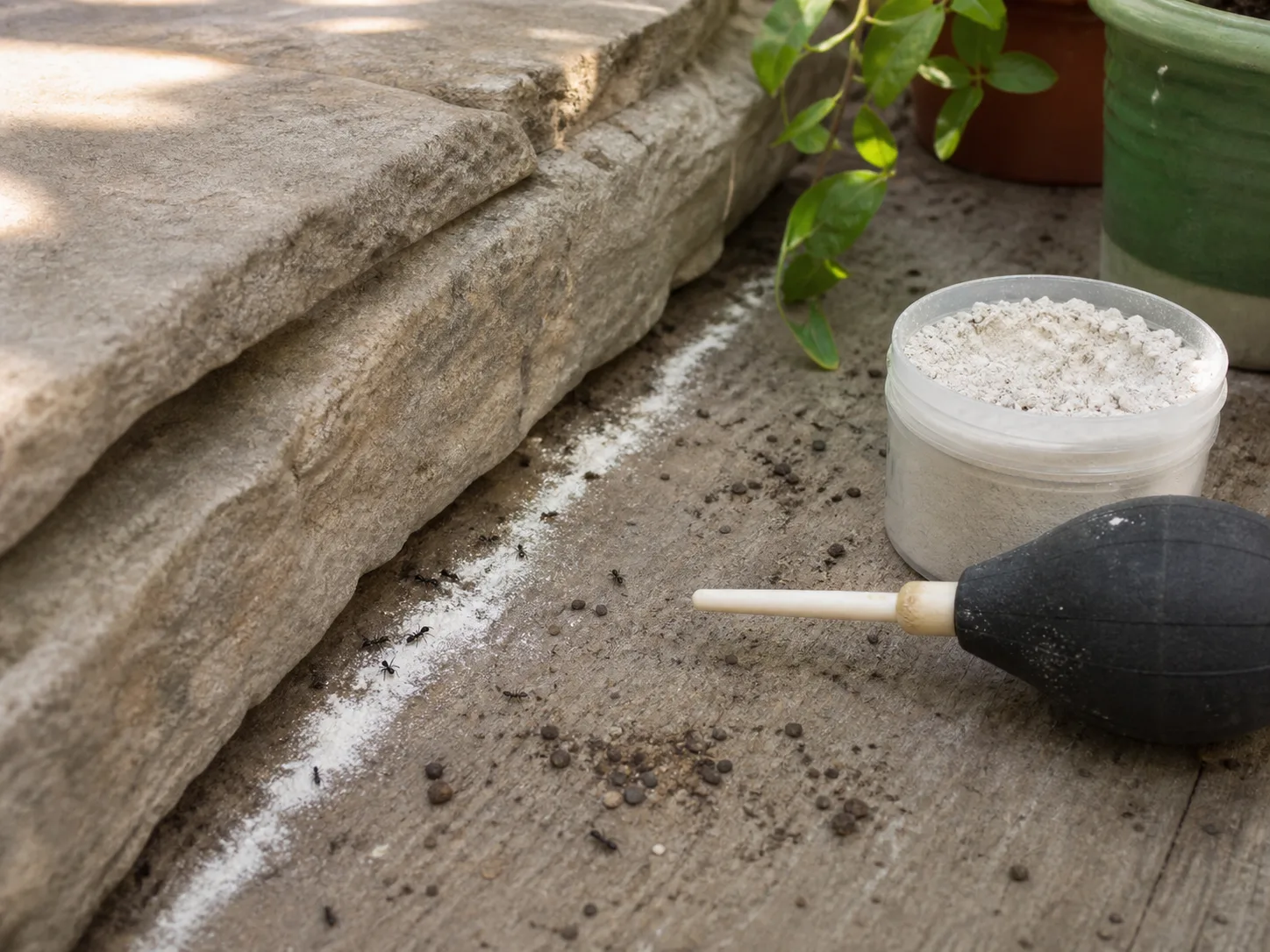
If you use diatomaceous earth, select a product labeled for the intended pest and site, apply the minimum amount that creates contact, and keep it away from open flowers and breathing zones. A dry dust can lose effectiveness when wet, and a visible line can harm beneficial crawling insects as well as ants. It is a targeted tool, not a harmless perimeter decoration.
When ants signal a bigger problem
The size, location, and behavior of the ants matter more than the color of the powder you have on hand. Large black ants around window frames, baseboards, or structural wood deserve a carpenter-ant inspection—especially when you see coarse sawdust-like debris or hear faint rustling inside a wall. Carpenter ants do not eat wood like termites, but they excavate it for nesting and can weaken damaged or damp timber. Purdue Extension recommends locating and treating the nest and correcting moisture or entry problems rather than relying on a surface repellent.
Tiny yellow or honey-colored ants appearing across several rooms can be harder to manage than a single kitchen trail. In apartments, hospitals, offices, and other multi-unit buildings, disturbing one nest can shift the problem to another room or unit. Coordinate with building management or a professional instead of distributing cinnamon, spray, or loose bait from room to room.
Call for professional or local extension help when ants sting children or pets, when fire-ant mounds are widespread, when you suspect a nest in a wall, when bait has failed after correct use, or when ants return through several sealed routes. A professional can identify the species, find hidden moisture or nesting sites, and choose a labeled treatment with less guesswork.
Conclusion: treat cinnamon as a test, not a cure
Cinnamon can be worth a small experiment when you want to discourage a few ants from crossing a dry threshold, but ground cinnamon is not a reliable ant killer or colony treatment. The strongest evidence concerns concentrated cinnamon oil or trans-cinnamaldehyde tested against red imported fire ants in the laboratory—not a pantry powder applied to an unknown indoor species.
Use the result as a decision point. Clean away the trail, remove food and water, find and seal the entry, and use a contained, slow-acting bait when recurring traffic shows that the colony needs to be reached. If the ants are on plants, inspect for aphids and honeydew; if they are large, stinging, or emerging from a structure, escalate early. The smell of cinnamon may change where ants walk, but a durable solution comes from matching the method to the problem.



