Mango Tree Care Guide for Pots and Warm Climates
Mangifera indica
Grow Mango in full sun, warm conditions, and freely draining soil. Learn watering, potting, size control, and sap and peel sensitivity precautions for Mangifera indica.
Mango Tree Care Guide for Pots and Warm Climates
Start with wateringThe most common care mistake for MangoWatering guide →Mango care essentials
Light
Water
Water young and container-grown Mango deeply, then wait until the top 3–5 cm of mix has dried before watering again. Established landscape trees need irrigation mainly during prolonged drought; chronic wetness causes decline.
Soil
Use a deep, airy, freely draining mix rather than heavy moisture-retentive compost. A practical container blend is 50% quality potting mix, 25% coarse perlite or grit, and 25% fine pine bark or finished compost.
Humidity
Temperature
Fertilizer
About Mango
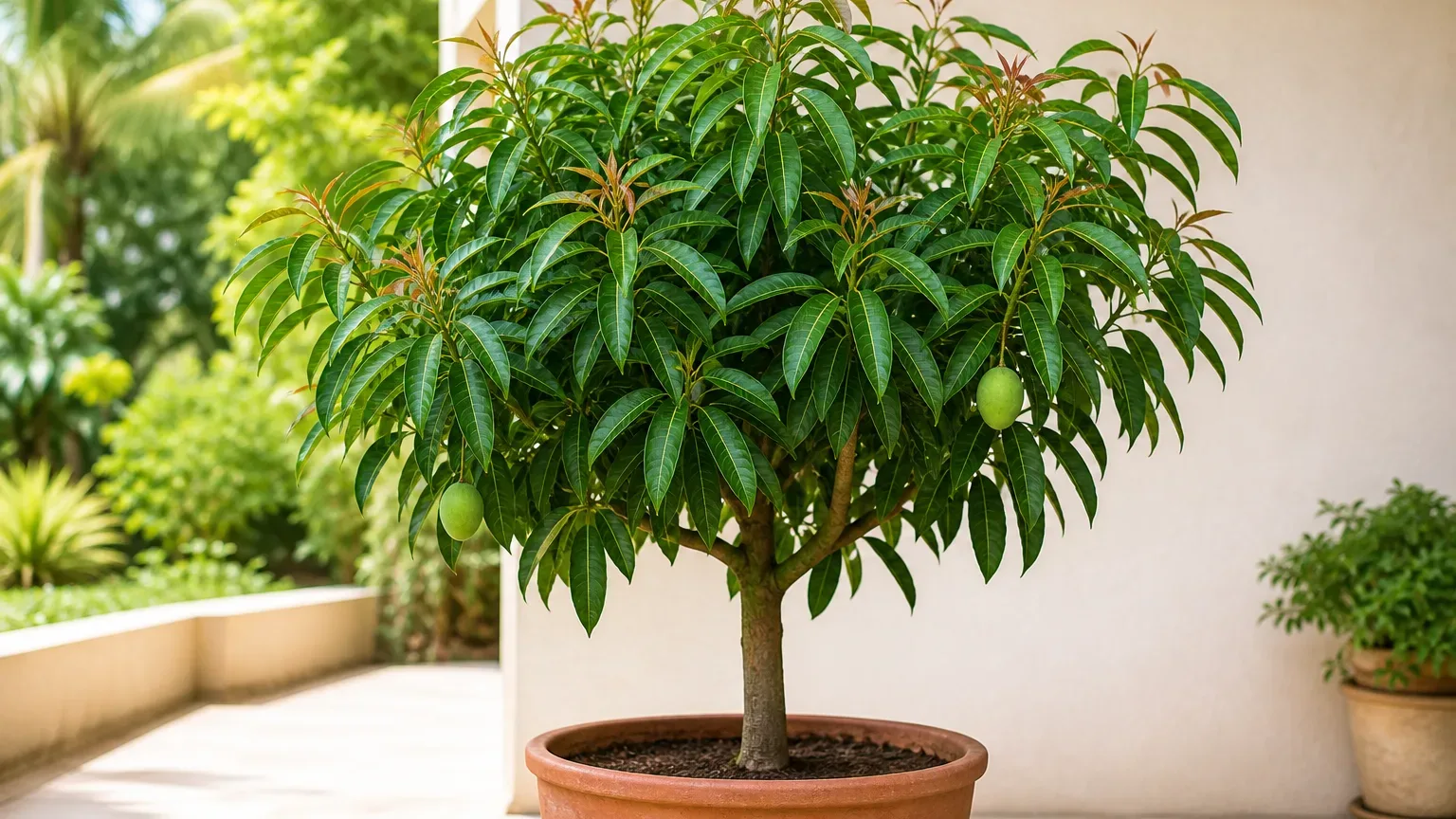
Mango is native to Indo-Burma region, including northeastern India and Southeast Asia, typically reaches 9–30 m (30–100 ft) tall if unpruned; grafted container trees can be maintained around 2–3 m (6–10 ft) with cultivar choice and regular pruning indoors, with moderate to fast in sustained tropical warmth and full sun growth. Mango has a tree like growth habit and part of the Anacardiaceae family. It is also known as Mango Tree, Aam, and Amra.
| Detail | Information |
|---|---|
| Also known as | Mango Tree, Aam, Amra |
| Native region | Indo-Burma region, including northeastern India and Southeast Asia |
| Mature size | 9–30 m (30–100 ft) tall if unpruned; grafted container trees can be maintained around 2–3 m (6–10 ft) with cultivar choice and regular pruning |
| Growth rate | Moderate to fast in sustained tropical warmth and full sun |
| Growth habit | Tree Like |
| Scientific name | Mangifera indica |
| Family | Anacardiaceae |
Mango Tree Care Guide for Pots and Warm Climates
A mango is an outdoor tropical fruit tree, not a foliage houseplant that will remain content beside a dim window. Give it direct sun, sustained warmth, free drainage, and enough root room, then manage water and canopy size according to whether it grows in the ground or a pot. That distinction matters: a mature landscape tree and a terrace tree share the same biology but not the same drying rate, nutrient reserve, or space.
For most home growers, the best starting plant is a healthy, named grafted cultivar suited to the local climate. A seed-grown mango can be rewarding as an experiment, but its eventual fruit and vigour may be unpredictable. In India and similarly warm regions, the practical challenge is rarely keeping mango alive; it is choosing a suitable site, preventing monsoon waterlogging, and controlling a naturally large tree before it outgrows the available space.
Quick mango care at a glance
- Light: Full outdoor sun, ideally at least six hours of unobstructed direct light; acclimate nursery leaves gradually to harsh terrace sun.
- Temperature: Warm, frost-free conditions. Protect young container trees from cold snaps and cold drying wind.
- Water: Soak the full root ball, allow the upper mix to begin drying, and never leave the pot standing in runoff. Reduce or stop irrigation when monsoon rain is doing the job.
- Soil: Deep, airy, freely draining soil in the ground; a structurally open potting mix and large drainage holes in containers.
- Pot: A stable container that is only moderately larger than the root ball, enlarged in stages rather than jumping into an enormous wet tub.
- Feeding: Moderate feeding during active growth, adjusted to local soil and the tree’s age; avoid pushing a mature tree with excess nitrogen.
- Pruning: Train young growth for low branching and prune for size after harvest, not while terminal flower panicles are developing.
If the tree is declining, check the root zone before buying a tonic. Wet, sour mix or standing monsoon water demands a drainage correction; bone-dry mix and a very light pot call for a thorough soak. The more detailed Mango watering guide and Mango soil guide separate those two problems.
What kind of plant is a mango tree?
Mangifera indica is an accepted species in the cashew family, Anacardiaceae. Kew describes it as a tree of the seasonally dry tropical biome with a native range from Assam to southern Yunnan, while horticultural accounts describe its long history of cultivation across India and Southeast Asia. This history explains why cultivated mango occurs far beyond the narrower native range assigned by modern floras.
The tree is evergreen in suitable climates and produces growth in flushes. Its flowers form branched panicles at shoot tips, and each fruit is a drupe with one large, flattened seed enclosed by a woody husk. UF/IFAS identifies the Indo-Burma region as the crop’s centre of origin and notes that mango has been cultivated in India for more than 4,000 years.
Growth habit and realistic mature size
An unpruned mango is not a patio-sized plant. Depending on cultivar and conditions, many varieties reach 9–30.5 m, developing a broad canopy and extensive roots. Even another UF/IFAS landscape profile gives a typical range of roughly 9–18 m tall and almost 15 m wide, which is enough reason to keep a ground-planted tree away from foundations, roofs, lanes, and power lines.
Container culture does not genetically dwarf a vigorous cultivar. The pot limits roots, while pruning limits the canopy; both also limit how much stress and crop load the tree can support. A lower-vigour cultivar, annual size control, and realistic acceptance of a modest crop make a large outdoor pot workable. A vigorous seedling allowed to become rootbound is not the same thing as a compact fruit tree.
Choose a grafted cultivar for predictable fruit and size
Choose a named grafted nursery tree when fruit quality, bearing time, and manageable vigour matter. UF/IFAS reports that grafted trees may begin bearing in three to five years, though climate, cultivar, nutrition, pruning, and pollination can delay or reduce a home crop. A graft union low on the trunk and a clearly labelled cultivar are more useful buying signals than a very tall top.
Inspect the root ball as well as the leaves. Reject a tree with a circling taproot packed against a tiny container, trunk constrictions, blackened shoot tips, active scale or mealybugs, or sour-smelling mix. Seed propagation is more complicated than “plant any stone and get the same mango”: monoembryonic seedlings are genetic crosses, while most embryos in a polyembryonic seed are maternal clones.
Best placement in India and other warm climates
Use a sunny garden, open courtyard, rooftop, or terrace with strong light and moving air. In humid coastal and monsoon climates, air movement and quick leaf drying matter because wet weather favours flower and fruit diseases. In very hot inland cities, acclimate a nursery tree over about a week rather than moving tender shaded foliage directly into all-day reflected heat from pale walls and paving.
In the ground, choose the warmest non-flooding part of the property and leave room for the intended maintained canopy. Tamil Nadu Agricultural University advises good drainage and notes that Indian cultivars have specific regional requirements; a famous cultivar is not automatically the best tree for every district. Local nursery and horticulture-department experience is especially valuable for flowering behaviour, disease pressure, and rootstock performance.
Growing mango in a large container
A container mango belongs outdoors. Start with a pot just wider than the current root mass, ensure several generous drainage holes, and step up as roots occupy the mix. An oversized pot around a small root ball can stay wet for too long during rain, while a tiny pot on a hot terrace can dry dangerously in a day. A heavy base or broad tub helps prevent a leafy tree from overturning in pre-monsoon wind.
Dwarf or lower-vigour cultivars are the sensible choice; the California Rare Fruit Growers specifically notes that dwarf cultivars suit large containers or greenhouses. Container fruiting still requires sun, maturity, suitable weather, and disciplined pruning. Moveable casters help with storms or brief cold, but do not plan to wheel a large mango into a living room as its permanent low-light home.
Light: treat mango as a sun tree
Mango grows and fruits best in full sun. A University of Florida landscape profile lists full sun and well-drained soil as core cultural requirements. A bright window may keep a young seedling alive temporarily, but glass reduces usable light and an indoor canopy lacks the space and airflow expected by a fruit tree.
Place a container where buildings, awnings, and larger trees do not shade it through the main part of the day. If growth is long and weak, leaves are widely spaced, and no sturdy new flushes develop, light is the first constraint to examine. Use the Mango light guide for acclimation steps and placement troubleshooting.
Watering through heat, monsoon, and cooler months
Young and container-grown mangoes need more consistent moisture than established landscape trees, but neither benefits from permanently saturated roots. Water a pot slowly until the whole root ball is wet and runoff exits freely, then wait until the upper 3–5 cm has dried before watering again. Check with a finger or wooden skewer and learn the pot’s dry weight instead of obeying a fixed calendar.
On an exposed Indian terrace, a rooted pot may need checks every day during a hot, dry spell; that does not mean it must be watered daily. During dependable monsoon rain, remove saucers, keep holes clear, and pause irrigation. For established ground trees, UF/IFAS recommends irrigation mainly during prolonged drought and warns that frequent overwatering can contribute to decline.
Soil and drainage: protect the root zone
Mango tolerates several mineral soil textures but performs poorly where water remains around the roots. Ground sites should drain after heavy rain; where local soil floods, planting on a broad raised mound is safer than placing the tree in a low basin. Do not bury the trunk flare under compost or mulch.
For containers, use a coarse, stable blend rather than dense garden clay or fine compost alone. One practical starting mix is about half quality potting mix, one quarter fine pine bark or mature compost, and one quarter coarse perlite, pumice, or grit. Adjust the components to your climate: humid monsoon locations need faster air return, while very hot dry terraces may need slightly more moisture retention. The Mango repotting guide explains when to refresh compacted mix without unnecessarily disturbing sensitive roots.
Feeding without forcing weak growth
Feed a young container tree lightly during active warm growth, following the product label and watering the root ball before applying soluble fertilizer. A balanced slow-release fruit-tree or citrus-type fertilizer with micronutrients is more defensible than frequent high-nitrogen doses. Flush container mix occasionally with plain water so dissolved salts do not accumulate.
Mature fruiting trees are different from seedlings. Excess nitrogen can produce a large soft canopy at the expense of balanced flowering and fruit quality; UF/IFAS recommends sharply reducing nitrogen for mature healthy trees. Soil type changes micronutrient availability, so use local soil testing or horticultural advice before applying iron, boron, or repeated foliar mixes. See the Mango fertilizer guide for age- and container-specific decisions.
Pruning, flowering, and fruit expectations
Train a young mango to form a low framework by encouraging several well-spaced lateral branches. Once it fruits, prune soon after harvest so the tree can replace shoots before the next flowering cycle. Mango flowers are terminal, so repeatedly clipping every tip as panicles form can remove the potential crop.
Annual selective pruning is easier on the grower than allowing a tree to become huge and then cutting it severely. UF/IFAS notes that hard size reduction may suppress production for one or more seasons. Use clean tools, do not climb an established tall tree, and hand hazardous canopy work to an insured arborist. The Mango pruning guide provides a focused sequence for size control.
Mango sap and peel contact sensitivity
Mango handling deserves a precise warning, not the vague claim that the edible flesh is “poison ivy.” A peer-reviewed review found that mango contact dermatitis is rare but documented, and identifies suspected sensitizers as alk(en)yl catechols and resorcinols. Prior sensitisation to urushiol-containing plants such as poison ivy or poison oak may allow a reaction on a person’s first known mango exposure.
Sap from cut stems and fruit stalks, peel, and pruning debris are the practical contact points. Wear gloves, long sleeves, and eye protection when pruning or harvesting; avoid touching your face; wash tools and exposed skin after work. If mango, poison ivy, or poison oak has caused a rash before, have someone else peel fruit and avoid direct contact with fresh sap. This is handling guidance, not a diagnosis; persistent or severe reactions need appropriate medical care.
Pet cautions around mango trees and fruit waste
Ripe mango flesh being eaten by people does not establish that leaves, bark, sap, peel, or treated potting mix are safe for every pet species. No species-specific ASPCA listing was identified in the sources reviewed for this guide, so the conservative choice is to prevent chewing and keep fallen pruning debris and peel out of reach. Do not label the whole tree “pet-safe” from the edibility of the pulp alone.
The fruit contains a single large, flattened seed inside a woody husk, as described by UF/IFAS. Keep that hard fibrous stone away from dogs and other animals that may swallow or break it, and keep pets away while pesticide or fertilizer residues are present. After significant ingestion or signs such as repeated vomiting, swelling, breathing difficulty, or marked distress, contact a veterinarian rather than trying a home remedy.
Common mistakes and the first corrective action
Keeping mango indoors: Move it to a warm outdoor site, acclimating leaves to direct sun. Using a huge pot for a small root ball: Downsize or improve drainage if the mix remains wet for many days. Watering through dependable monsoon rain: stop irrigation, empty saucers, and check whether water can escape.
Buying an unknown seedling for a tiny terrace: replace expectations, not just the pot; train it as an ornamental experiment or choose a named lower-vigour grafted cultivar. Pruning during flowering: stop tip cuts and wait until after harvest or the appropriate post-season window. Responding to every yellow leaf with fertilizer: inspect moisture, roots, light, and pests first because more salts can worsen a stressed container tree.
When to use this page vs other Mango guides
Use this overview to decide whether your space and climate suit a mango and to identify the first care constraint. For exact moisture checks and seasonal adjustments, open Mango watering; for window, terrace, and acclimation decisions, use Mango light. The Mango soil guide covers mixes and drainage, while Mango propagation explains why seed and grafting produce different outcomes.
Use Mango repotting when roots circle, the tree dries too quickly, or old mix collapses. Use Mango fertilizer when growth and nutrition are the main questions, and Mango pruning when canopy structure or harvest access—not basic health—is the decision.
Related Mango guides
- Mango light requirements — outdoor sun and acclimation
- How to water Mango — pot checks, heat, and monsoon changes
- Best soil for Mango — drainage and container mix structure
- Mango fertilizer schedule — feeding by age and setting
- Repotting Mango — pot size and root care
- Propagating Mango — seeds, embryo types, and grafting
- Pruning Mango — low framework and post-harvest size control
Conclusion
Successful mango tree care starts with accepting the plant’s scale and biology. Mangifera indica wants outdoor sun, tropical or subtropical warmth, a root zone that drains, and room to make a woody canopy. In a garden, give it a non-flooding site and long-term clearance; in a container, begin with a named grafted lower-vigour cultivar, increase pot size gradually, and prune every year rather than waiting for an oversized rescue cut.
In India and other warm climates, let weather drive care: check pots frequently in hot dry periods, stop automatic watering when monsoon rain is sufficient, and protect roots from standing water. Handle sap, peel, and pruning debris with gloves if sensitivity is possible, and keep pets away from the whole plant, treated soil, peel, and large seed rather than assuming edible pulp makes every part safe. Get light, drainage, and realistic size control right first; the detailed care guides can refine the rest.
How to care for Mango?
When should you water Mango?
Water young and container-grown Mango deeply, then wait until the top 3–5 cm of mix has dried before watering again. Established landscape trees need irrigation mainly during prolonged drought; chronic wetness causes decline.
- Test the top 3–5 cm and the pot's weight - Water young and container-grown Mango deeply, then wait until the top 3–5 cm of mix has dried before watering again.
- water thoroughly only when that layer is dry - Water young and container-grown Mango deeply, then wait until the top 3–5 cm of mix has dried before watering again.
- then let all excess drain - Water young and container-grown Mango deeply, then wait until the top 3–5 cm of mix has dried before watering again.
- Drain excess water - Water young and container-grown Mango deeply, then wait until the top 3–5 cm of mix has dried before watering again.
What soil works best for Mango?
Use a deep, airy, freely draining mix rather than heavy moisture-retentive compost. A practical container blend is 50% quality potting mix, 25% coarse perlite or grit, and 25% fine pine bark or finished compost.
- 50% quality potting mix - A practical container blend is 50% quality potting mix, 25% coarse perlite or grit, and 25% fine pine bark or finished compost.
- 25% coarse perlite or horticultural grit - A practical container blend is 50% quality potting mix, 25% coarse perlite or grit, and 25% fine pine bark or finished compost.
- 25% fine pine bark or finished compost - A practical container blend is 50% quality potting mix, 25% coarse perlite or grit, and 25% fine pine bark or finished compost.
Grower notes for Mango
What matters most with Mango
Mango is a full-sun tropical fruit tree, not a permanent indoor foliage plant. Give Mangifera indica at least 6–8 hours of direct sun, sustained warmth, and a root zone that drains quickly. Water young trees consistently while they establish, but do not keep mature roots wet: UF/IFAS notes that established trees usually need irrigation only during prolonged drought.
Best placement in a real home
Use a warm, open terrace, courtyard, rooftop, or frost-free garden with unobstructed sun and airflow. An unpruned Mango can reach 9–30 m, so container growing requires a grafted compact cultivar, a heavy pot, and annual size control. Keep trees away from buildings and power lines, and protect young plants from frost and prolonged cold.
Before you buy this tree
Choose a healthy grafted plant with a named cultivar if fruit quality, bearing age, and manageable size matter. Avoid a tall tree squeezed into a small pot, circling roots, trunk wounds, scale, mealybugs, blackened shoots, or sour-smelling mix. Seed-grown Mango trees are genetically variable and commonly take longer to fruit.
First month after bringing it home
Acclimate nursery foliage to intense sun over several days, quarantine the plant, and learn how quickly its pot dries before repotting. Water the whole root ball, then wait for the upper 3–5 cm to dry. Do not combine a drastic root disturbance, hard pruning, strong fertiliser, and a sudden move into harsh sun.
Handle sap, peel, and pruning debris carefully
Mango belongs to the Anacardiaceae family with poison ivy and cashew. Its sap, peel, stems, and leaves can expose sensitive people to related contact allergens called alk(en)yl resorcinols or mangol; this is more precise than saying Mango flesh contains poison-ivy urushiol. Wear gloves and long sleeves for pruning or harvesting, avoid touching the face, wash tools and exposed skin, and let someone else peel fruit if poison ivy, poison oak, or Mango has caused a rash before.
How Mango flowers and fruits
Mango makes terminal flower panicles, so repeated tip pruning during the flowering season can remove the crop. Train a young tree for a low, branched framework, then prune soon after harvest. Full sun and dry foliage reduce disease pressure; named grafted cultivars are more predictable than seedlings, but flowering and fruit set still vary with cultivar, weather, and tree maturity.
Is Mango safe for pets?
Ripe Mango flesh is food, but this does not establish the whole plant as pet-safe. Keep pets away from sap, leaves, peel, treated potting mix, and the large hard seed, which can choke or obstruct the digestive tract.
Mangifera indica does not have a species-specific ASPCA toxic/non-toxic plant listing cited for this hub. Do not classify the whole tree from the edibility of ripe flesh. Mango sap and peel contain contact allergens, while the large fibrous seed is a choking and intestinal-obstruction hazard. Seek veterinary advice after significant plant-part ingestion or any swelling, repeated vomiting, breathing difficulty, or distress.
Watering Mango
For Mango, test the top 3–5 cm and the pot's weight; water thoroughly only when that layer is dry, then let all excess drain and water check containers every 3–5 days in hot weather and weekly in cooler conditions; water newly planted trees 1–2 times weekly after their first establishment week. Water young trees most during warm dry growth, reduce when monsoon rain is dependable, and keep mature trees drier in cool months.
| Detail | Information |
|---|---|
| How often | Check containers every 3–5 days in hot weather and weekly in cooler conditions; water newly planted trees 1–2 times weekly after their first establishment week |
| How to check | Test the top 3–5 cm and the pot's weight; water thoroughly only when that layer is dry, then let all excess drain |
| Seasonal changes | Water young trees most during warm dry growth, reduce when monsoon rain is dependable, and keep mature trees drier in cool months |
Signs of overwatering
- yellowing leaves while the mix remains wet
- soft dark roots or a sour smell
- stalled flushes and branch dieback
- oedema-like spotting or premature leaf drop
Signs of underwatering
- limp or inward-curling leaves
- dry brown leaf margins
- aborted new flushes
- premature flower or fruit drop
Soil & potting for Mango
Use a mix of 50% quality potting mix, 25% coarse perlite or horticultural grit, 25% fine pine bark or finished compost for Mango. Free drainage is essential; Mango tolerates several soil types but performs poorly in flooded or persistently saturated ground. Target soil pH around 5.5–7.5. Repot every 1–2 years while young; root-prune and refresh the mix every 2–3 years once the tree occupies its final large container, ideally in early spring or the start of warm active growth.
| Detail | Information |
|---|---|
| Recommended mix | 50% quality potting mix, 25% coarse perlite or horticultural grit, 25% fine pine bark or finished compost |
| Drainage | Free drainage is essential; Mango tolerates several soil types but performs poorly in flooded or persistently saturated ground |
| Soil pH | 5.5–7.5 |
| Repotting frequency | Every 1–2 years while young; root-prune and refresh the mix every 2–3 years once the tree occupies its final large container |
| Best season to repot | Early spring or the start of warm active growth |
Signs it needs repotting
- roots circling densely or emerging from drainage holes
- pot drying within a day during warm weather
- tree becoming unstable or top-heavy
- growth stalling despite full sun and appropriate feeding
Humidity & temperature for Mango
Fertilizer & pruning for Mango
Common problems on Mango
Yellow Leaves
MediumLikely cause: Common on this plant type; confirm with recent watering, light, and root checks.
Quick fix: Inspect the plant and correct the most likely care stressor before stacking treatments.
Full fix guide →Brown Tips
MediumLikely cause: Common on this plant type; confirm with recent watering, light, and root checks.
Quick fix: Inspect the plant and correct the most likely care stressor before stacking treatments.
Full fix guide →Root Rot
MediumLikely cause: Common on this plant type; confirm with recent watering, light, and root checks.
Quick fix: Inspect the plant and correct the most likely care stressor before stacking treatments.
Full fix guide →Overwatering
MediumLikely cause: Common on this plant type; confirm with recent watering, light, and root checks.
Quick fix: Inspect the plant and correct the most likely care stressor before stacking treatments.
Full fix guide →Underwatering
MediumLikely cause: Common on this plant type; confirm with recent watering, light, and root checks.
Quick fix: Inspect the plant and correct the most likely care stressor before stacking treatments.
Full fix guide →Spider Mites
MediumLikely cause: Common on this plant type; confirm with recent watering, light, and root checks.
Quick fix: Inspect the plant and correct the most likely care stressor before stacking treatments.
Full fix guide →Mealybugs
MediumLikely cause: Common on this plant type; confirm with recent watering, light, and root checks.
Quick fix: Inspect the plant and correct the most likely care stressor before stacking treatments.
Full fix guide →Aphids
MediumLikely cause: Common on this plant type; confirm with recent watering, light, and root checks.
Quick fix: Inspect the plant and correct the most likely care stressor before stacking treatments.
Full fix guide →Leggy Growth
MediumLikely cause: Common on this plant type; confirm with recent watering, light, and root checks.
Quick fix: Inspect the plant and correct the most likely care stressor before stacking treatments.
Full fix guide →Slow Growth
MediumLikely cause: Common on this plant type; confirm with recent watering, light, and root checks.
Quick fix: Inspect the plant and correct the most likely care stressor before stacking treatments.
Full fix guide →Wilting
MediumLikely cause: Common on this plant type; confirm with recent watering, light, and root checks.
Quick fix: Inspect the plant and correct the most likely care stressor before stacking treatments.
Full fix guide →Drooping Leaves
MediumLikely cause: Common on this plant type; confirm with recent watering, light, and root checks.
Quick fix: Inspect the plant and correct the most likely care stressor before stacking treatments.
Full fix guide →Low Humidity
MediumLikely cause: Common on this plant type; confirm with recent watering, light, and root checks.
Quick fix: Inspect the plant and correct the most likely care stressor before stacking treatments.
Full fix guide →Not Enough Light
MediumLikely cause: Common on this plant type; confirm with recent watering, light, and root checks.
Quick fix: Inspect the plant and correct the most likely care stressor before stacking treatments.
Full fix guide →Fungus Gnats
MediumLikely cause: Common on this plant type; confirm with recent watering, light, and root checks.
Quick fix: Inspect the plant and correct the most likely care stressor before stacking treatments.
Full fix guide →Mold on Soil
MediumLikely cause: Common on this plant type; confirm with recent watering, light, and root checks.
Quick fix: Inspect the plant and correct the most likely care stressor before stacking treatments.
Full fix guide →