The Best Fertilizers We’ve Found Online for You
Compare current fertilizers for houseplants, vegetables, citrus, trees, shrubs, and lawns, then choose by NPK, release speed, soil test, and application method.
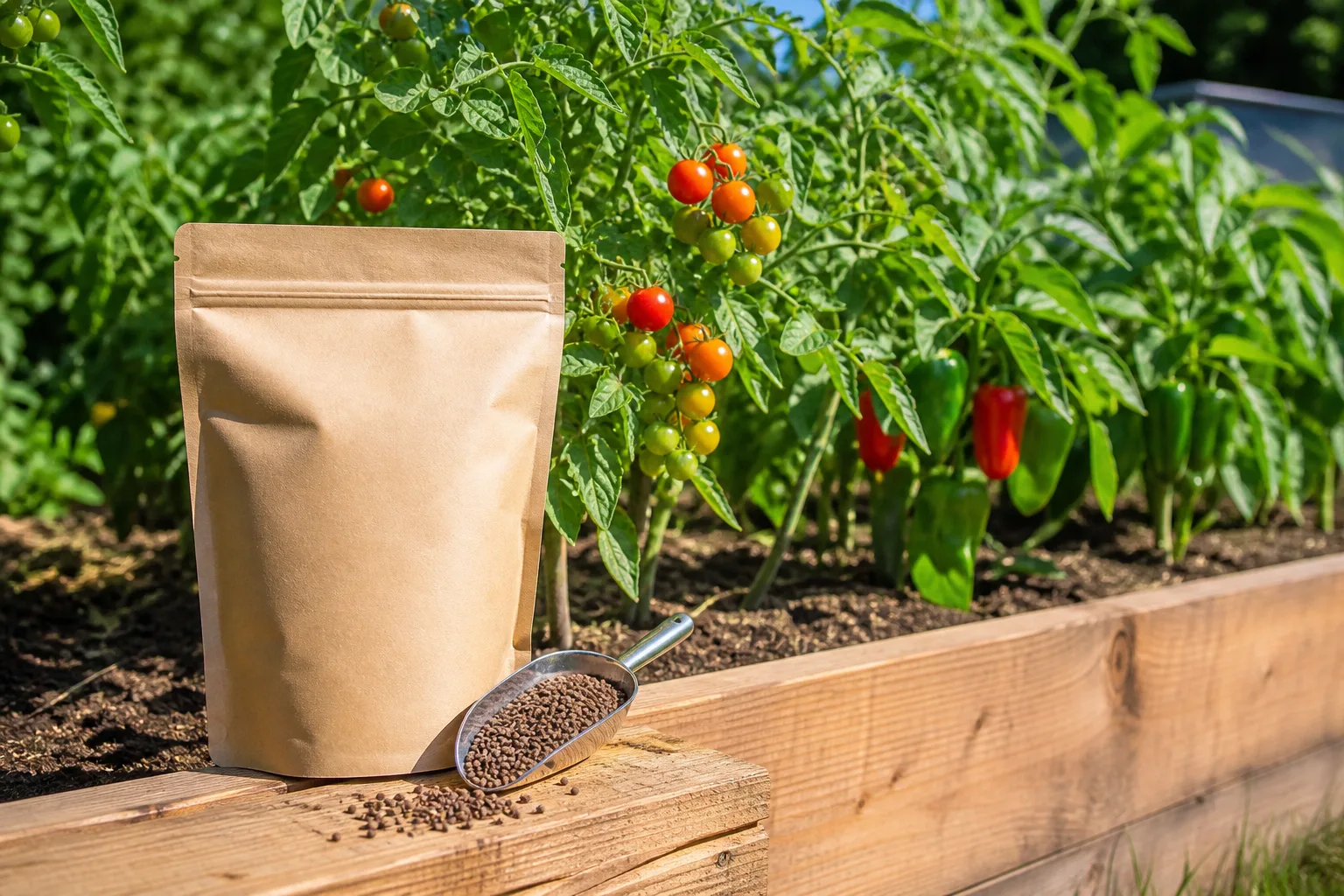
There is no single best fertilizer for every plant. A high-nitrogen lawn feed can be a sensible choice for established turf and a bad choice for a tomato container; a gentle organic blend can suit a raised bed but be too slow for a hungry plant in a small pot. The useful question is not “Which bag is strongest?” It is “Which product supplies the needed nutrients, at a manageable rate, in the place and season where the plant can use them?”
This 2026 shortlist is organized by that question. I checked current manufacturer information for the products’ analyses and intended uses, then weighed those details against extension guidance on soil testing, nutrient excess, and application math. Treat the named products as fit-for-purpose options, not guarantees: labels, availability, package sizes, and formulas can change, so the label on the product you buy remains the final authority.
Best fertilizers by job: the short list
| Job | Best-fit pick | Why it makes the list | Main limitation |
|---|---|---|---|
| General garden beds, flowers, shrubs, and trees | Espoma Plant-tone | Organic, slow-release, broad crop scope, 5-3-3 analysis | Not a quick correction for a confirmed deficiency |
| Low-maintenance containers | Osmocote Plus 15-9-12 | Controlled-release granules with listed secondary and micronutrients | Release length changes with media temperature; rate matters |
| Vegetable and herb beds | Espoma Garden-tone | Crop-specific directions and 3-4-4 analysis | Slow-release feeding still depends on moisture and active roots |
| Edible beds and containers | Dr. Earth Home Grown | 4-6-3 organic formula with directions for beds, containers, and top dressing | Organic nutrients are not instantly available |
| Fast, measurable feeding | Miracle-Gro Water Soluble All Purpose Plant Food | 24-8-16 water-soluble analysis for indoor and outdoor use | Frequent mixing makes overfeeding easier if you guess |
| Citrus, avocado, and mango trees | Miracle-Gro Shake ’N Feed Citrus, Avocado and Mango | 8-2-10 formula with added potassium, magnesium, sulfur, and iron | Intended for the named tree group, not a universal fruit fertilizer |
| Established turf | Scotts Turf Builder UltraFeed | 40-0-5 lawn analysis and coated nutrient particles | Lawn-only logic; it does not control weeds or replace cultural care |
The table is a starting point, not a permission slip to fertilize immediately. If your soil report says phosphorus or potassium is already high, a complete fertilizer can add more of what the garden does not need. Penn State Extension explains how to convert a fertilizer recommendation to the analysis you have, which is often more useful than choosing the most popular bag.
Best all-purpose organic pick: Espoma Plant-tone
Espoma Plant-tone is the most flexible choice here for a gardener who wants one dry organic product for flowers, vegetables, trees, shrubs, and some potted plants. Its current manufacturer page lists a 5-3-3 analysis, slow-release feeding, and use across those crop groups. The attraction is not that 5-3-3 is universally ideal; it is that the product has a broad label and a moderate analysis that is easier to fit into routine garden-bed maintenance than a lawn-strength nitrogen feed.
Espoma’s directions call for mixing it into the top four inches of a new bed at four pounds per 100 square feet. For established flowers and vegetables, the label gives a monthly growing-season schedule, while trees and shrubs have different seasonal guidance and rates based on plant size or drip-line diameter. That difference matters: “all-purpose” describes the crop range, not one rate for every plant.
Choose Plant-tone when you are building a repeatable bed-feeding routine, want organic-approved inputs, and can wait for microbial activity to make nutrients available. Pass on it as an emergency fix when a soil test or plant diagnosis points to a specific, immediately available deficiency. It also has the earthy odor common to some natural fertilizers, so store the bag securely and keep pets from digging in freshly treated beds.
Best controlled-release pick: Osmocote Plus 15-9-12
Osmocote Plus 15-9-12 is the best fit for gardeners who forget liquid-feed dates or manage many containers. The current ICL product page lists 15 percent nitrogen, 9 percent phosphate, and 12 percent potash, along with magnesium, sulfur, boron, copper, iron, manganese, molybdenum, and zinc. Those secondary and micronutrients do not make it automatically better, but they make the label more informative than a simple N-P-K headline.
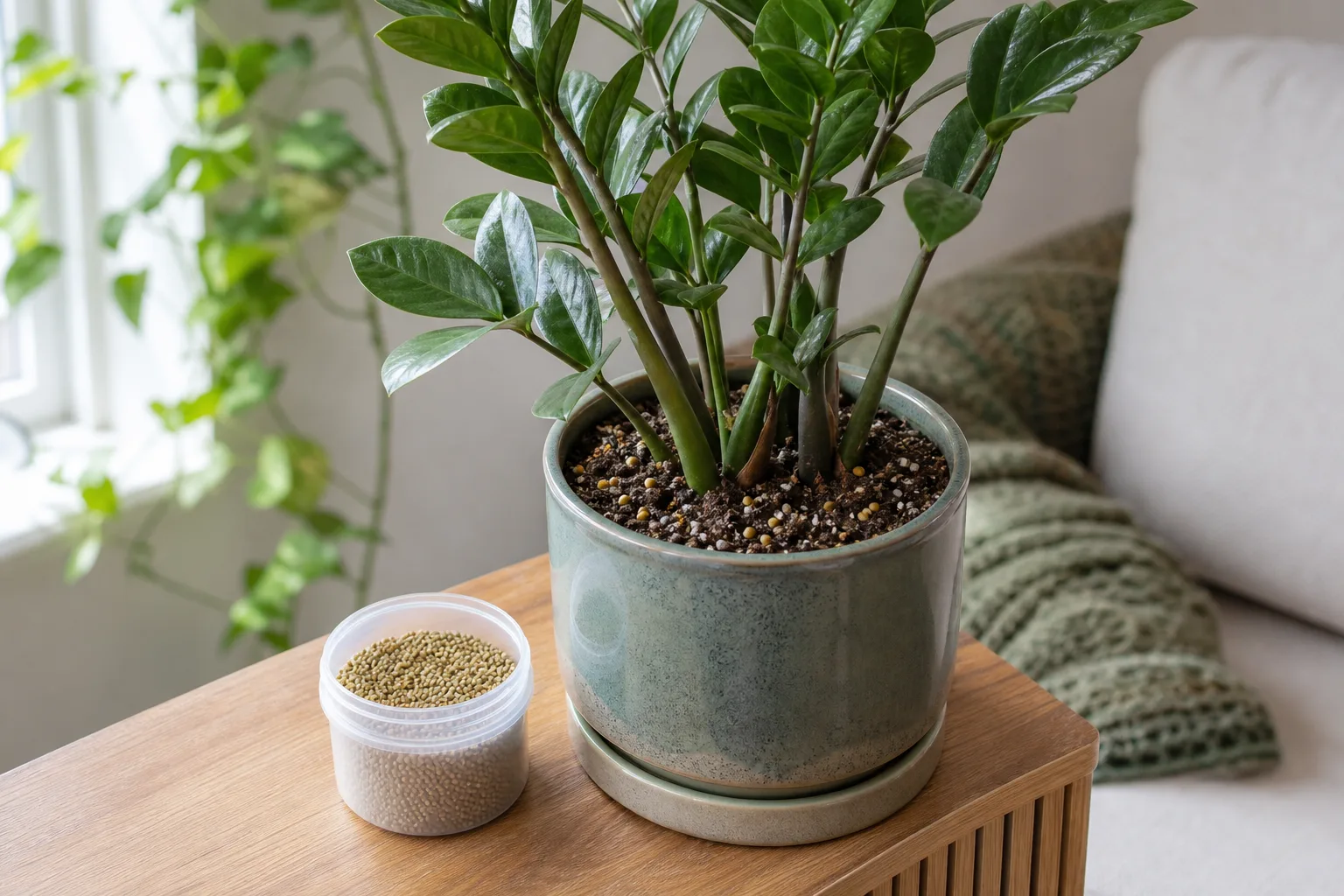
The important nuance is release behavior. The manufacturer lists an 8-to-9-month longevity at an average media temperature of 70°F, but the same product’s longevity changes across temperature ranges. Warmer media generally moves the release cycle faster; cooler media slows it. For a home grower, that means “feeds for months” is a planning aid, not a calendar guarantee.
Use a controlled-release product when your plant is actively growing, your pot drains freely, and you can measure the rate. Do not pile granules against a stem or add another complete fertilizer simply because the plant looks unchanged after a week. Controlled release is deliberately gradual, so judge the program over its intended window and monitor for salt crust, brown margins, or stalled roots.
Best for vegetables and herbs: Espoma Garden-tone
Espoma Garden-tone earns the vegetable-and-herb slot because its label is written around those crops rather than because its 3-4-4 analysis is a magic harvest formula. The manufacturer gives separate directions for cool-season crops, summer vegetables, herbs, seedlings, transplants, established plants, rows, and containers. That crop-aware detail helps a gardener avoid treating a lettuce bed like a lawn.
For a new vegetable bed, the current directions call for three pounds per 50 square feet worked into the top four to five inches. For established vegetables and tomatoes, the product page gives up to one-third cup per plant, while container and herb rates are smaller. The instruction to keep granules away from stems and foliage is worth following; fertilizer belongs in the root-zone soil, not in a concentrated mound touching tender tissue.
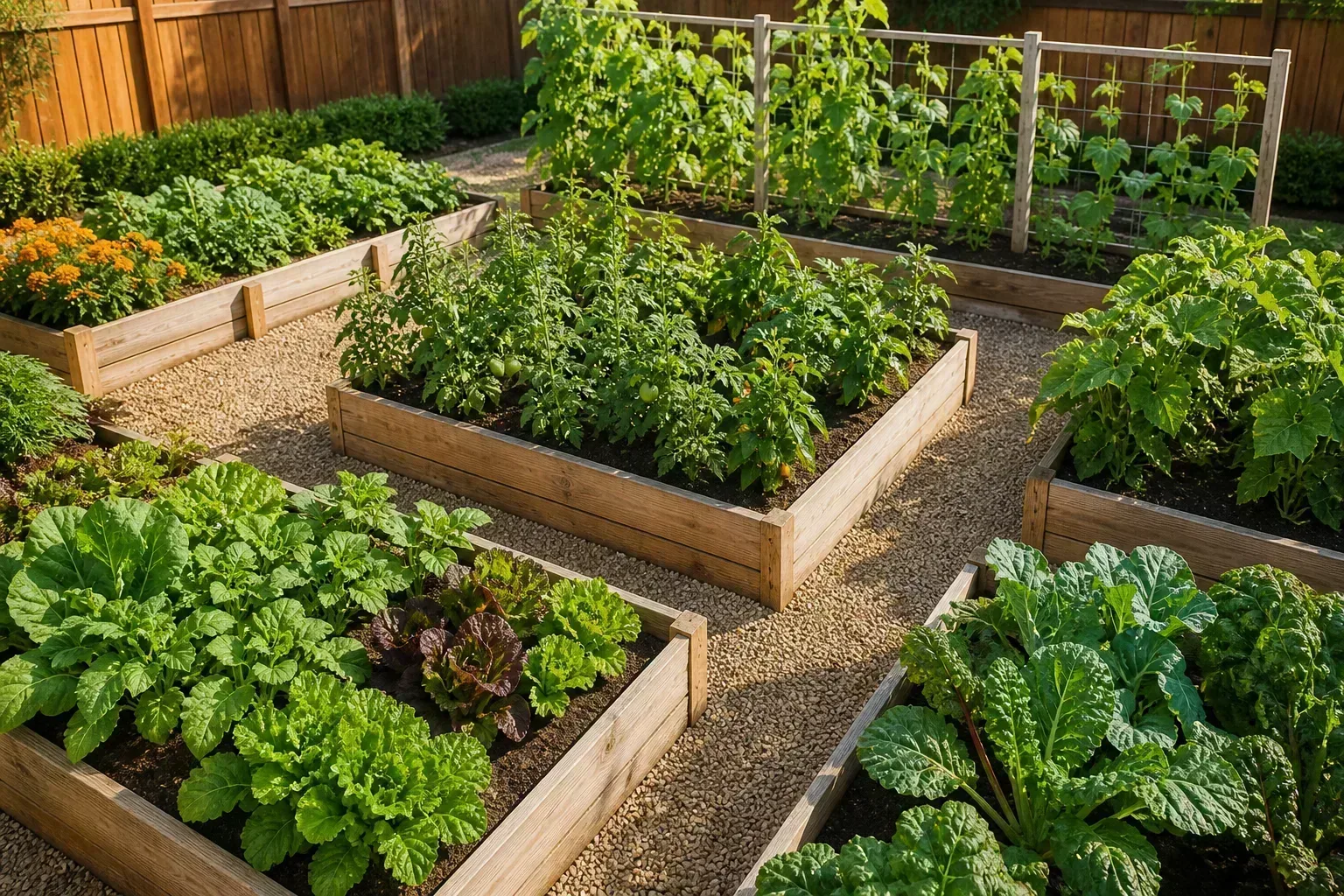
Garden-tone is a strong choice for a raised bed where you want dry, slower feeding and are willing to water after application. It is not a substitute for compost, drainage, crop rotation, or a soil test. Penn State’s soil-fertility guidance notes that organic matter improves structure and water-holding capacity but rarely supplies a complete, balanced nutrient program by itself; fertilizer and compost solve different problems.
Best for edible beds and containers: Dr. Earth Home Grown
Dr. Earth Home Grown is a practical alternative for edible gardens that move between in-ground beds and containers. Its current product page lists a 4-6-3 analysis, organic and natural positioning, and directions for initial planting, transplanting, top dressing, and compost-tea use. The label also lists calcium, sulfur, magnesium, iron, and manganese in addition to the three headline nutrients.
That broader label can be useful when you want one product for tomatoes, herbs, vegetables, and a patio container collection. It still does not prove that every plant needs every listed nutrient. If your soil is already high in phosphorus, applying a 4-6-3 product simply because it is marketed for vegetables can move you farther from the test recommendation.
Select Home Grown when crop scope, organic inputs, and a soil-building approach matter more than instant color. Use it at the package rate, water it in, and give the soil biology time to work. If the plant is wilting, the media is waterlogged, or roots are damaged, adding an organic fertilizer will not repair the underlying problem.
Best water-soluble general feed: Miracle-Gro Water Soluble All Purpose Plant Food
Miracle-Gro Water Soluble All Purpose Plant Food is the fast-feedback option for gardeners who want to mix a measured solution for flowers, vegetables, houseplants, trees, or shrubs. The familiar analysis is 24-8-16. That high nitrogen percentage can support leafy growth, but it is also a reminder that “all-purpose” does not mean “use at the same strength on every plant.”
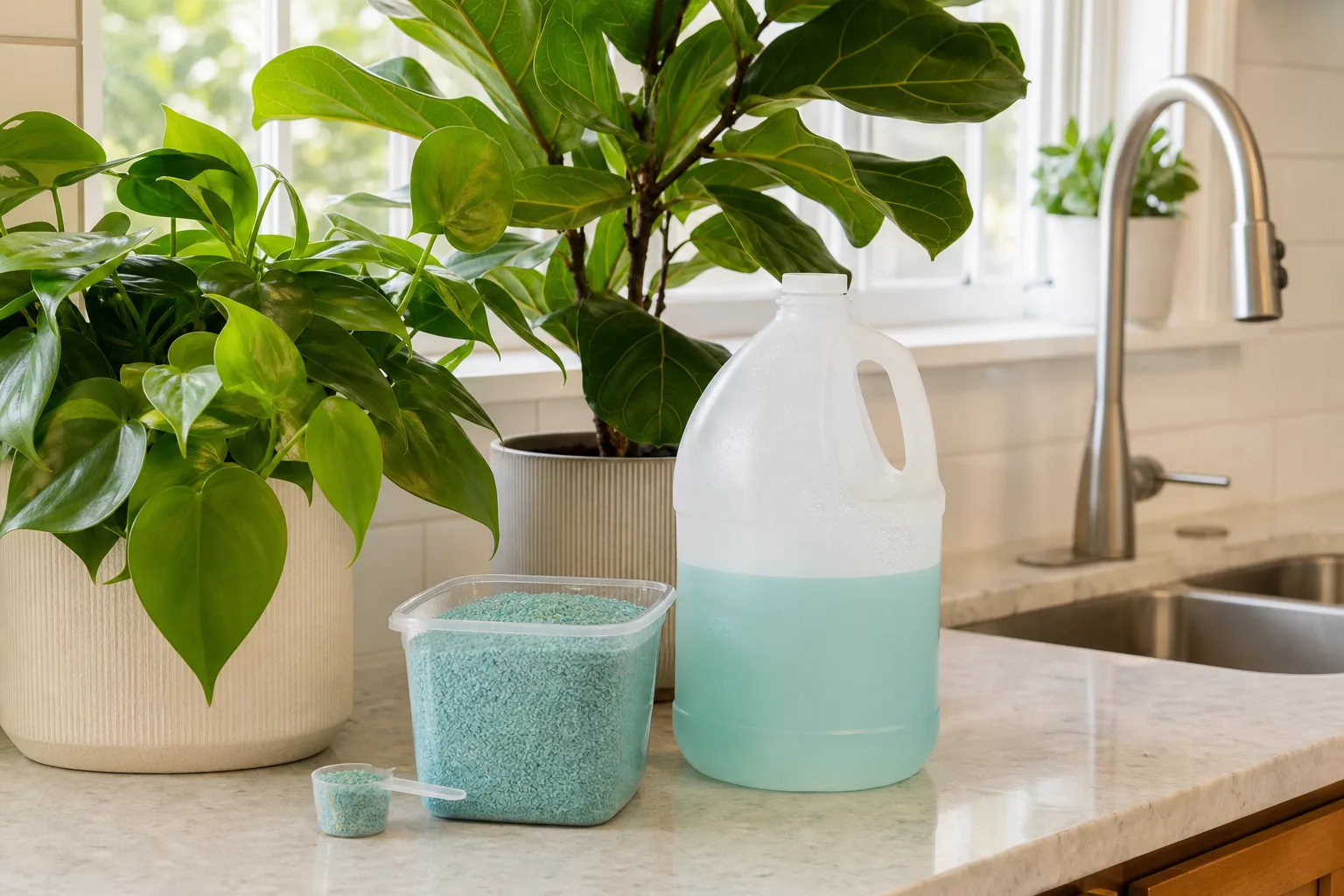
The advantage of soluble feed is control. You can make a small batch for a container or prepare a larger volume for a garden feeder, then stop when the plant’s active-growth window ends. The trade-off is that the product is easy to overuse: a heaped scoop, a stronger mix, or an extra application added “for insurance” increases the salt load without guaranteeing better growth.
For houseplants, apply only to already-moistened, actively growing plants and use the label’s dilution rather than improvising. Bath Garden Center’s houseplant guidance also stresses dilution, discarding saucer water, and periodic top watering to move unused salts through the pot. That is a practical distinction between feeding a healthy root system and trying to rescue a plant whose roots are already damaged.
Best for citrus, avocado, and mango: Miracle-Gro Shake ’N Feed
Miracle-Gro Shake ’N Feed Citrus, Avocado and Mango Plant Food is the most targeted pick in this guide. Its current product information lists an 8-2-10 analysis and added potassium, magnesium, sulfur, and iron, and specifies new or existing in-ground citrus, avocado, and mango trees. The crop boundary is the point: a formula designed around those trees is not automatically the best choice for berries, apples, houseplants, or a mixed ornamental border.
Granular tree fertilizer should be distributed across the root zone, not poured at the trunk. Avoid contact with foliage, follow the package’s area-based rate, work it into the soil only as directed, and water afterward. A young tree and a mature tree have different root-zone sizes, so copying a “per tree” amount from a different package size is risky.
This is a good purchase when you grow the named fruit trees in the label’s intended setting and want a dry product with secondary nutrients included. It is a poor purchase when a soil test has not identified a need, when the tree is drought-stressed or newly transplanted, or when you are hoping fertilizer will compensate for poor pollination, root damage, pests, or inadequate light.
Best for established lawns: Scotts Turf Builder UltraFeed
Scotts Turf Builder UltraFeed belongs in a separate lawn category, not in the all-purpose garden shelf. The current manufacturer page identifies a 40-0-5 analysis and coated nutrient particles intended to feed turf for up to six months under the product’s stated conditions. The high nitrogen emphasis makes sense for leaf-and-tiller production in grass, but it is exactly why you should not sprinkle it around vegetables, flowers, trees, or houseplants.
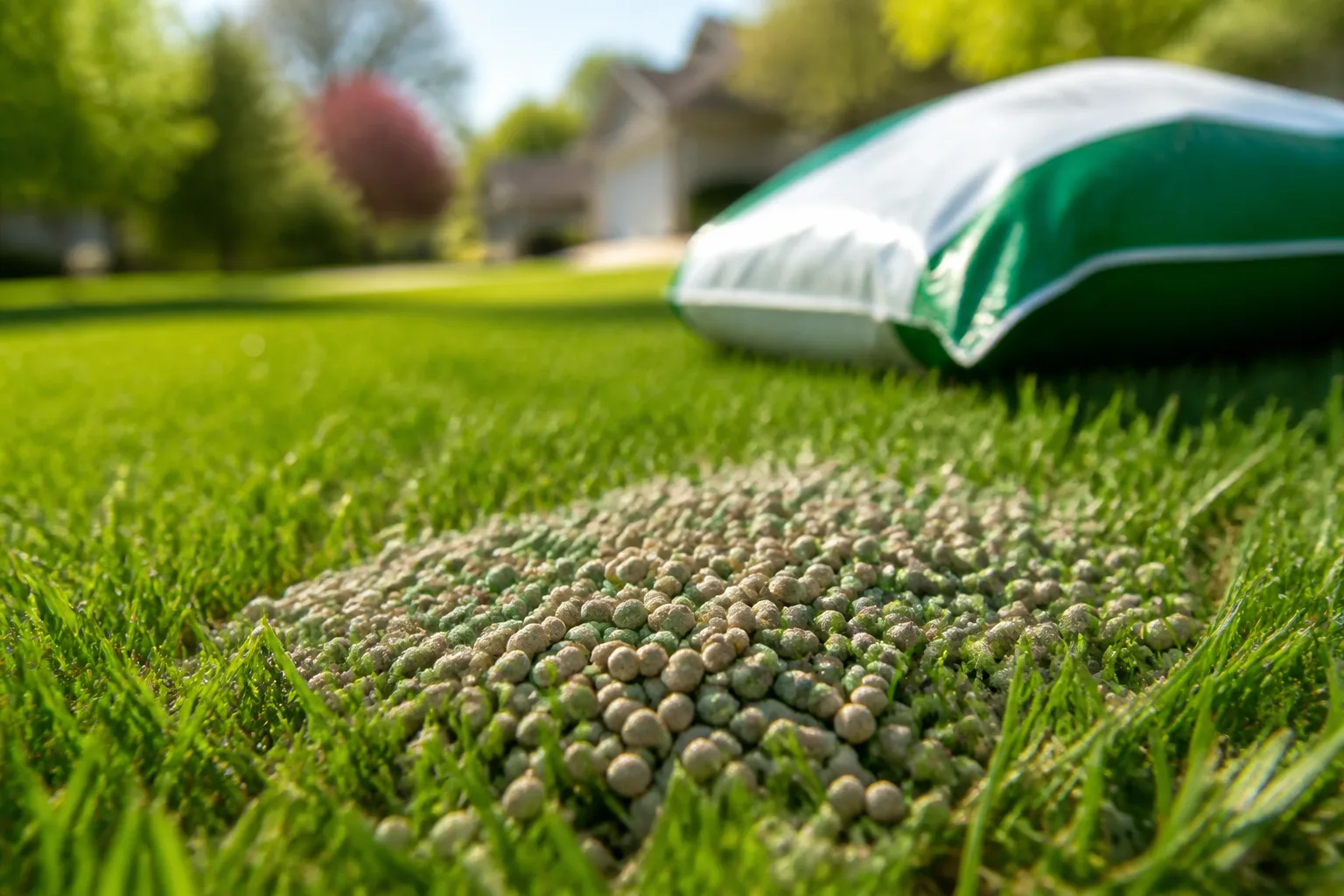
Use a spreader calibrated to the package, measure the lawn area, overlap passes evenly, and sweep granules off sidewalks and driveways. Water according to the current label and local conditions. A lawn fertilizer is not a weed killer unless the label says it contains one, and thickening grass is not the same as correcting compaction, shade, poor mowing, drought, or a disease.
The best use case is an established lawn with a known grass type and a feeding need that matches the label. Skip it when grass is dormant, heat- or drought-stressed, newly seeded unless the label permits it, or next to waterways where rain could carry nutrients away. UMN Extension’s lawn-fertilizing guidance is a useful reminder that lawn timing is climate- and turf-specific.
How we chose the fertilizers
I used five filters. First was label fit: the product had to state a clear crop or setting rather than rely on a vague promise. Second was analysis clarity: a current N-P-K listing and, where available, secondary or micronutrient information. Third was release behavior—water-soluble, dry organic, or controlled-release—because application mistakes often begin when a gardener assumes all granules behave alike.
Fourth was decision usefulness. A product made the list only if its strengths could be explained without promising a guaranteed bloom, harvest, or color change. Fifth was the downside: odor, frequency, crop limits, heat sensitivity, potential salt buildup, or the need for a spreader. A recommendation without a “pass if” condition is just advertising with a nicer font.
I also checked extension guidance before treating the N-P-K label as a prescription. Penn State’s soil-testing page explains that a soil test measures plant-available nutrients, pH, organic matter, and lime or fertilizer needs. That is a better starting point for an in-ground bed or lawn than a product roundup alone.
What the three NPK numbers actually mean
The three numbers on a fertilizer label are percentages by weight of nitrogen (N), available phosphate (P2O5), and soluble potash (K2O), in that order. A 10-pound bag labeled 5-10-5 contains 0.5 pounds of nitrogen, 1 pound of available phosphate, and 0.5 pounds of soluble potash. The shorthand “5-10-5 ratio” is useful for comparing products, but it is not the same thing as saying a plant needs those three nutrients in that exact proportion.
Nitrogen is closely associated with leafy, vegetative growth. Phosphorus participates in energy transfer and root and reproductive processes, while potassium supports many regulatory functions, including water relations and enzyme activity. The plant does not read the front of the bag, though; availability also depends on pH, moisture, temperature, root health, and whether the nutrient is already present.
Here is the math that prevents a common mistake. If a soil report calls for one pound of nitrogen over a measured area and you use a 20-10-20 fertilizer, you need five pounds of that product to supply one pound of nitrogen. You will also add half a pound each of phosphate and potash. Penn State’s conversion example shows why you should calculate from the nutrient the soil report actually requests rather than blindly applying the same weight of a different analysis.
Do not chase a symptom with a single nutrient unless a test, crop-specific diagnosis, or qualified extension recommendation supports it. Too much phosphorus or potassium can create imbalances, and excess fertilizer can move into waterways. “More” is not a neutral setting on a fertilizer spreader.
Match the formula to the plant and growing situation
Start with the plant’s setting, then the soil. Houseplants live in a small volume of potting media that can lose nutrients through watering, but they also have little room to dilute mistakes. A modest, measured liquid feed or a controlled-release product can work; a lawn analysis cannot. Plants under bright grow lights may continue active growth in winter, while a dim plant beside a cold window may need no fertilizer at all.
Vegetable beds are where a soil test pays off most clearly. Crops remove nutrients at different rates, compost can already add phosphorus and potassium, and repeated manure applications can push nutrients above optimum. In a container, use a product whose label gives container directions and remember that frequent irrigation can move soluble nutrients out of the root zone faster than in-ground rain-fed soil.
Trees and shrubs are not hungry toddlers that need a yearly handful at the trunk. Established woody plants often get nutrients from a large root zone and organic matter. Fertilize only when a test, visible deficiency pattern, crop guidance, or a planned establishment program says it is useful. Spread across the drip-line area, never against the trunk, and avoid fertilizing drought-stressed or newly transplanted roots unless the label or a professional recommendation says otherwise.
Lawns need grass-specific timing, mowing, irrigation, and spreader calibration. The right analysis depends on grass type, climate, soil, and local limits on nitrogen or phosphorus. A “greener” response is not proof that the product was necessary, and it can hide a deeper issue such as compacted soil or a wrong grass for the site.
Choose liquid, granular, or controlled-release fertilizer
Liquid or water-soluble fertilizer is best when you need a measured, relatively quick dose and can keep a schedule. It is convenient for containers and targeted feeding, but the same convenience makes it easy to repeat too soon. Mix only what you can use, label the watering can if you have several products, and never increase concentration to compensate for weak light or poor roots.
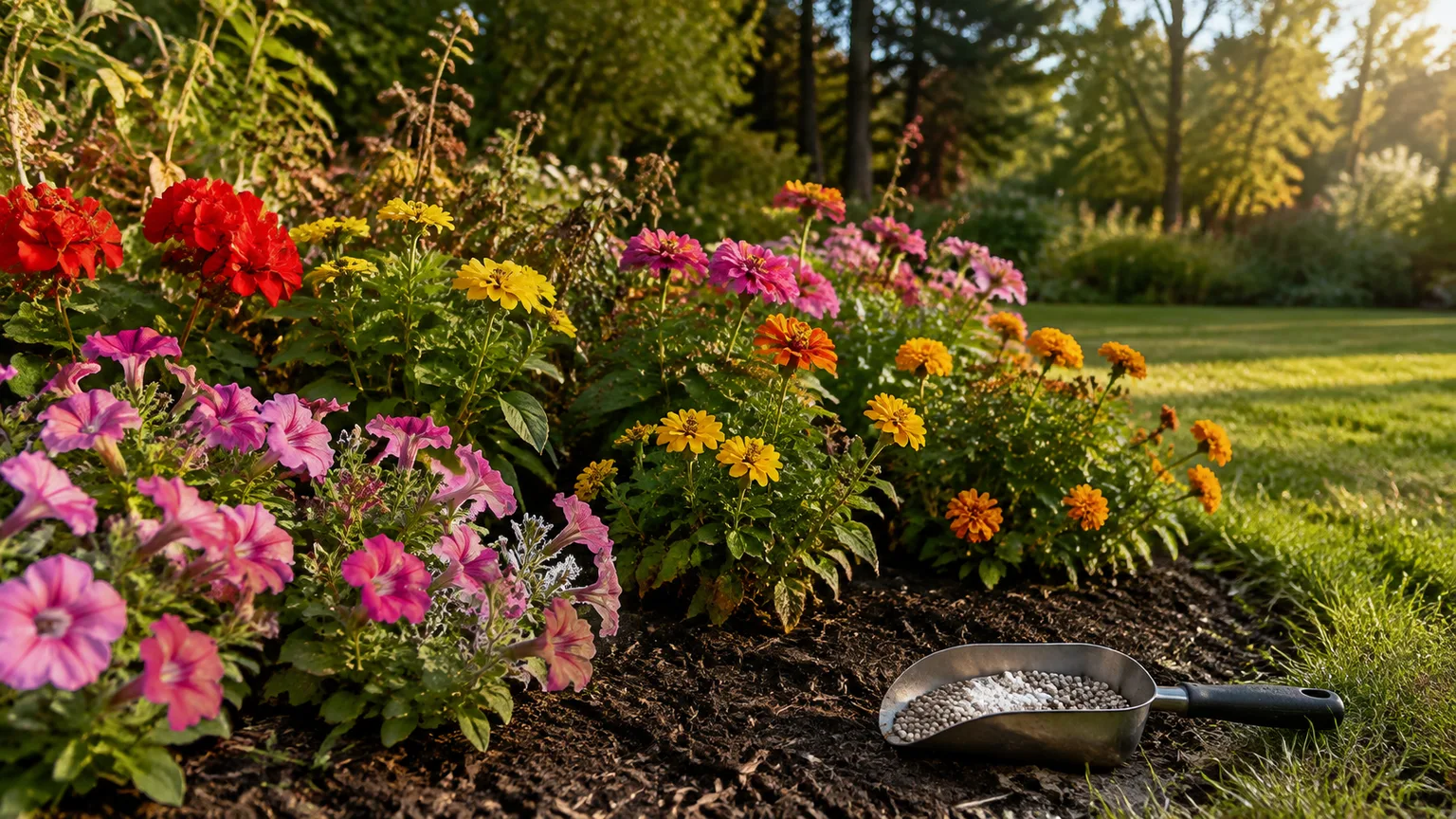
Dry organic fertilizer is best when you want slower nutrient release and are improving a bed over the growing season. Its nutrients must be processed by soil organisms before plants can use much of them, so soil temperature and moisture matter. Organic does not mean harmless in any amount: a natural source can still add excess nutrients, smell attractive to animals, or burn roots if concentrated against them.
Controlled-release granules are best when labor and consistency matter, especially in containers. They offer a buffer against one large soluble dose, not immunity from overapplication. The product’s release window can change with temperature, irrigation, media, and rate, which is why the manufacturer’s directions and a seasonal check matter more than a sticker that says “feeds for months.”
Organic versus synthetic fertilizer: the useful difference
The most useful distinction is not “natural good, synthetic bad.” It is how the nutrients become available, how concentrated the product is, and what your soil already contains. Commercial organic fertilizers often start with plant, animal, or mineral materials that soil organisms break down. Synthetic fertilizers generally supply soluble mineral salts that are available without that biological conversion.
Penn State’s soil-fertility overview makes the key point: once a nutrient is in a plant-available form, the plant uses it according to its chemistry, not according to the marketing story about its origin. Organics can support a broader soil-management strategy and release more slowly; synthetics can be precise and fast. Each can be misused.
Choose organic when you prefer approved organic inputs, accept slower response, and want a bed program that includes organic matter management. Choose synthetic or water-soluble when a soil report calls for a precise, immediately available amount and you can measure accurately. Choose neither when the real need is drainage, light, pH correction, pest control, or recovery from root damage.
How to apply fertilizer without burning plants
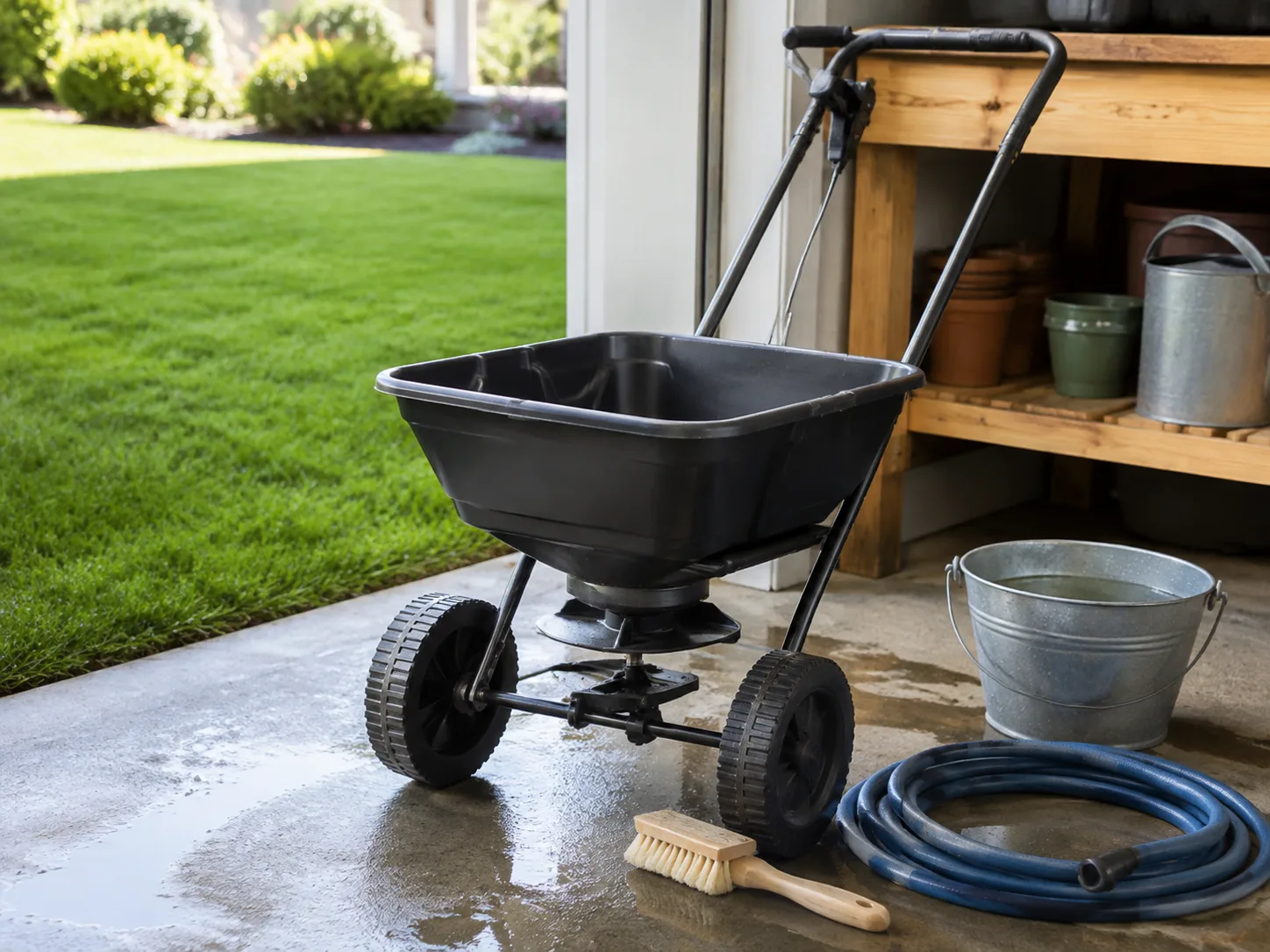
The safest application sequence is simple:
- Identify the plant, measure the area or pot, and read the current label.
- Check that the plant is actively growing and adequately watered, not wilted or waterlogged.
- Measure the product with the supplied tool or a dedicated scale; do not estimate by eye.
- Keep granules away from stems and foliage, and distribute them over the intended root zone.
- Dilute liquids exactly as directed; stronger is not a shortcut.
- Water after dry application when the label calls for it, and empty saucers under containers.
- Record the date, product, rate, and area so you do not accidentally double-feed.
Avoid fertilizer burn and salt buildup
Fertilizer burn is usually a concentration problem: too much salt near roots, too strong a liquid solution, dry roots exposed to fertilizer, or repeated applications before the last dose has moved or been used. Brown leaf edges, sudden wilt despite wet soil, a white crust on media, and declining roots can all justify stopping fertilizer while you investigate. They do not prove fertilizer burn by themselves; drought, poor water quality, root rot, and pests can look similar.
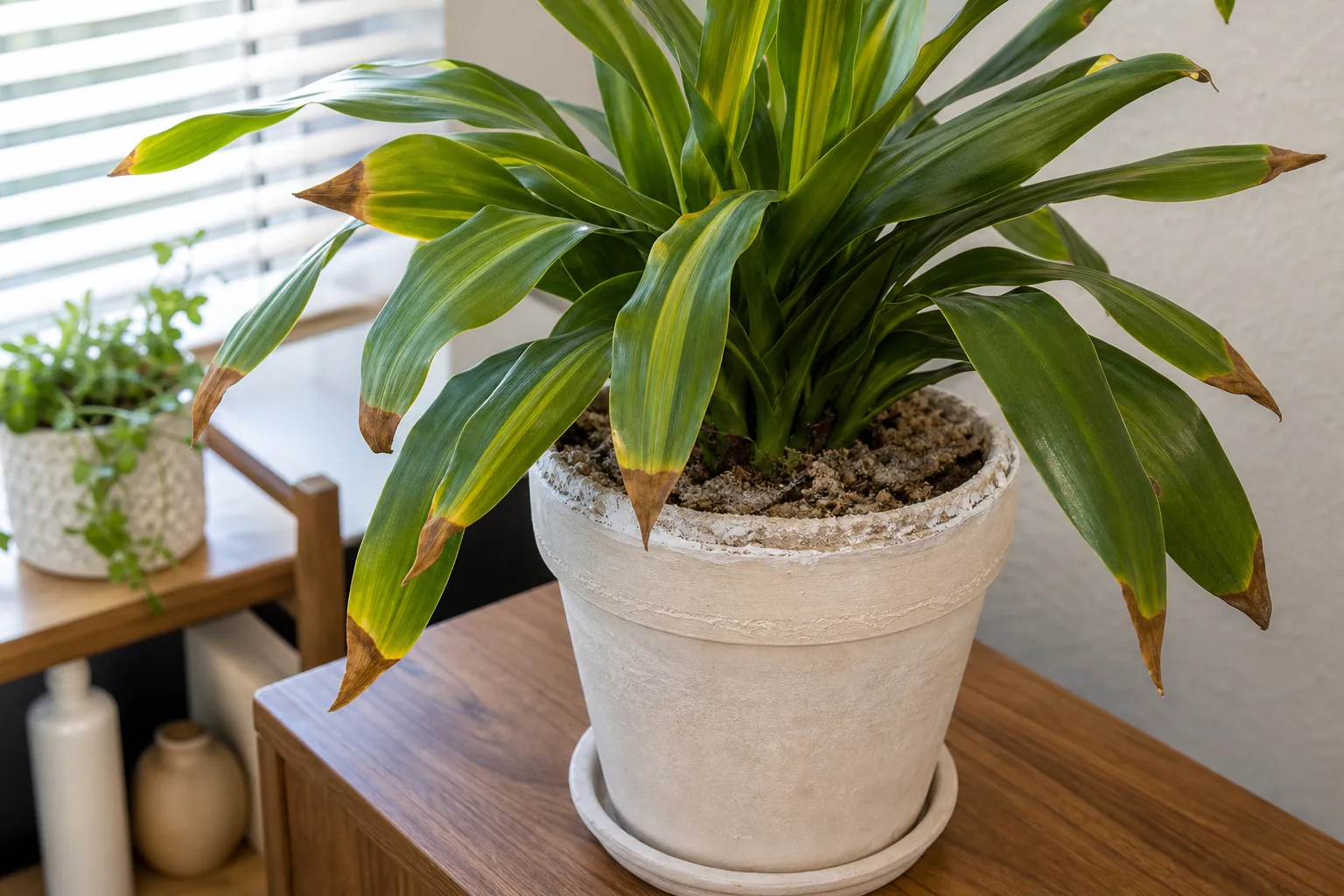
For a container plant with suspected salt buildup, pause feeding, check drainage, and flush the pot thoroughly with plain water if the plant and container can safely drain. Do not leave it standing in the runoff. Bob Vila’s houseplant guidance similarly emphasizes following rates, adjusting frequency to active growth, and watching for brown margins, dropped leaves, and wilting after overfeeding.
For lawns and beds, the equivalent cleanup is prevention: calibrate the spreader, avoid application before heavy rain, keep granules off hard surfaces, and respect local nutrient rules. Do not try to “wash away” a large outdoor overapplication into a storm drain. If the spill is substantial, follow the product’s safety information and ask a local extension office or environmental agency how to handle it.
When to fertilize—and when to wait
For most outdoor plants, fertilize during active growth and use the crop’s season rather than a universal spring date. A perennial beginning new growth may use nutrients in spring; a cool-season crop may have a different schedule; a tree entering drought stress should not be pushed with fertilizer. Always make the timing subordinate to the label, local climate, and soil report.
For houseplants, spring and summer are common feeding seasons, but indoor light changes the rule. A plant under strong grow lights may continue growing in winter, while a plant in low light should receive little or no fertilizer. Feed after watering or when the media is already slightly moist, never as a concentrated treatment on bone-dry roots. Reduce or stop when growth pauses, and restart only when new growth and conditions support it.
Do not fertilize a newly repotted plant simply because it looks quiet; fresh potting media may already contain nutrients and roots may be stressed. Do not fertilize a diseased, pest-ridden, severely wilted, or root-rotted plant until you have addressed the primary problem. A fertilizer can support recovery after roots resume function, but it cannot replace functioning roots.
What fertilizer cannot fix
Yellow leaves do not automatically mean nitrogen deficiency. Older leaves yellowing evenly may fit several explanations, while yellowing between veins, distorted new growth, brown tips, wilting in wet soil, or one-sided damage can point elsewhere. Before adding food, check light, watering depth, drainage, pests, temperature, pH, and the age of the leaf.
Fertilizer also cannot fix compacted soil, a pot without drainage, a plant placed in the wrong light, a lawn mowed too short, or a citrus tree with root rot. A nutrient test can tell you what is present in a sample, but it cannot replace observing the whole plant and site. If a deficiency is suspected in a valuable tree, edible crop, or plant with worsening symptoms, send a soil or tissue sample through your local extension service rather than stacking products.
If you do not have a soil test for a small, established bed, choose a conservative, crop-labeled product and apply the lowest label rate that fits the situation. Treat that as a temporary, measured program—not evidence that the garden needs fertilizer forever. Penn State recommends sampling lawns at about four inches and gardens at six to eight inches from multiple random spots, then mixing those cores into a representative sample.
Storage, runoff, and household safety
Keep fertilizer in its original, labeled container in a dry, secure place. Close resealable bags, prevent water from reaching dry granules, and do not store concentrate where children or pets can reach it. Wash measuring tools separately from food utensils, and avoid breathing dust or splashing concentrate; the product label and safety data sheet control the necessary protective equipment.
Be especially careful with combination products that also contain an insecticide, herbicide, or disease-control ingredient. Those products have additional crop, application, re-entry, and environmental restrictions and should not be treated as ordinary plant food. For edible plants, use only products whose current label permits that crop and follow the harvest interval if one is listed.
Finally, protect water. Never fertilize before a storm when runoff is likely, do not sweep granules into gutters, and leave untreated setbacks around ponds or streams when local guidance calls for them. The cheapest bag is not a bargain if half of its nutrients leave your property unused.
Conclusion
The best fertilizer is the one that matches the plant, soil, season, and level of attention you can give it. For a broad organic garden-bed routine, Espoma Plant-tone is a sensible starting point; for lower-maintenance containers, Osmocote Plus offers a controlled-release approach; for vegetables, Espoma Garden-tone or Dr. Earth Home Grown provides crop-specific directions; for fast measured feeding, Miracle-Gro Water Soluble All Purpose Plant Food is convenient; and citrus, turf, and other specialized jobs deserve their own labeled formulas.
Before buying, read the analysis, confirm the crop is on the label, and decide whether you need fast, slow, or controlled release. Before applying, test or diagnose when possible, measure the area, water responsibly, and record the dose. A modest amount used at the right time can help a plant; extra fertilizer used to compensate for a different problem usually creates another one.