Mango Propagation: Seed vs Grafting Guide
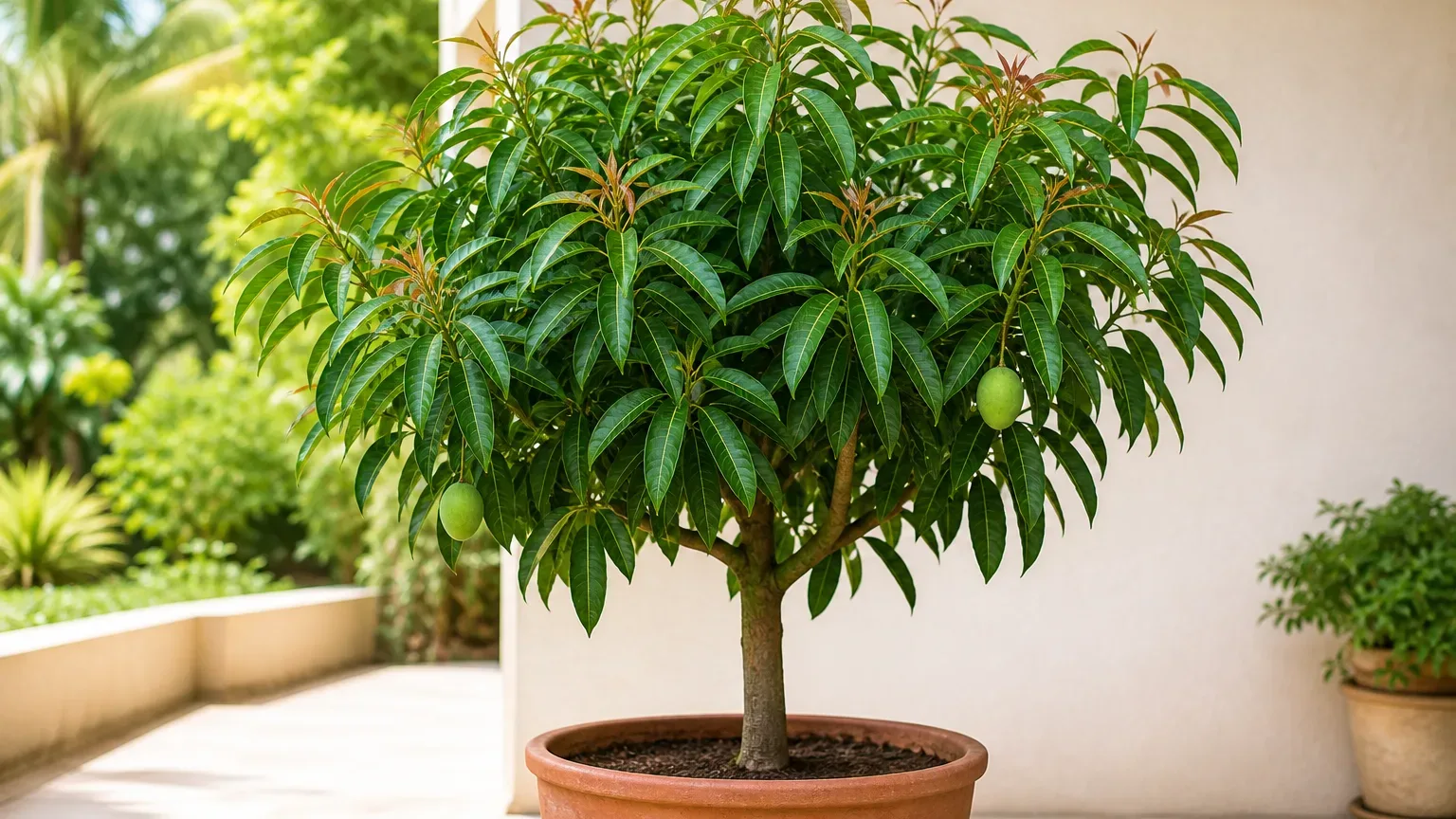
Mango Propagation: Seed vs Grafting Guide
Mango Propagation: Seed vs Grafting Guide
Mango propagation is a decision about what kind of tree you want, not just how to get a green shoot. Mangifera indica grows readily from a fresh stone in warm weather, but that seedling is often a genetic reshuffle of its parents. Named fruit quality, earlier bearing, and more manageable vigour usually come from a grafted plant, not from whatever embryo was inside last week’s fruit.
If your goal is a terrace or garden tree with predictable fruit, buy or make a healthy graft of a named cultivar. If your goal is a low-cost experiment, rootstock, or shade tree, seed is fine—as long as you accept uncertainty. Use this guide with the Mango care overview so placement, sun, and mature size are settled before you invest years in a seedling.
Choose the method that matches your goal
For true-to-type fruit of a named cultivar, use vegetative propagation: grafting or budding onto a seedling rootstock. UF/IFAS is explicit that monoembryonic varieties do not come true from seed and must be propagated vegetatively to obtain the same variety (UF/IFAS mango guide). In India, commercial planting material is commonly approach or epicotyl grafts of popular cultivars rather than chance seedlings (TNAU mango guidance).
For experimentation or rootstocks, sow fresh seed. Polyembryonic types can produce maternal-type seedlings and are widely used that way in the tropics, but you still cannot assume every shoot from a market fruit is a clone. For a home grower who only needs one good tree, purchasing a labelled grafted plant is usually faster and more reliable than mastering grafts from scratch.
Why seed-grown mango is genetically variable
A mango fruit holds one large stone with a woody husk around the seed. That seed is the product of flowering and fertilisation, not a miniature copy of the parent tree packed in flesh. California Rare Fruit Growers put the practical risk plainly: seedlings are a gamble, supermarket stones may have been chilled or treated until they are no longer viable, and a seed-grown tree may take three to six years to bloom and bear (CRFG mango fruit facts).
Even when germination succeeds, fruit flavour, fibre, season, disease response, and tree vigour can differ from the fruit you ate. That is why nursery labels and graft unions matter more than “this was a delicious mango.”
Monoembryonic vs polyembryonic seeds
Mango cultivars produce either monoembryonic or polyembryonic seeds. UF/IFAS explains the difference that drives home decisions: a monoembryonic seed contains one embryo that carries genes from both parents, so the seedling is a hybrid; a polyembryonic seed contains more than one embryo, and most of those embryos are genetically identical to the mother tree (UF/IFAS mango guide). Indian-type cultivars are typically monoembryonic; Indochinese types are typically polyembryonic.
Two caveats keep this from becoming false certainty. First, CRFG notes that it is impossible to distinguish true-to-type (nucellar) seedlings from zygotic seedlings from the same polyembryonic fruit by appearance alone. Second, “comes true” describes maternal clonal embryos—not a guarantee that every market fruit was correctly identified, properly pollinated under controlled conditions, or free of mixed nursery stock. When fruit identity matters, grafting a known scion remains the safer path.
How to grow mango from seed
Treat seed starting as a warm-season nursery project. Mango is a tropical tree: cool nights, soggy mix, and stale seed are common reasons stones rot instead of sprouting. Plan for a deep container, strong outdoor light after emergence, and eventual space for a large evergreen tree unless you will graft onto the seedling and prune for size.
Prepare and sow the stone
- Use seed from a fully ripe, healthy fruit. Avoid stones that look grey, mouldy, or long-chilled; CRFG flags supermarket fruit that has been sterilised or over-chilled as a frequent failure source.
- Clean away all pulp. Many growers carefully open the woody husk and plant the fresh seed before it dries out; CRFG recommends planting with the hump at soil level.
- Sow in a clean, freely draining nursery mix in a deep pot with an open drainage hole. Keep the seed shallowly covered according to its orientation, water thoroughly once, and let excess drain.
- If several shoots emerge from a polyembryonic seed, separate them carefully while young so each keeps cotyledon tissue where possible—CRFG advises separating multiple seedlings as soon as they have sprouted.
Expect germination in roughly two to four weeks under warm conditions with bottom heat when available. Do not discard a pot after a few cool days; give a full warm interval before deciding the stone failed.
Germination care and damping-off prevention
Keep the medium evenly moist, never waterlogged, in bright warmth with airflow. Damping-off fungi attack germinating seed and young stems especially when containers stay wet and sanitation is poor (NC State damping-off guidance). Use fresh soilless mix, wash reused pots, avoid thick overcrowding, and never leave trays sitting in runoff.
Once the first flush hardens, move seedlings into strong outdoor light gradually. A mango seedling that spends months in a dim room becomes leggy and soft, then burns when dropped onto a hot terrace. Coordinate early watering with the Mango watering guide and choose an open mix from the Mango soil guide before the taproot fills a tiny nursery bag.
Grafting and other vegetative methods
Vegetative propagation is how named mango cultivars are multiplied. The scion supplies the fruiting wood; the seedling rootstock supplies roots. UF/IFAS lists veneer grafting, cleft grafting, and chip budding as the most common successful methods in Florida, done most reliably in warm weather on young, vigorously growing seedling stocks with scion wood from leafy terminals or mature terminals with swelling buds (UF/IFAS mango guide).
Home growers without grafting skill should buy finished nursery grafts rather than risk killing both stock and scion. When you do graft, align cambium carefully, keep the union clean and snug, shade the fresh union from scorching sun, and remove rootstock sprouts that appear below the graft.
Approach, epicotyl, veneer and cleft grafts
In India, TNAU recommends approach and epicotyl grafts as planting material for orchard establishment and documents softwood or cleft grafting when top-working older trees onto emerging shoots (TNAU mango guidance). Epicotyl grafting uses a very young seedling shortly after germination; approach grafting joins a scion shoot to a stock while both remain attached to their parent plants until the union takes. Veneer and cleft grafts are the flexible field methods once stocks are pencil-thick and actively growing.
Whatever method you use, plant so the graft union stays above the soil line—TNAU specifies about 15 cm above ground after planting—so the scion does not root independently and the rootstock does not bury and sucker unnoticed.
Rootstocks and top-working
Most mango varieties are grafted onto polyembryonic rootstocks because seedlings are relatively uniform and vigorous; UF/IFAS cites stocks such as ‘Turpentine’ and unnamed criollo types that tolerate high-pH soils in Florida conditions. Local nurseries in India typically raise seedling stocks from regionally adapted seed sources rather than importing Florida rootstock names, but the principle is the same: a healthy, free-draining seedling under a named scion.
Top-working replaces the canopy of an undesirable tree with a preferred cultivar. TNAU describes beheading in July–August, allowing new shoots, then cleft or softwood grafting in September–October with scions such as Alphonso or Banganapalli. UF/IFAS similarly notes veneer-grafting desired scions onto trunks, limbs, or shoots after cutback. Leave some leafed branches when dehorning a large tree so the plant can feed itself while unions establish.
Air layering and cuttings have limited roles
Do not treat mango like a softwood houseplant that roots easily from stem pieces. CRFG reports that cuttings are rarely successful, and air layering (marcottage) is feasible mainly in humid climates or greenhouses but yields few plants. UF/IFAS found air layering of ‘Tommy Atkins’ possible with a specialised 2% NAA treatment, with roots in about 10–12 weeks, but the method failed on other varieties, is not used commercially, and has not been proven for home-landscape performance.
For home growers, that means air layers and cuttings are optional experiments—not the default path to a fruiting cultivar. Put your effort into a sound graft or a purchased named plant.
Wear PPE around mango sap during propagation
Mango belongs to the cashew family, Anacardiaceae, alongside poison ivy and related contact allergens. The most common mango hypersensitivity reaction discussed in clinical reviews is contact dermatitis, with alk(en)yl catechols and/or alk(en)yl resorcinols long suspected as sensitising substances; dermatitis can appear even on first mango exposure after prior sensitisation to urushiol-containing plants (PubMed mango contact allergy review). CRFG also warns that sap and pruning debris can cause severe dermatitis similar to poison oak and advises against burning litter.
During seed cleaning, grafting, top-working, and any work that releases sap from stems, peel, or leaves:
- Wear gloves and long sleeves; add eye protection when cutting woody wood overhead.
- Avoid touching your face or eyes mid-task.
- Wash exposed skin and tools with soap and water after handling.
- Let someone else peel fruit or handle sap-heavy debris if you already react to poison ivy, poison oak, or mango.
- Do not burn mango prunings where smoke could contact skin or lungs.
This is handling guidance, not medical advice. Seek clinical care for significant rash, swelling, or breathing difficulty.
Aftercare for seedlings and young grafts
After germination or a successful graft take, the plant still needs full outdoor sun, warmth, and a root zone that drains freely. Water thoroughly, then wait for the upper mix to begin drying; do not keep a young mango permanently wet because “it is tropical.” Move pot size up gradually using the Mango repotting guide, and delay hard fertiliser pushes until roots occupy the container—see the Mango fertilizer guide.
UF/IFAS reports that grafted trees may begin bearing in three to five years after planting, while climate, cultivar, nutrition, pruning, and bloom weather still decide whether a home crop arrives on schedule. Seedlings may bloom in a similar multi-year window but with unknown fruit. Train a low, branched framework early, and use the Mango pruning guide so you do not remove terminal flowering wood later by accident.
Common mango propagation failures
Rotting stones usually mean old or chilled seed, closed husks left wet too long, or saturated mix. Collapsed seedlings after emergence often point to damping-off or burial of the stem in wet media. Graft failure follows from dry scions, misaligned cambium, cool weather, or sun-scorch on an unprotected union. Rootstock takeover happens when sprouts below the union are ignored until they outgrow the scion. Huge, disappointing fruit trees are the predictable outcome of planting monoembryonic seed and expecting supermarket fruit quality.
Fix the cause rather than adding tonic sprays. Improve sanitation and drainage for nursery losses, remake grafts with fresh wood in warm weather, and replace a chance seedling with a named graft when fruit quality is the real goal.
When to use this page vs other Mango guides
Use this propagation page to decide between seed and vegetative methods, to sow or graft correctly, and to handle sap safely while you multiply plants. Use the Mango overview to decide whether the species fits your climate and space. Use Mango light when a young tree etiolates indoors or burns after a sudden move to terrace sun, and Mango watering when nursery pots stay wet or dry out too fast.
Use Mango soil and Mango repotting when the root zone—not the propagation method—is limiting establishment. Use Mango fertilizer only after the plant is rooted and growing, and Mango pruning once training cuts matter more than getting a living plant in the first place.
Related Mango guides
- Mango care overview — species fit, size, and safety context
- Mango light needs — outdoor sun and acclimation for young plants
- How to water mango — moisture checks for nursery pots and new grafts
- Best soil for mango — drainage for seedlings and containers
- Mango fertilizer — feeding after roots establish
- Repotting mango — potting on without wrecking young roots
- Pruning mango — framework training after propagation succeeds
Conclusion
Propagating mango well means matching method to outcome. Seed is excellent for learning, rootstocks, and polyembryonic maternal-type experiments, but monoembryonic stones and unknown market fruit will not reliably recreate the mango you liked. Grafting—approach, epicotyl, veneer, cleft, or a purchased nursery union—is how named cultivars stay true, and it is the practical choice for most home fruit trees in India and other warm climates. Wear gloves and sleeves whenever sap flows, keep nursery media airy and clean, and give every new plant full sun and free drainage so the propagation work is not wasted in the first monsoon.