Overwatering on Mango: Soggy-Soil Checks & Fixes
Quick answer
Stop all watering and check whether the soil is still wet below the surface. On mango, yellowing leaves plus soggy mix mean the roots are suffocating, so let the root zone dry and fix drainage before doing anything else.
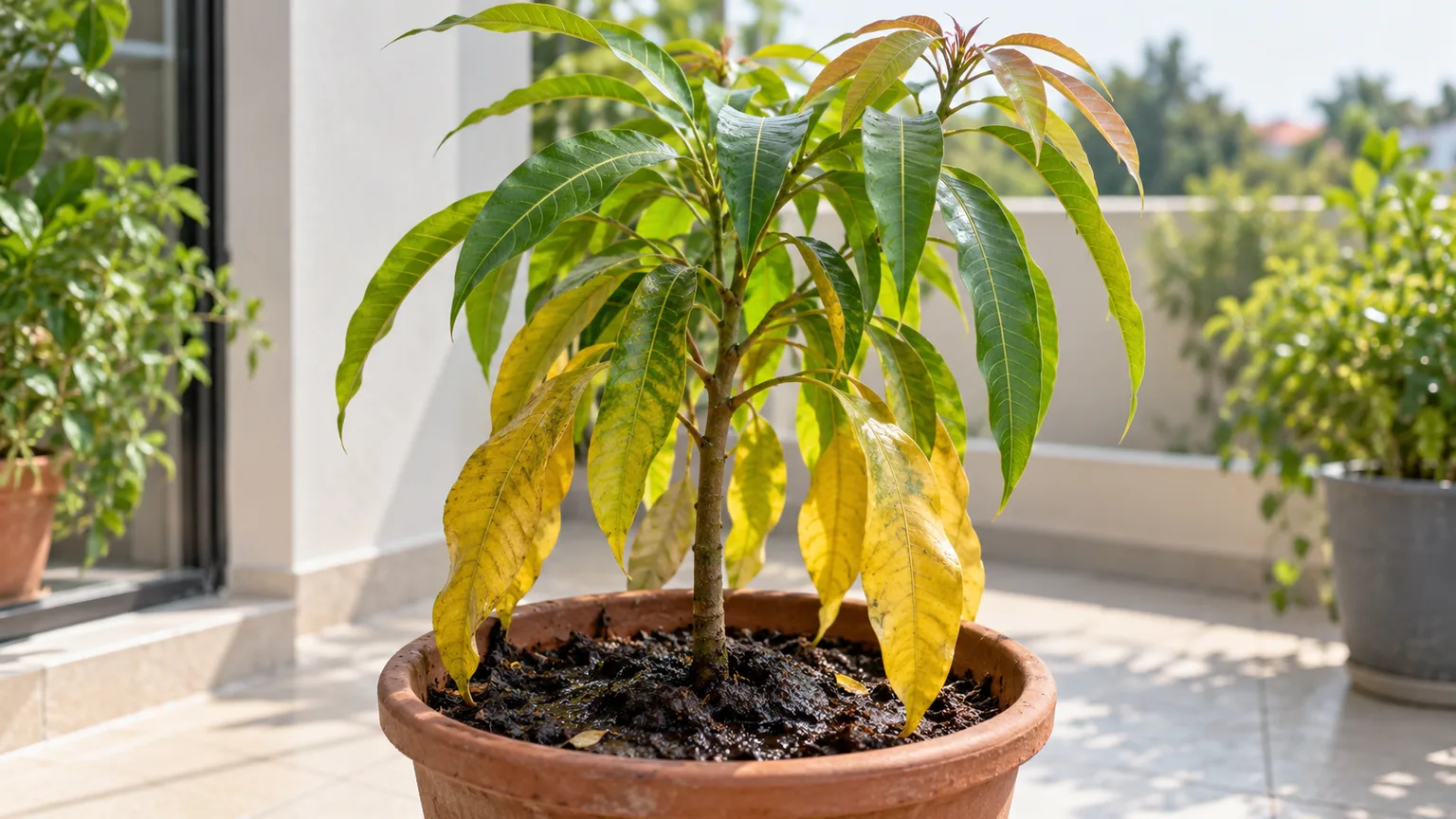
Overwatering on Mango: Causes, Checks & Fixes
This guide covers overwatering on Mango. See also the general Overwatering guide, watering, and light pages for this plant.
Overwatering on Mango: Causes, Checks & Fixes
Quick answer
Stop all watering. That is the whole first fix. On mango (Mangifera indica), yellow soft leaves on wet soil mean the roots cannot breathe, and another drink only deepens the damage. For how chronic wet mix damages roots in general, see our overwatering guide. On mango, the pattern usually shows up as older leaves yellowing while the pot feels heavy or the ground stays muddy days after rain.
Once watering stops, check drainage and the root zone before you prune, feed, or repot anything. Mango is a full-sun tropical fruit tree rather than a thirsty foliage houseplant, so its roots expect a soak followed by real drying air — background on that rhythm is in the Mango overview.
What overwatering looks like on Mango
An overwatered mango drops its older leaves first. Foliage turns pale yellow, feels soft rather than crisp, and falls while still limp — sometimes green leaves drop too. New flushes stall, and shoot tips may feel weak instead of firm and woody. Around the base you will find the giveaway: soil that stays soggy days after watering, a pot that feels heavy, standing runoff in the saucer, or a sour musty smell from the mix. White mold on the surface or fungus gnats hovering after watering both point the same way.
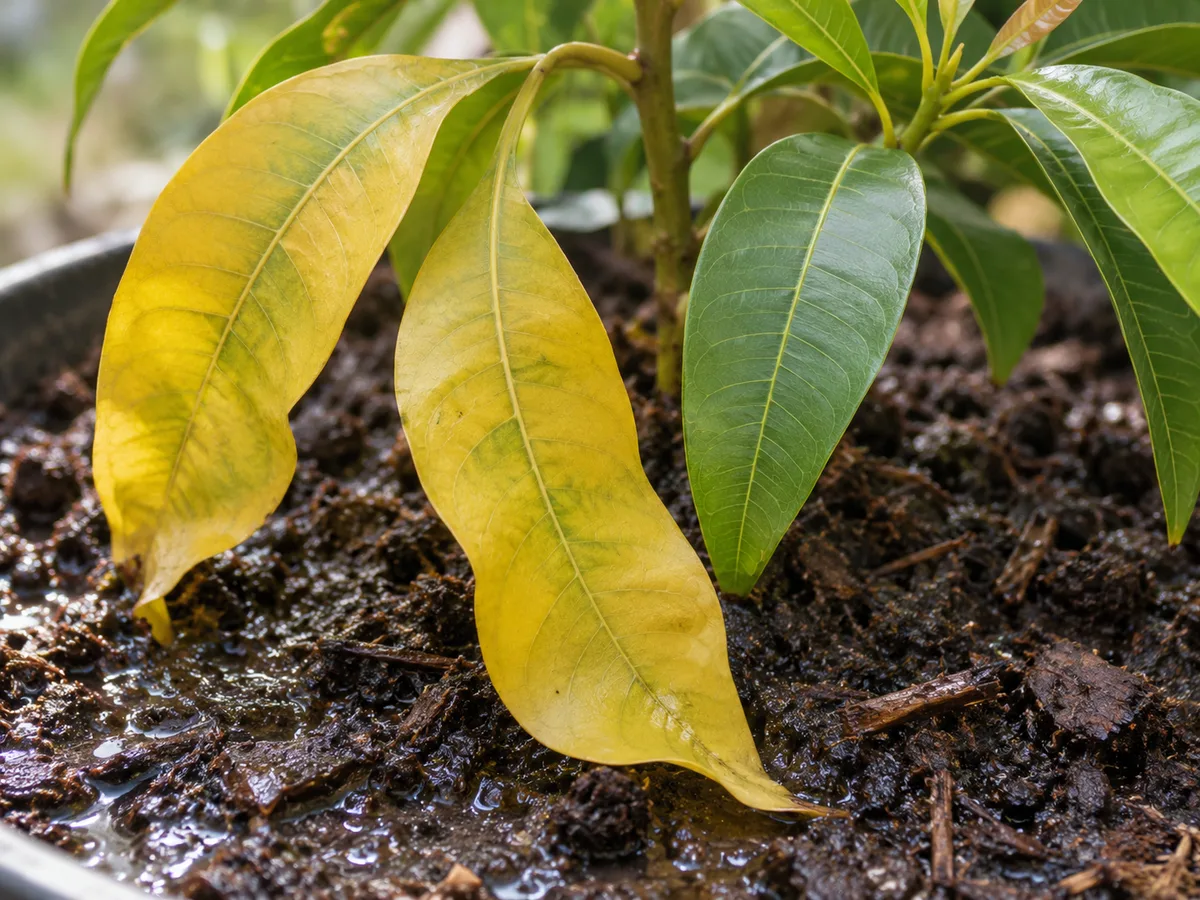
Yellowing limp mango foliage with a dark, saturated soil surface — the wet-soil plus soft-yellow-leaf pattern that separates overwatering from dry stress.
The confusing case is wilting on wet soil. A mango with drowned roots cannot move water upward, so the canopy droops exactly as if it were thirsty. The soil test settles it: dry and cracked means underwatering, while damp and heavy means too much water. Hold the hose either way until you know which side you are on.
Terrace pots and monsoon waterlogging
Container mangoes on Indian terraces and balconies are the classic overwatering victims. A large pot catches every monsoon shower, the saucer underneath stays full, and the drainage hole silts shut — so the tree sits in a private puddle for weeks. In the ground, the equivalent is a low garden hollow where rain collects after every storm.
Walk out during or just after rain and look at where water goes. If the saucer is brimming, if the pot sits flat in a puddle, or if the planting hollow holds water while the rest of the garden drains, you have found the cause. Raise pots on feet or bricks, empty saucers the same day, and clear blocked holes with a stick. For garden trees in flood-prone spots, extension guidance recommends to plant the tree on a large hill or mound of native soil 2 to 3 ft high rather than in the hollow itself. Mango tolerates an occasional soaking but will not perform well in poorly drained soils, and a tree that floods every monsoon never gets the dry cycle its roots need. The Mango soil guide shows the open mix that lets terrace pots drain between showers.
Flowering-season watering and wet panicles
Mango has one season when extra water actively costs you fruit. During bloom, routine heavy irrigation works against pollination and keeps flower panicles damp — exactly the conditions that invite anthracnose and poor fruit set. UF/IFAS seasonal guidance is explicit: Reduce watering during flowering to encourage pollination and early fruit set.
So a mango that yellows and sheds blooms in spring while you water daily is not hungry — it is being kept too wet at the worst moment. Ease off while flowers are open, water at soil level rather than overhead, and resume deep watering only once fruit is sizing up. If blossoms blacken and collapse in humid weather rather than just dropping, that leans toward disease pressure on wet panicles, not simple overwatering, and deserves its own diagnosis.
Graft union burial and trunk-flare depth
Most home mangoes are grafted, and the graft line matters for water damage. If the union sits at or below the soil surface — common after enthusiastic mulching or repotting too deep — bark stays damp, fungi get a foothold, and the base can darken even when the rest of the care looks right. Planting guidance for mango is to keep the graft union a few inches above the soil surface, never buried.
Scrape back mulch and mix until you find the flare where trunk widens into roots. Mulch should ring the tree, never touch the bark. A mango whose base blackens from the soil line upward while the canopy yellows has moved past simple overwatering into trunk or root decay — compare with root rot on Mango the same day.
How to confirm the cause
Work through these checks in order before changing anything:
- Soil at depth — Push a finger 5–8 cm into the mix or lift the pot. Damp and heavy days after watering confirms excess water; dry and light points to underwatering instead.
- Drainage path — Are pot holes open, is the saucer empty, and does garden water flow away from the trunk? Blocked drainage plus wet soil is a diagnosis, not a coincidence.
- Planting depth — Is the graft union visible above the soil, or buried under mix and mulch? Buried unions rot first.
- Season and stage — Is the tree flowering, fruiting, or sitting through monsoon? Bloom plus daily irrigation, or monsoon plus a full saucer, explains a lot.
- Roots and smell — For potted trees, slide the root ball out and sniff. Firm pale roots mean early trouble; dark mushy roots with a sour smell mean rot has started and this page alone is no longer enough.
Yellowing leaves plus soggy mix with stalled growth is the textbook overwatered-mango pattern. If instead leaves are crisp with brown edges on dry soil, or the whole canopy droops on a light pot, switch to the underwatering guide.
Symptom lookalike comparison
| Symptom pattern | Overwatering (this page) | Underwatering | Root rot |
|---|---|---|---|
| Soil 5–8 cm down | Wet for days, heavy pot | Bone dry, light pot | Often wet, may smell sour |
| Leaf feel | Soft yellow limp leaves | Crisp edges, inward curl | Rapid yellow and black, dieback |
| Wilting | Yes, with wet soil | Yes, with dry soil | Yes, worsening despite moisture |
| Base of trunk | Normal until advanced | Normal | Darkening, soft bark |
| First action | Stop water; fix drainage | Deep soak until runoff | Unpot, trim rot, fresh mix |
The first fix to try
Stop all watering until the top 5–8 cm of soil dries and the pot feels noticeably lighter. Do not feed, do not repot, and do not prune the canopy on the same day — one correction lets you read the tree’s response. Move a potted tree under cover so monsoon rain stops re-soaking it, and tip out any standing saucer water.
If foliage perks up and soil starts cycling between moist and dry within a week or two, you caught it early. Resume with the soak-and-dry rhythm in the Mango watering guide: water deeply, let excess drain fully, and skip irrigation while dependable rain does the job. Young trees in dry heat may need weekly soaking, but mature trees should be watered only during severe drought conditions — when in doubt, check the soil rather than the calendar.
Step-by-step recovery for soggy roots
When soil stays swampy or roots already smell off, stopping water is not enough. Work through these steps:
- Expose the root zone — For pots, slide the tree out and let the root ball breathe in shade with airflow. For garden trees, channel standing water away and rake wet mulch back from the trunk.
- Trim only dead roots — Cut dark mushy roots back to firm pale tissue with clean sharp pruners, sterilizing between cuts. Leave every firm root intact.
- Repot or replant for drainage — Potted trees go into fresh open mix in a pot with clear holes, planted no deeper than before. Garden trees in hollows get lifted onto a mound when the season allows.
- Reduce the canopy load — If you removed a lot of root, prune back roughly a fifth of weak or dead top growth so the smaller root system can support what remains.
- Wait on water and feed — Water lightly only once the mix dries at depth, and hold all fertilizer until steady new flushes appear. Salts on damaged roots set recovery back, and practical mango rescue notes agree to hold off feeding until consistent new growth shows.
Recovery timeline and what to watch
Mild cases — yellow lower leaves but firm trunk and pale roots — usually stabilize within two to four weeks once drainage is fixed. Old yellow leaves will keep falling; that is normal shedding of ruined tissue, not failure. Watch for firm new flushes and soil that dries on a predictable rhythm.
Moderate cases with trimmed roots need a full growing season before you can call the tree safe. Expect slow regrowth while roots rebuild, and keep irrigation conservative through the next monsoon. Worsening signs — spreading trunk darkening, branch dieback from the tips, or continued wilt on merely moist soil — mean decay is advancing past what drying alone can fix. Move to root rot on Mango or get a local plant-disease diagnosis rather than waiting another season.
Mistakes to avoid
Do not water because drooping leaves “look thirsty” without touching the soil — wet-soil wilt is the defining overwatering trap, and it overlaps with drooping leaves and wilting from root damage. Do not pile mulch against the trunk or bury the graft union while top-dressing. Do not repot into a much larger container to “give roots room”; extra wet mix around a small root ball stays soggy longer.
Do not fertilize a stressed mango hoping to push green growth back. Damaged roots cannot use the salts, and excess nitrogen on a mature tree buys leafy growth at the expense of flowering. And do not overhead-water a blooming tree to “help fruit set” — wet panicles and daily irrigation during bloom do the opposite.
How to prevent it next time
Give mango the drainage it evolved for: well-drained soil with a pH of 5.5-7.5, a structurally open potting mix, pots with large clear holes, and garden sites that never hold puddles. Water on soil evidence — finger test 5–8 cm down, pot weight, recent rain — not on weekdays. Saturated ground pushes out the air roots need to breathe, so every routine should end with excess water escaping freely.
Seasonal rhythm matters as much as volume: soak young trees through hot dry spells, back off while monsoon rain is dependable, keep bloom-time irrigation light, and leave mature landscape trees unirrigated outside real drought. The Mango watering guide, Mango soil guide, and Mango light guide together set the sun, air, and drainage baseline that makes overwatering unlikely.
When to worry
Treat it as urgent if the trunk base darkens, whole branches die back, the canopy wilts on wet soil for more than a few days, or unpotted roots are black and sour. Those are rot-escalation signs, not a scheduling slip — open root rot on Mango the same day. Slow yellowing of a few older leaves on soil that still dries normally can wait for a routine adjustment. When mold spreads across the surface alongside the wetness, compare with mold on soil on Mango as well.
When to use this page vs other Mango guides
- Mango watering guide — routine soak-and-dry rhythm and seasonal schedules; start here if you are unsure which direction the problem runs.
- Mango problems hub — browse every documented mango issue when symptoms do not fit one page.
- Root Rot on Mango — use when roots are mushy, sour, or the trunk base darkens; a different severity level from plain overwatering.
- Yellow Leaves on Mango — use when yellowing dominates but soil moisture looks normal; covers nutrient and light causes.
- Wilting on Mango — use when droop is the main symptom and you need to separate wet-soil wilt from dry-soil wilt.
Related Mango guides
- Mango overview
- Mango watering
- Mango soil
- Mango light
- Mango fertilizer
- Root Rot on Mango
- Yellow Leaves on Mango
- Wilting on Mango
- Drooping Leaves on Mango
- Mold on Soil on Mango
- Fungus Gnats on Mango
- Underwatering on Mango
- Mango problems
Related tool
Use the Plant Watering Calculator to narrow causes for overwatering on this plant before changing multiple variables at once.