Mold on Soil on Mango: Causes, Checks & Fixes
Quick answer
White or gray mold on mango soil is usually harmless surface fungus feeding on damp organic mix, not a disease on the tree itself. Scrape off the top layer, let the top 3-5 cm dry before watering again, and move the pot toward full sun with open drainage.
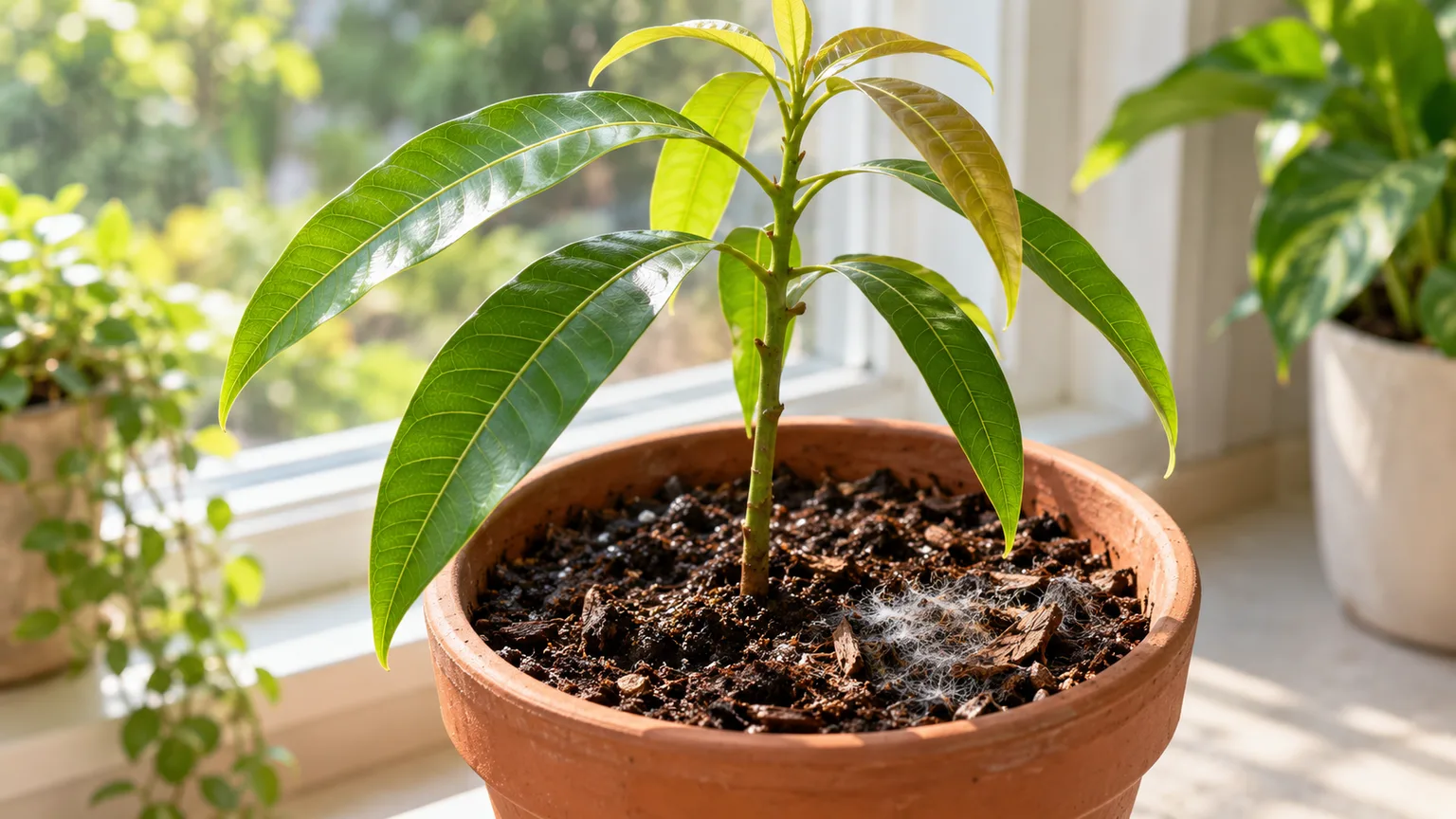
Mold on Soil on Mango: Causes, Checks & Fixes
This guide covers mold on soil on Mango. See also the general Mold on Soil guide, watering, and light pages for this plant.
Mold on Soil on Mango: Causes, Checks & Fixes
Quick answer
Your mango (Mangifera indica) has white or gray fuzz on the potting mix and you need to know whether to scrape, repot, or change watering. Start with what makes mango different from a typical houseplant: it is a full-sun tropical fruit tree whose roots need well-drained soil and full sun, and UF/IFAS warns that mango trees perform poorly in poorly drained soils.
First step: scrape off the top 1-2 cm of moldy mix and stop watering until the top 3-5 cm is dry. The fuzz itself is usually saprophytic fungi feeding on damp organic matter, not an infection of the tree. The real fix is letting the surface dry in bright sun with open drainage, not spraying the mold. For the general mechanics of soil mold on any houseplant, see our mold on soil guide — on mango, the pattern almost always traces back to a dim spot plus a wet surface.
Is this surface mold or root-zone decay?
Use this table before repotting or spraying anything:
| What you see | Likely cause | Urgency | First action |
|---|---|---|---|
| White/gray fuzz on soil only; firm stem, normal flushes | Harmless surface fungus on wet mix | Low | Scrape top layer → dry to 3-5 cm → more sun |
| Mold + tiny dark flies at every watering | Same wet soil breeding fungus gnats | Medium | Full dry-down; sticky traps; see gnat guide |
| Mold returns within days of scraping | Chronic overwatering or dense mix | Medium | Fix watering rhythm and gritty soil blend |
| Yellow leaves while mix stays wet; sour smell; soft dark roots | Advancing root rot | High — same day | Inspect roots; trim decay; repot into draining mix |
| White powder on leaves or flower panicles, not the soil | Mango powdery mildew, a different fungus | Medium | Do not confuse with soil mold; check disease guidance |
Mango seedlings can look fine above ground while the root zone stays saturated, so treat returning mold as a drainage and light problem even when the leaves still look green.
When to use this page vs other mango guides
This page is the symptom-first entry for fuzzy growth on a mango pot. Use it to decide what the surface growth means and which single action comes first.
- Overwatering — go here for the full dry-down rhythm and wet-soil leaf symptoms
- Root rot — go here when roots are soft and dark or the pot smells sour
- Fungus gnats — go here when small flies swarm alongside the mold
- Watering guide — go here for the long-term 3-5 cm check routine after mold clears
- Soil guide — go here for the 50/25/25 container blend that keeps mango surfaces dry
- Light guide — go here when a dim indoor corner keeps the pot wet for days
- Repotting guide — go here when a root-bound or oversized pot needs mix refresh
What mold on soil looks like on mango
Healthy mango containers should have a dry, crumbly surface between waterings. Mold shows up differently:
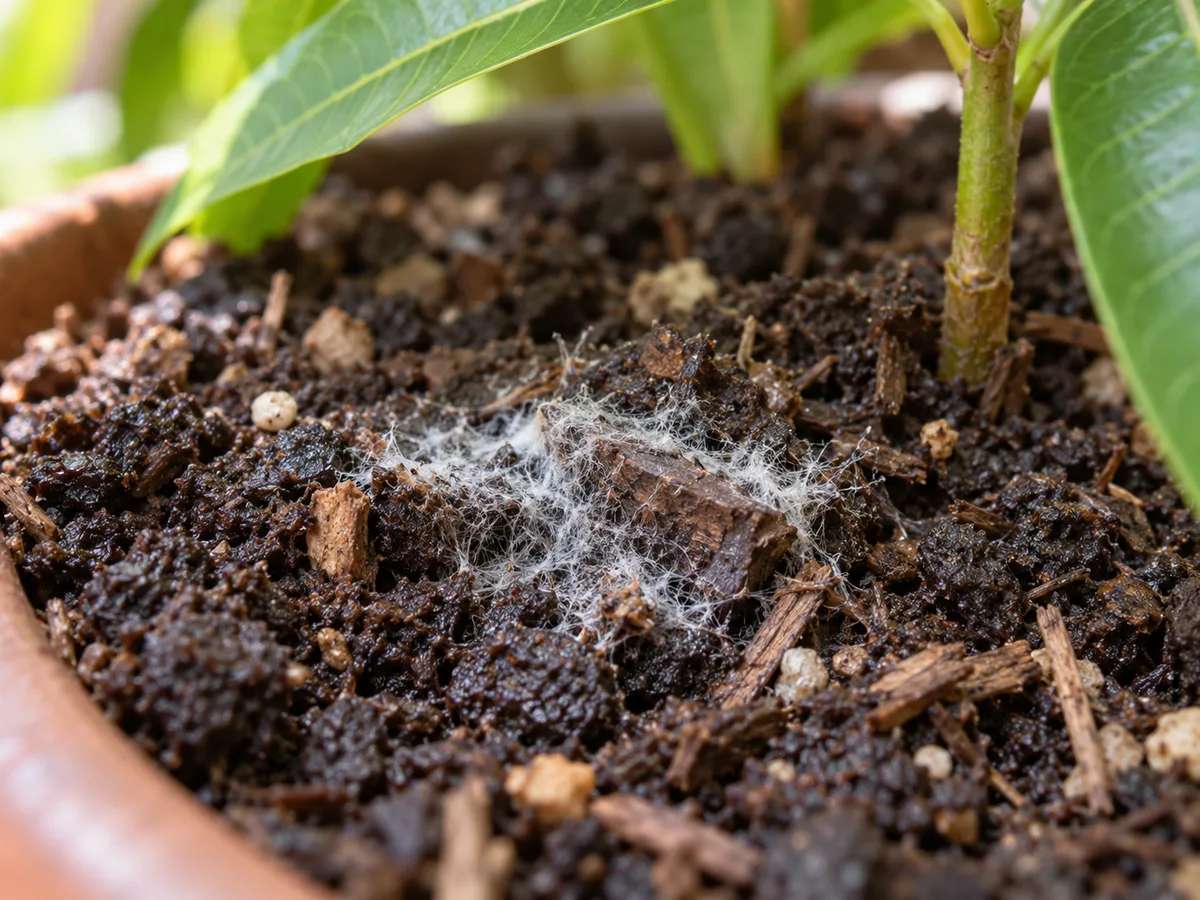
White fuzzy threads across the top of a mango pot — compare with dry, crumbly mix on a healthy container.
Typical harmless surface mold:
- White, gray, or pale tan fuzzy patches or cobwebby threads across the top of the mix
- Growth concentrated around fallen leaves, bark pieces, or compost-rich pockets
- Surface still cool and damp to the touch days after watering
- Stems firm, bark intact, and newest leaf flushes emerging normally
Signs the wetness behind the mold is hurting the tree:
- Mold returns within days of scraping
- Pot feels heavy long after the last watering
- Tiny dark flies rise when you disturb the surface
- Leaves yellow while the mix stays wet, or new flushes stall and drop
- Sour or swampy smell from drainage holes, distinct from normal earthy mix
Because mango grows in flushes, watch the newest flush: clean new leaves during dry-down mean recovery, while aborted or blackened flush tips in wet mix mean the roots need attention now.
Why mango gets mold on soil
Mango evolved for open tropical sun with fast-draining ground, not for a shaded pot with a constantly damp surface. Container seedlings are especially prone because nursery peat holds surface moisture long after the top looks watered lightly.
A dim indoor corner that never dries the surface. Mango needs at least 6-8 hours of direct sun. Indoors behind glass or several feet from a window, evaporation stalls and the top of the mix stays cool and damp for days — ideal for the fungi that break down decaying matter in peat-based blends. If the pot lives somewhere you would not ripen fruit, check the light guide alongside this fix.
Calendar watering on a tree that wants dry-down cycles. Young container mangoes are often watered every day or two out of habit, while the correct check is the top 3-5 cm plus pot weight. UF/IFAS notes that once established, mango trees need water only during severe drought — and overwatering can lead to decline. See the overwatering guide if leaves yellow in wet mix.
Compost-heavy or compacted container mix. A blend that is mostly fine compost or old peat stays wet at the surface even after light watering. Mango containers do best in the airy 50% potting mix, 25% coarse perlite or grit, and 25% fine pine bark or finished compost blend from the soil guide. Scooping garden soil into the pot is a common trigger: it seals the surface and holds water against the stem.
Oversized pots, blocked holes, and full saucers. Extra soil volume around a small seedling holds water the roots cannot use, and a pot without holes or a saucer that never empties keeps the whole column wet. This is the classic seed-grown mango setup — a deep pot for the taproot, watered often, sitting in a full saucer on a shaded balcony.
Monsoon-season rain plus mulch against the stem. Outdoors in rainy spells, thick mulch piled to the trunk plus daily rain keeps the surface permanently damp. Pull mulch back from the stem and let the top breathe between storms.
The mold itself is usually not pathogenic. The environment growing it — dim, still, constantly wet — is what threatens mango roots.
How to confirm the cause
Work through these checks in order before repotting or spraying:
- The 3-5 cm finger test — Push a finger into the mix. If the top 3-5 cm feels cool and soil clings to your skin days after watering, the surface never dries and mold will keep returning.
- Pot weight and saucer — Lift the pot and check the saucer. Heavy pots plus standing water confirm saturation through the column, not just a surface issue.
- Stem base and newest flush — Firm bark at the soil line and clean new leaves point to cosmetic surface fungus. Soft bark, oozing, or blackened flush tips point toward deeper decay — follow the root rot guide.
- Smell check — Earthy mix is normal. A sour or rotten smell from the surface or drainage holes means anaerobic decay is underway.
- Gnat check — Small flies rising on disturbance share the same wet habitat as the mold and confirm chronic surface wetness.
- Sun and season context — Mold appearing on a shaded balcony or dim room while watering stayed daily is a strong light-plus-water signal, not a disease outbreak. Compare with the not-enough-light and low-humidity pages only if leaf symptoms suggest them — still air matters more than humidity here.
If stems are firm, flushes look normal, and the smell is earthy, you are dealing with cosmetic surface fungus on wet mix.
Lookalike comparison
| What you see | Likely cause | How to tell apart |
|---|---|---|
| Fuzzy threads on damp soil surface | Saprophytic surface mold | Scraping reveals wet mix beneath; stems firm |
| Hard white or tan crust, no fuzz | Fertilizer or hard-water salt buildup | Crust is dry and crystalline; soil beneath is dry, not fuzzy |
| Smooth green film on wet surface | Algae in constantly wet, dim pots | Same dry-down and sun fix as mold |
| White powder on leaves or flower panicles | Mango powdery mildew, a leaf disease | On foliage, not soil; needs disease management, not scraping |
| White threads through fresh bagged mix | Normal mycelium in new peat | Disappears after first full dry-down; no sour smell |
First fix for mango
Scrape off the top 1-2 cm of moldy mix with a spoon and move the pot to the brightest direct-sun spot available.
Removing the upper layer of affected indoor-plant soil is the standard first response to surface fungal growth. Bag the scraped material and trash it rather than composting it. Then withhold water until the top 3-5 cm is dry, and use containers with drainage holes with the saucer emptied after every watering. Wear gloves while handling mango soil and stems: mango sap and peel carry contact allergens related to its Anacardiaceae family, so avoid touching your face and wash tools and skin afterward.
This single step removes the visible fungus and starts the dry-down the roots need. Mango tolerates drying between drinks far better than constant wetness.
Step-by-step recovery
After the scrape and the move to sun, follow the branch that matches your checks:
If mold was cosmetic and stems are firm:
- Wait until the top 3-5 cm is dry and the pot feels clearly lighter.
- Water deeply once so excess drains freely, then empty the saucer the same day.
- Clear fallen leaves and pull mulch back 5-8 cm from the stem so the surface breathes.
- Resume the watering guide rhythm: check depth and weight, never the calendar.
If mold returns within a week:
- Scrape again and replace the top few centimeters with dry, gritty mix matching the soil guide blend.
- Confirm every drainage hole runs free and the pot never sits in standing water.
- Downsize if a small seedling sits in a large pot — extra unused mix is a moisture reservoir.
- Add airflow: a sunny open terrace or courtyard dries mango surfaces far faster than a still indoor corner.
If fungus gnats appear with mold:
- Let the top 3-5 cm dry fully between waterings to break the gnat cycle.
- Add yellow sticky traps for adults while the surface dries.
- Remove fallen leaves and debris that feed both larvae and mold.
- Follow the fungus gnats guide if flies persist after two weeks.
If stems soften or roots look dark and smell sour:
Stop surface fixes and treat this as root-zone decay. Unpot, trim soft dark roots to firm tissue, and repot into fresh draining mix per the root rot guide. Mold was the visible warning of saturated soil.
Recovery vignette: shaded balcony seedling
A knee-high seed-grown mango in a deep 10-inch pot sat on a shaded balcony, watered daily (roughly 500 ml) through a humid month. White fuzz spread across the surface; the top 3 cm stayed cool and damp, but stems were firm with no sour smell. The grower scraped the top 2 cm, moved the pot to a spot with morning-to-midday sun, and waited six days until the top 4 cm dried before the next deep watering with the saucer emptied. No new fuzz appeared after ten days, and the next leaf flush emerged clean. The fix was sun plus dry-down rhythm — no fungicide.
Mistakes to avoid
- Scraping mold without changing water and light — the fuzz returns within days on a still-wet surface.
- Spraying fungicide, cinnamon, or peroxide as the first response — surface treatments do not fix blocked drainage or a dim corner.
- Daily light watering — small frequent drinks keep exactly the top layer wet where mold lives; water deeply, then wait.
- Repotting on day one for mild mold — firm stems with earthy-smelling mix usually recover with scraping, sun, and dry-down. Repot only when mix stays soggy, mold recurs fast, or roots need inspection.
- Misting the seedling or adding humidity trays — mango foliage in sun with dry top soil beats a humid microclimate over wet mix.
- Fertilizing a stressed seedling — excess feed cannot fix wet roots and can reduce vigor; correct moisture first per the fertilizer guide.
- Handling stems and soil bare-handed — mango sap can irritate sensitive skin, so glove up for scraping and repotting.
Recovery timeline
Surface mold usually stops spreading within one to two weeks once the top dries in good sun. Expect:
- No new fuzzy growth after the scrape
- A dry, crumbly surface before each watering
- A clearly lighter pot between drinks
- Clean newest flushes with normal color
New fuzz within days, persistent gnats, or yellowing leaves in wet mix mean the moisture fix is incomplete — recheck drainage holes, pot size, mix density, and sun hours.
Seasonal note: an outdoor mango in rainy months may need shelter from constant rain plus longer intervals between drinks, while the same tree in hot dry growth dries fast and drinks more. Always verify with the 3-5 cm check, not the calendar.
How to prevent mold next time
Build the routine around mango’s sun-and-drainage biology:
- Water only when the top 3-5 cm is dry and the pot feels light.
- Use the gritty 50/25/25 container blend and refresh compacted mix at repotting time.
- Keep drainage holes open and never leave the saucer full.
- Give 6-8 hours of direct sun with open airflow; shaded still corners grow mold.
- Clear fallen leaves and keep mulch back from the stem.
- Reduce watering frequency in cool, cloudy, or rainy spells when evaporation stalls.
The watering guide and soil guide carry the long-term routine once the surface stays clean.
When to worry
Treat mold as urgent when:
- Stems soften at the soil line or bark darkens while mix stays wet
- Multiple leaves yellow or flushes abort in saturated soil
- Mold, gnats, and a sour smell appear together
- Scraping plus dry-down fails twice in a row
Those cases signal root-zone decay risk, not a harmless surface issue — inspect roots per the root rot guide before the seedling collapses.
Mild fuzz on firm stems with normal flushes is low urgency. Fix sun, water, and drainage and it usually resolves without losing the plant.
FAQs
How can I confirm mold on mango soil is harmless surface fungus?
Harmless mold stays as fuzzy threads on the surface while stems stay firm and new flushes look normal. If leaves yellow in wet mix, roots look dark and soft, or the pot smells sour, treat it as root-zone decay and inspect drainage and roots rather than scraping again.
What should I check first when mango soil grows mold?
Push a finger 3-5 cm deep and lift the pot days after watering. Cool, clinging mix plus a heavy pot with a full saucer confirms the surface never dries. Also note sun hours — a shaded corner with daily watering is the classic mango mold setup.
Will mold on the soil kill my mango seedling?
The fuzz itself rarely kills the tree, but the chronic wetness behind it can stall seedlings or rot roots if ignored for weeks. Dry-down, sun, and drainage correction resolve most cases. Persistent yellowing in wet mix is the warning sign to escalate to the root rot guide.
When is mold on mango soil urgent?
Urgent when mold returns within days, fungus gnats swarm every watering, or stems soften with a sour smell in wet mix. Those signs mean saturated roots, so check drainage holes and root firmness the same day instead of repeating surface scraping.
How do I prevent mold on mango soil long term?
Water only when the top 3-5 cm is dry, use the gritty container blend from the soil guide, empty saucers, and give 6-8 hours of direct sun with airflow. Mango is a full-sun fruit tree — bright light plus a surface that dries between drinks prevents recurrence.
Related Mango guides
- Mango overview — full-sun tree care basics and container limits
- Watering — the 3-5 cm check and seasonal rhythm
- Soil — gritty 50/25/25 blend for container drainage
- Light — 6-8 hours of direct sun placement
- Overwatering — wet-soil symptoms beyond surface mold
- Root rot — root inspection and trim-and-repot steps
- Fungus gnats — companion pest on wet mix
- Repotting — mix refresh and pot sizing for young trees
- All Mango problems
Related tool
Use the Plant Problem Diagnosis Tool to narrow causes for mold on soil on this plant before changing multiple variables at once.