Not Enough Light on Mango: Causes, Checks & Fixes
Quick answer
Low light on mango shows as stretched flushes with long gaps between leaves, small pale foliage, one-sided lean, and stalled growth. Start hardening the tree toward 6–8 hours of direct sun over 7–14 days, then judge recovery by compact deep-green flushes.
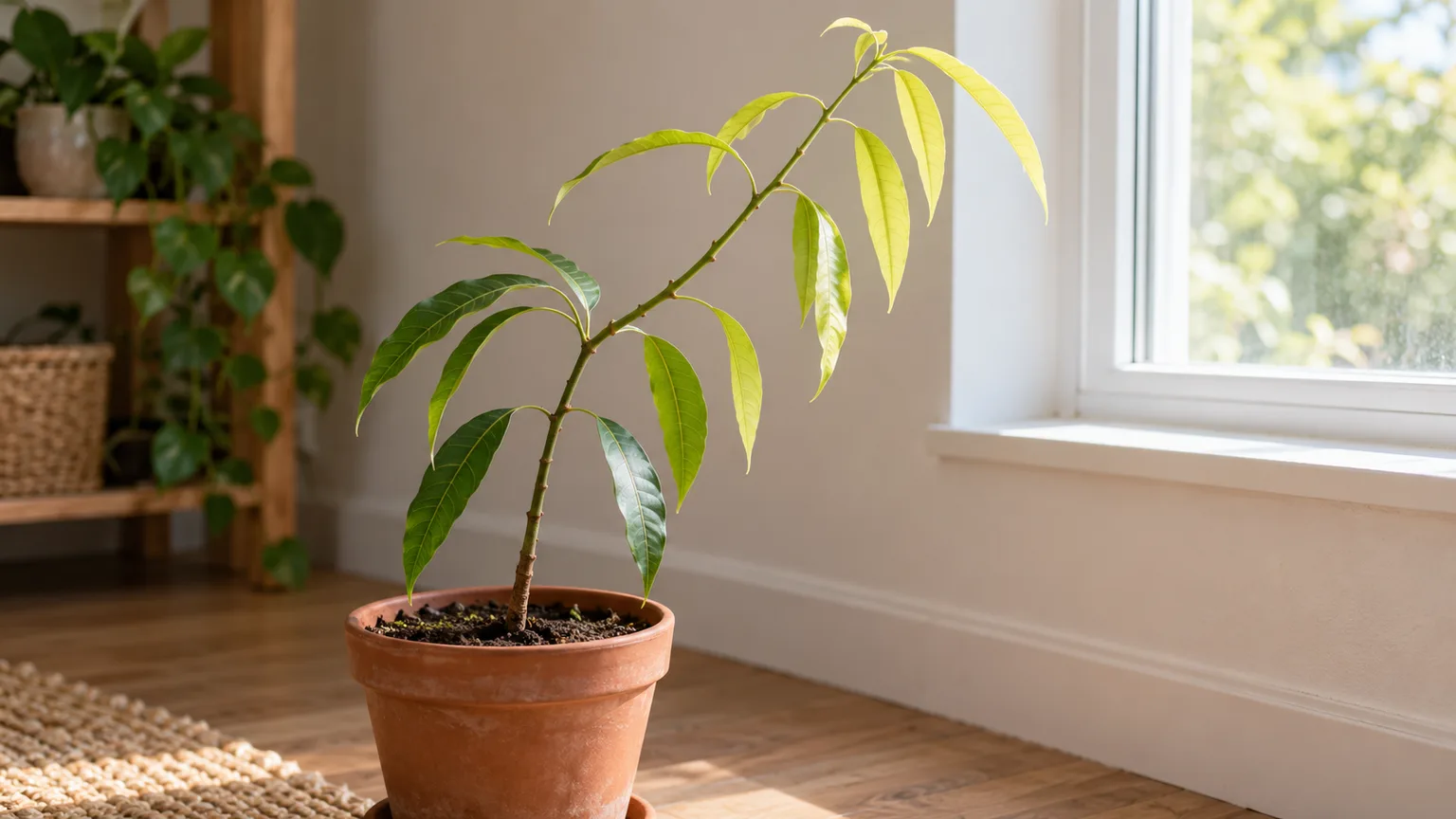
Not Enough Light on Mango: Causes, Checks & Fixes
This guide covers not enough light on Mango. See also the general Not Enough Light guide, watering, and light pages for this plant.
Not Enough Light on Mango: Causes, Checks & Fixes
Quick answer
A mango short of light pushes long thin flushes with wide gaps between leaves, unfolds small pale blades, leans its crown toward the brightest opening, and stalls between flushes while the mix stays wet far longer than normal. First fix: start hardening the tree toward 6–8 hours of direct sun over 7–14 days instead of dragging it from a dim room straight onto a blazing terrace. For how dim conditions weaken plants in general, see our not-enough-light guide. On mango, the pattern usually shows up as a sparse one-sided canopy with soft stretched shoots while the pot dries far slower than the watering rhythm expects.
What not enough light looks like on a mango
Mango is a full-sun fruit tree, not a shade-tolerant houseplant, so its low-light signature is vigorous-looking stretch rather than instant collapse. New shoots extend fast but weak, internodes lengthen, and each flush carries fewer, smaller leaves than the hardened growth below it. Young flushes that should emerge a rich reddish-bronze and firm up to leathery deep green instead stay soft, thin, and yellowish-green for weeks.
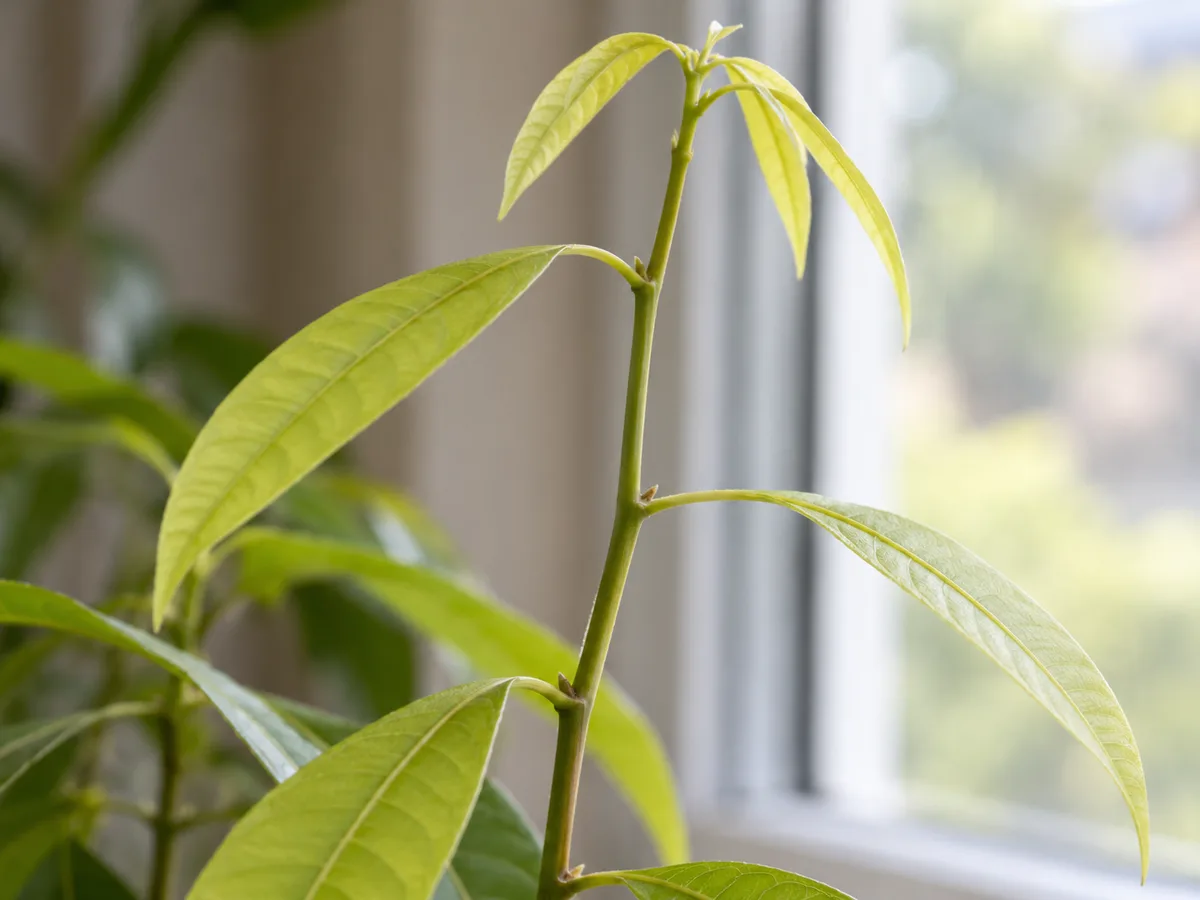
Not enough light symptoms on mango - compare stretched pale flush growth with firm hardened leaves on the same tree.
The crown tells the story before any meter does:
- Long bare stem sections between small pale leaves on the newest flush
- Growth angled hard toward one window or balcony opening, with the shaded side nearly bare
- Soft drooping shoot tips that never stiffen into upright woody stems
- Older leaves dulling and dropping while the top keeps reaching instead of filling out
- A pot that stays heavy and damp for days longer than it did outdoors, even though you changed nothing about watering
Because mango flushes in waves, compare the newest flush against the last hardened one. If each successive flush is thinner, paler, and leggier than the one before, light has been falling short for months, not days.
Why a full-sun fruit tree fails first in shade
Kew places mango in the seasonally dry tropical biome, an open high-light habitat where seedlings compete upward into full sun. The species answers with scale: Purdue’s monograph describes an unpruned tree as a 30–100 ft tree with a broad canopy, and even a grafted container tree carries that same sun-hungry physiology in miniature. UF/IFAS recommends planting mango in full sun for best growth and fruit production because flowering, wood ripening, and fruit sizing all draw on surplus energy that only strong light provides.
Indoors, that energy budget collapses. An open sunny site can reach around 10,000 foot-candles, while a spot a few feet inside a window delivers a small fraction of that. The tree spends its reserves stretching toward the glass instead of building firm wood, and each etiolated flush is weaker than the last. Flowering is the first luxury the tree abandons: mango bears on terminal panicles, so a shaded tree that never ripens firm terminal wood has nothing to bloom from, long before fruit is even a question.
Shade also slows the whole pot. Plants under high light transpire more water, so a mango moved from terrace to living room keeps drinking on its old schedule while using far less. The persistently damp mix then invites the root problems that get blamed for the decline, when light was the original deficit.
Terrace, balcony, and indoor light traps
Most light-starved mangoes are not in dark rooms; they are in bright-feeling spots that deliver little direct sun to the leaves. A deep balcony with an overhang above, a window recessed behind a sunshade, or a courtyard walled on the sunny side can feel hot and glaring while the canopy receives under two hours of true direct beam. Track sun actually landing on foliage at morning, noon, and mid-afternoon before trusting the position.
Container heat creates a second trap. On a west-facing rooftop the leaves want full sun while a black plastic pot bakes the roots, so growers drag the whole tree into shade. Shade the container wall with a light sleeve and raise the pot for airflow instead of starving the canopy. Winter brings the reverse: in northern regions a young tree comes indoors for frost protection and parks deep in a warm dim room, where cool air plus low light stalls every flush until spring.
Seedlings add their own confusion. A seed-grown mango looks content on a windowsill for its first year because the seed’s reserves fund early growth. Once those reserves run out, the same window cannot power a fast-growing tree species, and the second-year flushes stretch dramatically. A grafted compact cultivar held outdoors from the start avoids this cliff, which is one reason container guides steer growers toward dwarf types kept in large drained pots.
How to confirm low light before you move anything
Work through these checks in order so you do not mistake wet roots or pests for shade:
- Sun-hour count - Watch the canopy on a clear day and total the hours of unobstructed direct sun on the leaves. Under four hours with stretched new growth points squarely at light; six or more hours is the container minimum to hold against.
- Internode comparison - Measure the stem gap between leaves on the newest flush versus the last hardened flush. Doubling or tripling of spacing on the same tree is etiolation, not cultivar character.
- Flush color and texture - Healthy new mango leaves emerge reddish-bronze, then harden to stiff deep green. Flushes that stay soft, thin, and yellowish-green for weeks lack the energy to mature.
- Pot dry-down - Lift the pot and probe the top 3–5 cm. A heavy pot days after watering in a dim position confirms the light-water mismatch; cross-check with the soil guide if drainage itself is suspect.
- Pest and salt exclusion - Inspect tender flush tips for aphid clusters and check leaf margins for fertilizer burn before blaming light. Pests cluster on the same soft growth that shade produces, so confirm with the aphids guide when tips are sticky or distorted.
If sun hours are low, internodes are stretching, and the pot stays wet, you have a confirmed light diagnosis. If sun hours are adequate but growth still stalls, pivot to slow growth or root rot instead.
First fix: harden the tree toward real sun
Move the mango one step brighter and acclimate it over 7–14 days toward 6–8 hours of direct sun. Start with morning sun plus bright open shade, add an hour or two of stronger light every few days, and pause the progression if exposed leaves develop pale papery patches. This single staged move fixes the energy deficit without the scorch that a sudden jump from room light to May rooftop sun causes on tender flushes.
Do not fertilize the stretch away. Extra nitrogen on a shaded mango pushes even softer growth on an already weak frame, and feeding cannot substitute for photons. Hold fertilizer until the tree is sitting in strong light and pushing firm new leaves, as the fertilizer guide schedules feeding around active well-lit growth.
Step-by-step recovery after the move
Once the tree is staged brighter, work through recovery in this order:
If the tree is a seedling or recent nursery plant: Acclimate first, prune later. Let one full flush harden in the new light before removing anything, so you can see which wood is genuinely viable. Nursery stock is often raised under shade cloth and needs the full hardening window.
If shoots are leggy but stems are still firm: After the tree holds its new position for two to three weeks, head back the weakest stretched shoots to a healthy outward node to encourage branching. Keep cuts modest; mango flowers on terminal wood, so repeated tip removal during flowering season can delete the crop. Shape the framework using the pruning guide once the tree is growing compactly again.
If leaves are dropping and the mix stays soggy: Ease off watering immediately and let the top layer dry to its normal depth before the next drink. Consider thinning congested interior shoots so the canopy admits good sunlight and aeration, which speeds both evaporation and bud vigor. If stems feel soft or the mix smells sour, stop and follow the root rot protocol instead of pushing more sun alone.
If the tree must stay indoors through winter: Place it directly at the largest unobstructed window and add a full-spectrum LED panel over the canopy for roughly 12–14 hours daily. Oklahoma State Extension recommends artificial lighting where natural light is limited for houseplants generally, and mango sits at the extreme high-light end of that advice. Return the pot outdoors gradually when warm weather stabilizes.
Recovery timeline
Expect the decline to stop before new compact growth appears. Leaf drop should slow within two to three weeks of the brighter position, and the next flush — typically emerging over the following month in warm weather — should show shorter internodes and larger, better-colored blades. Judge success only by growth produced after the move; stretched stems never shorten and pale old leaves rarely re-green.
Full canopy density takes at least one to two flush cycles, often a whole growing season for a badly drawn tree. If new flushes still stretch after two months of genuine 6–8 hour sun, reassess the root zone through overwatering and repotting rather than adding more light.
Lookalike symptoms on a mango
| What you see | More likely cause | How to tell apart |
|---|---|---|
| Yellow leaves on wet heavy mix, stalled flushes | Overwatering | Pot stays heavy, lower leaves yellow first, no strong lean toward light |
| Limp inward-curling leaves, dry brown margins | Underwatering | Mix pulls from pot edges, leaves perk within hours of a deep drink |
| Tan crisp patches after a sudden move outdoors | Sunburn on unacclimated foliage | Damage sits on sun-facing leaves and appeared within days of relocation |
| Sticky distorted flush tips with visible insects | Aphids | Clusters on tender growth, honeydew sheen, ants patrolling tips |
| Uniform pale older leaves, thin canopy, no stretch | Nutrient shortfall on a well-lit tree | Sun hours adequate and internodes normal; see the fertilizer guide |
| Soft stems with sour-smelling mix | Root rot | Mushy base tissue and decay odor even after easing water |
| General stall with firm tissue in good sun | Slow growth | Light checks pass but no momentum; review pot size, season, and feeding |
Normal reddish-bronze new flushes deserve a special note: they look alarming to first-time growers but are healthy juvenile color that deepens as the leaf hardens. Worry when flushes stay pale and soft, not when they emerge bronze and firm up within weeks.
Mistakes to avoid
- Jumping from dim room to all-day terrace sun - Unacclimated leaves scorch within days. Harden over 7–14 days through morning sun first.
- Feeding a shaded tree to force growth - Fertilizer without light produces softer, weaker shoots. Light first, feed second.
- Pruning every stretched shoot on day one - Defoliating a light-starved tree removes the little photosynthetic area it has. Stabilize light, then shape.
- Watering on the old outdoor schedule indoors - Dim trees transpire far less. Check the mix, not the calendar, after every move.
- Shading the canopy to cool a hot pot - Insulate or sleeve the container wall and keep feeding the leaves full sun.
- Expecting flowers from a shaded juvenile - Bloom needs mature terminal wood plus strong light; no indoor feeding tricks replace either.
How to prevent it next time
Give mango the sunniest frost-free position from day one: open garden, rooftop, or terrace for in-ground trees, and the brightest long-sun balcony plus outdoor time for containers. Reassess sun hours at least three times a year, since roof overhangs, neighboring construction, and monsoon cloud shift the light map across seasons. Keep the canopy open with timely thinning for airflow and light penetration, and review the Mango overview before committing a seedling to a windowsill it will outgrow within a year or two.
When protection forces the tree inside, make the stay short and bright: sunniest window, canopy close to the glass, supplemental LED on a timer, and reduced watering to match. Move it back out in stages the moment nights stay reliably warm.
When to use this page vs other mango guides
- Use this page when stretched internodes, small pale flushes, one-sided lean, and slow pot dry-down arrive together after a dim position or an indoor winter.
- Use leggy growth when the stretch pattern itself is the focus and you need shaping and node-spacing detail.
- Use slow growth when light checks pass but the tree still lacks momentum across seasons.
- Use yellow leaves when discoloration dominates without obvious stretch or lean.
- Use overwatering and root rot when the pot stays soggy, stems soften, or the mix smells sour.
- Use the problems hub when several symptoms overlap and you need to scope-check before committing to one fix.
Related mango guides
- Mango care overview - whole-tree fit, size expectations, and grafted cultivar choice
- Mango light - sun hours, window placement, and grow-light setup detail
- Watering - dry-down rhythm as sun and season change
- Soil - free-draining container mix that dries on schedule
- Leggy growth on mango - stretch pattern, node spacing, and shaping cuts
- Slow growth on mango - stalled trees where light is not the limiter
- Pruning - canopy opening and crop-aware timing on terminal wood
- All mango problems - full per-plant cluster index
Low light on mango is almost always a placement problem, not a feeding or spraying problem: a full-sun tropical tree held where its leaves never see open sky. Count real sun hours, harden the tree outward in stages, and let the next flush prove the fix with compact deep-green growth.
How we wrote and verified this guide: Recommendations were checked against UF/IFAS Extension, Purdue horticulture, Kew, UGA Extension, Oklahoma State Extension, TNAU Agritech, and Gardening Know How references cited inline. Author: sai-ananth. Reviewer: LeafyPixels Review Board. Methodology: plant problem guidance is reviewed against botanical references, extension resources, and LeafyPixels plant-care data before publication. Last reviewed: 2026-09-02.
Related tool
Use the Plant Problem Diagnosis Tool to confirm not enough light against wet roots, pests, and nutrient issues before moving the tree or changing the feeding schedule.