How to Prune Mango: Training, Canopy & Size
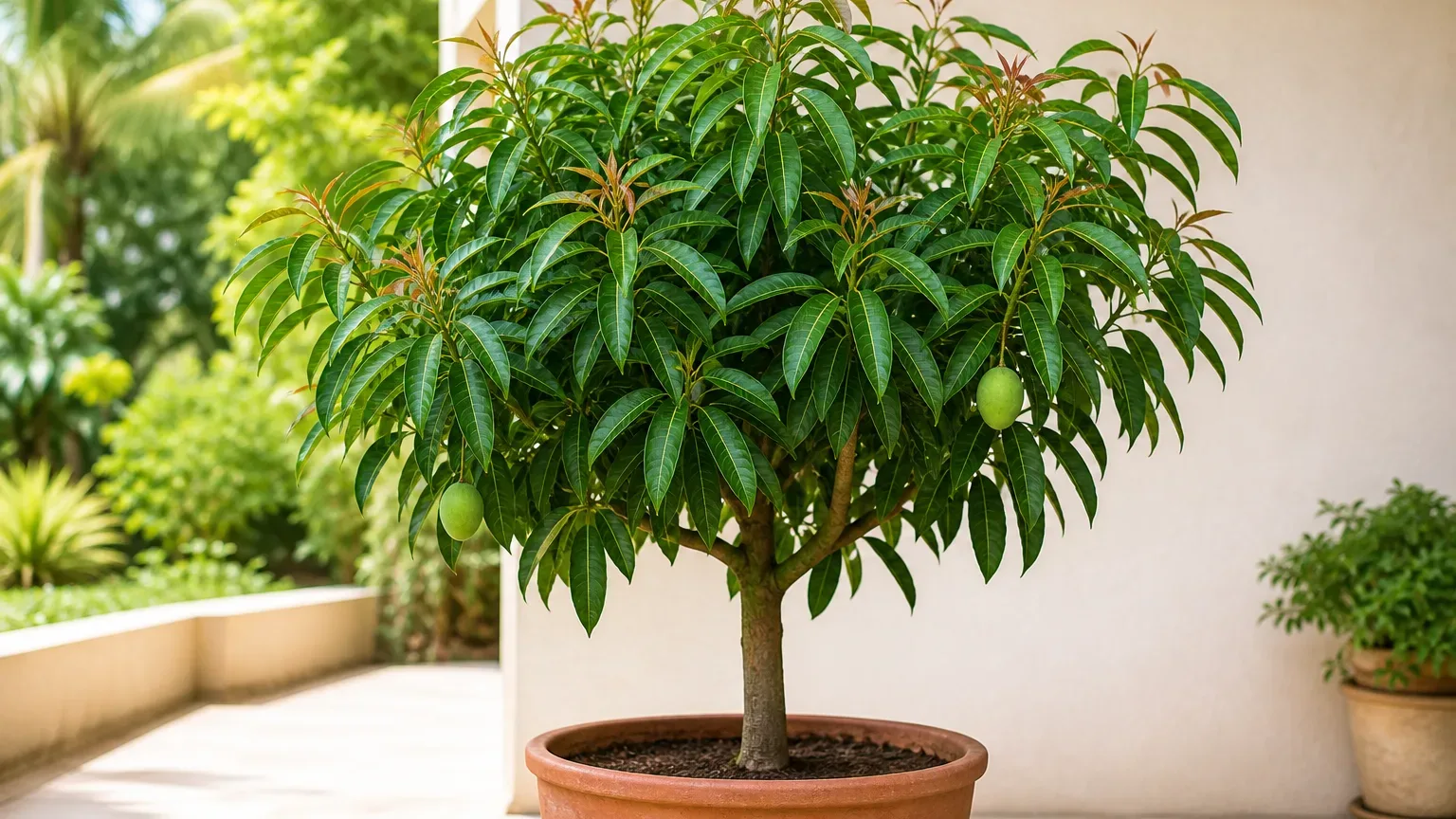
Mango Pruning Guide: Training, Canopy & Fruiting Wood
Mango Pruning Guide: Training, Canopy & Fruiting Wood
First, remove one clearly dead, broken, or diseased branch with clean, sharp bypass pruners. Cut it back to healthy wood or to the branch collar without leaving a long stub. Then step away and decide whether the tree needs training, canopy height control, or fruiting-wood management; those are different jobs, and tip-cutting every green shoot during flowering can remove the next crop.
Reviewed by LeafyPixels Review Board · Author: sai-ananth
Quick answer
Prune mango (Mangifera indica) to keep a low, open canopy that still flowers on shoot tips. Left alone, many varieties become large landscape trees about 9–30 m (30–100 ft) tall, so annual training and size control are what keep fruit within reach (UF/IFAS Extension). Flowers form in branched panicles at the ends of shoots, so the main shaping window is soon after harvest, not while panicles and young fruit are developing.
Wear gloves and long sleeves before you start: mango belongs to the Anacardiaceae family, and its sap, stems, leaves, and peel can cause contact dermatitis in sensitive people (PubMed). Correct mango light and watering problems before trying to prune a weak tree into productivity.
Decide what the mango tree needs
Walk around the tree before cutting. Look from the trunk outward and separate four goals:
- Training: building a low, multi-branched framework on a young tree.
- Sanitation: removing dead, broken, rubbing, or diseased wood, including malformed panicles or shoots.
- Fruiting-wood management: tipping or thinning after harvest so new terminals can flower later.
- Size control: keeping height and width within safe harvest reach or a container outline.
UF/IFAS recommends maintaining many tropical fruit trees, including mango, at roughly 6–15 ft (about 1.8–4.6 m) when annual pruning is practiced, so lower canopy wood stays productive (recommended maintenance height). Before reducing a sparse or stretched tree, check the mango overview to confirm that poor growth is not mainly a care problem.
When to prune mango
Routine shaping after harvest
Choose a time when the current crop is finished and warm growth can resume. UF/IFAS advises pruning soon after harvest, and Gardening Solutions notes completing that work within about a month of the last fruit—and before October in the Florida schedule—so the next flowering season is less likely to be disrupted (post-harvest window). In India and similar climates, the calendar month shifts with cultivar and harvest season, so identify which crop just finished rather than pruning by date alone.
Tamil Nadu Agricultural University describes practical canopy work after harvest: remove crowded weak terminals while retaining two healthy shoots, and shorten about 20 cm of the previous season’s terminal growth immediately after harvest (TNAU canopy management). Treat those production notes as a regional reference for terminal management, not a reason to shear every tip on a flowering home tree.
Cuts that should not wait
Remove a snapped limb, dead stub, or confirmed disease source promptly. Sanitation pruning is not the same as shortening healthy fruiting shoots. During wet, humid weather, make only necessary disease-removal cuts, disinfect tools, and prefer a dry period when opening many wounds.
Delay non-urgent structural pruning when:
- leaves are wilted from dry soil or roots remain saturated;
- the tree was recently transplanted or repotted;
- a cold spell or extreme heat is imminent;
- most branch tips carry flower panicles or young fruit you intend to keep;
- active dieback has not yet been diagnosed.
Protect yourself from mango sap
Before the first live cut, put on gloves, long sleeves, and eye protection. Mango sap and related plant parts can expose sensitive people to contact allergens in the same plant family as poison ivy and cashew. Avoid touching your face, wash exposed skin and tools after pruning, and bag debris rather than leaving sticky cuttings where pets or children handle them. If you already react to poison ivy, poison oak, or mango peel, have someone else prune or harvest, or use stricter barrier protection.
Train a young mango for a low, strong framework
Formative pruning on young trees increases lateral branching and builds a framework that can carry fruit without racing skyward (formative pruning). UF/IFAS tropical-fruit guidance starts training at planting: if a young tree is not already branching, make a heading cut at about three feet (roughly 90 cm) from the ground to encourage three to four main limbs. When those limbs reach about 20 inches (about 50 cm), tip them again to force further branching, repeating that pattern for the first two to three years (young-tree training).
Prefer wide-angled or more horizontal scaffolds over vigorous upright shoots. Remove rootstock sprouts below the graft union on grafted trees. Once the tree reaches the height you can harvest safely, switch from repeated tipping of every shoot to selective thinning cuts—removing a few upper limbs back to their origin each year so lower canopy does not disappear into shade.
Use that system only on a vigorous, established young tree. If the nursery plant already has suitable low branches, do not automatically cut it back to a bare stick. Select scaffolds that:
- radiate in different directions rather than emerging as a tight cluster;
- have room to thicken without rubbing;
- begin high enough that foliage and fruit do not rest on the soil;
- remain low enough for future picking, spraying, and pruning.
Understand mango fruiting wood before cutting
Mango does not flower on permanent short spurs the way some temperate fruits do. The inflorescence is a many-branched terminal panicle borne at the ends of shoots (flowering habit). The practical consequence is clear: tip-pruning during flowering or early fruit set can remove the crop on that shoot.
Before shortening a shoot, inspect its tip:
- Panicles or young fruit present: leave it until harvest unless breakage or disease forces removal.
- Long leafy terminal after harvest: tip it back to a well-placed outward lateral or bud if it exceeds the planned canopy.
- Crowded cluster of weak terminals: keep two healthy shoots and remove the rest at their origins when you are in a post-harvest window.
- Strong vertical water shoot: remove it at the branch of origin, or retain and shorten one only when it fills a genuine canopy gap.
Heading (tipping) removes the end of a shoot and encourages branching below the cut. Thinning removes a whole branch or shoot at its origin and opens space without creating a tuft of shoots at the cut end. Use a few deliberate heading cuts after harvest to renew terminals, then thinning cuts to prevent those laterals from becoming a dense thicket that shades the lower canopy.
Make clean cuts and prevent disease spread
Use hand pruners for pencil- to finger-thick shoots and loppers or a pruning saw for larger branches. Sharpened bypass blades leave a cleaner surface than dull blades that crush green wood. Before pruning, clean sap and debris from the tool, then sanitize the cutting surfaces; Iowa State Extension provides specific pruning-shear sanitation guidance. When tools have cut diseased wood, UF/IFAS recommends disinfecting cutting surfaces after each cut (for example, one part pine-oil disinfectant to three parts water) (tool disinfection).
For a whole branch, cut just outside the swollen branch collar. Do not cut flush against the trunk, and do not leave a long peg. For branches thicker than about two inches (5 cm), use a three-step cut: undercut, remove the weight, then finish at the collar so bark does not tear. For a heading cut, cut just above a healthy outward-facing bud or lateral branch.
When disease is suspected:
- prune visibly affected wood back to firm, healthy tissue;
- for mango malformation, remove affected panicles or shoots with a margin of apparently healthy wood and destroy the trimmings (malformation sanitation);
- disinfect blades before moving to another branch or tree;
- bag or remove diseased debris rather than leaving it beneath the canopy;
- do not propagate from suspect shoots;
- stop and seek a local diagnosis if discoloration continues inside the cut wood.
Opening an overcrowded canopy helps light and air movement so flowers, leaves, and fruit dry more quickly after rain—an important part of reducing anthracnose and related problems—but pruning does not replace correct diagnosis or a full disease program (disease context).
Control height and spread without stripping the canopy
Set a realistic finished height before the first live cut. For many home mangoes maintained with annual pruning, UF/IFAS’s 6–15 ft band keeps fruit accessible; unpruned or high-vigour trees need much more space from buildings and power lines (size and spacing). Choose the height that suits the cultivar, site, and your ability to harvest safely from the ground or a stable ladder.
Reduce the longest upper limbs back to a substantial outward-facing side branch rather than chopping every limb at one flat level. Move around the canopy and alternate sides, preserving leafy branches between cuts. Thin crossing or inward-growing shoots at their origins, but keep enough interior structure to shade major limbs. Sudden exposure of previously shaded bark to intense tropical sun is a reason to stage a large reduction rather than stripping the crown in one day.
UF/IFAS notes that severe pruning to reduce the height or width of a very large mango does not injure the tree permanently, but it can reduce production for one to several seasons (severe pruning effects). Once a tree is about 25–30 ft (7.6–9 m) or taller, climbing to prune is dangerous; hire a licensed, insured arborist for large reductions.
Prune container mango as a small fruit tree
A pot does not turn mango into a naturally dwarf houseplant. Container pruning must keep the crown proportional to a restricted root system while retaining enough sunlit terminals to flower. Start with a grafted lower-vigour cultivar, a heavy stable container, and a clear maximum height—often set by terrace clearance, wind, and whether you can move the pot.
After harvest:
- Wear PPE, then remove dead, damaged, rubbing, and inward-growing shoots.
- Shorten the tallest one or two branches to outward laterals within the planned outline.
- Retain several well-spaced leafy terminals around the tree.
- Tip new extensions later, before they again exceed the available space.
- Rotate the container periodically so one bright side does not become disproportionately heavy.
Do not hard-prune the canopy on the same day as major root pruning or an emergency mango repotting job. Root reduction limits water uptake while canopy cuts demand wound response and new shoot growth. If both are necessary, stabilize the root zone first and stage structural pruning after the tree resumes firm new growth. A freely draining mango soil mix and full sun matter more to compact, sturdy regrowth than repeated tip cutting alone.
Aftercare and signs of recovery
Return the tree to its usual full-sun position rather than moving a newly thinned canopy abruptly into harsher reflected heat. Water from the soil check, not because pruning occurred: soak when the upper root zone reaches the threshold described in the mango watering guide, and do not keep the pot constantly wet in an attempt to force regrowth.
Do not add a heavy fertilizer dose immediately after cutting. If the tree is healthy and entering active growth, resume its normal mango fertilizer program rather than trying to compensate for lost canopy. Useful recovery signs are firm bud swell below heading cuts, evenly distributed new laterals, stable remaining leaves, and terminals that stay compact in full light.
Pause further pruning if green leaves drop rapidly, the cut surface darkens and dieback travels down the branch, or new growth wilts despite moist soil. Those signs point to root, disease, temperature, or water stress—not a need for more shaping.
Common mango pruning mistakes
- Tip-cutting during flowering: removes terminal panicles and the crop on those shoots.
- Letting the tree become a tall umbrella: lower canopy stops flowering once it is shaded.
- Shearing the whole crown like a hedge: creates crowded regrowth and poorly placed terminals.
- Skipping PPE: sticky sap and peel allergens can cause a painful rash after a long pruning session.
- Flush-cutting the trunk: damages the branch collar needed for orderly wound closure.
- Using dirty tools on suspect dieback: risks carrying contaminated material between cuts.
- Hard top pruning plus root pruning together: asks a container tree to recover above and below ground at once.
- Expecting pruning to fix shade: weak, stretched shoots return unless the tree receives enough direct sun.
Related Mango guides
- Mango overview — whole-tree care, growth habit, and sap cautions.
- Mango light — full-sun needs for sturdy shoots and flowering.
- Mango watering — moisture checks before and after pruning.
- Mango soil — drainage and root-zone support for container trees.
- Mango fertilizer — feeding during active growth, not as a post-cut fix.
- Mango repotting — when root work should be staged separately.
- Mango propagation — use only healthy, pest-free wood if you reuse cuttings.
Conclusion
Good mango pruning preserves terminal flowering wood while keeping the canopy low enough to harvest. Begin with sanitation and sap-safe PPE, train a multi-branched framework while the tree is young, and use selective tipping and thinning soon after harvest to renew fruiting shoots without shearing away the next crop. For a container tree, maintain a compact outline in small steps and keep root work separate from major canopy reduction.