How to Grow a Mango Tree From Seed: A Complete Guide
Grow a mango tree from seed with clear steps for opening the pit, choosing a germination method, balancing warmth and moisture, and raising a sturdy seedling.
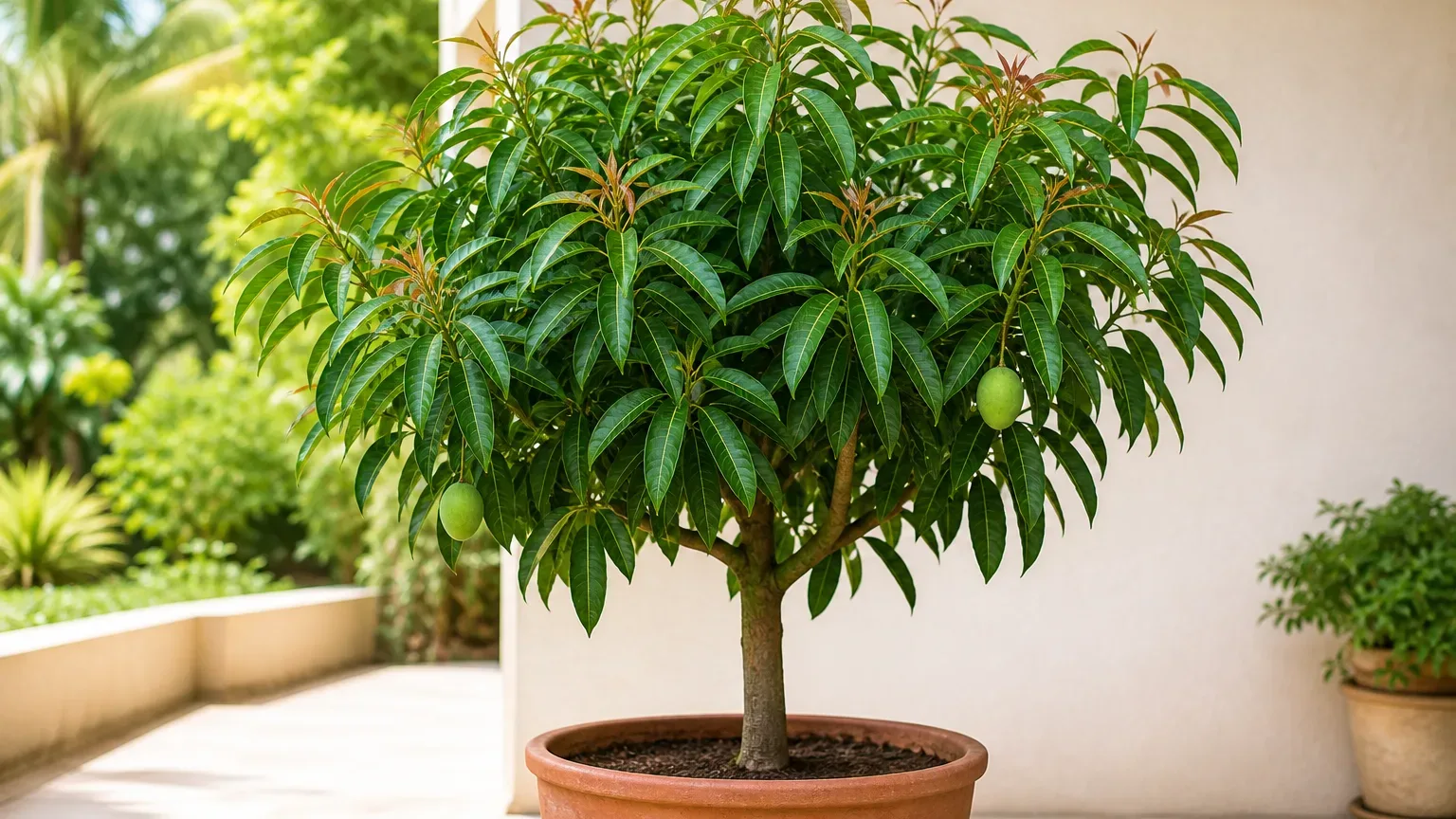
Growing a mango from a grocery-store fruit is straightforward when the seed is fresh, warm, and never left waterlogged. The part that requires judgment is what happens after the first shoot: the seedling may not resemble the fruit’s parent, and a tropical tree raised in a cool climate may remain a container project rather than become a fruiting backyard tree.
For the best odds, clean and open the woody pit soon after eating the mango, inspect the kernel, and choose either a draining pot or a damp paper towel. Then leave the seed alone long enough to root. Repeatedly unwrapping it, tugging on a new root, or keeping the mix soggy causes more failures than a lack of special equipment.
First decide what a seed-grown mango can do
Start with the outcome you want. A seed is a rewarding, low-cost way to watch a tropical tree develop, grow a leafy patio plant, or experiment with propagation; it is not the most dependable route to a named mango variety or an early crop. If predictable fruit is the goal, a healthy grafted tree from a reputable nursery is usually the more direct choice.
The seedling’s size and fruit quality are uncertain, and seed-grown trees often take years to reach flowering maturity. In a warm region with room for a large evergreen tree, that uncertainty may be acceptable. In a short-summer area where the plant must spend winter indoors, treat fruit as a possible bonus rather than the reason to start the seed.
What is inside the mango pit?
The large, flattened object left after cutting a mango is the woody husk, not the seed itself. Inside it is a pale kernel, which contains the embryo or embryos that can germinate. The husk protects the kernel, but it can also slow emergence, so many growers carefully open it before planting.
Mango seeds can be monoembryonic or polyembryonic. UF/IFAS Extension’s mango guide explains that polyembryonic seeds contain multiple embryos, most genetically like the mother tree, while monoembryonic seedlings combine traits from both parents. That distinction is useful, but a grocery fruit’s label rarely tells you which seed type it contains, and seeing more than one shoot is not a guarantee of identical fruit.
Choose a fresh fruit and clean the pit
Use a fully ripe, healthy mango with no obvious spoilage. After eating the flesh, rinse the pit under running water and rub away every slippery fiber; fruit residue left in a warm, damp environment can grow mold before the seed has a chance to sprout.
Begin the process the same day if possible. A mango kernel is not a dry seed packet that can be stored for months; prolonged drying reduces the odds of success. If you cannot plant it immediately, keep the cleaned pit briefly in a cool place and do not leave it sitting in water or baking in sun, but avoid turning a short delay into long-term storage.
Open the husk without damaging the kernel
Let the outside of the cleaned husk dry just enough to handle comfortably, then find the thinner seam along its curved edge. Hold it on a stable cutting board, keep fingers away from the seam, and use sturdy scissors or a blunt-edged tool to ease the husk apart a little at a time. The goal is to separate the two woody sides, not slice into the kernel.
The kernel should feel firm and look plump, cream-colored, or pale tan. Set aside one that is shriveled, crushed, sour-smelling, or extensively blackened; a small surface stain is not by itself proof that the embryo is dead, but soft decay is a bad sign. Avoid peeling away the thin skin clinging to the kernel, since extra scraping can damage the embryo.
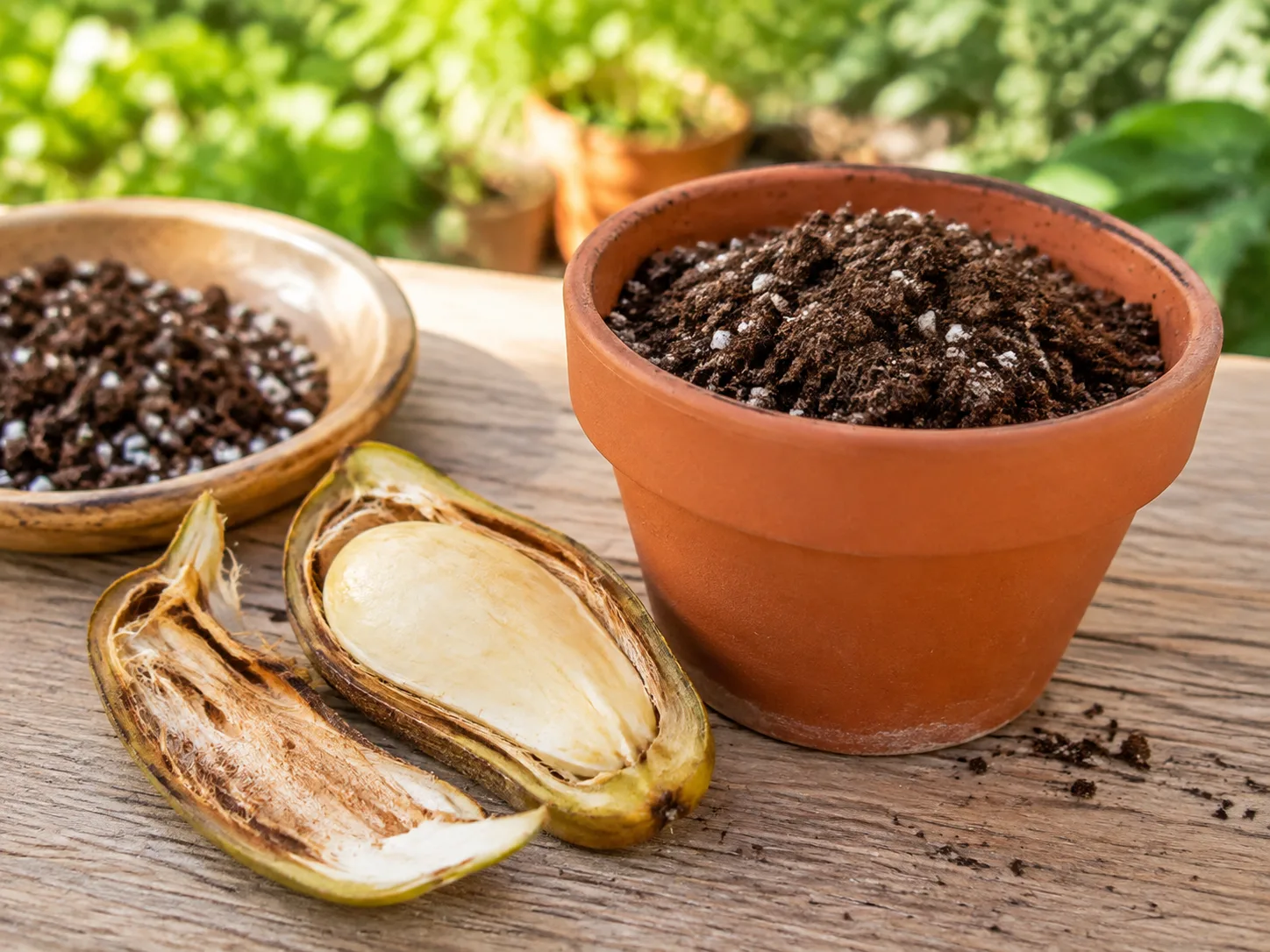
Keep the husk flat on the board, cut away from your body, and reposition it rather than forcing the tool if it slips. If it resists safe opening, stop; you can plant the cleaned whole husk, accepting that emergence may take longer or fail.
Choose your germination method
Both a pot and a damp paper towel can work. Direct potting avoids the most delicate transfer because the root can grow where it will remain; a towel makes it easier to see whether a kernel has swollen or begun to split. Epic Gardening’s mango propagation guidance describes the towel-and-bag approach, but do not confuse “moist” with dripping wet or leave a sealed seed unchecked for weeks.
Choose the method that best matches your habits. If you tend to overwater or forget to inspect bags, use a pot with drainage. If you want to monitor progress closely, use a towel for only the germination stage and move the seed as soon as a short root appears.
Direct potting: easiest to keep roots undisturbed
Use a clean nursery pot roughly 6 to 8 inches deep with open drainage holes. Fill it with fresh seed-starting mix or a light, peat- or coir-based potting mix blended with perlite; avoid garden soil, which can pack tightly in a small container and stay wet around the kernel.
Set the kernel on its side and cover it with about 1 inch of mix. If its shape makes one end clearly broader, point that end slightly upward, but do not spend time trying to identify an exact root end. Water until the mix is evenly damp and excess drains out, then put the pot in a warm place with bright, indirect light.
Damp towel: easiest to inspect
Wrap the kernel in a clean paper towel that is damp throughout but not dripping. Place it in a food-storage bag or lidded container, leave a little air space, and keep it in a warm spot out of direct sun. The towel should feel like a wrung-out sponge; if water pools at the bottom, replace it with a drier one.
Check every few days for a split, a pale root tip, and any fuzzy growth or sour odor. As soon as a root is visible and still short—before it coils around the towel—plant the kernel in potting mix, root pointing downward or naturally toward the bottom. Handle the root by the seed end, never pinch the tender tip, and do not wait for a long tangle of roots just to get a clearer look.
Plant the seed at a useful depth
Whether it germinated in a towel or not, keep the planting shallow. A kernel covered by roughly 1 inch of mix has enough moisture contact while the shoot can reach the surface without pushing through a deep, heavy layer. A seed planted too deep in wet mix can exhaust itself or rot before its first leaves open.
If a root has already emerged, make a narrow hole with a pencil or finger, lower the root gently, and let it point down without bending. Lay the seed at the surface and cover the kernel, leaving no exposed root. Do not press the mix hard; a light settling tap is enough, and compacted mix removes the air spaces roots need.
Keep the seed warm and lightly moist
Warmth speeds germination, while cold, wet mix slows it and gives decay an advantage. Aim for a consistently warm room—roughly the mid-70s to mid-80s Fahrenheit is practical—rather than placing the pot on a radiator or heating mat set too hot. Epic Gardening recommends keeping the bagged seed above 70°F; use that as a practical lower guide, not a promise that every seed will emerge at the same temperature or speed.
Water the pot once to settle the mix, then check it with a fingertip instead of following a daily schedule. Add water when the surface begins to dry, and let all excess drain; the mix should stay lightly moist, not glossy, sodden, or standing in a saucer. A small pot in a warm sunny window can dry fast, while the same pot in a cool room may remain wet for several days.
During germination, the seed does not need strong direct sun. Bright indirect light is enough until a shoot appears, and it reduces the chance that sun heats the pot and dries the kernel unevenly. Once the first leaves open, increase light gradually rather than moving a tender shoot from a dim corner into harsh afternoon sun.
How long mango seeds take to sprout
Think in weeks, not a guaranteed countdown. A fresh kernel in warm, airy mix may swell and split relatively quickly, while a cooler room, a thicker husk, a less viable seed, or fluctuations in moisture can delay visible growth. The first activity may be a root below the mix, so no shoot on day seven does not automatically mean the seed has failed.
Look for the kernel to plump, the seam to open, a root near a drainage hole, or a curved shoot pushing through the soil. New mango leaves can emerge bronze, reddish, or pale green before darkening; color alone is not a sign of disease. Do not dig the seed up to check progress unless you have a clear reason, because disturbing a new root can set the seedling back.
If nothing changes after several weeks, check the conditions before starting over. Confirm the mix is warm and not waterlogged, inspect whether the kernel has softened or developed an unpleasant odor, and consider planting a second fresh seed if the first was old or damaged. Starting two seeds can improve the chance of one success, but give each its own pot so roots do not become tangled.
Care for the seedling after its first shoot
Once leaves unfold, the seedling begins to rely more on light and its new roots. Set it near a bright window or under a suitable grow light, and rotate the pot occasionally if the stem leans strongly toward one side. Keep it warm and out of cold drafts; a mango seedling is a tropical plant, not a frost-tolerant annual.
Water thoroughly when the upper layer of mix starts to dry, then empty the saucer. If the leaves droop while the soil is dry and the pot feels light, water it; if they droop in wet soil, more water is likely to worsen the problem. Check the drainage holes and smell the mix before assuming the seedling needs fertilizer.
The seed supplies stored energy during the earliest stage, so fertilizer is not a germination aid. Wait until the plant has several leaves and is making active new growth; then, if the potting mix contains no starter fertilizer, use a complete liquid houseplant or fruit-tree fertilizer at the lowest label rate. Skip feeding when the plant is cold, wilting, recently repotted, or sitting in wet mix.
Pot up only when roots and leaves are ready
Do not transplant just because a certain number of days has passed. Wait until the seedling has a few healthy leaves and roots hold the mix together or begin to reach the pot’s drainage holes. A move made too early can break fragile roots; a move made much too late can leave the plant drying quickly or circling tightly in a tiny container.
Choose a pot only one size larger, with several drainage holes and enough depth for the root system. A tall nursery pot is often a more practical choice than a shallow decorative bowl because it provides depth without surrounding a small root ball with a large reservoir of wet mix. Slide out the root ball while supporting the mix, keep the stem at the same soil level, and fill around it with fresh, airy potting mix. Water once to settle the soil, let it drain, and give the plant a few quiet days in bright indirect light before changing its conditions again.
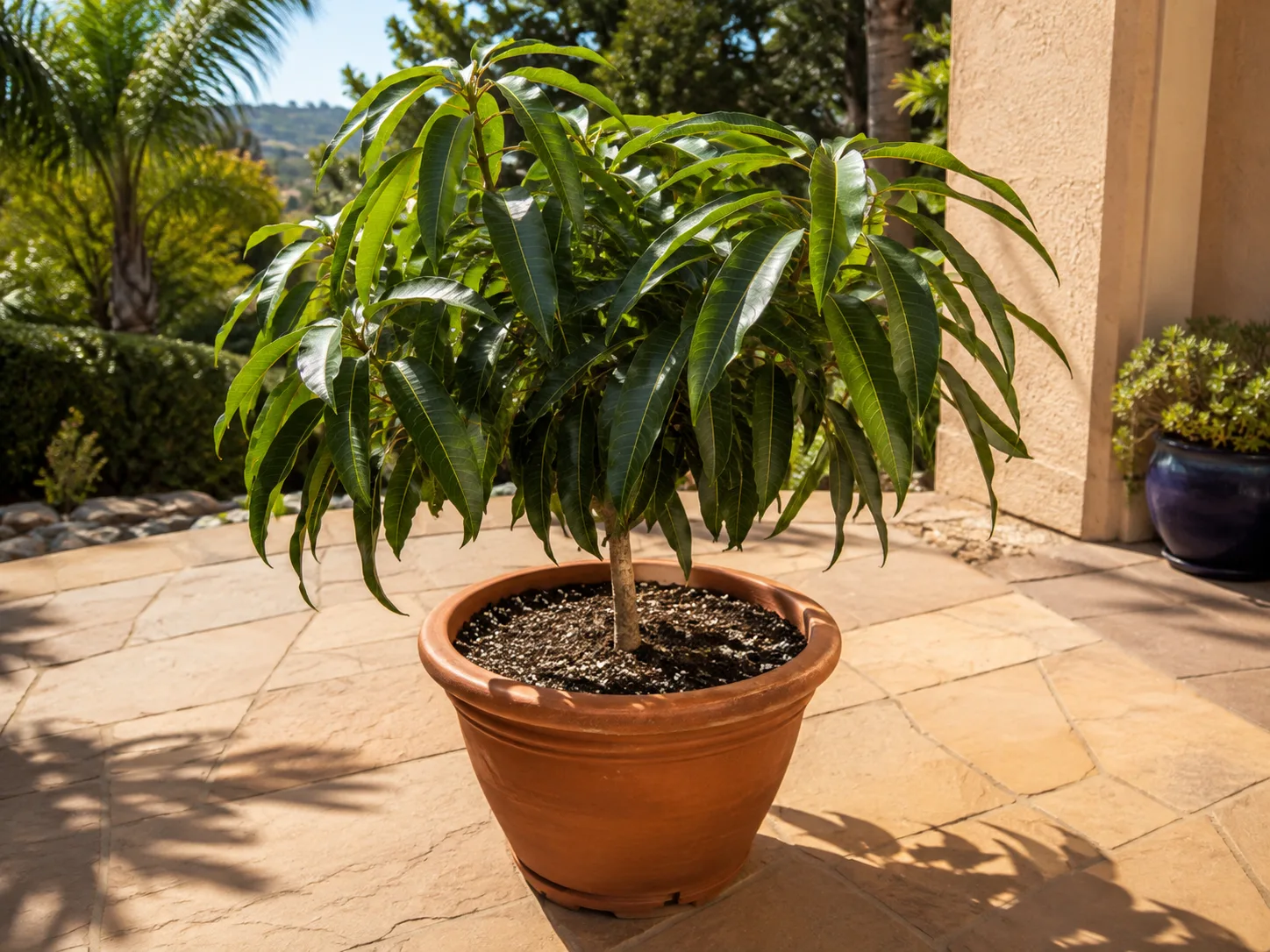
Mango roots are sensitive to prolonged sogginess and unnecessary disturbance. Avoid routinely unpotting the tree to inspect the roots, and do not jump from a small seed pot straight into an enormous container. A pot that is far too large holds a wide volume of unused, wet mix, which can stay oxygen-poor around the young root ball.
Move it into stronger sun gradually
Mature mango trees grow best in full sun, but a newly opened seedling may have developed under dim indoor conditions. Acclimate it over about one to two weeks: begin with a short spell outdoors in bright shade, extend the time each day, and introduce morning sun before exposing it to hot afternoon rays. Bring it back under cover if the leaves bleach, crisp, or fold in strong heat.
Wait until nights are reliably warm before leaving it outside. Wind can also dry a small pot quickly, so shelter a new seedling from strong gusts while its roots are establishing. If moving it outdoors is not possible, use the brightest window available and consider a grow light positioned according to its manufacturer’s instructions.
Decide whether it belongs indoors, outdoors, or in a pot
In a tropical or warm subtropical climate with no regular frost, a seedling can eventually be planted outdoors after it has grown strong enough to handle the site. Choose a sunny, well-drained spot with room for a substantial tree and away from roofs, paths, utilities, and structures; UF/IFAS’s landscape fact sheet describes mature mangoes as trees that can reach several dozen feet in height and spread. UF/IFAS Extension also notes that young trees are vulnerable to cold, so a container is the safer choice where winter temperatures can approach freezing.
In colder regions, grow the seedling in a pot only if you can provide strong light and move or protect it before cold weather. Indoor growth can maintain a healthy foliage plant, but a sunny window may still provide less light than a tropical tree needs to flower and set fruit. A small seedling can stay in a manageable pot for a while; as it grows, its need for light, root space, and warm conditions becomes harder to satisfy indoors.
If you want the full tree-care plan after germination, see the site’s mango growing guide. For this seedling, focus first on steady warmth, bright light, a freely draining mix, and room for roots; do not try to force rapid height with heavy feeding.
Troubleshoot stalled, moldy, or collapsing seeds
When a seed fails, change the factor most likely to be wrong rather than changing everything at once. The kernel’s texture, the moisture in the mix, and the room temperature usually narrow the cause quickly.
- The kernel is soft, black, or smells sour: it has probably rotted. Discard it, wash the pot, use fresh mix, and start with another newly cleaned pit. The usual cause is stale fruit tissue, contaminated mix, or water trapped around the kernel.
- The towel has fuzzy mold: replace it, rinse the kernel gently, and use a clean container with a towel that is damp rather than wet. If the kernel itself is soft or smells bad, do not try to rescue it by sealing it up again.
- Nothing has sprouted but the kernel is still firm: give it more time while checking warmth and moisture. A firm seed can be slow; avoid peeling, cutting, or repeatedly digging it up to “wake it.”
- The shoot emerges and then collapses: inspect the stem at soil level and the dampness of the mix. A pinched, dark stem with constantly wet soil can indicate rot; improve airflow, let the surface dry slightly between waterings, and remove any decayed plant tissue.
- Leaves scorch after moving outdoors: return the plant to bright shade and resume acclimation more slowly. Pale patches and crispy margins on the sun-facing side after a sudden move point to light stress, not a need for more fertilizer.
- Leaves droop in a wet pot: check for blocked drainage and roots that remain saturated. Do not add water because the canopy looks thirsty; let the mix drain and correct the pot or medium before watering again.
Do not use household bleach, fungicide, or fertilizer as a routine seed treatment. Those products do not make an old kernel viable, and unnecessary chemical treatment can damage the embryo or expose people and pets. If you use any plant-care product later, follow its label and local rules rather than borrowing a rate intended for another crop.
Understand seed-grown mango genetics and fruiting
The seedling is a new tree, not a copy of the supermarket fruit by default. Polyembryonic seeds may produce several seedlings, most of which are maternal clones, while monoembryonic seeds produce a genetically mixed seedling; UF/IFAS Extension explains why the difference matters for propagation. Unless you know the cultivar and seed type, assume that flavor, fruit size, tree vigor, and time to bearing could differ from the mango you ate.
Horticulture sources offer widely different fruiting estimates for seedlings. Epic Gardening gives a common five-to-eight-year range, while a California Gardening grower account cautions that seed-grown trees can take far longer; these are experience-based ranges, not a schedule to rely on. UF/IFAS reports that grafted trees can begin bearing within a few years under suitable conditions, but that does not predict when an ungrafted seedling will flower or whether its fruit will be worthwhile.
If fruit is your priority, keep the seedling as an experiment while you choose a grafted cultivar suited to your climate. If the plant is mainly for foliage, learning, or the pleasure of raising a tree from something you ate, enjoy the process without treating a future harvest as guaranteed. A seedling can be a success even if it never produces fruit.
Conclusion
To grow a mango tree from seed, start with a fresh pit, clean away the fruit, open the husk carefully, and plant the sound kernel shallowly in warm, draining mix. Keep it lightly moist, protect the first root from handling, and wait for several leaves before potting up or introducing stronger sun.
The bigger decision is whether a seed-grown tree fits your goal. It is an excellent hands-on growing project, but its genetics and fruiting timeline are uncertain; for a named mango and a more predictable crop, buy a grafted tree. Either way, warmth, light, drainage, and patience will do more for the plant than elaborate germination tricks.