Cuphea Plant Care for More Flowers and Fuller Growth
Cuphea plant care varies by species. Compare Mexican heather, cigar flower and candy corn plant, then get practical light, water, pruning and winter advice.
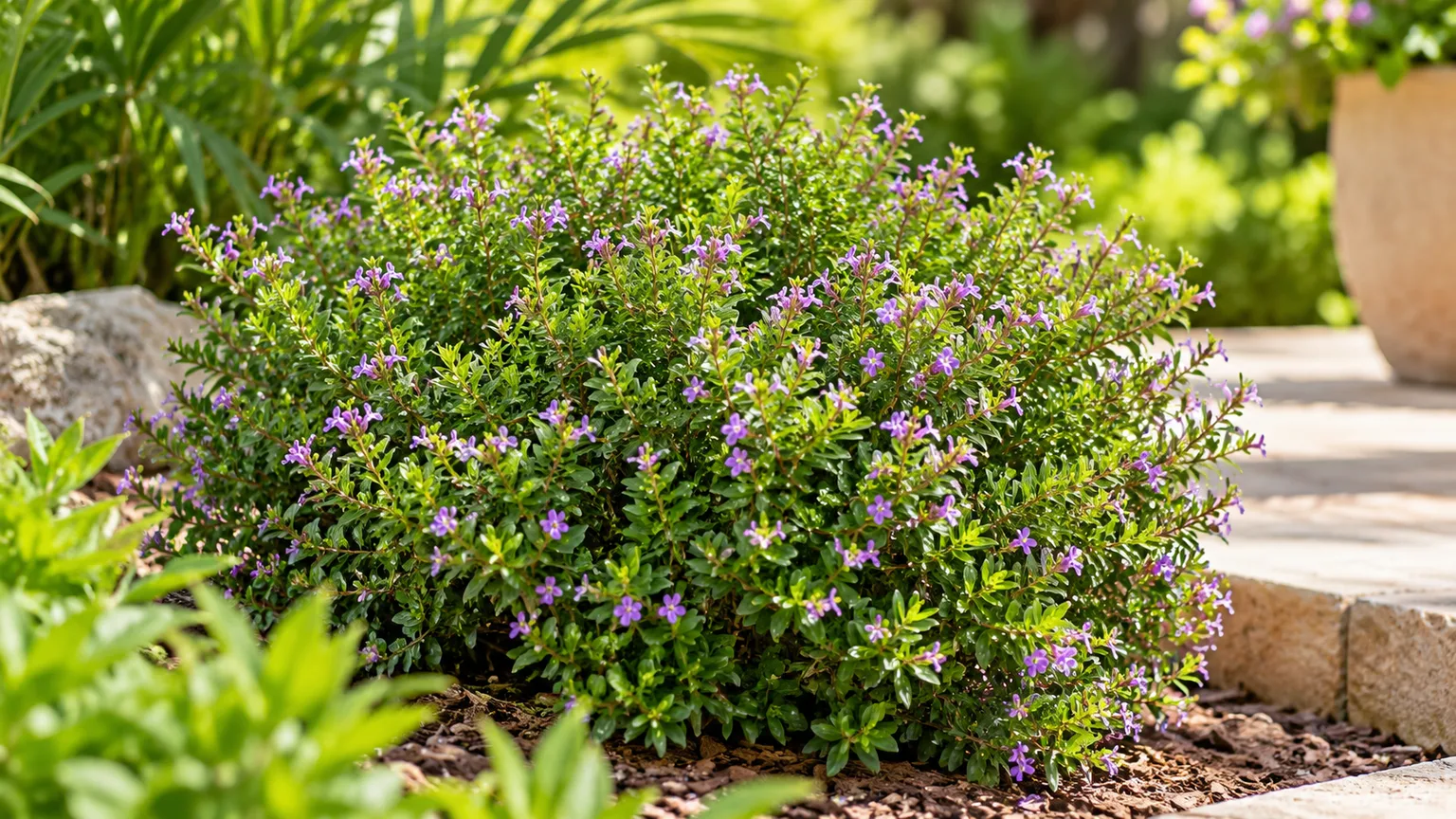
Cuphea is not one uniform garden plant. The name covers compact shrubs, heat-loving annuals, tender perennials, and hybrids with very different flowers and winter limits. A plant sold as Mexican heather needs a different expectation than a tall candy corn plant, so start with the botanical name on the tag before you decide how much sun, space, or winter protection to give it.
Most Cuphea reward the same basic setup: warm weather, plenty of light, and soil that stays lightly moist but drains freely. The details change by species and climate. This guide helps you match the care to the plant you have, then use the soil and the plant’s growth as cues instead of following a fixed watering calendar.
Start With the Species You Actually Bought
Cuphea is a genus in the loosestrife family, Lythraceae. Common names such as cigar plant, firecracker plant, false heather, and bat-faced Cuphea refer to different species or selections, not interchangeable forms of one plant.
Oklahoma State Extension lists several of these types together, but the differences in mature size, flower shape, and winter hardiness are large enough to matter at planting time. Oklahoma State University Extension’s Cuphea profile is a useful reminder to identify the species before applying a generic zone or care claim.
Check the tag for a Latin name, cultivar, and mature width. If the label only says “Cuphea,” ask the nursery which species it is or compare the flowers and leaves with a reliable species profile. The form matters just as much as the flower: a low, fine-textured mound can edge a path, while a taller, spreading shrub may need a larger container or a place where its stems can arch without crowding neighbors.
Match a common name to a species and growing habit
| Type | What to expect | Best use |
|---|---|---|
| Mexican heather (Cuphea hyssopifolia) | Dense, fine foliage with small lavender, pink, or white flowers; commonly about 1 to 2 feet tall and wide. | Low border, groundcover, or patio pot where a soft, continuous texture matters more than large individual blooms. |
| Cigar or firecracker plant (C. ignea) | Reddish-orange tubular flowers with dark tips; a rounded plant often around 18 to 30 inches tall. | A warm-season container or sheltered bed where the unusual flowers can be seen close up. |
| Candy corn plant (C. micropetala) | Taller, clumping growth and yellow-orange tubular flowers that deepen in color as they mature; Clemson Extension describes plants roughly 3 to 4 feet tall and wide. | Back of a sunny border or a late-season pollinator planting with room to spread. |
| Bat-faced Cuphea (C. llavea) and hybrids | More conspicuous, two-toned flowers and compact forms in many named selections. | Mixed containers and bedding where flower color or a specific cultivar is the point. |
These dimensions are examples, not a genus-wide promise. A cultivar can be more compact or more vigorous than its parent species, and a plant grown in a pot usually stays smaller than the same selection in a favorable bed.
Read the named variety’s tag for spacing and zone information. NC State Extension’s profile for Mexican heather notes that it is a true Cuphea despite the common name: it is not a member of the heather family.
The cultivar list in BHG’s Cuphea guide shows the same spread: some bat-faced selections are compact, while other named hybrids grow substantially taller. Use the cultivar label for final spacing instead of assuming that the genus-wide overview describes your plant.
Species identification also helps you judge ecological fit. Mexican heather flowers can attract bees, butterflies, and hummingbirds, but NC State Extension notes that C. hyssopifolia has naturalized and is considered weedy in Hawaii. Gardeners there should check local guidance before planting or disposing of seed; a plant’s pollinator value does not automatically make it suitable everywhere.
Give Cuphea Strong Light Without Overheating It
For most Cuphea, start with a bright outdoor position that receives at least several hours of direct sun. More light generally means denser growth and more flowers, especially for plants that become loose or floppy in shade. A bright south- or west-facing patio can work well in a mild-summer area, while very hot regions may need protection from fierce afternoon sun.
Read the plant’s response to sun and shade
Use the plant as a gauge rather than treating “full sun” as a rule for every climate. If stems stretch toward the light and flowers thin out, the site may be too dim.
If leaves look limp or scorched after a heat wave despite damp soil, move a potted plant to morning sun with afternoon shade; for a bed, consider a spot with filtered late-day light next season. NC State’s cigar plant profile describes C. ignea as happiest in full sun to partial shade and specifically notes partial shade in very hot climates, while the RHS profile recommends shade from hot sun for this species. NC State Extension and the Royal Horticultural Society support that heat-aware adjustment.
Indoors, Cuphea needs a genuinely bright window to keep flowering, but an outdoor plant should not be rushed from deep shade into intense midday sun. Acclimate it over about a week by adding a little more direct light each day. The reverse is useful in autumn: bring it indoors before frost, then place it in the brightest available window and expect slower growth and fewer flowers through winter.
Set Up Soil and Drainage Before Planting
Cuphea grows best in soil that holds some moisture but drains promptly after watering or rain. NC State Extension describes Mexican heather as adaptable to different soils with good drainage and best with regular moisture, while the RHS profile recommends well-drained soil for cigar flower. It is not a plant for a permanently saturated pocket.
The simplest check is to water the site and observe it: if puddles remain long after nearby soil has drained, choose a raised bed or container rather than placing the roots in a low, soggy spot. Adding a little compost can improve structure in a bed, but avoid turning a planting hole into a rich, water-holding pocket surrounded by dense clay.
Improve a garden bed
Work compost into a broad planting area if the soil is compacted or low in organic matter, rather than filling only the hole with loose mix. Set the root ball at the same depth it grew in the nursery pot and keep mulch a few inches away from the stems. On heavy clay, a raised bed or berm is more dependable than trying to make one small pocket drain quickly; standing water is more likely to cause trouble than the soil’s texture by itself.
Choose a container that can drain
Choose a pot with open drainage holes and enough volume to hold moisture between checks without leaving roots wet for days. A pot only slightly wider than the root ball is easier to manage than an oversized container full of slow-drying mix.
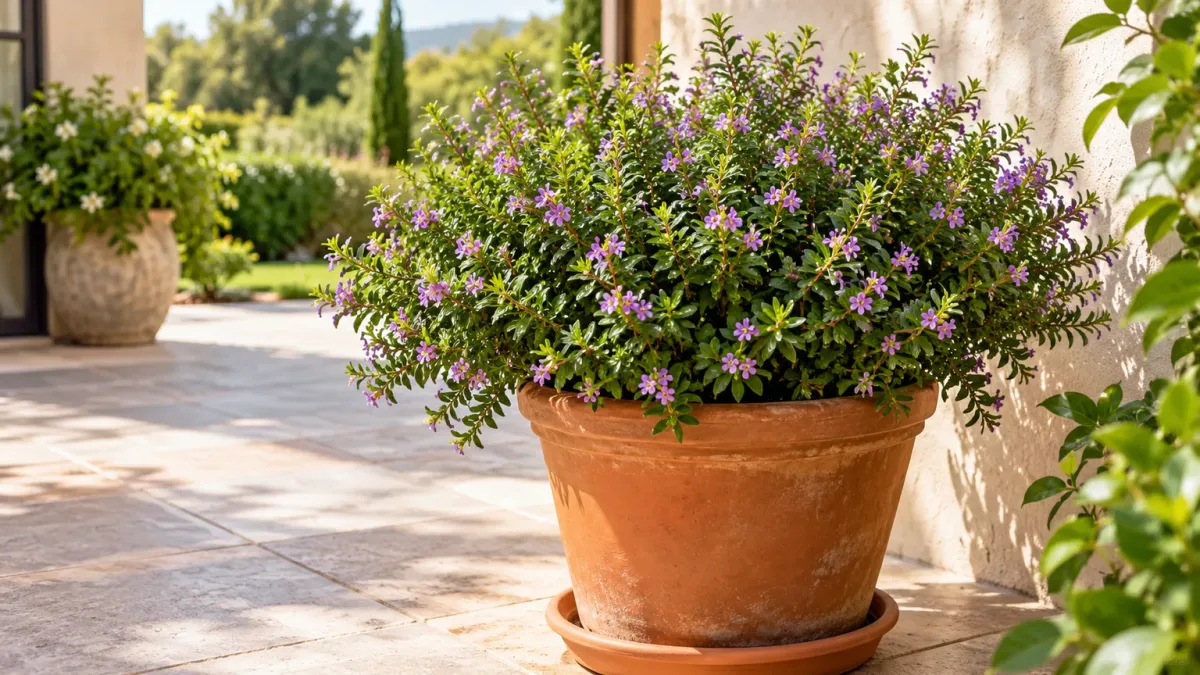
Use a fresh, free-draining potting mix rather than garden soil, which compacts in a container. The patio pot in the existing image is a good model for placing Mexican heather where its flowers can be seen and the container can be moved before cold weather.
Plant After Frost and Space for the Mature Form
Set nursery plants outdoors after the local risk of frost has passed and the soil has warmed. Cuphea is a warm-weather plant; a cold night soon after planting can set it back or kill tender growth even when daytime weather feels pleasant. BHG also recommends planting Cuphea outdoors after frost danger has passed.
Water the plant in its nursery pot before planting, loosen circling roots gently, and settle the top of the root ball level with the surrounding soil. Water thoroughly after planting so the mix contacts the root ball without leaving the bed waterlogged.
Use the mature width on the label to set spacing rather than crowding plants to make an instant display. Some compact selections can sit relatively close together, but taller or spreading types need air around their stems and room to grow.
If you are planting a mixed border, put the taller C. micropetala toward the back and keep low C. hyssopifolia near an edge where its fine foliage will not be swallowed by larger neighbors. In a pot, one well-sized specimen can fill out over the season; multiple plants need a wider container and more frequent watering.
Water by Checking the Root Zone
The goal is steady moisture during active growth without a soggy root ball. Water new plantings often enough that the root ball does not dry completely while roots establish; once plants are settled, they can tolerate brief dry spells, but prolonged drought can slow growth and flowering. A plant may wilt from dry soil or from roots that cannot take up water in saturated soil, so check before reaching for the hose.
For an in-ground plant, feel the soil a short distance below the surface near the root zone. If that layer is dry and the plant is not showing signs of prolonged heat stress, water slowly at the base so moisture reaches the roots.
In a container, lift the pot if you can, or use a finger or wooden stick to check the mix; water thoroughly when it has started to dry, then let excess drain away. A small pot in a hot, windy location may need checking much more often than a shrub in the ground.
Avoid shallow daily splashes that wet only the surface, and do not let a saucer hold water beneath the pot. If the soil stays wet while leaves yellow or stems soften, pause watering and inspect drainage before adding more.
If it dries quickly every day, move the pot out of reflected heat, use a larger container next season, or add a thin mulch layer over the bed without piling it against stems. This combination of moisture and drainage is more useful than calling every Cuphea drought-proof or keeping every one constantly wet.
Feed Lightly, Especially in Containers
Cuphea does not need heavy feeding to flower. In a bed with reasonably fertile soil, compost worked in before planting may be enough for the season.
In a container, nutrients wash out faster and the limited mix may support less growth, so a modest feeding during active growth can help. Follow the fertilizer label for the product and the container size; a general-purpose or flower fertilizer used at label rates is safer than an improvised concentrated dose.
Feeding advice varies by type: BHG’s broad Cuphea guide recommends regular summer feeding, while Clemson Extension’s candy corn plant profile recommends a spring, low-nitrogen fertilizer. That difference is a reason to follow the tag and local species guidance rather than applying one schedule to every Cuphea. Too much nitrogen can push leafy growth at the expense of flowers and make stems soft, so if a plant has healthy green leaves but few blooms, review light, recent transplant stress, and watering before adding more feed.
Stop or reduce feeding when growth slows in cool weather or when a plant is resting indoors. Fresh potting mix and a measured, occasional feed are more reliable than repeatedly adding fertilizer whenever flowering pauses.
Pinch and Prune Without Removing Future Flowers
Pinching is most useful while a young plant is actively growing. Once it has recovered from planting, pinch the soft ends of a few long stems to encourage branching and a fuller outline. Do not remove every growing tip at once: the plant needs leaves and growing points to build its shape, and repeated cutting can delay flowering.
Most bedding Cuphea do not need deadheading to keep making flowers, as Oklahoma State Extension notes for the genus. Remove a few unattractive stems if the plant looks untidy, and use clean, sharp snips to shape it after a flush or after flowering has finished. Shrubby types such as cigar plant should not automatically be sheared to the ground simply because another Cuphea is sold as a perennial; preserve the plant’s woody framework and follow its species guidance.
NC State Extension recommends pinching C. ignea to prevent legginess, while the RHS advises spring pruning if needed. A light trim is a safer default than a hard late-season cut on a frost-tender plant.
Propagate Cuphea From Seed or Tip Cuttings
Choose seed when you want several plants and do not need every seedling to match a named cultivar exactly. Choose cuttings when you want a clone of a favorite plant and have a healthy parent.
Extension profiles list both seed and stem cuttings as propagation routes for some Cuphea; methods and timing still vary by species. If a plant tag identifies a patented selection, check the tag’s propagation terms before taking or sharing cuttings.
Start seed with the right timing and light
Use fresh seed from a reliable packet and follow its species-specific directions. Some Cuphea seed is small and benefits from light to germinate, so press it onto the surface of a clean, moist seed-starting mix rather than burying it deeply unless the packet says otherwise.
Keep the surface evenly moist, not waterlogged, and provide warmth and bright light. NC State Extension suggests starting Mexican heather 8 to 10 weeks before the last frost, while BHG gives a 10-to-12-week window for Cuphea generally; treat those as planning ranges, not universal rules for every seed lot. NC State Extension’s Mexican heather profile and BHG’s growing guide provide the details behind those different recommendations.
Once seedlings have several leaves and are sturdy enough to handle, pot them on or prepare them for the garden. Harden them off by gradually exposing them to outdoor sun and air over several days, then plant only after frost risk has passed. Seeds can take months to flower, and seedlings from hybrids may not look exactly like the parent, so buy a named plant if you need a predictable flower color or habit this season.
Root a softwood cutting in a clean medium
Take a 3- to 5-inch tip from a healthy, nonflowering stem in spring or early autumn. Use clean snips, remove the lower leaves, and leave at least one or two leaf nodes that can sit below the surface of the medium.
Insert the bare section into a small pot of clean, free-draining propagation mix and water just enough to settle it. A rooting hormone is optional; moisture, warmth, and a healthy cutting matter more than a strong dose.
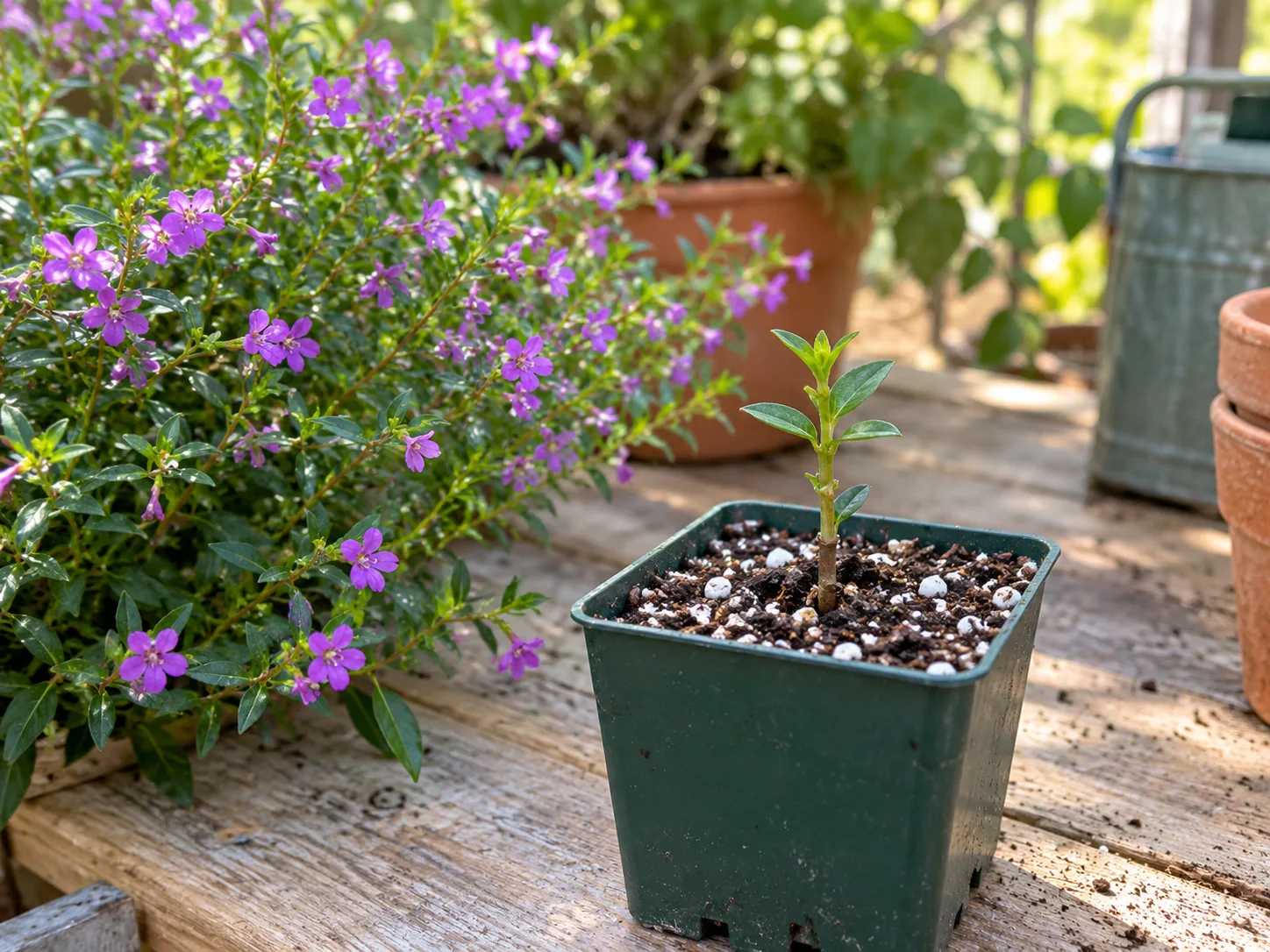
Set the pot in bright indirect light, out of direct sun, and cover it loosely with a clear bag or dome if the air is dry. Vent it regularly so condensation does not keep leaves wet, and remove any fallen or rotting leaves. Keep the mix slightly moist, not saturated.
New growth is encouraging but not proof of roots; wait until the cutting resists a gentle tug or roots are visible through the drainage holes before potting it into regular mix. Give it time to adjust before exposing it to harsh sun or outdoor temperature swings. BHG outlines a similar tip-cutting method and advises daily ventilation when covering cuttings; the RHS and NC State profiles also list seed or cuttings as propagation options for Cuphea species.
Make a Winter Plan Before Frost Arrives
Cuphea is often sold as an annual because many kinds are tender in climates with freezing winters, but hardiness depends on the species and selection. Do not apply one zone range to the whole genus: NC State lists Mexican heather in zones 9a through 11b, its cigar plant profile in zones 10a through 12b, and Clemson Extension gives candy corn plant a different range of zones 8 through 11.
These are profile estimates for different plants, not interchangeable guarantees. A named cultivar’s tag and local extension advice are more useful than a broad label that simply says “Cuphea.”
For an in-ground plant that is marginally hardy in your area, drainage and shelter can improve its odds, but mulch cannot turn a frost-tender tropical plant into a reliably hardy perennial. If losing the plant would be disappointing, take cuttings or grow it in a movable pot rather than gambling on winter protection. C. micropetala is an important exception to the common “tender annual” shorthand: Clemson Extension treats candy corn plant as a perennial in zones 8 to 11, so its winter plan should follow that species profile.
Before the first frost, inspect potted plants for insects and bring them indoors while nights are still mild. Remove dead or damaged stems, rinse dust from foliage, and place the plant near the brightest window available. Water less often as growth slows, but do not leave the root ball bone-dry for weeks.
For cigar plant, Harvest to Table’s growing notes likewise recommend bright indoor light and reduced winter watering and feeding. Indoor air and light are different from an outdoor patio; allow a transition period when moving the plant back outside in spring, and wait until frost has passed before leaving it outdoors overnight.
Troubleshoot Weak Bloom, Wilting, and Pests
Cuphea is generally low maintenance, but a symptom rarely points to one cause on its own. Look at the recent weather, the plant’s location, and soil moisture before changing fertilizer or pruning. Check a few leaves and stems closely, especially on plants brought indoors, because the light and air movement change as soon as a container moves inside.
Few flowers or floppy stems
| What you see | First check | Practical adjustment |
|---|---|---|
| Healthy leaves, few flowers | How many hours of direct light does the plant actually receive? | Move it gradually to a brighter position, or use a little afternoon shade only if heat is causing stress. |
| Long, weak stems and a loose shape | Is the plant shaded by a wall, shrub, or neighboring pot? | Increase light where practical and pinch a few soft tips after the plant is established. |
| Buds stall after planting or a move | Was the plant recently transplanted, chilled, or exposed to an abrupt light change? | Keep moisture even, stabilize the location, and give it time to resume growth before feeding. |
| Lots of foliage but few blooms | Has it received repeated high-nitrogen feeding? | Pause fertilizer and let new growth mature; use a balanced product at label rates only if feeding is needed. |
Small flowers can be easy to overlook on C. hyssopifolia, whose appeal is the mass of many tiny blooms rather than a few large flowers. Candy corn plant, by contrast, may delay its show until later in the season.
Check the species and expected bloom window before deciding a plant is failing. For C. micropetala, Clemson Extension notes that its yellow-to-orange flowers begin in September in the South Carolina garden context, so a quiet midsummer plant may be following its normal rhythm rather than missing a care requirement.
Yellow leaves, wilt, or visible insects
If leaves wilt, feel the soil before watering. A dry root ball points toward thirst; wet, heavy mix with yellowing leaves or soft stems suggests poor drainage or root stress. Let a saturated pot drain, remove standing water, and check that its holes are open.
If it has a sour smell or collapsing roots, trim only clearly dead material and repot into fresh, free-draining mix if enough healthy roots remain. Do not keep adding water to a wilting plant until you know which condition it has.
Look under leaves and around new growth for aphids, whiteflies, mealybugs, or thrips; NC State Extension specifically flags mealybugs, thrips, and whiteflies on Mexican heather, especially indoors. Small numbers can often be rinsed off or removed while you isolate a potted plant and monitor new growth.
Recheck after several days because eggs and hidden insects may remain. Use a pesticide only if identification confirms it is needed, and follow its label and local guidance exactly; spraying a flowering plant while pollinators are visiting creates an avoidable exposure risk.
Conclusion
For dependable Cuphea care, begin with the Latin name and the winter limits of that exact plant. Give it bright light, protect it from scorching afternoon heat where necessary, water when the root zone begins to dry, and make sure the soil or pot drains freely. Pinch young stems if you want a denser plant, but avoid routine hard cutting and heavy fertilizer.
In a warm climate, many Cuphea can stay outdoors and bloom for a long season. In a cold-winter garden, treat a tender kind as a summer annual or use a container and take a cutting before frost. Matching the care plan to the species is the difference between an easy pollinator plant and a plant that never gets the conditions its label implied.