How to Harvest Cilantro for Repeat Leaf Harvests
Learn where to cut cilantro, how much to take, how to slow bolting with succession sowing, and how to keep fresh leaves crisp after harvest.
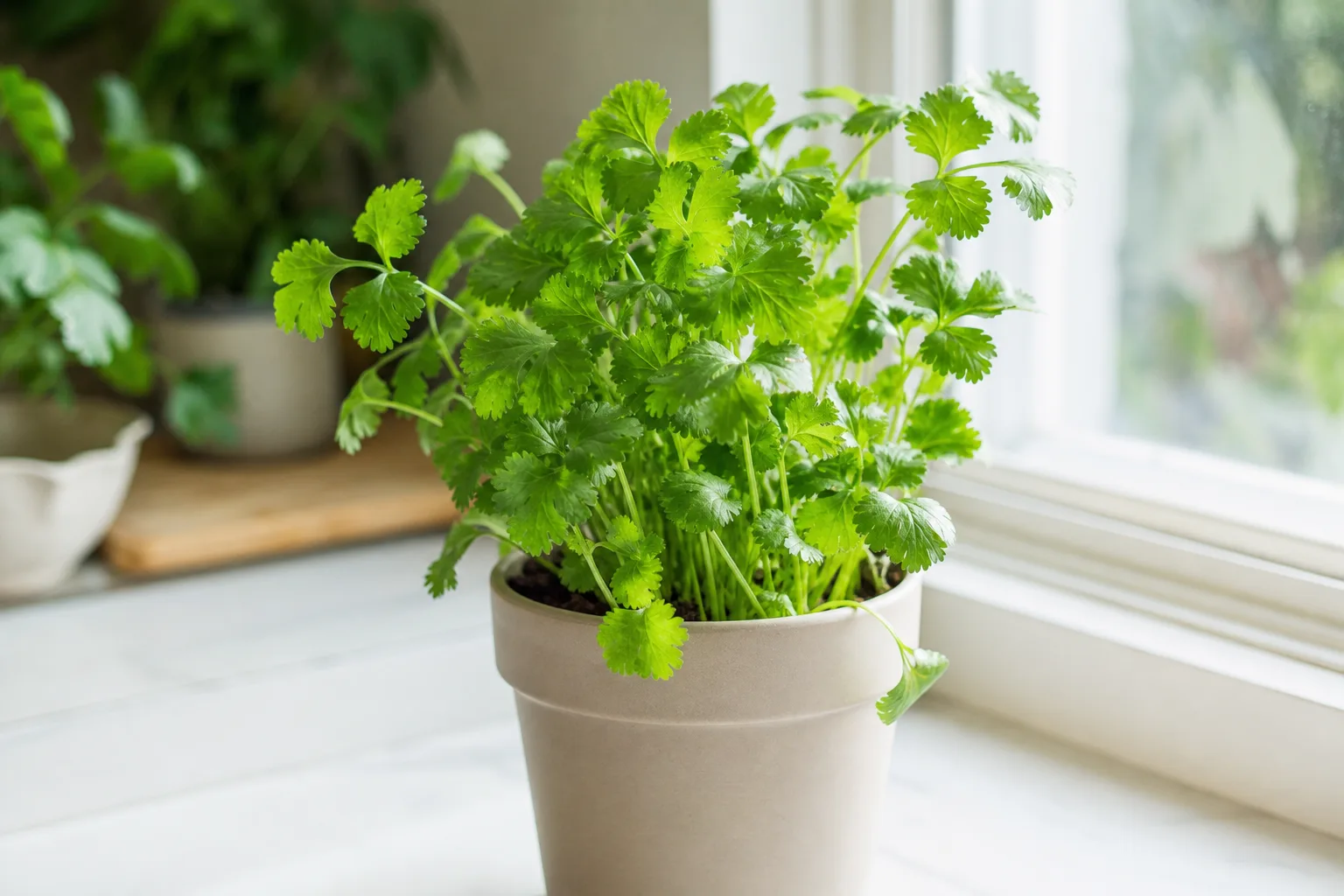
Cilantro gives you a short window for tender leaves, but that window is easier to use when you harvest according to the plant’s stage instead of a fixed calendar. Start with established plants, take the mature outer stems, leave the center growing point alone, and sow a new small batch before the old one flowers.
The important distinction is that cilantro is not an endlessly regenerating herb. It is the leafy phase of Coriandrum sativum, a cool-season annual that eventually sends up flowers and makes coriander seed. A careful cut can give you several useful pickings, while succession sowing—not increasingly aggressive pruning—is what keeps the kitchen supplied.
For a quick rule, begin when the plant has several leafy stems and the leaves are roughly 4 to 6 inches tall. Cut the outside stems near their base, remove no more than about one-third of a healthy plant for a repeat harvest, and get the cut foliage out of sun and heat immediately.
Know which harvest you want: leaves or coriander seed
Decide whether this planting is for fresh cilantro leaves, coriander seed, or both. The decision changes how long you keep cutting, how closely you space plants, and whether you remove flower stalks when they appear.
For leaves, you want a compact plant with broad, flat, richly green foliage. The University of Wisconsin Extension describes the early leaves as broad and flat, then notes that a bolting plant produces finer, fern-like leaves on a taller flower stem. Those later leaves are still edible, but they are usually less satisfying for the classic leafy harvest.
For coriander, let the plant complete the reproductive phase. UF/IFAS Gardening Solutions explains that the same plant used for cool-season cilantro produces the spice coriander from its seeds; once you allow flowering, the best use of the plant may shift from repeated leaf picking to seed collection. This is not a failed crop—it is a second harvest with a different timing target.
If you want both, take leaves early and lightly, then leave one or two strong plants to flower. Harvest the remaining leafy plants as needed while the seed plants finish. That small division is more dependable than expecting every plant to provide abundant leaves and a large seed crop at the same time.
Wait until the plant can spare leaves
Very young cilantro seedlings have little leaf area beyond what they need to establish roots. Cutting them as soon as they emerge may give you a few tiny leaves, but it can slow the plant before it has enough growth to replace what you remove.
Wait until the plants have several true leaves, multiple visible stems, and enough height to give you a usable cutting. A calendar estimate can help you watch the crop, but it should not overrule the plant: light, temperature, cultivar, spacing, and moisture all change how quickly cilantro reaches harvest size.
University of Wisconsin Extension places the foliage harvest roughly 45 to 80 days from planting, while other extension guidance uses a shorter window for fast-growing plants. The useful takeaway is not one universal number of days; it is to judge the leaf size and the amount of established growth in front of you.
Signs cilantro is ready
Your first selective harvest is usually ready when:
- several outer stems carry full-sized, undamaged leaves;
- the leafy stems are about 4 to 6 inches tall, or the plant is roughly 6 inches high;
- the center still has small, actively growing leaves;
- the plant is not already dominated by a tall flower stalk; and
- the soil is moist but not waterlogged, so the plant is not recovering from drought or root stress.
If the plant is thin, pale, wilted, or crowded by weeds, harvest less or wait. A plant that is struggling cannot be made productive by removing more leaves, and a large dose of fertilizer is not a substitute for light, spacing, moisture balance, or cool weather.
Gather tools and cut outer stems without stripping the crown
For a few leaves, clean fingers are enough. For a bunch, use sharp scissors or small pruning shears that make one clean cut instead of crushing the soft stem. Wipe soil from the blades before you begin, especially when moving between containers or patches.
The coolest part of the day is a good time for a larger harvest. Early morning after surface moisture has dried gives the leaves a better chance of staying crisp, but harvesting right before cooking is also excellent because cilantro loses aroma with time. If you pick in the afternoon, carry the stems straight to shade rather than leaving them in a warm basket while you finish other garden jobs.
Keep a shallow bowl or basket nearby so the cut stems are not compressed. Cilantro bruises easily, and a deep, tightly packed container can turn a fresh handful into a damp mass before you get indoors. If the leaves are dirty, rinse them under clean, cool running water and dry them thoroughly; never use soap or household cleaners on edible leaves.
Start on the outside of the plant and work inward only as the plant becomes larger. Choose mature outer stems with good leaves, follow each stem down through the foliage, and cut it close to the base while avoiding the small central leaves.
This method removes foliage the plant can spare while preserving the growing point. It also makes it easier to inspect the plant as you harvest: you can spot yellowing, a hidden flower stalk, crowded stems, or a dry root zone before taking more.
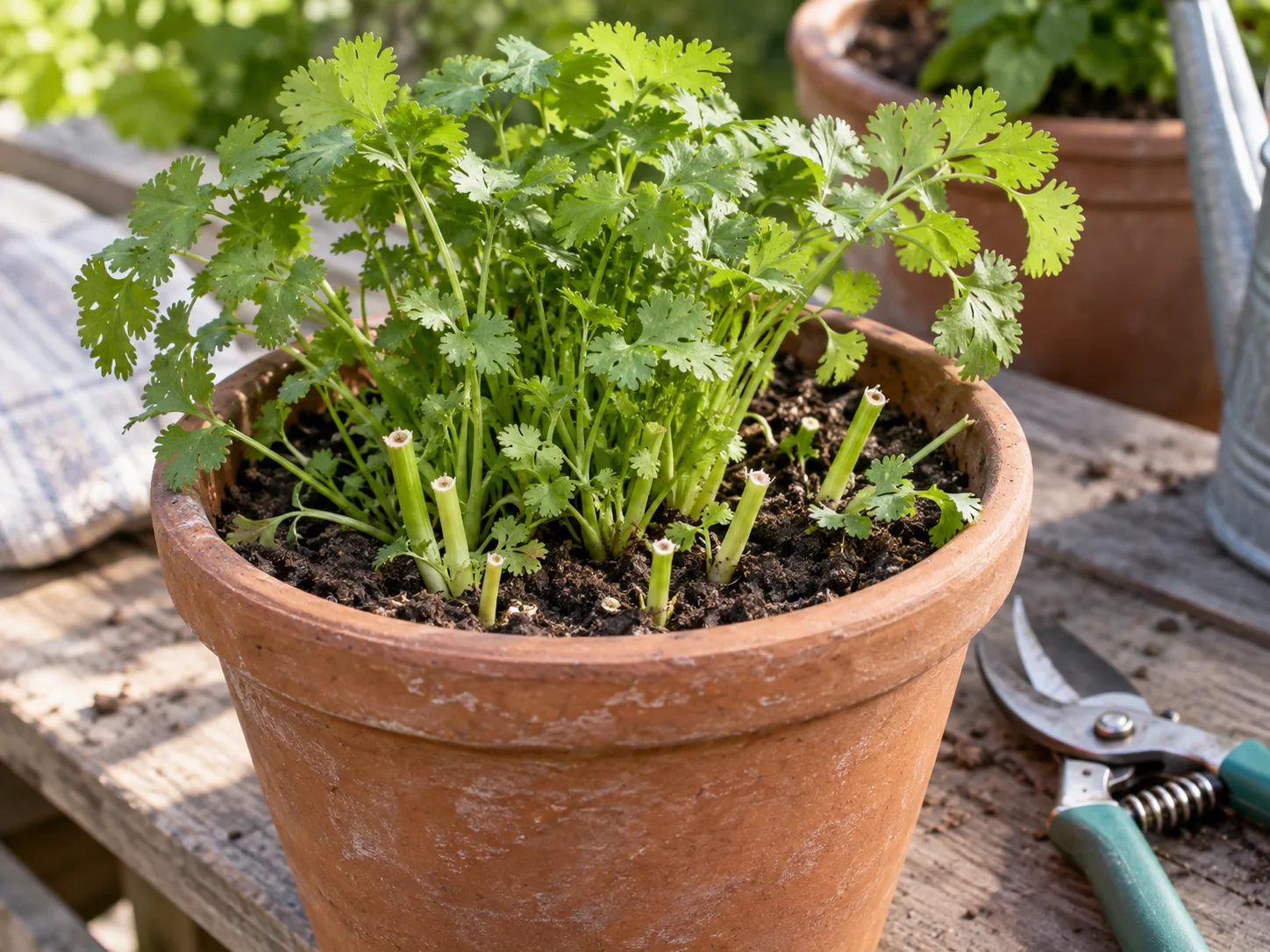
Do not treat cilantro exactly like basil. Basil branches strongly when you cut above a leaf pair, while cilantro’s reliable advantage is that you are removing selected stems and preserving the remaining crown. The Wisconsin guidance supports picking older outside leaves for new growth, but it also makes clear that cilantro’s life cycle remains short.
Where to place the cut
For an individual stem, place the scissors near the soil line or just above the crown, where you can remove the whole usable stem without tugging the plant. Do not dig into the crown or pull upward, because disturbing the root and crown can turn a simple harvest into unnecessary stress.
For a small bunch, gather several outer stems and make one clean cut about an inch above the soil. Leaving a little stem rather than scraping the crown gives the plant a clear, undamaged base. If your plants are small or sparse, move the cut higher and take fewer stems instead of forcing a full bunch.
The center is your reserve. Leave the youngest leaves and the shortest inner stems in place even when the outer foliage looks ready. Those inner leaves are the next harvest, and they are also the photosynthetic area that helps the plant recover.
Set a harvest limit that leaves the plant working
For repeat harvests, use about one-third of the leafy plant as a conservative upper limit. It is a practical home-garden rule rather than a magic number: a dense, vigorous plant may tolerate a little more than a thin plant, while a stressed or recently transplanted plant needs much less.
Look at what remains after the cut. You should still see a living center, several useful leaves, and enough green surface that the plant does not look stripped. If you can no longer imagine where the next leaves will come from, you harvested too hard.
After a moderate harvest, keep the soil evenly moist but not saturated and give the plant the light it needs. Do not respond to a heavy cut with repeated fertilizer applications. Extra nitrogen can produce soft growth or dilute flavor, and it cannot reverse a plant that is already being pushed toward flowering by heat and long days.
Regrowth is also less predictable than the phrase “cut and come again” suggests. A healthy plant can produce another picking after a moderate cut, but it will not keep resetting indefinitely; age, weather, roots, and the cultivar all matter.
Choose between a light harvest and a full cut
Use a light harvest when you need cilantro for a garnish, salsa, soup, or one meal and the plant is still compact. Take only the stems you can use, leaving neighboring plants and the center of the harvested plant untouched.
Use a larger bunch harvest when a recipe needs a lot of cilantro or when the plant is already close to flowering. If one mature plant is clearly ahead of the others, cut that plant low and leave the younger plants to develop. This gives you food now without sacrificing the entire succession.
If you cut the whole plant about an inch above the soil, it may produce a second flush under favorable cool conditions. The Wisconsin Extension notes that a whole plant can be cut as a bunch and allowed to regrow for a second cutting, but treat that as an opportunity rather than a guarantee. In hot weather or after a flower stalk has formed, starting a new sowing is usually the better use of your space.
Do not pull the plant just because the leaf harvest is over. If it is flowering and you want coriander, keep it in the ground until the seed heads mature. If you do not need seed, remove the spent plant and replant the space with a fresh crop suited to the current season.
Harvest cilantro in containers and indoors
Containers make harvest convenient, but they can also heat and dry faster than a garden bed. Use a pot deep enough for cilantro’s long root system, give it drainage, and sow in the final container when possible. University extension guidance warns that cilantro does not transplant well because of its taproot, so avoid repeated pot changes just to keep the plant looking tidy.
Place an outdoor pot where it receives strong light but can get afternoon protection in hot weather. A movable container gives you a useful option: keep it in brighter light during cool weather and shift it away from reflected heat from walls, paving, or a metal railing when temperatures rise.
Indoor cilantro can stay harvestable longer because you can control temperature and day length more closely, but it still needs strong light. Savvy Gardening recommends at least six hours of direct sunlight for a full-sized plant or the equivalent support from a grow light, and it advises keeping pots away from heating vents. A sunny windowsill that becomes hot in the afternoon may be worse than a slightly less bright spot supplemented with a grow light.
Harvest indoor plants the same way as outdoor plants: mature outer stems first, center preserved, and no more than the plant can replace. Sow a new pot before the first one flowers instead of assuming one windowsill plant will supply fresh leaves all year.
Use timing and succession sowing to extend the crop
The most reliable way to extend a cilantro harvest is to grow plants at different ages. Sow a small patch, wait roughly two to three weeks, sow another, and continue while the conditions remain favorable for leafy growth. You do not need a large garden; even a short row or several small containers can create a useful relay.
The second planting should be growing while the first is being harvested. By the time the first begins to stretch, the second can provide fresh leaves, and a third planting can be establishing behind it. This spreads risk across weather and growth stages instead of placing all of your harvest hopes on one planting date.
Match sowing to your climate
In a cool spring, sow as soon as your soil can be worked and repeat before the first crop gets old. In regions where summer arrives quickly, stop expecting long leaf production from a late spring sowing and plan a fall crop as the weather cools. UF/IFAS Gardening Solutions recommends fall and winter growing in Florida because long days and warm conditions push cilantro to flower quickly.
In a colder climate, an early spring crop and a late-summer or early-fall crop can be more productive than trying to nurse cilantro through the hottest part of summer. The University of Wisconsin Extension specifically advises against summer plantings where heat causes plants to bolt before producing much foliage, and Utah State University Extension recommends adjusting spring or fall sowing to local conditions.
Use your local frost dates and actual soil conditions rather than copying a month from another climate. Cilantro prefers cool growing conditions but is not indestructible in a hard freeze, and a crop planted too late may make leaves without enough time to mature seed.
Choose a slow-bolting cultivar
If leaves are the priority, look for a cultivar described as slow-bolting or bolt-resistant. Utah State University Extension lists choices such as ‘Slow Bolting’ and ‘Leisure’, while other extension and horticultural references commonly mention ‘Santo’, ‘Calypso’, or ‘Long Standing’ for a longer leafy window.
The label is a useful advantage, not a promise. Even a slow-bolting cultivar will flower when the plant experiences sufficiently warm conditions, long days, drought, or root stress. Compare cultivars within the same season and location rather than assuming a variety can defeat midsummer heat.
If your goal is coriander seed, a cultivar’s delay to flowering may be less important. You can let a standard planting flower, then select the healthiest plants with the fullest seed heads for your seed harvest and next crop.
Read the plant when it starts to bolt
Bolting is the shift from leaf production to flowering and seed production. Watch for a taller central stem, smaller and more finely divided leaves, flower buds, or pale pink and white umbels rising above the leafy crown.
Heat and long days are common triggers, but dry soil, cramped roots, and a hot container can accelerate the change. Mulch can moderate soil temperature in a bed, and steady moisture can reduce drought stress, but neither practice can keep an annual vegetative forever.
When the plant is already tall and lacy, do not keep taking large leafy cuts in the hope of returning it to its earlier form. Harvest the usable leaves promptly, then decide whether you want flowers and coriander or whether it is time to replace the plant.
When removing a flower stalk helps
If you catch a single early flower stalk while the plant is still mostly leafy, cut that stalk cleanly and harvest the best leaves soon. This may buy a short delay, especially if cool weather returns, but the plant has already begun its reproductive transition.
Removing every new stalk can become a losing battle. It is more useful to take the brief extra harvest, leave a plant for seed if you want it, and sow the next batch. Treat flower removal as a timing tactic, not a permanent anti-bolting treatment.
Flowering cilantro is also valuable in the garden. Its small umbels can attract pollinating and beneficial insects, and the plant gives you a chance to collect coriander rather than sending it straight to the compost pile. The UF/IFAS guide notes the appeal of its flowers to pollinating insects, so seed production can serve both the kitchen and the garden.
Switch from leaves to coriander seed
Let the flower heads finish blooming and watch the developing fruits change from green toward tan or light brown. The exact color varies with stage and light, so use several signs together: the plant is drying, the seed heads feel firm, and the fruits are no longer soft green.
The University of Wisconsin Extension recommends harvesting when the seeds are light brown and the plant has dried, often two to three weeks after flowering. Mother Earth News offers a useful shattering check: cut when about half the seeds have changed from green to grayish tan, then finish drying them off the plant.
Cut the seed-bearing stems before most of the fruits fall. Put the cut stems in a paper bag or over a cloth in a warm, dry, airy place. Leave the bag open enough for airflow, and handle the stems gently because ripe coriander seed can drop as soon as the plant is moved.
After roughly two weeks, shake or rub the dry heads to release the seeds. Remove large pieces of stem and chaff, then store the whole seeds in an airtight container in a cool, dark, dry cupboard. Label the container with the harvest date and keep seed intended for planting separate from seed intended for cooking.
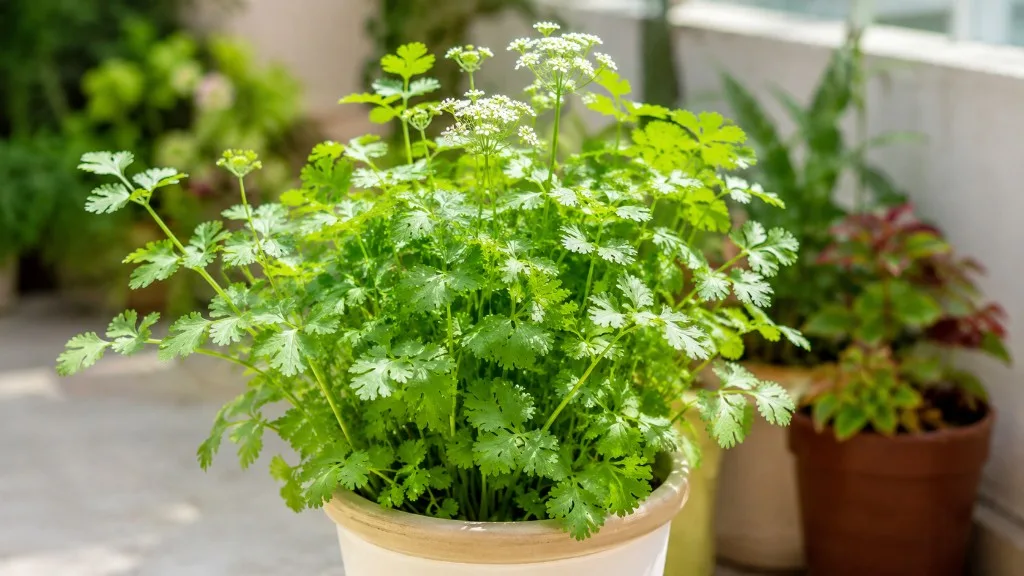
Do not rush the drying stage. Wisconsin Extension notes that thorough drying develops the flavor of the seeds, and moisture left in a sealed container can lead to mold or poor seed quality. If you want self-sown cilantro, allow a few heads to shed naturally, but do not rely on random seedlings if you need a predictable succession schedule.
Wash, chill, and store fresh cilantro
Move freshly cut cilantro into shade immediately and sort it before storage. Remove yellow, crushed, slimy, or diseased leaves so they do not shorten the life of the rest of the bunch.
Because cilantro is often eaten raw, clean handling matters from garden to plate. Colorado State University’s Food Source Information explains that fresh cilantro can carry foodborne pathogens and that prevention, hygiene, and clean handling are central to fresh-herb safety. For a home harvest, wash your hands, use clean containers, rinse leaves under clean running water when needed, and dry them thoroughly.
For the longest fresh life, trim the stem ends and stand the bunch upright in a jar with a small amount of clean water. Loosely cover the leaves with a bag, refrigerate the jar, and change the water when it becomes cloudy or every day or two. Keep the leaves above the water; submerged foliage turns slimy quickly.
If you do not want to use the jar method, wrap dry leaves loosely in a clean paper towel and place them in a container or partly open bag. This works best when the leaves are already dry and the container is not packed so tightly that condensation collects inside.
Use the leaves while they are crisp and aromatic. Discard cilantro that is slimy, moldy, sour-smelling, or visibly decayed rather than trimming around questionable spots and mixing the remainder into raw food.
Freezing is better than drying for leafy flavor
Fresh cilantro has the brightest aroma, but freezing is a good way to preserve more of its character than air-drying. Rinse and dry the leaves well, chop them if convenient, and freeze small portions in a sealed container or bag. Small portions let you take out only what a cooked dish needs.
Frozen leaves soften when thawed, so use them in soups, sauces, beans, rice, or cooked fillings rather than expecting the texture of a fresh garnish. You can also freeze chopped cilantro in small portions with a little water or oil, provided the container is well sealed and clearly labeled.
Drying is possible, but the leafy flavor becomes much weaker. Mother Earth News makes the same practical distinction: frozen leaves retain more of their useful flavor, while dried leaves are better treated as a mild seasoning. Coriander seeds are the part that benefits from thorough drying and long, airtight storage.
Fix the harvest mistakes that waste a crop
Cutting the center first: Removing the youngest inner stems takes the plant’s active growth away. Start outside and leave the crown visible.
Waiting for a perfect height: Cilantro does not become better because you wait for a single number. If the plant is already stretching or the weather is turning hot, harvest the usable leaves and start the next sowing.
Taking half the plant for one meal: A large harvest can leave too little leaf area for recovery. Use the one-third rule for repeat harvests, or deliberately take one whole mature plant while protecting younger neighbors.
Trying to prune heat away: Flower-stalk removal may delay seed production briefly, but it cannot override the annual life cycle. Move your effort to timing, shade, moisture consistency, and succession sowing.
Treating a container like a garden bed: A dark pot on hot paving can cook the root zone and dry out between checks. Use a deep, draining container and move it from reflected heat when necessary.
Transplanting repeatedly: Cilantro’s taproot makes unnecessary root disturbance costly. Sow in the final pot or bed, and if you must transplant, handle the root ball gently and do it while the seedling is young.
Storing wet leaves: Water left between packed leaves becomes condensation and speeds decay. Rinse when needed, then dry thoroughly before refrigeration.
Throwing away a bolted plant: A bolting plant may no longer be ideal for a leafy bunch, but it can provide flowers, coriander seed, or a source of self-sown seedlings. Change the harvest goal instead of treating the plant as useless.
Follow a repeatable cilantro harvest schedule
Use this schedule as a flexible rhythm, not a promise of exact dates:
| Crop stage | What to do | What to leave for the next stage |
|---|---|---|
| First sowing | Direct-sow a small row or pot in cool conditions; keep the seedbed evenly moist. | Enough seedlings to thin without crowding. |
| Establishment | Wait for several true leaves and a leafy plant around 6 inches tall. | The center crown and youngest leaves. |
| First harvest | Take mature outer stems near the base; remove about one-third or less. | At least two-thirds of the healthy foliage on a repeat-harvest plant. |
| Succession | Sow another small batch about two to three weeks later while the first is productive. | A younger crop that will replace the older one. |
| Bolting watch | Harvest good leaves promptly when the plant stretches or flower buds appear. | One or two plants if coriander seed is wanted. |
| Seed finish | Cut drying, light-brown seed heads before shattering and finish drying in a paper bag. | Fully dry seed for cooking or the next sowing. |
Record what happened in your own garden: the sowing date, first usable cut, first flower stalk, and the temperature pattern around bolting. Next season, move the second sowing earlier or later based on that record, and test one slow-bolting cultivar beside your usual variety.
The best harvest plan is often smaller than a gardener expects. A few plants sown repeatedly can give a steadier supply than one crowded planting that all bolts in the same week, and a single seed plant can provide enough coriander for future sowings and the spice cupboard.
Conclusion
Harvest cilantro by reading the plant, not by waiting for a perfect date. Once it has several strong leafy stems, take the mature outer growth near the base, protect the center, and keep repeat cuts modest. A whole-plant cut is useful when you need a large bunch, but save it for a mature plant and let younger succession plantings carry the next harvest.
Cool-season timing, direct sowing, sensible moisture, afternoon protection in hot weather, and new seed every few weeks do more to extend your supply than repeatedly removing flower stalks. When bolting finally wins, let the plant change jobs: harvest the remaining leaves, enjoy the flowers, and collect coriander seed when the heads dry and turn light brown.
That approach turns cilantro’s short life cycle into a predictable rhythm. You get better leaves now, a replacement crop already underway, and a useful seed harvest instead of a pot of tired stems.