22 Types of Perennial Flowers, Sorted by Bloom Season
Compare 22 perennial flowers by bloom season, sun, moisture, and mature size, then choose plants that fit your garden and build color from spring through fall.
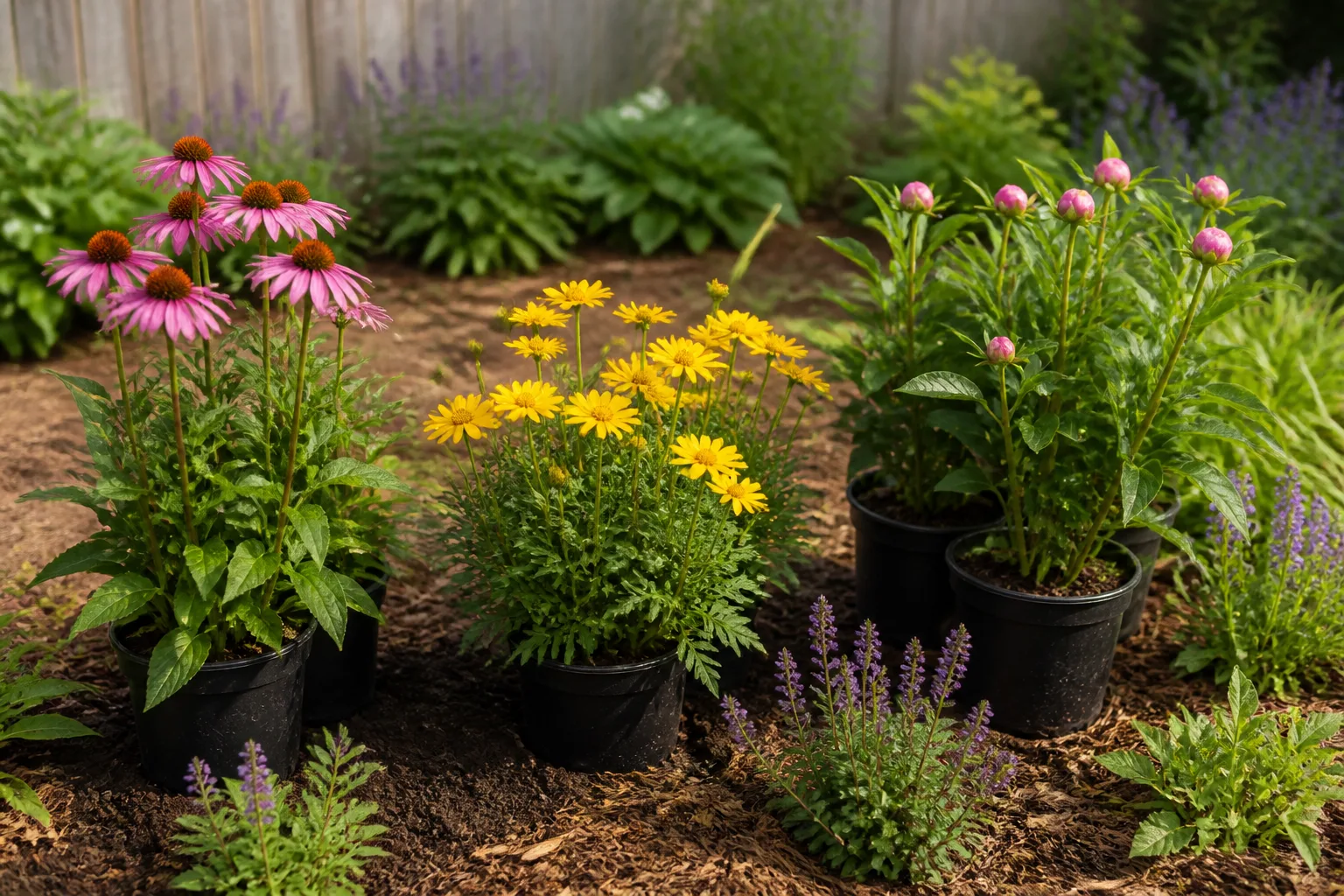
A perennial is a plant that lives for more than two years; herbaceous perennials usually die back aboveground in winter and regrow from persistent roots or crowns. That shared life cycle does not mean they all flower for months. Peonies may give you a spectacular but brief spring display, while catmint can flower in repeated waves; hostas are usually chosen for leaves first, with summer flowers as a bonus. A reliable border uses those differences rather than expecting one plant to do every job.
The 22 choices below are grouped by their usual bloom window, then described by light, moisture, and mature habit. These are planning ranges, not a calendar: latitude, elevation, weather, soil, and cultivar can shift bloom by weeks. A Colorado State University Extension table is especially useful for comparing bloom periods and heights, but it describes plants adapted to Colorado’s lower elevations, not a universal planting schedule. Better Homes & Gardens’ seasonal guide likewise organizes perennials by season and notes that most have a defined flowering period. Choose a plant for the conditions you actually have, then use staggered bloom to keep the garden interesting.
First, match the plant to the site
A plant label can show an impressive zone range and still describe the wrong plant for your yard. Before buying, observe the site through the day and after rain: how long does direct light reach it, where does water linger, and which plants already struggle there? Colorado State University Extension’s perennial-garden guide puts site selection, soil, water, bloom period, and mature size ahead of color choices for a reason: a flower that is healthy in the wrong spot rarely performs like the catalog photo.
Count direct sun before choosing flowers
Write down direct-sun hours at the planting spot, including the difference between morning and hot afternoon sun. Many flowering perennials give their best bloom in full sun, but an exposed wall or south-facing bed can also add heat and dry soil faster than the same number of light hours in an open garden; a little afternoon shade can protect plants in hot-summer regions. Part-shade plants often appreciate morning light and relief from harsh midday or afternoon sun. Do not call a site “shade” just because it sits beneath a tree: filtered light, dry tree roots, and deep building shade are different conditions.
Match soil moisture and drainage
“Moist” soil is not the same as waterlogged soil. Astilbe and queen of the prairie appreciate a consistently damp root zone; bearded iris and dianthus are more likely to fail where water stands around their crowns or rhizomes. Catmint, yarrow, and stonecrop tolerate drier conditions after they establish, but they still need watering while roots spread into the bed. If a spot stays wet after ordinary rain, improve drainage or choose a plant that tolerates it rather than trying to solve every mismatch with extra compost or fertilizer.
Use hardiness zones as a filter, not a guarantee
A USDA hardiness range is a useful first check on winter survival, not a promise about summer heat, humidity, rainfall, or flowering. Even within one zone, a sheltered urban courtyard and an exposed, windy slope can behave differently. Cultivars within the same species may also differ in cold tolerance, height, and bloom period, so check the nursery label and local extension advice. Invasive or freely spreading behavior is regional too: be especially deliberate with running plants, and consider locally native species where they fit the site and your design.
Spring and early-summer perennials
These plants bring the first major color, but spring bloomers often finish before summer is underway. Their leaves and structure matter after the flowers fade, so pair them with later perennials rather than leaving bare gaps. Colorado State University Extension’s herbaceous-perennial table lists approximate flower periods and mature heights; it also separates plants by sun, part shade, and shade, a better starting point than assuming all perennials want the same soil.
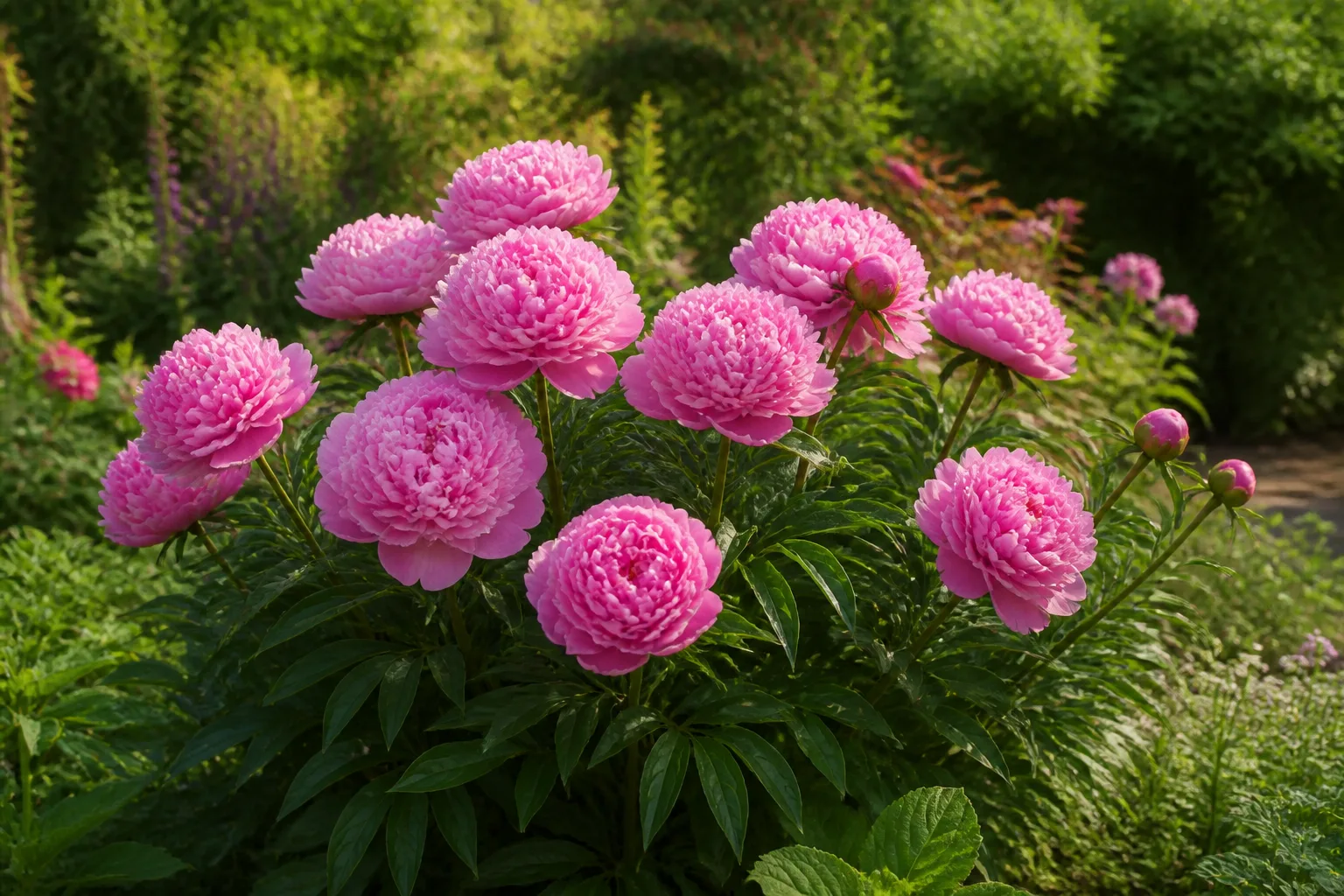
1. Peony (Paeonia). Herbaceous peonies usually flower in late spring, with many garden types forming a rounded clump about 2 to 3 feet tall and wide. Give them full sun for dependable bloom, or light afternoon shade where summers are very hot, in fertile soil that drains freely. The large flowers can become heavy after rain, so a support ring is easier to install before stems flop. Peonies are long-lived and dislike frequent moving; if you want a different cultivar, choose the final site carefully and confirm local hardiness because tree, herbaceous, and intersectional peonies do not have identical habits.
2. Bearded iris (Iris germanica). Bearded irises usually bloom in late spring, with flower stalks rising above sword-shaped leaves; the clump often reaches roughly 1 to 3 feet depending on cultivar. They need sun and sharp drainage, especially in winter, because a wet planting site encourages rhizome problems. Keep the top of the rhizome exposed or only lightly covered rather than burying it under a thick layer of soil or mulch. Reblooming cultivars exist, but the second flush depends on cultivar and growing conditions, so treat it as a bonus instead of a guaranteed season-long display.
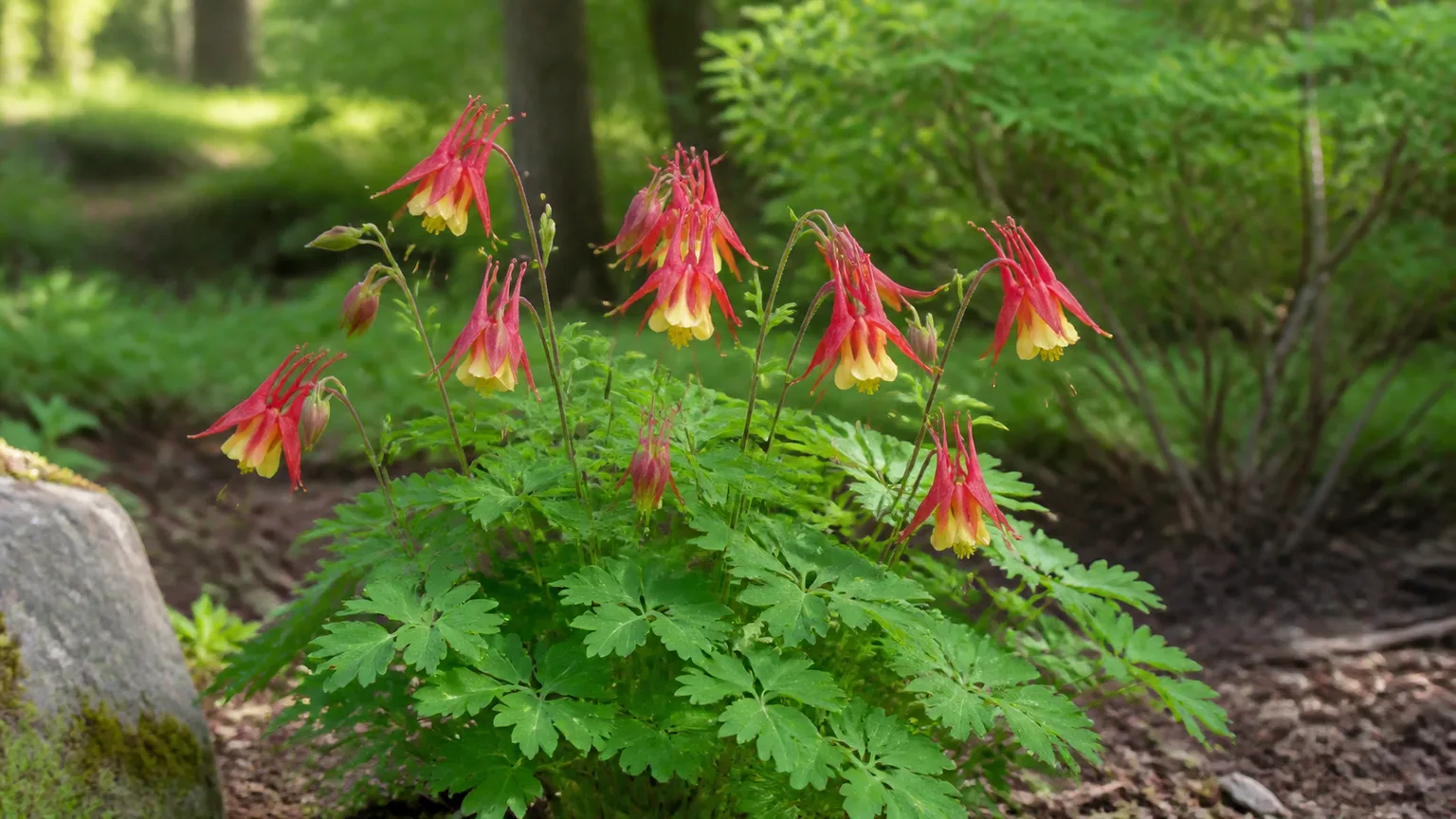
3. Columbine (Aquilegia). Columbines bloom in mid- to late spring on airy stems, often 1 to 3 feet tall, above a low clump of delicate leaves. They suit morning sun or bright part shade and evenly moist, well-drained soil; in hot climates, afternoon shade helps the foliage hold up. Many hybrids self-sow and may cross with nearby columbines, so seedlings can differ from the original flower color. If local ecology matters, select a columbine species native to your region instead of assuming a colorful nursery hybrid is native.
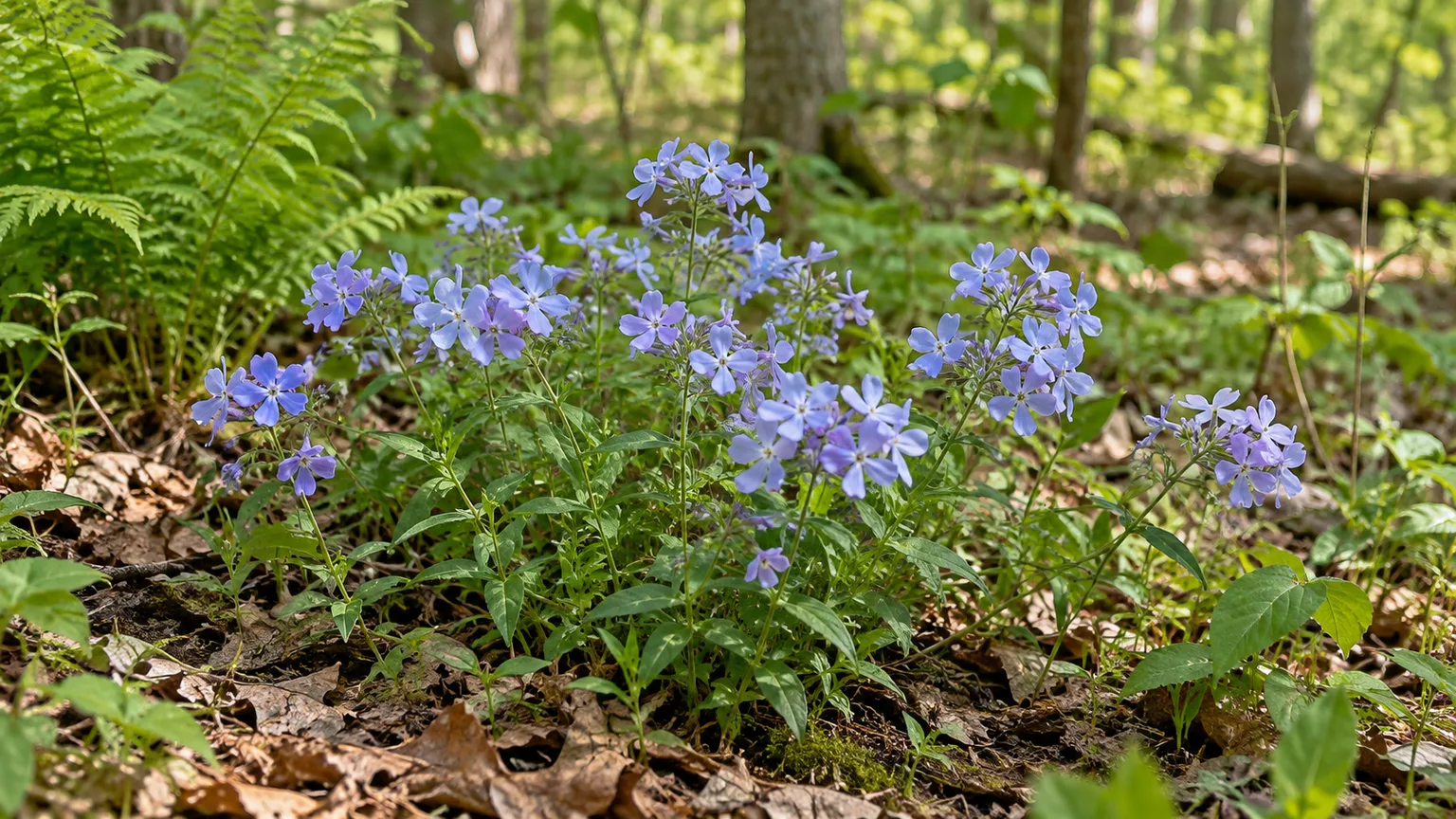
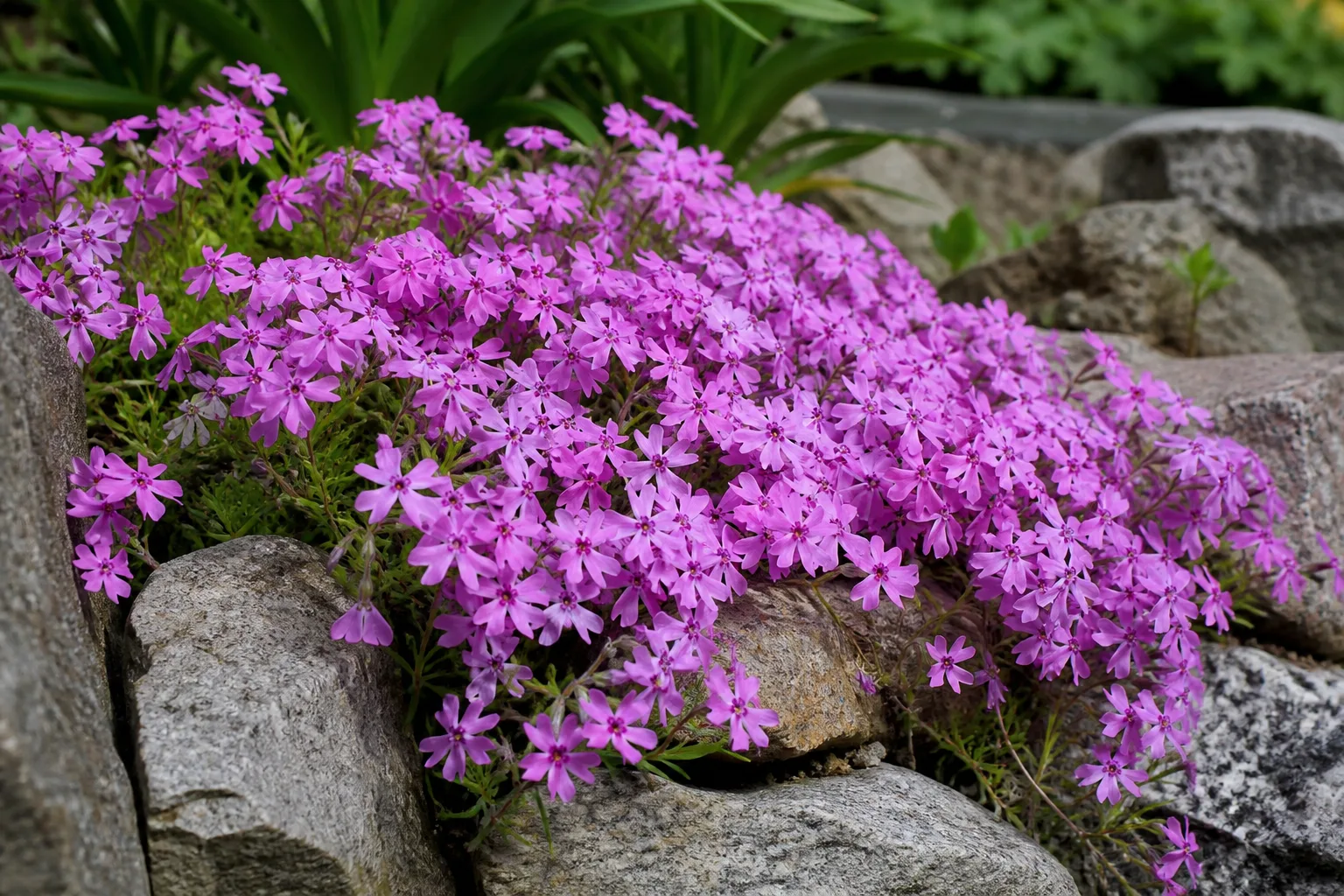
4. Woodland phlox (Phlox divaricata). This spring-blooming phlox is a low, spreading woodland plant, usually around 6 to 18 inches tall, rather than the taller summer garden phlox described later. It prefers part shade, humus-rich soil, and steady moisture without stagnant water. Use it at the front of a shade bed or beneath deciduous trees where spring light reaches the ground; it can struggle in hot, dry afternoon sun. Give the patch room to knit together, but do not mistake it for a plant that will cover a sunny, drought-prone bank.
5. Barrenwort (Epimedium). Epimedium is a foliage-first perennial with small, spurred spring flowers and a slowly expanding groundcover habit. Many varieties stay near 8 to 18 inches tall and are useful in partial to full shade, including established dry shade once their roots settle in. Its leaves can turn attractive colors through the season, which makes it more valuable than its short bloom window suggests. Cut away tired evergreen foliage in early spring if you want the flowers to show clearly; do this before the new bloom stems rise, and leave healthy foliage if winter protection matters in your climate.
6. Dianthus (Dianthus). Perennial pinks bloom in late spring and often repeat into summer, with fragrant flowers above compact, gray-green or grasslike leaves. Depending on species and cultivar, plants can form a 6- to 18-inch mound, so they work well at a sunny border edge, in a rock garden, or beside a path. They need excellent drainage and at least several hours of sun; wet winter soil is a more common problem than ordinary summer dryness. “Dianthus” covers short-lived, biennial, and longer-lived kinds, so check whether the cultivar is sold as a perennial for your zone.
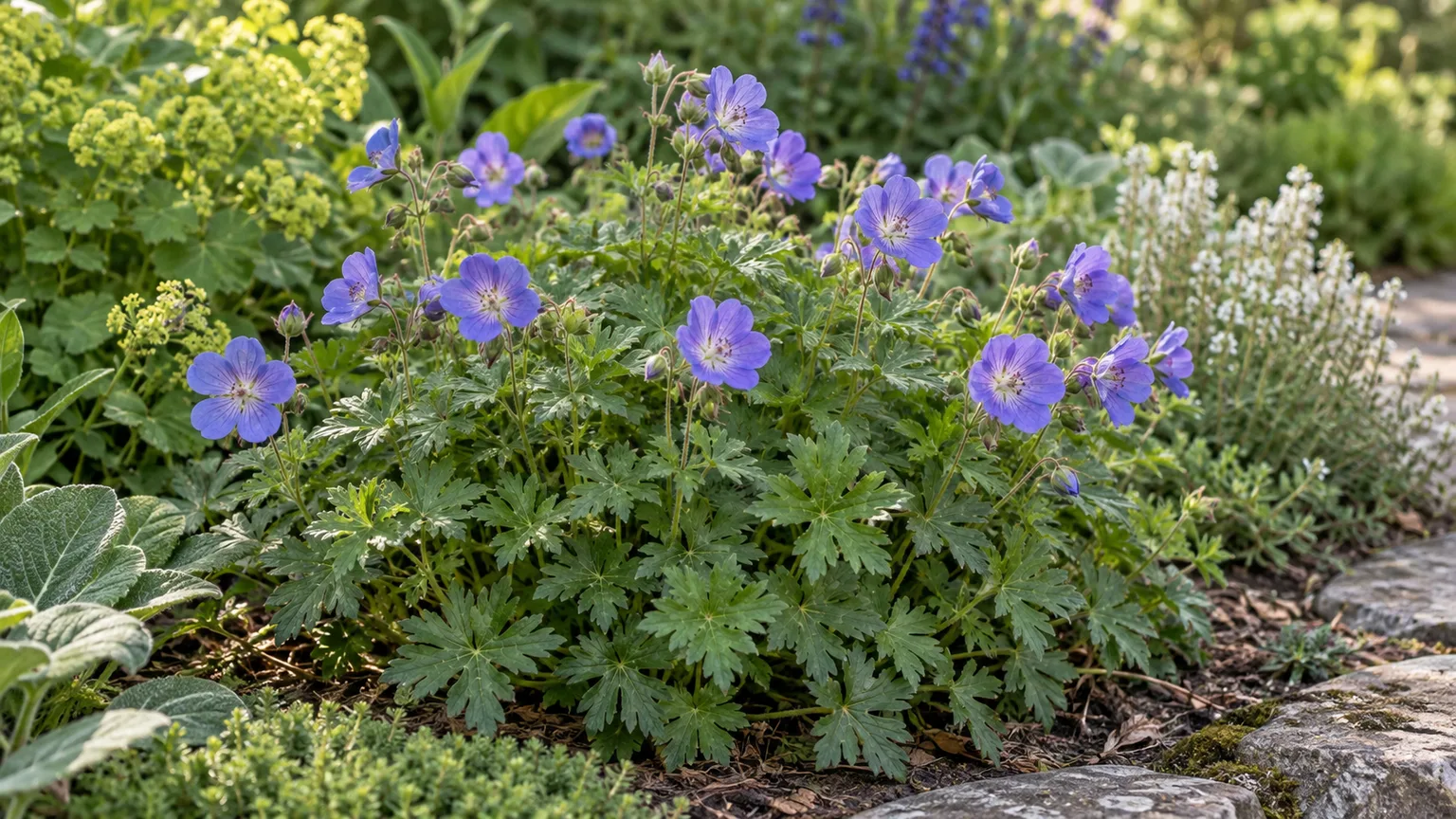
7. Hardy geranium (Geranium species and hybrids). True hardy geraniums, often called cranesbills, are not the tender florist plants labeled geranium at garden centers, which are Pelargonium. Hardy types form spreading or mounding clumps about 6 inches to 2 feet tall, with bloom from late spring into summer; some cultivars flower longer than others. Most grow in sun or part shade and prefer reasonably drained soil. They make a good soft edge in a mixed border, but the spread of a named cultivar can be much wider than its height, so check mature width before placing it beside a narrow path.
Summer perennials for sun and shade
Summer is when a garden’s light and water mismatches become obvious. Shade lovers may scorch in a hot, dry bed, while sun-loving flowers stretch or bloom less when crowded under trees. The plant entries below give approximate heights, but width and water requirements matter just as much when you decide where they belong.
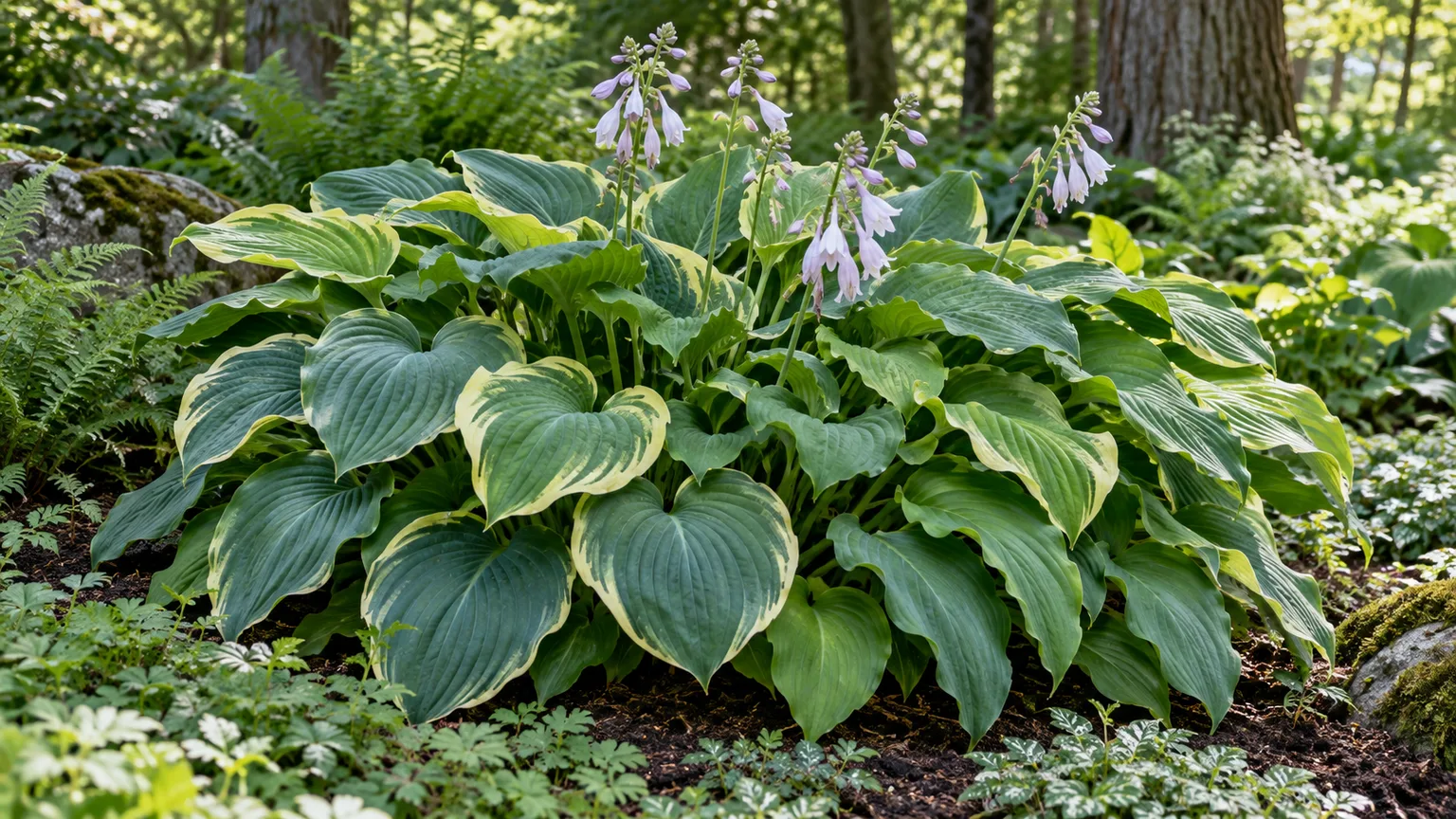
8. Hosta (Hosta). Hostas are grown mainly for their leaves: a single clump may be 1 foot tall in a small cultivar or several feet across and taller in a large one. White or purple flower stalks usually appear in summer, but foliage color, texture, and mature scale are the main reasons to plant them. Most prefer part to full shade and evenly moist, well-drained soil; some golden or fragrant cultivars tolerate more sun if moisture is steady. Deer often browse hostas, and dry shade can shrink leaves or scorch margins, so match the cultivar to the site rather than choosing from a flower photo alone.
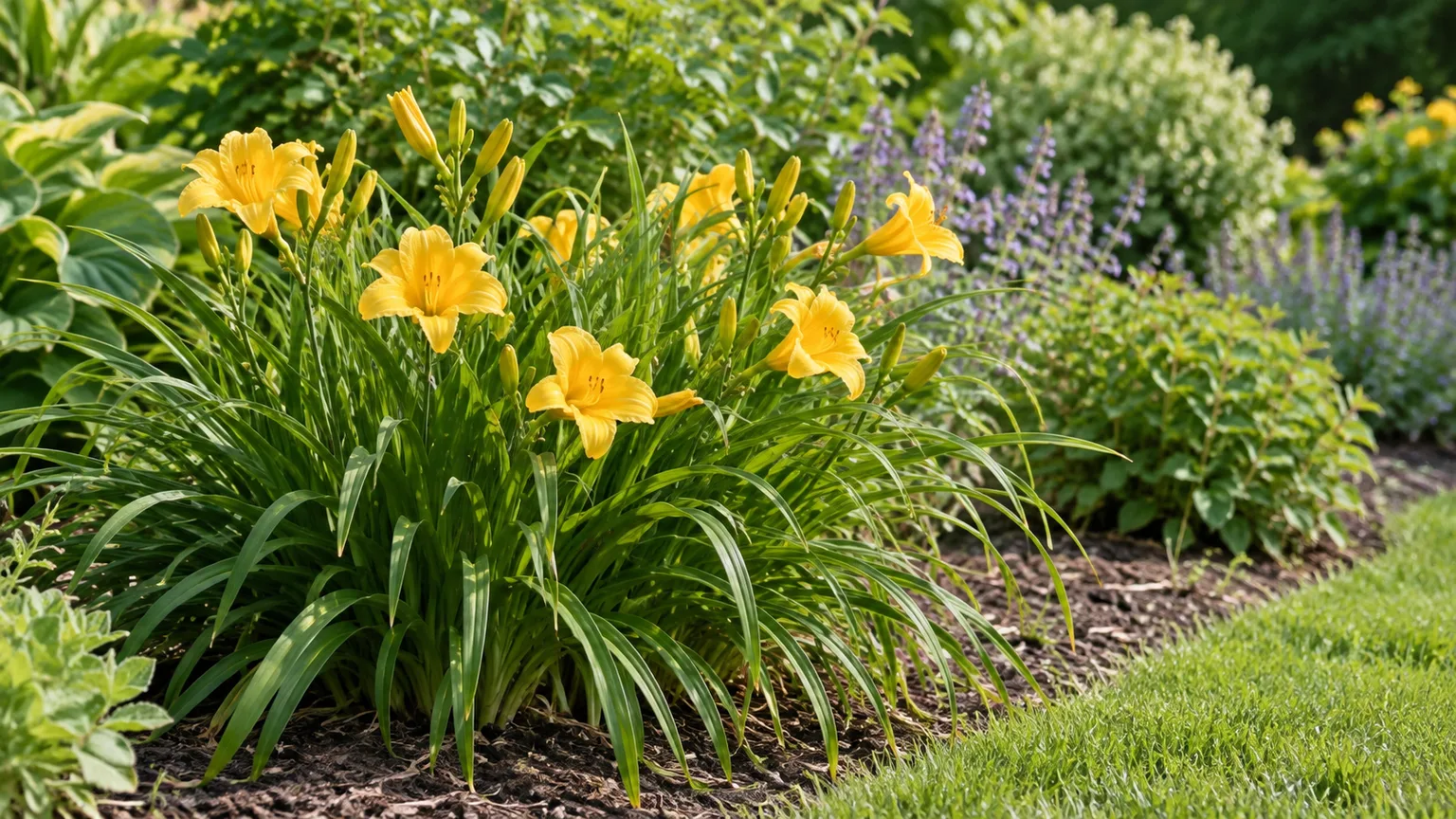
9. Daylily (Hemerocallis). Daylilies flower from late spring into summer, with grasslike foliage and flower stalks commonly 1.5 to 3 feet tall. Each individual flower lasts about a day, but a mature stalk carries multiple buds, and cultivars flower at different times; some rebloom after the first flush. Full sun gives the strongest flowering, though part sun can work, especially in hot regions. They tolerate a range of soils once established but still need drainage. Cultivars vary greatly in height and spread, so choose a compact rebloomer for a small bed and check local guidance before planting vigorous species.
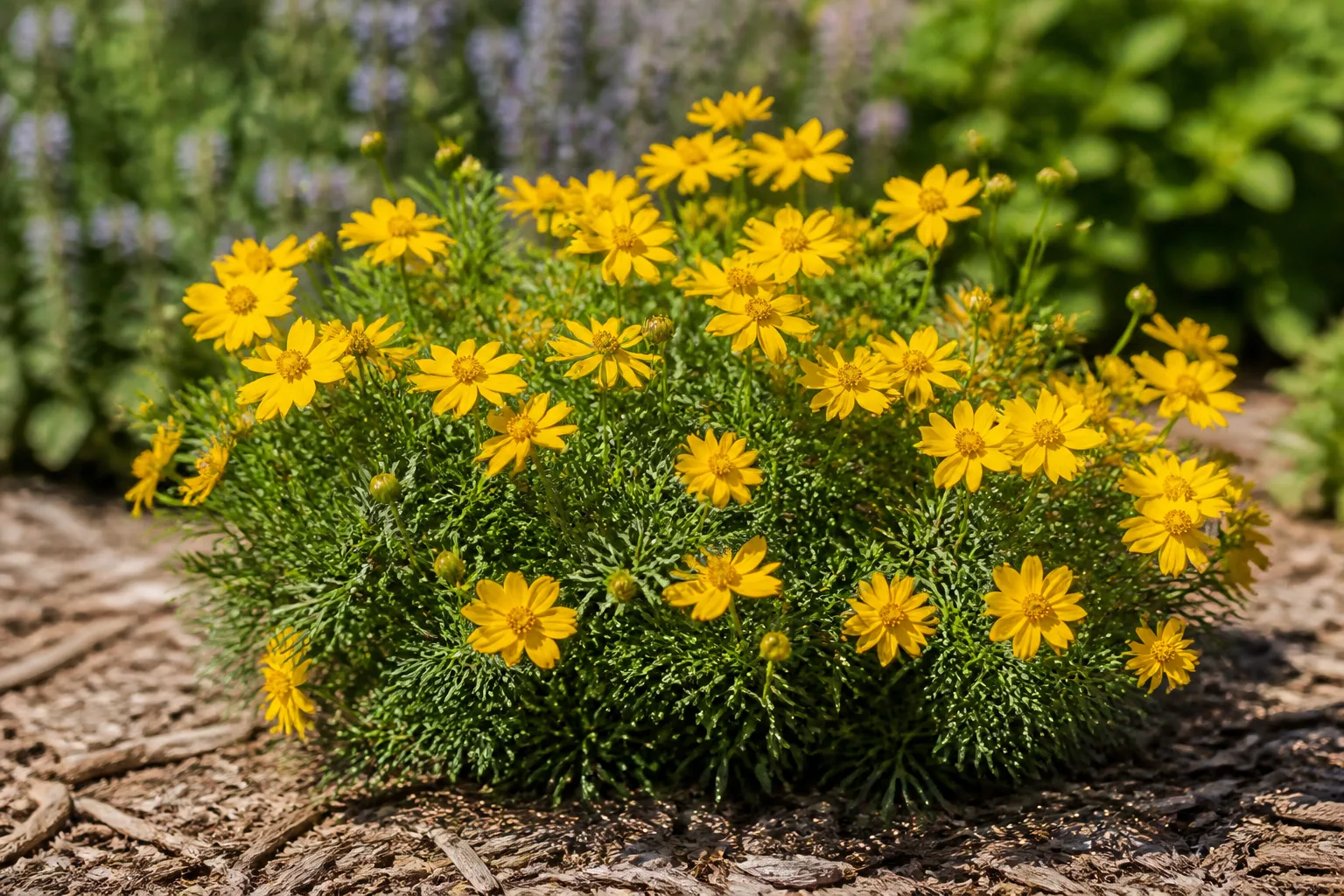
10. Coreopsis (Coreopsis). Coreopsis, or tickseed, offers bright daisy-shaped flowers from early summer into late summer, and some cultivars continue longer with deadheading. Plants range from compact 8- to 12-inch mounds to threadleaf clumps around 2 feet tall. Full sun and well-drained soil suit most kinds; established plants handle dry spells better than a new transplant. The genus includes species and hybrids with different cold tolerance, so do not assume every yellow coreopsis is equally hardy. A compact cultivar is easier to maintain at the front of a border than a spreading species in a tightly edged bed.
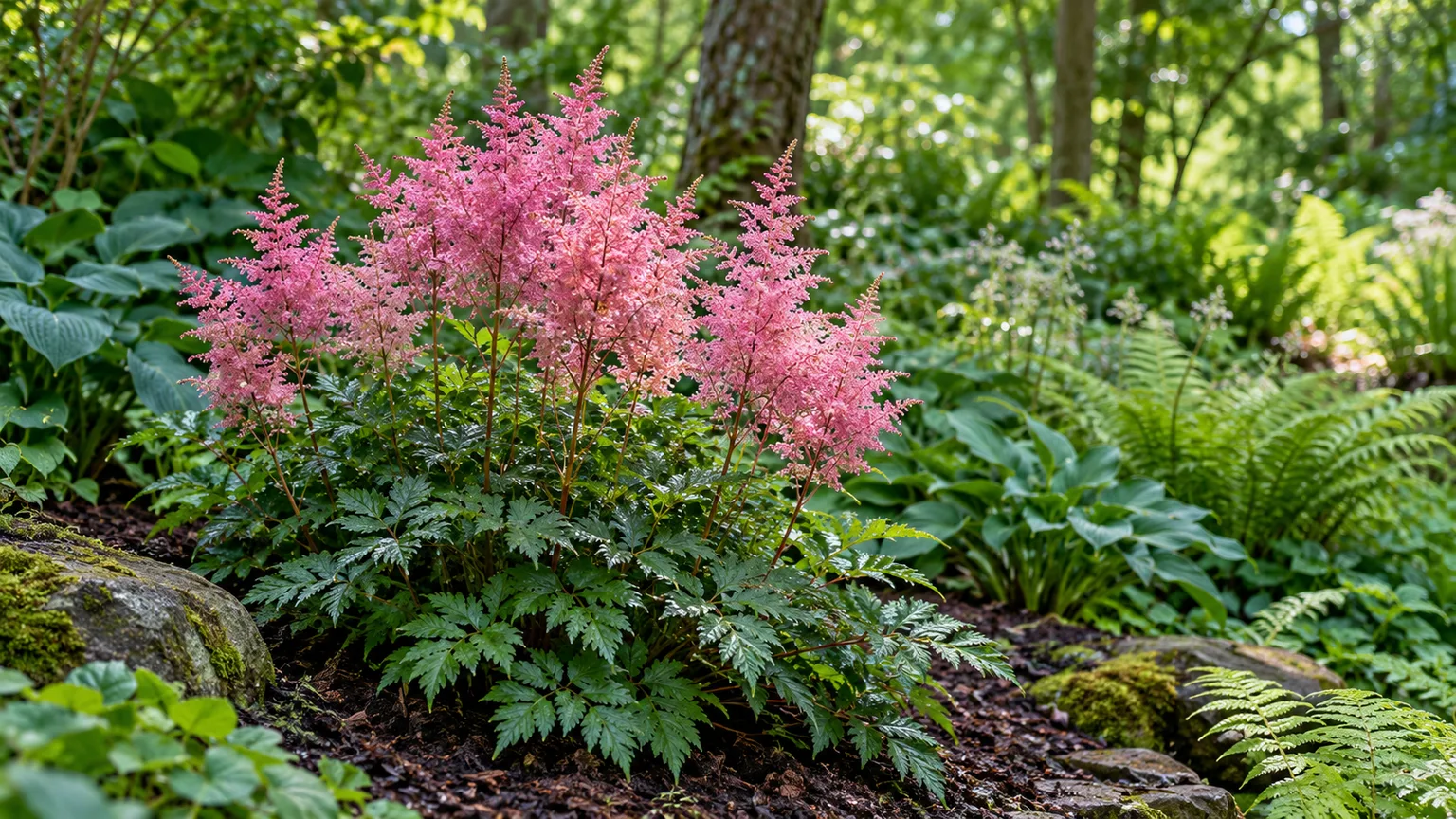
11. Astilbe (Astilbe). Astilbe’s feathery plumes arrive from late spring through summer, often reaching 1 to 3 feet depending on variety. It is a useful choice for part shade and rich, moisture-retentive soil, but “shade plant” does not mean “no water needed”: dry roots can cause scorched leaves and poor flowering. In cool, humid regions it may handle more sun if soil stays damp; in hot or dry-summer climates, afternoon shade is safer. Leave faded flower plumes for texture or cut them if you prefer a tidier bed; choose a cultivar with a mature height that fits the front or middle of the border.
12. Garden phlox (Phlox paniculata). Tall garden phlox blooms in summer with fragrant clusters at the tops of upright stems, commonly 2 to 4 feet tall. It likes sun to light part shade, fertile soil, and regular moisture, but crowded, humid conditions invite powdery mildew. Space plants for airflow and water at the soil rather than wetting foliage late in the day. Compact cultivars can fit smaller gardens; taller varieties may need support in windy locations. This is a different plant and role from the low, spring-blooming woodland phlox above, despite sharing the common name.
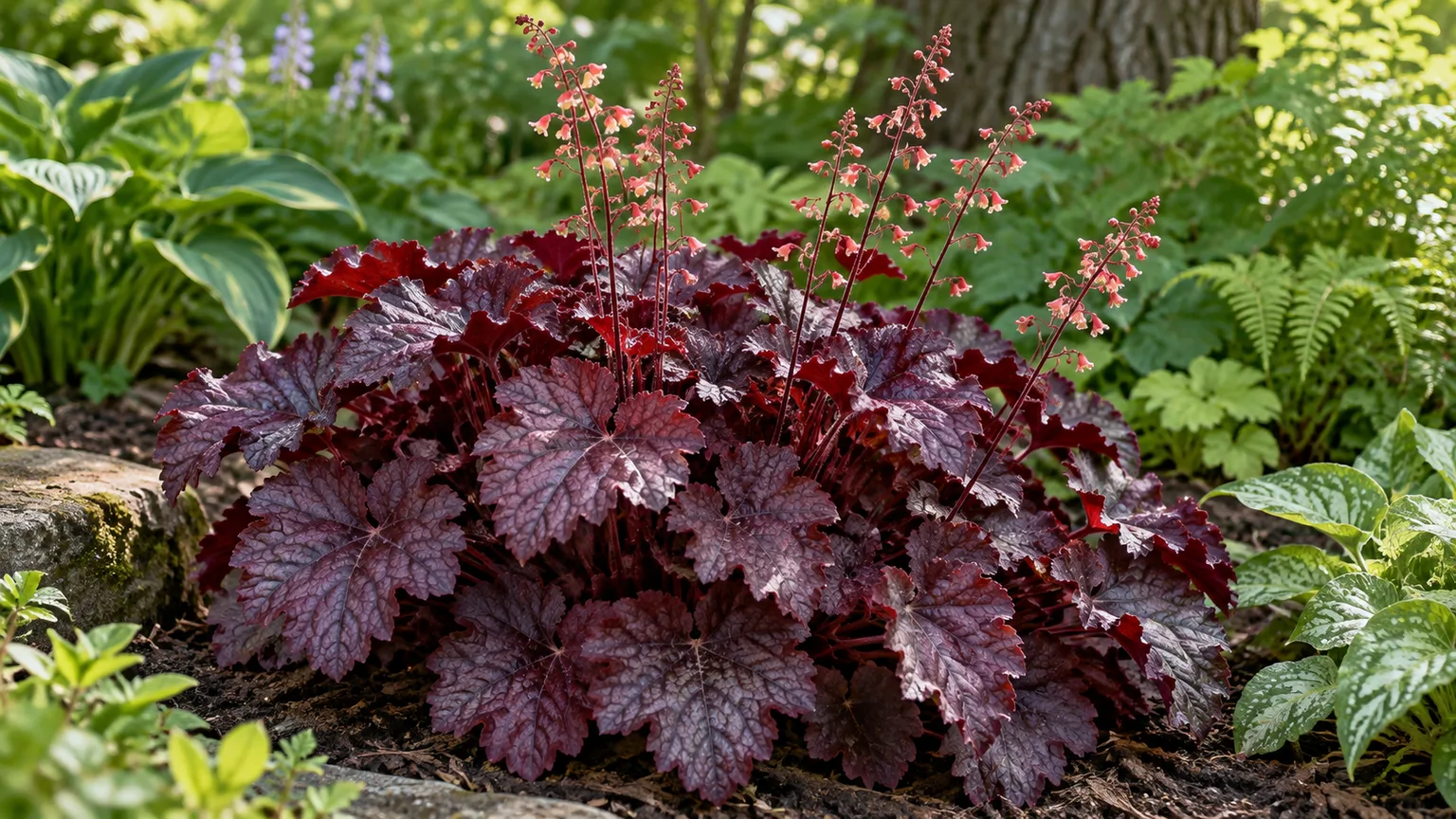
13. Coral bells (Heuchera). Heuchera is usually selected for foliage, not a massive flower show: its rounded clump may be around 8 to 18 inches tall, with slender flower stalks rising above it in late spring or summer. Leaf colors span green, silver, copper, and purple, depending on cultivar. Most appreciate part shade and well-drained soil; morning sun can deepen color, while hot afternoon sun can scorch some varieties. Keep the crown at soil level and avoid planting into a wet pocket. For gardeners who want a flower-heavy border, use coral bells as a foliage anchor and let other perennials carry the bloom.
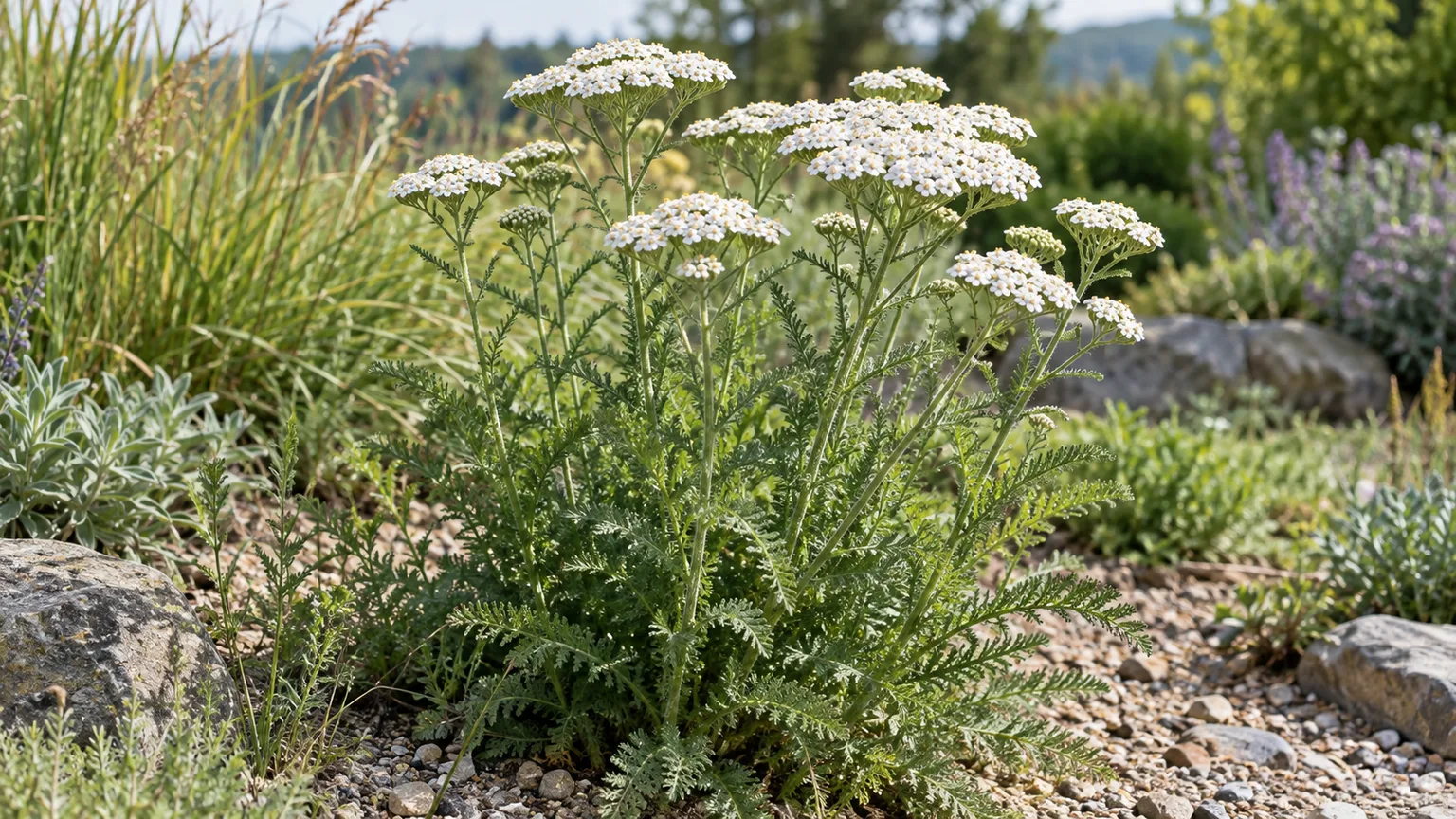
14. Yarrow (Achillea). Yarrow produces flat clusters over fernlike foliage, with bloom commonly stretching from early summer into early fall. A mature clump often reaches 2 to 3 feet, though compact selections are shorter. It performs best in full sun and lean, well-drained soil, and it tolerates drought after establishment; too much fertility or shade can make stems flop. Some yarrow spreads quickly by rhizomes, so choose a restrained cultivar or give it room, then divide when the clump becomes crowded. Colorado State lists several yarrows as xeric and notes their spreading habit, but local species and cultivars differ.
15. Queen of the prairie (Filipendula rubra). This is the tall American native often called queen of the prairie, not every plant sold under the broader name meadowsweet. Its pink, frothy summer plumes can rise 4 to 6 feet above a substantial clump, making it a back-of-border plant for sun or part shade and consistently moist soil. It is a poor match for a dry slope or a small bed that cannot accommodate its mature size. The species is native to parts of eastern North America; in other regions, verify local suitability and choose plants from a responsible source.
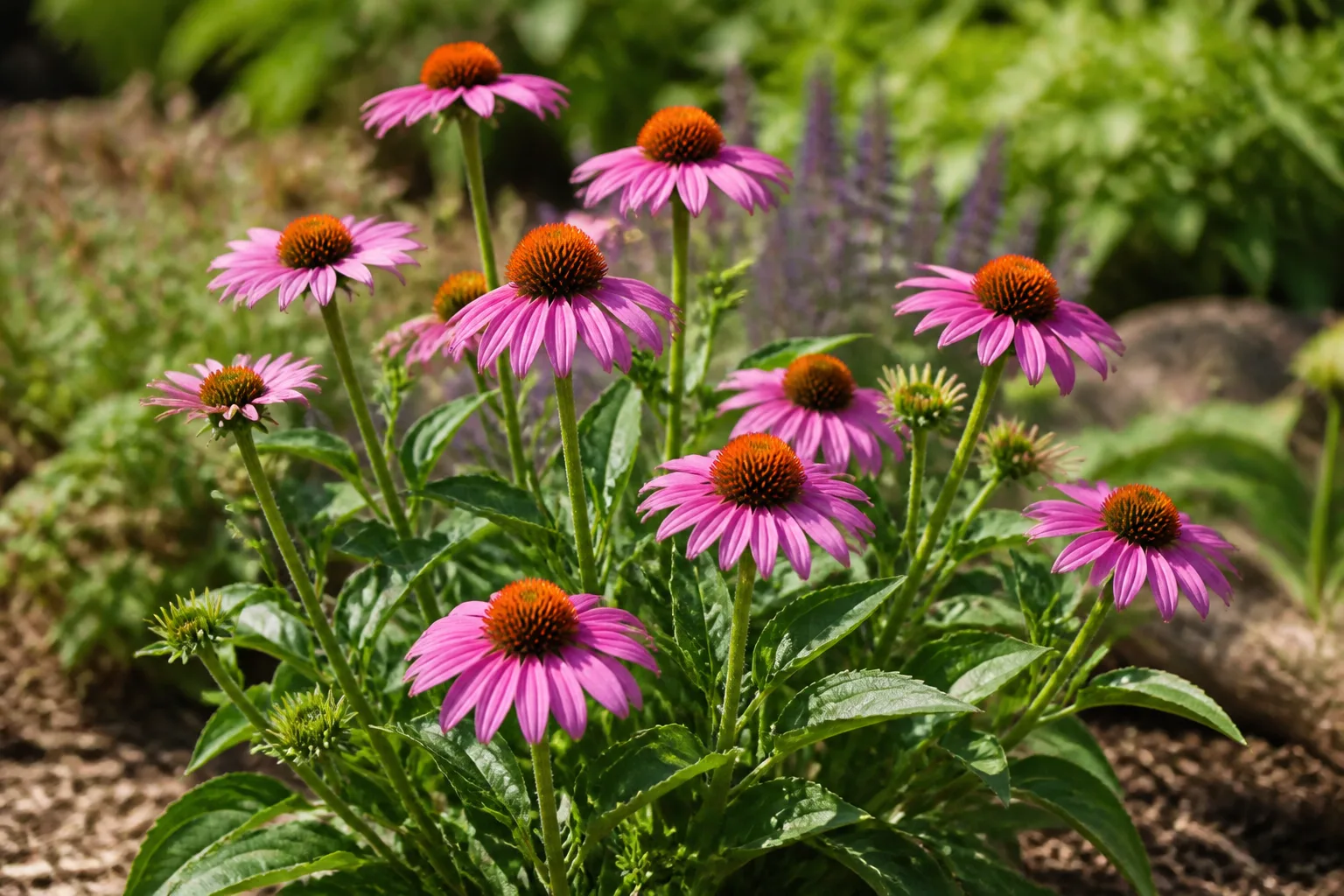
16. Purple coneflower (Echinacea). Coneflowers flower in summer on sturdy stems, usually 2 to 4 feet tall, and bring bold daisy-like petals around a raised central cone. They prefer full sun and well-drained soil; established plants can handle short dry spells better than a newly planted crown. Leave some seedheads standing if you want winter structure and a food source for birds, or deadhead for a tidier look and possible later flowers. Hybrids have a wider color range, but their winter persistence can vary, so a familiar species such as Echinacea purpurea is often a steadier choice than buying on color alone.
17. Catmint (Nepeta). Catmint makes a soft mound of aromatic foliage with lavender-blue or violet flower spikes, often from late spring through summer and again after a trim. Depending on species and cultivar, the plant can be around 1 to 3 feet tall and similarly wide; some popular selections spread farther than a tight border allows. Give it full sun, average to dry soil, and good drainage. Shearing back the first flush can encourage a fresh wave, but do not cut into heat-stressed or drought-stressed foliage. The name is Nepeta; it should not be confused with calamint, a related but different genus sometimes mislabeled in garden lists.
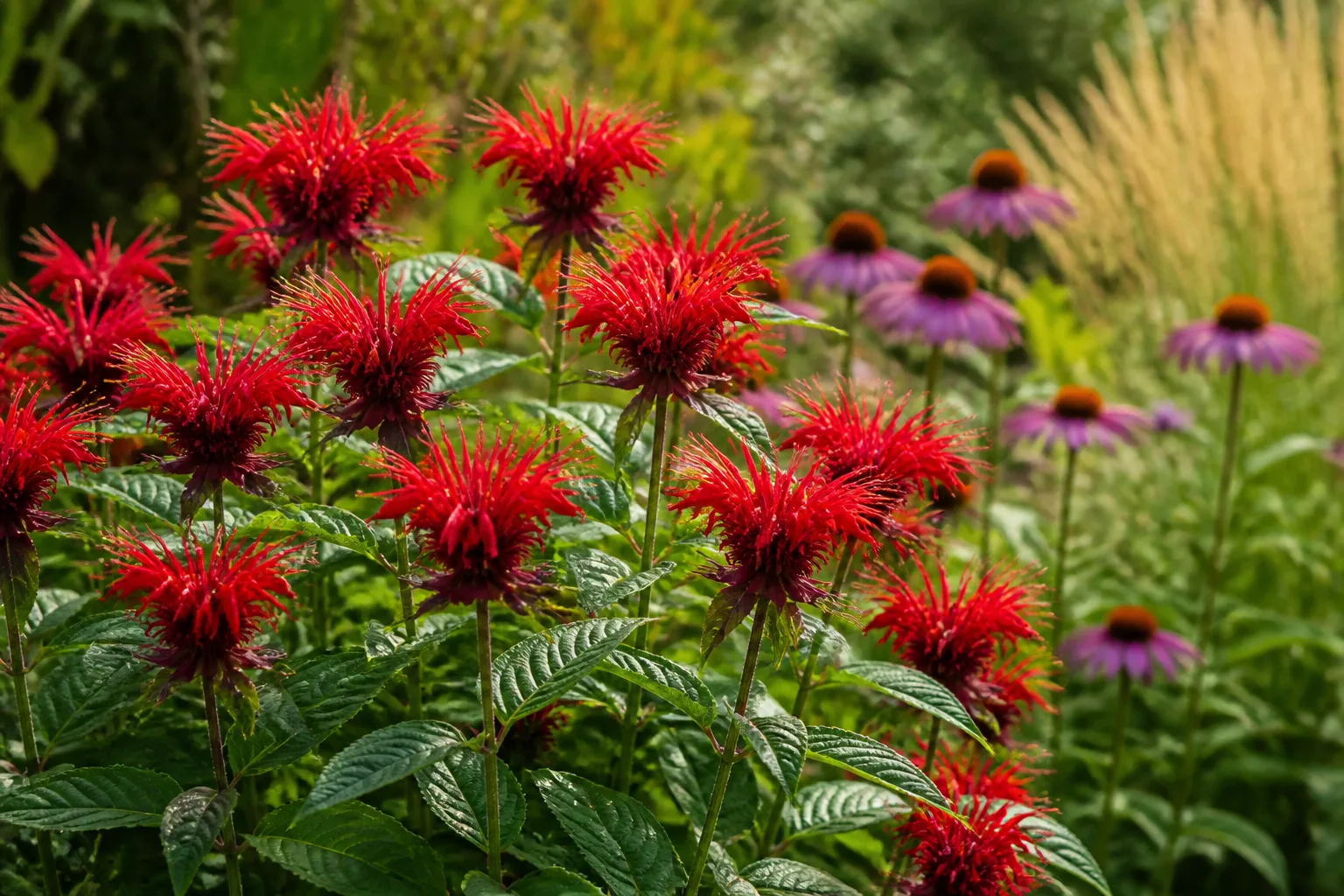
18. Bee balm (Monarda). Bee balm’s shaggy flower heads bloom in summer, usually on 2- to 4-foot stems above aromatic leaves. It grows best in sun or part shade with reasonably fertile soil and steady moisture; a dry, hot site can shorten flowering, while crowded humid foliage is prone to powdery mildew. Give the clump air space and divide it if it outgrows the bed. Some species are native to particular regions, so choose the species or cultivar for your local climate and pollinator goals rather than assuming every Monarda has the same height, spread, or hardiness.
Late-summer and fall perennials
Late bloomers extend color after many spring and early-summer flowers have finished. Their value is not just a later flower: sturdy stems, seedheads, and foliage can keep a bed from looking empty as other plants rest. The bloom windows below overlap, but autumn arrives earlier at high elevations and in northern climates, and later in warm regions.
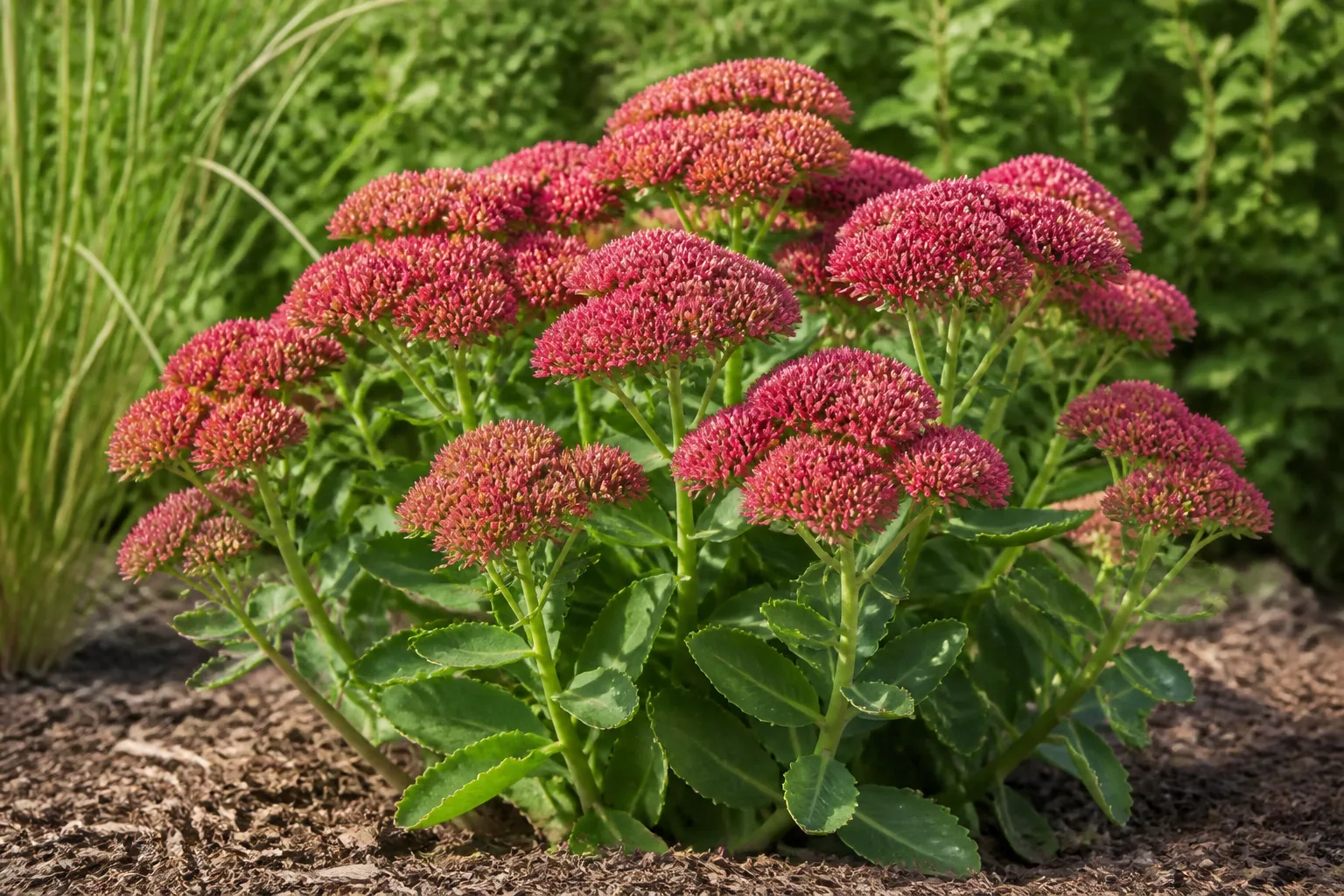
19. Showy stonecrop (Hylotelephium, often sold as Sedum). Upright stonecrop forms a fleshy-leaved clump about 1 to 2 feet tall, then opens broad pink flower clusters in late summer that deepen toward fall. Full sun and sharp drainage produce stronger stems; rich, wet soil can make the plant flop. It is more drought tolerant after establishment, not immediately after planting. “Autumn Joy” is a familiar name, but the group contains different cultivars and heights. The older name Sedum remains common on labels, so check the botanical name and mature width before comparing it with low, creeping sedums.
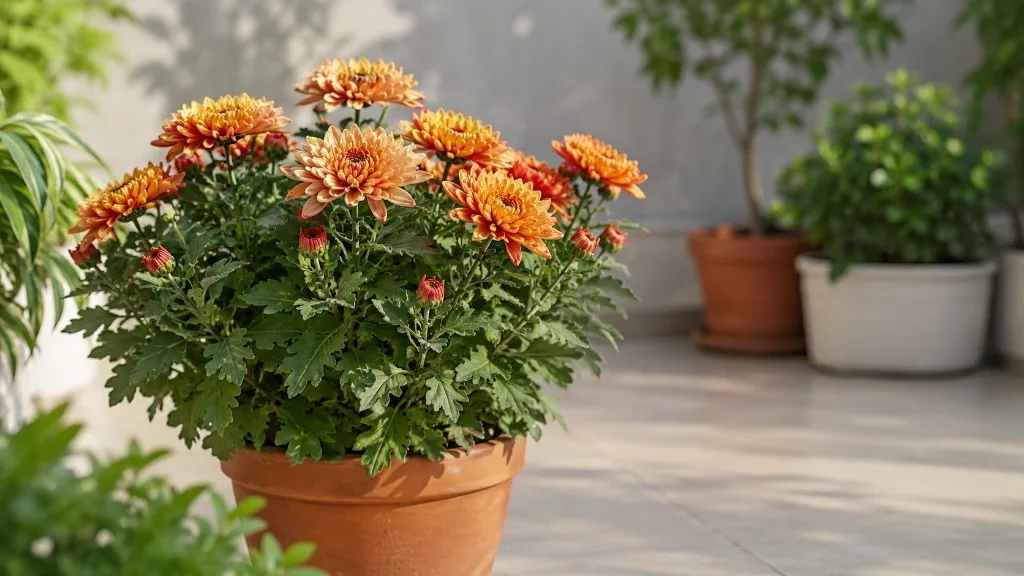
20. Garden chrysanthemum (Chrysanthemum). Garden mums add late-summer and autumn color, usually on rounded plants about 1 to 3 feet tall. They need full sun and well-drained soil, and their cold hardiness depends on cultivar, planting time, winter wet, and local climate. A florist mum sold in bloom as a short-term pot plant is not automatically a hardy garden perennial; look for a cultivar labeled for your zone and plant it early enough to establish before winter. Pinching can create a bushier plant, but stop by the locally recommended date so buds have time to form.
21. Japanese anemone (Anemone hupehensis and hybrids). Japanese anemones carry white or pink flowers on tall stems in late summer and fall, with leafy clumps often 2 to 4 feet tall. They prefer part shade or sun with reliable moisture; afternoon shade helps in hot-summer climates. Their growth can expand beyond the original clump, so leave room and check local recommendations before placing one beside a delicate groundcover or a narrow path. A low, dry site is a poor fit. Exact size, hardiness, and spread depend on whether the plant is a species or a selected hybrid.
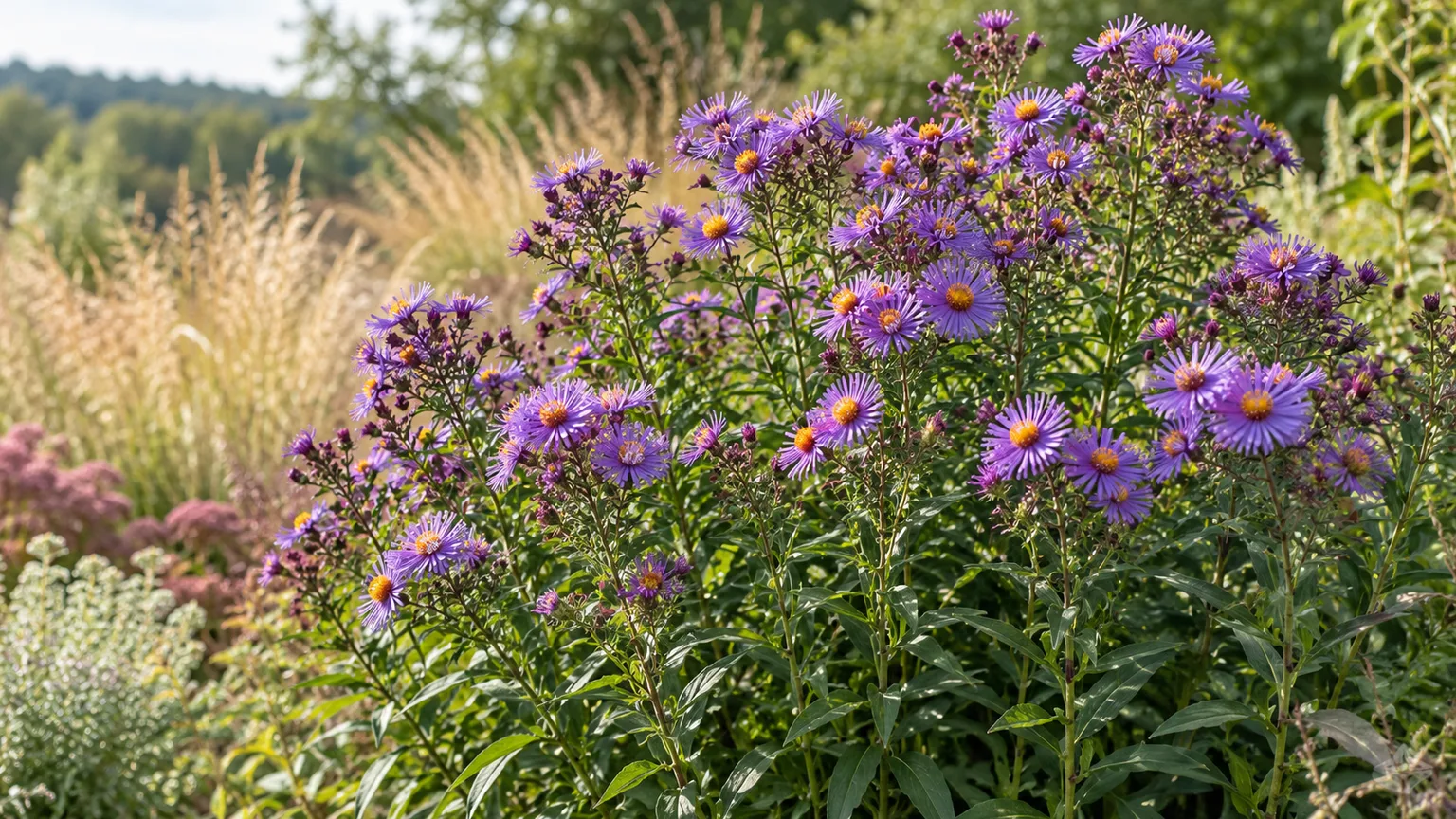
22. Asters (including New England aster, Symphyotrichum novae-angliae). Asters provide late-summer or autumn flowers when many borders are fading. New England aster can reach 3 to 4 feet, while compact cultivars may stay closer to 1 to 2 feet; choose by mature height and width, not flower color alone. Most need sun and well-drained soil, and tall kinds may need support in a windy garden. Asters are not one uniform plant: select a species and cultivar suited to your region, and give taller clumps enough room to avoid a crowded, mildew-prone center.
Turn a list into a border that blooms in sequence
A good perennial bed is a sequence of overlapping highlights, not 22 plants all flowering at once. A short spring display can still be worthwhile if it is followed by summer flowers and an autumn finish; foliage and seedheads carry the spaces between. Gardenia’s perennial selection guide also treats bloom periods as approximate and recommends starting with light, moisture, hardiness, and mature size. That order prevents a common mistake: buying a plant because it looks good on a list, then trying to redesign the bed around its needs.
Plant in overlapping waves
For early color, combine peony, columbine, woodland phlox, and epimedium, then let daylily, coreopsis, catmint, and garden phlox take over in summer. Astilbe and hosta can keep a shaded bed interesting while sun-loving plants bloom elsewhere; sedum, Japanese anemone, mums, and asters bridge the move into autumn. The exact dates will shift by climate, so use the grouping as a sequence to adjust, not a calendar to obey. Include more than one plant in each important window if a particular area needs reliable color.
Plan for mature width and height
Set nursery pots on the soil before digging so you can judge spacing and sight lines. Put low dianthus, epimedium, woodland phlox, and compact coral bells at the front; place large peonies, bee balm, Queen of the Prairie, tall phlox, and asters farther back or in the middle of an island bed. Use the mature width on the plant label instead of the pot width. Penn State Extension’s perennial-care guidance cautions that crowded plants are harder to maintain and gives spacing ranges by mature height; air space also helps reduce disease pressure in phlox and bee balm.
Group plants by water needs
Put plants that want consistently moist soil together, and keep dry-site choices in a separate zone if you can. For example, astilbe, hosta, bee balm, and queen of the prairie are easier to manage near one irrigation line than beside yarrow, catmint, dianthus, or showy stonecrop. Penn State recommends deep watering and notes that drought tolerance applies after establishment. During the first season, check new plants more often than established clumps, especially after hot wind or when rain misses the bed.
Keep foliage and seedheads in the design
Peony leaves, hosta foliage, heuchera’s colored leaves, and epimedium’s groundcover texture remain useful after their flowers fade. Leave selected echinacea and stonecrop seedheads through winter if they are healthy and you like the structure; cut diseased material away rather than keeping it for decoration. This simple mix helps the garden look intentional between bloom waves without planting every gap with another flower.
Quick pairings for common garden conditions
Use these as starting combinations, not fixed recipes. Confirm the local cultivar’s mature size and hardiness, then group plants by the moisture they need.
| Garden condition | Good candidates from this list | The tradeoff to plan for |
|---|---|---|
| Hot, sunny, fast-draining bed | Yarrow, catmint, dianthus, coreopsis, showy stonecrop | Water new plants while they establish; yarrow may spread and some coreopsis are less cold hardy |
| Sunny bed with regular moisture | Peony, bearded iris, daylily, coneflower, garden phlox | Leave room for mature clumps; tall stems may need airflow or support |
| Part shade with reliable moisture | Astilbe, hosta, bee balm, woodland phlox, Japanese anemone | Shade does not remove the need to water; check spread and mildew conditions |
| Dry or dappled shade | Epimedium, some hardy geraniums, selected hostas | Flowering may be lighter; tree roots can make the site drier than it looks |
| Autumn color | Asters, mums, Japanese anemone, showy stonecrop | Plant hardiness and bloom timing vary sharply by cultivar and region |
A hot, dry border
If a sunny border bakes between waterings, start with catmint, yarrow, dianthus, and stonecrop, then add a suitable coreopsis for longer color. These choices still need regular watering in their first season; drought tolerance means a plant can cope after roots establish, not that it can be planted and ignored. Keep spreading yarrow away from small, delicate neighbors and avoid enriching a naturally lean, fast-draining bed just to make it look like dark potting soil.
A shady or consistently moist bed
For a cool, shaded bed, combine hosta and epimedium for leaves, then add astilbe or woodland phlox for seasonal flowers. In a consistently damp sunny-to-part-shade pocket, queen of the prairie can add height, but its large mature habit deserves space. Do not put all shade plants into one category: an epimedium that tolerates dry shade may resent the wet soil that suits astilbe, while hosta can struggle under a thirsty tree.
What to verify locally before you buy
Take a photo of the planting site and check it through one sunny day; note light, standing water after rain, and nearby tree roots. Then compare the plant label’s mature width, mature height, hardiness range, and preferred moisture with those observations. State or county extension services can help confirm whether a species is a good local fit, especially for plants that spread, species marketed as native, and garden mums expected to overwinter.
The broad ranges in perennial lists are starting points rather than guarantees. Colorado State’s bloom table is tied to Colorado’s lower-elevation conditions, and the extension guide notes that weather, soil, and elevation move bloom dates; the same species can flower weeks apart in different climates. Do not blame a perennial for failing to meet a catalog date if it is young, newly divided, drought-stressed, shaded, or planted outside its preferred climate. Give it a suitable site first, then use local observations to tune your succession plan.
Conclusion
The best perennial flowers are not simply the ones with the showiest blooms; they are the plants whose light, moisture, mature size, and hardiness fit your yard. Choose a few spring bloomers, a larger summer group, and dependable late-season flowers, then connect them with foliage that lasts after the petals fade. If you match the site before shopping and allow each plant room to reach its natural size, a border can become fuller and easier to manage over time without relying on a single “easy” flower to carry the whole season.