Clematis Wilt: Symptoms, Diagnosis, and What to Do
Diagnose clematis wilt with a symptom checklist, then learn what to cut, how to clean tools, which plants are more susceptible, and when wilt means something else.
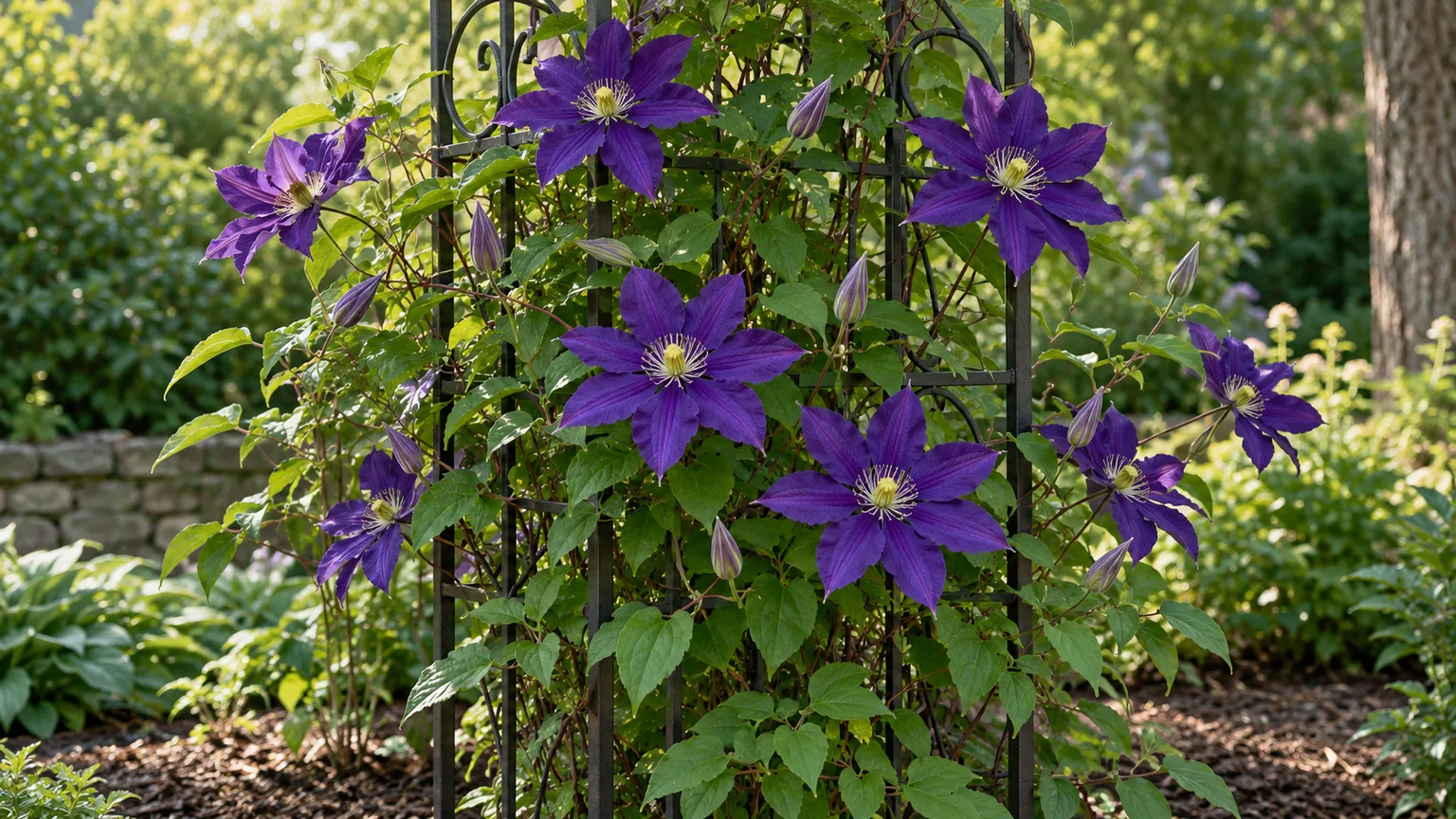
A clematis that collapses in a day deserves a close look, but drooping leaves alone do not prove clematis wilt. The disease is associated with blackened stems and leaf lesions, especially on some large-flowered hybrids; drought, a snapped stem, slug damage, and failing roots can create a similar limp display. Before cutting the whole vine or reaching for a spray, inspect the affected shoot, the soil, and the plant’s base.
That short pause matters because true clematis wilt is a specific fungal disease, not a catch-all term for any clematis that looks thirsty or tired. A careful check can help you remove a likely infection without sacrificing healthy growth, while also revealing when the problem is water, injury, pests, or root stress. If you do find suspicious black tissue, prompt sanitation is sensible even though a home gardener cannot confirm the fungus from appearance alone.
First, check the pattern of collapse
Look at how the decline began. Clematis wilt often affects one or more shoots that were growing normally, then causes rapid wilting and blackening over a short period, sometimes around the time flower buds are opening. The change can start on a leaf, at a stem lesion, or lower on a shoot and move along that particular stem; it does not always take down the entire vine at once. Missouri Botanical Garden describes sudden stem collapse with leaves and stems turning black within a few days, but the same source notes that the disease is localized rather than a fungus that necessarily races through every stem.
Notice what remains healthy. If a single shoot is limp while neighboring stems are firm and green, the pattern points you toward a local problem: a lesion, a broken or girdled stem, insect feeding, or a localized infection. If the entire plant is weak, check the root zone, watering history, drainage, and recent weather before assuming a stem disease. A large-flowered hybrid in a humid spell raises suspicion, but neither the plant type nor the weather is proof by itself. (Missouri Botanical Garden; RHS)
Inspect leaves and fresh stem tissue
Check both sides of the leaves attached to the affected shoot. Dark or reddish-brown spots, shriveling, and blackening leaf stalks can appear with infection; a stem may then wilt and die. The RHS identifies leaf spotting followed by shriveling and black petioles as one infection pattern, while direct stem infection can show black discoloration inside the stem. Use a clean pair of pruners to make a small crosswise cut through a freshly affected section, or split a piece that is already removed. Dark, stained tissue beneath the surface adds evidence; a green interior does not absolutely exclude disease, but it makes you look harder for another cause.
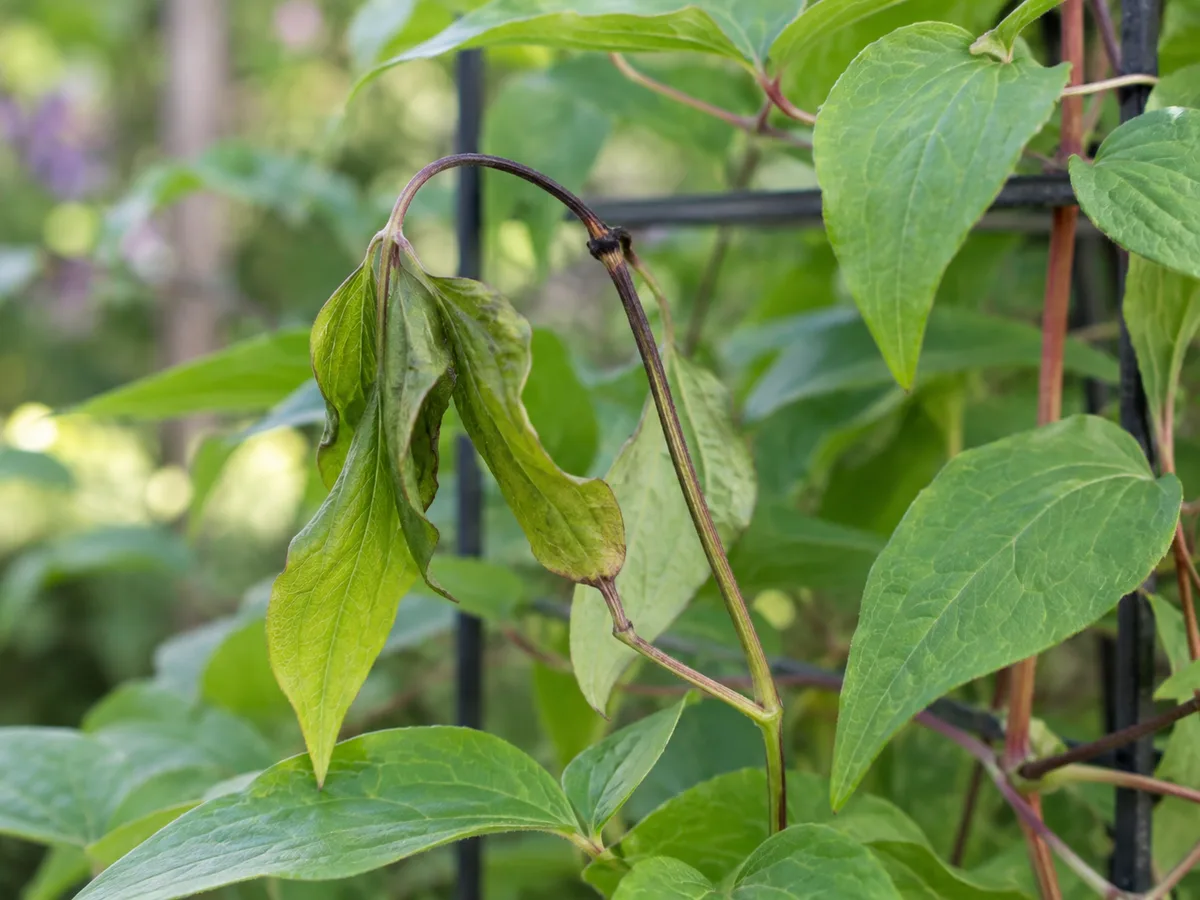
Do not confuse an old, naturally woody base with a fresh lesion. Clematis stems can become brown and firm as they mature, so inspect the transition between healthy and recently affected growth rather than judging from bark color alone. If you see a distinct blackened section, take a photo before cutting and note which shoot is affected; that record helps you compare new symptoms later or show the pattern to a local Extension office or diagnostic clinic.
Check soil, the stem base, ties, and pests
Touch the soil several inches below the surface, not only the dry crust. Very dry soil, especially in a container or near a hot wall, makes water stress plausible. Soil that stays saturated suggests poor drainage or root dysfunction, and adding more water can worsen that condition. Neither wet nor dry soil rules the fungus in or out; it helps you identify a second problem that could explain the wilt or make the vine more vulnerable.
Trace the affected shoot down to its base. Look for a snapped, twisted, rubbed, or tightly tied section, a cut from a string trimmer, or a narrow band of damaged bark. Slugs and snails may rasp tender tissue, while rabbits or other animals can sever stems. A clean break or girdle at one point can interrupt water movement and make everything above it droop, even if there is no fungal infection. Check the support and nearby ground carefully because the injury can be hidden behind leaves or mulch.
Inspect nearby stems and leaves before you handle the plant again. If the vine is tangled, avoid pulling it apart; clematis stems snap easily, and a new wound can create another entry point for disease. Instead, photograph the plant, gently move foliage aside, and compare the affected and healthy shoots. This simple baseline makes the next step—prune, water appropriately, repair support, or investigate roots—more deliberate.
What clematis wilt is—and what the name misses
Clematis wilt is a fungal leaf-spot and stem-rot disease associated with Calophoma clematidina. Older references use the names Phoma clematidina or Ascochyta clematidina, so a source using one of those names may be discussing the same disease under earlier taxonomy. The fungus can infect leaves or stems, and typical affected tissue can become dark and collapse. That is why “wilt” can sound like a general water-transport failure even though a gardener should look for a local lesion or blackened tissue, not just limp foliage. (RHS; Clemson Cooperative Extension)
The infection is not the only reason clematis stems wilt. The RHS specifically notes many recorded wilting cases where the fungus is not present; even on susceptible large-flowered hybrids, environmental stress and other damage remain plausible. Missouri Botanical Garden describes the disease as localized and associated with wounds, so the idea that the fungus always travels systemically through the plant and shuts down every stem is too simple. A healthy shoot beside a collapsing one is useful evidence, not a contradiction.
Spores can persist on dead plant material, and splashing water or contaminated handling may help move them to susceptible tissue. High humidity and a dense, wet canopy can favor disease pressure, but a humid week does not diagnose clematis wilt. Treat weather as context that changes probability, while the plant’s lesions, internal stem discoloration, injury, and root conditions provide the more useful evidence. (Missouri Botanical Garden)
Compare clematis wilt with other causes
Several problems can produce a limp vine, but they leave different clues. Use the comparison as a triage tool, not a laboratory diagnosis: more than one stress can occur at once, and a plant with damaged roots may also develop a secondary infection.
| What you observe | More plausible direction | What to check next |
|---|---|---|
| One shoot collapses quickly, with leaf spots or black tissue inside the stem | Clematis wilt is possible | Cut back to healthy tissue, remove debris, and watch neighboring shoots |
| Soil is dry well below the surface; several shoots droop during heat | Water stress is plausible | Water the root zone thoroughly, then check whether the soil drains and stays evenly moist |
| Wilt begins above a snapped, grazed, tied, or rubbed point | Physical or animal injury | Find the break or girdle and remove only the damaged section |
| Whole plant declines gradually in persistently wet soil | Root dysfunction or root disease | Stop routine watering, check drainage, and inspect roots if the plant can be lifted safely |
| Leaves have a pale or powdery surface and may yellow or distort | Powdery mildew or another foliar issue | Look for visible growth on leaves rather than assuming black stem rot |
The details in the table are tendencies, not hard rules. A dry vine can develop brown tissue after prolonged stress, and a fungal lesion may be easy to miss beneath the foliage. Clemson Extension also distinguishes common clematis problems such as powdery mildew and animal damage from the sudden black collapse associated with wilt. If symptoms keep spreading, the plant is valuable, or the pattern remains unclear after you inspect it, submit fresh affected material to a local plant diagnostic service rather than trying several treatments at random. (Clemson Cooperative Extension)
Read the difference between sudden and gradual decline
Timing helps narrow the possibilities. A shoot that was vigorous yesterday and is limp today, particularly with black lesions or stained tissue, merits a wilt inspection. A plant that has been smaller, yellower, and weaker over weeks may be struggling with root competition, poor drainage, planting depth, nutrient conditions, or chronic water stress. The gradual pattern is less characteristic of classic stem collapse, though it does not rule out a disease problem.
Also ask what changed just before symptoms appeared. A new tie, heavy pruning, digging near the crown, a storm, a hot dry spell, repeated overhead watering, or recent fertilizing can give you a useful lead. If you discover a dry root zone and no stem discoloration, correct the water issue and reassess rather than cutting every shoot to the ground. If you discover saturated soil and a declining whole plant, more water is not a safe default. Record the sequence; “wilted” describes the appearance, while the sequence helps identify the cause.
What to do when fungal wilt is plausible
When a shoot is collapsing and you find dark lesions or stained tissue, remove the affected growth promptly. Work on a dry day if possible so wet foliage is less likely to transfer material, but do not leave a clearly dying, blackened stem in place for days just to wait for perfect weather. Choose a cut below the visible damage and inspect the cut end; if the tissue is still dark or stained, move farther down to firm, healthy-looking tissue. The RHS recommends removing wilted stems back to healthy, non-stained tissue and destroying the affected material. (RHS)
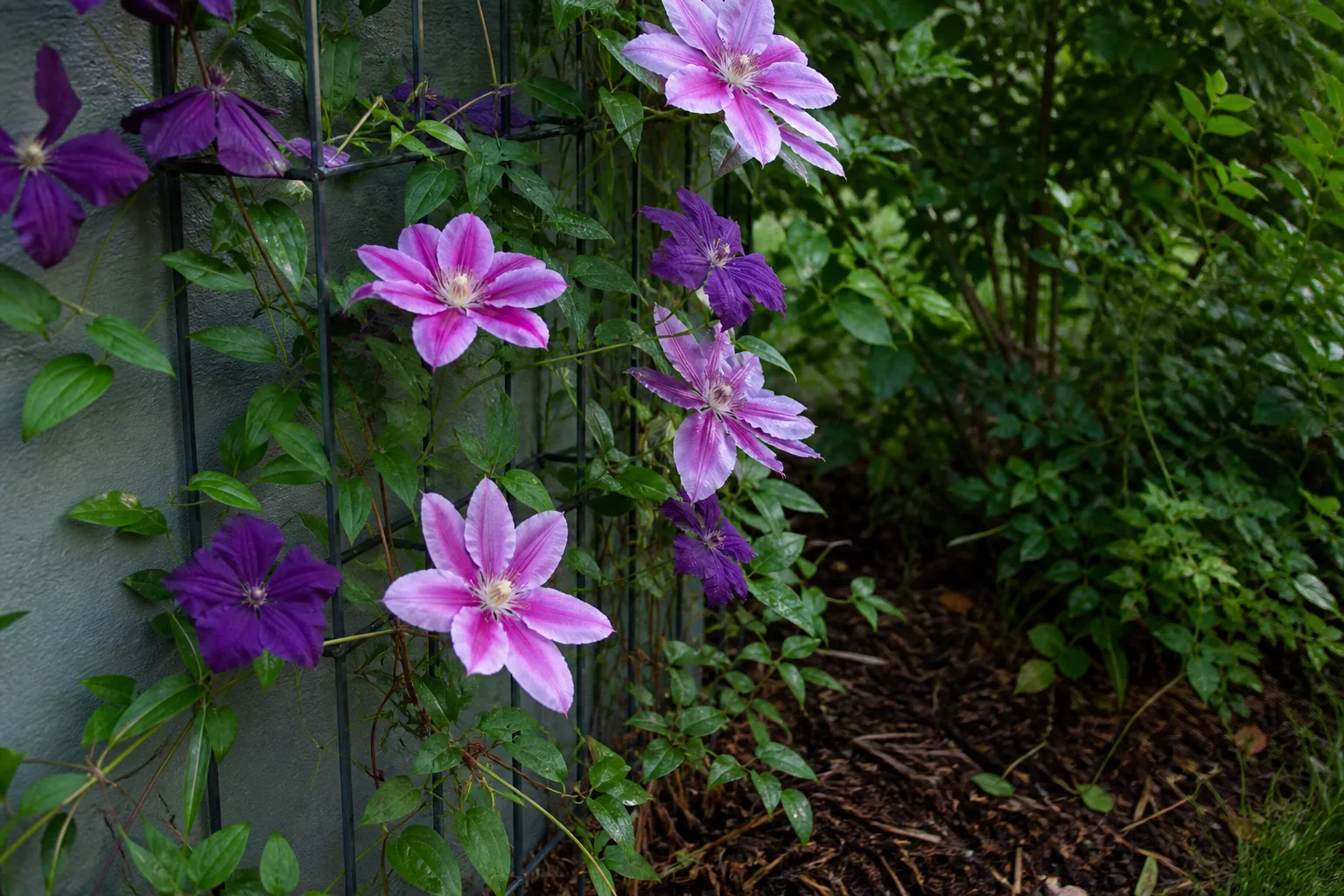
Do not automatically cut a healthy-looking vine to ground level because one shoot wilted. The right cut depends on how far the symptoms extend and whether other stems show lesions. If the whole aboveground vine is blackening, it may be necessary to remove most or all affected growth, but make the decision from the tissue you can see rather than following a universal “cut everything” rule. For routine shaping and cultivar-specific timing, use the clematis pruning guide; disease sanitation is a separate task.
Cut below stained tissue
Use sharp bypass pruners that can make a clean cut without crushing the stem. Find a point beneath the last visible lesion or dark section, then cut through healthy tissue. If discoloration reaches the soil line, remove the affected shoot as low as you can without tearing the crown or excavating roots. The fungus is associated with localized tissue infection, so removing the infected section is the practical priority; cutting into healthy roots or digging around the crown can create avoidable damage.
For more than one affected shoot, clean the blades between cuts or at least between plants. Remove loose soil and plant residue first, then use an appropriate disinfectant according to its label and let the tool dry; do not rely on wiping a visibly dirty blade. Household disinfectants vary in concentration and contact time, and some can corrode tools, so follow product instructions rather than mixing a stronger solution by guesswork. Clemson Extension emphasizes careful sanitation and avoiding injury as part of clematis disease management. (Clemson Cooperative Extension)
Do not handle the suspect stem and then tie up healthy vines with the same dirty gloves or tool. If you need to steady another shoot, wash your hands or change gloves and use clean equipment. This is a straightforward way to limit accidental transfer while you are still uncertain about the diagnosis.
Dispose of debris and clean tools
Collect the cut stems and fallen leaves rather than leaving them beneath the trellis. Bag the material for household waste where local rules allow, or follow your municipality’s plant-disease disposal guidance. Do not put suspicious material in a cool home compost pile: a backyard pile may not heat evenly enough to destroy all viable plant pathogens. A professionally managed municipal composting program may use different processes, so check the local facility’s accepted-material rules instead of assuming every compost system behaves alike.
After cleanup, remove old clematis leaves and dead stems from the immediate planting area, especially material that is obviously diseased. You do not need to strip the entire garden bare or remove sound mulch everywhere; focus on infected debris and avoid carrying soil or clippings to another bed. The RHS and Missouri Botanical Garden both recommend removing affected material because the pathogen may survive on plant debris and be spread through contaminated handling or splashing. (RHS; Missouri Botanical Garden)
Keep the crown and reassess regrowth
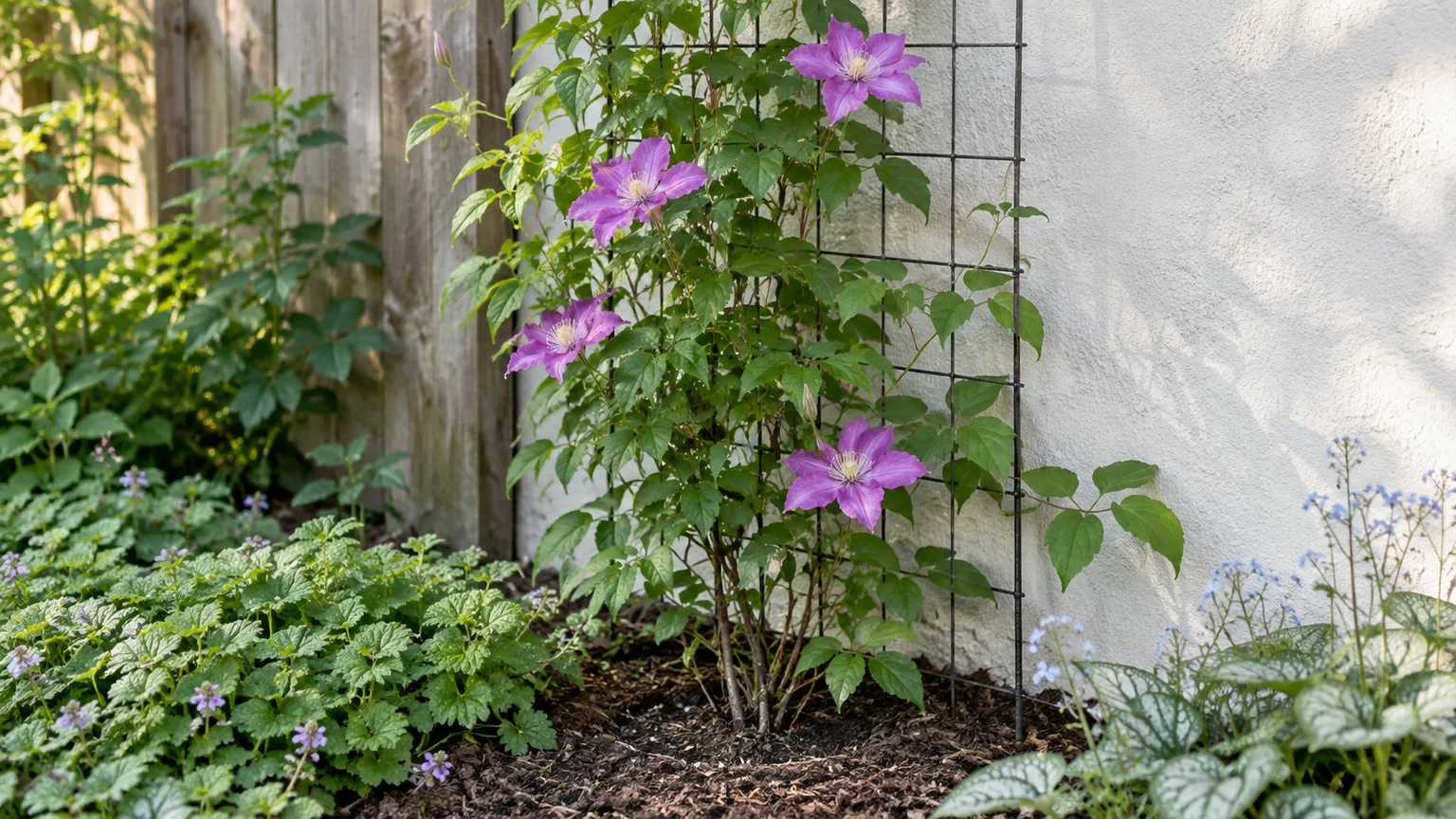
Do not assume the roots are dead just because the top growth has collapsed. Affected plants may produce new shoots from the crown or below ground; the RHS and Missouri Botanical Garden both describe recovery from the base as possible. Leave the crown undisturbed, keep the root zone appropriately moist rather than waterlogged, and check occasionally for new growth. Some plants recover slowly or not at all, so avoid a fixed promise such as “it will be back in a month.”
If new shoots emerge, let them grow before making major structural cuts. Protect them from being snapped or cut by a trimmer, guide them gently to support, and water according to the soil condition. If there is no growth after a reasonable portion of the growing season, reassess crown firmness, drainage, winter injury, and any history of root disease. For broad planting, watering, and support advice, the clematis care guide covers those topics; it does not replace the diagnostic checks here.
Which clematis are more vulnerable
Some large-flowered hybrids, particularly those with Clematis patens ancestry, are more likely to develop clematis wilt than many smaller-flowered species. That genetic tendency helps set your suspicion level; it does not tell you whether a particular drooping plant is infected. The RHS lists cultivars such as ‘Henryi,’ ‘Vyvyan Pennell,’ ‘Mrs N. Thompson,’ ‘Duchess of Edinburgh,’ ‘Madame le Coultre,’ ‘Ernest Markham,’ ‘Comtesse de Bouchaud,’ ‘Jackmanii,’ and ‘Nelly Moser’ among susceptible examples. Cultivar records and local growing conditions matter, and a label that says “large flowered” is not a diagnosis.
Small-flowered species and cultivars are often less susceptible. The RHS identifies C. alpina, C. montana, C. orientalis, C. integrifolia, C. macropetala, and C. tangutica as resistant examples, while describing C. viticella as tolerant rather than fully resistant. Missouri Botanical Garden likewise says species clematis and small-flowered hybrids are much less susceptible. These terms describe relative risk, not immunity; any clematis can wilt from drought, stem breakage, root trouble, or pests. (RHS; Missouri Botanical Garden)
Large-flowered hybrids and smaller-flowered types
The plant’s identity is most useful as one clue among several. If a known susceptible hybrid has a sudden blackened shoot with internal staining and leaf spots, fungal wilt moves higher on the list. If a species clematis suddenly collapses above a clean break, a support injury may be more likely. Still, do not rule the disease out solely because the plant is thought to be resistant; labels can be missing, species are sometimes misidentified, and cultivar susceptibility is not always absolute.
When choosing a replacement after repeated losses, consider a species or smaller-flowered cultivar with a lower reported susceptibility, matched to your climate and available space. Do not buy a plant based only on a “wilt-proof” promise. Check mature size, flowering time, hardiness, and whether the species suits your garden. You can find the right plant through a reliable nursery or local horticulture group, then keep its label so future symptoms can be interpreted more accurately.
Reduce the risk without over-treating
Prevention is largely about reducing avoidable wounds, removing infected debris, and keeping the root environment workable. The goal is not to make a clematis immune or to keep every leaf dry at all times; it is to avoid stressful extremes and prevent careless handling from spreading a possible infection. Good culture may help a plant tolerate stress, but it cannot guarantee that a susceptible cultivar will never develop disease. (Missouri Botanical Garden; Epic Gardening)
Avoid wounds, stagnant moisture, and infected debris
Tie new growth loosely so the stems do not rub against a hard edge or become constricted as they thicken. Give the vine a support that it can grip, and check after windy weather for stems twisted or pulled away from the trellis. Avoid digging close to the crown or repeatedly disturbing roots; if you mulch, keep material away from the stems and do not build it into a wet pile against the base. The general site and root-care principles are in the clematis care guide, while the pruning guide helps you plan seasonal cuts without confusing them with disease removal.
Water the root zone when it needs water, and pay attention to drainage as well as dryness. Overhead watering is not automatically forbidden, but frequent splashing that keeps foliage wet for long periods is worth avoiding when practical. Keep the area clear of dead clematis debris and use clean pruners between plants. If an infected vine is removed, do not reuse loose soil or debris that may carry plant material elsewhere; follow local advice if you suspect a persistent root or soil disease.
Skip prophylactic fungicide schedules unless a local Extension specialist or current product label specifically supports the use for clematis and the disease in your region. Recommendations in older or secondary sources can differ, and products registered for other plants or diseases are not automatically appropriate. The RHS states that there are no chemicals available to treat clematis wilt; removing affected tissue, limiting spread, and improving the growing conditions are the safer core actions for a home gardener. A spray cannot restore a stem that has already blackened and collapsed. (RHS)
When the wilt diagnosis is misleading
The word “wilt” describes a plant’s loss of firmness, not the cause. If there is no blackened lesion, no leaf spotting, and no stained tissue, keep checking rather than declaring fungal disease. A plant that droops in dry soil needs a measured root-zone watering; one that droops in saturated soil may need better drainage or a closer look at roots. A stem severed at the base needs an injury response, and leaves with a powdery coating point you toward a different foliar problem.
Do not flood a plant simply because it looks thirsty, feed it heavily to force recovery, or spray several fungicides in succession. Each action can add stress, hide the diagnostic pattern, or conflict with product instructions. Instead, take a dated photo, inspect one affected shoot, check soil moisture below the surface, and note recent weather or physical damage. Revisit the plant over the next few days; if symptoms spread or roots and crown are involved, ask a local Extension service, botanical garden, or plant clinic whether they accept diagnostic samples.
Also be cautious with claims that all clematis wilt is incurable or that every plant will reliably regrow. The disease can kill aboveground shoots while leaving the crown alive, but a stressed or infected root system changes the outlook. Conversely, a dramatic one-stem collapse may result from a broken stem and need no disease treatment. Your best decision comes from the combination of plant identity, symptom pattern, tissue inspection, and site conditions—not from the word “wilt” alone.
Conclusion
When a clematis suddenly droops, check for the clues that make fungal wilt plausible: rapid shoot collapse, leaf spots, black petioles or stems, and dark tissue inside a fresh cut. Then compare that evidence with dry or saturated soil, stem injury, animal feeding, and gradual whole-plant decline. A single wilted shoot is a reason to inspect carefully, not an automatic reason to remove the entire vine.
If symptoms point to clematis wilt, cut affected growth back to clean tissue, collect the debris, disinfect tools, and leave the crown in place to watch for regrowth. Record the plant’s cultivar and the pattern of symptoms, keep roots healthy without overwatering, and avoid unverified spray schedules. That response protects healthy growth while giving you a better chance of understanding what actually happened.