How to Grow and Care for Tiger Aloe Indoors and Out
Learn tiger aloe care for light, soil, watering, temperature, repotting, pups, and flowers, with clear fixes for yellow, bending, or shriveled leaves.
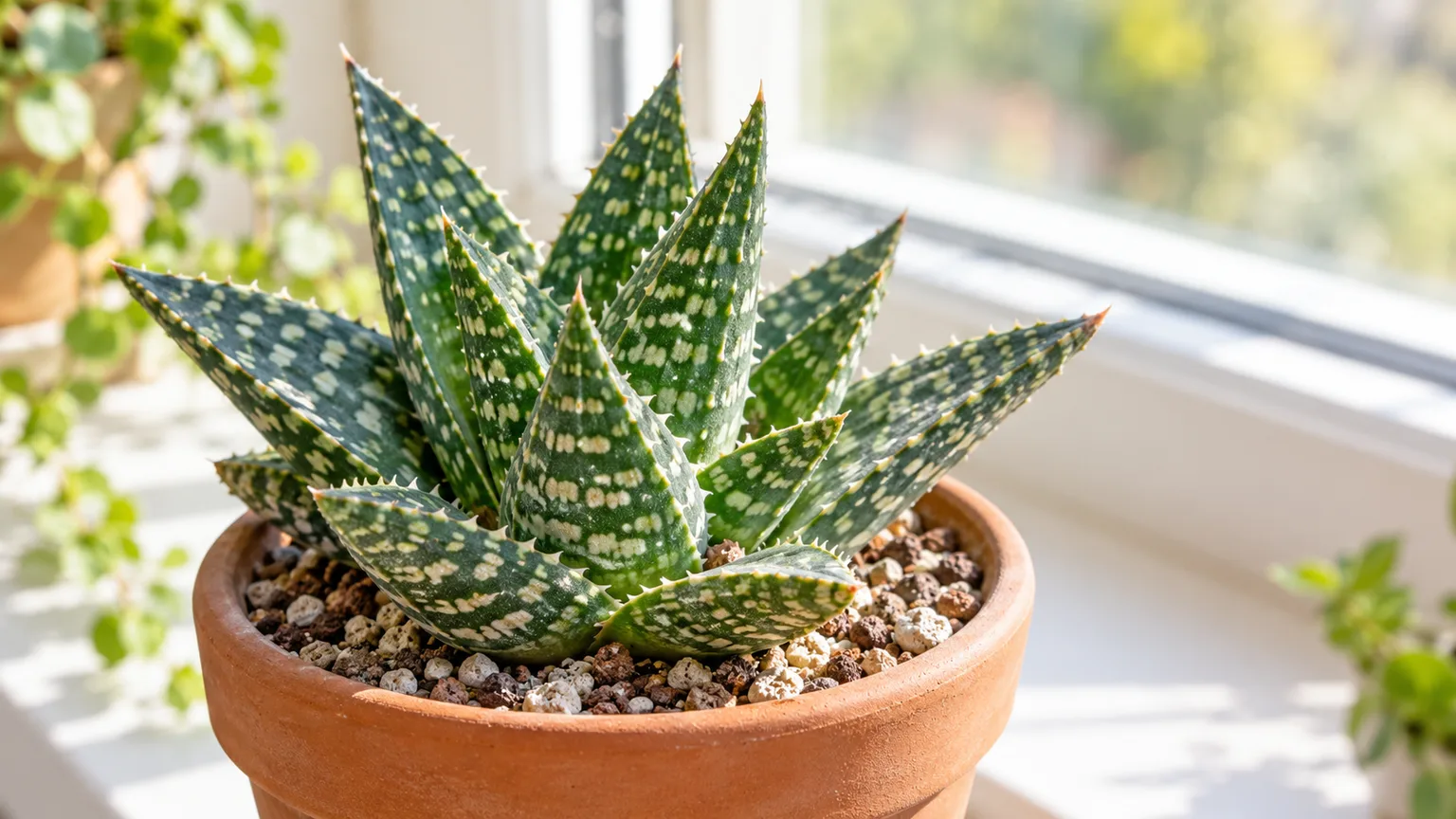
Tiger aloe is a compact succulent with bold white bands across its dark green leaves. It is often sold under the older name Aloe variegata, but the accepted name used by the South African National Biodiversity Institute is Gonialoe variegata. Give it bright light, a pot with an open drainage hole, and a gritty mix that dries between thorough waterings; the main risk is keeping its roots damp for too long.
This is a small, slow-growing plant rather than a large aloe. The rosette itself usually stays under about 10 inches tall, although a mature plant can send up a flower stalk that rises well above the leaves. It can work as a houseplant in cooler climates or as a patio and rock-garden succulent where winters are warm and drainage is sharp.
Identify Tiger Aloe before treating it like Aloe vera
Tiger aloe, also called partridge-breast aloe, is a stemless succulent in the family Asphodelaceae. Its leaves overlap in compact ranks and have irregular transverse bands or spots; their undersides have a distinct keel, and the white leaf margins carry small teeth rather than the prominent sharp spines many people picture when they hear “aloe.” The SANBI PlantZAfrica profile describes the species as a dwarf aloe, generally no more than about 10 inches tall, and notes that it often forms small clumps from underground suckers.
The species grows naturally in arid and semi-arid parts of South Africa and southern Namibia, often among low shrubs or in rocky crevices. That habitat helps explain why it can handle some shade yet still needs quick drainage: it may be sheltered from the strongest sun, but its roots are not adapted to a potting mix that stays wet. The Royal Horticultural Society’s plant profile still uses Aloe variegata as the profile name and lists “tiger aloe” as a common name; nursery tags may use either botanical name.
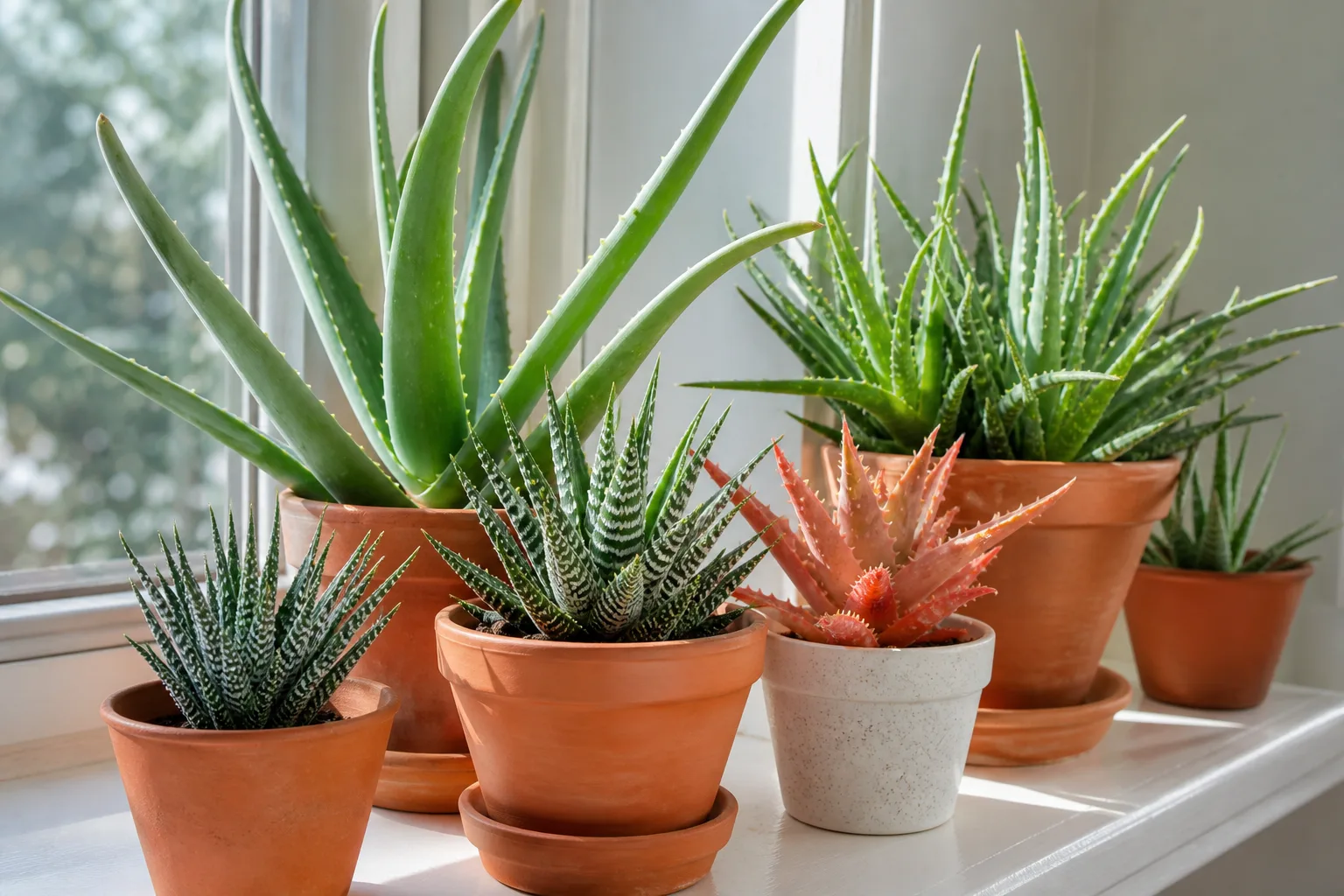
Tiger aloe is not Aloe vera, and its leaves should not be treated as a source of soothing gel. SANBI records no medicinal uses for Gonialoe variegata. The RHS also flags the plant as potentially harmful if ingested and advises handling precautions, so keep it away from children and animals that chew plants; do not apply its sap to skin or use it as a home remedy.
Set the light for compact growth
Place an indoor plant near a bright window where it gets strong ambient light and, if possible, some gentle morning sun. Tiger aloe is more tolerant of partial shade than many desert succulents, but a dim shelf can still leave it stretched or leaning toward the window. If the plant has been living in low light, increase exposure gradually over a week or two rather than moving it directly into hot afternoon sun.
In a bright outdoor site, morning sun and light afternoon shade are a reliable starting point, especially in hot climates. Plants grown by SANBI in their native range often occur in partial shade among low vegetation, while the RHS lists full sun as a suitable position. Those descriptions are not contradictory: the plant can handle full sun once acclimated, but it does not need to be scorched to thrive indoors or in a patio pot.
A shift in leaf color alone is not a watering instruction. Epic Gardening’s tiger aloe care guide notes that a tiger aloe moved too quickly into brighter sun may bronze or turn reddish, while SANBI describes brownish coloration in plants exposed to drought stress. Check the soil, firmness, and recent light changes before deciding what the color means. A plant that is firm but bronzed after a move may simply need a slower light transition; a soft yellowing base is a more serious moisture warning.
Choose a pot and fast-draining mix
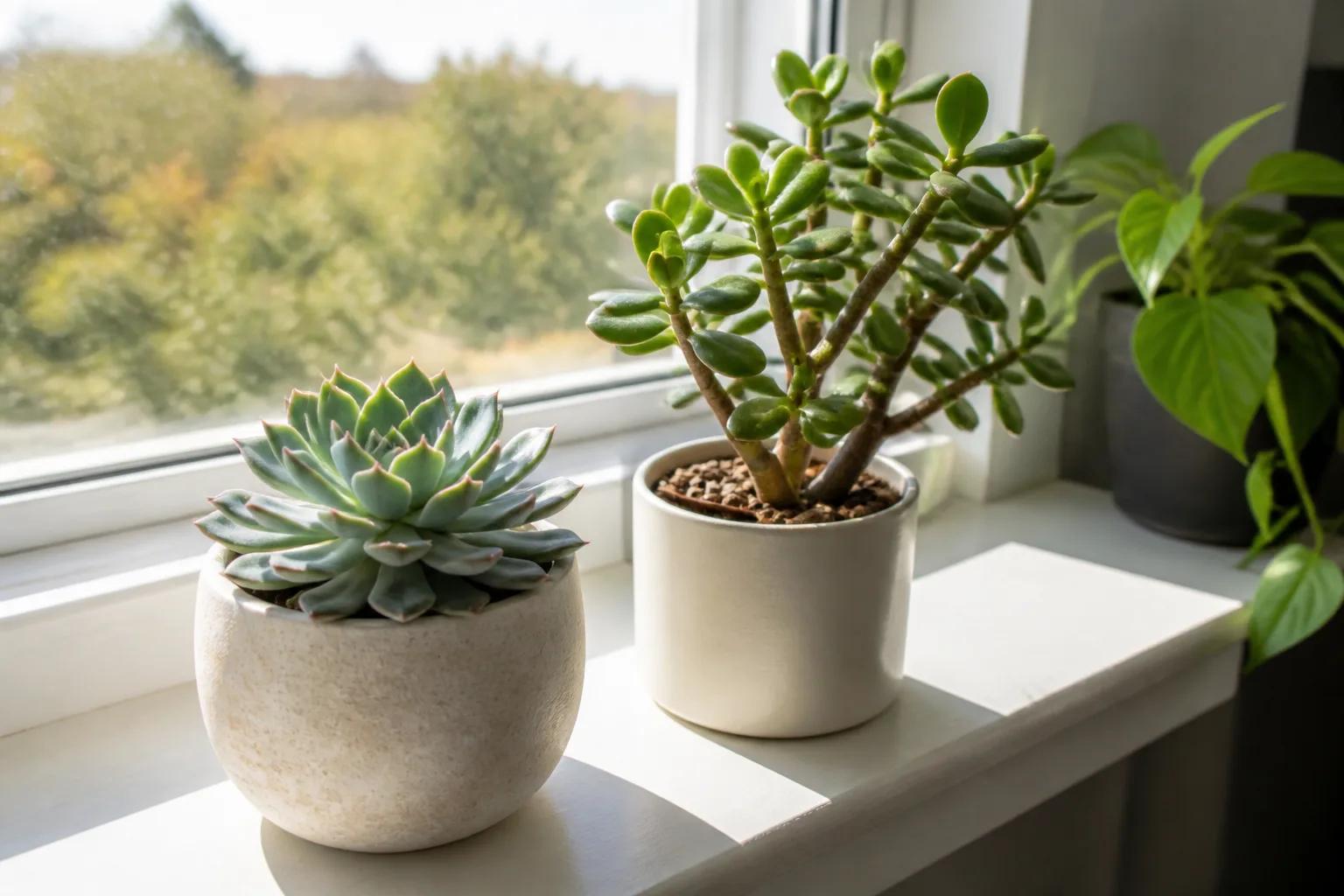
Start with a pot that has at least one unobstructed drainage hole and is only slightly wider than the root ball. An oversized pot holds a larger volume of damp mix around a relatively small root system, which can stay wet longer than the plant can use it. Unglazed terracotta is useful if you tend to water heavily because the walls dry faster, but a glazed pot is fine when it drains freely and you check the mix before watering.
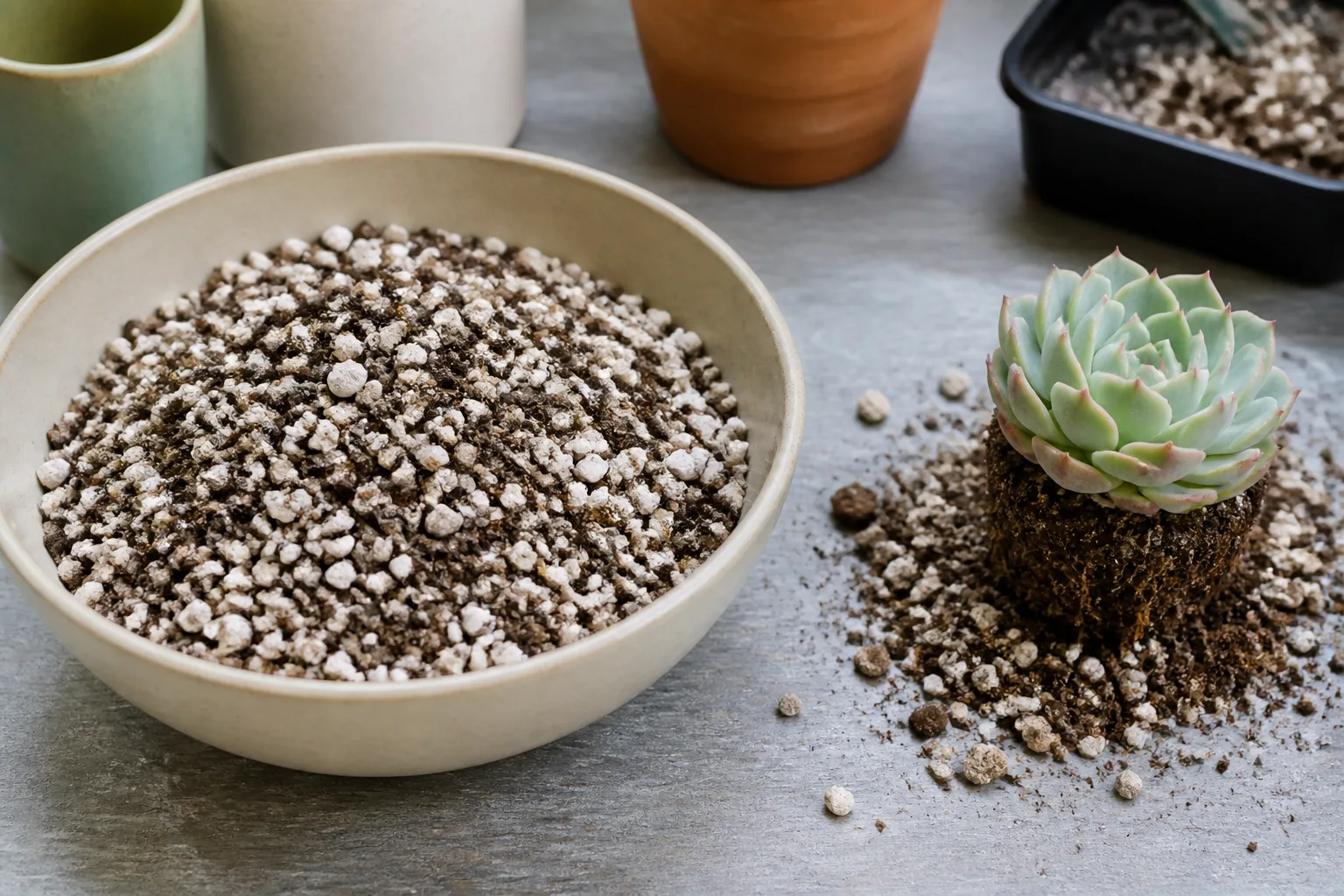
Use a cactus or succulent mix that drains quickly, not dense all-purpose potting soil on its own. If water sits on the surface or the mix stays damp for many days, blend in a coarse mineral amendment such as pumice, perlite, or horticultural grit. The RHS recommends cactus compost or a loam-based mix amended with grit; the goal is a mix that holds the plant upright but does not trap water around the roots.
Do not place a layer of gravel at the bottom as a substitute for drainage. It raises the saturated zone rather than improving the mix above it. Fill the container with an even, airy medium from top to bottom, cover the root ball at its previous depth, and keep the center of the rosette above the soil line so water cannot pool in the crown.
Water after the root zone dries
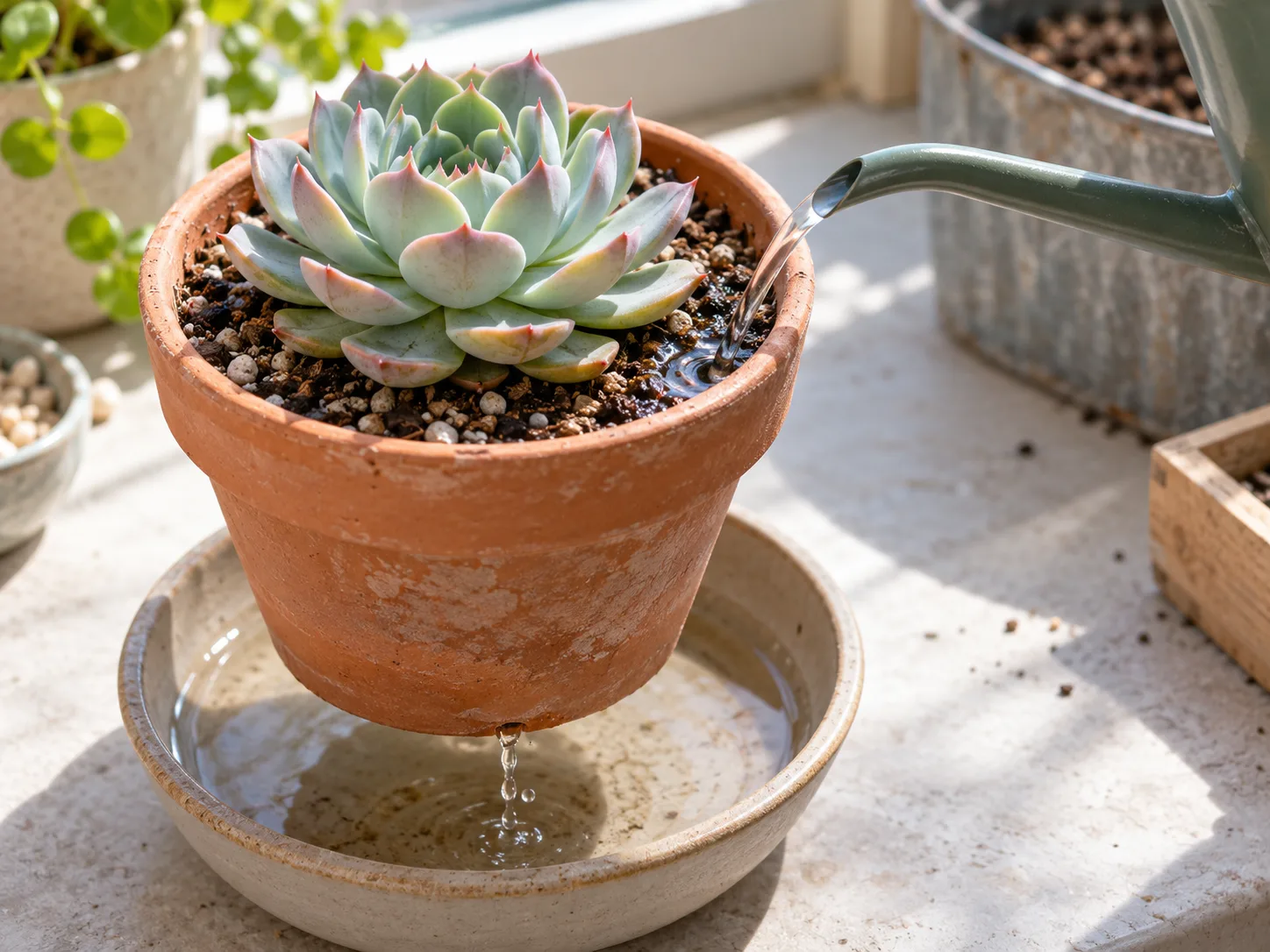
Water thoroughly, then let the mix dry before watering again. When it is time, apply water until it runs through the drainage hole and empty the saucer; a small sip wets only part of the root ball and can leave salts behind. This soak-and-drain approach gives roots a complete drink while preserving the dry interval a drought-adapted succulent needs.
Do not follow a calendar such as “every Sunday.” A plant in a warm, bright room in a small terracotta pot may dry much sooner than one in a cool room, a larger glazed pot, or winter low light. Check below the surface with a wooden skewer or a fingertip near the outer root zone, and learn how light the pot feels when dry. If the mix is still cool and damp, wait even if the top looks dry.
Reduce watering in winter when growth slows and the room is cooler or darker. The RHS specifically advises very sparing water during winter dormancy. A Gardenia tiger aloe profile also recommends allowing the mix to dry completely between waterings and reducing irrigation in winter, which supports a moisture-based routine rather than a weekly schedule. That does not mean leaving a plant in a heated room bone-dry for months; watch leaf firmness and the mix, then water when the root zone has dried and the plant begins to look slightly less plump. Avoid repeated misting, which does not hydrate the roots and can leave water sitting in the leaf joints.
Keep it warm and adjust care by season
Tiger aloe prefers warm growing conditions and does not tolerate frost. As a conservative container-care rule, move an outdoor plant inside when nights begin approaching 50°F (10°C), and bring it in before any frost. Epic Gardening gives a similar threshold for cold protection; this is a practical margin for a potted plant, not a guarantee that every specimen is safe at that exact temperature.
Indoors, keep the plant away from cold window drafts in winter and avoid placing it next to a heater that dries the root ball quickly. Normal household humidity is adequate. A bathroom, humidifier, or pebble tray is unnecessary; the main environmental need is a bright position with enough warmth and airflow for the soil to dry between waterings.
If you move the plant outdoors for summer, introduce it to brighter light in stages. Start in bright shade, then add morning sun over several days. Check the pot more often outside because wind and heat can dry it faster, but do not compensate with daily watering unless the root zone is actually dry. Before moving it back indoors, inspect the leaf bases for pests and remove any old, damp debris from the pot.
Feed lightly during active growth
Tiger aloe is not a heavy feeder. If it is growing in fresh commercial succulent mix, it may need little or no fertilizer during its first season. Once established, use a diluted balanced liquid fertilizer during spring or early summer while the plant is actively producing leaves; stop feeding as growth slows and do not try to force a flower with extra fertilizer.
The RHS lists monthly liquid feeding from May through August for container plants. For a slow-growing indoor plant, a more conservative approach is to begin with a half-strength dose once, then repeat only if the plant is actively growing and the mix has not been recently refreshed. Follow the product label, water normally before feeding if the mix is bone-dry, and flush the pot occasionally if fertilizer salts collect as a pale crust on the surface.
Repot when the plant or mix needs it
Tiger aloe grows slowly, so repotting every year is usually unnecessary. Move it to a slightly larger container when roots fill the pot, the clump becomes unstable, offsets have no room, or the mix has broken down and no longer drains well. A snug but not cramped pot is easier to manage than a large container with a long-wet root zone.
Repot during active growth in spring or early summer when possible. Ease the plant out gently, remove loose old mix, and inspect roots for soft, dark, or hollow sections. Trim only damaged tissue with a clean tool, then set the rosette at the same depth in dry, gritty mix. If roots were cut or broken, give the wounds time to dry before watering; then resume the normal soak-and-dry cycle rather than keeping the new pot constantly moist.
A plant that is simply leaning toward light does not need a larger pot. Rotate it a quarter-turn every week or two and improve the light gradually. Repotting will not fix a dark location, and an unnecessary change can disturb a plant that was otherwise growing well.
Propagate offsets or grow from fresh seed
The easiest way to make another tiger aloe is to separate an offset, or pup, that has begun growing beside the parent. SANBI describes the species as forming small groups through underground suckers, and the RHS recommends propagating from offsets in late spring or early summer. Seed is possible, but it is a slower route for a plant that can take several years to reach mature size.
Separate offsets with roots
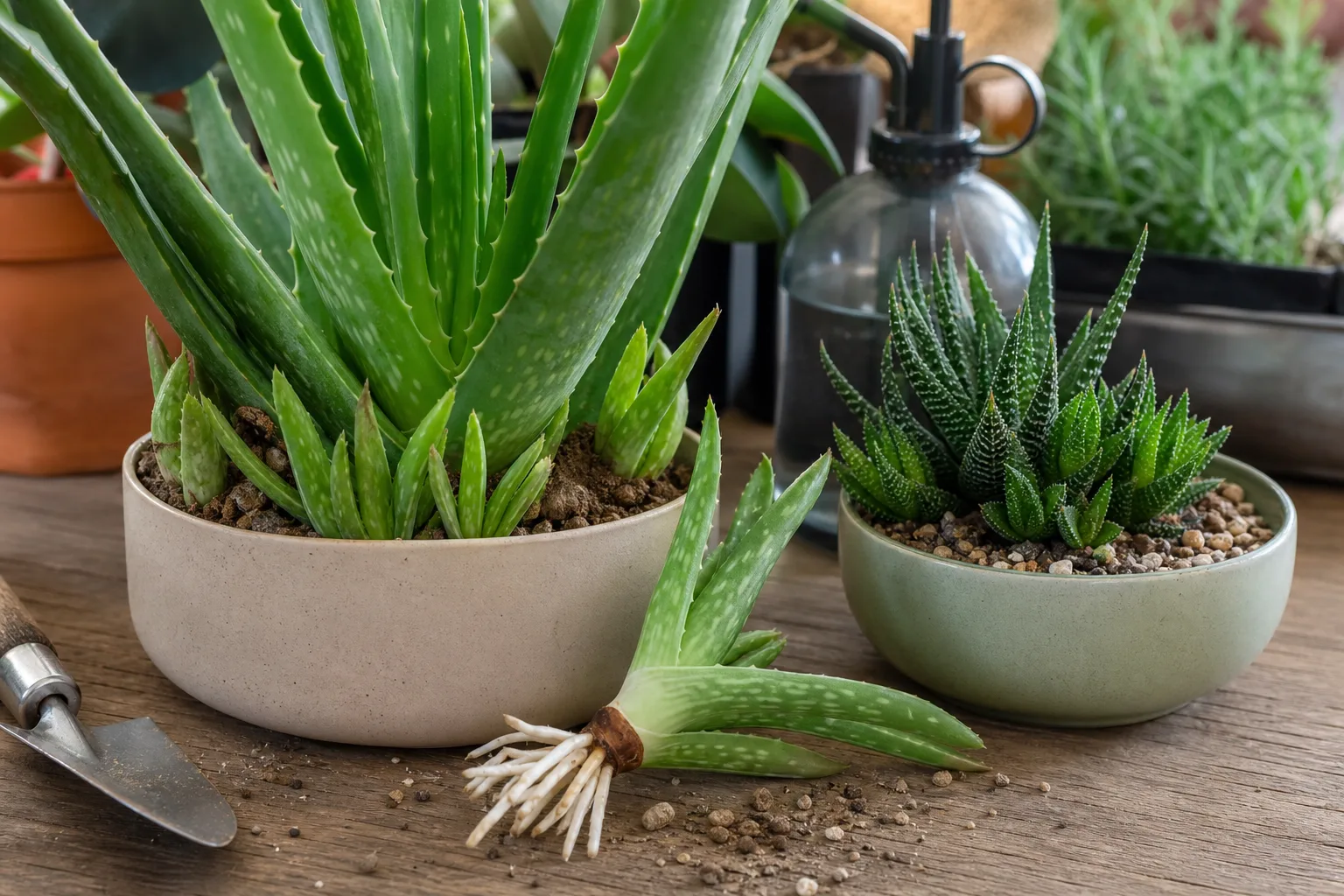
Choose a pup with its own roots or at least several established leaves, then remove the parent from its pot if the connection is below the soil surface. Brush mix away carefully and use a clean, sharp blade to separate the offset without tearing the parent’s crown. If the division has a fresh wound, set it aside in a dry, shaded spot until the cut surface has dried.
Plant the pup in a small container with drainage and fresh gritty mix. Keep it in bright indirect light while it settles, then gradually increase sun as new growth appears. Wait until the mix has dried before the first thorough watering; constantly moist soil is not a shortcut to faster rooting. The new plant is established when it begins making leaves or roots of its own.
Grow from seed only if you are patient
Use fresh seed if you want to raise a plant from the beginning. SANBI recommends sowing in the warm season of its South African range in coarse river sand, covering seed lightly, and keeping the medium moist; that calendar is specific to the Southern Hemisphere. In another climate, sow when you can provide warm conditions, bright indirect light, and steady moisture without leaving the seed tray waterlogged.
Seedlings are vulnerable to damping off, so use a clean container and a fresh, open mix, and provide airflow once germination begins. Do not transplant them until they are sturdy enough to handle. The RHS lists five to ten years as a possible time to maturity, so seed propagation is best treated as a long-term project rather than a way to get a flowering plant quickly.
Understand the flower stalk and bloom cycle
A mature tiger aloe can produce a tall raceme with hanging tubular flowers in shades of salmon pink, flesh pink, or dull red; yellow is reported but less common. SANBI records flowering from July to September in southern Africa, while the RHS describes the bloom as occurring in summer. Indoor plants may flower at a different time or not at all, so do not treat one calendar month as universal.
Age and growing conditions matter more than a bloom trick. A small nursery plant may need years to mature, and an indoor plant in low light may keep growing leaves without enough energy for flowers. Give it strong light, a warm growing season, and a cooler, drier winter rest that matches your home conditions. Do not overfeed or deliberately stress it to force blooms.
When the flower stalk has finished, cut it near the base with a clean tool. Leave the healthy rosette intact; it does not need pruning to flower again. If no flowers appear, reassess maturity and light first, then give the plant time.
Prune old leaves and check for pests
Tiger aloe does not need shaping. As the rosette grows, an occasional outer leaf may dry naturally; remove it only after it is fully dry, using a clean blade rather than pulling hard against the crown. If you remove a spent flower stalk or a damaged leaf, avoid cutting into the central growing point.
Inspect leaf bases and undersides for scale, mealybugs, or aphids, which can hide in a dense rosette; Gardenia’s profile also names aphids and mealybugs. Isolate an infested plant, remove visible insects with a damp cotton swab or cloth, and check nearby succulents. If the problem persists, use a treatment labeled for houseplants and test it on one leaf first; concentrated sprays and repeated applications can damage succulent surfaces.
Scale and mealybugs can appear as small fixed bumps or cottony clusters, while spider mites may leave fine webbing and stippled foliage. Do not confuse natural white bands with pest damage: tiger aloe’s irregular markings are part of the leaf pattern and repeat across healthy leaves. Sudden new webbing, sticky residue, or spreading pale specks are better reasons to inspect closely.
Diagnose yellow, bending, or shriveled leaves
A single old leaf drying at the base is normal for many rosette succulents. A whole plant changing color or losing firmness deserves a closer check. Look at the leaf texture, where the change starts, how quickly it is spreading, and whether the mix is wet or dry before changing the care routine.
Soft yellow leaves point to root trouble
Yellow leaves that feel soft or translucent, especially near the base, often indicate excess water or poor drainage. Check the potting mix and drainage hole; if the mix is damp for days or smells sour, remove the plant and inspect the roots. Trim mushy roots back to firm tissue, let cuts dry, and replant in fresh gritty mix. A collapsed or rotting crown may not recover, but healthy offsets can sometimes be separated and saved.
Wrinkled or thinner leaves can signal that the plant has been dry too long, especially if the pot is light and the mix is dry all the way through. Give it one complete watering and let the extra drain rather than misting repeatedly. If the leaves do not firm up after the soil is moist, check for damaged roots; a plant cannot absorb water through roots that have rotted or dried severely.
Leaning and stretched leaves point to low light
Leaves that lengthen, spread, or lean strongly toward one side usually indicate insufficient or uneven light. Move the pot closer to a bright window, rotate it gradually, and allow new growth to adapt. Older stretched leaves may not return to their original shape, so judge improvement by the next leaves rather than expecting the existing rosette to tighten overnight.
Bronzing or reddish-brown color after moving the plant into strong direct sun can be a stress response. Return it to bright filtered light and re-acclimate more slowly. If the leaves are also soft, wrinkled, or the soil is very dry, drought may be contributing; if they are limp and yellow in wet soil, investigate root rot instead. Treat the whole pattern, not the color alone.
Grow Tiger Aloe outdoors only in suitable climates
In frost-free or reliably mild climates, tiger aloe can grow in a sheltered rock garden or patio container with fast-draining soil. SANBI describes it growing among rocks and low shrubs in arid or semi-arid parts of South Africa and Namibia. That does not mean it wants baking heat with no protection: the habitat includes partial shade, and a new plant still needs gradual exposure to outdoor sun.
A container is the safer option where winter cold or heavy rain is a concern. It lets you bring the plant under cover before frost and keep winter rain from saturating the root zone. If you plant it in the ground, choose a raised or sloped spot where water cannot pool around the crown, and avoid rich beds that are irrigated as frequently as vegetables.
Do not use a USDA hardiness label as a complete outdoor-care plan. A climate may be warm enough but too wet, or mild most winters but still receive an occasional damaging frost. Check local conditions, protect the plant from cold rain and frost, and grow it in a pot if you cannot reliably keep the roots dry through the cool season.
Conclusion
Tiger aloe stays compact, grows slowly, and is easier to maintain when you treat it as a drought-adapted succulent rather than a thirstier Aloe vera. Give it bright light, an airy mix, a pot that drains, and a thorough watering only after the root zone dries. Increase sun gradually, reduce water in cooler low-light months, and inspect soft yellow leaves before adding more water.
Propagate the offsets when they have roots, and give a young plant time to mature before expecting flowers. The plant’s growth and bloom timing vary with climate and conditions, but the core routine is consistent: protect it from frost, avoid standing moisture, and let the plant—not a fixed calendar—tell you when its next care step is due.