How to Grow Paperwhite Narcissus Indoors and Outdoors
Paperwhite flower care is simple when you choose the right method. Learn to force bulbs in soil or pebbles, prevent floppy stems, and handle bulbs after bloom.
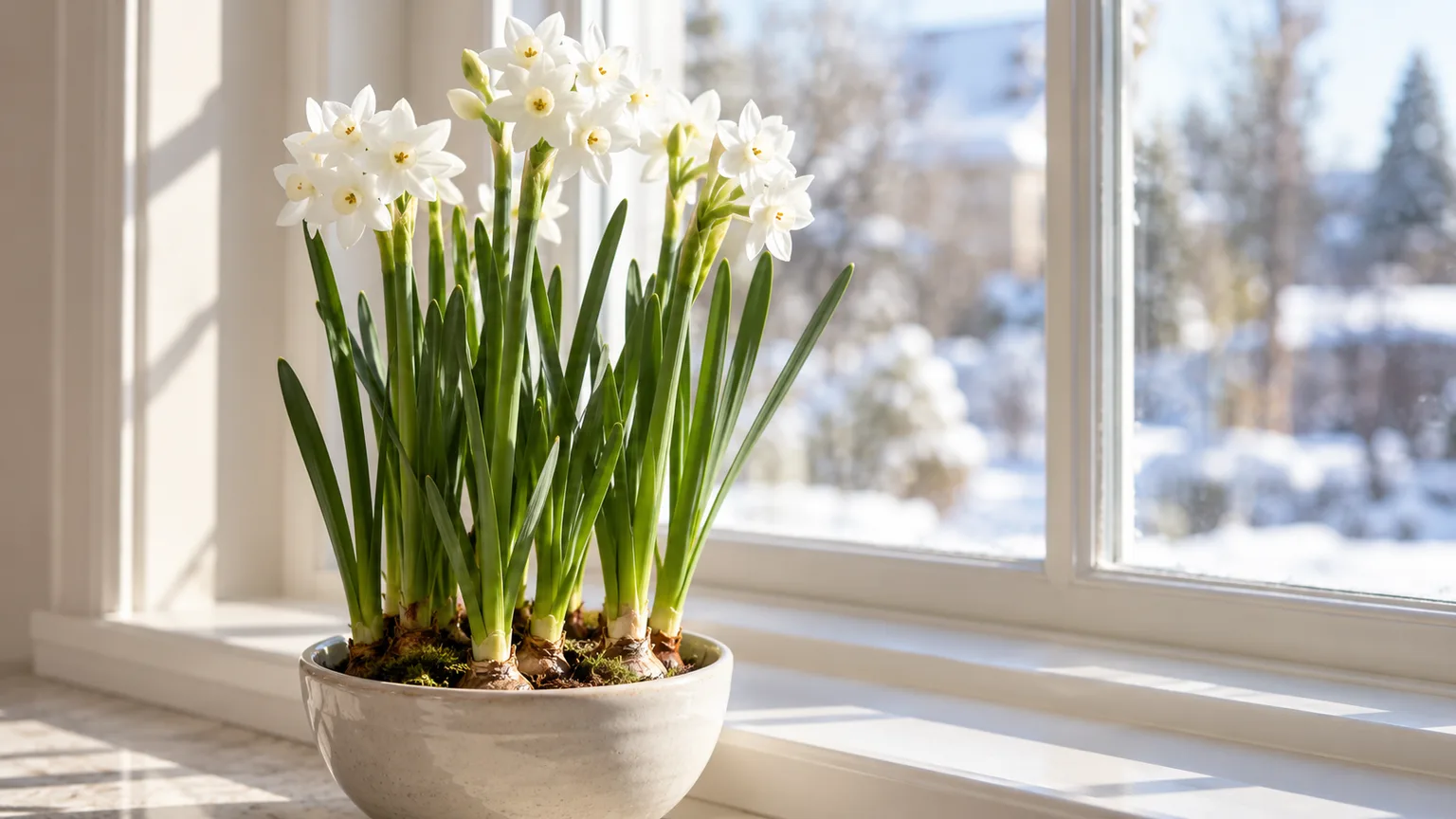
Paperwhite narcissus is one of the quickest ways to bring fragrant flowers indoors in winter. Unlike many spring bulbs, paperwhites do not need a cold period before they bloom, so you can force them in potting mix or in a shallow bowl of pebbles and water. Once you choose the method, the key is keeping the bulb itself out of standing water and giving new shoots enough light to grow sturdy.
There are two different goals behind “growing paperwhites.” Indoor forcing uses the bulb’s stored energy to create a short seasonal display; outdoor planting is a long-term garden choice that works best where winters are mild. Knowing which one you want helps you set realistic expectations for bloom timing, stem height, and whether the bulbs may flower again.
Paperwhite Narcissus at a Glance
| Growing question | Practical answer |
|---|---|
| Botanical name | Narcissus papyraceus |
| Need for chilling | None for indoor forcing |
| Indoor bloom window | About 4–8 weeks after planting, depending on conditions |
| Indoor growing media | Well-drained potting mix, or pebbles and water |
| Outdoor growing | Best in mild-winter regions; check local hardiness guidance |
| Main care risks | Rot from excessive water, tall weak stems, and pet ingestion |
Paperwhites belong to the narcissus group and make clusters of small flowers on upright stalks. Most are white, but cultivars can have yellow or orange cups or petals; their scent can be strong enough to fill a small room. UF/IFAS describes paperwhite narcissus as an easy bulb to force indoors and notes that the flowers do not need pre-chilling. (UF/IFAS Gardening Solutions)
Use timing as a range, not a guarantee. UF/IFAS gives roughly four to eight weeks from planting to full flowering, while Better Homes & Gardens describes about four to six weeks; cultivar, bulb condition, and the temperature around the pot help explain the variation. If you need flowers for a particular date, start early and plant a second small batch a week later as insurance. (UF/IFAS Gardening Solutions; Better Homes & Gardens)
Choose Indoor Forcing or Outdoor Growing
Choose indoor forcing if you want flowers in winter, live where the ground freezes hard, or want to grow a pot on a windowsill. This method works in any climate because the bulb is kept indoors; it does not turn the plant into a permanent houseplant, though. The bulb has a finite reserve, and forcing pushes it to spend that energy on leaves, roots, and flowers in one concentrated season.
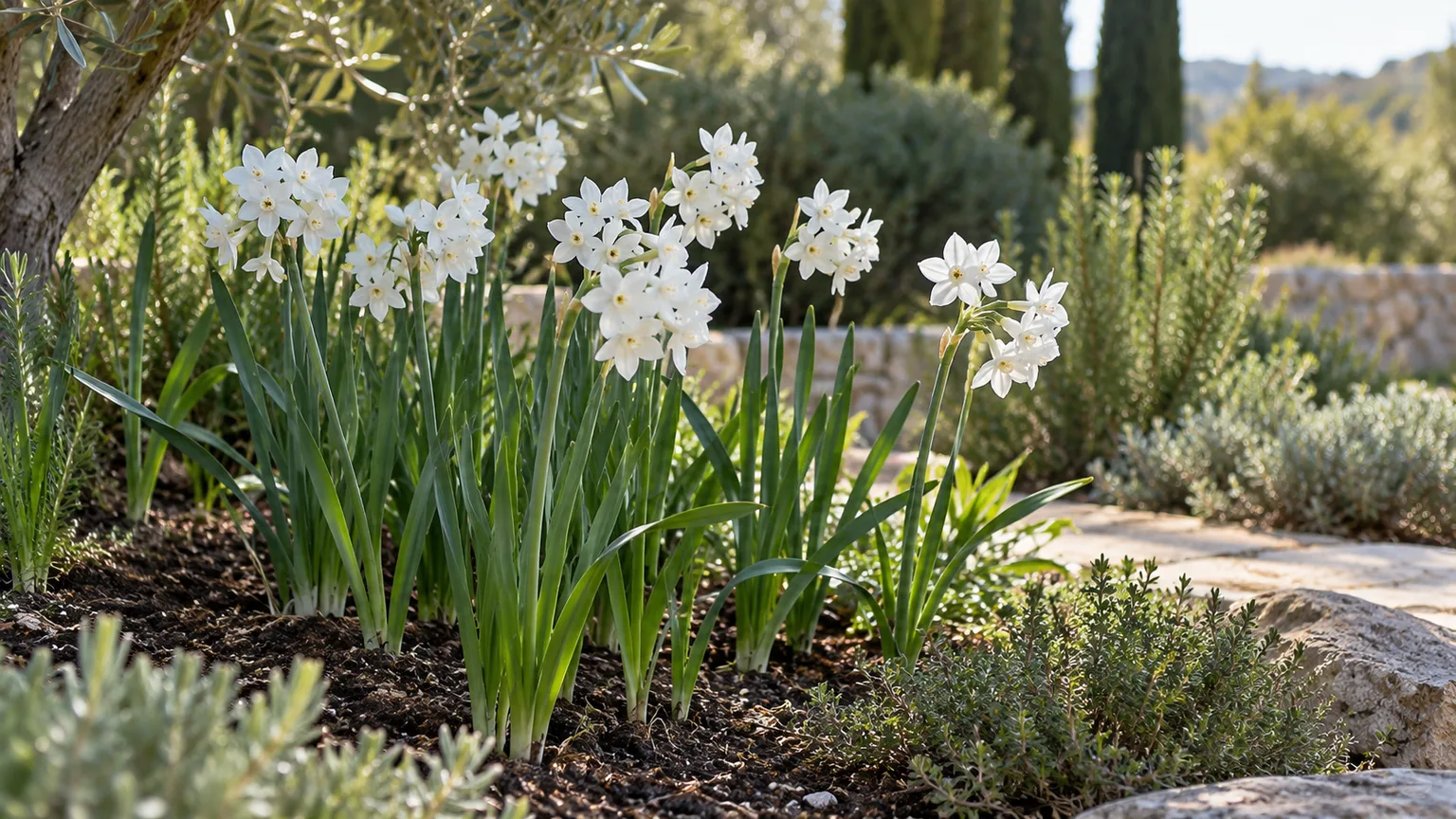
Choose outdoor growing if you have a warm-winter garden with soil that drains freely and you want a planting that can settle into the landscape. Paperwhites are often grown indoors, but UF/IFAS notes that they can also be planted in Florida landscapes, even though reblooming can be difficult. For outdoor success, local winter temperatures matter more than the fact that paperwhites are sold as bulbs. (UF/IFAS Gardening Solutions)
Do not confuse a paperwhite’s ability to bloom indoors without chilling with cold hardiness outdoors. “No chill required” means the bulb does not need refrigerated cold treatment to flower; it does not mean the planted bulb tolerates freezing soil. If your garden has regular hard freezes, treat outdoor planting as an experiment or grow paperwhites as an indoor seasonal display.
How Hardiness Zones Affect Outdoor Plans
Published zone ranges for paperwhites vary. Better Homes & Gardens places them in USDA zones 9–11, while broader narcissus profiles may cover a wider mix of species and cultivars; a genus-level daffodil range should not be assumed to describe every paperwhite. If you live near a zone boundary, check your local extension office or a regional nursery for species-specific advice before planting a large bed. (Better Homes & Gardens; NC State Extension Plant Toolbox)
In a suitable mild-winter climate, pick a garden spot with sun to light shade and excellent drainage. Waterlogged soil is a bigger threat than dry weather while the bulb is dormant, because standing moisture encourages bulb rot. In hotter summer climates, a position that gets bright winter light but some relief from the most intense summer heat can make the planting easier to manage; the best location will depend on local rainfall and soil.
Select Healthy Bulbs and a Container
Start with bulbs that feel firm and heavy for their size. Avoid any that are soft at the basal plate, smell sour, show spreading mold, or have a sunken damaged patch. A few papery brown outer scales are normal; wet, mushy tissue is not. UF/IFAS specifically recommends blemish-free, firm bulbs because basal rot can start in the roots and move upward, leaving dwarfed growth or abnormal flowers. (UF/IFAS Gardening Solutions)
For potting mix, use a container with drainage holes and enough weight to stay upright once the flower stems rise. A pot roughly three to five inches deep is generally sufficient for forcing, but wider bowls look fuller when they hold several bulbs. Plant the bulbs close enough to make a substantial display while leaving a little space between them; crowded bulbs are fine, but they should not press hard against one another or the pot wall. (UF/IFAS Gardening Solutions; Better Homes & Gardens)
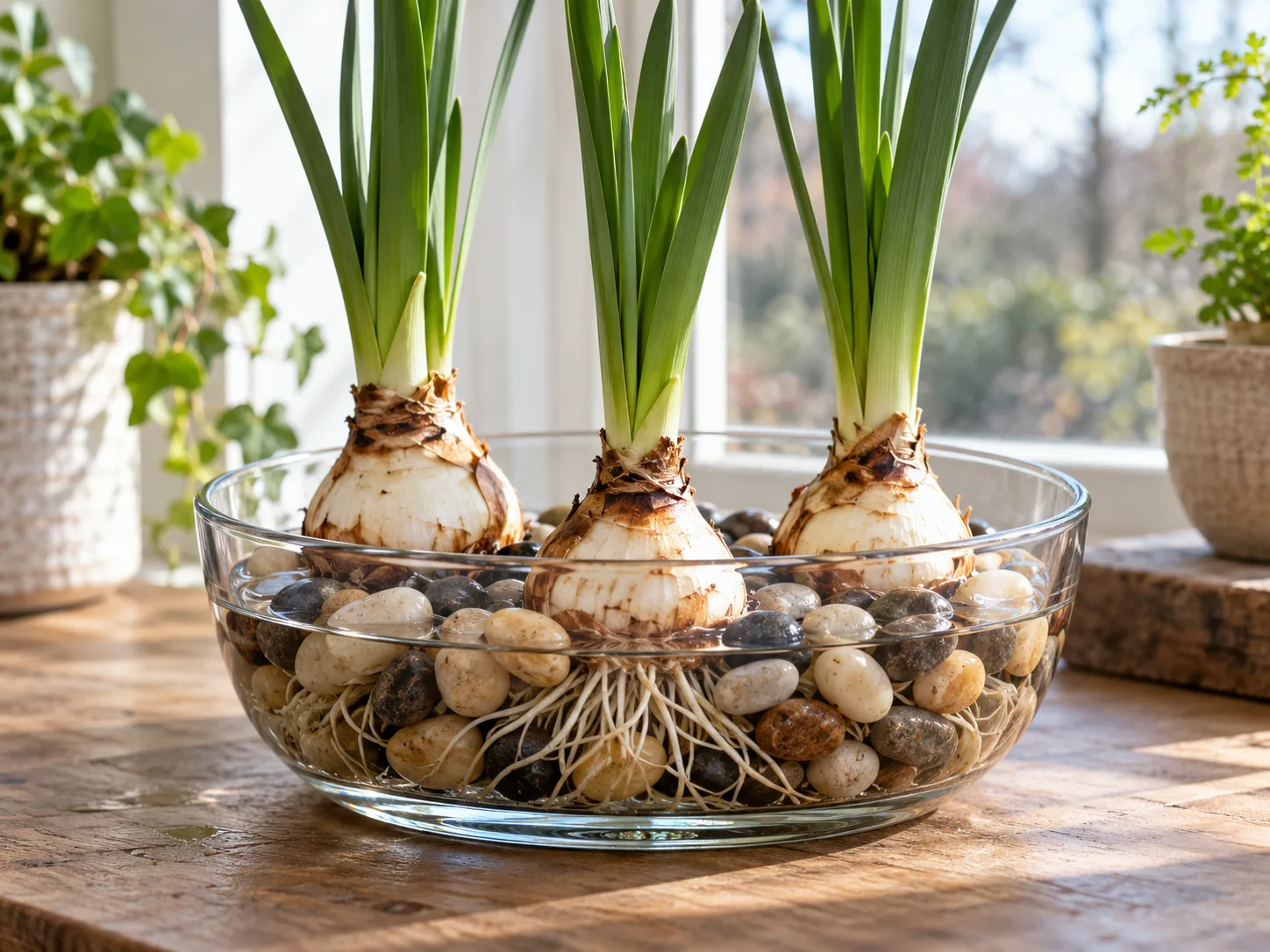
For a pebble bowl, choose a stable watertight container with enough depth to anchor the bulbs and hold the roots. Clear glass makes the roots visible, but an opaque ceramic dish works just as well. The main advantage of water forcing is the clean, decorative display; the trade-off is that the bulb has no soil around it to buffer water changes or supply nutrients after its stored reserves run down.
Choose Potting Mix or Pebbles
Both methods work. Pick potting mix if you want drainage and a better chance of planting the bulb outdoors afterward; pick pebbles if you want a simple, soil-free winter display and can check the water level regularly. The bloom itself does not depend on adding fertilizer during indoor forcing, because the bulb already stores what it needs for the first flush of flowers.
Grow in Potting Mix
Use fresh, loose potting mix in a container with drainage holes. Set each bulb pointed end up and cover the lower portion with mix while leaving the upper third exposed; the exposed neck helps you see the bulb and reduces the chance of keeping the entire bulb wet. Water thoroughly once so the mix settles, then empty the saucer instead of letting the pot sit in runoff.
Keep the mix evenly moist while roots establish, but let excess water drain away. A bulb in damp soil can root without being kept soggy. Check below the surface with a fingertip rather than watering by the calendar: a pot near a sunny window may dry faster than one in a cool room, and ceramic, plastic, and terracotta containers lose moisture at different rates.
Grow in Water and Pebbles
Add an even layer of clean pebbles or gravel to a watertight dish, set the bulbs upright, and tuck a few more stones around them so they cannot tip. Add water until it just reaches the basal plates—the flat root-forming bottoms of the bulbs. Keep the waterline there or a touch below it as roots emerge; do not cover the sides of the bulbs with water. UF/IFAS and Better Homes & Gardens both describe water-level control as central to this method. (UF/IFAS Gardening Solutions; Better Homes & Gardens)
Check the bowl every day or two, especially once the roots are drinking. Add water in small amounts when the level drops rather than refilling it to the top of the pebbles. If the bulb’s base stays submerged, lift it out, rinse away any soft tissue, and restart only if the bulb is still firm; a bulb that has turned mushy or foul-smelling should be discarded.
Force Paperwhite Bulbs Indoors, Step by Step
- Plant in stages if timing matters. Set the first group about four to eight weeks before the date you want flowers, then start another group a week later. Because bloom speed varies, staggered planting gives you a better chance of having at least one pot open on time.
- Choose soil or pebbles. For a long-lived container, use draining potting mix. For a centerpiece, use a shallow watertight bowl with pebbles and keep the water only at bulb-base level.
- Position the bulbs correctly. Pointed ends face up. In mix, keep the top third exposed; in a pebble dish, use stones to support the sides without burying or soaking the bulb.
- Give roots a cool, bright start. Put the container in a bright place away from direct heat vents. Once roots and shoots begin to develop, maintain good light and avoid a warm, dim corner where stems stretch toward the window.
- Track progress by the plant. Roots and green shoots are better indicators than a fixed calendar. If several weeks pass with no visible growth, check whether the bulb remains firm, whether water is reaching the roots, and whether the room is unusually cold.
Paperwhites do not need the refrigerator treatment used for many other spring-flowering bulbs. Pre-chilling can waste time and may create a false expectation that all narcissus behave the same way. The Old Farmer’s Almanac also describes paperwhites as bulbs that can be grown indoors without a chilling period. (The Old Farmer’s Almanac)
Light, Water, Temperature, and Fertilizer
Before flowering, give paperwhites plenty of bright light. A bright window is useful, but rotate the pot every few days if stems lean toward the glass. Once flowers open, move the container away from hot afternoon sun, radiators, fireplaces, and heating vents. UF/IFAS cautions that excess warmth or too little light can make leaves and stalks grow too tall, while too much sun can shorten the flowers’ display. (UF/IFAS Gardening Solutions)
Keep water steady without leaving roots or bulbs in stale, stagnant conditions. In a soil pot, water when the surface begins to dry and let the container drain fully. In a pebble bowl, maintain contact between the water and root zone, not a deep bath around the bulb. If roots are visible in a clear bowl, they should look pale and firm rather than brown, slimy, or foul-smelling.
Cooler indoor temperatures usually make the flowers last longer. A room that feels comfortable to people can be warm enough to accelerate flower aging, so move an open pot to the coolest bright place in the home overnight or when it is not on display. The plant does not need extra humidity or misting; wetting the flowers can make the arrangement messy without solving the real issue of room heat.
Skip fertilizer while forcing bulbs indoors. The goal is one concentrated bloom, not long-term leafy growth, and extra fertilizer cannot replace the energy the bulb has already spent. For outdoor plantings, follow local bulb-care advice and product labels rather than applying houseplant fertilizer to dormant bulbs.
Keep Paperwhite Stems Upright
Paperwhites can grow long stems quickly, especially in a warm room with weak light. If leaves and stalks are already stretching, move the pot to a brighter and cooler location as soon as possible; changing conditions early is easier than trying to straighten a mature flowering stem. Keep the pot out of direct hot sun after flowers open, because heat can shorten bloom life even while it encourages fast growth.
Choose a compact cultivar if stem height is a concern, and use a wide, heavy container that will not tip. A simple plant ring, discreet stake, or loose tie can support stems without cinching them together. Better Homes & Gardens also recommends slim stakes, twine, or a ring around the foliage when a display needs extra support. (Better Homes & Gardens)
Some growers use a controlled alcohol solution to shorten stems, but it is an optional technique with little room for guessing: an overly strong mix can injure the plant, and the exact protocol matters. For most home displays, the lower-risk sequence is bright light, a cooler growing spot, a compact cultivar, and gentle physical support. If you use a published alcohol protocol, measure it exactly, keep the solution away from pets and children, and do not substitute sweetened drinks or household rubbing alcohol.
Make Blooms Last and Tidy Spent Flowers
A paperwhite flower cluster typically stays attractive for around two weeks indoors, with warmth and strong direct sun tending to shorten that window. Move the pot to a cool bright spot once the first flowers open, and remove only individual flowers or stalks that have finished. Cutting a spent stalk at the base keeps the arrangement neat but will not make the same bulb produce another flush immediately. (Better Homes & Gardens)
Paperwhite fragrance is part of the appeal, but it can feel overpowering when many bulbs flower together in a small room. If you are sensitive to perfume, start with a few bulbs or display the bowl in a larger, ventilated room rather than using a large pot on a bedside table. A milder-scented cultivar can help, although fragrance varies by selection and by how many blooms are open at once.
After the flowers fade, keep any leaves that are still green. Those leaves are the bulb’s route to rebuilding some energy; cutting them back early removes the plant’s chance to replenish itself. Once the foliage yellows naturally, it can be removed and the bulb can be evaluated for outdoor planting or disposal.
Grow Paperwhites Outdoors and Manage Rebloom
Outdoor paperwhites are best treated as a warm-climate narcissus, not a cold-hardy spring bulb for every garden. Better Homes & Gardens gives USDA zones 9–11 as the usual outdoor range, and UF/IFAS notes landscape use in Florida. The exact result still depends on winter lows, drainage, cultivar, and local conditions, so a zone label is a starting point rather than a guarantee. (Better Homes & Gardens; UF/IFAS Gardening Solutions)
Plant outdoor bulbs in a well-drained bed in a mild part of the year, following the depth and spacing recommended for the specific bulbs you bought. Choose a spot with sun or partial shade; NC State Extension describes narcissus generally as suitable for full sun to partial shade and warns that bulb rot can occur in wet soils. Do not make a poorly drained bed “safer” by burying bulbs deeper or watering more often; improve drainage or select another site instead. (NC State Extension Plant Toolbox)
If you are planting bulbs that have already been forced indoors, keep expectations modest. A bulb that bloomed in water has used a large share of its stored energy and has no soil nutrition to help it recover during forcing. It may grow leaves outdoors and still skip flowering for a season or more. Better Homes & Gardens notes that replanted forced bulbs can take at least two to three years to flower again; UF/IFAS likewise says reblooming in a Florida landscape can be difficult. (Better Homes & Gardens; UF/IFAS Gardening Solutions)
A soil-forced bulb has a slightly better starting point than one grown only in pebbles, but it still may not return to the same flowering strength right away. After bloom, let the foliage stay green until it yellows, then plant the bulb outdoors only if your winter climate is appropriate. If the garden freezes deeply, compost the spent bulb and buy fresh, firm bulbs for next season instead of storing it indoors for months without the conditions it needs.
Paperwhite Varieties for Color, Scent, and Height
Choose a variety for the space and fragrance level you actually want. ‘Ziva’ is a familiar white selection with a strong scent; ‘Nir’ is also white and is described as shorter with milder fragrance; ‘Grand Soleil d’Or’ adds yellow petals and an orange cup. These names are not just color choices: if a tall stem is likely to flop in your display, a shorter cultivar is a practical advantage. (Better Homes & Gardens)
UF/IFAS highlights other cultivars that broaden the palette, including ‘Erlicheer’ and ‘Omri’ for white flowers, ‘Galilee’ for white and cream tones, and ‘Avalanche’ for white petals with yellow centers. Yellow-flowered forms can be especially fragrant, so ask the bulb seller about scent and mature height if you are buying in person. Labels can differ in how they describe perfume, so “mild” should be treated as relative rather than scentless. (UF/IFAS Gardening Solutions)
Troubleshoot Paperwhite Growing Problems
Most paperwhite failures can be narrowed down to three checks: is the bulb still firm, can the roots reach moisture without sitting in stagnant water, and is the shoot getting enough light at a cool enough temperature? Check those conditions before adding fertilizer or moving the bulb repeatedly. A quick diagnosis prevents you from treating a bulb that is already rotten or expecting a damaged bulb to recover.
Bulbs Soften, Rot, or Fail to Sprout
A soft bulb, unpleasant smell, or brown mush at the base points to rot. Remove it from the pot or bowl and discard it; do not compost visibly diseased bulbs where you may later mix that material into a bulb bed. If the bulb is still firm but has no growth, check that the pointed end faces up, that the root-forming base can reach moisture, and that the planting area is not extremely cold.
For future plantings, start with firm, clean bulbs and use loose potting mix or a pebble bowl where water can be controlled. Basal rot can cause weak growth and misshapen flowers, so avoiding damaged stock and excessive moisture is more effective than trying to treat a badly affected bulb after symptoms appear. (UF/IFAS Gardening Solutions)
Leaves Grow but Flowers Do Not Open
When leaves appear but buds are absent, first consider bulb quality and the forcing calendar. A small, dried-out, or previously forced bulb may lack the stored reserves needed for a strong display. If the bulb came from an indoor arrangement last year, it may need more than one outdoor growing season to rebuild energy, and it may not be worth holding for a second indoor forcing attempt.
For a newly purchased bulb, keep conditions steady and allow time for the expected bloom window. Paperwhites can take four to eight weeks to flower, so a few weeks of leafy growth does not automatically mean failure. If the bulb remains firm and the leaves are healthy, continue care; if the growth is weak and the bulb is soft, replace it rather than chasing a fertilizer fix. (UF/IFAS Gardening Solutions)
Stems Flop or Blooms Fade Early
Long, floppy growth usually means the plant is growing too warm, too dim, or both. Move it to a cool bright spot and rotate the container so stems receive even light; if flowers have already opened, add a ring or slim stake rather than forcing the stalks upright. UF/IFAS identifies excessive warmth and inadequate light as common reasons the stems stretch, while too much direct sun can speed flower deterioration. (UF/IFAS Gardening Solutions)
If petals brown or fade soon after opening, move the arrangement away from heat and hot sun. Do not mistake a normal two-week bloom period for a disease; cut individual spent flowers only when they become unattractive and leave healthy foliage in place until it yellows. (Better Homes & Gardens)
Handle Paperwhites Safely Around Pets and Children
Keep paperwhite bulbs and cut foliage out of reach of cats, dogs, horses, and young children. NC State Extension lists narcissus among plants with poison characteristics, and the ASPCA identifies paperwhite as toxic to dogs, cats, and horses; it names lycorine and other alkaloids as toxic principles and says the bulb is the most poisonous part. Do not let children or pets chew the bulb, leaves, or flowers, and wash hands after handling if you have sensitive skin. (NC State Extension Plant Toolbox; ASPCA Animal Poison Control)
If a pet may have eaten any part of the plant, contact a veterinarian or an animal poison-control service promptly rather than waiting for symptoms. The ASPCA lists vomiting, drooling, and diarrhea among possible signs, with more serious effects after a large ingestion. Keep the bulb label or a photo of the plant available when you call, and do not try home treatment unless a veterinary professional tells you to. (ASPCA Animal Poison Control)
Conclusion
Paperwhites are straightforward to grow when you decide first whether you want a quick indoor display or a warm-climate garden planting. Forcing takes no pre-chilling: set bulbs in draining potting mix or support them in pebbles with the waterline at the base, then provide bright light and cooler conditions as shoots and flowers develop.
If stems begin to lean, correct light and temperature early and support the stalks gently. After blooming, leave green foliage intact and treat rebloom as a possibility rather than a promise, especially for bulbs forced in water. With a firm bulb, controlled moisture, and realistic timing, paperwhite narcissus can bring fragrant flowers into the darkest part of the year without much fuss.



