Drooping Leaves on Neem: Causes, Checks & Fixes
Quick answer
Drooping leaves on Neem (Azadirachta indica) stem from a loss of petiolar turgidity in its pinnate compound leaves, triggered either by acute drought dehydration, root hypoxia in waterlogged heavy soil, or sudden chilling below 10°C (50°F). First step: Lift the container and probe the top 3–5 cm of soil—soak thoroughly if feather-light and bone-dry, or halt watering immediately and move to a warm, bright position if the pot is heavy and wet.
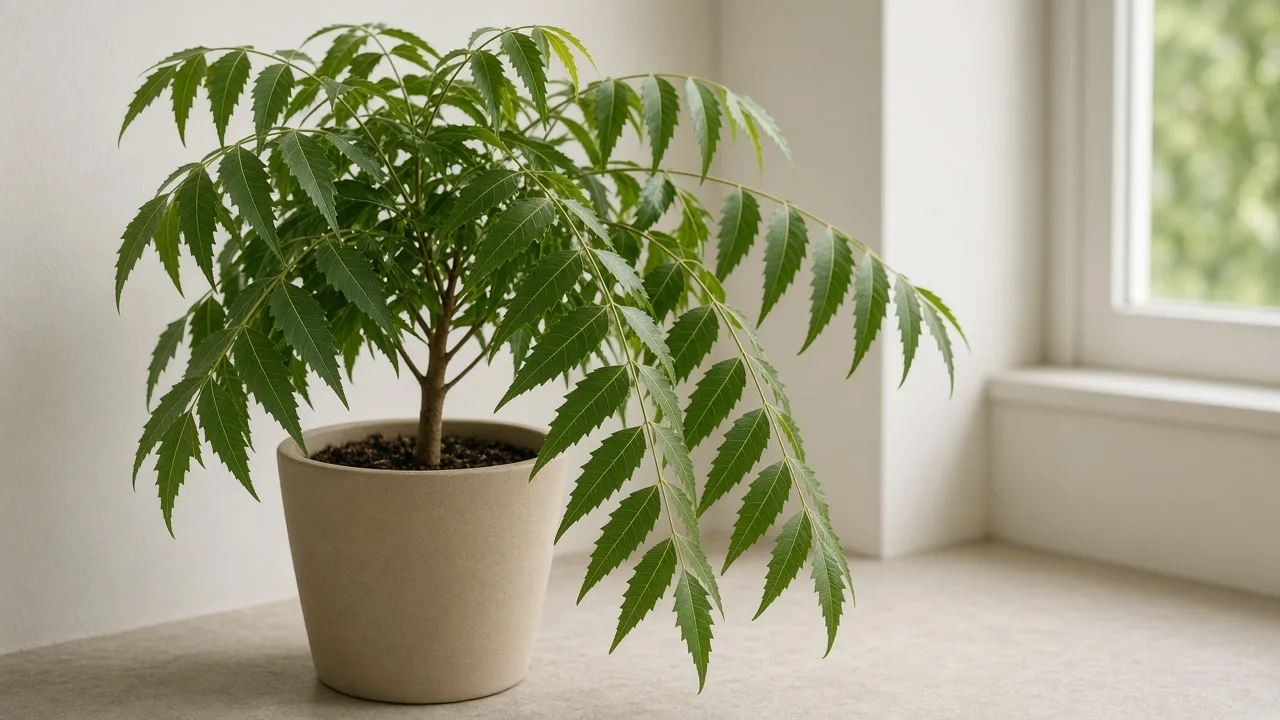
Drooping Leaves on Neem: Causes, Checks & Fixes
This guide covers drooping leaves on Neem. See also the general Drooping Leaves guide, watering, and light pages for this plant.
Drooping Leaves on Neem: Causes, Checks & Fixes
Quick answer
Drooping on Neem (Azadirachta indica) represents a physiological loss of petiolar turgidity along the elongated rachis of its pinnate compound leaves. In healthy conditions, hydrostatic pressure within the vascular xylem and parenchyma cells keeps the long leaf stalks held stiffly outward from the woody branches. When water movement ceases—either because the root ball is parched, roots have suffocated from waterlogging hypoxia, or cold temperatures have paralyzed water uptake—the entire compound leaf flags and arcs downward toward the pot.
For the universal physics of hydraulic pressure loss in container plants, see our drooping leaves hub. On Neem, the symptom is almost never a mystery: your pot weight and soil temperature reveal the answer within seconds.
First step: Lift the container to gauge pot weight, probe the top 3–5 cm (1–2 inches) of soil with your finger, and verify current ambient temperatures. If the container is feather-light and the soil is powdery, give one deep bottom-drain soak; if the container is heavy, cool, and soggy, cease watering immediately and move the tree to a sunny, warm location.
When to use this page vs other Neem guides
Drooping is a gradual loss of stiffness across foliage over hours to days. Differentiate true drooping from rapid total collapse, chronic chlorosis, or pathogen decay by referencing the diagnostic routing table below:
| Symptom pattern on Neem | What it indicates | Recommended guide |
|---|---|---|
| Pinnate leaves flagging downward; base firm, soil dry or damp | Loss of petiolar turgidity from moisture or thermal stress | Stay on this guide |
| Heavy, cold, soggy mix; lower leaves turn yellow and drop; sour smell | Advanced anaerobic root decay from prolonged saturated soil | Root Rot on Neem |
| Soggy pot with soft foliage; soil stays wet for more than 7 days | Chronic excess irrigation before root rot fully takes hold | Overwatering on Neem |
| Crispy, curled leaflets dropping after extended dry spell; light pot | Prolonged moisture deficit past temporary flagging stage | Underwatering on Neem |
| Sudden, catastrophic collapse of foliage and tender green shoot tips | Acute vascular failure, severe root severance, or extreme freeze | Wilting on Neem |
| Foliage upright but pale yellow between veins or on older growth | Insufficient light or nitrogen/micronutrient deficiency | Neem care overview |
For general cultural practices that maintain steady vascular health, consult our comprehensive Neem watering guide and Neem temperature guide.
What drooping leaves look like on Neem
The foliage of Neem belongs to the mahogany family (Meliaceae) and displays distinctive alternate, once-pinnate compound leaves bearing 20 to 30 serrated, lanceolate leaflets. Because each compound leaf extends 20 to 40 cm from a slender main petiole and central rachis, the architecture of the canopy is exceptionally sensitive to internal hydraulic pressure.
When petiolar turgidity declines, the symptoms appear in an orderly mechanical sequence:
- Leaflet cupping and dullness: Before the main leaf stalk bends, individual leaflets lose their glossy emerald luster, curling slightly along their serrated margins as stomata close to conserve moisture.
- Rachis curvature: The elongated central axis (rachis) softens, causing the leaf tip to bend downward in a gentle arc.
- Petiolar flagging: Turgor pressure drops entirely at the pulvinus-like junction where the petiole meets the woody stem. The entire compound leaf hangs limply against the trunk or pot rim.
- Defoliation risk: If unaddressed, the plant activates abscission zones at the base of the petiole, dropping green or yellowing compound leaves entirely to safeguard core stem hydration.
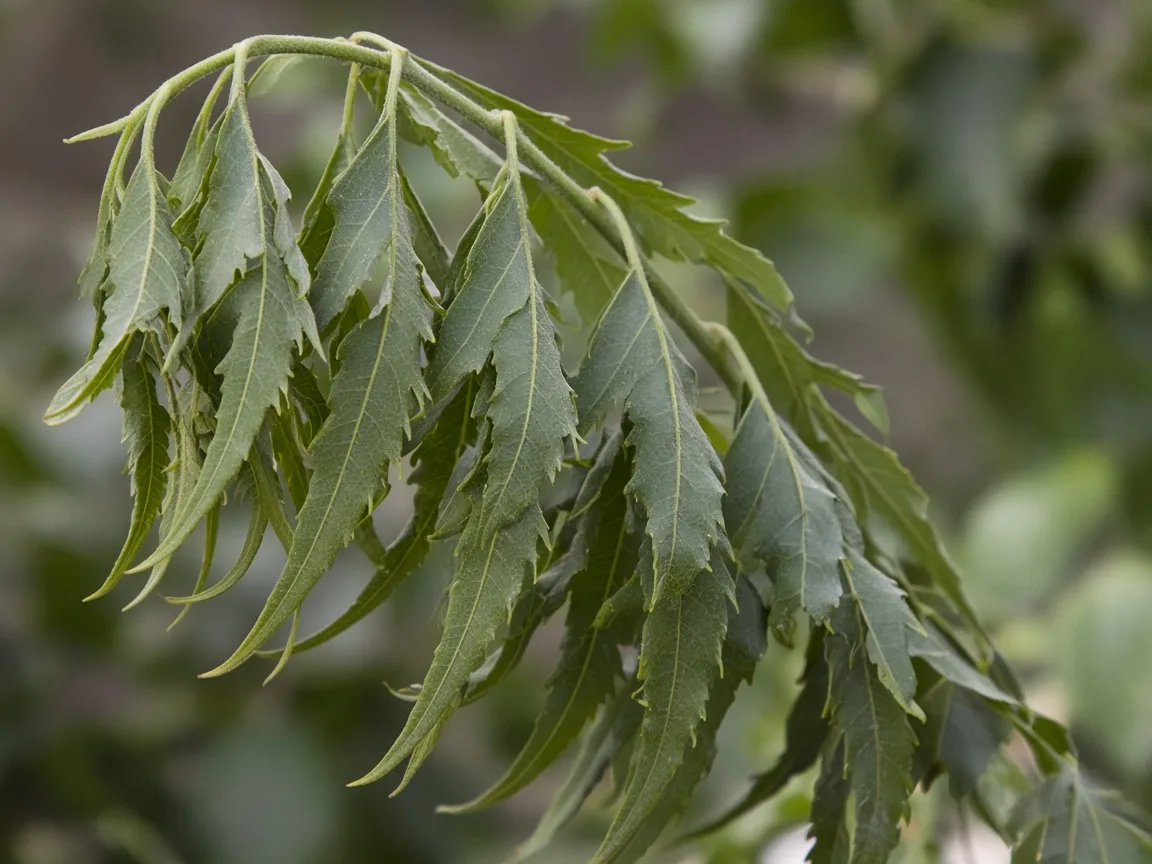 Loss of petiolar turgidity causes the elongated rachis of Neem’s pinnate compound leaf to arch downward and flag.
Primary causes of drooping on Neem
Understanding why a Neem tree droops requires looking at its evolutionary history in the dry tropical regions of the Indian subcontinent. Adapted to semi-arid climates with periodic dry spells and deep, permeable sandy loams, the species develops an extensive root system designed for high aeration and rapid drainage. Indoors or in patio containers, disruptions to this environment quickly manifest as drooping foliage.
1. Acute drought dehydration
In warm summer weather or under intense direct sun, a containerized Neem transpires rapidly through its abundant leaflets. Because container soil volume is constrained, available moisture in the root zone can deplete in just a few days. The National Research Council notes that while Neem possesses impressive drought adaptation once deeply rooted in open ground, containerized specimens depend entirely on timely soil moisture cycles. When moisture levels drop below the permanent wilting point, cell walls lose internal pressure, causing immediate petiolar sag.
2. Waterlogging and root hypoxia in poorly drained heavy soils
The most dangerous cause of drooping is paradoxical wilt caused by saturated soil. As documented by botanical records, the plant quickly dies in waterlogged soils. When a potted Neem is planted in dense clay, peat-heavy potting soil, or a pot without functional drainage holes, water fills the soil pore spaces, driving out all dissolved oxygen.
Without oxygen, root cells enter anaerobic stress and cannot perform the active metabolic transport required to take up water and nutrients. The Missouri Botanical Garden explains that waterlogged roots suffocate from lack of oxygen, preventing moisture transport to the canopy even when the pot is swimming in water. The leaves droop as if parched because the damaged root system cannot deliver water upward to maintain petiolar turgor. Furthermore, the Royal Horticultural Society highlights that poor soil drainage and waterlogging trigger root dieback that leaves woody plants vulnerable to opportunistic water molds like Phytophthora.
3. Cold temperature drops below 50°F (10°C)
Neem is an obligate warm-climate tree that thrives in temperatures between 21°C and 38°C (70°F to 100°F). When autumn temperatures plummet or a container is left outdoors during an unseasonal cold snap, chilling injury occurs. Gardening Know How highlights that extended cool temperatures below 35°F to 50°F cause the tree to drop its leaves, as metabolic activity stalls. Cold root zones drastically reduce hydraulic conductivity, leaving roots unable to absorb ambient soil moisture. The petioles flag downward in response to thermal shock, followed by rapid leaf drop if the plant is not moved into warmth.
Diagnostic check: Step-by-step triage
Before applying water or disturbing the root ball, execute this 4-step diagnostic protocol to pinpoint the exact driver:
Step 1: The pot-lift and soil moisture test
Grip the rim of the pot and lift it 2 inches off the ground:
- Feather-light pot: If the container lifts effortlessly and a wooden skewer inserted 5 cm (2 inches) into the core comes out completely dry with no clinging soil, the drooping is caused by acute drought.
- Heavy, waterlogged pot: If the pot feels dense, heavy, and cool to the touch, and soil clings damply to your finger or probe, the cause is root hypoxia / overwatering.
- Neutral weight: If moisture is moderate, proceed immediately to Step 2 and Step 3.
Step 2: The petiole and stem firmness test
Gently pinch the base of a drooping petiole where it joins the woody stem:
- Pliant, flexible, but papery: The petiole is dry and thirsty; leaflets feel soft and papery. This confirms dehydration.
- Soggy, translucent, or darkened at the joint: The petiole junction feels water-soaked or blackened. This signals systemic root and crown hypoxia.
- Firm petiole with drooping compound leaflets: Often an early indicator of cold draft exposure or sudden thermal fluctuation.
Step 3: Temperature and draft assessment
Review the environmental exposure over the previous 48 hours:
- Has the plant experienced night temperatures below 10°C (50°F)?
- Is the container situated directly in front of an air conditioning vent, drafty balcony doorway, or uninsulated windowpane?
- Cold drafts chill the foliage and substrate, creating localized hydraulic resistance that triggers immediate leaf flagging.
Step 4: Root odor and color inspection
If the pot is heavy and wet, ease the root ball slightly out of the nursery container:
- Healthy roots: Plump, firm, fibrous, ivory to light tan in color, with a fresh, earthy scent.
- Suffocated / rotted roots: Dark brown or black, slimy, pulling away easily in thread-like strands, accompanied by a sour, swampy odor.
The first fix for drooping Neem
Do not attempt multiple corrections simultaneously. Apply the single targeted remedy dictated by your diagnostic findings:
For acute drought (light pot, parched mix)
Deliver a thorough, deep bottom-drain watering. Pour room-temperature water slowly around the root perimeter until water runs freely from the bottom drainage holes. Allow the pot to drain fully for 15 minutes, and discard all runoff collected in the saucer. Do not let the pot sit in standing drainage water.
For waterlogging hypoxia (heavy pot, wet mix)
Halt all irrigation immediately. Elevate the pot on pot feet or wooden slats to ensure air circulates beneath the drainage holes. If the potting mix is dense clay or compacted organic matter, gently aerate the top 2–3 cm with a blunt chopstick to break up surface crusting and encourage oxygen diffusion into the upper root zone. If roots are actively rotted, transition to the salvage repotting protocol described below.
For cold chilling stress (temperatures <10°C / 50°F)
Relocate the container immediately to a protected indoor location or greenhouse maintained between 18°C and 26°C (65°F to 80°F). Ensure the plant receives maximum bright light while shielding it completely from drafts. Keep soil on the drier side until the tree acclimates to warmth and resumes transpiration.
Step-by-step recovery sequence
Once the initial stressor is stabilized, guide your Neem through recovery following this chronological schedule:
Day 1: Identify root cause → Apply single fix (deep soak OR cease water/aerate OR move to warmth)
Day 2–4: Monitor petiolar turgidity; ensure warm ambient temps (>18°C) and bright sun
Day 5–14: Maintain strict soak-and-dry rhythm; prune permanently dead, shriveled compound leaves
Week 3–6: Look for swollen apical buds and fresh bright green pinnate leaflet flushes
Protocol for root rot salvage (if hypoxia has decayed roots)
If root inspection revealed black, foul-smelling roots, ordinary drying will not suffice:
- Unpot carefully: Gently slide the root ball from the container and rinse away the contaminated, anaerobic soil mix under tepid water.
- Excise necrotic tissue: Using sterile shears wiped with 70% isopropyl alcohol, prune away all darkened, mushy, and hollow root strands back to clean, firm, light-colored tissue.
- Repot in sterile, lean substrate: Replant the tree in a clean pot with ample drainage holes using a fresh mix of 50% coarse horticultural sand or perlite, 30% sandy loam, and 20% compost. For optimal texture formulas, see our Neem soil guide.
- Water in sparingly: Moisten the fresh substrate once, place the plant in bright indirect light, and do not water again until the upper 5 cm dries completely.
Recovery timeline and expectations
Recovery speed depends directly on the severity and nature of the underlying cause:
- Drought-induced drooping: Dehydrated Neem leaves exhibit remarkable resilience. A thoroughly watered plant typically restores petiolar turgidity within 4 to 12 hours, with compound leaves returning to their horizontal, upright posture by the following morning.
- Cold-induced drooping: Chilled foliage rarely returns to its original condition. Expect a portion of the flagged compound leaves to yellow and drop over 5 to 10 days. As long as the primary woody stems remain green under a gentle thumbnail scratch test, new auxiliary and apical buds will break within 2 to 4 weeks once warm conditions are restored.
- Hypoxia-induced drooping: Root regeneration requires patience. Above-ground recovery will not occur until new fine root hairs develop to support water absorption. Damaged foliage will abscise, but firm green stems will produce a new flush of healthy foliage within 3 to 5 weeks under warm sun.
Common mistakes to avoid
When dealing with drooping foliage on a containerized Neem, well-intentioned growers frequently make errors that worsen plant stress:
- Watering on a calendar instead of soil moisture: Pouring water into the pot every Monday without probing soil depth guarantees root rot during rainy or cool periods. Always let the top 3–5 cm dry out completely.
- Applying fertilizer to a drooping plant: Never feed a stressed or drooping tree. Fertilizer salts draw moisture away from damaged root hairs via osmotic pressure and can scorch compromised roots. Hold all feeding until vigorous new growth is active.
- Leaving standing water in saucers: Allowing the container to sit in a saucer full of drainage runoff creates an anaerobic reservoir at the bottom of the root zone, suffocating lower roots. Always dump drip trays 15 minutes after watering.
- Premature heavy pruning: Resist the urge to chop back branches when foliage droops. Even flagging leaves transpire and help draw excess water out of damp soil. Only remove leaves after they have completely browned or fallen off naturally.
- Sudden light shifts during shock: Do not move a cold-shocked or rotted plant into scorching midday desert sun while its roots cannot absorb water. Provide bright, filtered sunlight until turgor stabilizes.
How to prevent drooping leaves on Neem
Preventing future turgor loss requires matching container culture to Neem’s natural botanical adaptations:
1. Soil and container selection
Always pot container Neem in porous unglazed terracotta rather than plastic or glazed ceramic. Terracotta breathes, allowing oxygen to permeate the root ball from the sidewalls and helping excess moisture evaporate evenly. Use a lean, sandy potting blend with a pH between 6.2 and 7.0 that drains water in seconds.
2. Strict soak-and-dry watering cadence
Neem performs best with a deliberate soak-and-dry rhythm. Water thoroughly until the mix is evenly saturated, then hold off entirely until the upper 3–5 cm (1–2 inches) of soil is completely dry to the touch. During hot summer weather on a sunny balcony, this may occur every 3 to 5 days; during cooler winter months, the interval may stretch to 10 to 14 days.
3. Thermal and sunlight requirements
Keep container Neem in a location that receives a minimum of 6 hours of direct sunlight daily. If growing outdoors in temperate climates, bring the tree indoors well before nighttime autumn temperatures drop below 13°C (55°F). Maintain an indoor winter environment away from cold glass and chilling floor drafts.
Related Neem guides
Explore these specialized guides across the Neem problems hub to keep your tree thriving:
- Neem care overview — Botanical characteristics, growth habits, and year-round indoor care.
- Neem watering guide — Season-by-season irrigation schedules, soil testing methods, and dry-down checks.
- Neem temperature guide — Cold tolerance limits, frost protection, and optimal heat ranges for container culture.
- Neem soil guide — DIY potting soil recipes, drainage amendments, and container pH balancing.
- Overwatering on Neem — Recognizing saturated substrate, yellowing leaflets, and early moisture stress.
- Underwatering on Neem — Chronic drought symptoms, crispy leaf tips, and dehydration remedies.
- Root Rot on Neem — Surgical root pruning, antifungal treatments, and sterile repotting protocols.
- Wilting on Neem — Rapid stem collapse, vascular wilt differentiation, and emergency triage.
Related tool
Use the Plant Watering Calculator to calculate an accurate dry-down interval for your container neem based on pot size, sunlight, and seasonal temperatures.