Neem Soil Requirements: Mix, Drainage & pH
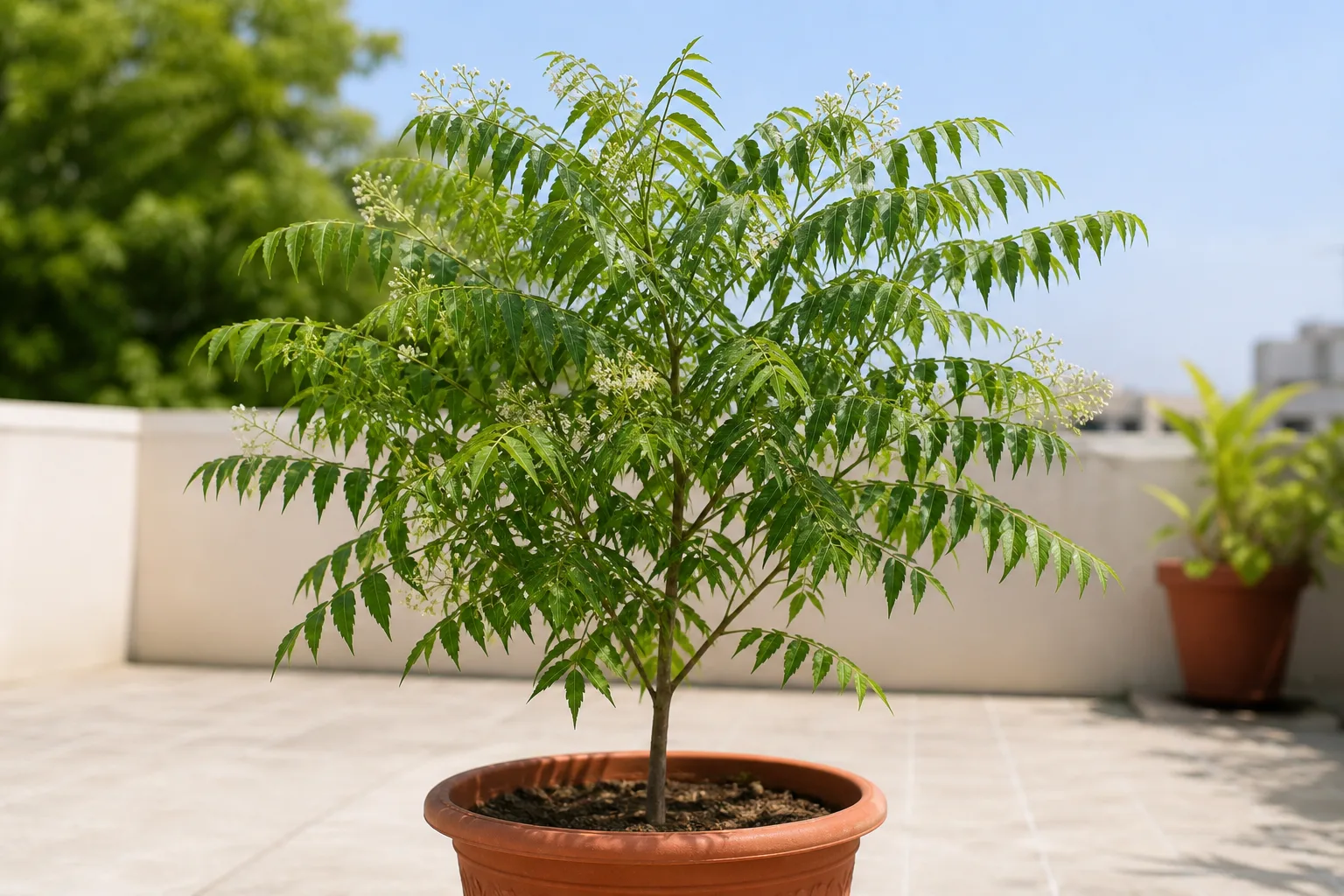
Neem Soil Requirements: Mix, Drainage & pH
Neem Soil Requirements: Mix, Drainage & pH
Neem soil is not about rich, constantly moist potting mix. Azadirachta indica—also called Indian lilac or margosa—evolved in dry tropical forests of the Indian subcontinent, where roots explore deep, sandy, well-drained ground and then wait out dry spells. Missouri Botanical Garden describes culture in deep, sandy, dry to medium, well-drained soils with excellent drought tolerance, and notes that container plants have less drought reserve than field trees (Missouri Botanical Garden — Azadirachta indica). Oregon State University adds that neem reportedly prefers deep, permeable, sandy soils in sub-arid to sub-humid tropical climates (Oregon State University Landscape Plants).
If your terrace neem sits in dense, peat-heavy bag mix that stays wet for a week after every watering, the plant is fighting its own root zone—not “needing more fertilizer.” This guide covers the best soil for neem in pots and yards, a workable DIY ratio, pH targets, drainage checks, monsoon realities in India, and the first fixes when soil goes wrong. Pair soil choices with Neem watering and Neem light—wet mix in weak light is the fastest way to lose a young tree.
What neem soil should do for Azadirachta indica
Neem soil has one primary job: let water leave the root zone quickly while still holding enough moisture for a deep soak. Secondary jobs are aeration (roots need oxygen between drinks) and a mildly acidic to near-neutral chemistry so nutrients stay available without forcing a rich, soggy organic profile. Neem tolerates nutritionally poor soil once established; it does not tolerate chronic wet feet (Plants For A Future — Azadirachta indica).
Think of soil as the partner to watering, not a separate hobby. A lean sandy mix that drains in hours makes a soak-and-dry rhythm easy. A compacted clay or peat sponge makes every watering a gamble, even if you follow a careful calendar. For the full care context—sun, size, and drought-smart habits—start from the Neem overview.
Dry-forest roots, lean sandy ground
In habitat and long cultivation across India and nearby regions, neem thrives where rainfall is often modest and soils are deep and sandy rather than waterlogged. Tropical Plants Database (Ken Fern) notes that neem prefers well-drained soil in sun, tolerates poor soils and drought once established, and dies quickly in waterlogged soils; it also notes limits in extreme deep dry sands where the dry-season water table sits very deep (Tropical Plants Database — Azadirachta indica). That biology explains why balcony growers lose neem after monsoons or winter overwatering: the canopy may still look green while roots have already suffocated.
Ideal mix for container neem
For pots on Indian terraces and balconies, aim for a sandy, lean, free-draining mix with a modest compost fraction—roughly 20–30% compost by volume, not a peat-dominant houseplant blend. A practical starting formula that matches how LeafyPixels profiles this species is:
- 50% sandy loam or clean garden soil (screened of stones and plastic)
- 25% coarse sand, grit, or perlite
- 25% well-rotted compost
The mix should feel gritty when squeezed, not sticky or spongy. After a thorough watering, excess should run from drainage holes within minutes, and the upper few centimetres should begin to dry within a few days in warm bright weather—not stay dark and cold for a week. If you buy a commercial “potting mix,” open the bag: if it looks like fine black peat with a few white flecks, amend it heavily with coarse sand or perlite before planting neem, or blend half-and-half with a sandy garden soil.
A practical DIY recipe that drains fast
Build the DIY mix in a tub so you can see texture. Moisten lightly while combining so dust settles and particles coat evenly. Avoid fine builder’s sand that packs like cement; use coarse river sand or horticultural grit. Perlite or pumice works well when sand quality is poor. Keep compost at a supporting role—neem is not a heavy feeder in containers, and excess organic matter holds water that this mahogany-family tree does not want. Once mixed, fill a pot with drainage holes, settle gently without compressing, and water once to confirm free outflow before planting.
What to avoid in bagged “garden” mixes
Skip moisture-control blends, African violet mixes, and any bag marketed to stay damp for tropical foliage. Skip pure clay from a building site and undrained decorative cachepots. Skip planting neem in a huge empty pot filled with wet compost “so it has room to grow”—oversized volumes of organic mix stay anaerobic long after the roots need air again. If you already used a wrong bag, plan a soil refresh at the next Neem repotting window rather than drowning the plant with fertilizer to “fix yellow leaves.”
Soil pH for neem
Target a preferred pH around 6.2–7.0 for container neem—mildly acidic to neutral. Horticultural databases commonly list a preferred band near 5.5–7.0, with tolerance roughly 5.0–7.5 depending on source (Plants For A Future — Azadirachta indica). In practice, most sandy loam-plus-compost mixes land near this window without special chemistry unless your local water or compost is strongly alkaline or acidic.
pH extremes matter more when growth stalls despite sun and drainage. Extremely alkaline mixes can lock micronutrients; very acidic, peat-heavy mixes often stay wet and cold. If you suspect a chemistry problem, a simple home soil pH kit on a moist sample is enough for a home grower—then correct by refreshing the mix rather than chasing multiple amendments at once. Feeding belongs in the Neem fertilizer guide; soil structure still comes first.
In-ground neem soil vs terrace pots
In the ground across much of India, neem often thrives in deep permeable sandy soils with little fuss, provided the site does not pond during monsoons. Oregon State’s landscape notes match that preference for deep sandy profiles in warm climates (Oregon State University Landscape Plants). Raised beds or planting on a slight mound help in clay belts. In-ground trees develop broader root systems and more drought buffering than pot plants.
Containers reverse the risk profile. Pot volume is small, evaporation and sun heat the mix fast in summer, and winter or monsoon shade can lock moisture in for days. Missouri Botanical Garden explicitly notes reduced drought tolerance in containers compared with landscape trees (Missouri Botanical Garden — Azadirachta indica). Choose a pot with large drainage holes, a sandy lean mix, and a size only one step up from the current root ball. Never leave a saucer of standing water under a neem pot for more than a brief drain period.
Drainage, pots, and the wet-feet problem
Waterlogging is the non-negotiable failure mode. When soil stays saturated, root cells lose oxygen, tissue softens, and opportunistic decay follows—the same overwatering pathway extension gardeners describe for many woody plants (Missouri Botanical Garden — Overwatering). Ken Fern’s cultivation notes put it bluntly for this species: neem quickly dies in waterlogged soils (Tropical Plants Database — Azadirachta indica).
Use terracotta or fabric pots if you tend to overwater; plastic is fine if the mix is gritty and you check dryness. Elevate pots on feet so holes stay open. Mesh over holes keeps mix in without blocking flow. Do not “improve drainage” with a thick gravel layer under dense soil—that can create a perched water table. Fix the mix itself instead.
How to test if your mix drains well enough
Water until runoff starts. Time how long free water exits, then check the pot weight and finger-test depth the next day. In warm, sunny conditions, the top 3–5 cm should be approaching dry within a few days for established container neem—matching the dryness cue used in Neem watering. If the pot still feels heavy and cool after four or five days in heat, amend or repot. If it dries rock-hard in one day and sheds water, you may have too little organic matter or hydrophobic peat—remix with a bit more compost and coarse sand rather than daily sipping.
Warning signs the soil is wrong
Wrong soil announces itself through patterns, not one yellow leaflet. Watch for a sour or swampy smell after watering, mix that stays dark and sticky, fungus gnats breeding in perpetual damp, yellowing lower leaves with soft stems, and leaf drop during cool, low-light stretches when wet roots cannot recover. New growth may stall even when you fertilize. In advanced cases, roots turn brown and mushy instead of firm and pale.
Also watch for the opposite failure: mix that sheds water instantly, pulls away from pot walls, and leaves the plant crispy at the tips during peak summer—often degraded peat or ultra-fine sand that compacted into a brick. Refresh the substrate; do not respond with daily shallow cups of water that only wet the crust.
Compacted clay, waterlogging, and India monsoon pots
Heavy clay holds water and seals air pores. Neem may survive in clay landscape soils if the site slopes and the dry season is long, but container clay is a poor choice. During monsoon months, move pots under a roof edge where rain cannot refill the pot daily, empty saucers, and confirm drainage holes are not clogged with roots or snails. If a pot sits in a flooded tray for days, treat it as an emergency: tip out standing water, check roots, and plan a mix refresh when the plant is stable.
In North India winters, cool nights slow water use. The same sandy mix that dried in three summer days may take ten days to dry—so soil choice still matters, but watering interval must stretch. Soil cannot fix frost risk; protect plants from cold snaps as described in the Neem overview.
When to refresh or replace neem soil
Young container neem often fills pots quickly. Refresh or repot about every 2–3 years, or sooner if the mix smells foul, drains poorly, or roots circle drainage holes. Late winter to early spring (roughly February–March in much of India) is the usual window so roots can reclaim the new mix in rising warmth—details live in Neem repotting. When propagating from seed or cuttings, use a sandier seedling mix and avoid waterlogged trays; aftercare belongs with Neem propagation.
Do not reuse old, decomposed mix for a stressed plant. Discard sour soil, wash the pot, and start fresh with the sandy lean recipe. Light top-dressing of compost in spring can help an otherwise healthy mix without burying the trunk in wet organic matter.
When to use this page vs other Neem guides
Use this page when you are choosing, mixing, diagnosing, or refreshing substrate and drainage. Switch to Neem watering for how often to soak and how to read dryness. Use Neem light when pale or stalled growth tracks shade more than mix. Use Neem fertilizer only after drainage and sun are sound. Use Neem repotting for pot size and timing, and Neem pruning when canopy size—not soil—is the constraint on a terrace tree.
Related Neem guides
- Neem overview — habitat, size, and full-care priorities
- Neem watering — soak-and-dry rhythm that matches sandy mix
- Neem light — full sun that helps pots dry predictably
- Neem fertilizer — lean feeding after soil and sun are right
- Neem repotting — when and how to replace failing mix
- Neem propagation — sandy starts for seed and cuttings
Conclusion
Neem succeeds in soil that behaves like deep permeable sand with a little compost, not like a moisture-retentive houseplant bag. Build a lean DIY mix, insist on open drainage, keep pH near mildly acidic to neutral, and treat waterlogging as an emergency. Get the root zone right and Neem watering becomes straightforward; get it wrong and no calendar can save the roots.