Neem Light Needs: Full Sun, Windows & Signs
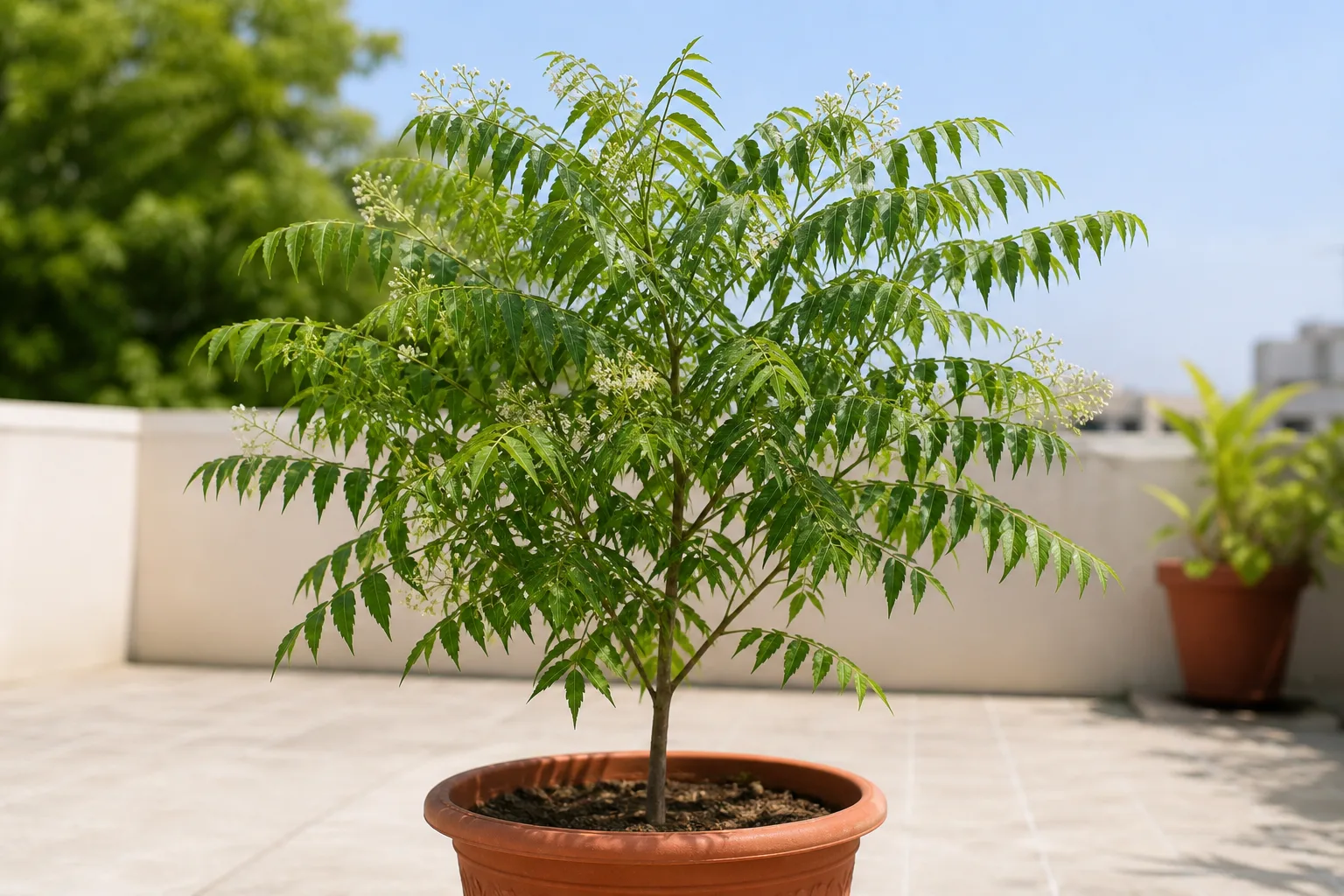
Neem Light Needs: Full Sun, Windows & Signs
Neem Light Needs: Full Sun, Windows & Signs
Neem (Azadirachta indica) is a heat-loving mahogany-family tree that runs on sky brightness, not on the soft indoor light that keeps many foliage houseplants alive. Missouri Botanical Garden places it in full sun to part shade in tropical to subtropical culture, and growers who treat it like a dim-corner “medicinal herb” usually get sparse flushes, slow woody growth, and a pot that stays wet for days. (Missouri Botanical Garden)
The practical goal is simple: put neem where new compound leaves emerge dense and green under real daytime sun, then adjust water and pot size to match that metabolism. This guide covers how much light neem needs, terrace and balcony placement for Indian and similar climates, seedling shade rules, direct-sun acclimation, grow-light backups, and the warning signs that tell you to move the pot before you change fertilizer.
How Much Light Neem Actually Needs
Aim for at least 6 hours of direct sunlight daily for container and patio trees you want to keep compact, leafy, and actively growing. That is the home-grower translation of “full sun” for a species that evolved as an open-canopy dry-forest and avenue tree, not as an understory foliage plant. Part shade can keep a young plant alive through a harsh heat wave or a nursery stage, but it is a compromise—not the long-term target for a mature patio specimen.
In measurable terms useful for grow-light setups, think in terms of strong outdoor daylight most of the day, not office brightness. A south- or west-facing Indian terrace in clear weather easily exceeds what most indoor rooms can deliver even beside glass. If you can cast a sharp, dark shadow with your hand next to the leaflets for much of the day, you are closer to the exposure neem wants than a bright-looking living room that only throws a soft shadow.
Full sun vs part shade for Azadirachta indica
Authoritative horticultural profiles agree that neem prefers sun, with partial shade listed as acceptable rather than ideal. Oregon State University describes culture as sun or partial shade in subtropical climates on deep, permeable sandy soils. (Oregon State University) Missouri Botanical Garden uses the same full sun to part shade range and notes excellent drought tolerance once established. (Missouri Botanical Garden)
Feedipedia, summarizing agroforestry references, calls neem a full-sunlight species that can withstand some shade in its first years. (Feedipedia) That nuance matters: temporary shade for seedlings is biology; permanent shade for a maturing trunk is a growth trap. National Academies Press material on neem planting likewise states that neem needs open sunlight for best performance, even though seedlings can push through competing scrub early on. (National Academies Press / NCBI Bookshelf)
Surviving vs thriving on a terrace
A neem that “survives” in a bright indoor lobby or a north balcony often looks acceptable for months because woody stems and compound leaves do not collapse overnight. Thriving looks different: steady leaf flush, thicker leaflets with healthy green color, shorter internodes, and a potting mix that dries on a predictable schedule after deep watering.
Survival mode shows as long gaps between flushes, pale or thin new leaflets, elongated soft shoots reaching toward the brightest wall, and soil that stays heavy long after you water. At that point people usually blame the Neem watering guide first. Fix light before you redesign the watering calendar.
Why Neem Is a Sun Tree, Not a Living-Room Plant
Marketing sometimes sells neem as an easy balcony plant you can grow “anywhere warm.” Botany is stricter. Neem is valued worldwide as a shade tree for people—avenues, courtyards, and farm edges—because the canopy itself intercepts harsh sun. The tree that casts shade still demands open light on its own crown. Putting a potted neem deep indoors reverses that relationship: the plant sits in the shade it was meant to create for humans.
Winrock International’s agroforestry profile is blunt about light demand: mature neem trees are light demanding, while seedlings tolerate moderate shade during their first growing season, especially on dry sites. (Winrock International) That single sentence should change how you place nursery plants versus two-year patio trees.
Dry tropical origins and open-sky brightness
Neem is native to dry tropical forests of the Indian subcontinent and nearby regions and has long been cultivated across India, Pakistan, Malaysia, and beyond. Missouri Botanical Garden places it in tropical, dry, deciduous/evergreen forest origins and recommends deep, sandy, well-drained soils with heat. (Missouri Botanical Garden)
Winrock notes a comfortable temperature band around 9.5–37°C, strong drought tolerance once established, and a hard stop on cold and frost. (Winrock International) Light and heat travel together in real homes: a sunny terrace that stays warm also drives growth; a cool, dim room slows both photosynthesis and dry-down, which is why poorly lit containers often fail from wet roots rather than “mystery disease.”
Best Placement for Indian Homes and Similar Climates
For most Indian apartments and houses, the winning placement is outdoors: the sunniest terrace, roof, or south-facing balcony where the canopy sees open sky most of the day. Use the Neem overview for whole-plant context; this page is the placement deep-dive.
Choose a spot where the pot receives direct sun for the majority of daylight hours, not where the room merely feels bright to your eyes. Human vision adapts to interiors. Neem leaflets do not. If neighboring buildings or a deep overhang cut the sky to a narrow strip of morning light, treat that balcony as part shade and expect slower woody growth unless you can raise the pot onto a more open roof edge.
Terrace, roof, and balcony orientation
In the northern hemisphere, south-facing exposures usually deliver the longest daily sun for containers. West-facing balconies can work well but run hotter in late afternoon; watch leaf temperature on black pots against concrete walls during May–June heat. East-facing balconies give reliable morning sun and are often the gentlest entry point for plants moving out of nursery shade. North-facing balconies are usually too dim for vigorous neem unless the site is unusually open to reflected sky light—and even then, growth is typically maintenance-level only.
Rotate the container a quarter turn every two to three weeks if one side leans hard toward the open edge. Leaning is directional growth toward light, not a fertilizer problem. Pair strong sun with the sharply draining sandy mix covered in the Neem soil guide so roots get air as light increases demand.
Indoor windows only as temporary or winter cover
Indoor culture is possible in containers with pruning, as Missouri Botanical Garden notes, but indoor plants generally have less drought reserve than field trees and still need the brightest possible exposure. (Missouri Botanical Garden) Treat indoor windows as winter protection or short-term housing, not as the default summer home.
Oregon State lists hardiness around USDA Zone 10 (subtropical). (Oregon State University) Missouri Botanical Garden warns neem is intolerant of temperatures below about 40°F (4°C). (Missouri Botanical Garden) In cooler North Indian winters, move pots under cover or to the brightest protected spot before cold snaps—not after leaves blacken. When you bring a sun-grown tree indoors, place it against the brightest south or west glass you have, accept slower growth, and cut watering to match the dimmer indoor day.
Seedlings vs Mature Trees: Shade Tolerance Changes Fast
Young neem can handle more shade than a maturing patio tree. Plants For A Future notes that plants can tolerate fairly heavy shade during their first few years, then require large amounts of light. (Plants For A Future) Feedipedia’s full-sunlight framing with early shade tolerance matches that timeline. (Feedipedia)
Winrock’s nursery guidance is practical: raise seedlings under partial shade for the first 1–2 months (or until about 30 cm tall), then gradually expose them to full sunlight. (Winrock International) If you buy a soft, shade-grown seedling and immediately park it on a west roof in June, expect bleached leaflets even though the species is sun-loving. Acclimate first; then lock in full sun as the permanent habit.
Adult trees in open ground are light-demanding crown plants. Once your container tree is past the nursery phase, do not keep it permanently under a shade cloth “just in case.” Temporary afternoon shade during extreme heat waves is fine; multi-year shade cloth culture is how patio neems become sparse and weak.
Direct Sun, Heat, and Safe Acclimation
Acclimated neem handles full outdoor sun—that is the normal condition across Indian towns where it is planted as an avenue and courtyard tree. Problems appear when intensity jumps overnight: a plant from a dim nursery, indoor shelf, or shaded verandah moved straight onto reflective concrete in peak summer.
Heat and light interact. Black plastic pots on a west terrace can cook roots even when leaflets look only mildly stressed. Use a light-colored pot, elevate for airflow, and make sure the Neem soil mix drains fast so wet heat does not combine with full sun to smother roots.
Morning sun, afternoon intensity, and glass heat
Morning sun is the safest first exposure when you are stepping a plant up from shade. Afternoon sun on open terraces is normal for established neem and usually fine once leaves have thickened through a few weeks of outdoor living. The riskiest scenario for containers is often direct sun through glass on a plant that lived indoors: panes raise leaf temperature quickly, and unacclimated tissue can bleach or crisp on the sun-facing side.
Acclimate over two to three weeks. Week one: morning sun or filtered terrace light for a few hours. Week two: longer direct exposure, still avoiding the hottest late-afternoon blast if leaflets look thin. Week three: full outdoor schedule unless new growth shows bleaching. Do not combine a major light jump with same-day repotting and heavy feeding—change light first, then confirm a flush before other interventions.
Low-Light Limits and Honest Indoor Reality
How dark is too dark? If your neem sits in a room where you cannot cast a clear shadow at midday, you are below a useful growth threshold for this species. North rooms, interior corridors, and “bright” kitchens with no plant-facing sun will usually produce survival-mode plants: slow or stalled flushes, thinner leaflets, and watering schedules that feel impossible because the mix never dries.
Short-term low light—a few weeks under cover during a cold snap—is reasonable. Multi-month indoor holding without a strong window or grow light is not a fair test of the species. Neem’s reputation for toughness comes from drought and poor soils outdoors, not from tolerance of perpetual indoor shade. Plants For A Future lists preference for a well-drained soil in a sunny position, with semi-shade as a secondary option rather than a dim-room invitation. (Plants For A Future)
Adult trees can tolerate some frost better than seedlings in landscape literature, but container plants in North India should not gamble on that nuance—protect them and accept that winter indoor light will be weaker than summer terrace light. (Feedipedia)
Grow Lights When Outdoor Sun Is Unavailable
When frost, rental rules, or a deep balcony leave you without reliable direct sun, a full-spectrum LED grow light is the honest substitute. Neem will not match outdoor terrace vigor under a desk lamp, but consistent artificial light beats a dim corner.
Use a fixture marketed for plants or seedlings, roughly 4000K–6500K full-spectrum white LED. Start with the lamp 30–45 cm above the tallest tips, run it 12–14 hours daily on a timer for indoor winter holding, and raise or lower based on new growth. Soft, stretched shoots mean the lamp is too far or too weak; crispy upper leaflets mean it is too close or too long.
Grow lights help most as winter insurance or for seedlings finishing in a bright room before outdoor transplant. They are a poor long-term replacement for a sunny Indian terrace if your goal is a stout 1.5–3 m patio tree. When you return the plant outdoors in spring, re-acclimate—indoor LEDs do not fully prepare leaflets for unfiltered May sun.
Warning Signs of the Wrong Light
Read new growth, not old scars. Historical leaf drop from a cold week or a dry spell will not reverse; the next flush tells you whether today’s placement works. Give any move two weeks before judging, unless tissue is clearly bleaching within days.
Too little light vs heat or scorch stress
Too little light usually shows as sparse or delayed flushes, longer soft internodes, smaller or paler leaflets, a canopy that leans hard toward the window or open balcony edge, and soil that stays wet far longer than your summer watering habit expects. Scale and other pests can build when growth is soft and air is still—stress stacks.
Too much sudden intensity or glass heat shows as bleached or tan patches on the sun-facing leaflets, crispy margins after a move, and temporary wilting during the hottest hour even when the root ball is moist. True “full sun intolerance” is uncommon on acclimated outdoor neem; unacclimated jumps are the usual cause. Step the plant back, then resume gradual exposure rather than permanently banishing it to shade.
If leaflets yellow and drop in cool weather while the pot stays heavy, check light and temperature together before assuming a soil disease. Low light plus cool nights is a classic overwatering trap covered further in the watering guide.
How Light Affects Watering and Growth Pace
Light is the throttle on water use. Strong sun raises photosynthesis and transpiration; dim placements slow both. The same container that needs water every 4–7 days in peak summer sun may stay wet 10–14 days or longer in a cool, shaded winter nook—exactly the seasonal pattern outlined in the plant hub and watering notes.
After you increase light, check moisture more often for a month, but still water only when the top 3–5 cm is dry. After you decrease light for winter cover, extend dry intervals and pause heavy feeding until new growth confirms activity. Fertilizer cannot replace photons; feeding a shade-stressed neem often produces weak soft tissue. See the Neem fertilizer guide only after placement is honest.
Propagation and nursery work also track light. Cuttings and seedlings root more cleanly under bright, warm conditions after the early shaded establishment window—details live in the Neem propagation guide.
Conclusion
Neem light needs come down to one species-specific rule: mature Azadirachta indica wants open sun, while seedlings only borrow shade briefly. Give container plants 6+ hours of direct light on a terrace, roof, or bright balcony; use part shade as a temporary tool for heat waves and nursery stages, not as a permanent indoor lifestyle.
Place the pot where new leaflets prove the light works. Acclimate shade-grown plants before full summer exposure, protect containers from near-freezing nights, and treat grow lights as backups—not as equal substitutes for Indian outdoor sun. When growth stalls or the mix stays wet, fix light first, then revisit water, soil, and feeding one change at a time.
When to use this page vs other Neem guides
- Neem overview — Whole-plant identity, size, climate, and care summary before a light deep-dive.
- Neem watering — Dry-down schedules once light level sets how fast the pot uses moisture.
- Neem soil — Sandy drainage mixes that keep roots healthy under full sun.
- Neem fertilizer — Feeding only after placement supports active growth.
- Neem repotting — Pot size and timing when a sun-grown tree outgrows its container.
- Neem propagation — Seed and cutting light aftercare for new plants.
- Neem pruning — Size control for terrace trees that are already in strong sun.