Neem Propagation: Seeds, Cuttings & Timing
Neem Propagation: Seeds, Cuttings & Timing
Neem Propagation: Seeds, Cuttings & Timing
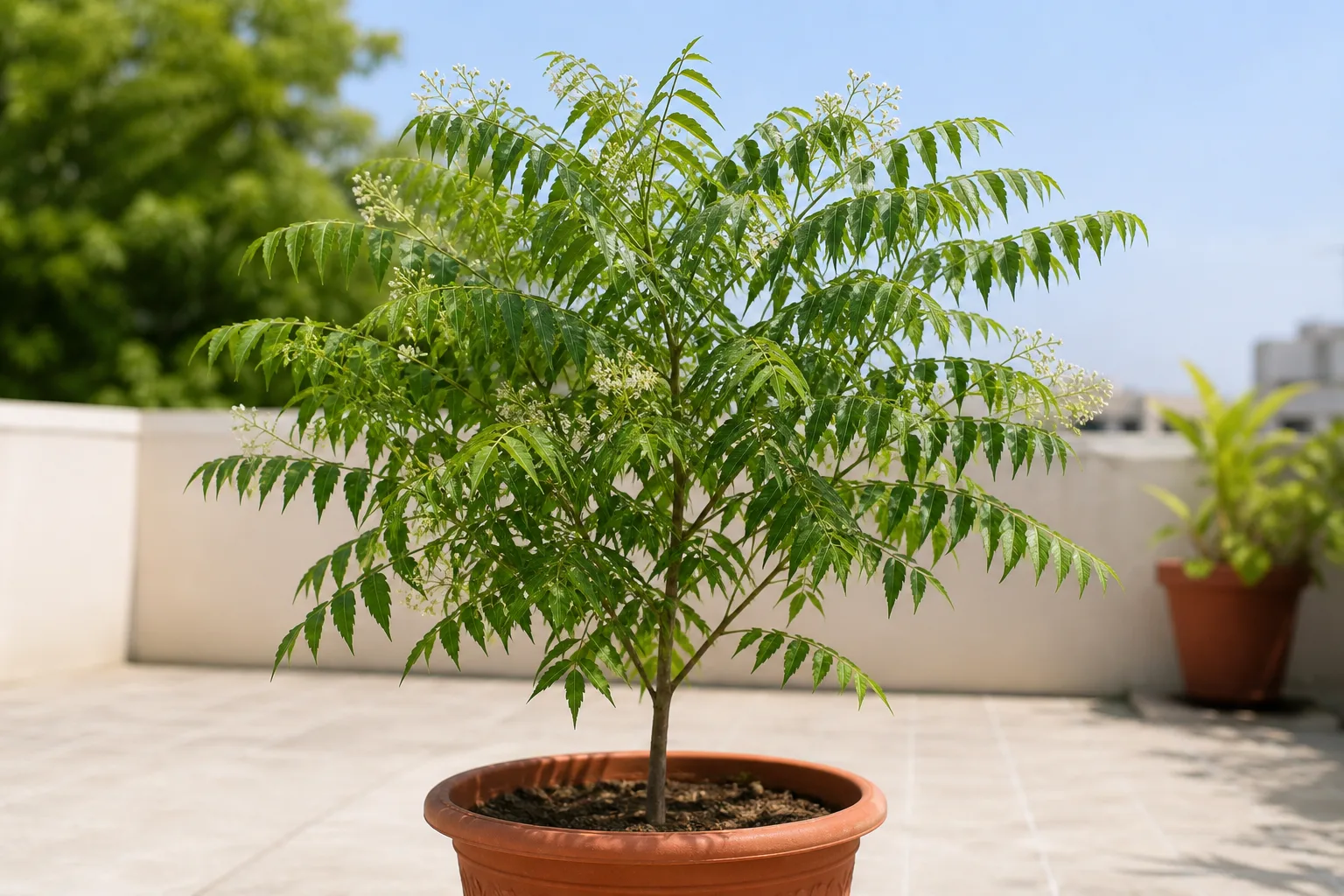
Propagating neem (Azadirachta indica) is less about clever gadgets and more about timing. This mahogany-family tree multiplies readily from ripe fruit when the seed is still alive—and frustrates growers who sow last year’s dry packet or stick cuttings into soggy mix. In Indian terrace and nursery conditions, the winning pattern is simple: process fruit the week it yellows, sow shallow in sandy media, keep seedlings bright but not waterlogged, then move young plants into the same full-sun, free-draining culture mature trees need.
This guide covers seed collection and sowing, stem cuttings with auxin, aftercare into pots or ground, and the failures that look like “bad luck” but usually track moisture, heat, or dead seed. Use it when you want more plants—not when you need a general care overview.
Why Neem Propagation Is Time-Sensitive
Neem is usually raised from seed in nurseries as bare-root or container stock, though vegetative options exist. Winrock’s agroforestry profile notes that seedlings can also be produced by air layering, cuttings, grafting, and tissue culture, but seed remains the default for most growers. (Winrock International)
The catch is seed biology. Fresh neem seed loses viability rapidly after about two weeks if it is not processed and stored correctly, and improperly stored lots germinate poorly. (Winrock International) FAO breeding work likewise flags neem seed as recalcitrant, meaning ordinary dry, warm storage is a poor fit compared with orthodox crop seeds. (FAO)
That is why “neem propagation” searches so often end in empty trays. The plant is not hard to start when fruit is ripe and warm weather is stable. It is hard to start when the kernel has already died in a jar.
Missouri Botanical Garden describes the fruit as a smooth olive-like drupe with one elongated seed (rarely two or three)—so each fruit is a small, high-stakes unit, not a mass of tiny seed. (Missouri Botanical Garden) In frost-free landscapes the tree can also spread by self-seeding, which tells you natural germination works when fruit drops fresh onto warm soil—and that outdoor plantings need local invasive-plant awareness. (Missouri Botanical Garden)
Choose Seed or Cuttings for Your Goal
Pick the method that matches your goal before you cut a branch. Seed gives genetic diversity and is the reliable home path when fruit is available. Cuttings and other clonal methods preserve a known parent—useful if you already have a compact, healthy patio tree—but rooting success varies with season, cutting type, and hormone use.
When fresh seed is the better path
Choose seed when you can collect yellow ripe fruit from a healthy tree, process it within days, and sow into warm conditions. Winrock notes trees may begin fruiting as early as 3–5 years and become fully productive around 10–12 years, with fruit ripening roughly 12 weeks after full bloom. (Winrock International)
Seed-grown plants are the practical choice for street-tree or farm plantings where you want many seedlings and do not need clones. Expect more variation in canopy form and vigor than you get from cuttings—that variation is normal for an outcrossing tropical tree.
When cuttings or clonal methods make sense
Choose stem cuttings when you want a genetic copy of a parent with good form, leaf density, or container manners, or when fruit is unavailable. Forestry reviews summarize successful rooting with hardwood, semi-hardwood, softwood, leafy, and mini-cuttings treated with auxins such as IBA, often in sand or other airy media, with strong seasonal effects. (Gehlot et al., Nativa / AFRI review)
Winrock also lists air layering, grafting, and tissue culture as vegetative routes. Those belong in specialist nurseries more than on a balcony; for home growers in India, fresh seed first, then IBA-treated cuttings covers almost every realistic need.
How to Propagate Neem From Fresh Seed
Treat seed work as a short project with a deadline, not a rainy-day hobby. Warm soil, clean media, and prompt processing matter more than fancy trays.
Collect, clean, and dry ripe fruit
Harvest ripe fruit from the tree rather than relying on long-stored market seed when you can. Winrock advises collecting ripe seed, removing the pulp, washing the seeds clean, then air-drying 3–7 days in the shade until moisture is roughly around 30%. With that preparation, seed may store up to about four months at 15°C; longer storage needs drier seed (about 6–7% moisture) in sealed containers near 4°C. (Winrock International)
For a home terrace, the safer rule is simpler: sow within days of cleaning. If you must hold seed briefly, keep it cool, dry to the touch after shade-drying, and never leave pulp fermenting on the kernel. Soft, sour-smelling fruit and moldy seed coats belong in the compost, not the tray.
Sow depth, spacing, and first weeks
Winrock’s nursery guidance is concrete: sow seeds horizontally about 1 cm deep; space nursery-bed rows about 15–25 cm apart with 2.5–5 cm between seeds; prick out when two pairs of leaves appear (often 1–2 months) or thin to roughly 15 × 15 cm. Fresh seed should show the highest germination, with seedlings emerging in about 1–3 weeks. Removal of the seed coat may help stored lots. Raise seedlings under partial shade for the first 1–2 months (or until about 30 cm tall), then gradually move them into full sun. (Winrock International)
Match that to container culture at home. Use a sandy, free-draining mix that mirrors adult neem soil needs—not a peat brick that stays wet for a week. Keep the surface lightly moist for germination, then switch toward the adult dry-down rhythm once true leaves expand. Seedlings tolerate brief moderate shade early, but mature trees are light-demanding; Winrock notes seedlings may take shade in year one, especially on dry sites, while mature plants want large amounts of light. (Winrock International)
Oregon State describes landscape neem as hardy around USDA Zone 10, preferring deep, permeable sandy soils in sun or partial shade—another reminder that cold, heavy, waterlogged starts fight the species biology. (Oregon State University)
How to Root Neem Stem Cuttings
Cuttings turn a good parent into more of the same plant, but woody neem is not a pothos. Expect slower rooting, seasonal windows, and a need for warmth plus an open medium.
Cutting type, season, and rooting hormone
Reviews of vegetative work on Azadirachta indica report rooting across cutting types, with IBA frequently outperforming other treatments in trials. Examples include about 80% rooting on semi-hardwood material treated with 1000 ppm IBA in favorable seasons (often around leaf-fall or bud-break / February in some Indian studies), and strong results on mini-cuttings with lower IBA rates in sand. Distal cuttings of adequate length (around 25 cm in some protocols) rooted better than very short pieces. (Gehlot et al., Nativa / AFRI review)
For a home grower: take semi-hardwood or firm young shoots from a healthy, pest-free plant during active warm weather—late spring to early monsoon in many Indian regions, or the leaf-fall/bud-break window if your local trees follow that pattern. Strip lower leaflets, leave a small top flag of foliage, and use a quick dip of IBA rooting powder or a dilute liquid labeled for woody cuttings. Skip water jars for woody stems; they invite stem rot more often than they produce transplantable roots.
Rooting medium and humidity setup
Sand or a sand-heavy blend is repeatedly cited as a strong rooting substrate for neem cuttings; vermiculite and soil mixes appear in trials with mixed results depending on aeration. (Gehlot et al., Nativa / AFRI review) Stick cuttings so at least one node sits below the surface, water in once, then keep the medium barely moist—not swampy. Bright indirect light or filtered terrace light is safer than harsh midday scorch on leafless sticks. A clear cover can raise humidity for the first week or two, but vent daily so condensation does not cook soft tissue.
Missouri Botanical Garden notes container neem generally has less drought tolerance than field trees and still needs well-drained media—apply the same logic to cuttings: open mix, warm roots, no sitting water. (Missouri Botanical Garden) Root checks by gentle tug often make sense after several weeks; resistance without black mush is progress.
Seedling and Cutting Aftercare
Once roots or true leaves exist, stop treating the plant like a greenhouse pet and start treating it like a young neem tree. Shift toward the adult watering rhythm: soak when the top few centimetres dry, then let the pot lighten. Overly frequent misting of foliage plus cool nights is a damping-off invitation, not a kindness.
Winrock recommends gradual exposure to full sun after early partial shade, with container seedlings often ready for outplanting around 3–4 months at about 30–50 cm height in nursery systems. (Winrock International) On a balcony, that translates to upsizing pots only when roots fill the starter container, using the same sandy lean mix you would for repotting, and placing the plant where it receives strong direct sun most of the day.
Protect young plants from temperatures near or below about 4°C / 40°F—Missouri Botanical Garden flags intolerance below that threshold. (Missouri Botanical Garden) Hold fertilizer until growth is steady; lean soils suit neem, and hot feed in tiny pots burns soft new roots. When you do feed later, follow the light touch in the fertilizer guide.
Common Propagation Failures and First Fixes
Empty trays after three weeks usually mean dead or improperly stored seed, sowing too deep, or temperatures too cool for tropical germination. Restart with freshly cleaned ripe fruit sown at about 1 cm.
Seedlings that germinate then flop at the soil line often point to damping-off fungi favored by wet, cool, crowded conditions. NC State Extension describes damping-off as stem rot near the soil line and root decay, prevented mainly by clean trays, well-drained media, sensible seeding density, and avoiding chronically wet flats. (NC State Extension) Improve airflow, water less often, and discard collapsed plants rather than nursing mush.
Cuttings that stay green then blacken from the base usually sat too wet or too cool. Re-stick into sandier mix with lighter moisture and warmer nights. Soft, short cuttings in monsoon humidity without drainage fail more often than firm, seasonally timed sticks with IBA.
Pale, stretched seedlings that never thicken need more light after the brief early shade period—not more water. Move them toward the sun schedule in the light guide before you assume a nutrient problem.
When to use this page vs other Neem guides
Use this propagation page when you are multiplying plants: collecting fruit, sowing, rooting cuttings, or troubleshooting new seedlings. Switch to the overview for identity, mature size, and pet cautions. Open light when placement and sun hours are the bottleneck. Use watering when established plants yellow or crisp. Choose soil when drainage or mix recipes fail. Use fertilizer only after roots are active. Use repotting when a seedling outgrows its starter pot. Use pruning to keep a patio tree at 1.5–3 m instead of chasing a landscape giant.
Related Neem guides
- Neem overview — species identity, size, climate fit, and cluster map
- Neem light needs — full-sun placement after seedlings leave the nursery shade phase
- Neem watering — dry-down watering once plants leave the constantly moist germination stage
- Neem soil mix — sandy, lean mixes that prevent waterlogging in pots
- Neem repotting — when to upsize rooted seedlings and cuttings
- Neem fertilizer — light feeding only after active growth returns
- Neem pruning — size control for container trees grown from seed or cuttings
Conclusion
Neem propagation rewards growers who respect two facts: fresh seed is perishable, and young plants still need the same sunny, free-draining world as adults. Collect ripe fruit, clean and sow promptly at shallow depth, or take seasonally timed cuttings with IBA in sand. Harden seedlings into full sun, water on a dry-down schedule, and protect them from cold snaps. Do that, and Azadirachta indica multiplies the way it does across tropical India—reliably, without mystery products, and without treating a drought-smart tree like a moisture-loving houseplant.