Wilting on Neem: Causes, Checks & Fixes
Quick answer
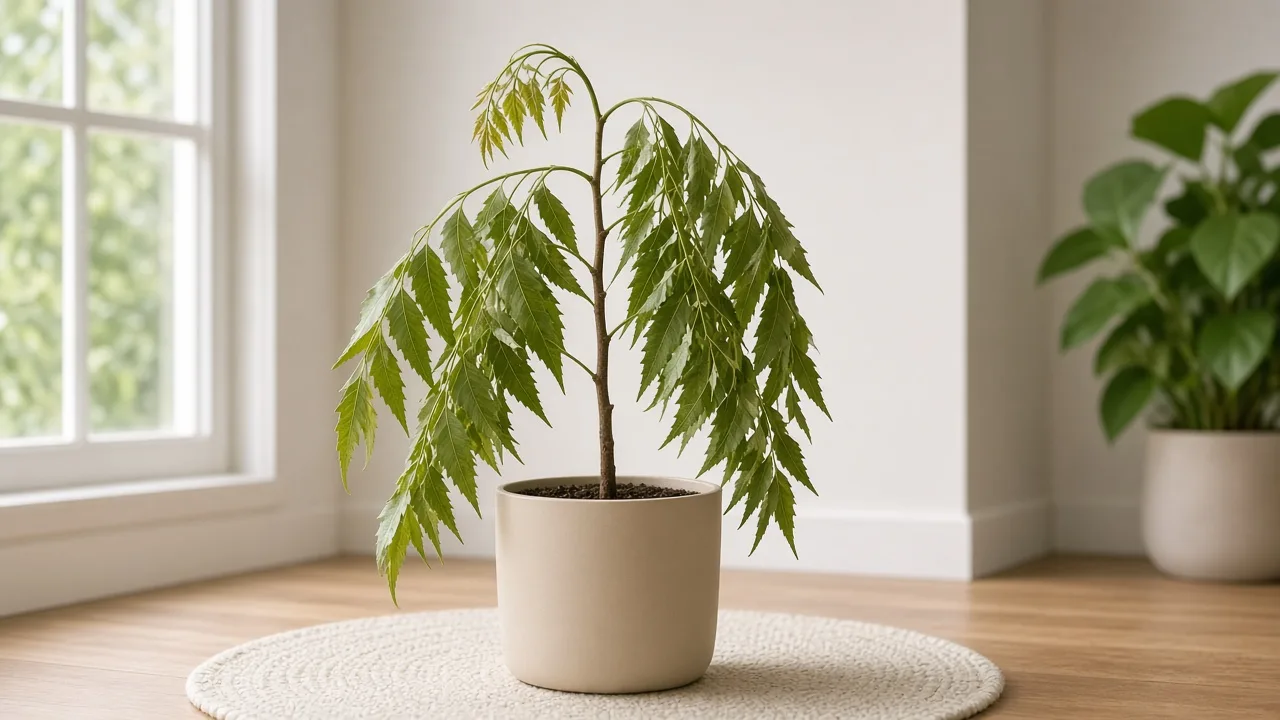
Wilting on Neem (Azadirachta indica) is a severe loss of vascular turgor causing compound leaves and tender green shoot tips to collapse limply. While acute drought causes rapid wilting in bone-dry soil, paradoxical wilting occurs in waterlogged mix when roots suffocate from anaerobic hypoxia, when delicate taproots suffer transplant shock, or when temperatures drop below 10°C (50°F). First step: Probe the bottom third of the root ball with a moisture meter or wooden dowel—if bone-dry, deliver a slow, deep bottom-drain soak; if saturated, halt watering immediately, move to a warm, bright spot, and inspect root collar firmness.
Wilting on Neem: Causes, Checks & Fixes
This guide covers wilting on Neem. See also the general Wilting guide, watering, and light pages for this plant.
Wilting on Neem: Causes, Checks & Fixes
Quick answer
Wilting on Neem (Azadirachta indica) indicates an acute physiological collapse of hydrostatic pressure within the plant’s vascular xylem and cell walls. Unlike slight daytime flagging, true wilting causes the elongated central rachis of its pinnate compound leaves and the tender green growing tips of young branches to lose rigidity simultaneously, curling downward in severe distress.
Because Neem is an evolutionary marvel of the dry tropics, many growers assume a wilting tree simply needs a bucket of water. However, unthinking watering is often fatal: Neem suffers from paradoxical wilting when waterlogged, compacted soil suffocates root tissue, depriving the plant of the oxygen needed to pump moisture upward. Wilting also strikes when an unseasonal cold snap chills the root zone below 10°C (50°F), or when recent repotting traumatizes the tree’s sensitive taproot.
For general environmental causes and vascular wilt mechanics across all plant families, visit our wilting environment guide. On Neem, your immediate priority is differentiating moisture deficit from root-zone hypoxia before touching the watering can.
First step: Insert a two-pronged soil moisture probe or a slender wooden dowel 10–15 cm (4–6 inches) deep into the root ball. If the probe reads bone-dry (levels 1–2) and the pot is feather-light, saturate the root ball with a deep bottom-drain flush. If the probe registers wet or saturated (levels 8–10) and the pot is heavy, stop watering immediately, move the container into a warm, bright shelter, and check for anaerobic root rot.
When to use this page vs other Neem guides
Wilting is an emergency symptom representing systemic vascular disruption. Distinguish acute canopy wilting from gradual leaflet discoloration, localized pests, or chronic watering stress using the differential diagnostic table below:
| Symptom pattern on Neem | What it indicates | Recommended guide |
|---|---|---|
| Complete canopy collapse; soft, bent shoot tips; limp compound rachises | Acute systemic vascular failure (drought, hypoxia, root shock, or cold) | Stay on this guide |
| Compound leaves flagging downward; stem tips remain upright; soil drying | Early loss of petiolar turgidity before terminal shoot collapse | Drooping leaves on Neem |
| Soggy pot with sour sulfur odor; lower leaflets turn butter-yellow and drop | Advanced fungal root decay from prolonged anaerobic saturation | Root rot on Neem |
| Soil constantly damp; foliage pale green and soft; growth stalled | Chronic moisture excess prior to structural root collapse | Overwatering on Neem |
| Brittle, curling leaflets; dry soil pulling away from pot rim; light container | Chronic or repetitive moisture deficit past the temporary wilt stage | Underwatering on Neem |
| Stems healthy but leaflets covered in fine webbing or stippled bronze | Microscopic mite infestation draining cell contents | Spider mites on Neem |
| Upright branches but pale or yellowing leaflets across the entire canopy | Nutrient depletion, root-bound conditions, or insufficient sunlight | Neem care overview |
For broader cultural requirements that keep vascular tissues healthy, consult our dedicated Neem watering guide, Neem light guide, and Neem soil guide.
What wilting looks like on Neem
Azadirachta indica belongs to the Meliaceae family (the mahogany family) and produces pinnate compound foliage with curved, serrated leaflets. Each compound leaf features 20 to 30 asymmetrical, falcate leaflets arranged along an extended central axis (rachis) measuring 20 to 40 cm in length.
When systemic turgor pressure plummets, the collapse progresses rapidly through four distinct morphological stages:
- Terminal shoot drooping: The tender, non-lignified green shoots at the branch tips lose hydrostatic stiffness first. They crook downward like a shepherd’s staff.
- Inward leaflet curling: Individual leaflets cup inward along their central midrib. The glossy deep-green surface turns dull matte-gray as stomata snap shut to restrict transpiration.
- Petiolar and rachis collapse: Turgor fails completely at the pulvinus base of each petiole and along the rachis. Compound leaves fold flat against the trunk and main scaffold branches.
- Vascular desiccation or abscission: If caused by drought, foliage becomes crinkly and brittle. If driven by root rot or cold shock, foliage remains limp, damp, and dull, eventually turning yellow-brown and dropping en masse.
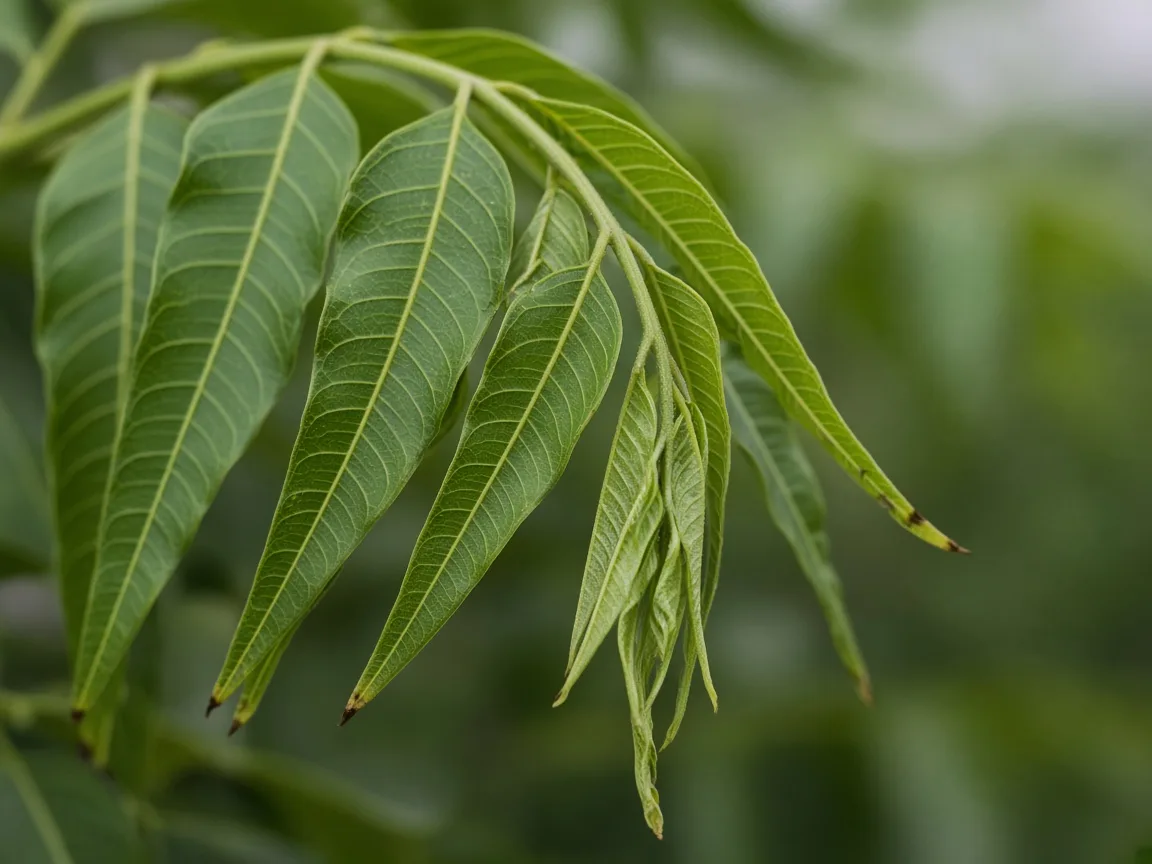 Macro close-up of a Neem compound leaf exhibiting vascular wilt, limp petiolar tissue, and curled leaflet margins under moisture stress.
Primary physiological causes of wilting on Neem
To resolve wilting permanently, you must understand how Neem functions in its native habitat. Indigenous to the semi-arid, seasonally dry tropical forests of South Asia, Neem is adapted to deep, well-aerated, sandy-loam soils where monsoon rains are followed by months of parched heat. In containers, however, its physiological adaptations can quickly work against it if indoor conditions drift outside its tolerances.
1. Acute drought dehydration
Containerized Neem trees transpire immense volumes of water through their numerous serrated leaflets, especially when positioned in full direct sun or hot balcony environments. Because the root volume is confined by pot walls, available water can vanish in as little as 48 hours during midsummer.
When soil moisture drops past the permanent wilting point, the tree can no longer draw water via capillary action. Hydrostatic pressure inside the xylem vessels collapses, resulting in immediate canopy wilt. Fortunately, healthy Neem possesses high drought resilience; if rehydrated before cellular necrosis occurs, vascular pressure is rapidly restored.
2. Anaerobic root collapse and root rot (paradoxical wilt)
The most catastrophic form of wilting occurs when the potting mix is thoroughly soaked. As documented by botanical field observations, Neem is intolerant of waterlogged soils and cold drafts. When grown in heavy garden soil, standard peat potting mix, or containers lacking unrestricted drainage holes, excess water fills every microscopic pore space, expelling dissolved oxygen.
Without soil oxygen, root cells experience rapid metabolic asphyxiation. The Missouri Botanical Garden explains that root hypoxia prevents moisture absorption, causing plants to wilt paradoxically in wet soil because damaged roots cannot transport water to the leaves. Furthermore, the Royal Horticultural Society notes that waterlogging and soil compaction cause root dieback, opening pathways for opportunistic pathogens like Pythium and Phytophthora to decay the root system.
3. Taproot transplant shock and root disturbance
Unlike many fibrous-rooted houseplants, juvenile Neem produces a deep vertical taproot and extensive mycorrhizal networks designed to anchor the young tree and seek deep underground water tables. This taproot is exceptionally fragile and prone to shock when disturbed.
When a grower repots a Neem tree and aggressively loosens the root ball, prunes the taproot, or leaves the roots exposed to ambient air, fine root hairs desiccate within minutes. Horticultural researchers at Penn State Extension emphasize that root disruption and transplant shock disrupt water uptake, severing the hydraulic bridge between root and substrate. Even if the new soil is perfectly damp, the damaged taproot cannot supply water to the extensive canopy, triggering immediate post-transplant wilt.
4. Cold temperature drops below 10°C (50°F)
Neem is an obligate tropical tree requiring warm ambient conditions. While mature outdoor trees withstand brief chills, containerized specimens have exposed root zones that track air temperatures closely.
Horticultural guides confirm that temperatures below 50°F (10°C) cause cold shock and foliage collapse on Neem trees. Chilling paralyzes root cell membranes, drastically reducing root hydraulic conductivity. Water absorption drops close to zero even if moisture is present in the soil. Transpiration from daytime sun or dry indoor heating continues, creating an internal water deficit that leaves the entire canopy limp and wilted.
Diagnostic protocol: Step-by-step triage
Never guess the cause of a wilted Neem. Follow this systematic 4-step diagnostic protocol to pinpoint the exact physiological driver before taking action:
Step 1: Soil moisture probe and container heft
Do not rely on the soil surface, which often dries out under sun while the lower root zone remains waterlogged.
- Use a soil moisture probe: Insert a clean probe 10–15 cm (4–6 inches) deep into the root core. If the gauge reads 1–2 (dry), suspect acute drought. If it reads 8–10 (saturated/wet), suspect anaerobic hypoxia.
- The wooden dowel test: If you do not own an electronic meter, insert an unpainted wooden skewer deep into the bottom third of the container for 10 minutes. If it comes out clean, warm, and bone-dry, the soil is parched. If it comes out dark, damp, and smelling of damp earth or sulfur, the lower root ball is saturated.
- Pot lift check: A dry 5-gallon container lifts effortlessly with one hand; a waterlogged container feels dense, heavy, and cold.
Step 2: Stem flexibility and scratch test
Gently pinch the green terminal shoots and the woody main stem:
- Pliable green shoots with firm main stem: The vascular cambium is alive; the wilt is acute and treatable.
- Wrinkled, shriveled, or hollow lower stem: Vascular collapse is advanced. Use a thumbnail to lightly scrape a 2 mm sliver of bark near the soil line: bright emerald green indicates active life, whereas brown, stringy, or water-soaked tissue indicates fatal stem necrosis.
Step 3: Root collar and drainage inspection
Examine the soil surface right where the trunk enters the substrate:
- Foul, swampy odor: A pungent, sour smell confirms anaerobic fermentation and active bacterial or fungal root rot.
- Exposed, severed taproot: Look for evidence of recent shifting or potting disruption that severed root-soil contact.
- Obstructed drainage: Check underneath the container. Water pooled in saucers or roots plugging the drainage hole indicate water stagnation.
Step 4: Temperature history cross-check
Review environmental conditions over the previous 48 hours:
- Did nighttime temperatures outdoors dip below 10°C (50°F)?
- Was the plant placed directly in front of an air conditioner vent or unsealed winter window?
- Was the tree recently moved from an indoor windowsill into intense midday garden sun?
The first fix for Neem
Your first action must directly counter the confirmed diagnosis:
- If acute drought is confirmed: Place the container in a sheltered, shaded area and deliver a slow, thorough watering until water flows freely from the drainage holes. Wait 15 minutes, empty the saucer completely, and keep the tree out of harsh midday sun for 24 hours while turgor recovers.
- If waterlogging or root hypoxia is confirmed: Stop watering immediately. Elevate the pot on pot feet or wooden blocks so air circulates freely beneath the drainage holes. Move the plant to a warm, brightly lit location (18°C–25°C / 65°F–77°F) with good ventilation to accelerate substrate dry-down.
- If transplant shock is confirmed: Do not add more water if the soil is already moist. Mist the foliage lightly, place a clear plastic tent or bag loosely over the canopy to raise local humidity to 70–80%, and place the tree in bright, filtered light away from direct sun to reduce transpiration demand until root hairs regenerate.
- If cold shock is confirmed: Move the tree indoors immediately to a warm room above 20°C (68°F). Keep it away from cold glass and hot forced-air heating drafts. Do not saturate the root ball; chilled roots cannot process water.
Step-by-step recovery protocol
Once the immediate crisis is stabilized, manage recovery using this structured timeline:
Day 1: Pinpoint cause via deep probe -> Apply single targeted first fix
Days 2–4: Monitor terminal shoot firmness -> Provide warm, filtered sunlight
Days 5–10: Allow top 3–5 cm to dry -> Remove completely desiccated leaves
Weeks 2–4: Inspect apical buds for green swelling -> Reintroduce direct sun
Weeks 4–8: Resume balanced soak-and-dry irrigation once new flushes unfurl
Protocol for anaerobic root rot salvage
If the root probe showed saturated conditions and the root ball emits a sour odor, drying the soil alone will not stop fungal decay. You must intervene surgically:
- Unpot with minimal taproot disturbance: Gently tilt the pot and ease the root ball out. Do not pull on the trunk.
- Wash away anaerobic soil: Rinse the root system under tepid water to reveal the roots. Healthy Neem roots are pale cream or light tan and snap crisply when bent. Rotten roots are dark brown, black, slimy, and slough off like wet thread under gentle pressure.
- Excise rotten tissue: Using sharp shears sanitized in 70% isopropyl alcohol, prune away all rotten root sections back to healthy, firm tissue. Avoid cutting into undamaged portions of the primary taproot.
- Repot in fresh, gritty substrate: Clean the container thoroughly with a 10% bleach solution, or switch to a new porous terracotta pot. Replant the tree in a sterile, ultra-draining blend of 50% coarse horticultural sand or perlite, 25% sandy loam, and 25% compost. For custom soil formulations, review our Neem soil guide.
- Establish recovery conditions: Water the fresh soil lightly once to settle air pockets. Place the tree in bright indirect light and maintain ambient temperatures around 22°C–26°C (72°F–79°F). Do not water again until a moisture probe inserted deep into the root zone reads dry.
Recovery timeline and expectations
Understanding what tissue can and cannot recover prevents premature panic:
- Drought-induced wilt: Neem has exceptional hydraulic recovery. If wilted from simple dry soil, the central rachis and limp leaflets will regain full turgor within 4 to 12 hours after a deep soak. Older lower leaflets that turned yellow or crispy will not turn green; let them drop naturally.
- Transplant shock wilt: Expect canopy flagging to persist for 5 to 10 days while root hairs re-establish contact with the substrate. Compound leaves may drop, but as long as terminal green stems remain supple, new auxiliary buds will break within 2 to 3 weeks.
- Cold shock wilt: Leaves that have undergone cellular chilling injury cannot be saved; they will turn dull olive-brown and drop over 7 to 14 days. Provided the woody trunk stayed protected from freezing, dormant buds will push out a vigorous flush of fresh pinnate leaves within 3 to 5 weeks once temperatures stabilize above 18°C (65°F).
- Hypoxic root rot wilt: Root regeneration is the slowest recovery path. The tree must produce new feeder root tips before canopy turgor can return. Foliage loss is common. True recovery is verified when firm, vibrant emerald leaflets emerge from apical stems 3 to 6 weeks after repotting.
Critical mistakes to avoid
Avoid these common missteps that turn a treatable wilting episode into a dead tree:
- Pouring water on a waterlogged tree: Assuming that every wilted plant is thirsty is the single most common cause of container tree death. Always probe soil depth before watering.
- Applying fertilizer during wilt stress: Never feed a wilted or stressed Neem. Mineral salts increase the osmotic pressure of the soil solution, drawing water out of damaged roots and causing severe chemical root burn. Withhold all fertilizer until vigorous new growth is active.
- Placing a shocked tree in blazing sun: While healthy Neem craves intense sunlight, a tree with damaged roots cannot replace transpired water. Shield recovering trees in bright, indirect light until vascular turgor stabilizes.
- Aggressive canopy pruning during wilt: Do not hack off branches in hopes of “saving energy.” Even wilted leaves help pull water through the stem through residual transpiration. Only prune branches that have turned brittle and brown inside the cambium layer.
- Leaving stagnant water in drip saucers: Never allow container Neem to sit in drainage runoff. Empty drip trays 15 minutes after watering to prevent anaerobic moisture accumulation at the base of the pot.
How to prevent wilting on Neem
Long-term prevention requires matching container culture to Neem’s dry tropical physiology:
1. Pot selection and soil architecture
Always grow container Neem in porous unglazed terracotta rather than plastic or glazed ceramic. Terracotta breathes through its clay walls, dissipating excess moisture and delivering critical oxygen directly to the root zone. Pair this with a gritty, lean potting mix featuring sharp drainage and a pH of 6.2 to 7.0. Never use dense, heavy garden clay or moisture-retentive peat blends without adding 25% coarse sand, perlite, or pumice.
2. The soak-and-dry watering cadence
Adopt a disciplined soak-and-dry irrigation schedule. Water thoroughly until moisture runs freely from the drainage holes, then refrain from watering until the top 3–5 cm (1–2 inches) of soil is completely dry. In hot summer weather under full sun, watering may be necessary every 4 to 7 days; during cooler winter months, the interval naturally widens to 10 to 14 days. For detailed seasonal adjustments, refer to our Neem watering guide.
3. Sunlight and thermal stability
Neem requires at least 6 hours of direct sunlight daily to maintain vigorous vascular circulation. For placement recommendations, visit our Neem light guide. In temperate climates, bring containerized Neem indoors well before autumn night temperatures drop below 13°C (55°F), and keep the tree protected from freezing drafts and dry radiator heat throughout the winter.
Related Neem guides
Explore these companion guides across our Neem problems hub to keep your tree resilient and thriving:
- Neem care overview — Botanical characteristics, annual growth cycles, and indoor care fundamentals.
- Neem watering guide — Season-by-season irrigation schedules, soil testing methods, and dry-down checks.
- Neem light guide — Sunlight requirements, foot-candle ranges, and winter grow-light positioning.
- Neem soil guide — Lean potting soil formulas, aeration amendments, and container pH balancing.
- Root rot on Neem — Recognizing root hypoxia, surgical pruning, and sterile repotting protocols.
- Overwatering on Neem — Correcting saturated substrate and early moisture stress before root failure.
- Underwatering on Neem — Managing chronic drought, crispy leaflet margins, and deep soaking methods.
- Drooping leaves on Neem — Differentiating petiolar flagging from complete systemic vascular collapse.
Related tool
Use the Plant Watering Calculator to calculate an accurate dry-down interval for your container Neem based on container volume, soil composition, ambient temperature, and sun exposure.