Slow Growth on Neem: Taproot, Light & Thermal Fixes
Quick answer
Slow growth on Neem (Azadirachta indica) is most commonly triggered by taproot constriction in shallow nursery pots, photon starvation below 600 µmol/m²/s PPFD, or winter cool-temperature dormancy below 14°C (57°F). Neem is a vigorous, deep-rooted tropical tree; when its vertical taproot circles in a cramped container, hormonal feedback arrests apical meristem division. First step: gently unpot the tree to inspect the lower root zone for a kinked or circling taproot, and measure canopy light levels before applying any fertilizer or altering watering routines.
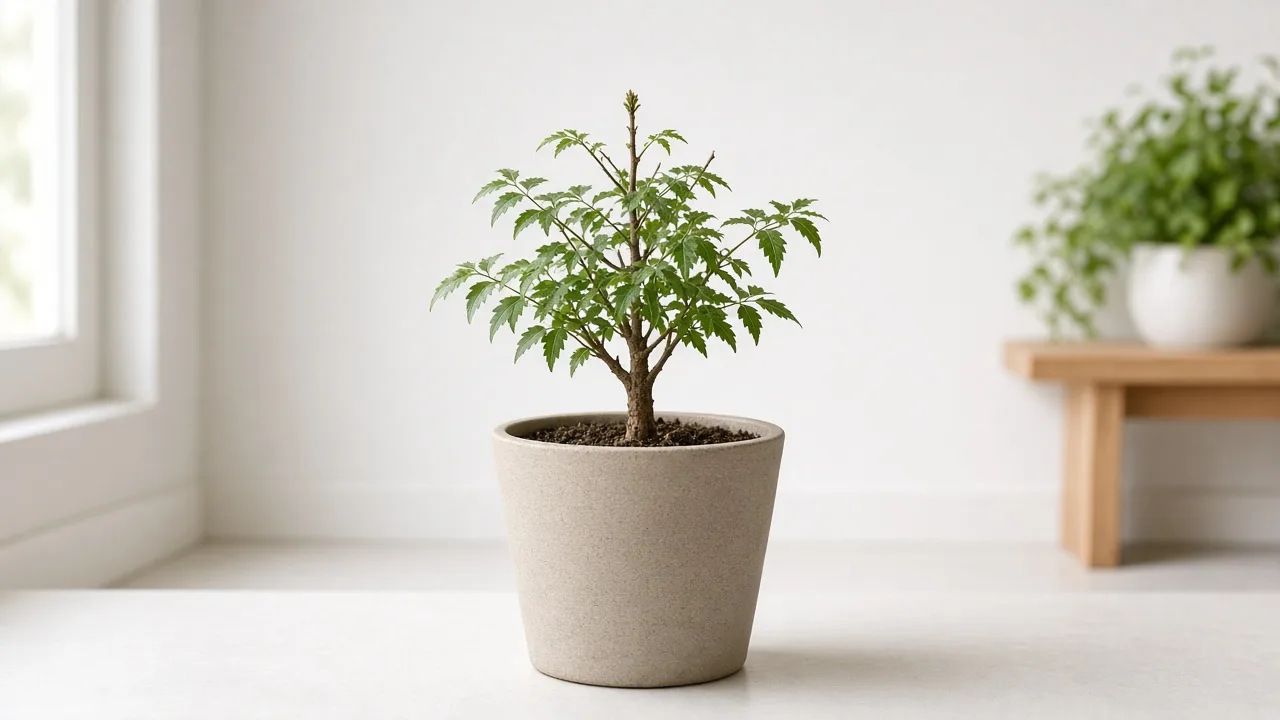
Slow Growth on Neem: Causes, Checks & Fixes
This guide covers slow growth on Neem. See also the general Slow Growth guide, watering, and light pages for this plant.
Slow Growth on Neem: Causes, Checks & Fixes
Quick answer
Azadirachta indica (Neem) is a fast-growing, evergreen tree belonging to the mahogany family (Meliaceae). Under warm, sun-drenched conditions, a healthy juvenile Neem pushes vigorous flushes of pinnately compound leaves every couple of weeks, rapidly expanding its primary woody stem. When growth grinds to a halt, the tree is almost always suffering from an invisible physical or environmental bottleneck: taproot constriction in a shallow container, sub-optimal photon flux density (PPFD), cool-temperature thermal dormancy, or micronutrient lockout triggered by pH extremes.
For how systemic environmental stress arrests cell division across different plant families, consult our slow growth hub. On Neem, the telltale signature of true slow growth is a dormant, non-expanding terminal apical bud, compressed internodes, and miniature, leathery leaflets that refuse to unfurl, often while the lower root ball has formed a dense, girdled mat at the base of the container.
First fix: Perform a root-zone inspection before making arbitrary changes to watering or fertilizer. Unpot the tree or gently slide the root ball out to evaluate whether the dominant downward taproot is circling the base of the pot. If the root system is girdled, transition the tree into a deep, tall pot filled with a gritty, sandy loam mix, and place it under at least 6 hours of direct sunlight (or 600+ µmol/m²/s PPFD) at temperatures above 21°C (70°F).
When to use this page vs other Neem guides
Because arrested growth is a general response to stress, it can overlap with watering problems, pest attacks, or lighting issues. Use this diagnostic matrix to route your tree’s symptoms to the right resource:
| Symptom Pattern on Neem | Primary Diagnosis | Where to Go Next |
|---|---|---|
| Frozen apical bud, micro-leaflets, compressed internodes, circling roots | Taproot constriction or low temperature stall | This guide |
| Elongated internodes, pale green floppy shoots, leaning toward light | Chronic low-light etiolation | Leggy growth & Neem light guide |
| Stalled growth with uniformly yellowing lower compound leaves | Nitrogen depletion or chronic overwatering | Yellow leaves & Neem watering guide |
| Crisp brown leaflet margins, droop during heat, rapid soil dry-out | Severe under-hydration or pot-bound drought | Underwatering & Brown tips |
| Wilted, soft foliage with persistently wet, foul-smelling potting mix | Root hypoxia and anaerobic pathogen decay | Root rot & Overwatering |
| Stunted new flushes covered in stippling, fine webbing, or cottony residue | Sucking pest infestation | Spider mites & Mealybugs |
| Baseline substrate formulation, container depth, and drainage rules | Potting mix engineering | Neem soil guide |
| Comprehensive cultural maintenance and seasonal care schedule | Holistic overview | Neem overview & Neem care overview |
| Complete index of physiological disorders and pests for container Neem | Diagnostic directory | All neem problems |
What slow growth looks like on Neem
In high-heat, high-light environments, Azadirachta indica is renowned for its rapid biomass accumulation. In its native dry tropical habitat, young trees can put on over 1 to 1.5 meters of vertical growth per season. When grown in containers or indoor spaces, however, physiological bottlenecks cause growth to decelerate or stall completely.
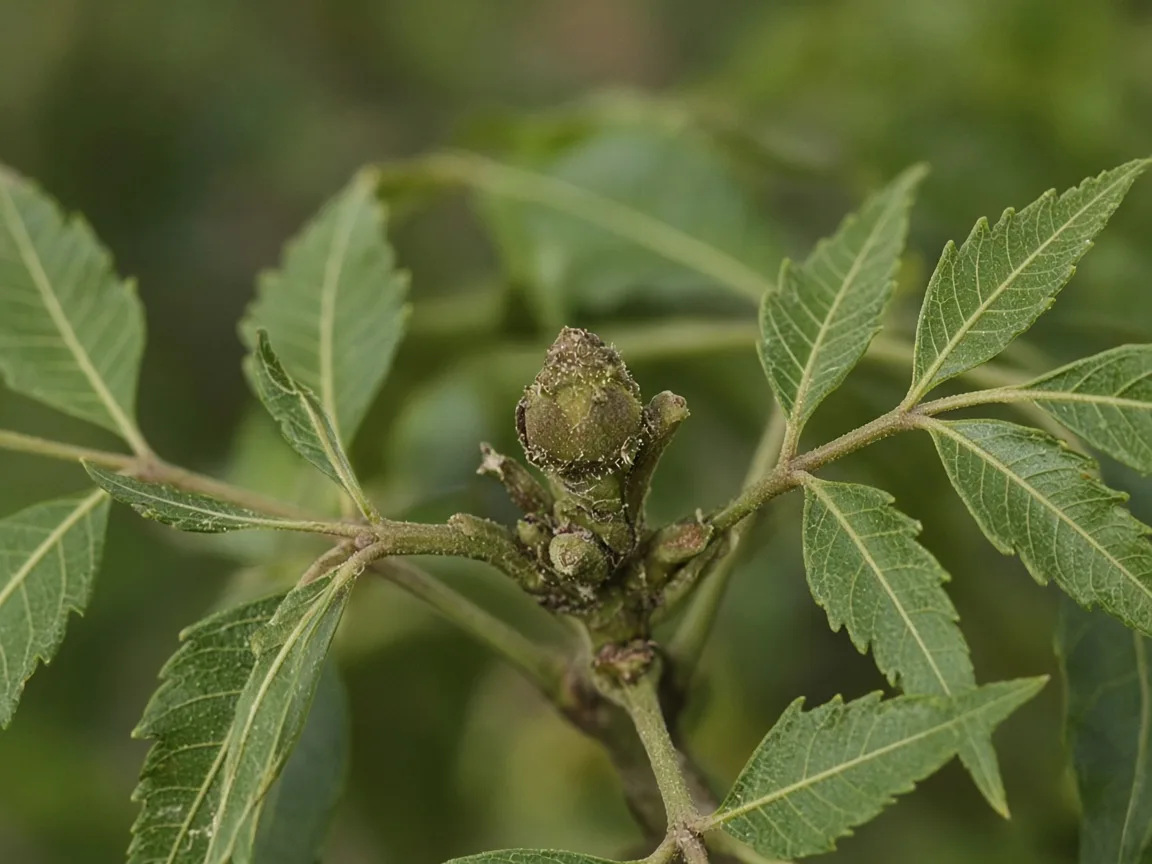
A stalled Neem apical bud displaying stunted compound leaves and arrested petiole elongation caused by container taproot constriction and sub-optimal light.
A stalled Neem exhibits specific morphological cues:
- Arrested terminal apical bud: The central growing tip remains tightly closed, dull brownish-green, and inactive for consecutive weeks during what should be peak summer or spring vegetative flushes.
- Micro-leaflets (“little leaf” symptom): Any leaflets that manage to emerge are drastically reduced in size—often measuring less than a third of their normal 4–8 cm length—with stiff, curled margins.
- Shortened internodal spacing: Nodes along new branch extensions form directly on top of each other, giving the shoot tips a dense, tufted, or “rosetted” appearance rather than a graceful, tiered canopy.
- Delayed rachis development: The central stem of the compound leaf fails to elongate, causing paired leaflets to bunch tightly together along a stubby petiole.
- Lack of lateral branching: Axillary buds along older woody branches remain completely dormant, failing to generate new secondary foliage even after light tip pinching.
- Early leaflet chlorosis without abscission: Young leaves emerge pale lime-green or yellowish-white, lingering in an immature, semi-expanded state for weeks without turning rich forest green.
Primary physiological causes of slow growth on Neem
Diagnosing slow growth on Neem requires understanding the species’ specialized botanical traits. The tree is not a tender houseplant; it is a tough, sun-adapted, taproot-anchored timber and shade tree. Five distinct physiological mechanisms account for almost all growth stalls.
1. Taproot constriction and pot binding in nursery containers
The most overlooked cause of stunted growth in container Neem is the restriction of its juvenile taproot. Botanical assessments by Feedipedia document that Neem naturally develops a pronounced, deep vertical taproot early in its seedling stage, which can extend deep into the soil before substantial lateral root systems develop.
When a young Neem tree is grown in a standard shallow nursery pot, that vertical taproot rapidly hits the impermeable plastic base. Instead of driving downward, it coils, kinks, and circles tightly against the container floor. In plant physiology, this physical barrier triggers immediate hormonal feedback: root apical meristems experiencing mechanical resistance decrease their synthesis of cytokinins (which promote shoot division) and increase abscisic acid and ethylene production. This hormonal shift signals the canopy to halt vegetative flush production, regardless of how much fertilizer or water is supplied to the upper soil.
2. Sub-optimal light intensity (PPFD)
Neem is an obligate tropical heliophyte. As highlighted by the Missouri Botanical Garden, Neem demands full direct sun to thrive and reach its growth potential. In open tropical fields, Neem absorbs over 1,500–2,000 µmol/m²/s of photosynthetic photon flux density (PPFD).
When grown indoors, on covered patios, or behind standard double-pane window glass, light intensity often drops below 150–200 µmol/m²/s. While shade-tolerant foliage plants can grow at these levels, 200 µmol/m²/s is barely above Neem’s light compensation point—the threshold where photosynthetic sugar production merely balances baseline cellular respiration. Without surplus carbohydrates, the tree cannot synthesize cellulose or lignin to build new shoots, leaving the plant in prolonged metabolic stasis.
3. Winter cool temperature dormancy (thermal stall)
Native to the frost-free lowlands of South Asia, Azadirachta indica possesses zero genetic adaptation to cold climates. Authoritative research published through the National Academies Press / NCBI Bookshelf emphasizes that Neem stops vegetative growth when ambient temperatures fall below 14°C (57°F), dropping leaves and entering semi-dormancy if cold persists.
Between 14°C and 18°C (57°F–64°F), Neem enters a thermal stall:
- Enzymatic activity in the rubisco cycle slows to a crawl.
- Cell wall elasticity at the apical meristem hardens, preventing cell elongation.
- Root hydraulic conductivity drops, meaning the root system absorbs water at a fraction of its normal rate.
Growers often misinterpret this natural cool-season resting phase as a nutrient deficiency, mistakenly applying water and fertilizers that the dormant roots cannot absorb, quickly inducing root burn or rot.
4. Nutrient deficiencies: Nitrogen and micronutrient starvation
In containers, Neem’s rapid vegetative potential means it rapidly strips available minerals from restricted soil volumes. Two distinct nutritional deficiencies halt growth:
- Nitrogen (N) depletion: As a mobile macronutrient, nitrogen is required for chlorophyll synthesis and protein formation. When nitrogen is exhausted in sandy, lean potting mixes, the entire canopy turns a pale chartreuse, and shoot elongation halts completely because the tree cannot produce amino acids for new cellular walls.
- Zinc (Zn) and Iron (Fe) deficits: Zinc is a crucial cofactor for tryptophan synthesis, the direct chemical precursor to auxin (indole-3-acetic acid), which drives stem elongation. Zinc deficiency in Neem causes classic “little leaf” syndrome—nodes fail to lengthen, creating rosetted, stunted micro-flushes. Iron deficiency arrests chlorophyll formation in the newest emerging flushes, leaving tips starkly chlorotic and unable to photosynthesize.
5. Substrate pH lockout in alkaline or acidic extremes
Neem thrives across a relatively broad pH spectrum in deep natural ground, but in container culture its roots are exceptionally sensitive to nutrient immobilization caused by media pH shifts. Horticultural databases from Plants For A Future record that Neem performs best within an optimal soil pH of 6.2 to 7.0, although it tolerates 5.0 to 8.0 in open land.
In containers, prolonged irrigation with hard, municipal tap water gradually loads the potting substrate with calcium and magnesium carbonates, driving the root-zone pH above 7.8. At this alkaline level, chemical pH lockout occurs: iron, manganese, and zinc precipitate into insoluble mineral forms that the root hairs cannot absorb. Even if the potting mix contains abundant micronutrients, the tree starves biochemically. Conversely, overly acidic substrates below pH 5.5 bind phosphorus and cause calcium antagonism, leading to root tip death and complete vegetative arrest.
How to confirm the root cause
Before initiating corrective treatments, work through this step-by-step diagnostic checklist to identify the exact limiting factor:
- Check container dimensions and root architecture:
- Gently tilt the container and slide the root ball free.
- Inspect the bottom third of the root ball. Is there a thick, woody primary taproot coiling around the base or weaving through the drainage holes?
- If roots form a solid spiral cage that leaves no room for downward penetration, taproot pot-binding is confirmed.
- Audit canopy photon exposure (PPFD):
- Measure light intensity right at the uppermost leaf level using a dedicated PAR meter or calibrated mobile sensor.
- If your readings show less than 600 µmol/m²/s PPFD (or fewer than 5–6 hours of direct, unobstructed sunlight), photon starvation is the bottleneck.
- Log ambient day and night temperatures:
- Track temperature highs and lows over a 48-hour period.
- If nighttime temperatures routinely dip below 15°C (59°F) or daytime highs stay under 20°C (68°F), the tree is in temperature-induced dormancy.
- Test substrate pH and electrical conductivity (EC):
- Perform a pour-through runoff test using distilled water.
- If the runoff pH registers above 7.5, your tree is experiencing alkaline micronutrient lockout. If pH is below 5.8, investigate acid shock.
- Inspect the newest foliage for micronutrient patterns:
- If the youngest emerging leaflets are miniature and bunched together, suspect zinc deficiency.
- If young leaflets display brilliant yellow tissue between fine green veins, suspect iron chlorosis.
- If older lower leaves are fading to uniform yellow while new growth stalls, diagnose nitrogen starvation.
The first fix to try
Perform a root-zone audit and liberate the constricted taproot into a tall, deep container.
Because Azadirachta indica is genetically programmed to establish a deep anchor before allocating massive resources to canopy growth, resolving root restriction is the single most impactful intervention:
- Select the correct pot profile: Do not choose a wide, shallow bowl or standard standard nursery squat pot. Neem requires a tall, deep container (such as a citrus pot or deep tree container) that provides vertical depth for the primary root. The new container should be at least 4–6 inches deeper than the current root ball.
- Loosen girdled taproots: Gently tease apart the circling lower roots. If the primary taproot has kinked into a tight knot against the container base, gently straighten the flexible tips or prune the very bottom coiled tip by 1–2 cm using sterile shears to stimulate fresh, downward-oriented root branching.
- Use a lean, gritty, well-draining substrate: Repot into a sandy, fast-draining mix formulated according to our Neem soil guide. A blend of 50% coarse sandy loam, 25% pumice or perlite, and 25% aged compost provides the high permeability Neem demands.
- Water once deeply, then place in warmth: Saturate the root ball until water flows freely from the base, confirm rapid drainage, and move the container to a warm location (24°C–32°C / 75°F–90°F) in bright, indirect light for 5–7 days before re-introducing full sun.
Secondary recovery steps
Once root space is secured, systematically optimize the remaining cultural variables to kickstart active vegetative flushes:
Optimize light intensity and photoperiod
Neem cannot resume vigorous shoot division in ambient indoor light. As noted in research from Oregon State University, Neem is built for intense sunlight in open exposures.
- Move the container outdoors to an open southern or western terrace where it receives 6 to 8 hours of direct, unfiltered solar radiation.
- If growing indoors or overwintering, position a high-output, full-spectrum LED fixture 12 to 18 inches above the terminal canopy. Run the light on a 14-hour daily timer to deliver a Daily Light Integral (DLI) of 25–35 mol/m²/day, ensuring canopy PPFD remains above 600 µmol/m²/s. Consult our Neem light guide for detailed fixture recommendations.
Correct substrate pH and deliver chelated micronutrients
If your runoff test confirmed an alkaline substrate (pH > 7.5):
- Flush the container thoroughly with pure, unchlorinated rainwater or reverse-osmosis water adjusted to pH 6.0–6.3 using organic citric acid or horticultural sulfur.
- Apply a foliar spray of chelated iron (Fe-EDDHA or Fe-DTPA) and zinc sulfate mixed at half-strength. Foliar feeding bypasses root lockout completely, supplying essential metallic cofactors directly to the leaf mesophyll within 48 hours.
- Transition routine watering to an acidic soak-and-dry rhythm as outlined in our Neem watering guide.
Buffer against cool drafts and thermal stalls
If seasonal temperatures are below 18°C (64°F):
- Bring outdoor containers inside before nighttime lows touch 10°C (50°F).
- Place containers on horticultural seedling heat mats set to 24°C (75°F) if growing in a cool room or greenhouse. Warming the substrate directly elevates root metabolic activity and triggers cytokinin synthesis even when ambient room air is mild.
Balanced nutritional feed once active growth begins
Do not fertilize a stalled tree immediately on day one. Wait until you see the apical bud swell and crack open with reddish-green leaflet tips. Once growth resumes:
- Apply a balanced organic fertilizer (such as a 3-1-2 or 10-10-10 formulation with micronutrients) diluted to quarter-strength every two weeks during warm months.
- Incorporate a top-dressing of well-rotted vermicompost or neem cake powder to nourish beneficial mycorrhizal fungi in the sandy substrate.
Recovery timeline: What to expect
Re-establishing active vegetative growth on a stunted Neem tree requires patience as hormonal balance realigns between the root system and the canopy meristem.
- Days 1 to 14 (Root regeneration & metabolic reset): Beneath the soil line, pruned and loosened taproot tips begin sending out fresh, white lateral feeder roots into the open, gritty mix. The canopy will show little visible change, but turgidity will stabilize.
- Days 15 to 25 (Apical bud reactivation): Under warm temperatures (>22°C / 72°F) and 600+ PPFD, the dormant terminal bud will swell, darken to a glossy bronze-green, and begin elongating. Petiole bases will push outward from the node.
- Weeks 4 to 6 (Vigorous pinnate flush): The terminal shoot extends rapidly, producing 2 to 4 full-sized, once-pinnate compound leaves. Leaflets emerge soft and reddish-bronze before maturing into rich, deep forest-green blades with characteristic serrated margins.
- Month 2 and beyond (Canopy expansion and caliper thickening): The primary stem thickens, laying down secondary xylem and forming fibrous, lenticellate bark. Regular lateral branching commences along the upper third of the trunk.
Mistakes to avoid
When attempting to revive a stalled Neem tree, common well-intentioned interventions often worsen the condition:
- Heavy fertilizing on stagnant roots: Never dump high-nitrogen chemical fertilizer onto a stalled Neem in an attempt to “jump-start” growth. If roots are inactive due to pot-binding or cold weather, unused mineral salts accumulate in the soil, scorching delicate root hairs and triggering chemical dehydration.
- Daily calendar watering: When growth halts, the tree’s transpirational demand plummets. Watering on a rigid schedule when the plant is not actively transpiring quickly turns the lower potting mix anaerobic, resulting in lethal root rot. Always verify that the top 3–5 cm of soil is completely dry before watering.
- Radical taproot amputation: While loosening girdled root tips is beneficial, severing more than 20–25% of the primary taproot mass in one operation can cause severe shock, permanent canopy dieback, or death.
- Abrupt sunburn shock: Moving a tree that has been languishing in a dim indoor room directly into intense midday sun will bleach and blister the fragile, shade-adapted leaflets. Acclimate the plant incrementally over 7 to 10 days by starting in bright dappled shade.
- Pruning off dormant apical tips: Do not prune the terminal leader of a stalled tree in hopes of forcing bushiness. A stalled tree lacks carbohydrate reserves; removing its primary auxin-producing tip can cause the remaining bare stem to die back to the soil line.
Related Neem care guides
To support your tree’s recovery with comprehensive, species-specific care, explore these companion resources:
- Neem Overview — Comprehensive species guide covering botanical classification, container sizing, hardiness zones, and long-term patio cultivation.
- Neem Watering Guide — Soak-and-dry irrigation schedules tailored to seasonal growth stages and container depths.
- Neem Light Requirements — In-depth light thresholds, direct sunlight management, seasonal balcony tracking, and LED grow light specs.
- Neem Soil Guide — Engineering sandy, free-draining container mixes with the proper pH balance to prevent nutrient lockout.
- Neem Problems Hub — Diagnostic directory covering pest management, foliage disorders, root rot, and environmental stress.
Related tool
Measure your natural or supplemental photon levels with the Light Meter Calculator to confirm whether your Neem tree is receiving sufficient PPFD for vigorous vegetative growth.