Powdery Mildew on Heartleaf Philodendron: Causes, Checks &
Quick answer
Powdery mildew on heartleaf philodendron coats glossy heart-shaped leaves with a dry white flour-like film, often where trailing vines overlap in humid baskets. First step: isolate the plant and remove the worst coated leaves while spacing vines so air can move between layers.
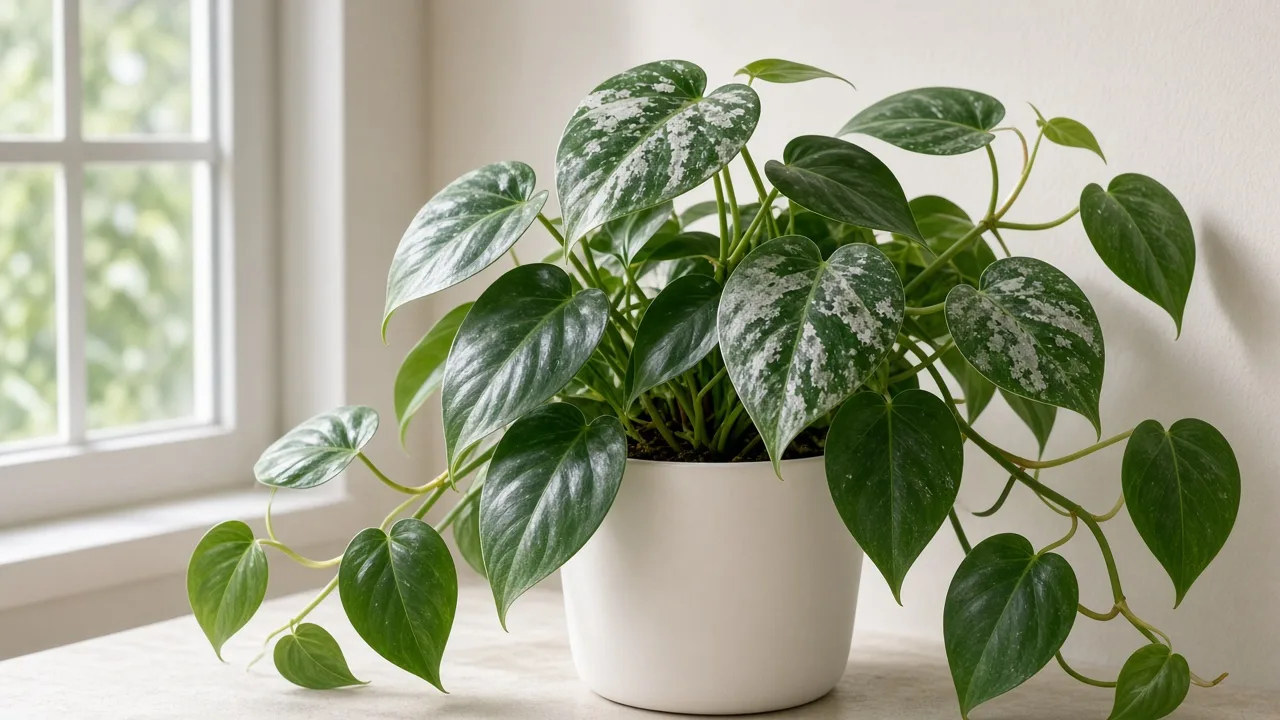
Powdery Mildew on Heartleaf Philodendron: Causes, Checks & Fixes
This guide covers powdery mildew on Heartleaf Philodendron. See also the general Powdery Mildew guide, watering, and light pages for this plant.
Powdery Mildew on Heartleaf Philodendron: Causes, Checks & Fixes
Quick answer
Powdery mildew on heartleaf philodendron (Philodendron hederaceum) shows up as a dry white or gray coating on glossy heart-shaped leaves—often described as if the plant were dusted with flour. On trailing vines, the first patches usually appear on inner leaves where overlapping foliage traps humid, still air between runners.
For how powdery mildew fungi spread in general, see our powdery mildew disease guide. On heartleaf philodendron, lift the trailing vines and inspect the shaded layers in the center of the basket first—that is where mildew outruns your weekly glance at outer leaves.
First step: isolate the philodendron away from other houseplants, then remove the worst powdery-coated leaves and spread trailing vines so air can move between them.
Do not spray fungicide on day one while vines still form a dense humid ball against the pot rim.
Why heartleaf philodendron gets powdery mildew
Heartleaf philodendron is a fast-growing trailing aroid that tolerates the 40–60% humidity many homes already provide. That same humidity band, paired with stagnant air between layered heart leaves, is exactly what powdery mildew fungi favor—high relative humidity at night, lower humidity by day, and warm room temperatures around 70–80°F (22–27°C).
Several philodendron-specific habits stack the odds:
Dense hanging baskets and shelf cascades. Long vines loop back on themselves until dozens of heart leaves overlap. The outer layer looks fine while inner leaves stay shaded and slow to dry—prime territory for white fungal patches before you notice anything from across the room.
Humidity without airflow. Heartleaf appreciates moisture in the air, but misting leaves or keeping vines pressed against a wall creates pockets where spores germinate on leaf surfaces while the top of each leaf feels dry. Powdery mildew does not need standing water on foliage the way bacterial blight does.
Crowded aroid collections. Philodendron often shares shelves with pothos, monstera, and other trailing aroids. Mildew spores travel on air currents; a coated heartleaf beside a dense neighbor can reinfect both pots after you clean only one.
Stressed or shaded vines. Plants in dim corners push soft, thin leaves that stay wet longer after watering. Chronically wet mix from overwatering weakens vines without causing mildew directly—but stressed tissue recovers more slowly once coating appears.
Recent nursery or patio exposure. New plants and summer outdoor hangs can introduce spores that establish in the humid microclimate at the center of a full basket.
What powdery mildew looks like on heartleaf philodendron
Powdery mildew on heartleaf philodendron is distinctive once you separate it from pests, guttation, and light stress.
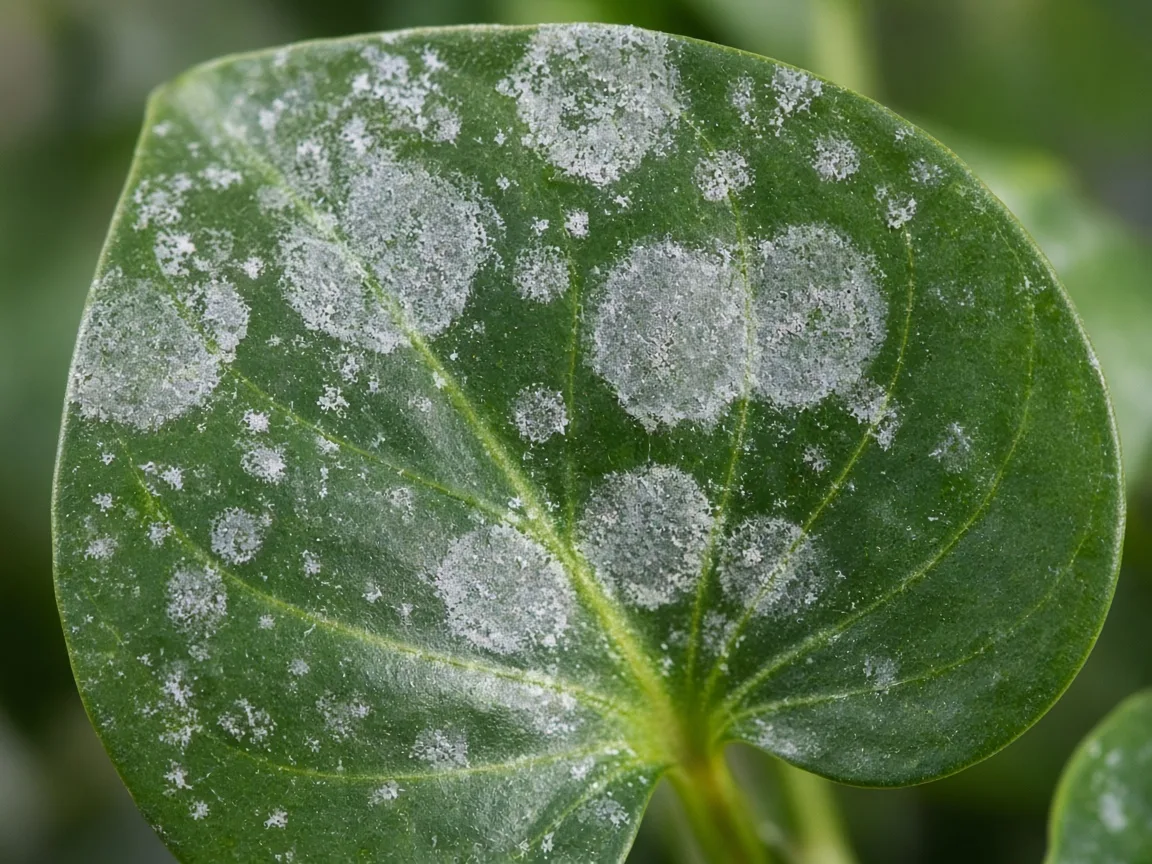
Dry white flour-like patches on a glossy heart-shaped leaf—the coating smears when rubbed and spreads along overlapping vine layers in humid baskets.
Early signs:
- Small white circular spots on upper leaf surfaces, often on inner shaded leaves before outer runners
- Fine dusty coating along leaf edges and petioles where heart leaves overlap
- Slight leaf curl or dulling of gloss on coated panels while the vine tip still looks green
Established infection:
- White powdery fungal growth merging across multiple heart leaves on the same runner
- Yellowing or premature drop of heavily coated lower leaves as photosynthesis drops
- Stalled or distorted new heart leaves at vine tips when coating reaches young tissue
- Powder on stems and leaf undersides in advanced cases, not only the obvious upper faces
What it does not look like:
- Cottony white tufts tucked into leaf axils with stickiness—mealybugs, not mildew
- Clear water droplets at leaf margins after a heavy drink—normal guttation on philodendron
- Uniform pale new leaves in dim light without smearing powder—not enough light or chlorosis, not fungus
- Water-soaked dark spots with sour odor—blight or bacterial issues
The rub test matters on glossy heart leaves: powdery mildew smears when you lightly rub a coated spot between finger and thumb. Mineral dust, perlite splash, or dried spray residue wipes away cleanly and does not regrow on the same patch within days.
Lookalikes to rule out on heartleaf philodendron
| Sign | Likely cause |
|---|---|
| Dry white film that smears; spreads leaf to leaf | Powdery mildew (this page) |
| Cottony wax in axils; sticky honeydew below | Mealybugs |
| White dust wipes off once; no spread | Mineral splash, perlite, or pesticide residue—see white spots |
| Clear droplets at margins after watering | Guttation, not disease |
| Water-soaked spots + mush or odor | Blight or leaf spot disease |
| Even pale new growth; no powder | Pale leaves from low light or nutrients |
How to confirm the cause
Work through these checks in order before you treat:
- Isolate first - Move the philodendron away from pothos, monstera, and other shelf mates before handling coated leaves.
- Rub test - Lightly rub one coated heart leaf. Mildew smears and leaves a faint residue; dust and dried spray do not.
- Location pattern - Note whether coating started on inner overlapping leaves in a hanging basket or against a wall. That pattern fits mildew more than uniform sun bleach on outer panels.
- Axil inspection - Peel back trailing layers and check leaf axils and nodes. Mealybugs cluster as cottony wax; mildew sits as flat powder on leaf faces.
- Spread speed - New white patches on additional leaves within three to five days in warm humid rooms confirm active fungus, not a one-time dust event.
- Watering review - Confirm you are not confusing guttation (clear margin droplets) with fungal coating. Heavy watering the night before can produce guttation on heartleaf without any smearing powder.
- Neighbor check - Scan plants that shared the same hanging row or watering tray for matching dry white film.
If the rub test smears, inner shaded leaves led the outbreak, and axils are clean of cottony wax, you have enough to act on mildew without waiting for lab confirmation.
First fix for heartleaf philodendron
Isolate the plant, remove the worst powdery-coated leaves, and spread trailing vines so air can move between layers.
This single step targets the condition heartleaf most often creates for itself: a humid, still canopy in the center of a full basket. Using clean alcohol-wiped scissors:
- Cut off heavily coated leaves at the petiole base
- Bag and trash infected tissue—do not compost it indoors where spores survive
- Drape remaining vines on separate hooks or a small trellis so leaves do not stack flat against each other
- Empty standing water from cachepots after every watering per Philodendron watering
Garden guides for philodendron note that small mildew outbreaks often respond to removing affected leaves and improving circulation before any chemical step. Do not mist leaves, foliar-feed, or fertilize while coating is active—succulent new growth is more susceptible to infection.
Do not spray fungicide on day one while vines still form a dense humid ball. Chemicals protect healthy tissue; they do not erase powder already on leaves.
Step-by-step recovery
After isolation, cleanup, and airflow:
- Move to bright indirect light with gentle room airflow—see Philodendron light. Leaves dry faster in appropriate light without scorching glossy heart panels.
- Water at soil level only - Avoid wetting leaf surfaces during active mildew. Bottom-water or direct the spout at the mix surface.
- Apply potassium bicarbonate or horticultural oil on remaining healthy green tissue only if coating still spreads after spacing improves. Fungicides do not cure existing powdery mildew infections—they slow spread to clean leaves. Follow label intervals, typically seven to fourteen days.
- Test neem oil on one leaf if you choose it for indoor use. Heartleaf tolerates dilute applications, but oil in hot direct sun can dull glossy foliage.
- Scout weekly - Lift inner vine layers and pinch off new coated leaves before patches merge across whole runners.
- Hold fertilizer until new heart-shaped tips emerge clean for two weeks. Stressed vines need stable culture, not nitrogen pushing soft susceptible shoots.
For severe baskets where most inner leaves are coated and growth has stalled, stripping one long runner back to firm nodes and letting it regrow in open air often works better than repeated whole-plant sprays.
Recovery timeline
Spacing and leaf removal show results within several days when room humidity drops—new vine tips should open without white coating within one to two weeks if airflow holds.
Spray protection takes longer. Expect one to two weeks of label-interval applications before spread clearly slows. Old powdery leaves stay dull or discolored; judge success by clean new heart leaves at vine tips, not by reversing damage on mature foliage.
Mild infections caught on a few inner leaves often stabilize without losing the whole display. Dense baskets where coating reached most runners before discovery may need aggressive pruning and several weeks before trailing length looks full again.
Why mildew hides inside trailing baskets
Heartleaf philodendron’s longest runners naturally fold back into the pot until outer glossy leaves hide a humid core. Unlike an upright rosette plant where every leaf gets similar light, a mature hanging heartleaf can carry three layers of overlapping cordate foliage within a 25 cm pot diameter.
Practical fix: Hang vines on multiple small hooks or a short moss pole segment so runners stay separated instead of forming one wet sphere. During weekly care, lift the lowest loop of each vine and glance at the leaves pressed against the pot rim—that is the mildew early-warning zone on trailing aroids.
Guttation vs powdery mildew on glossy heart leaves
Heartleaf philodendron commonly pushes clear water droplets from leaf margins when soil is moist and nighttime humidity is high. Owners often notice white marks and assume fungus.
Guttation dries to a faint mineral crust that does not smear like fungal powder and does not march from leaf to leaf over successive days. Powdery mildew sits on the leaf face as dry flour-like film and spreads along the same runner. If you watered heavily yesterday and see droplets only at margins, wait one dry day before treating—if flat white coating remains on upper surfaces, proceed with mildew cleanup.
Salvaging vine nodes when lower leaves must go
When powder coats the bottom half of a long runner but firm green nodes remain higher on the same stem, heartleaf philodendron can be saved by pruning back to clean tissue—a rescue path that does not work on single-rosette plants.
Cut the vine above the highest coated node, leaving at least one firm node with an uncoated leaf. Root the salvaged tip in moist well-draining mix away from the infected basket if the parent pot still carries heavy spore load on fallen debris. Discard topdressing and wipe the pot rim if white powder collected there.
What not to do
- Do not mist leaves while white coating is active—surface moisture patterns can favor some foliar pathogens and do not replace airflow fixes.
- Do not return the plant to a crowded shelf early—spores travel on air currents between aroids.
- Do not treat flat powder with alcohol dabs meant for mealybugs—that addresses wax, not mildew, and can damage glossy leaf cuticle.
- Do not fertilize coated vines until new growth emerges clean. The Spruce notes stressed plants and fresh succulent growth invite further infection.
- Do not compost heavily infected leaves indoors. Bag and trash tissue far from other pots.
How to prevent powdery mildew next time
Space trailing vines instead of letting them stack into one humid ball. Water at soil level, quarantine new plants before mixing collections, and match light to your watering rhythm so leaves dry predictably. During weekly care, inspect inner overlapping leaves on hanging baskets—the same habit that catches mealybugs early.
Improve airflow around grouped aroids and address poor drainage before chronically wet mix weakens vines. Clean reused pots if a previous basket had heavy mildew; spores can persist on debris.
When to worry
Treat as urgent when white coating jumps to multiple vines within a week, new tips stall while still dusted, or shelf neighbors show matching powder. Lower urgency: a few smearing spots on inner leaves in one basket while vine tips still open clean.
Severe cases where every runner is coated and growth has stopped may not be worth endless spray cycles—a hard prune to firm nodes or discarding the worst basket protects the rest of the collection.
Conclusion
Powdery mildew on heartleaf philodendron is manageable when you isolate early, open airflow through trailing vines, and remove coated tissue before spores spread through dense hanging layers. Inspect inner leaves during weekly care, and cross-check mealybugs and white-spot pages before treating the wrong problem.
When to use this page vs other guides
Use this page for dry white flour-like film that smears on glossy heart leaves. Use mealybugs for cottony axil clusters with stickiness. Use white spots when dust wipes off once without spread. Use blight for water-soaked mushy tissue with odor. Use leaf spot disease for firm brown or tan spots without powder.