Blight on Heartleaf Philodendron: Causes, Checks & Fixes
Quick answer
Blight on heartleaf philodendron is usually bacterial—Erwinia soft rot starting at the soil line or Xanthomonas spots with yellow halos on glossy leaves. First step: isolate the plant immediately and cut off every mushy or water-soaked leaf and stem section with sterilized shears.
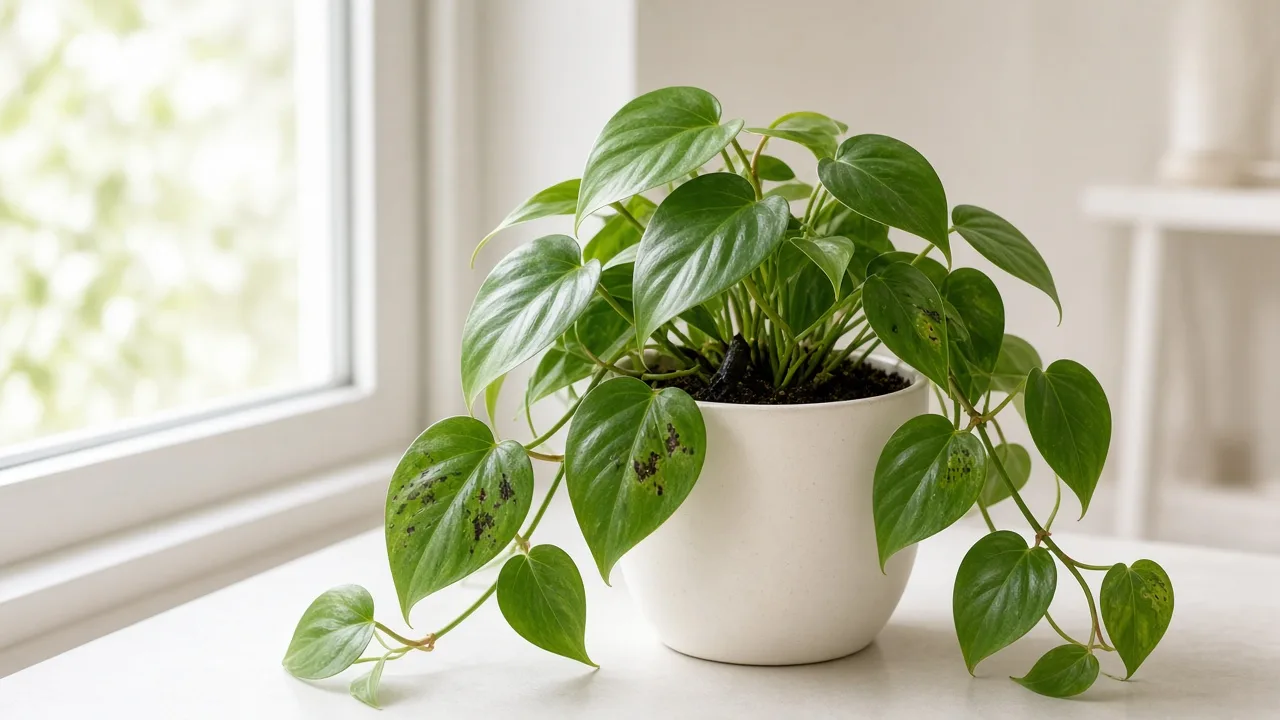
Blight on Heartleaf Philodendron: Causes, Checks & Fixes
This guide covers blight on Heartleaf Philodendron. See also the general Blight guide, watering, and light pages for this plant.
Blight on Heartleaf Philodendron: Causes, Checks & Fixes
Quick answer
Blight on heartleaf philodendron (Philodendron hederaceum) usually means a bacterial infection, not ordinary brown tips from dry air. The two patterns home growers see most are Erwinia soft rot—tiny water-soaked spots at the soil line that turn tan, then black and mushy—and Xanthomonas leaf blight, which starts as translucent spots with yellow halos on heart-shaped leaves.
Erwinia blight is caused by Erwinia carotovora and Erwinia chrysanthemi, bacteria that produce a mushy, brown, smelly soft rot when humidity stays high and leaves stay wet. On trailing philodendron, the damage often appears where long vines rest against a wet pot rim—not randomly across the whole plant.
For how blight spreads on wet foliage in general, see our blight symptom hub. On heartleaf philodendron, inspect the soil-line nodes on the lowest hanging vine first—that is where Erwinia commonly enters before climbing petioles.
First step: move the philodendron away from every other plant, then cut off all mushy or water-soaked leaves and stem sections with sterilized shears.
Why heartleaf philodendron gets blight
Philodendron’s trailing growth keeps dozens of heart-shaped leaves on long runners whose petioles and stem joints sit close to damp soil, cachepot rims, and neighboring pots. Xanthomonas species attack philodendron and related aroids, spreading fastest when humidity is high and water sits on leaf surfaces overnight.
Common triggers on indoor philodendron:
- Overhead watering or misting that wets glossy leaves and petioles
- Trailing vines buried in wet soil or resting in standing cachepot water
- Warm, stagnant air around crowded shelf collections
- Pruning or repotting with unsterilized tools
- Stressed vines recovering from overwatering or dim corners
Erwinia attacks below or at the soil level, which matches how hanging heartleaf philodendron often drapes its lowest nodes into the pot rim where moisture collects.
What blight looks like on heartleaf philodendron
Erwinia bacterial blight starts as small, dark green water-soaked spots on stems or leaf petioles. Spots expand to tan lesions, then blackened mushy tissue with a distinct foul odor in humid conditions. When infection reaches petioles, leaves collapse and drop off while new growth may emerge yellow and stunted.
Xanthomonas bacterial blight shows translucent leaf spots that turn reddish brown with yellow halos around the edges. Spots can progress to holes as tissue breaks down.
Fungal blight (southern blight) is less common indoors but appears as white mycelial masses on stems and leaves when hygiene is poor—distinct from the water-soaked bacterial look.
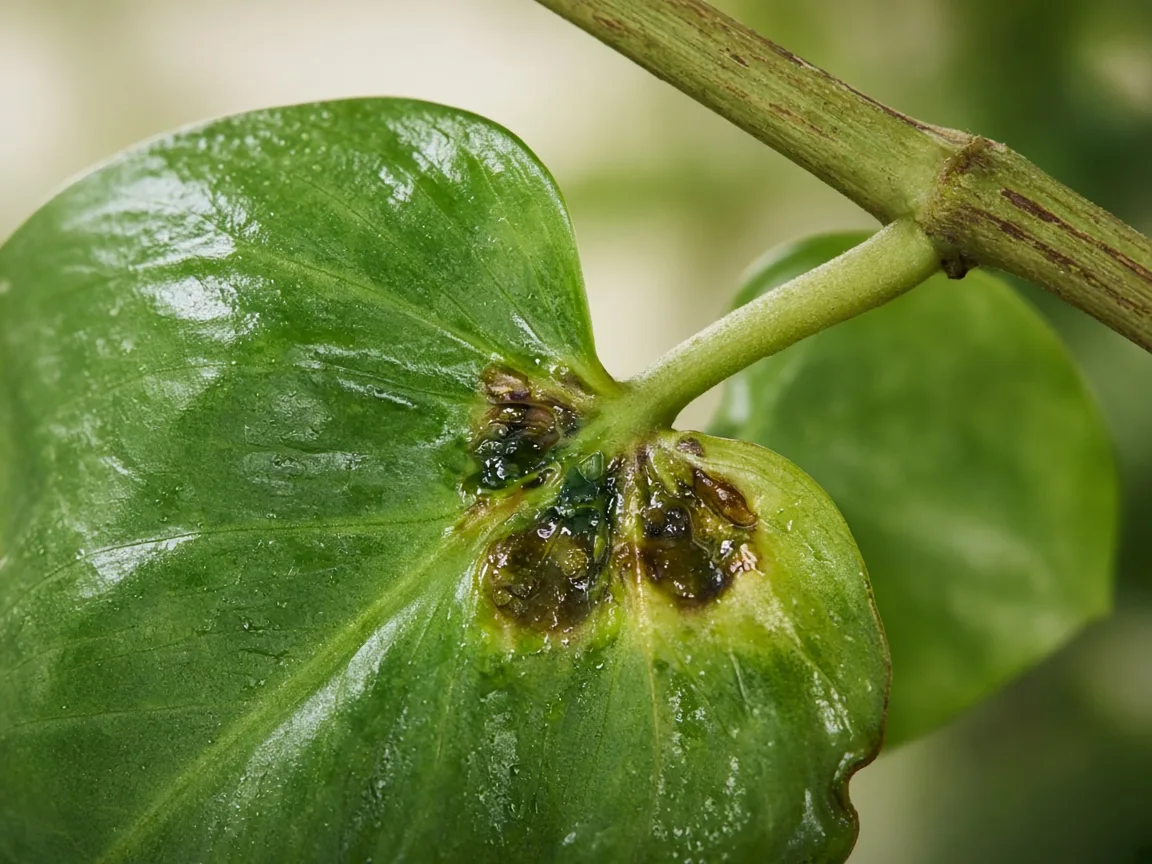
Water-soaked dark green spots at a petiole junction—these expand to mushy tan tissue on trailing philodendron when humidity stays high.
Lookalikes to rule out on heartleaf philodendron
| Sign | Likely cause |
|---|---|
| Water-soaked spots + sour smell + mushy petioles | Bacterial blight (this page) |
| Dry brown tips only, no odor | Brown tips or low humidity |
| Uniform yellow lower leaves, wet soil | Overwatering |
| Defined spots without mush, no smell | Leaf spot disease |
| Black spots with yellow halos, firm tissue | Xanthomonas blight (this page) vs fungal leaf spot |
| Soft stems + foul soil smell | Root rot |
How to confirm the cause
- Smell test - Mushy tissue with a sour or rotten odor points to Erwinia soft rot, not dry cultural damage.
- Soil-line inspection - Lift trailing vines and check nodes touching the pot rim for water-soaked dark spots.
- Speed check - Bacterial spots that grow rapidly across petioles within days confirm active blight, not old mechanical damage.
- Halo pattern - Translucent spots with yellow halos on leaf margins suggest Xanthomonas rather than fungal blight.
- Mycelium scan - White cottony growth on stems indicates fungal blight, not bacterial mush.
- Neighbor check - Inspect pothos and monstera on the same shelf for matching water-soaked lesions.
First fix for heartleaf philodendron
Isolate the philodendron the same day you see water-soaked or mushy tissue, then remove every affected leaf and stem section back to firm green tissue using alcohol-wiped shears.
Epic Gardening recommends removing all affected foliage even when spots look small—bacteria spread through splash and tools before symptoms spread visually. Bag and trash infected tissue; do not compost indoors.
Do not mist, foliar-feed, or fertilize during active blight.
Step-by-step recovery
- Move the pot to a bright spot with gentle airflow per Philodendron light needs.
- Avoid overhead watering—water at soil level only or bottom-water without wetting petioles.
- Sterilize shears between each cut and between plants.
- Remove trailing stems that stay mushy after one clean cut; keep only firm vines.
- Hold isolation until no new water-soaked spots appear for two to three weeks.
- If the main stem collapses but upper nodes stay firm, see node salvage below.
Recovery timeline
Erwinia caught on one or two leaves often stabilizes within one to two weeks once tissue is removed and leaves stay dry. Xanthomonas leaf spots stop spreading when humidity drops and infected leaves are gone. Judge recovery by clean new heart-shaped leaves at vine tips—not by old blemished foliage turning perfect again.
Why blight starts at the soil line on trailing vines
Heartleaf philodendron’s longest runners naturally drape downward until nodes and petioles rest against the pot rim or wet cachepot water. Erwinia enters through wounds or natural openings at that contact point, then travels up petioles faster than it would on an upright self-heading philodendron.
Practical fix: Elevate trailing stems on a small stake or hook so the lowest nodes do not sit in pooled water. Empty cachepots after every watering per Philodendron watering guidance.
Heart-shaped leaf petiole collapse pattern
On heartleaf philodendron, blight often shows clearly at the narrow petiole where the heart leaf meets the vine. Water-soaked darkening at that junction precedes full leaf collapse—unlike curling leaves from underwatering, which wilt evenly without mush or odor.
When one petiole turns soft, remove that entire leaf plus one inch of firm stem below the lesion. Waiting for the spot to “dry out” usually lets Erwinia reach the next node overnight in warm rooms.
Salvaging healthy nodes when a vine collapses
If the lower stem turns black and mushy but firm green tissue remains higher on the same vine, heartleaf philodendron can often be saved through node cuttings—a rescue path that does not work on single-rosette plants.
Cut 4–6 inch sections with at least one node above the rot zone, let cut ends callus for a few hours, then root in moist well-draining mix away from the infected pot. Discard the parent container’s old mix if stem rot reached the soil surface. This is propagation for salvage, not routine care.
What not to do
- Do not mist or foliar-spray while bacterial spots are active—surface moisture speeds bacterial spread.
- Do not return the plant to a shared shelf early—Erwinia moves through splash and contaminated shears.
- Do not treat mushy bacterial rot with fungicide alone—fungicides do not stop Erwinia soft rot.
- Do not fertilize stressed vines until new growth emerges clean for two weeks.
- Do not stack repotting, heavy pruning, and pesticide on the same day—make one change, then read the plant’s response.
How to prevent blight next time
Water at soil level, skip leaf misting, and keep trailing vines off wet rims. Quarantine new plants before mixing them with shelf collections. Sterilize tools between vines during Philodendron pruning. Match watering to how fast the pot dries in your room—not a fixed calendar.
Improve airflow around grouped aroids and address poor drainage before bacteria find constantly wet leaf surfaces.
When to worry
Treat as urgent when you smell sour rot, stems blacken at the soil line, or water-soaked spots appear on multiple vines within 48 hours. Lower urgency: one small firm-edged spot on a single lower leaf while new nodes still open clean.
Severely mushy main stems with odor throughout the pot may not be saveable—take firm cuttings immediately or discard the plant to protect the collection.
Conclusion
Blight on heartleaf philodendron is manageable when you isolate early, remove mushy tissue aggressively, and keep glossy leaves dry. Inspect soil-line nodes on hanging vines during weekly care, and cross-check overwatering and leaf spot pages before treating the wrong problem.
When to use this page vs other guides
Use this page for fast-spreading water-soaked or mushy tissue with possible foul odor. Use leaf spot disease for slower firm spots without mush. Use root rot when stems are firm but soil smells sour and roots are soft. Use black spots for dry fungal or sun-scorch marks without water-soaked margins.