Deformed New Growth on Heartleaf Philodendron: Causes
Quick answer
Deformed new growth on heartleaf philodendron usually means thrips feeding inside unfurling leaves, or stress from dry air, low light, or wet roots. Inspect the newest leaf at each trailing tip first—then isolate and rinse if pests are present.
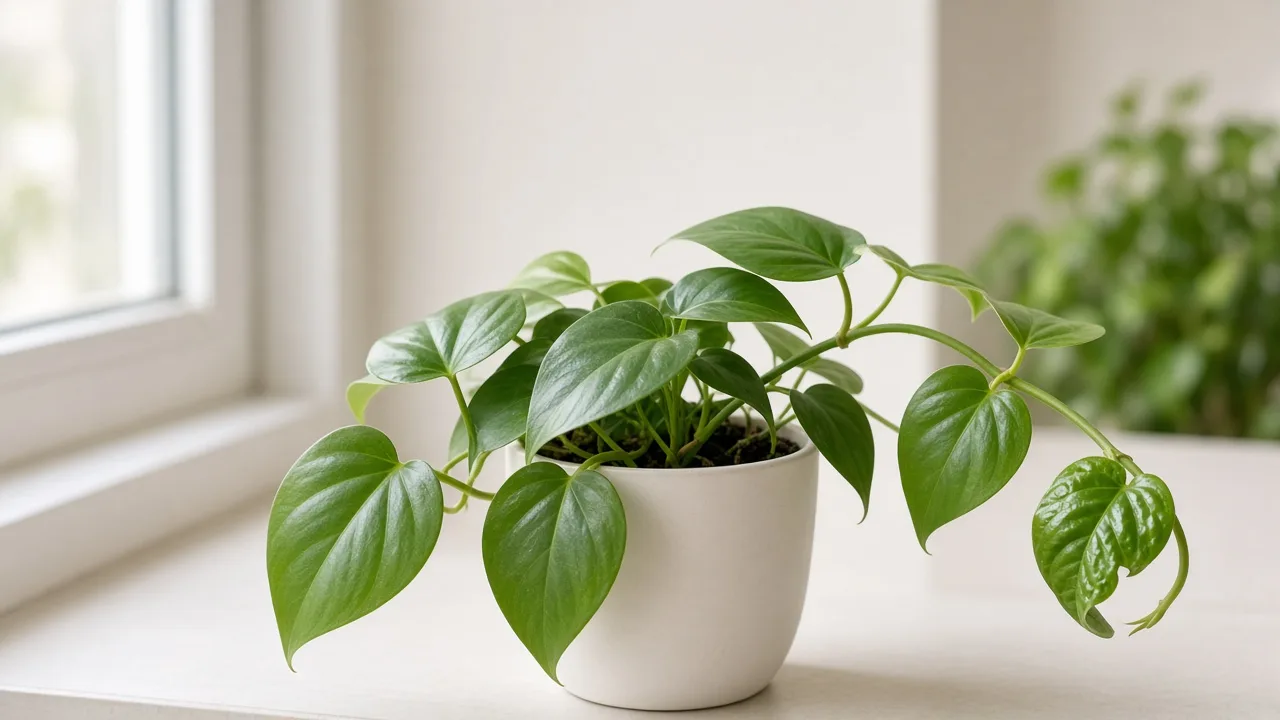
Deformed New Growth on Heartleaf Philodendron: Causes, Checks & Fixes
This guide covers deformed new growth on Heartleaf Philodendron. See also the general Deformed New Growth guide, watering, and light pages for this plant.
Deformed New Growth on Heartleaf Philodendron: Causes, Checks & Fixes
Quick answer
Deformed new growth on heartleaf philodendron (Philodendron hederaceum) shows up when the newest glossy heart leaves unfurl crooked, crinkled, partially stuck, or flecked with translucent patches while older vines still look fine. On this fast-growing trailing aroid, that pattern almost always targets the last one to three leaves at each growing tip—not the whole plant at once.
First step: inspect the newest unfurling leaf for thrips. Gently open the rolled tip inside the pointed sheath and check for silver streaks, tiny black specks, or pinhead-sized insects along the midrib. Thrips feed on developing tissue before leaves expand, which permanently distorts the blade as it opens. If you find pest signs, isolate the plant and rinse leaf undersides and growing tips with a steady stream of lukewarm water before any spray.
If the leaf is clean, shift to care stress—dry air during unfurl, low light, chronic wet soil, or cold drafts near windows. See our deformed new growth guide for universal symptom mechanics; on heartleaf philodendron, damage usually appears at cascading vine tips where the softest tissue unfurls first.
What deformed new growth looks like on heartleaf philodendron
Heartleaf philodendron puts out glossy, solid-green heart-shaped leaves on long trailing stems. Healthy new foliage emerges from a pointed sheath with a papery stipule, opens evenly over a few days, and settles into the classic sweetheart shape.
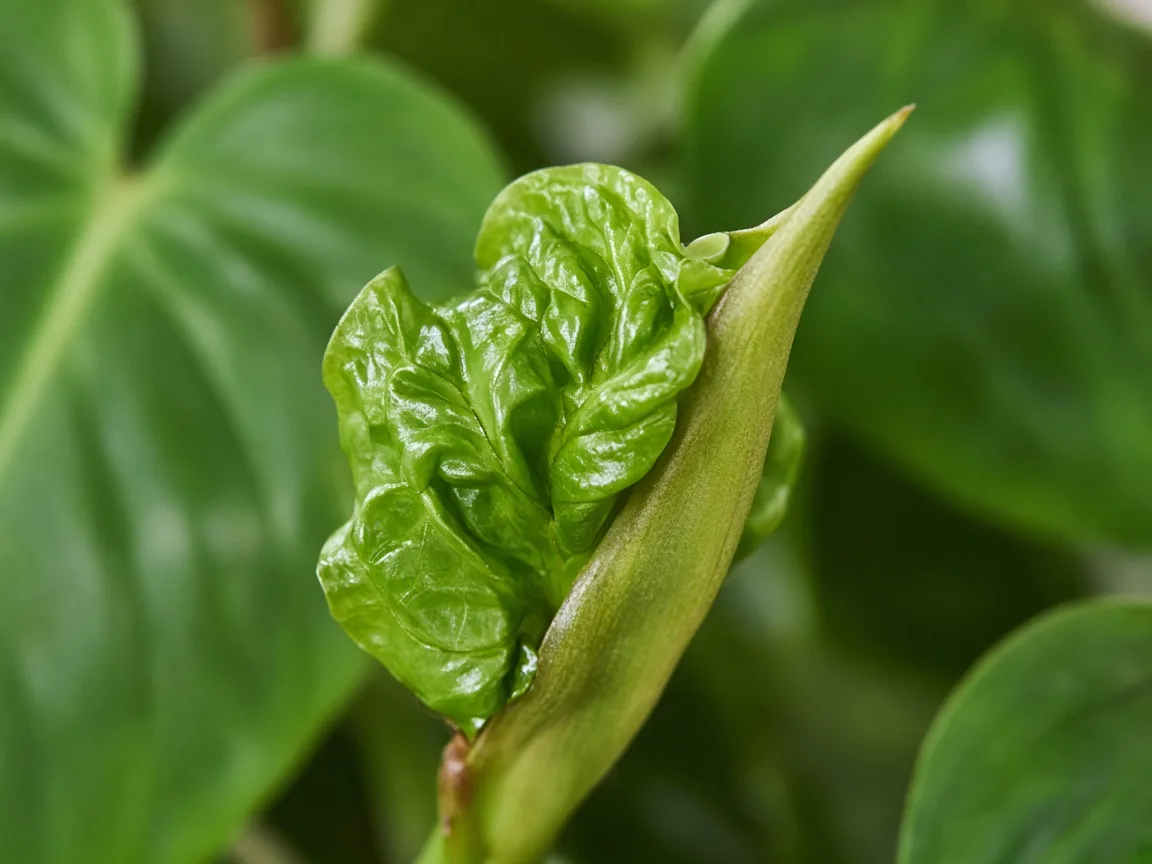
Deformed new growth on heartleaf philodendron—compare the crinkled unfurl with healthy glossy tissue on the same vine.
Typical deformation patterns:
- One half of a new leaf stuck or folded while the other side opens normally
- Crinkled, puckered, or accordion-pleated surface on the freshest blade only
- Translucent or paper-thin patches that never green up
- Asymmetric heart shape or a leaf that stops expanding before reaching normal size
- Tip burn or brown scorch on the youngest leaf while older leaves stay glossy
- Several consecutive new leaves at one vine tip look wrong while interior foliage is fine
What it is not: Random holes in mature leaves (usually chewing pests or physical damage), long bare gaps between every leaf (leggy not enough light), or yellowing starting on the lowest leaves (often overwatering on heartleaf philodendron). Deformed new growth with healthy older foliage narrows the cause list quickly.
Why heartleaf philodendron gets deformed new growth
Thrips on unfurling leaves at vine tips
Thrips are the most common reason heartleaf philodendron’s newest leaves look wrong. These tiny insects feed on tender tissue inside the leaf roll before it opens. As the blade expands, damaged cells stay stunted—creating crinkles, stuck sections, and silver stippling. NC State Extension lists banded greenhouse thrips among common insect problems on Philodendron hederaceum.
Because thrips are hard to see, owners sometimes blame fertilizer or humidity first. On heartleaf philodendron, pest damage usually appears on consecutive new leaves at a trailing tip while the rest of the basket looks normal. For full treatment depth after confirmation, see thrips on heartleaf philodendron.
Dry air or low humidity during unfurl
Heartleaf philodendron tolerates average household humidity and can survive in low light, but new leaves are physically fragile while unfurling. If air is very dry—near heating vents, radiators, or constant airflow—a leaf can snag on itself and open unevenly. Winter heating causes occasional stuck unfurling without pests. Compare with low humidity on heartleaf philodendron when several vine tips show the same pattern in dry rooms.
Insufficient light for normal leaf expansion
Heartleaf philodendron survives dim corners, but it cannot build full-sized glossy tissue there forever. In very low light, new leaves may emerge smaller, thinner, or pale with weak structure that looks deformed next to older, better-lit foliage. This differs from thrips damage: light stress usually affects vine spacing and leaf size across several nodes, not isolated crinkling on one leaf.
Overwatering and root stress
Philodendron uses water quickly in bright light, but roots still need oxygen. When mix stays wet for days—especially in low light—roots cannot absorb the oxygen needed to function normally and new growth can stall, cup, or emerge smaller than expected. Wet soil paired with firm older leaves but weak new tips points to root environment stress rather than a pest. Review heartleaf philodendron watering before repotting.
Calcium deficiency and uneven watering
Calcium is immobile in plants, so deficiency shows on newest growth first: distorted young leaves while older foliage stays green. On heartleaf philodendron, this pattern is less common than thrips but worth considering if you use only reverse-osmosis or distilled water long term without repotting, or if soil dries completely between every watering. See calcium deficiency on heartleaf philodendron when multiple vine tips show pale, thin new blades with no pest signs.
Cold drafts and repotting shock
Heartleaf philodendron grows best around 18–27°C (65–80°F). Cold air from winter windows or air-conditioning vents can interrupt cell development in new leaves. Recent repotting, a move, or a fertilizer spike at the wrong time can also produce one or two odd leaves before growth stabilizes.
How trailing vine tips make unfurl damage obvious
Heartleaf philodendron is a trailing aroid, not a self-heading rosette. Each vine arm produces leaves in sequence from a single growing point at the tip. The softest, most vulnerable tissue is always the leaf still rolled inside its pointed sheath—exactly where thrips and dry-air damage concentrate.
That growth habit explains a common owner confusion: the hanging side of a basket looks perfect while the longest trailing arm shows two crinkled hearts at the very end. Inspect every active tip, not just the most visible section of the plant.
Stipule sheaths and the pothos lookalike trap
Philodendron hederaceum is often confused with pothos, but new growth carries conspicuous free stipules that pothos lacks. When diagnosing deformed unfurling, peel back that papery sheath carefully—thrips hide in the protected roll, and mechanical tearing of the stipule can mimic pest damage on the next leaf.
If you are unsure which plant you have, check petioles: philodendron petioles are entire (not grooved like pothos). Correct ID matters less for the first rinse, but it helps you pick the right cluster guides later.
How to confirm the cause
Work through these checks in order:
- Newest-leaf pest scan - Hold the latest unfurl at eye level in bright light. Look for silver stippling, black frass specks, or slender insects. Tap the leaf over white paper; thrips often show as tiny moving specks.
- Damage pattern - Is only the last one to three leaves at a tip affected? Thrips and unfurl stress fit that. Are many vines small and pale with long internodes? Suspect low light.
- Soil moisture - Push your finger 2–3 cm into the mix per heartleaf philodendron watering. Soggy soil days after watering with weak new tips suggests root stress. Bone-dry soil at every check may limit calcium uptake and leaf expansion.
- Humidity and airflow - Note if the pot sits above a radiator, under a ceiling fan, or in a drafty window bay during winter.
- Light at leaf level - At midday, a soft shadow on your hand where leaves sit means usable indirect light. Barely visible shadow means the vine is struggling to build normal new tissue.
- Recent changes - Repotting, relocation, or a new plant nearby in the last month raises thrips and stress odds.
Confirmed thrips: silver streaks or insects on newest growth. Confirmed care stress: clean pest scan but dry air, wet soil, dim light, or cold exposure matches the timeline.
The first fix to try
If you see any thrips signs—or cannot rule them out—isolate the plant and rinse it first.
Move heartleaf philodendron away from other houseplants. In a sink or shower, use lukewarm water to wash leaf undersides, stems, and growing tips for two to three minutes. Focus on the rolled newest leaves where thrips hide. Let the plant drain fully, then monitor the next unfurl for seven days.
Do not fertilize, repot, or prune heavily on day one. Damaged leaves will not reshape; your proof of success is the next clean unfurl.
If the pest scan is clean and soil has been wet too long, let the top 2–3 cm dry before watering again and move to brighter indirect light. If air is very dry, shift the pot away from heat sources and group it with other plants to raise local humidity.
Step-by-step recovery
When thrips are confirmed or suspected
- Isolate from other plants immediately.
- Rinse all leaf surfaces and growing tips; repeat every three to five days for two weeks.
- After the first rinse, apply insecticidal soap or horticultural oil to undersides and new growth, following label rates for houseplants.
- Prune only leaves that are heavily distorted and still harbor pests—you do not need to remove every blemished blade.
- Inspect neighboring plants that shared a shelf or window.
Expect two to four weeks before a clearly normal new leaf opens. Older crinkled leaves stay as they are. Full spray schedules and life-cycle timing live on thrips on heartleaf philodendron.
When care stress is the cause
Low light: Move gradually to brighter indirect light within a few feet of an east or west window. Acclimate over one to two weeks if the plant lived in a dark corner.
Dry air: Shift away from heating vents. A pebble tray or grouping with other plants helps; heartleaf philodendron rarely needs a humidifier unless your home stays below 30% RH in winter.
Wet roots: Stop watering until the top 2–3 cm is dry. Confirm drainage holes are open and the nursery pot is not sitting in standing water. If mix smells sour or stems soften at the soil line, read overwatering on heartleaf philodendron before repotting.
Calcium or water quality: If you use only distilled or RO water, switch to tap (if safe locally) or add a balanced fertilizer at half strength during active growth after the plant stabilizes—not while new leaves are still failing.
Recovery timeline
| Stage | What to expect |
|---|---|
| Days 1–7 | First rinse or care correction; watch whether the next sheath opens evenly |
| Weeks 2–3 | One clean heart-shaped leaf is a strong positive sign |
| Weeks 4–6 | Two consecutive normal unfurls mean the main cause is resolved |
| Older leaves | Crinkled or stuck blades do not flatten—judge recovery by new tissue only |
Mild unfurl stress from dry air often corrects on the very next leaf once humidity improves. Thrips cases need two to four weeks and repeated rinses or sprays through several life cycles.
Lookalike symptoms on heartleaf philodendron
| What you see | More likely cause | Where to go |
|---|---|---|
| Crinkled or stuck new leaves at vine tips only | Thrips, dry-air unfurl stress | This page; thrips |
| Wavy or cupped expanded leaves across the vine | Water stress, heat, draft | Distorted leaves |
| Yellow lowest leaves, soft stems | Chronic wet soil | Overwatering |
| Long bare stems, small pale hearts everywhere | Dim light | Not enough light |
| Brown dry tips on otherwise normal leaves | Low humidity, salt, underwatering | Brown tips |
When to use this page vs other heartleaf philodendron guides
Use this page when the problem is misshapen tissue on leaves still unfurling or just opened at trailing tips. Use distorted leaves on heartleaf philodendron when expanded mature blades look wavy or cupped. Use thrips on heartleaf philodendron when you have confirmed insects and need a full treatment schedule. Use no new growth when vines stall entirely with no fresh sheaths.
Mistakes to avoid
- Spraying fertilizer on a stressed vine before checking pests and roots
- Repotting on day one when the issue is thrips or dry-air unfurling
- Removing every blemished leaf—heartleaf philodendron needs foliage to photosynthesize while recovering
- Assuming one odd leaf means virus—consecutive deformed unfurls with silver streaks almost always trace to thrips or culture stress, not mosaic
- Ignoring neighboring pothos or monstera on the same shelf after finding thrips
How to prevent deformed new growth next time
Quarantine new plants two to three weeks. Keep heartleaf philodendron in bright indirect light for steady unfurling, water when the top 2–3 cm dries per your watering guide, and use well-draining mix with perlite so roots stay aerobic. During active spring and summer growth, inspect the newest sheath on each trailing arm weekly—thrips are easiest to stop before they scar three leaves in a row.
Related Heartleaf Philodendron guides
- Heartleaf philodendron overview - Species profile, growth habit, and care baseline
- Heartleaf philodendron problems hub - Full symptom index for this plant
- Thrips on heartleaf philodendron - Use after you confirm insects on unfurling tissue
- Distorted leaves on heartleaf philodendron - Use when mature expanded blades look wrong, not just new unfurls
- Heartleaf philodendron watering guide - Use for routine moisture checks before assuming deformed new growth is the main issue
- Not enough light on heartleaf philodendron - Use when small pale leaves appear across the whole vine, not one crinkled tip
Use the Plant Problem Diagnosis Tool to narrow causes for deformed new growth on this plant before changing multiple variables at once.