Curling Leaves on Heartleaf Philodendron: Causes, Checks &
Quick answer
Curling leaves on heartleaf philodendron usually mean water stress—dry soil with upward cupping, or wet soil with limp curl from failing roots. First step: probe moisture at 2 inches depth and lift the pot before watering, moving, or spraying.
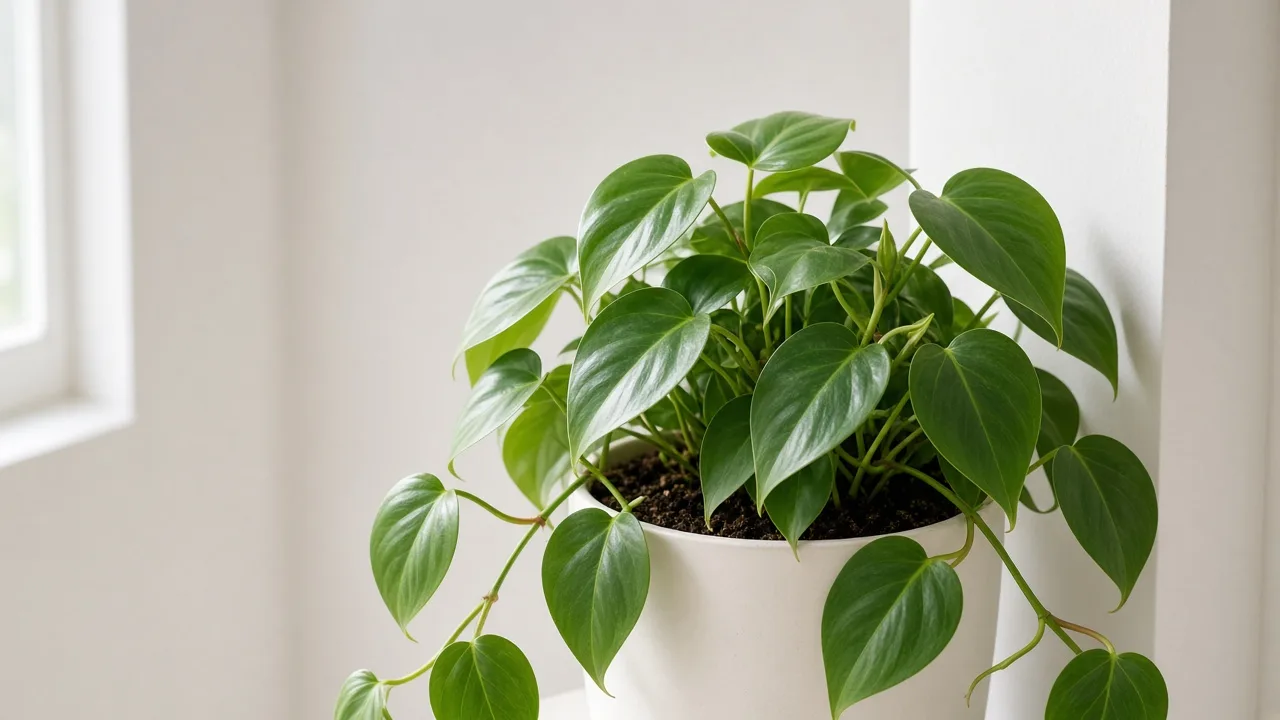
Curling Leaves on Heartleaf Philodendron: Causes, Checks & Fixes
This guide covers curling leaves on Heartleaf Philodendron. See also the general Curling Leaves guide, watering, and light pages for this plant.
Curling Leaves on Heartleaf Philodendron: Causes, Checks & Fixes
Quick answer
Curling leaves on heartleaf philodendron (Philodendron hederaceum) are a moisture and turgor signal first, not a missing fertilizer problem. Glossy heart-shaped leaves cup inward when roots cannot supply enough water—or when rotting roots cannot move water even though the mix is wet.
First step: stick your finger 2 inches into the mix and lift the pot. Light and dry with upward cupping means underwatering. Heavy and damp with limp, downward curl means stop watering and inspect roots. Do not pour water until you know which pattern you have.
For how leaf curl works in general, see our curling leaves symptom guide. On heartleaf philodendron, the pattern usually shows up on trailing vines with dry centers in hanging baskets, or on new growth near the stipules.
What curling leaves look like on heartleaf philodendron
Healthy heartleaf philodendron leaves are heart-shaped, glossy, and lie mostly flat along the vine. NC State describes the species as a trailing vine with glossy heart-shaped leaves—stress curling breaks that flat profile in recognizable ways:
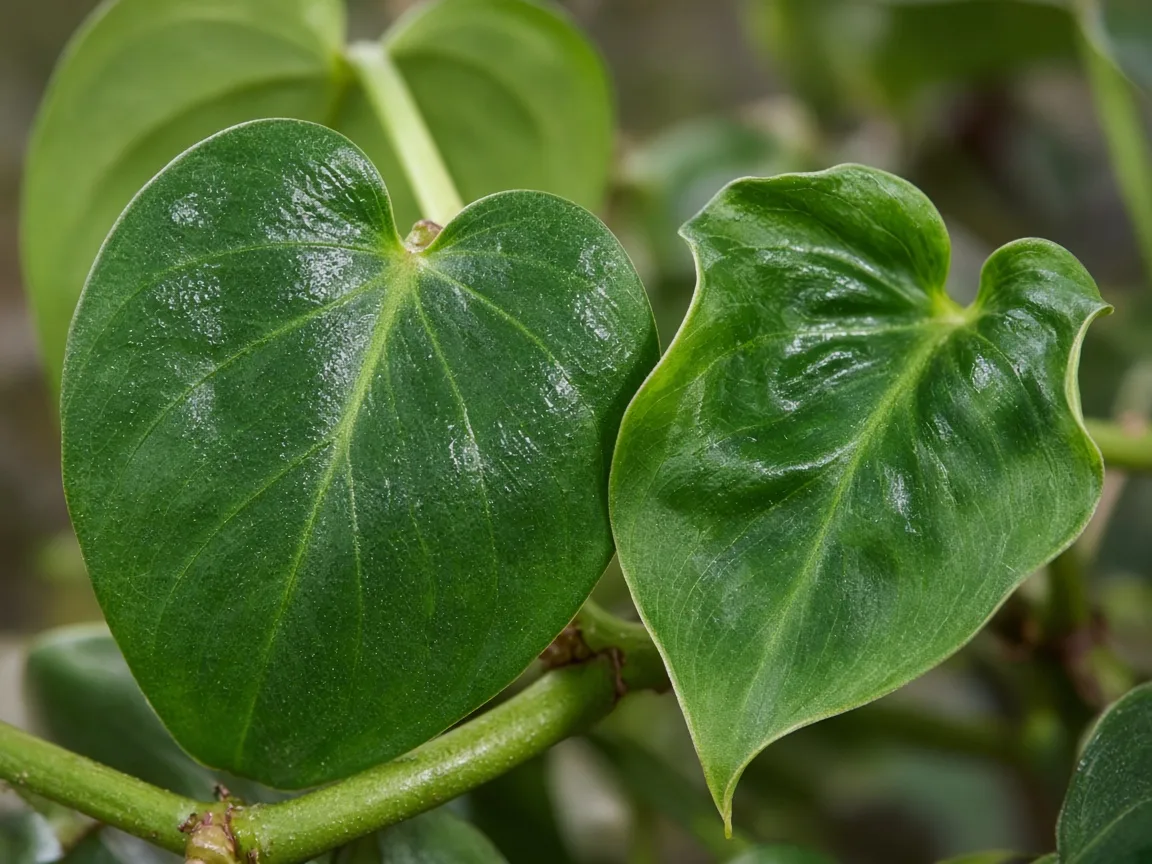
Curling leaf symptoms on heartleaf philodendron—compare cupped tissue with flat leaves on the same vine.
- Upward or inward cupping along the whole blade, sometimes called a taco shape
- Dry, papery tips on leaves that feel thin and light
- Downward limp curl paired with yellowing lower leaves and soil that stays wet for days
- Twisted or stunted new leaves that fail to open fully over one to two weeks
- One-sided curl on leaves facing a hot window or heating vent
Variegated cultivars such as ‘Brasil’ may show thinner or more translucent patches when dehydrated. Long bare stems with pale small leaves suggest low light slowing water use, not drought alone.
Reading curl on trailing vines and stipule growth
Heartleaf philodendron is easy to confuse with pothos, but the curl story is not identical. Philodendron new growth carries conspicuous stipules on emerging leaves—papery sheaths at the vine tip. When curl appears only on the newest leaf still inside its stipule, the cause is often heat, low humidity, or pests attacking tender tissue before it unfurls.
On mature leaves farther down the vine, cupping usually reflects root-zone moisture, not a local pest. Check both zones: stipule tips for distortion, older leaves for drought or wet-root patterns. Non-grooved petioles and falling stipule scraps on older nodes are quick ID clues that you are on philodendron, not pothos.
Why heartleaf philodendron gets curling leaves
Water stress is the most common trigger
Leaves curl when cells lose turgor—the same mechanism behind wilting. Both watering extremes show up on this forgiving aroid because growers assume toughness means it never needs checking.
Underwatering: Trailing vines in bright spots dry out quickly. When the top 2 inches goes bone dry for too long, leaves cup inward to reduce surface area. Heartleaf can look fine for days, then curl suddenly once the root zone is fully dry—especially in hanging baskets where the outer mix dries before the center.
Overwatering: Chronic wet mix suffocates roots. Damaged roots cannot transport water, so leaves curl and yellow even though soil feels damp. NC State notes root rot can occur in overly wet soil on this species. Philodendron in dim corners is especially prone because the plant uses little water while growers keep to a calendar schedule.
Light and heat
Heartleaf prefers medium light but tolerates low light. Direct sun on a south-facing window heats leaves and triggers cupping as a self-shading response. Hot and cold air from vents can dry out leaf edges and damage cells, producing curl on the exposed side only.
Low humidity and dry airflow
The species prefers medium relative humidity and moist soil but can tolerate dry air. Winter heating and constant AC lower moisture around leaf edges. New leaves unfurling in dry rooms may curl at the margins even when roots are adequately watered.
Pests on tender new growth
NC State advises monitoring aphids, spider mites, mealybugs, and scale on philodendron. Thrips leave silvery streaks and black specks on expanding leaves; spider mites cause stippling and fine webbing on undersides. Mealybugs cluster at nodes and leaf axils along trailing stems.
Root-bound pots and hanging-basket dry pockets
When roots circle densely and mix dries in a day or two, water swings between flood and drought. That inconsistency produces recurring curl on mid-vine leaves even when watering looks regular. In hanging baskets, the bottom of the root ball can stay wet while the surface looks dry—or the reverse—making moisture checks at depth essential.
How to confirm the cause
Work through these checks in order:
- Moisture at 2 inches — Dry and light pot = drought curl. Wet and heavy pot = overwatering or root rot on heartleaf philodendron.
- Which leaves curl — Scattered older leaves with dry soil = underwatering. Lower yellow leaves plus wet mix = overwatering. Only new tips twisted = pests or heat on growing points.
- Heartleaf philodendron light guide — Curl on the window-facing side only = excess direct sun. Long bare stems with pale new leaves = too little light slowing water use.
- Pot weight trend — Getting lighter daily while leaves cup = needs water. Staying heavy for a week = hold water and check roots.
- Pest inspection — Use a hand lens on new leaf undersides, stipule tips, and stem nodes. Tap a suspect leaf over white paper; thrips dart, mites crawl slowly.
- Root spot-check — If wet soil and spreading curl persist, slide the plant out. Firm white roots support drought recovery; brown mushy roots confirm rot.
First fix for heartleaf philodendron
Make one correction based on moisture—nothing else on day one:
If the top 2 inches is dry and the pot is light: Water thoroughly until excess drains, empty the saucer, and recheck in 24 hours. Leaves often relax within hours when roots are healthy.
If the mix is wet or sour-smelling: Stop watering. Move to brighter indirect light so the pot can dry. If soil has stayed wet more than a week, unpot and trim mushy roots before following the heartleaf philodendron repotting guide into fresh perlite-rich mix.
Do not fertilize curled leaves. Do not mist heavily as a first response—that can worsen fungal issues on stressed foliage. Do not repot and prune every vine the same day unless rot is confirmed.
Step-by-step recovery
After the first moisture correction:
- Stabilize placement — Bright indirect light, away from hot glass and AC blasts. Rotate the pot weekly for even growth.
- Reset heartleaf philodendron watering — Water only when the top 2 inches dries. Heartleaf typically needs water every 7–10 days in summer and every 14–21 days in winter in average indoor light.
- Raise humidity if edges crisp — Group plants, use a pebble tray, or run a humidifier if winter air stays below 40% RH.
- Treat pests if confirmed — Isolate the plant. Rinse undersides with plain water, then apply insecticidal soap on label intervals if thrips or mites persist.
- Repot if root-bound — Move up one pot size with fresh airy mix when roots circle heavily and the pot dries unevenly.
- Trim only when stable — Remove leaves that stay severely distorted after two weeks of corrected care; they rarely flatten fully.
Lookalike symptoms
| What you see | Often confused with | How to tell apart |
|---|---|---|
| Drooping vines | Curl from drought | Drooping is limp stems; curl is rolled leaf tissue—check soil together |
| Leggy bare stems | Thirst | Long internodes mean low light; soil may stay wet because the plant uses little water |
| Yellow lower leaves | Normal aging | Aging yellows one or two bottom leaves on a vigorous vine; stress yellows several at once on wet soil |
| Drooping leaves | Curl only | Drooping without cupping often points to sudden temperature shock or severe root failure |
| Brown tips | Full-leaf curl | Tip burn is edge-focused; curl rolls the whole blade—humidity and salt differ from moisture extremes |
Mistakes to avoid
- Watering on a fixed calendar without checking dryness
- Moving a wet plant to stronger sun without fixing drainage first
- Spraying pesticide before confirming insects
- Expecting already-curled leaves to fully flatten—watch new growth instead
- Handling vines near pets—philodendron is toxic to cats and dogs
Recovery timeline
Mild drought curl often improves within hours to one day after a proper soak. Overwatering recovery takes one to three weeks once roots dry and new growth resumes. Pest-distorted new leaves need one to two full leaf cycles—roughly two to four weeks on heartleaf’s fast growth rate—before you can judge whether unfurling leaves look normal.
How to prevent curling next time
Pair allowing soil to dry between waterings with bright indirect light so the pot dries predictably. Avoid oversized pots that hold water too long. Scout new growth weekly during warm months. Repot every one to two years before roots choke the mix.
When to worry
Escalate if curl climbs to every new leaf within days, stems soften at nodes while soil stays wet, or webbing spreads despite rinsing. A few cupped leaves on a long trailing vine after a missed watering is routine, not a crisis.
Conclusion
Heartleaf philodendron curling leaves usually trace to dry roots, wet roots, or heat—not a missing fertilizer. Confirm with moisture at 2 inches and leaf pattern, correct watering and light first, then inspect for pests if new growth stays twisted. Recovery shows up on the next flat leaves—not on the ones already cupped.
When to use this page vs other heartleaf philodendron guides
- Heartleaf philodendron watering — Use for routine moisture checks before assuming curling leaves is the main issue.
- Overwatering — Use when the pot stays heavy and wet with yellow lower leaves.
- Underwatering — Use when the pot is light, soil is dusty dry, and leaves perk after soaking.
- Spider mites or thrips — Use when new leaves twist with stippling, webbing, or silver streaks.
- Heartleaf philodendron problems hub — Browse all common issues on this species.