White Spots on Heartleaf Philodendron: Causes, Checks &
Quick answer
White spots on Heartleaf Philodendron usually mean mealybug wax, powdery mildew, scale, hard-water residue, or normal variegation on cultivars—not one disease. First step: wipe one spot with a damp cotton swab under bright light; powder smears, mealybug wax feels cottony with insects underneath, and mineral crust flakes flat.
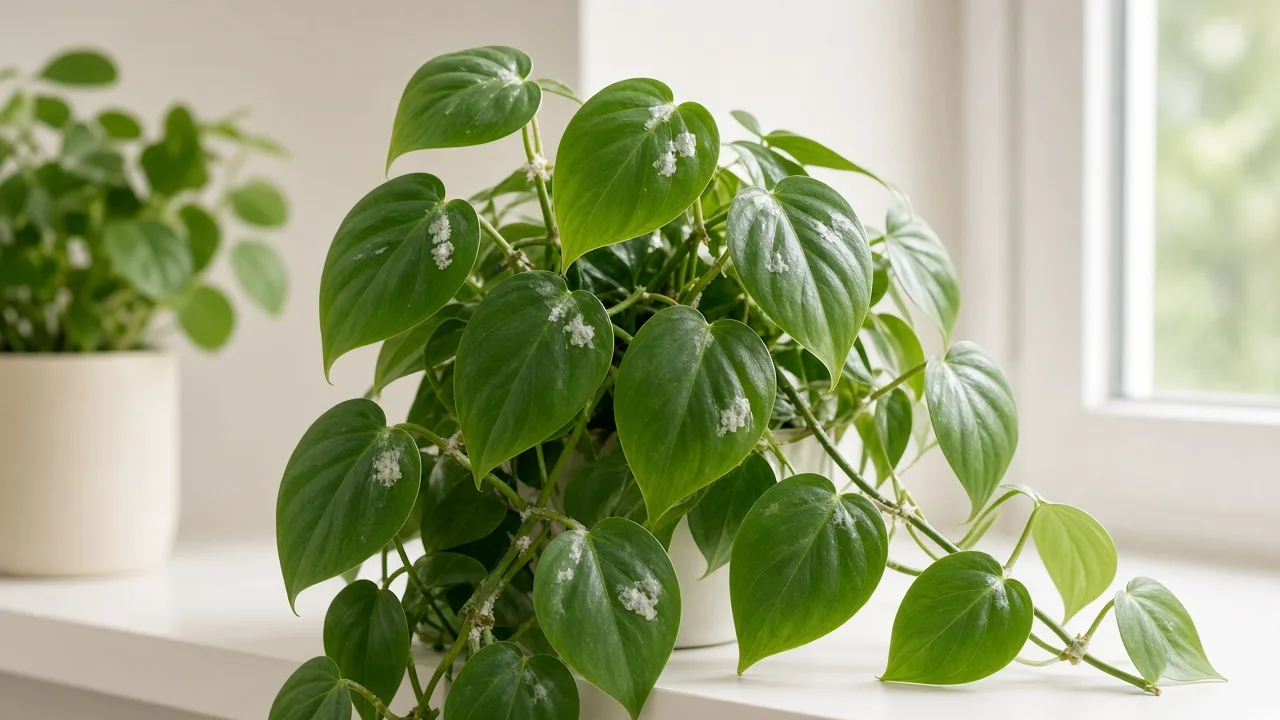
White Spots on Heartleaf Philodendron: Causes, Checks & Fixes
This guide covers white spots on Heartleaf Philodendron. See also the general White Spots guide, watering, and light pages for this plant.
White Spots on Heartleaf Philodendron: Causes, Checks & Fixes
Quick answer
White spots on Heartleaf Philodendron (Philodendron hederaceum) fall into five common categories: mealybug wax, powdery mildew, scale insects, hard-water mineral crust, and normal variegation on cultivars like Brasil or Rio. They are not interchangeable, and treating every white speck the same way wastes time or damages fast-growing trailing vines.
First step: wipe one white mark with a damp cotton swab under bright light. Powdery mildew leaves a fine white smear that rubs off easily. Mealybug wax feels cottony and often reveals slow-moving insects when you part the tuft. Scale shows as firm waxy bumps that do not smear. Mineral deposits wipe away as flat chalk without insects beneath. Stable cream or silver patches fixed since the leaf formed usually mean variegation—not disease.
Before you spray, rule out guttation: clear droplets at leaf margins after a heavy watering are normal on glossy heart leaves. Sticky tacky residue below axil clusters points to pest honeydew instead. For how sap-sucking pests create white wax in general, see our mealybugs guide—on heartleaf, the pattern usually shows up in leaf axils along trailing vines where overlapping foliage hides colonies from across the room.
Why Heartleaf Philodendron gets white spots
Heartleaf philodendron is a fast-growing trailing aroid whose glossy cordate leaves cascade from shelves, hangers, and poles. That growth habit creates sheltered crevices at every node—exactly where mealybugs gather in cottony colonies out of casual view. Long vines that drape behind furniture or stack against a wall can carry white wax along multiple nodes while outer leaves still look mostly green.
Philodendron is among houseplant genera where aboveground mealybugs commonly occur. Indoor year-round warmth favors populations, and heartleaf’s soft new growth at vine tips is easy sap for crawlers after hatching. Plants recently purchased, shared on a community shelf, or moved outdoors for summer often bring hitchhikers that show up first as isolated white tufts in axils.
Powdery mildew coats leaf surfaces with talc-like white dust when air is stagnant and foliage stays damp—common in crowded hanging rows, steamy bathrooms, or dim corners where leaf spots may develop on philodendron alongside other humidity-related issues. Unlike mealybugs, mildew spreads as a surface film across exposed glossy panels rather than cottony clumps in creases.
Scale insects leave immobile white, tan, or brown waxy bumps along green petioles and vine stems. They can be confused with mealybugs but lack cottony filaments and do not smear pink when crushed.
Hard-water residue appears when overhead watering, foliar misting, or hard tap water dries on heart-shaped leaves—especially on the glossy upper surface where droplets bead before evaporating.
Variegated cultivars such as ‘Brasil’, ‘Rio’, ‘Cream Splash’, and ‘Silver Stripe’ show intentional cream, yellow, or silver sectors that are stable from unfurling. New growers sometimes panic when variegation looks like disease; those patches do not spread as random dusty colonies on unrelated leaves.
Dense hanging baskets and full trailing displays look healthy from across the room while white wax or mildew builds on inner nodes—the layered sections behind the pot on a high shelf are the highest-risk inspection zones.
What white spots look like on Heartleaf Philodendron
Heartleaf’s trailing habit means white marks often appear on hidden axils and overlapping vine sections before they are obvious on outer leaves. Check both the spot pattern and where it sits on the plant.
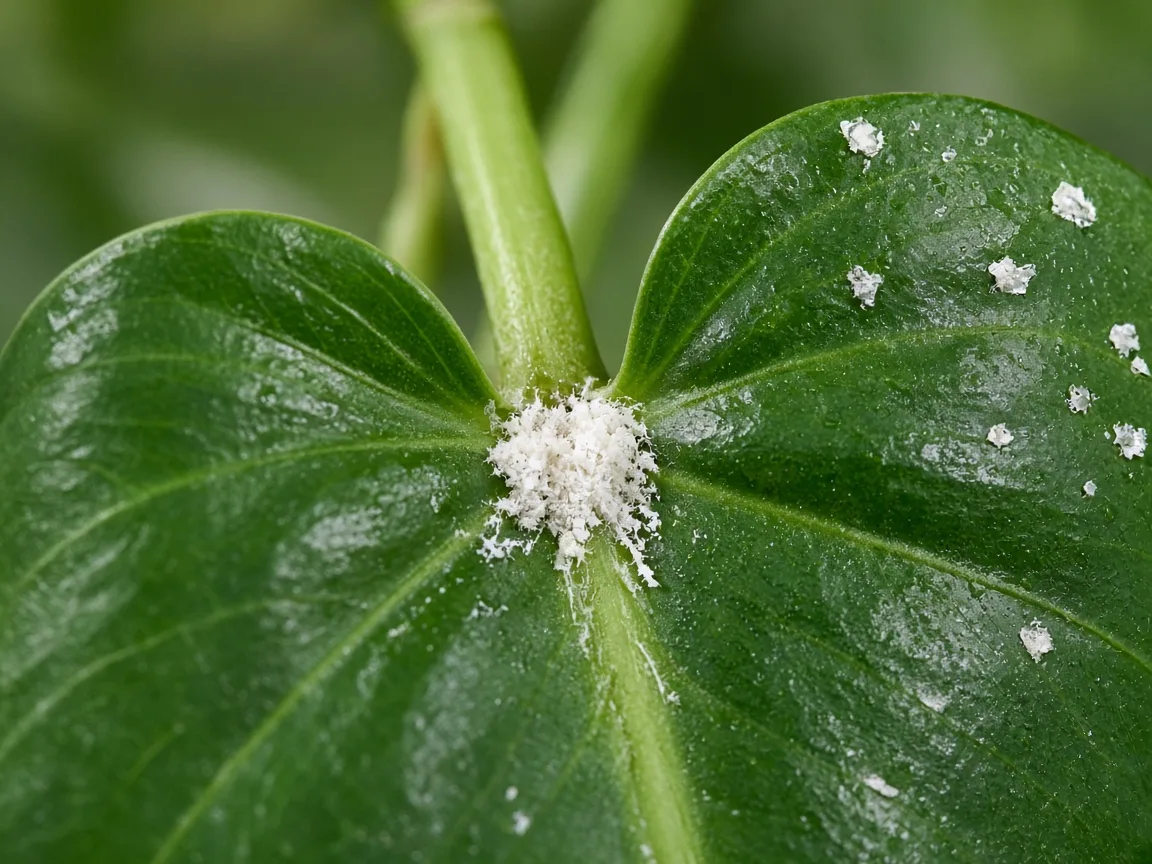
White Spots symptoms on Heartleaf Philodendron - compare with healthy tissue on the same plant.
Mealybug wax:
- Cottony white tufts tucked into leaf axils where heart leaves meet green petioles—not loose dust sitting on the leaf surface
- Clusters at vine nodes along trailing stems, especially where vines loop behind furniture
- Waxy patches at the base of unfurling new leaves before they fully open
- Sticky honeydew on lower glossy leaves or pot rims below active colonies
- Pink or gray segmented insects visible when wax is pulled apart with a swab
Powdery mildew:
- Talc-like white or gray dust on upper leaf surfaces and young stems
- Spots enlarge and merge into powdery patches along vine tips
- Rubs off as fine powder with a damp swab; no insects underneath
- Often worse on crowded hanging plants in still, humid air away from windows
Scale insects:
- Firm white, tan, or brown bumps on petioles and vine stems
- Does not smear or rub off like mildew dust
- No cottony filaments like mealybugs—bodies stay attached when scraped gently
Hard-water mineral deposits:
- Flat chalky white dots or streaks, often aligned with splash or spray direction
- Wipe away cleanly with a damp cloth
- Return on new leaves only after the next overhead hard-water event
Variegation (not a problem):
- Stable cream, yellow, or silver sectors on cultivars like ‘Brasil’ or ‘Rio’
- Present since the leaf unfurled; does not spread as random dusty patches
- Uniform pattern relative to the cultivar—not isolated cottony tufts in axils
How to confirm the cause
Work through these checks in order before buying sprays:
- Wipe test — Rub one spot firmly with a damp cotton swab. Powder smears; mineral crust flakes; mealybug wax pulls away in tufts; scale bumps stay firm; variegation and mite stippling stay in the tissue.
- Axil and node inspection — Lift trailing vines and inspect every leaf axil with bright light, including sections hidden behind other foliage. Mealybugs cluster in creices; mildew coats exposed leaf tops.
- Underside check — Monitor for aphids, spider mites, mealybugs, and scale on leaf undersides and along midribs. Spider mites cause fine yellow stippling with possible webbing—not white powder; see spider mites on heartleaf philodendron.
- Guttation vs. honeydew — Clear water droplets at leaf margins after heavy watering are guttation. Tacky sticky residue below axil clusters points to pest honeydew.
- Spread speed — Mildew and mealybugs expand over days along vines. Mineral spots appear after watering events and do not creep across unrelated stems overnight.
- Cultivar check — If you grow ‘Brasil’, ‘Rio’, or similar, compare spots to the stable variegation pattern on older leaves on the same vine.
| Wipe test result | Texture | Insects visible? | Likely cause |
|---|---|---|---|
| White smear rubs off | Talc-like powder | No | Powdery mildew |
| Cottony tuft pulls away | Soft, fibrous | Often yes | Mealybugs |
| Firm bump stays attached | Waxy shell | Sometimes | Scale insects |
| Flat chalk wipes clean | Hard crust | No | Hard-water minerals |
| No change, stable pattern | Fixed in tissue | No | Variegation or old leaf aging |
If the wipe test shows cottony wax with insects, isolate and treat for mealybugs. If powder smears without insects and spots spread in humid stagnant air, treat for mildew. If spots wipe off and match your watering pattern, adjust water method before spraying fungicides or insecticides.
First fix for Heartleaf Philodendron
Isolate the plant and wipe one representative white mark with a damp cotton swab under bright light.
That single action tells you whether you are dealing with removable powder, pest wax, mineral crust, or fixed variegation—without stacking fungicide, alcohol, and pruning on the same day. Move the pot away from neighboring aroids (pothos, monstera, other philodendrons) before you handle vines so crawlers do not walk to clean pots.
Once you know the category:
- Mealybugs confirmed — Dab visible cottony clusters with a cotton swab dipped in 70% isopropyl alcohol. Full rescue steps live on the mealybugs on heartleaf philodendron page.
- Powdery mildew confirmed — Prune the worst coated leaves, improve airflow, and stop overhead misting. See powdery mildew on heartleaf philodendron for spray intervals.
- Scale confirmed — Scrape or dab individual bumps with alcohol; repeat weekly. Details on scale insects.
- Mineral crust only — Wipe leaves with a damp cloth and switch to base watering per the watering guide.
- Variegation only — No treatment needed; learn the cultivar’s normal pattern.
Do not fertilize a stressed heartleaf while white spots are actively spreading. Do not repot on day one unless root inspection is required for a different problem.
Step-by-step recovery
After the wipe test and isolation:
For mealybugs:
- Dab every visible cluster with 70% isopropyl alcohol on a cotton swab.
- Spray insecticidal soap into axils and leaf undersides weekly until two clean weeks pass.
- Shorten unreachable trailing sections with alcohol-wiped scissors so every node can be inspected.
- Wipe sticky honeydew from glossy leaves so new clusters are easy to spot.
For powdery mildew:
- Remove the most heavily coated leaves with clean scissors.
- Space hanging pots so vines are not touching—improve airflow with a fan on low if air is stagnant.
- Water at the base; let foliage dry before night. Match light conditions so leaves dry quickly after watering.
- Apply horticultural oil or neem to remaining affected foliage if spread continues—test one hidden leaf first; glossy heart leaves can react in hot direct sun.
- Scout every three to five days until new heart leaves unfurl clean.
For scale:
- Scrape or dab firm bumps with alcohol on a swab.
- Follow with insecticidal soap on stems and petioles where bumps were attached.
- Re-check weekly for six weeks—scale nymphs are mobile before they settle.
For hard-water deposits:
- Wipe affected leaves with a damp cloth.
- Switch to base watering or use filtered or rainwater.
- Flush the pot if fertilizer salts also crust the rim—see salt build-up if white crust appears on soil surface too.
Heartleaf philodendron is toxic to cats and dogs. Wear gloves when handling treated vines and keep pets away from freshly sprayed plants until sprays dry.
Recovery timeline
Light mealybug pressure on one or two vine sections often clears within two to three weeks of weekly alcohol and soap passes. Powdery mildew on a few leaves may stabilize within one to two weeks once airflow improves and coated tissue is removed. Scale takes longer—four to six weeks of weekly checks are common because nymphs hatch on staggered intervals.
Mineral spots clear immediately when wiped but return on the next overhead hard-water event if you do not change method. Variegation never changes—judge mistaken-alarm cases by learning the cultivar’s stable pattern once.
Old spotted or mildew-coated leaves will not fully revert to perfect gloss. Use clean new heart-shaped growth at vine tips, firm petioles, and absence of fresh white dust or wax as recovery markers. Heartleaf’s fast spring growth helps—you should see clean new nodes within weeks once the cause is controlled.
Case example: A trailing heartleaf on a bookshelf showed isolated white tufts at four axils along vines hidden behind the pot. Wipe tests revealed cottony wax with pink insects. After isolation, weekly alcohol dabs, and insecticidal soap on weeks two through four, the first clean unfurling heart leaf appeared in week three; two consecutive clean weeks passed by week five.
Signs you are winning: new leaves emerge without white dust or wax, wipe tests stay clean on young growth, and axil inspection finds no live insects. Signs the problem is worsening: powder coats most new shoots within days, cottony clusters spread along multiple vines in a week, or new growth stalls while soil stays wet—check overwatering if that mismatch appears.
Lookalike symptoms to rule out
Spider mites cause fine yellow-white stippling and webbing rather than white powder patches or cottony axil tufts. Tap a leaf over white paper—mites look like moving dust specks. Dry indoor heat near radiators is the usual trigger; see spider mites.
Guttation produces clear water droplets at leaf margins after heavy watering or high humidity—not white spots on the blade. It dries without tackiness and does not spread.
Fertilizer or chemical foliar burn leaves pale dried patches where concentrated spray dried on hot glossy leaves. Pattern matches spray timing, not infectious spread. See chemical damage if spots appeared right after a product application.
Normal old-leaf aging may show pale or tan areas on lower leaves before they drop. That uniform senescence on one or two bottom leaves differs from spotty white disease or pest wax on active vine tips.
Leaf spot disease causes brown or tan lesions with defined edges—not talc-like surface dust. See leaf spot disease if spots are sunken or water-soaked.
What not to do
Do not spray fungicide on every white speck before the wipe test. Mineral crust and variegation need cultural fixes or no treatment at all.
Do not ignore axils on trailing vines because outer leaves look fine—mealybugs and mildew often start on hidden nodes behind furniture.
Do not stack alcohol dabs, neem oil, repotting, and heavy pruning the same day without confirming the cause first.
Do not mist foliage in a dim corner. Humidity without enough bright indirect light keeps mildew viable on damp glossy panels.
Do not move the plant back among others after one treatment; crawlers and spores travel to neighboring pots.
Do not confuse sticky honeydew with guttation—honeydew feels tacky and pairs with wax in axils.
Do not let treated vines dangle within pet reach—heartleaf sap irritates mouths if chewed.
How to prevent white spots on Heartleaf Philodendron
Quarantine every new plant two to three weeks before placing it near your heartleaf. Trailing philodendrons are often grouped on shelves or hung in rows—exactly how mealybugs and mildew spread between pots.
During weekly care, lift one trailing vine and glance at the axils behind it—especially where vines drape behind furniture. Space hanging pots so leaves are not touching. Keep bright indirect light so new leaves open firm and dry quickly after watering per the watering guide.
Water at the base with well-draining mix per the soil guide. Avoid foliar misting unless you rinse residue that dries white. Use filtered or rainwater if hard tap water leaves recurring crust.
Disinfect scissors with alcohol after pruning any plant with suspected pests. Inspect plants that shared a nursery bench whenever one shows cottony wax or powdery dust. When moving heartleaf outdoors for summer, check vine nodes for hitchhikers before bringing it back inside.
When to worry
Treat most white spots as medium severity on heartleaf philodendron—but escalate if:
- Talc-like coating spreads across most new leaves within one week
- Cottony clusters appear at multiple nodes along several trailing vines
- Ants persist on the pot rim despite plant treatment
- New heart leaves stop emerging or open yellowed and distorted
- Scale bumps multiply along most petioles on active growth
- Multiple plants in a hanging row show axil clusters, powdery dust, or honeydew at once
If repeated weekly treatment for six weeks fails and wax or mildew coats most nodes along multiple vines, consider discarding a heavily infested plant rather than risking your entire collection—heavily infested houseplants are often best discarded when salvage is impractical. Take a clean node cutting first if the upper vine is still firm and pest-free.
Conclusion
White spots on Heartleaf Philodendron are a diagnostic puzzle, not one disease. Mealybug wax, powdery mildew, scale, mineral crust, and cultivar variegation each need a different fix. Confirm with a damp swab wipe under bright light, isolate before treating, and match the recovery path to the cause. Prevent recurrence by quarantining newcomers and inspecting vine axils during routine care on trailing stems. Judge success by clean new heart-shaped growth at vine tips—not by old foliage returning to perfect gloss.
Related Heartleaf Philodendron guides:
- Overview — species context, light, and toxicity
- Watering — base-watering rhythm to avoid mineral crust
- Light — airflow and drying after watering
- Mealybugs — cottony axil clusters and alcohol protocol
- Powdery mildew — talc-like surface dust treatment
- Scale insects — firm waxy bumps on stems
- Spider mites — stippling lookalike
When to use this page vs other Heartleaf Philodendron guides
- Heartleaf Philodendron problems hub — Browse all common issues on this species when you are not sure which symptom fits.
- Mealybugs on Heartleaf Philodendron — Use when wipe tests confirm cottony wax with insects in axils, not talc-like surface dust.
- Powdery Mildew on Heartleaf Philodendron — Use when white dust smears off leaf surfaces without insects beneath.
- Scale Insects on Heartleaf Philodendron — Use when spots are firm immobile bumps on petioles and stems.
- Pale Leaves on Heartleaf Philodendron — Use when whole leaves lighten rather than discrete white spots appear.
Related Heartleaf Philodendron guides
- Heartleaf Philodendron overview
- Heartleaf Philodendron watering
- Heartleaf Philodendron light
- Heartleaf Philodendron soil
- Mealybugs on Heartleaf Philodendron
- Powdery Mildew on Heartleaf Philodendron
- Heartleaf Philodendron problems
Related tool
Use the Plant Problem Diagnosis Tool to narrow causes for white spots on this plant before changing multiple variables at once.