Scale Insects on Heartleaf Philodendron: Causes, Checks &
Quick answer
Scale insects on heartleaf philodendron look like small tan or brown bumps glued to glossy stems, petioles, and leaf undersides-often mistaken for natural stem texture until leaves turn sticky or yellow. First step: isolate the plant and scrape every visible bump with a cotton swab dipped in 70% isopropyl alcohol.
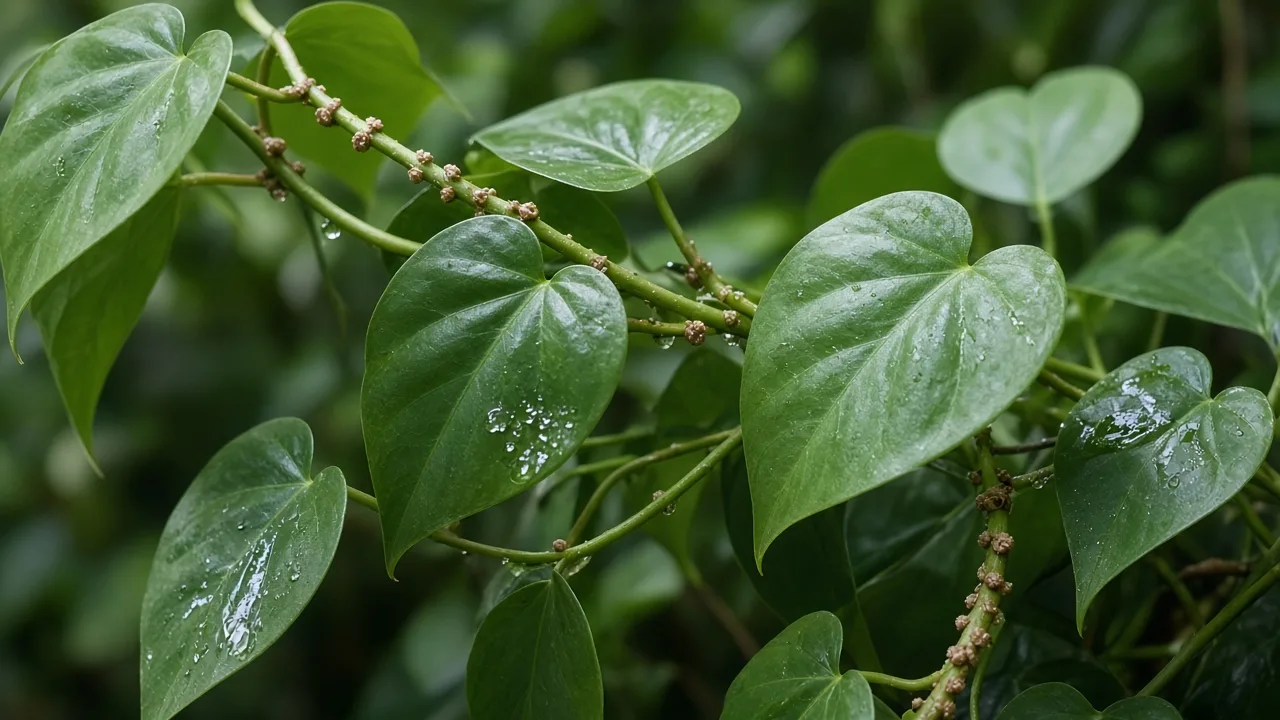
Scale Insects on Heartleaf Philodendron: Causes, Checks & Fixes
This guide covers scale insects on Heartleaf Philodendron. See also the general Scale Insects guide, watering, and light pages for this plant.
Scale Insects on Heartleaf Philodendron: Causes, Checks & Fixes
Quick answer
Scale insects on heartleaf philodendron (Philodendron hederaceum) show up as small, immobile tan, brown, or bark-colored bumps glued to glossy vine stems, leaf petioles, and leaf undersides along trailing growth. They pierce tissue, drain sap, and-on soft scale species-excrete sticky honeydew that can lead to black sooty mold on the heart-shaped leaves below.
For how scale life cycles work indoors in general, see our scale insects guide. On heartleaf philodendron, bumps often hide along the lowest hanging vine sections where glossy stems stay shaded and rarely get wiped during quick watering.
First step: isolate the plant and scrape every visible scale with a cotton swab dipped in 70% isopropyl alcohol. Contact removal beats a single blanket spray because overlapping trailing strands and tight node angles hide adults that foliar mists never reach.
Why heartleaf philodendron gets scale insects
Scale insects are common sap-sucking pests on houseplants that usually arrive on new nursery plants, shared pruning shears, or nearby infested specimens. Heartleaf philodendron’s fast trailing growth creates dozens of nodes along several feet of stem-places casual weekly checks miss when you only glance at upper foliage.
Hanging baskets let vines drape and touch neighboring pots, giving crawlers a bridge between plants. Uninfested plants become infested when leaves touch those of an infested plant-common on crowded plant shelves and shared propagation stations.
Warm indoor rooms suit scale year-round. Indoor ornamentals are especially vulnerable because mild temperatures favor overlapping generations and natural enemies are absent indoors.
Philodendron-specific risk factors:
- Glossy stems that mimic scale color - Tan bumps blend with brown vine tissue until honeydew appears.
- Dense trailing layers - Lower vine sections pressed against pot rims or cachepots stay uninspected.
- Shared aroid shelves - Philodendron beside pothos and monstera shares pest pressure when one pot is contaminated.
- Recent nursery arrivals - Scale often enters collections on new hanging baskets before adults are obvious.
What scale insects look like on heartleaf philodendron
Scale insects are unusual pests protected by a waxy or shell-like cover that makes adults essentially immobile. On philodendron they are easy to miss until colonies build.
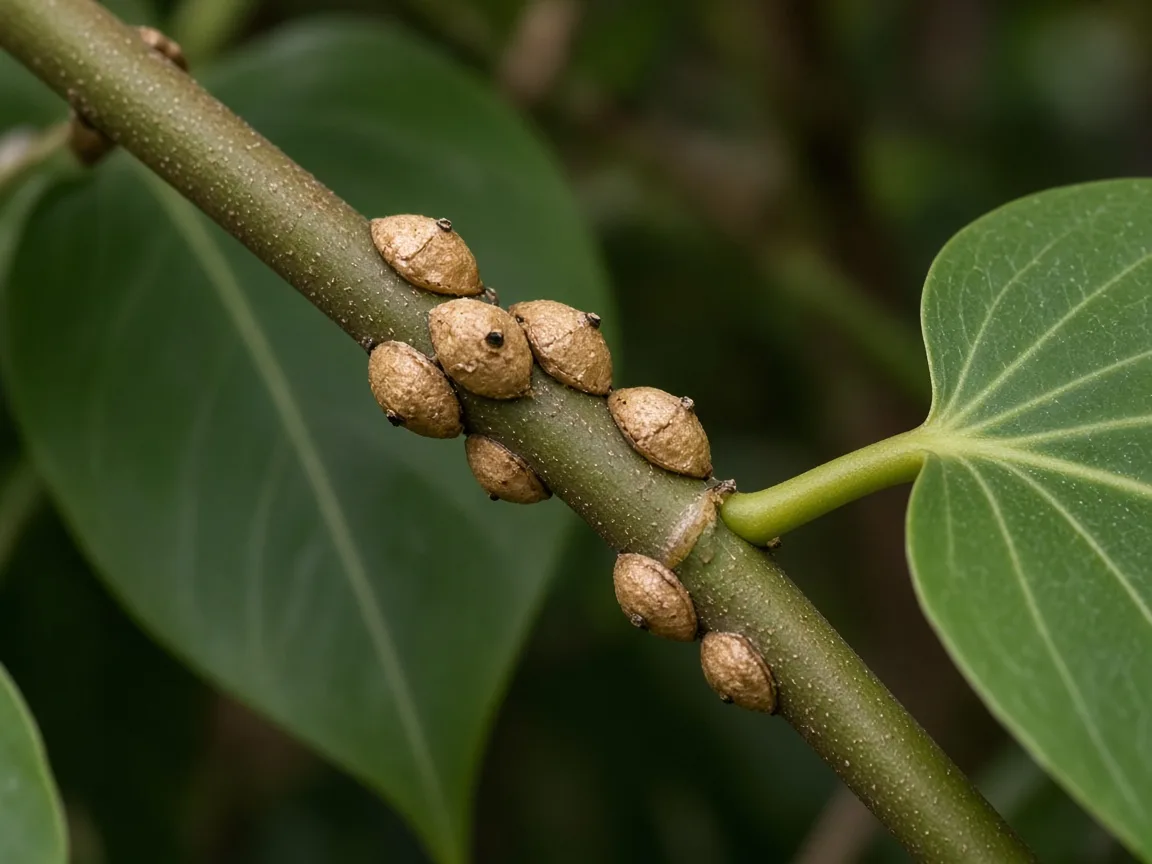
Immobile tan bumps at a vine node—run your finger along every stem from soil line to growing tips.
Typical signs on trailing philodendron:
- Flat or dome-shaped bumps on green or brown vine stems, leaf petioles, and along leaf veins on undersides
- Bark-colored disks in rows along glossy stems-tan, brown, or gray-until you look closely
- Sticky, shiny honeydew on lower heart-shaped leaves and shelves beneath hanging baskets
- Black sooty mold on sticky leaf surfaces; it wipes off but returns until insects are controlled
- Ant trails on pot rims or basket chains-ants harvest honeydew and protect scale colonies
- Yellowing leaves and stalled new growth when feeding is heavy on growing tips
Press a suspect bump with a fingernail or toothpick. Scale should flake off with gentle pressure; mealybugs smear waxy cotton instead. Spider mites leave stippling and webbing, not hard bumps.
How to confirm the cause
- Isolate first - Move the philodendron away from other plants before handling.
- Nodes and petioles - Follow each vine and inspect every leaf base with bright light, including undersides on trailing sections.
- Leaf veins - Check undersides of heart-shaped leaves where soft scales often concentrate along veins.
- Soil line and pot rim - Lift outer leaves and check where stems enter the mix.
- Scrape test - Pry a bump with a toothpick. Scale shells lift; natural stem texture stays green and attached.
- Neighbor check - Inspect pothos, monstera, and other shelf mates for bumps or honeydew.
If stems are firm, soil smells neutral, and the only issue is immobile bumps with stickiness, soft scale fits. Wet soil, soft stems, and uniform yellowing without bumps point to overwatering instead.
First fix for heartleaf philodendron
Move the philodendron away from other plants and manually remove every visible scale with a cotton swab dipped in 70% isopropyl alcohol.
Manual removal with alcohol swabs is effective on manageable houseplant scale when you work systematically along each trailing stem. Alcohol dissolves the waxy cover on contact; follow with a rinse the next day if leaves look dull.
Do not return the plant to a shared shelf until you see no new bumps for two weeks.
Step-by-step recovery
- Scrape and swab every bump along vines from soil line to tips, including petiole bases.
- Rinse foliage the day after alcohol treatment to clear residue from glossy leaves.
- Apply horticultural oil or insecticidal soap if new crawlers appear. Coat stems and both leaf surfaces thoroughly; repeat on label intervals through at least three cycles.
- Set yellow sticky traps near the pot to catch crawlers and monitor reinfestation.
- Prune heavily encrusted leaves back to healthy nodes when washing fails to clear an entire leaf back.
- Wash sooty mold off leaves once honeydew production stops.
For a small starter philodendron encrusted on every vine with bumps reappearing daily after four treatment cycles, discarding may be safer than risking your collection-propagate one clean cutting from a pest-free node if any section remains uninfected.
Recovery timeline
Manual removal shows results within days when colonies are small. A full oil or soap course typically takes two to four weeks. Yellowed or honeydew-coated older leaves may stay blemished-judge recovery by clean new heart-shaped growth at vine tips.
Lookalike symptoms to rule out
| What you see | More likely cause | Philodendron clue |
|---|---|---|
| White cottony clusters in axils | Mealybugs | Waxy fluff, not hard shells |
| Stippling + webbing | Spider mites | Moving tap-test specks |
| Silvery streaks + frass | Thrips | Scrape marks, not bumps |
| Uniform lower yellow on wet soil | Overwatering | No immobile bumps |
Glossy trailing vines: where philodendron hides scale
Heartleaf philodendron is often grown as a hanging basket with the oldest vines lowest and least inspected. Scale colonies frequently start on the undersides of leaves pressed against the pot rim or on stems tucked behind the hanger hook.
Pull the basket forward weekly during treatment and work from the growing tips backward so you do not miss nodes hidden under overlapping heart leaves. On shelf-grown plants, vines that rest on the soil surface of neighboring pots are common crawler bridges-isolate before you scrape.
When to use this page vs other Heartleaf Philodendron guides
Use this page for immobile bumps with optional honeydew on stems and leaf veins. Use mealybugs for cottony wax in leaf axils. Use spider mites for stippling and silk. Use yellow leaves when discoloration is uniform without bumps.