Brown Zucchini Leaves: Causes, Diagnosis & Fixes
Learn why zucchini leaves turn brown, how to distinguish mildew from pests or watering stress, and what to do first to protect healthy growth and fruit.
Start with a quick triage
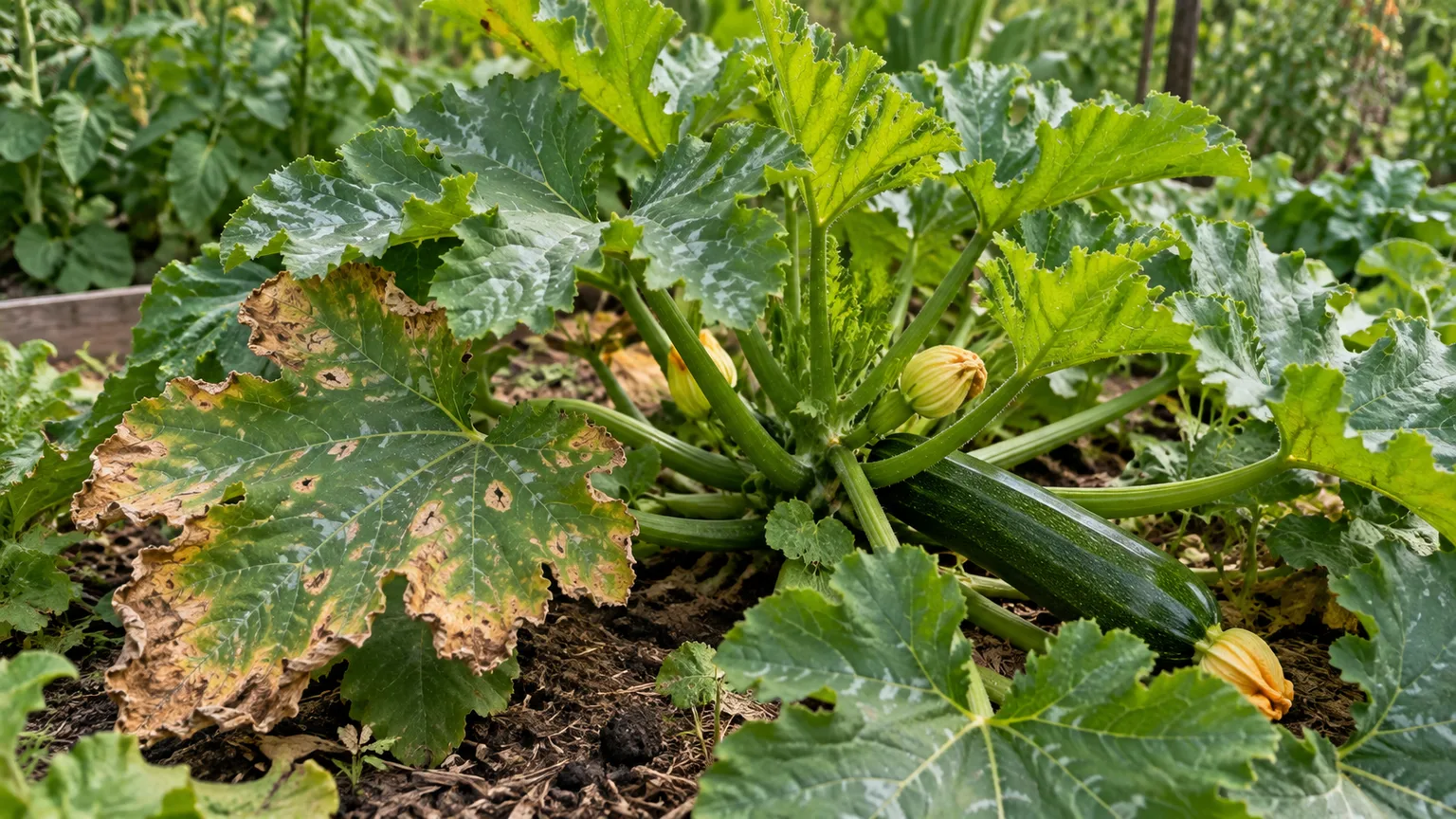
Brown leaves are a symptom, not a diagnosis. On zucchini, the pattern matters more than the color: crisp edges on several leaves after hot, dry weather suggest water stress; scattered spots that spread suggest disease or insect feeding; a whole vine that wilts while the soil is damp calls for an immediate look at the stem base.
Before you water, prune, or spray, check the soil about two inches below the surface, turn over two or three affected leaves, and inspect the vine where it meets the ground. Those checks often separate a correctable watering issue from pests, disease, or normal aging in less time than trying several treatments at once.
Read the pattern before choosing a fix
Start with where browning begins. Damage confined to the outer margins can follow a dry spell, a hot afternoon, or a fertilizer or spray splash; small tan or brown spots scattered across the blade point more toward a leaf-spot disease or feeding injury. When the whole plant wilts, especially early in the morning, inspect the roots and lower stem rather than treating the leaves as the primary problem.
Look at the underside as well as the top. White growth that smears or looks dusty can fit powdery mildew, while yellow patches bounded by veins with gray or purplish fuzz below can indicate downy mildew; squash bug eggs and nymphs also hide beneath leaves. Zucchini may have natural silvery patches along the veins, too, so flat silver markings with no residue are not automatically mildew.
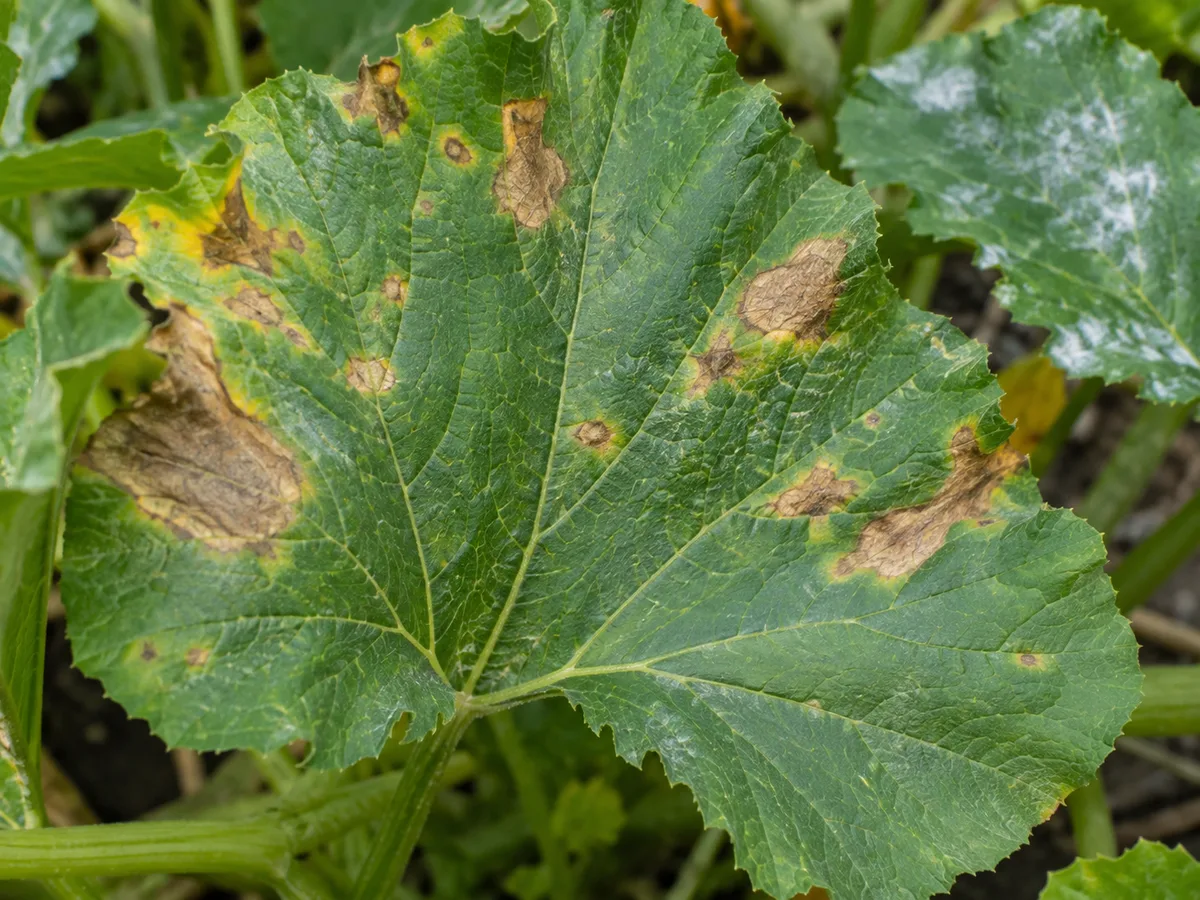
A photograph can help compare patterns, but one leaf image cannot confirm a pathogen. Use the surrounding clues—weather, soil, the direction of spread, insects, and the condition of new growth—to decide whether a visual diagnosis is strong enough to guide treatment.
Common reasons zucchini leaves turn brown
Several problems can produce brown tissue, and more than one can occur on a mature plant at the same time. Match at least two clues before choosing a fix; for example, a dry root zone plus crispy margins is a stronger case for drought stress than browning alone.
Water stress and poor drainage
Zucchini uses a broad canopy to support fast-growing fruit, so its leaves can droop temporarily during the hottest part of a sunny day. If the plant perks up by evening and the root zone is moist, that brief midday sag may reflect heat load rather than a need to soak the bed again. Morning wilt, dry soil below the mulch, and brittle margins together make inadequate water more likely.
A vine crop typically needs about an inch of water from rain or irrigation per week during the growing season, but that is a starting point, not a rigid calendar. Sandy beds, raised beds, containers, heavy fruiting, wind, and heat change how quickly the root zone dries; University of Minnesota Extension’s zucchini guidance recommends soaking the soil thoroughly and adjusting frequency to the soil and growing conditions.
Too much water can create a similar canopy symptom by depriving roots of oxygen or encouraging crown and root decay. If the soil stays saturated, smells sour, or the stem base is soft while leaves yellow and collapse, more irrigation can make the decline worse; improve drainage and let the root zone dry toward normal rather than adding water on a timer.
Powdery mildew
Powdery mildew often starts as pale spots or white, flour-like patches on older leaves, then expands across the surface. As infected tissue loses function, yellow areas can dry and turn brown; severe infection weakens the canopy and can expose developing fruit to sunburn. The disease is common on cucurbits and can spread quickly when plants are crowded or shaded.
Unlike many leaf diseases, powdery mildew does not need a film of water on the foliage to infect it. Humid air around a dense canopy can favor disease even when the leaves are dry, and warm, dry weather can help spores form and spread; UMN Extension’s cucurbit mildew guide describes both patterns. That is why watering at soil level is sensible, but it is not a guaranteed mildew cure.
Natural zucchini silvering is a frequent false alarm. It tends to follow the leaf veins in an even, flat pattern and does not rub off; powdery mildew forms irregular colonies with visible white residue. If the patch does not have powder, do not spray a fungicide simply because the leaf looks pale.
Downy mildew and other leaf spots
Downy mildew usually begins as pale green or yellow angular patches constrained by leaf veins. Turn the leaf over: gray, purplish, or downy growth beneath the corresponding spots is a key clue, and affected tissue may brown quickly during cool, wet, or persistently humid weather. It is caused by an oomycete, not the same fungus responsible for powdery mildew, so the two diseases do not have interchangeable treatment plans; see University of Maryland Extension’s squash problem key and Penn State Extension’s home-garden mildew guidance.
Other leaf spots can start as tan, brown, or gray lesions, sometimes with a yellow halo, that enlarge or merge. Bacterial angular leaf spot, anthracnose, and other cucurbit diseases may look alike in a phone photo, and rain splash or handling can spread some pathogens. If spots keep appearing on new leaves after you correct water and remove severely affected tissue, photograph both leaf surfaces and ask a local extension office or diagnostic clinic to identify the disease before choosing a product.
Squash bug feeding
Squash bugs pierce leaves and draw sap, leaving small yellow marks that can turn brown and merge as feeding accumulates. Heavy feeding may make whole leaves blacken and dry, and the plant can wilt when injury is severe. Inspect the undersides for bronze or reddish-brown egg clusters arranged in groups, pale young nymphs, and gray-brown adults; Utah State University Extension notes that the spots can progress from yellow to brown and that adults are difficult to control with insecticides.
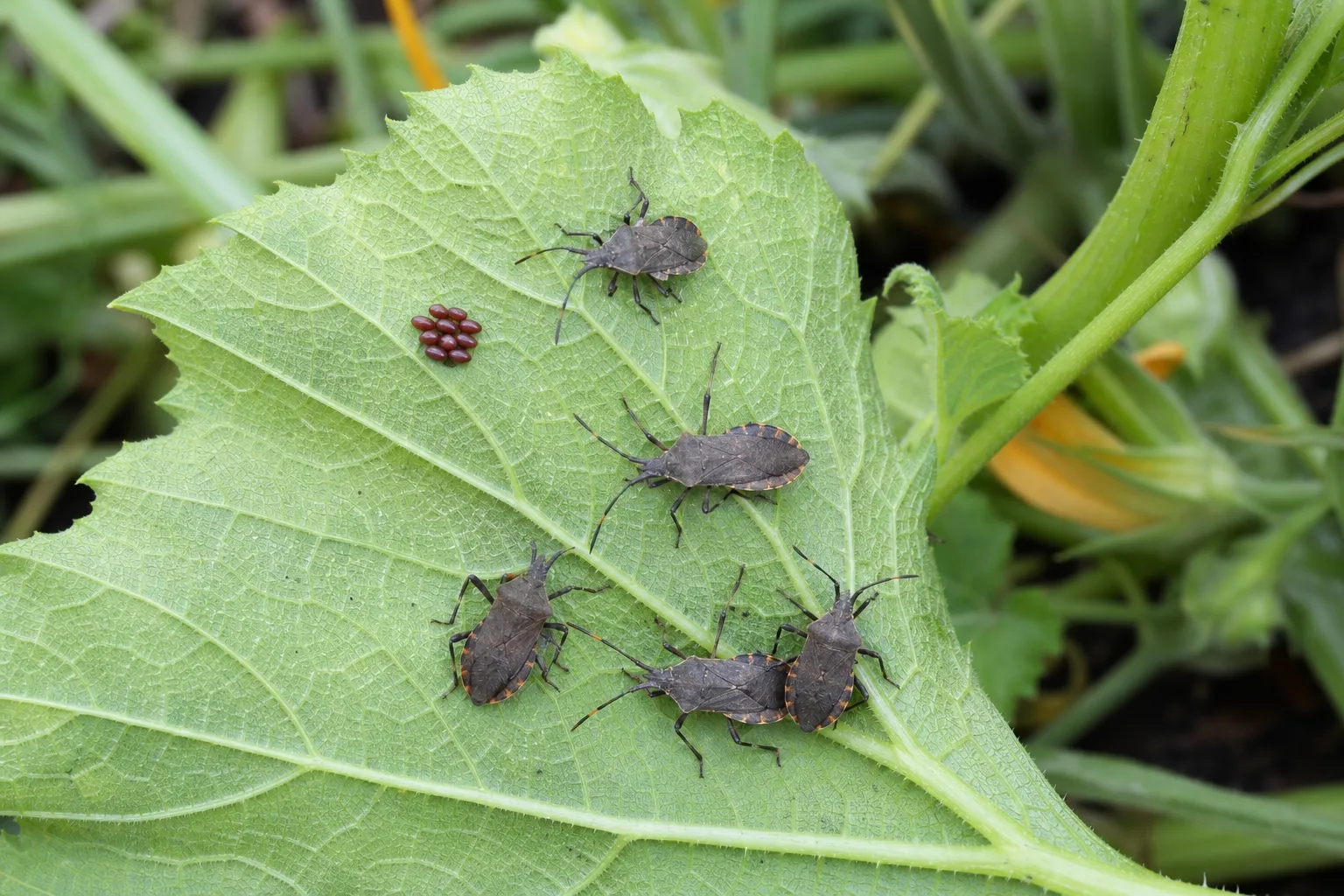
A few insects do not automatically explain extensive browning. Check whether fresh stippling is concentrated near the bugs, whether fruit is scarred, and whether the damage is still advancing; this keeps you from treating an unrelated old leaf spot as a pest outbreak. Fine Gardening’s summer-squash pest guide also stresses checking leaves and removing egg clusters early, when hand removal is practical.
Squash vine borer or bacterial wilt
A squash vine borer larva feeds inside the lower stem, disrupting water movement. The warning pattern is a plant that wilts during the day and then stays limp by morning, often with a small hole, mushy stem tissue, or sawdust-like frass near the soil line. This pest is regionally important rather than universal; if the stem looks intact and there is no frass or entry hole, do not cut open a healthy crown on a guess.
If a borer is confirmed, a careful lengthwise slit near the entry point can expose a larva, but cutting the main stem can finish off a plant that might otherwise have recovered. The wound also needs to be handled carefully; burying a small injured section in moist soil may encourage rooting, but recovery is uncertain. For a badly collapsed vine, harvesting usable fruit and starting another plant may be more realistic than invasive surgery.
Cucumber beetles can spread bacterial wilt. That disease causes persistent wilt despite adequate soil moisture and can progress to yellowing and browning; the leaves alone cannot confirm it. If beetles are present and the whole plant collapses rapidly, avoid moving tools between vines and ask an extension service whether the plant should be removed; Penn State Extension’s vegetable problem guide describes beetle-associated bacterial wilt and the limits of recovery.
Older leaves, heat, and spray injury
The oldest, lowest leaves are the first to age out, especially after a zucchini plant has built a dense canopy and is producing fruit. If one or two shaded leaves yellow and dry while the crown and newest leaves remain firm and green, normal senescence is more likely than a fast-moving disease. That is different from new lesions appearing on several leaves or repeated morning wilt.
A heat wave can scorch exposed tissue, particularly when the plant dries between waterings or was moved from shade into strong sun. Fertilizer granules, concentrated liquid feed, or a pesticide applied in hot sun can also burn leaf edges; a sharp line or splash pattern and damage appearing soon after application are clues. Do not respond by adding more fertilizer or combining sprays—the second treatment can compound the injury.
A five-minute inspection that narrows the cause
Take one pass through the bed in this order. It prevents a common mistake: deciding what the plant needs from the top of one leaf, then changing water, fertilizer, pruning, and pesticide routines all at once.
- Check the root zone. Push a finger or a narrow trowel two inches into the soil near the root area, not directly against the crown. Note whether it is dry, evenly moist, or waterlogged; repeat in a container at more than one spot because potting mix can be dry at the surface and wet below.
- Compare old and new leaves. Browning limited to old, shaded leaves with healthy new growth is less urgent than fresh lesions on the newest leaves. Photograph the same affected leaf today so you can tell whether the edges are expanding over the next few days.
- Look at both leaf surfaces. Search for powder, fuzzy growth, angular yellow patches, stippling, eggs, nymphs, and feeding holes. Do not rub off all suspicious material before taking a clear photo if you may need expert identification.
- Trace the vine. Follow a wilted petiole to the main vine and inspect the crown for a hole, frass, cracking, soft tissue, or beetles. A healthy crown and firm stem make vine borer less likely.
- Check the pattern beyond one plant. Similar crisping on several plants can point to a shared heat, irrigation, drift, or fertilizer event. One collapsing zucchini next to healthy squash may instead point to a plant-specific pest, wound, or root problem.
Fix only what you can confirm
The safest first response is the one that matches the strongest evidence. If the root zone is dry, water it; if a leaf has a few old dry margins but no progression, observe it; if eggs or a stem hole are visible, act on the pest sign. A mild case rarely benefits from throwing every possible treatment at it on the same afternoon.
Correct soil moisture first
When soil is dry, water slowly at the base until the root zone is moist several inches down, then reassess rather than repeating the same amount every day. A soaker hose or drip line can wet the soil evenly while reducing splash onto foliage; UMN Extension recommends ground-level watering for squash and adjusting frequency for soil texture and trellising.
When soil is already wet, pause irrigation and look for standing water, compacted soil, blocked drainage holes, or a low spot that holds runoff. Do not let a zucchini sit in a saucer of water if grown in a container, and do not try to correct a soggy bed with fertilizer. Once drainage is corrected, water only when the root zone begins to dry rather than following a fixed daily schedule.
A layer of organic mulch can slow evaporation and reduce soil splash, but keep it from pressing against the crown. Mulch helps make moisture more even; it cannot compensate for a clogged drain, dense shade, or a pot with no drainage opening.
Remove damaged leaves selectively
A fully brown, crisp leaf will not green up again. If a leaf is mostly dead, badly infected, or touching the soil, cut its petiole cleanly with a sharp tool and remove it from the bed; wipe the blade between plants when disease is suspected. Avoid stripping every leaf with a spot, because the remaining healthy canopy is what fuels fruit growth and shades squash from sunscald.
Do not remove several large leaves at once just to make the plant look tidy. Start with leaves that are entirely dead or heavily infected, then reassess new growth after a few days; if browning keeps advancing, the underlying cause still needs attention. For a single old leaf with dry edges and no other symptoms, leaving it until it is mostly spent is often less stressful than pruning it early.
Manage squash bugs and vine problems
For squash bugs, inspect leaf undersides every few days and crush or scrape egg masses before they hatch. Hand-pick visible adults and nymphs into a container of soapy water if that is practical, and check beneath a flat board placed near the plant early the next morning, when hiding insects may gather there. Utah State Extension’s integrated-management guidance emphasizes suppressing populations at the egg and nymph stages and clearing crop residue after the season.
Floating row covers can keep egg-laying adults off young plants, but they need to come off when zucchini flowers open so pollinators can reach them. This trade-off makes covers most useful early, before flowering, and less useful once the plant needs insect visits for fruit set. Avoid broad-spectrum insecticides on open blooms; if you consider a product, use only one labeled for edible squash and the target pest, and follow its label and harvest interval.
For a suspected vine borer, first confirm a hole or frass at the stem base. If a small larva is visible and you decide to remove it, use a clean blade and make the smallest cut possible; do not slit multiple vines preemptively. A severely damaged main stem, soft crown, or plant that stays wilted after moisture is corrected may not recover, so preserve healthy fruit and plan a replacement rather than escalating to repeated cuts.
What recovery looks like
Brown tissue stays brown. The sign of recovery is not a damaged leaf turning green; it is new leaves emerging normally, the vine staying firm through the morning, and fruit continuing to enlarge without fresh injury. A photo log of one affected leaf and one healthy new leaf gives you a more reliable comparison than memory.
After correcting drought stress, the plant may stop producing new crisp margins fairly quickly, but leaves already scorched or diseased cannot be repaired. With powdery mildew, the goal is often to slow the loss of healthy foliage long enough to harvest, not to erase every white patch. UMN Extension explains that heavy mildew can weaken plants and hasten fruit ripening, so a heavily affected late-season plant may have a shorter productive window even after you improve airflow.
Check the plant again in 48 to 72 hours, then once or twice a week. If new leaves are clean and the stem is firm, keep the changed routine steady; if fresh brown spots appear, capture close-up photos of both leaf surfaces and the vine base before using a pesticide or fungicide.
Prevent another round of browning
Give zucchini enough room for air to move through its large leaves, and control weeds that crowd the base. Choose a sunny, well-drained site, water deeply when the root zone needs it, and use mulch to reduce sharp moisture swings. Avoid overfeeding nitrogen: lush, crowded growth can make scouting harder and create a humid canopy where disease spreads more easily.
When buying seed, check the variety description for resistance or tolerance to powdery mildew and other diseases common in your region. Resistance is not immunity, and a resistant variety still needs reasonable spacing, water, and pest checks, but it can reduce the chance that one common disease ends the harvest early. Savvy Gardening’s squash mildew guide describes resistant cultivars and airflow as useful prevention tools.
Scout from the beginning of the season instead of waiting for brown leaves. Turn over leaves to look for squash bug eggs, check the stem bases for borer activity where that pest occurs locally, and remove old vines and debris at the end of the season. If you use row covers, secure edges against pests and remove them when flowering begins so pollination is not blocked.
When to ask for diagnosis or remove the plant
Ask your county extension office or a plant diagnostic clinic for help when lesions spread rapidly, the underside shows unfamiliar growth, multiple cucurbits are affected, or a treatment choice would depend on distinguishing a fungus from an oomycete or bacterium. Send sharp images of both sides of a leaf, the whole plant, the stem base, and a note about recent rainfall and irrigation. A lab or local expert can sometimes identify a problem that visual comparison cannot.
Remove a plant if the crown is soft and rotting, the main vine is severed, most foliage has collapsed with little healthy new growth, or a confirmed bacterial or viral disease threatens nearby plants. Bag suspicious diseased material rather than placing it in a home compost pile unless your local composting guidance says the pile reaches pathogen-killing conditions. If the plant has a few older leaves browning late in the season while fruit is still growing, removal may be unnecessary; harvest regularly and let healthy foliage continue supporting the crop.
Conclusion
Brown zucchini leaves can come from too little or too much water, mildew, insect feeding, vine damage, heat, or ordinary leaf aging. Begin with the soil, compare old and new growth, inspect both sides of the leaves, and follow any wilt back to the vine base before taking action.
Make one evidence-based change, then watch new growth rather than expecting brown tissue to recover. Consistent root-zone moisture, open airflow, regular pest checks, and selective pruning give a zucchini plant its best chance to keep producing while you manage the cause.