7 Cornstarch Garden Uses—And 3 to Skip
Can cornstarch help garden plants? Get safe methods for seeds, bulbs, tools, and spills—and science-backed alternatives for pests, mildew, and clay soil.
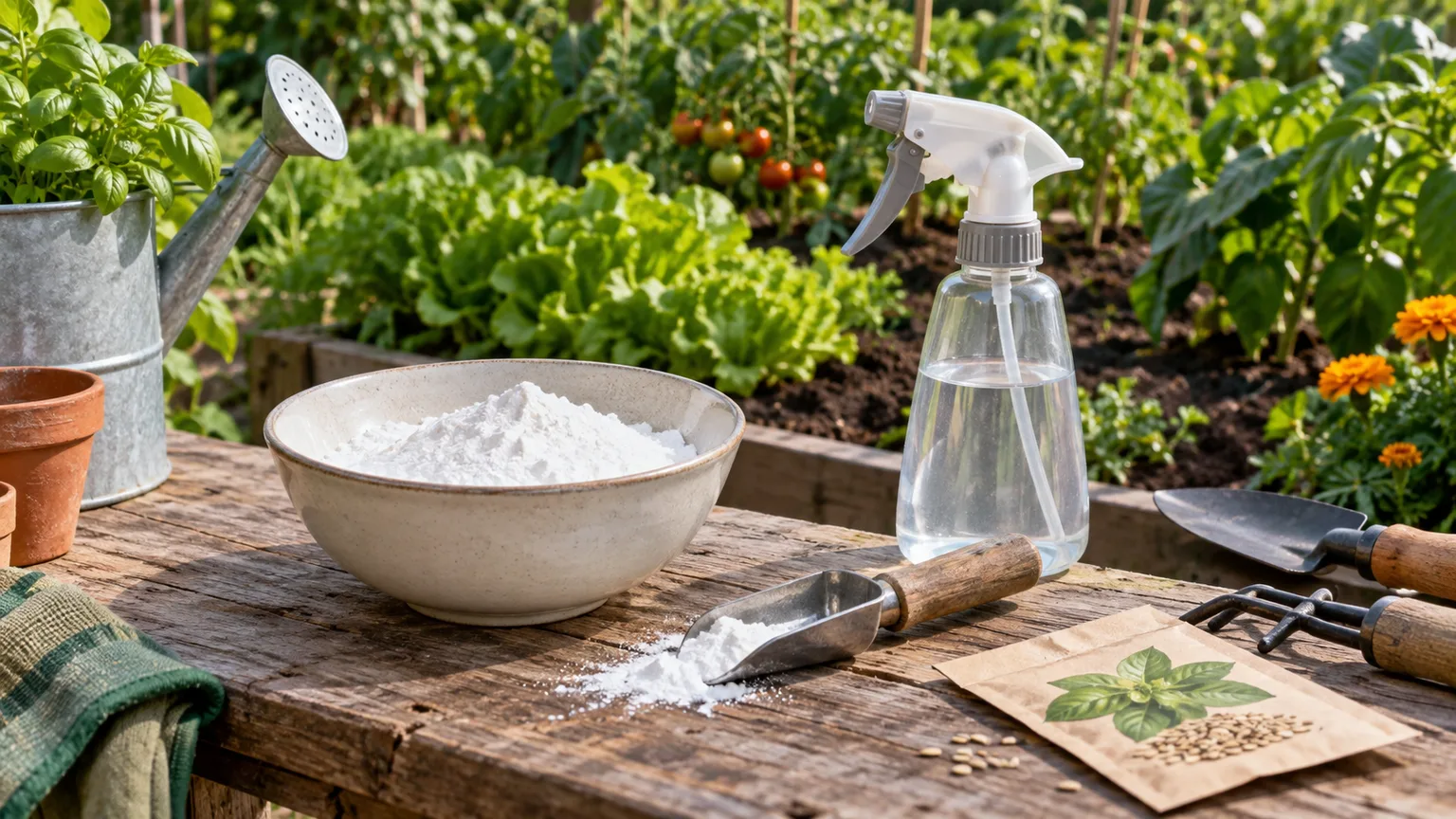
Cornstarch can be useful around the garden, but not for the reason most viral hacks suggest. It is a food starch that thickens when wet, so it can help you handle tiny seeds, absorb a fresh oil drip, or reduce friction on a sweaty tool handle. It is not automatically an ant killer, fungicide, soil conditioner, or spray adjuvant just because it came from the pantry.
That distinction matters. The most convincing cornstarch claims rely on a plausible-sounding mechanism—“it absorbs moisture,” “it sticks to leaves,” or “ants eat it”—without showing whether the method works in a real bed, at a safe rate, for long enough to protect a plant. A recent horticulture evidence review found little peer-reviewed support for most of the popular claims and emphasized the gap between an anecdote and a tested recommendation. (The expert review of viral cornstarch garden claims)
Here are seven ways people use cornstarch around the garden, with the practical version of each idea: what is worth trying, what needs a small-scale test, and what I would leave in the kitchen.
The honest answer: cornstarch is a garden utility, not a cure-all
Cornstarch is mostly starch, and starch behaves predictably in a saucepan: add water and heat, and the granules swell into a gel. In a garden, that same behavior is both the attraction and the problem. A thin gel can suspend a row of carrot seeds; a heavy coating on soil or leaves can become a sticky film that traps dust, blocks equipment, and creates a damp food source for microbes.
The practical rule is simple: use cornstarch for a temporary handling job, not as a permanent amendment or a plant-health treatment. A temporary job can be measured—did the seeds come out evenly, did the oil spot lift, did the tool feel less abrasive? A plant-health claim needs more: a correctly identified pest or disease, a repeatable rate, a safe application method, and evidence that the treatment helps more than it harms.
Quick verdict: keep these uses, question these claims
| Garden job | Verdict | Better decision |
|---|---|---|
| Spacing tiny seeds | Worth a small trial | Make a thin gel and plant immediately; do not let it dry out. |
| Storing bulbs or seed | Not a proven preservative | Dry the material properly, then use breathable bulb storage or a cool, moisture-proof seed container. |
| Fresh oil on pavers | Useful cleanup aid | Blot first, dust the stain, wait, then sweep and dispose of the powder. |
| Hand or tool friction | Reasonable comfort aid | Use on intact, dry skin or a clean handle; gloves remain better protection. |
| Ants | Unproven | Identify why ants are present and use integrated pest management if needed. |
| Powdery mildew | Do not rely on it | Improve airflow, remove infected material, and use a product labeled for the disease when appropriate. |
| Spray thickener, slippery paths, clay soil | Skip | Use a labeled adjuvant, a real absorbent or traction method, and organic matter respectively. |
The table is intentionally less exciting than a promise of pest-free plants. It is also more useful. You can still experiment with a pantry ingredient, but you will know which results count as success and which symptoms mean you should stop.
1. Use a cornstarch gel to space tiny seeds
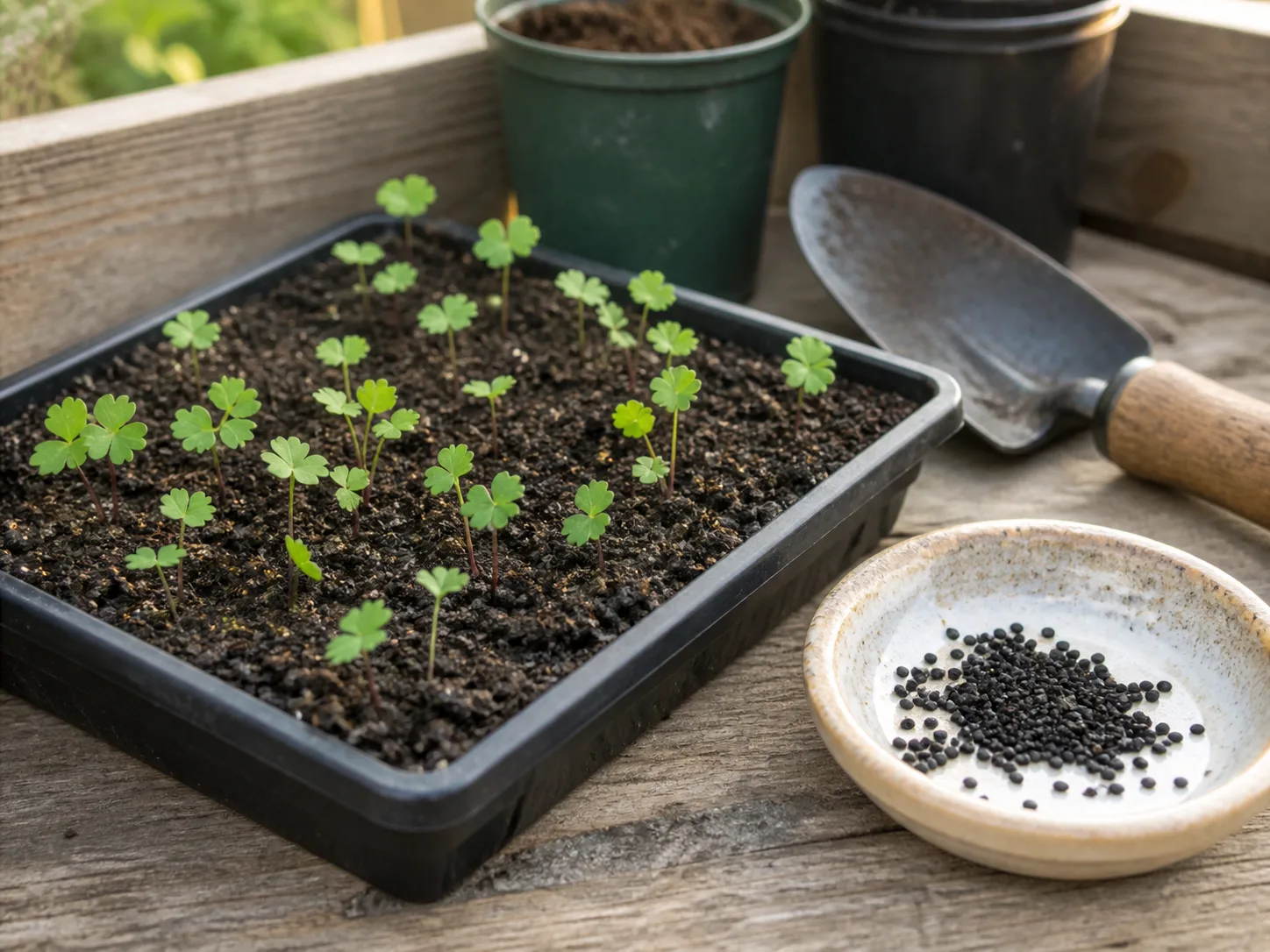
This is the most defensible plant-related use because the cornstarch is doing a mechanical job, not pretending to change the seed’s biology. A thin gel gives very small seeds—especially carrot, lettuce, and some herb seeds—a fluid carrier that can be squeezed into a shallow row. It can reduce the “three seeds in one spot, bare soil everywhere else” problem that makes fine seed frustrating to sow.
The method is practical rather than a guarantee of faster germination. A gardening experiment from Northern Homestead uses a cooked cornstarch gel with soaked carrot seeds, then dispenses the mixture through a small opening; the grower still had to thin dense sections. (Northern Homestead’s cornstarch seed-sowing experiment) That is the right expectation: the gel can improve handling and keep seeds moist during the first stage, but spacing, soil contact, temperature, and follow-up watering still decide whether seedlings emerge.
How to make seed gel without smothering seeds
- Mix 2 tablespoons of cornstarch with 1 cup of water in a small saucepan. Stir while heating until the mixture becomes a thin, pourable gel, then cool it completely. The ratio is a starting point, not a law; if the gel will not move through a squeeze bottle, dilute it with a little clean water.
- Moisten the seedbed before sowing. Make a shallow furrow at the depth recommended on the seed packet, because the gel does not compensate for planting seed too deeply.
- Add dry seed to the cooled gel, or use briefly soaked seed that has been drained well. Do not use seeds with long, fragile sprouts unless you can keep the row consistently moist from planting through emergence.
- Put the mixture in a freezer bag with a pinhole-sized corner or a clean squeeze bottle. Dispense a narrow line, cover lightly with fine soil, and water gently enough that the row stays in place.
Use only what you can plant that day. A warm, wet starch mixture is not a seed-storage medium; it is a food-rich, damp environment that can spoil. If the row is crowded, thin when seedlings are large enough to handle instead of adding more gel or soil to compensate.
2. Protect dry bulbs and seeds from handling moisture
The idea of dusting bulbs or seeds with cornstarch comes from a real concern: moisture encourages mold and shortens storage life. But the important variables are how dry the material is before storage, the temperature, and the container, not whether a white powder is present. Colorado State University Extension says seed moisture and storage temperature are the two most important factors in how long seed can be stored, and recommends dry, cool storage in a moisture-proof container for many seed types. (Colorado State University Extension’s seed-storage guidance)
For saved seed, skip the cornstarch by default. Clean off plant debris, dry the seed fully in a protected, well-ventilated place, label the crop and year, and store it in a sealed container in a cool location. An optional desiccant packet made for seed storage is easier to monitor than a pantry powder that may cake around the seed. Before investing a whole bed in old seed, test a sample on a damp paper towel and count how many sprout.
Bulbs and tubers need a different approach because they are living storage organs, not dry seed. Cure them according to the crop, brush off loose soil, inspect for soft spots, and keep them in a breathable bag or crate with airflow. If you choose to test a very light cornstarch dust on an already-dry, unblemished bulb, treat it as an experiment: do not coat damp material, do not seal wet bulbs in plastic, and inspect weekly for soft rot or a sour smell.
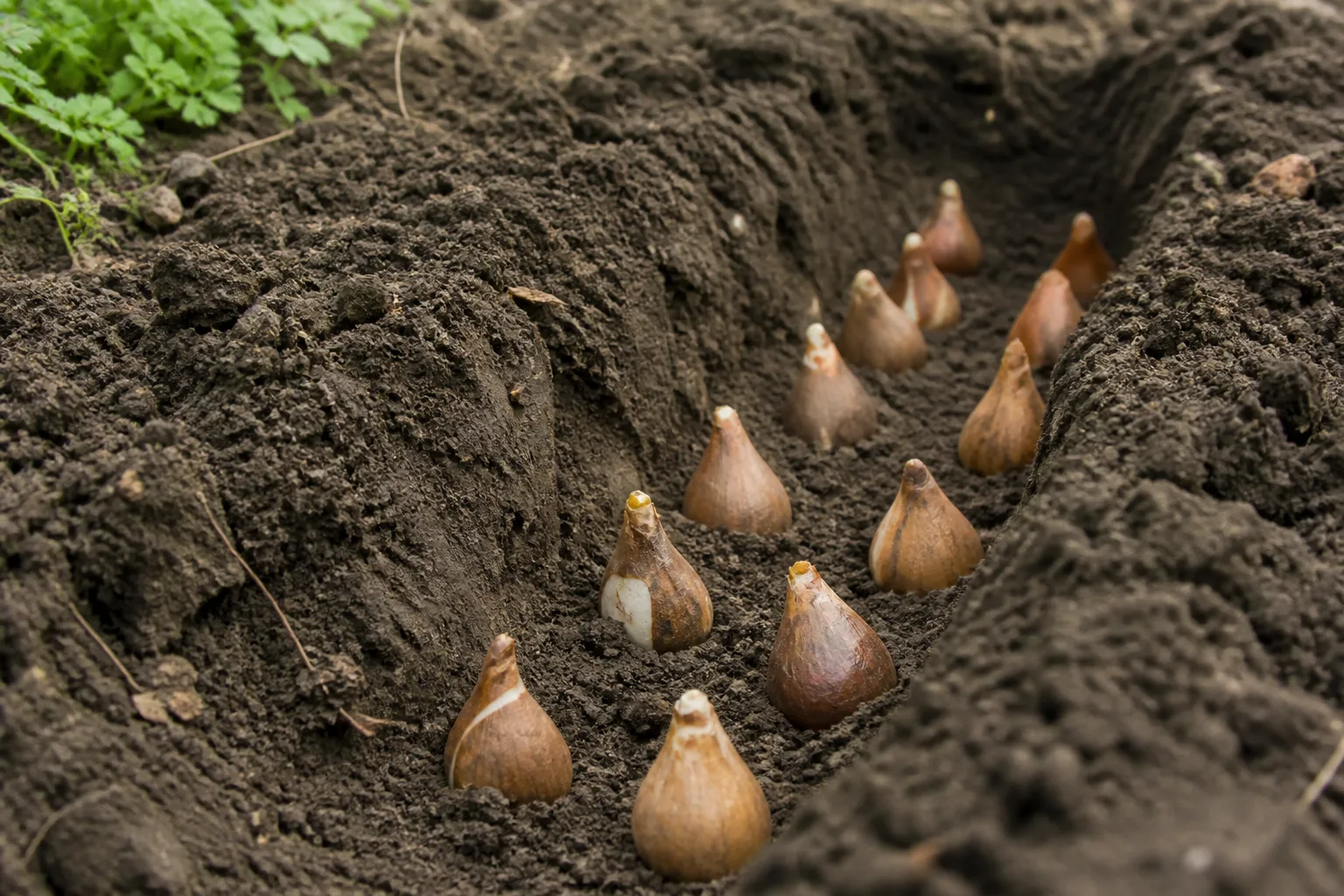
Never use cornstarch to rescue a bulb that is already wet, cut, or rotting. Powder on the outside cannot reverse internal decay, and a coating can make it harder to notice a problem. Good storage is a moisture-management system, not a dusting ritual.
3. Blot fresh oil spills on pavers and garden surfaces
This is a genuine cleanup use, and it is more reliable than using cornstarch as a treatment for a living plant. A fresh drop of oil from a mower, trimmer, or wheelbarrow can soak into porous pavers and leave a dark mark. A dry, absorbent powder can pull some of that surface oil upward before it spreads.
Blot first with an absorbent rag or paper towel if the spill is still wet. Then cover the remaining spot with enough cornstarch to hide the sheen, leave it for several hours or overnight, and sweep it into a bag. Do not hose the powder into a storm drain, vegetable bed, pond, or lawn; the goal is to collect the contaminant, not move it somewhere else.
This works best on a fresh, small spill. Old oil that has penetrated concrete may need a surface-appropriate cleaner, and a pressure washer can spread the residue into soil and waterways. Keep the powder off wet paths, where starch and water can make a paste instead of a clean, dry absorbent layer.
4. Reduce hand friction during long garden sessions
Cornstarch can absorb sweat and make a smooth tool handle feel less tacky, which may reduce rubbing for some gardeners. A small amount on intact, dry skin or inside a clean glove can make it easier to slide the glove on and off. A light dusting on a clean, dry shovel or trowel handle may also change the feel of the grip.
Use this as a comfort aid, not as protective equipment. Cornstarch will not prevent a puncture, replace a well-fitting glove, or repair a blister. Wash your hands after gardening, and do not put powder into an open blister, cut, rash, or area that is hot, swollen, or oozing. If a plant sap or pesticide has irritated your skin, rinse it off and follow the product label or medical guidance rather than sealing the area under a paste.
The friction problem is often a fit problem. A handle that is too thin makes you squeeze harder; a glove that is too loose creates folds that rub. Adjust the tool, take breaks, and keep a clean pair of gloves available before reaching for a powder.
5. Test an ant problem—but do not call cornstarch pest control
Dry cornstarch is often described as an ant deterrent or a bait that ants eat but cannot digest. There is no good reason to treat that claim as established garden control. A horticulture instructor interviewed in the evidence review cited above found no controlled research showing that dry cornstarch reliably disrupts ant trails or kills a colony in real garden conditions. (The expert review of cornstarch and ants)
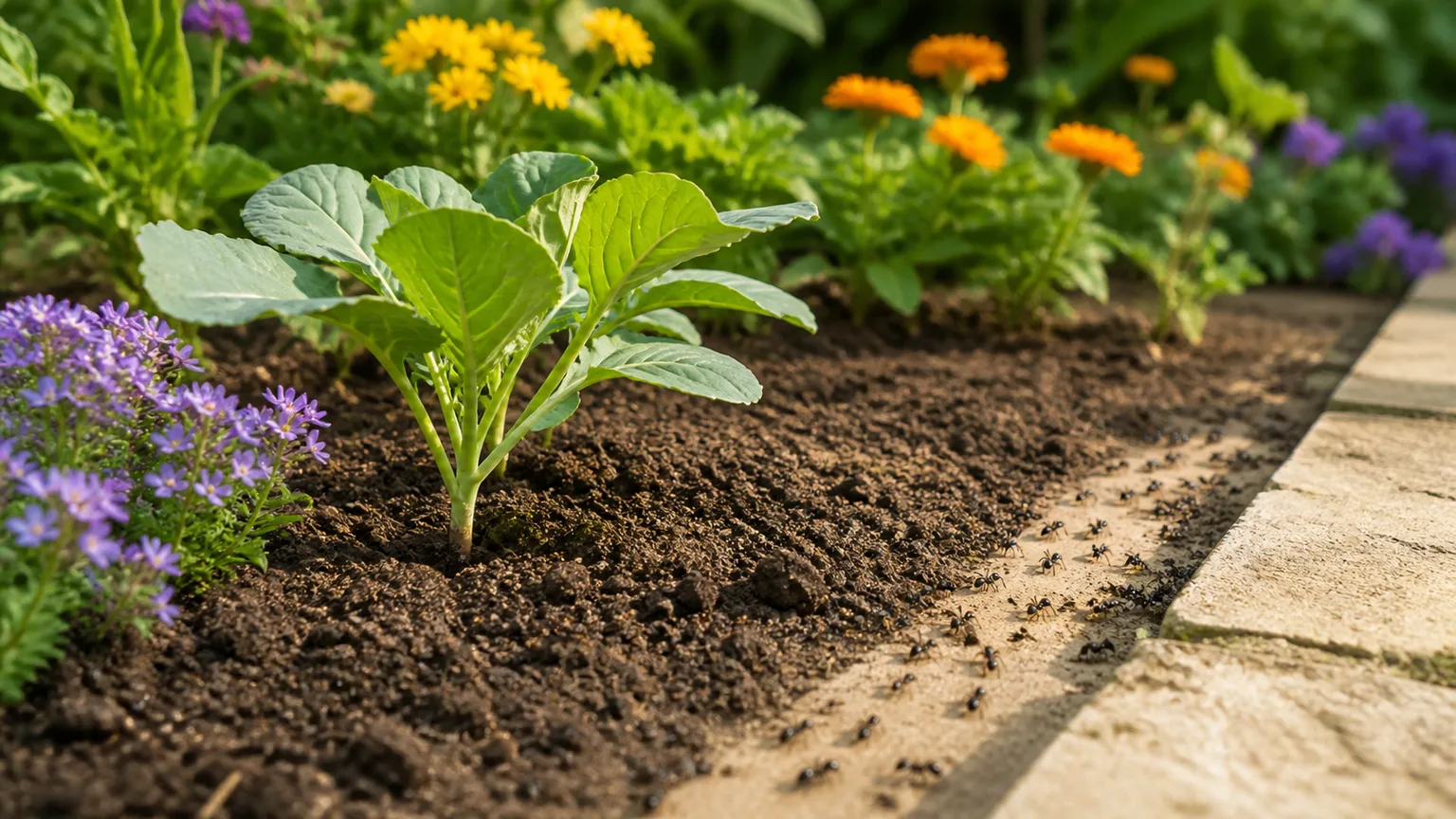
If you are curious, make the test low-risk and observational: put a teaspoon of cornstarch on a piece of cardboard beside, not on, a non-edible hardscape edge. Watch whether ants avoid it, cross it, or simply walk around it after wind or dew changes the patch. Do not dust flowering plants, edible leaves, or the soil around a plant just to see what happens. A white line that disappears after rain is not pest management.
More importantly, ask why the ants are there. Ants may be farming aphids, scales, or mealybugs for honeydew; they may also be nesting under a paver without harming the plant at all. Inspect the undersides of leaves and new growth for sap-feeding insects, sticky residue, curled leaves, or sooty mold. If a real infestation is present, start with physical removal and cultural control, then choose a product labeled for the target and site if treatment is necessary.
The National Pesticide Information Center warns that home remedies often lack directions for rate, timing, location, and protective equipment, and that “natural” does not remove the need to consider exposure. (National Pesticide Information Center’s home-remedy guidance) That makes cornstarch a poor substitute for a measured, targeted ant-control plan.
6. Skip cornstarch for mildew and foliar disease
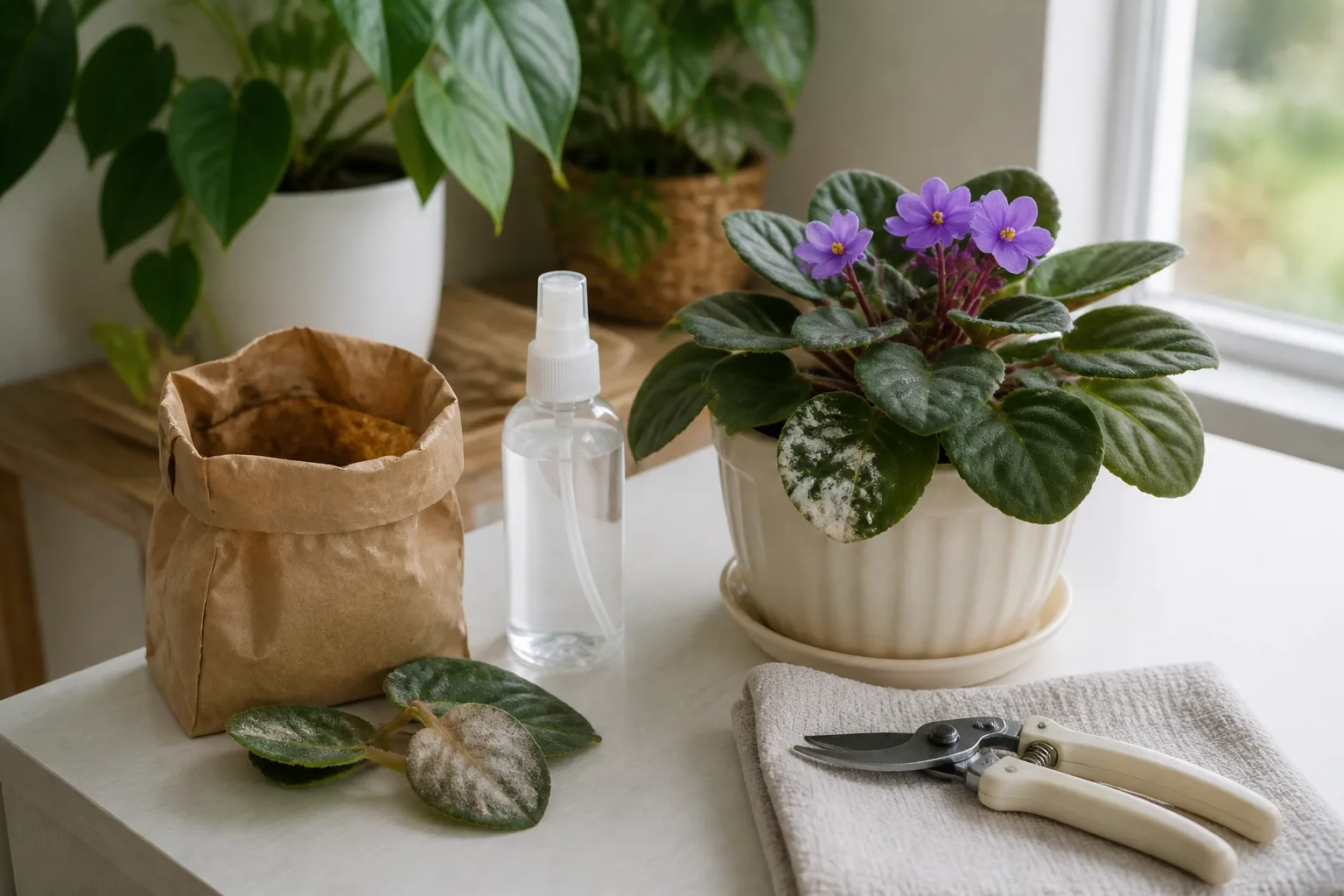
Cornstarch does not have a demonstrated role as a cure for powdery mildew. The white coating on a leaf can look like a dust problem, but powdery mildew is a living fungal disease with a host, a life cycle, and environmental conditions that determine how quickly it spreads. Adding another white powder can make the symptom harder to read and can leave a film on the leaf surface.
Colorado State University Extension describes powdery mildew as white to gray, talcum-like growth and notes that it is favored by crowded plantings and poor air circulation. It also points out that powdery mildew is host-specific and does not require a wet leaf surface to infect, which is why simply coating foliage with a drying pantry powder is not a complete strategy. (Colorado State University Extension’s powdery mildew guidance)
What to do instead when leaves have white patches
First, confirm what you are seeing. Powdery mildew usually appears as distinct white patches that expand across the leaf surface. Dust, mineral spray residue, mealybugs, and downy mildew can look different and need different responses. Photograph the top and underside of an affected leaf, check the newest growth, and contact your local extension service if the diagnosis is unclear or the plant is valuable.
For a confirmed or strongly suspected powdery mildew problem:
- Improve spacing and airflow so leaves dry and the canopy is less crowded.
- Water the root zone rather than repeatedly wetting foliage, and avoid creating a damp, stagnant canopy.
- Remove badly infected leaves and clean up fallen debris; do not put diseased material in a cool backyard compost pile. Colorado State Extension specifically warns that compost temperatures may not kill the fungus. (Its cleanup and prevention guidance)
- Choose resistant cultivars when replacing plants, especially for repeat problems on squash, roses, lilacs, grapes, and other susceptible hosts.
- If a fungicide is warranted, use a product labeled for the crop, disease, and application site. Apply exactly as directed and test any product on a small area first.
Cornstarch can still stay in the pantry while the plant gets a treatment that has a known target and label.
7. Do not use it to thicken sprays, stop slippery paths, or fix clay soil
Three other popular cornstarch ideas share the same flaw: they mistake a short-term physical effect for a dependable garden solution. Starch can thicken water, absorb a little oil, and feel dry until it gets wet. None of those facts make it a suitable foliar adjuvant, walkway treatment, or soil amendment.
Why cornstarch clogs sprayers and coats leaves
The suggestion to add cornstarch to neem, soap, garlic, or other homemade sprays sounds reasonable because a thicker liquid may run off less quickly. In practice, starch settles, clumps, and can clog a small sprayer. Once it dries on foliage, the residue may interfere with the clean leaf surface you are trying to protect and can be difficult to rinse from fuzzy or waxy leaves.
Use a spreader-sticker or nonionic surfactant only when the product label calls for it and gives a compatible rate. Do not improvise a recipe for an edible crop, mix products because they are all described as natural, or assume that better adhesion equals better disease control. The National Pesticide Information Center explains that natural and biological pesticides still need careful use and label compliance because risk depends on both the substance and the amount of exposure. (National Pesticide Information Center’s natural-pesticide guidance)
Cornstarch is also a poor choice for a slippery path or stepping stone. A dry powder may temporarily mask moisture, but rain, dew, or a wet shoe can turn it into a slick starch paste. Sweep, scrub, improve drainage, remove algae with a surface-appropriate method, or add real traction instead of distributing a food powder where people will walk.
Why dry powder cannot repair clay
Adding a spoonful of cornstarch to a hole or a pot may make a mix hold water briefly, but clay soil is not fixed by adding any random water-absorbing powder. Fine clay particles compact tightly; roots need connected pore spaces that hold both water and air. When starch hydrates, it can fill spaces rather than create the stable aggregates a productive soil needs.
University guidance points to organic matter, not pantry starch, as the long-term tool. Colorado State Extension explains that organic matter helps bind tiny clay particles into larger aggregates, improving porosity, infiltration, drainage, and air movement. (Colorado State University Extension’s soil-amendment guidance) N.C. Cooperative Extension recommends spreading organic matter across the planting area and working it into the upper soil rather than creating a rich pocket in one planting hole. (N.C. Cooperative Extension’s clay-soil guidance)
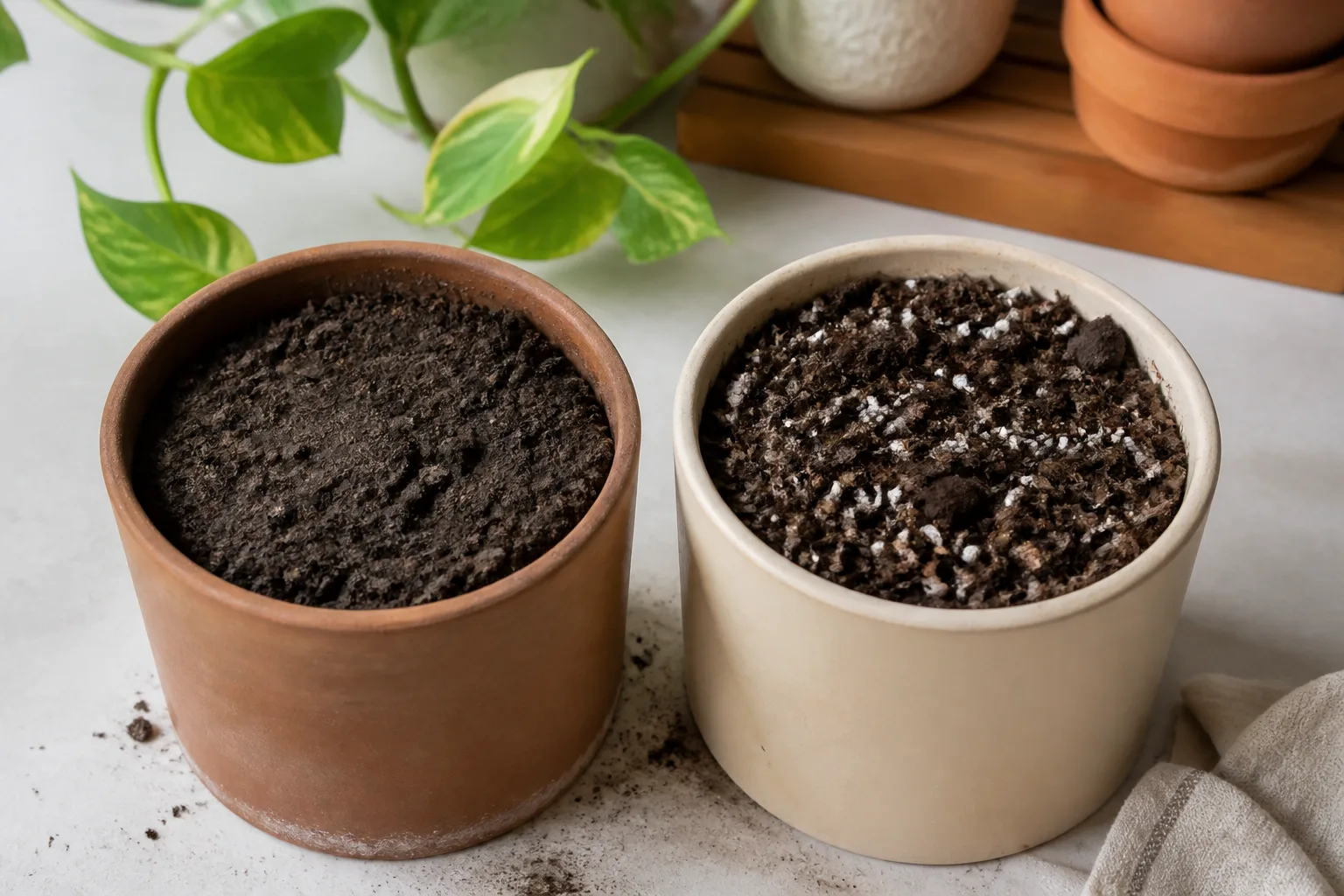
For a clay bed, start with a soil test, add finished compost or another suitable organic amendment across the bed, avoid working the soil when it is wet, and repeat the improvement over time. A raised bed filled with a quality growing medium may be the faster choice for vegetables if the native soil is severely compacted or drains poorly.
How to use cornstarch safely around edible plants and pets
Cornstarch is familiar in the kitchen, but “edible ingredient” does not mean “safe to scatter everywhere.” The risk is usually not that a teaspoon of plain cornstarch is a powerful poison; the risk is that a wet, unlabeled mixture can create plant residue, attract moisture, contaminate food-contact surfaces, or give you false confidence about a pest or disease.
Keep cornstarch experiments away from harvestable leaves and fruit unless you have a clear, crop-specific reason and a method that leaves no residue. Use a dedicated measuring spoon and container for garden mixtures, never return used powder to the pantry, and wash tools that touched soil, oil, or pesticides. Keep any prepared gel out of reach of children and pets, and discard it rather than storing it warm.
Do not mix cornstarch with dish soap, essential oils, vinegar, baking soda, or pesticide products by guesswork. The more ingredients a home recipe contains, the harder it is to predict plant burn, spray stability, residue, and exposure. If a commercial product is involved, the label is the authority for where, how much, how often, and on which crop it can be used; unlabeled home remedies do not come with those guardrails. (National Pesticide Information Center’s safe-use guidance)
Better substitutes for the jobs cornstarch cannot do
The fastest way to avoid a garden hack failure is to match the material to the job:
| If your goal is… | Use this instead | Why it fits |
|---|---|---|
| Even spacing for tiny seed | Seed tape, pelleted seed, or a thin cornstarch gel | Designed for placement rather than disease control. |
| Long seed storage | Fully dry seed in a labeled, moisture-proof container kept cool | Controls the variables that actually affect viability. |
| Bulb storage | Proper curing, breathable storage, airflow, and regular inspection | Reduces condensation and reveals rot early. |
| Ants associated with aphids | Remove or treat the sap-feeding pest, then reassess the ants | Addresses the food source instead of scattering a powder. |
| Powdery mildew | Airflow, sanitation, resistant varieties, and a labeled fungicide if needed | Targets the disease and its conditions. |
| Better soil structure | Finished compost, organic matter, mulch, and a soil test | Builds stable pore space over time. |
| A spray that wets leaves evenly | A compatible labeled surfactant or adjuvant | Formulated to mix and spread predictably. |
| A slippery path | Drainage, cleaning, algae control, and traction | Solves the surface hazard without wet starch. |
A simple decision rule for pantry remedies
Ask three questions before applying any kitchen ingredient to a plant. What is the exact job? If the answer is “kill a disease” or “change soil structure,” use research-based horticultural guidance instead of a recipe. What happens when it gets wet? If it turns sticky, ferments, clogs, or seals a surface, keep it off leaves and roots. Can I measure success and undo the test? If you cannot tell whether it helped—or cannot rinse, remove, or isolate it—do not apply it broadly.
That rule preserves the fun part of garden experimentation while removing the dangerous leap from “this seems plausible” to “this protects my entire crop.”
A one-week garden test plan
If you still want to try cornstarch, choose a job with a small downside and a clear endpoint. Seed gel is a better first experiment than dusting an entire bed for ants or spraying every leaf with a cloudy mixture.
On day one, choose one short row of fine seed and leave a nearby row as your comparison. Make a thin gel, label the date and crop, and plant both rows at the same depth. Give them the same light, soil, and water. Do not pre-soak one row unless you are intentionally comparing that variable.
On days two through five, check moisture and emergence without adding more starch. Record whether the gel stayed where you placed it, whether the seeds emerged evenly, and whether thinning was easier. If the surface forms a crust, smells sour, or remains wetter than the comparison row, stop using it in that bed and remove the affected surface gently when possible.
On day seven, count seedlings in a fixed length of row rather than deciding by impression. If the gel did not save time or improve spacing, go back to a seed tape, pelleted seed, or careful hand sowing. A useful garden experiment earns its place by reducing work or risk—not by producing the most exciting before-and-after story.
Conclusion
The best cornstarch garden uses are modest and temporary: make a seed-spacing gel for tiny seeds, absorb a fresh oil spill on hardscape, or reduce friction on a clean tool handle. Dry-storage claims deserve caution because seed viability depends on moisture and temperature, while bulbs need curing, airflow, and inspection more than a dusting of pantry powder.
For ants, powdery mildew, spray adhesion, slippery paths, and clay soil, cornstarch is not the tool I would trust with a crop. Diagnose the real problem, use the least disruptive effective method, and choose a labeled product or extension-backed practice when the job calls for one. A healthier, more pest-resilient garden comes from good growing conditions and targeted action—not from coating every problem in white powder.