Fiddle-Leaf Fig Dropping Leaves: Causes and Fixes
Fiddle-leaf fig dropping leaves? Check soil, roots, light, temperature, and pests, then rebuild a steadier routine without making the problem worse.
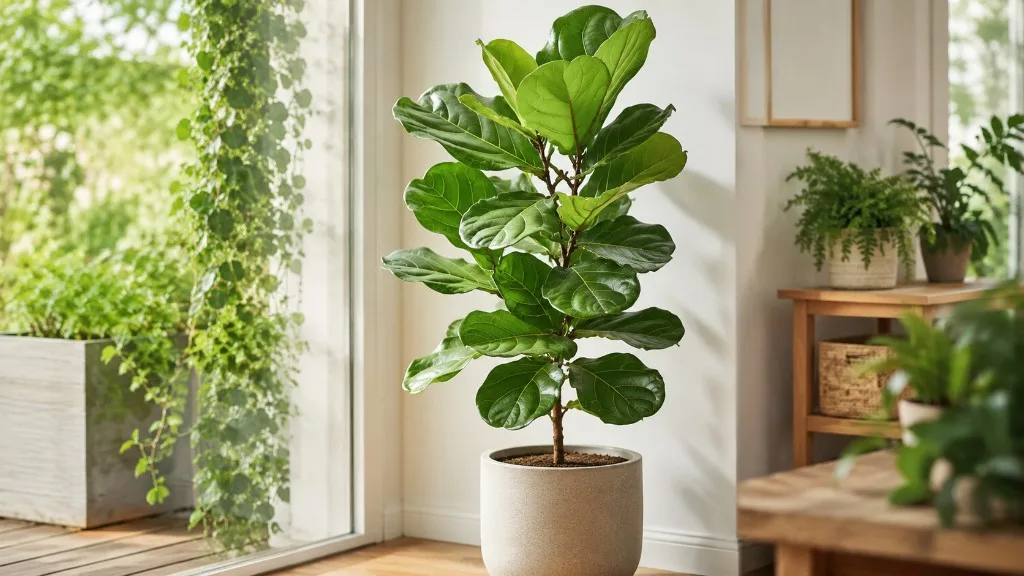
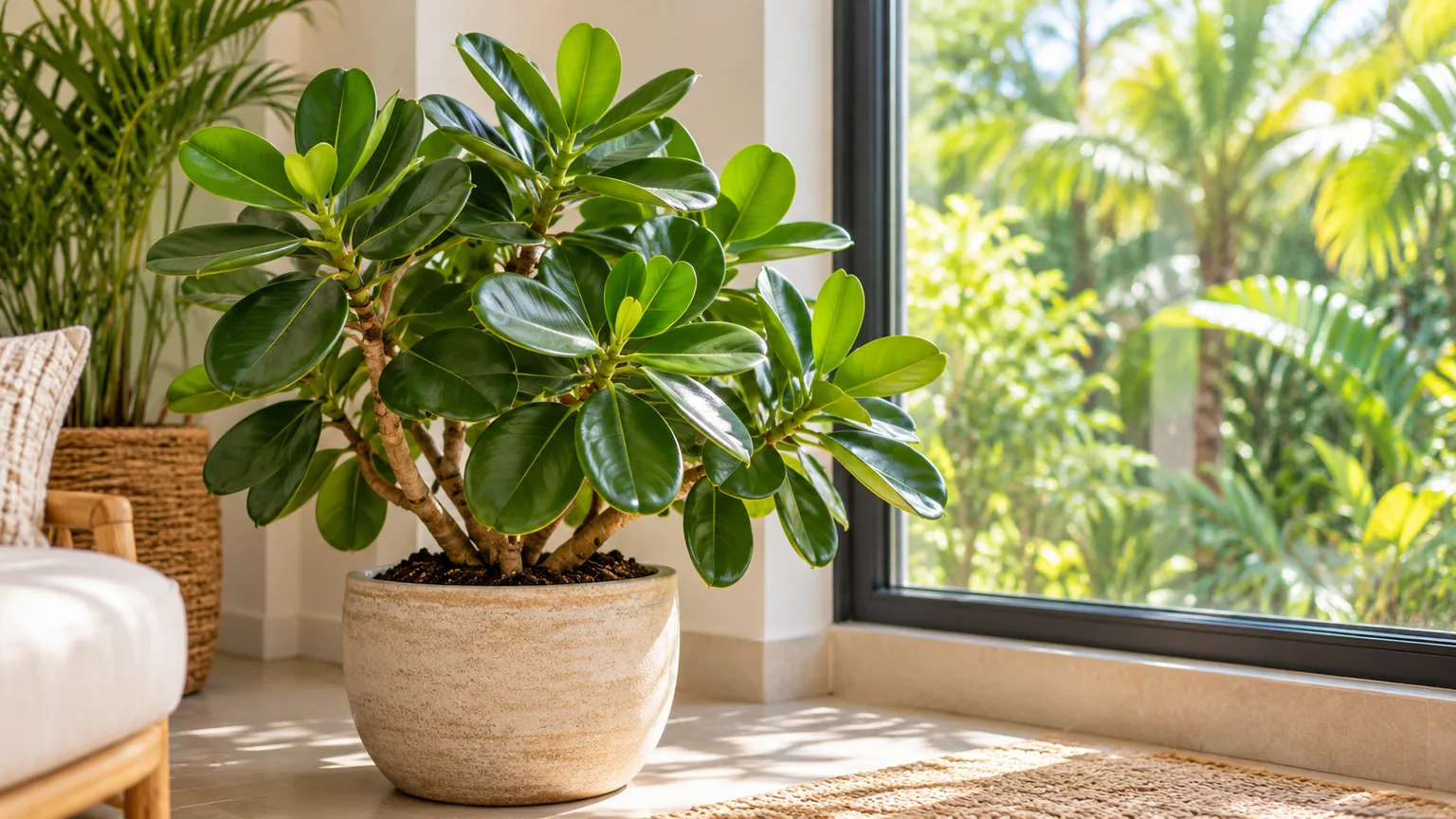
When a fiddle-leaf fig drops one large leaf, it feels like a crisis because every leaf is so visible. The right response is to pause before watering: leaf drop can follow dry soil, saturated roots, a sudden move, low light, temperature stress, or sap-sucking pests, and the wrong “fix” can intensify the original problem.
The goal is not to force a fallen leaf back. It is to find the active stress, correct one thing at a time, and give the plant a stable place to produce new growth. North Carolina Extension describes Ficus lyrata as a plant that prefers bright indirect light, moist but well-drained soil, protection from afternoon sun, moderate humidity, and temperatures above 55°F; it also lists both too much and too little water as causes of leaf drop. That baseline is a better starting point than a fixed watering calendar, as NC State Extension explains.
Start with a 10-minute triage before you water
Before touching the watering can, write down how many leaves fell and when you first noticed the change. Then work through the plant in this order: recent changes, leaf pattern, soil moisture, drainage, light, and pests. This sequence matters because a dry-looking leaf can be caused by a dry root zone, but it can also be caused by roots that are too damaged to take up water.
Check timing, location, and which leaves are falling
Ask whether the plant moved recently, came home from a nursery, was repotted, was rotated into a different window, or was placed near an air-conditioner, heater, open door, or cold pane of glass. A sudden cluster of otherwise green leaves falling soon after one of those changes points more toward environmental shock than a slow watering mistake.
Next, look at the position of the fallen leaves. A single old leaf at the bottom can be normal replacement, especially when the top growth is firm and healthy. Several lower leaves turning yellow over time fit a root-zone or watering problem more closely, while upper leaves with stippling, webbing, holes, or sudden damage raise the priority of a pest inspection.
Read the soil, pot, and drainage
Push a finger or a wooden skewer about 2 inches into the mix, then lift the pot if you can do so safely. Soil that is cool and wet several days after watering, a sour smell, or a pot sitting in runoff makes overwatering more likely. Soil that has pulled away from the pot wall, feels dry well below the surface, and makes the container unusually light points toward underwatering.
Also check whether water can actually leave the pot. A decorative cachepot can hide a nursery pot with drainage, but a sealed container turns every watering into a risk. If water runs down the sides and out immediately while the center of the root ball remains dry, the mix may have become hydrophobic; that requires a slow rehydration, not more frequent shallow sips.
Match the pattern to the most likely cause
Use the pattern below as a starting point, not a diagnosis from one symptom. Fiddle-leaf figs often show overlapping signs, and you should let the soil and roots settle disagreements between a yellow leaf and a crispy edge.
| What you see | What it suggests | First check |
|---|---|---|
| Sudden green leaves drop after moving or a draft | Environmental shock | What changed in the last one to three weeks? |
| Lower leaves yellow while the mix stays wet | Overwatering or root damage | Drainage, pot size, and roots |
| Edges turn tan and crispy; soil is very dry | Underwatering or dry air | Moisture several inches down and pot weight |
| New leaves are pale, growth is sparse, or the plant leans | Too little light | Window exposure and distance from glass |
| Bleached patches face the window | Sun scorch | Afternoon direct sun and heat through glass |
| Fine speckling, webbing, sticky residue, or cottony clusters | Pests | Leaf undersides, stems, and leaf joints |
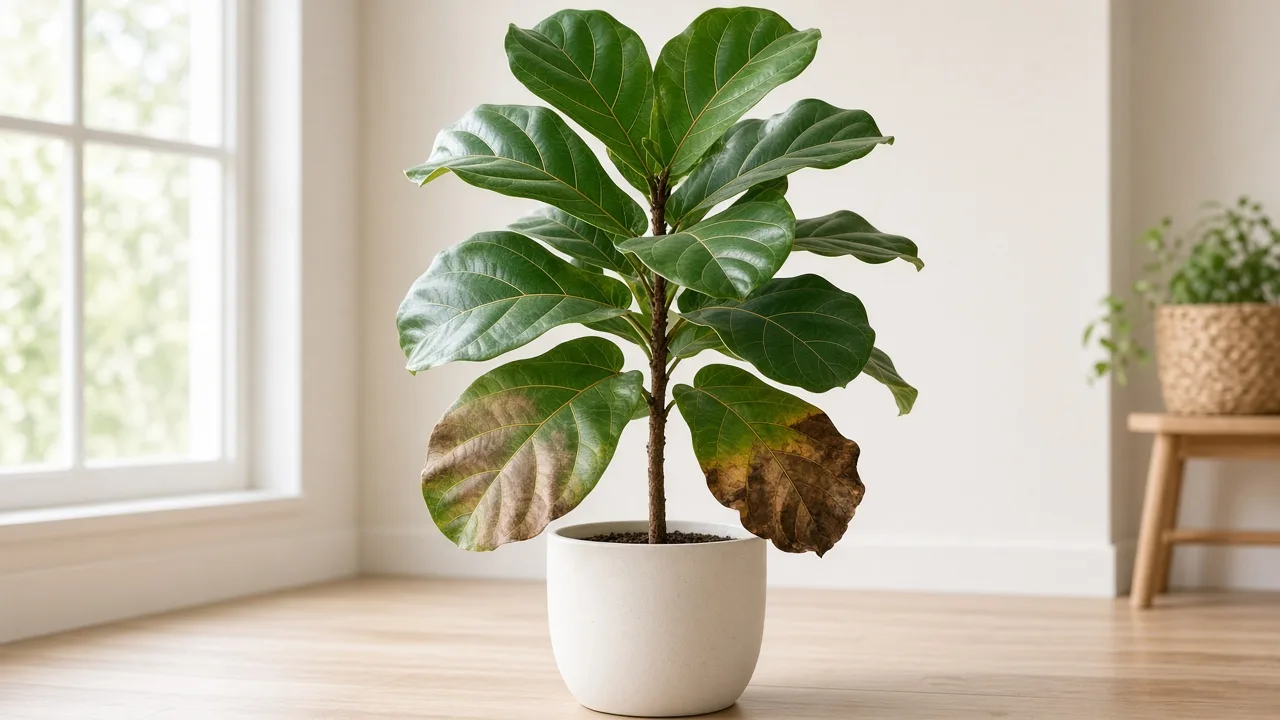
Do not treat the table as a reason to stack fixes. Watering, repotting, moving, fertilizing, and spraying all in the same afternoon can leave you with no way to tell which change helped. Make the least disruptive correction that fits the evidence, then observe whether new damage slows.
Environmental shock after a move, draft, or repot
Fiddle-leaf figs are particularly noticeable when they adjust to a new environment. Moving a plant changes light intensity, temperature, humidity, and air movement at the same time, even when the new location is only a few feet away. Epic Gardening describes leaf drop after a major move as a common adjustment response and notes that a newly purchased plant may lose a small number of leaves while it adapts from nursery conditions to a home. Use that explanation when the timing matches, but keep checking the root zone, as Epic Gardening advises.
Repotting can create a similar pause because disturbed roots temporarily take up water less efficiently. A plant that drops a few leaves after a careful repot may be stressed rather than doomed; a plant that keeps losing leaves while its new pot remains soaked has a continuing moisture problem that waiting alone will not solve.
Set a shocked plant in bright, stable light and leave it there. Keep it away from direct blasts from heating or cooling equipment, avoid cold drafts, and do not rotate or rearrange it every day while you search for a perfect angle. Water only when the mix reaches the dry point appropriate for that pot, and do not fertilize until the plant is showing active new growth again.
Overwatering and root trouble
Overwatering is not simply “too much water in one day.” It is often a slow-drying root zone caused by dense mix, a pot that is much too large, blocked drainage, a saucer that stays full, or a dim and cool location where the plant uses little water. NC State Extension flags fiddle-leaf figs as intolerant of wet soils and connects leaf drop with water extremes, while practical guidance from Gardening Know How emphasizes checking roots rather than relying on leaf color alone.
If the soil is still damp and the leaves are yellowing or drooping, pause watering and check the pot. Do not keep adding water because the leaves look thirsty; roots damaged by low oxygen can fail to move water upward, making a wet plant imitate drought. A sour smell, soft stems, blackened tissue, or a root ball that stays wet for an unusually long time makes an inspection more urgent.
How to inspect roots without guessing
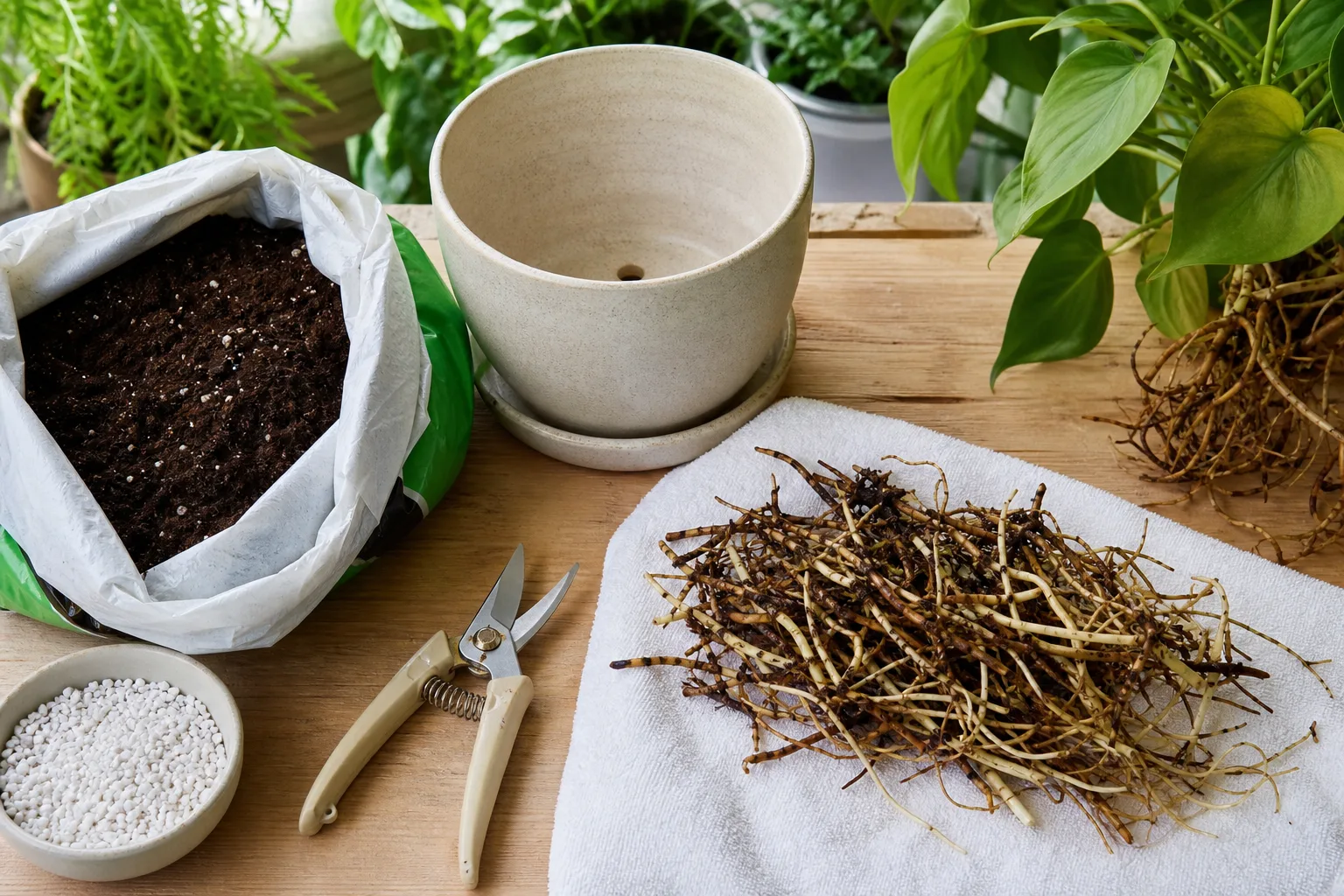
Slide the plant from its pot over a protected surface and loosen enough mix to see the roots. Healthy roots are generally firm and flexible, with pale tan or white sections; rotting roots are dark, soft, slimy, or foul-smelling and may shed their outer tissue when handled. Gardening Know How explains that root rot can mimic underwatering precisely because damaged roots cannot supply water even while the soil around them is wet. The root inspection is the confirmation step described by Gardening Know How.
If roots are mostly firm, return the plant to a pot with clear drainage and let the mix dry to the correct depth before watering again. If some roots are mushy, use clean, sharp shears to remove only the dead sections, keeping as much firm root tissue as possible. A dramatic leaf drop does not justify cutting healthy roots or repeatedly disturbing the plant without evidence.
The recovery plan after root rot
Repot into fresh, airy indoor potting mix in a clean container that is only slightly larger than the remaining root ball. Do not bury the trunk deeper than it was, do not leave the plant standing in runoff, and do not use fertilizer while the reduced root system is trying to recover.
After repotting, place the plant in bright indirect light and keep conditions steady. Water less by volume than you did before only if the root system is now much smaller, but still water thoroughly when the mix reaches the dry point; tiny daily splashes keep the surface damp without rehydrating the whole root ball. Recovery may take weeks, and severe root loss can be fatal, so the useful sign is the end of new damage followed by firm buds or new leaves—not an overnight cosmetic improvement.
Underwatering, dry air, and salt buildup
Underwatering usually leaves a different trail from saturated roots. The mix becomes dry far below the surface, the pot feels light, the leaf edges turn tan or crispy, and the foliage may curl or feel papery before it falls. A plant near a heater, in strong light, or in a small root-bound pot can dry faster than your usual routine suggests.
Dry indoor air can worsen edge damage, but low humidity is rarely a reason to keep the roots wet. Give the plant a better location, group plants sensibly, or use a humidifier if the room is consistently dry; do not use a sealed cover or leave water in the saucer. A hygrometer can tell you whether the room is actually dry instead of making you guess from one brown tip.
Fertilizer salts can create brown margins and a plant that looks thirsty even though the soil is moist. If you see a crust on the mix or recently increased feeding, stop fertilizer, water thoroughly so excess drains away, and let the plant stabilize. Resume only a diluted, seasonal feeding routine once new growth shows that the roots are functioning.
Rehydrate dry or hydrophobic soil safely
If the soil is bone-dry and has pulled from the pot, water slowly around the entire surface until the mix begins to absorb it. Pause for a few minutes, then repeat until a small amount drains from the bottom. This is safer than flooding the pot once, which can send water around a shrunken root ball while leaving the center dry.
For a very dry plant, set the nursery pot in a shallow basin of water for a limited soak, then remove it and let it drain completely. Do not leave the pot sitting in water afterward. Once rehydrated, check the soil every few days and adjust the interval to how quickly the pot dries rather than returning to a weekly rule.
Light problems: too little versus too much
Fiddle-leaf figs need useful daylight to support a large canopy. A bright window with filtered light, or a position slightly back from a strong south- or west-facing window, is usually more dependable than a dim corner. NC State Extension recommends bright indirect light or partial shade and warns that afternoon sun can scorch the leaves.
Too little light often appears as slow or stretched growth, long gaps between leaves, leaning toward the window, and soil that stays wet because the plant is using water slowly. Too much intense direct sun produces bleached or tan patches on the side facing the glass, often with dry tissue around the damage. Those damaged areas will not turn green again, so the test is whether new leaves emerge without fresh scorch.
Move the plant gradually if the current light is clearly wrong. A sheer curtain can soften harsh afternoon sun, while a grow light can help in a dark winter room; either change should be followed by a few weeks of observation. Do not move a plant every time one leaf yellows, because repeated location changes can become the stressor you are trying to remove.
Pests that cause leaf drop
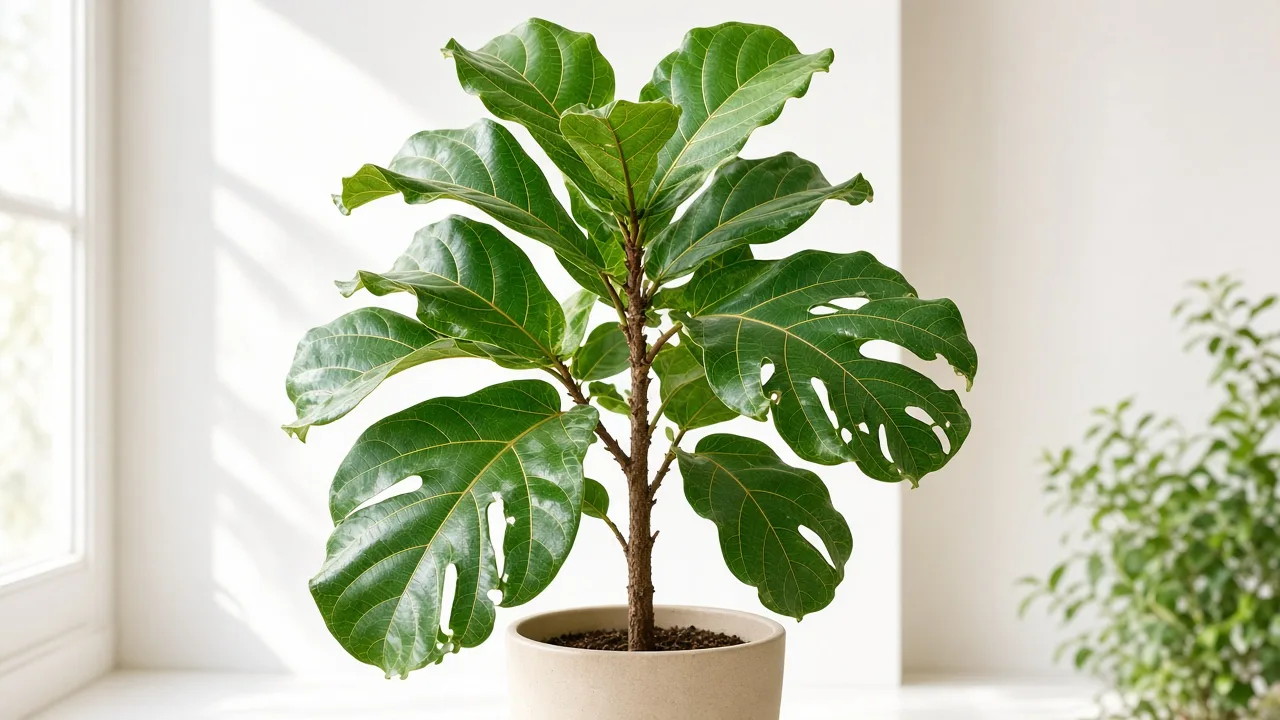
Inspect a dropping fiddle-leaf fig before assuming every mark is a watering issue. Use a flashlight to look under leaves, along the midrib, around the leaf-stem joints, and on the trunk. Sticky residue, fine webbing, cottony clusters, fixed brown bumps, stippled discoloration, or unexplained holes justify isolating the plant from nearby houseplants while you identify the pest.
Montana State University Extension notes that indoor infestations can cause leaf drop or yellowing and recommends regular inspection, quarantine, small-area testing, and careful label reading before using a pesticide. Those precautions matter on fiddle-leaf fig leaves, which can mark or burn when a product is misapplied, so follow the guidance from Montana State University Extension.
Spider mites
Spider mites are tiny and easier to notice through their damage than as individual insects. Look for pale stippling, a dusty or bronze cast, fine webbing between leaves and stems, and activity on the undersides. Dry, warm indoor air can make an infestation progress quickly, but increasing humidity alone will not remove an established population.
Start by isolating the plant and rinsing the foliage with a gentle but thorough stream of water, including the undersides if the plant and pot can be handled safely. Let the leaves dry, then use an insecticidal soap or horticultural oil only if the product label allows indoor use on ornamental plants; test a small area first and follow the label’s dilution and repeat schedule. Reinspect weekly because one treatment may miss eggs or protected adults.
Mealybugs, scale, and thrips
Mealybugs look like white cottony clusters in leaf joints and along stems. Scale looks more like small brown or tan bumps that cling to the plant, sometimes with sticky honeydew. Thrips can leave silvery scarring, distorted new growth, or tiny dark specks, and they may be much harder to manage than a few visible mealybugs.
For a small infestation, remove individual insects with a cotton swab or soft cloth only after testing the method on a discreet leaf area. For a larger infestation, follow a product label rather than mixing household ingredients; keep the plant isolated and repeat monitoring after treatment. Remove heavily damaged leaves only after the pest is under control, because pruning alone does not stop insects hidden on stems or new growth.
A recovery routine for the next month
Once you have made the evidence-based correction, give the plant a quiet month. In week one, record the soil moisture, check the drainage hole, isolate pests if needed, and keep the plant in stable light. In weeks two and three, look for whether new leaves are falling, whether the mix is drying at a sensible rate, and whether existing leaves are holding their color and firmness.
By week four, assess growth rather than expecting the old leaves to look perfect. A healthy recovery may show as a firm terminal bud, a new leaf, or simply no additional leaf loss. If damage continues, revisit the diagnosis from the beginning; persistent wet soil, a hidden pest, insufficient light, or a draft is more likely than a need for another dose of fertilizer.
Keep a simple note of watering dates and pot weight for a few cycles. This turns “I think it needs water” into a repeatable observation and makes seasonal changes easier to catch. A calendar can remind you to check, but the plant and pot should decide whether you water.
When to prune, repot, or leave leaves alone
Prune a leaf when it is fully brown, badly torn, or carrying confirmed disease damage that you have already addressed. Use clean shears and cut the leaf stalk without stripping bark from the trunk. A partly green leaf still contributes energy, so removing every imperfect leaf can reduce the plant’s ability to recover.
Repot when the root inspection, blocked drainage, compacted mix, or severe root binding makes the current pot unsafe. Do not repot solely because one leaf fell, because the disturbance can add transplant shock to a plant that was already adjusting. If the roots are healthy and the mix is drying normally, leaving the plant undisturbed is often the best intervention.
You can clean dust from sturdy leaves with a damp, soft cloth, but avoid polishing products and aggressive rubbing. Clean foliage is easier to inspect for pests, while a glossy cosmetic treatment can hide the stippling, residue, or webbing you need to see.
How to prevent another leaf-drop cycle
Choose the location before you choose a watering schedule. Give the fiddle-leaf fig bright filtered light, keep it away from heating and cooling vents, protect it from cold drafts, and leave enough space for the canopy to grow without brushing a wall or curtain. NC State Extension lists scale, aphids, mealybugs, thrips, and spider mites among pests to monitor, so inspect the undersides of leaves whenever you water.
Use a pot with drainage holes and an airy mix that does not stay saturated. Water thoroughly when the upper root zone has dried to the appropriate depth, let excess drain, and empty the saucer. Reduce watering in darker or cooler periods only as the drying rate changes; never reduce it by a blind seasonal formula if the room remains warm and bright.
Acclimate any outdoor summer move and any return indoors gradually, quarantine new plants, and avoid feeding a plant that is sick, freshly repotted, or not actively growing. This combination of stable placement, observable moisture checks, and early pest inspection prevents more leaf-drop cycles than a collection of emergency products.
Conclusion
Fiddle-leaf fig leaf drop is a symptom, not a diagnosis. Start with timing and leaf position, then check the soil, drainage, light, roots, and undersides of the leaves before choosing a fix. Sudden green-leaf loss after a move may need stability; yellow leaves in wet soil may need root inspection; crispy edges in a light pot may need a careful rehydration; and stippling or webbing calls for isolation and pest management.
The leaves that already fell will not return, but a healthy root system and growing point can support new growth. Make one correction, hold the plant steady, and judge recovery by the end of new damage and the arrival of firm new growth—not by how quickly the old scars disappear.