How to Get Rid of Rats: Traps, Exclusion, and Safety
Use this sequence to learn how to get rid of rats: identify activity, remove food and shelter, seal entry points, set traps, and know when to call a pro.
Getting rid of rats takes more than putting out one trap or scattering bait. The dependable sequence is to confirm where rats are active, remove what feeds and shelters them, trap animals already inside, and close the routes they use to return. That integrated approach addresses both the rat you see and the conditions that keep the next one coming.
Start with the freshest evidence rather than treating every corner of the property. A rat in a wall void, an animal traveling along a fence, and an old burrow beneath a shed call for different actions, and the wrong trap in the wrong place can sit untouched. The CDC’s rodent-control guidance likewise emphasizes reducing food, water, and shelter while trapping and sealing access.
The fastest reliable plan starts with four steps
For a first response, keep the work simple and focused. Take a photo of new droppings, gnaw marks, or a burrow; note the room or outdoor route and date; then follow this order:
- Remove easy food and water. Seal pantry goods and animal feed in thick containers with tight lids, clean spills, bring pet bowls inside overnight, and fix leaks where practical.
- Choose traps for the rat’s route. Use rat-sized snap traps near fresh signs, not small mouse traps scattered through open rooms. Keep every trap away from children, pets, and non-target wildlife.
- Inspect the structure and yard. Check low gaps, utility penetrations, garage and crawl-space doors, vents, roof edges, tree branches, compost, and stored clutter.
- Repair openings with gnaw-resistant materials. Use metal mesh, sheet metal, or masonry where appropriate; ordinary foam or caulk by itself can be chewed through.
- Check progress and clean only after control is under way. Inspect traps daily, watch cleaned areas for new signs, and follow CDC cleanup instructions instead of sweeping droppings dry.
For one confirmed animal in an accessible room, traps plus food control may be enough while you repair entry points. Persistent fresh signs, multiple rooms, attic or wall activity, or contaminated insulation should move the job toward professional inspection rather than a larger pile of consumer poison.
Confirm rats and map where they travel
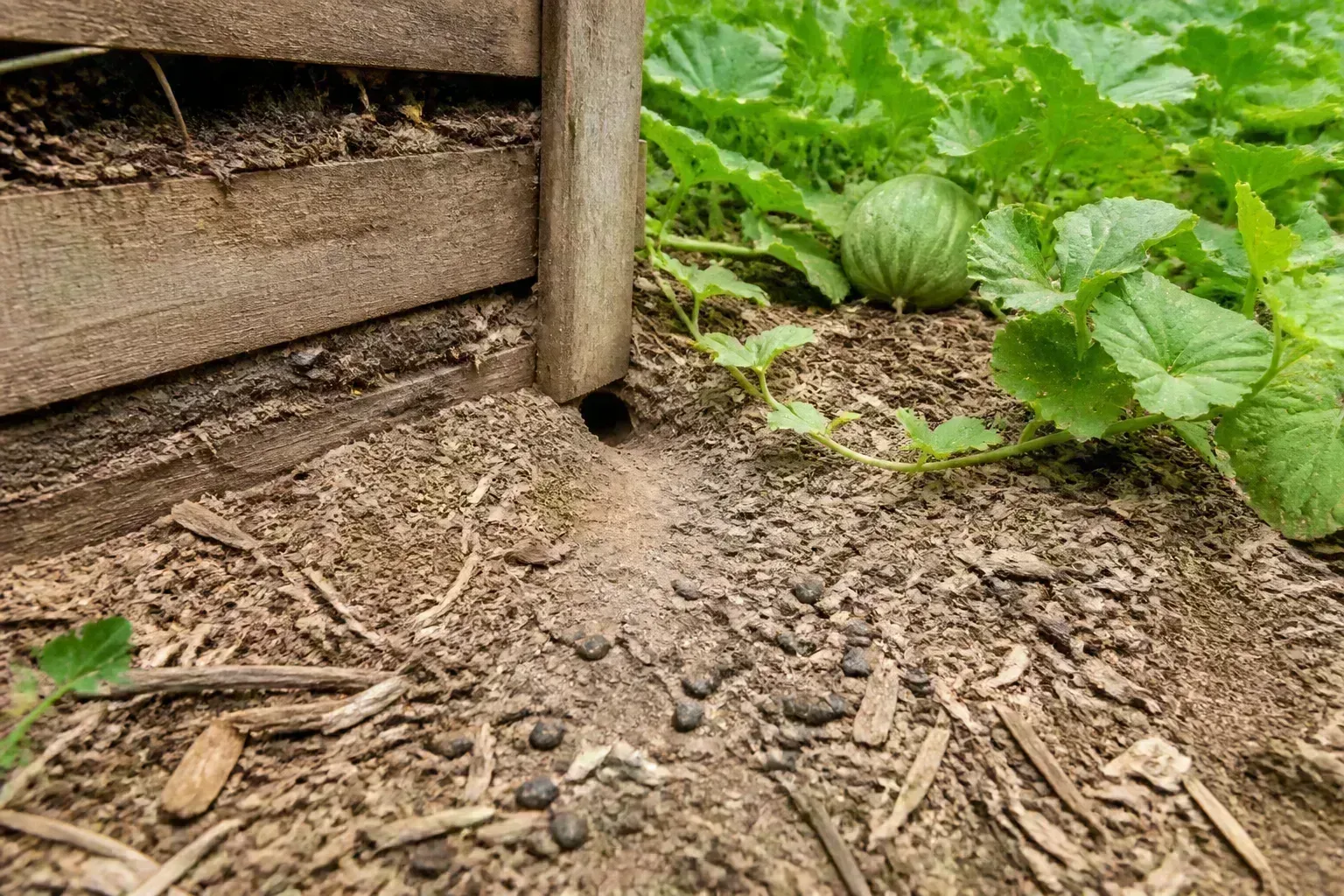
Rats are mostly active after dark, so homeowners often notice evidence before they see the animal. Common clues include larger droppings near food or pet dishes, gnawing on packaging or wood, dark rub marks along beams and pipes, shredded nesting material, scratching in a ceiling, burrows, and movement along fence tops or utility lines at dusk. UC IPM lists these signs as useful indicators, but evidence alone may not identify the exact species.
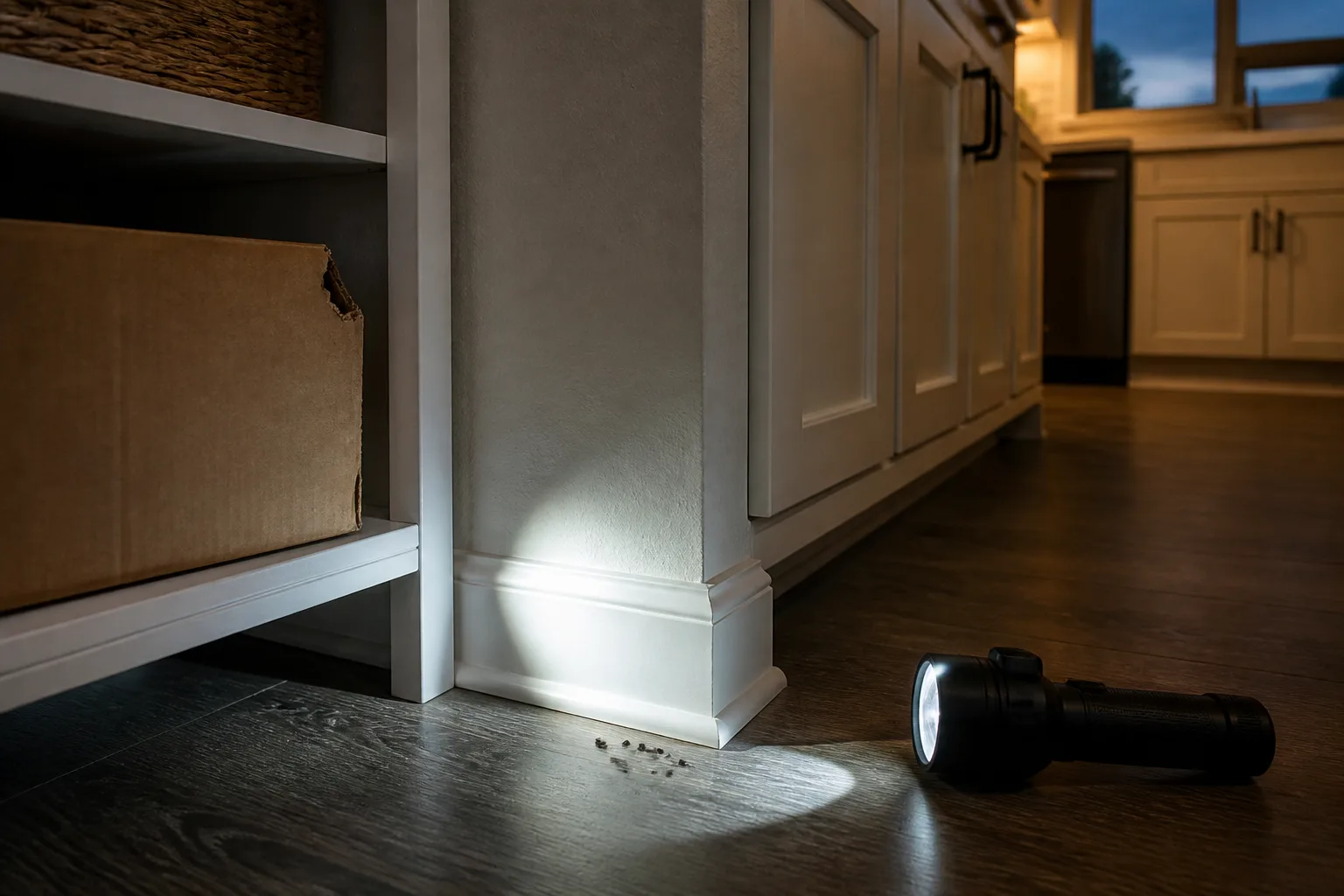
Walk the area with a flashlight and record where signs cluster. Look low behind appliances, under sinks, beside garbage, and near foundation gaps; for roof rats, also inspect shelves, attic access, soffits, rafters, and tree or fence routes. The UC IPM rat guide notes that rats favor familiar pathways, so a map of fresh signs is more useful than putting traps in random places.
Roof rats and Norway rats need different placement
In many U.S. homes, the common commensal species are the Norway rat and the roof rat. A Norway rat tends to be stockier and nest in burrows or lower spaces; a roof rat is typically more slender, climbs well, and often nests in trees, dense vines, or elevated indoor areas. Location is a clue, not proof: either species can use a building’s upper or lower voids.
| Clue | Norway rat | Roof rat |
|---|---|---|
| Typical routes | Along foundations, behind objects, through lower floors | Fences, branches, utility lines, attic edges, shelves |
| Common shelter | Burrows, woodpiles, clutter, basements | Dense vegetation, trees, attics, wall or ceiling voids |
| First trap locations | Floor level by fresh signs and wall edges | Elevated ledges or beams along a known route, plus ground routes if signs confirm them |
| Useful habitat changes | Remove ground clutter and food near burrows | Thin connected vegetation and keep branches from providing roof access |
That distinction matters because a baited trap on a basement floor cannot intercept a rat that is traveling along an attic beam. If you cannot tell which species is present, use droppings, route clues, and camera footage to guide placement, or ask a licensed local professional to identify it before using toxic bait. NC State Extension also cautions that small juvenile rats can be mistaken for mice, which affects trap size.
Check whether the evidence is fresh
Old signs can remain after rats have left, so reset the evidence before escalating. After you safely disinfect and remove droppings or wipe a hard surface, check the same route again over the next several days; new droppings, fresh pale gnawing, or a new catch indicate current activity. The CDC describes reappearing droppings after safe cleanup as one way to detect rodents that are still present.
Do not handle droppings or nests just to decide whether they look old. A phone photo, a dated note, or a camera aimed at a travel route is enough to compare signs without creating dust or contaminating your hands. If you have already cleaned an area and nothing new appears, keep monitoring rather than assuming every old mark proves an active infestation.
Remove food, water, and shelter
Sanitation is not a substitute for trapping rats already nesting in a house, but it makes traps and exclusion more effective. Rats stay near reliable food and shelter; if a bowl of pet food, overflowing compost, or an open bin is easier to reach than your trap, the trap has to compete with that food source. The RHS garden guidance similarly points to accessible food, compost, and hiding places as reasons rats keep visiting gardens.
Make kitchens, garages, and storage harder to forage
Move cereal, grains, nuts, birdseed, pet food, and livestock feed out of paper bags and thin plastic sacks. Use thick plastic, metal, or glass containers with tight lids; rats can gnaw softer packaging and some plastic tubs. Wipe crumbs from under appliances, empty kitchen waste regularly, keep garbage-can lids secure, and avoid leaving pet food or water bowls down overnight if that is feasible for the animal.
Check for water as well as calories. Repair dripping taps, leaky hose connections, and slow plumbing drips; dry standing water in a basement or utility area when it is safe to do so. Move seldom-used cardboard and fabric into sealed bins, raise stored items off the floor, and reduce clutter so there are fewer dark nesting pockets and easier-to-check edges.
Make yards and gardens less attractive
Outside, secure trash and compost, pick up fallen fruit and nuts, clean birdseed from beneath feeders, and feed pets only what they will eat at one sitting. Put firewood and lumber on a rack away from the house, clear brush and debris touching the foundation, and thin dense groundcover where it forms a concealed path. In food gardens, harvest ripe produce promptly; the RHS advises against using compost from a rat-inhabited pile on produce that will be eaten raw and may touch that compost.
Roof rats can use a connected canopy as a travel bridge, while Norway rats more often exploit burrows and sheltered ground-level clutter. Trim branches that touch or overhang the roof, remove climbing vines from the wall where practical, and maintain a clear strip around foundations and sheds. A single yard change will not solve a neighbor-wide problem, but coordinated cleanup, sealed feed, and reduced shelter can cut down the easy resources rats find around homes.
Seal entry points without trapping rats inside
Exclusion is the part that keeps the next rat from using the same opening. Look at the house from the ground up, including foundation cracks, utility and plumbing penetrations, garage-door edges, crawl-space vents, damaged screens, roof vents, soffits, and gaps where siding meets masonry. Rats climb well, so an inspection limited to the basement can miss the route into an attic.
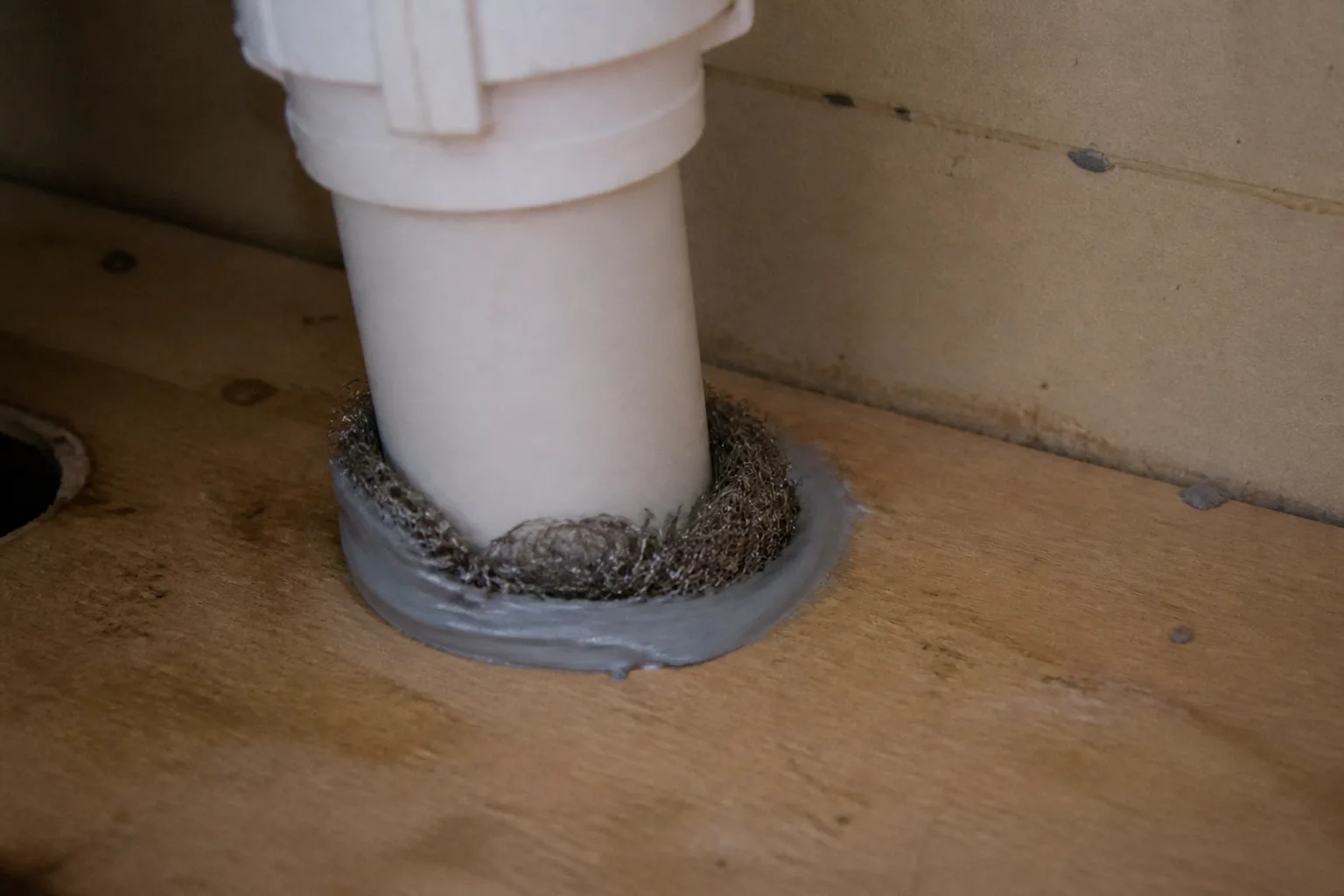
The CDC’s sealing guide recommends checking gaps inside and outside, then using materials such as metal, hardware cloth, cement, or steel wool with caulk for small openings. UC IPM advises sealing openings larger than about a quarter inch and notes that rats can chew through plastic, foam, wood, and caulk. Treat that measurement as a cautious home-proofing threshold, not as a guarantee that a house with no visible quarter-inch hole is rat-proof.
Inspect from the foundation to the roofline
Start where evidence is freshest, then inspect one level outward and upward. A low burrow and droppings by the trash can point you toward foundation openings and under-deck gaps; gnawing in the attic calls for checking roof edges, vents, fascia, utility lines, and the tree canopy. Use binoculars or a camera zoom for high spots rather than climbing onto a roof without the training and equipment to do so safely.
Check door bottoms in daylight, when a light line can reveal a gap. A properly fitted door sweep, repaired threshold, intact vent screen, and sealed pipe penetration are often more useful than spraying scent around the room. Keep ventilation openings functional: use appropriately sized durable metal screening rather than blocking vents or creating moisture problems inside a wall or crawl space.
Use materials rats cannot chew through
For small irregular gaps, pack a metal mesh or steel wool into the opening and secure it with a suitable exterior sealant so rats cannot push the material out. For larger holes, choose galvanized hardware cloth, sheet metal, or a masonry repair suited to the location; attach it firmly at the edges. Lightweight chicken wire, expanding foam alone, soft plastic, and loose caulk are not durable rodent barriers.
If you hear activity inside a wall or roof void, do not blindly close the only apparent opening and leave an animal trapped in the structure. Trap or have the route inspected first, especially when the opening may be an exit as well as an entrance. For a rat entering through roof wires, a damaged sewer line, or a structural opening you cannot reach safely, bring in a professional or the relevant utility rather than taking a ladder or plumbing risk.
Trap rats indoors with correctly sized snap traps
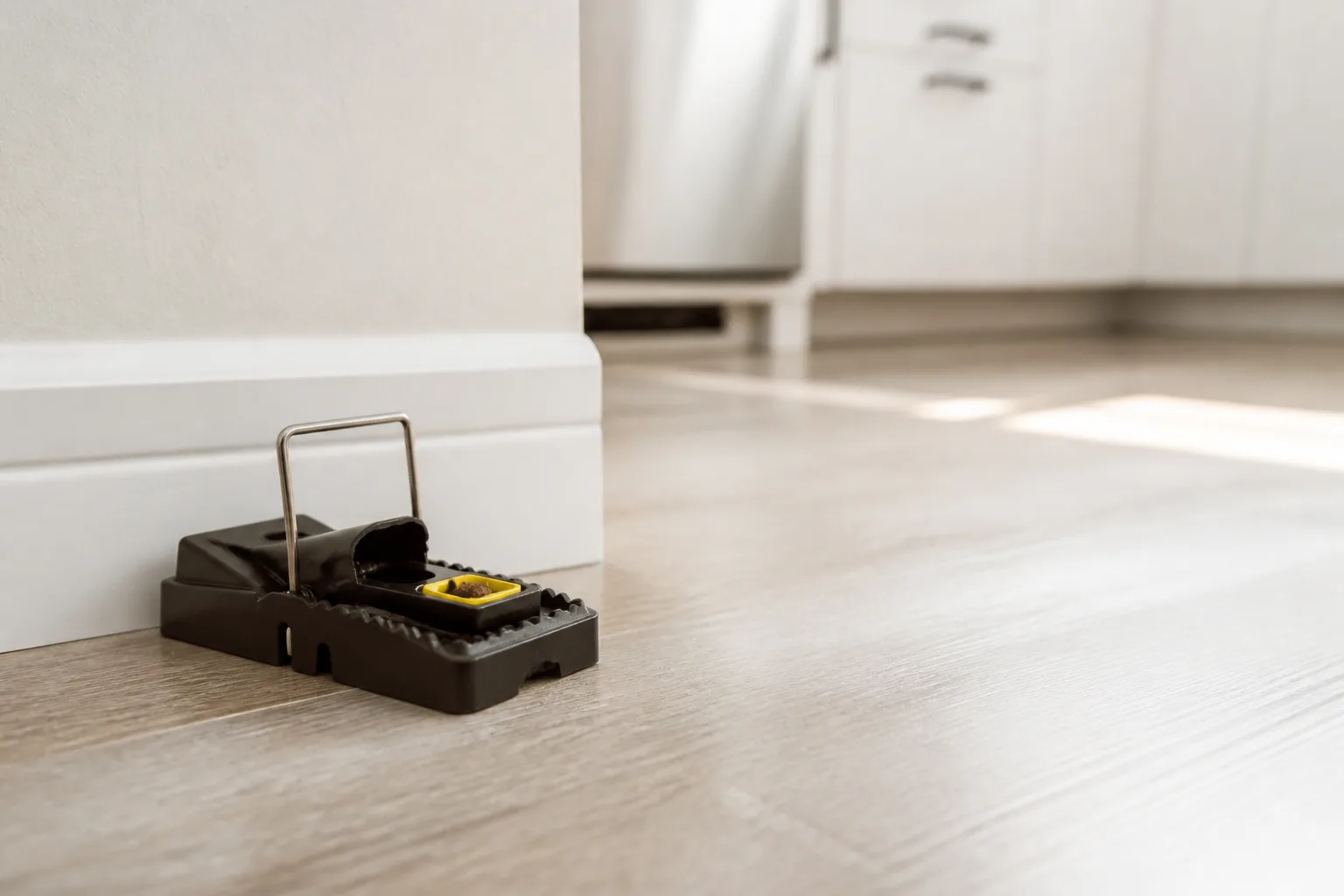
For most accessible indoor rat problems, a rat-sized snap trap is a practical first control tool. It lets you confirm a catch and remove the carcass, and the CDC recommends traditional snap traps around the home while reserving poison bait stations for infestations that persist. Choose a trap labeled for rats: a small mouse trap may not hold or trigger on an adult rat, while a rat snap trap has enough force to injure fingers or a curious pet.
Bait with a small amount of food the rat is already eating or can readily smell, such as peanut butter, nuts, or dried fruit. A pea-sized smear is enough; a large blob can be taken without triggering the bar. Wear gloves when handling a used trap or carcass, follow the product directions, and use a protective station or barrier when children, pets, or wildlife could reach the trap.
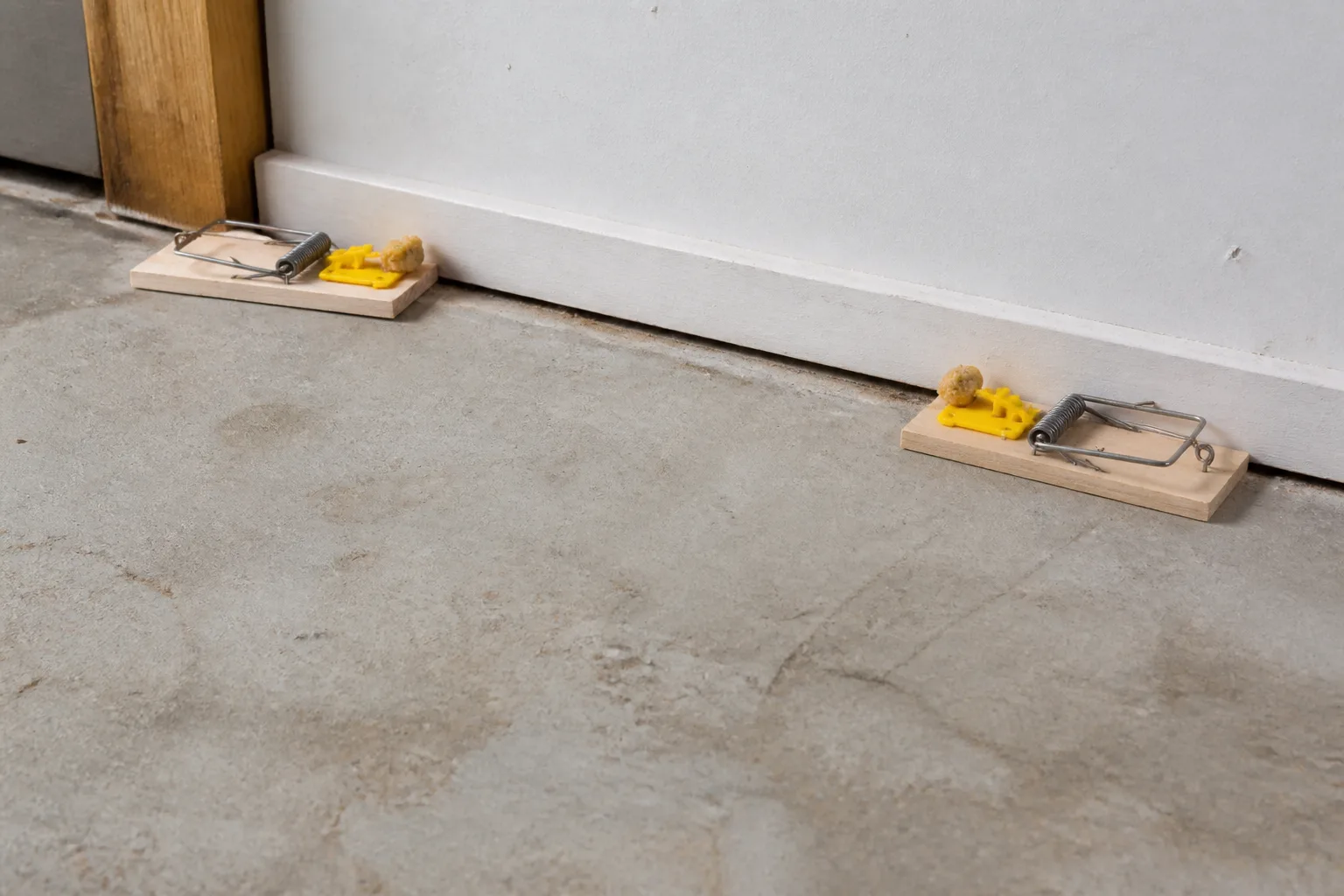
Place the trigger across a confirmed runway
Set a floor trap along a wall, behind an appliance, or near fresh droppings or gnawing—not in the center of a room where rats rarely travel. The trigger or bait end should sit close to the wall, with the trap forming a T across the rat’s route; if a trap must run parallel to a wall, using a pair to intercept travel from both directions can help. Keep traps stable so they will not slide or tip if a rat approaches from the side.
For Norway rats, begin with ground-level runways near burrows, foundations, and sheltered clutter. For roof rats, place rat-sized traps on elevated routes only when you can secure them firmly and keep them inaccessible to children, pets, and birds; a trap that can fall is a hazard. UC IPM notes that location is often more important than the trap’s style, so use the fresh sign map to decide where a trap belongs.
Pre-bait cautious rats and check traps daily
Rats often investigate cautiously and may avoid a new object for days. If bait is taken without a catch, or rats ignore a fresh trap, leave the bait on an unset trap for a few nights; once it is eaten repeatedly, set the trap according to its instructions. This “pre-baiting” builds familiarity and reduces the chance that a wary animal will learn to avoid a trap after a failed attempt.
Use enough traps to cover the active route instead of relying on a single device in a large room, attic, or garage. Check traps daily and promptly remove any dead rat; then reset them while signs continue. The CDC says that no captures for a week, together with no new signs, is a reasonable indication that rats are gone, but persistent new droppings, urine spots, or gnawing after a week call for more work or a professional assessment.
Use rodenticide only when the situation warrants it
Poison bait can be part of a rat-control plan, but it is not the best first move for every home. Baits can harm children, pets, and wildlife if accessed, and an animal may die in a wall, ceiling, or other spot that is difficult to reach. Poison also does nothing to close a gap or remove the food that attracted rats in the first place.
If trapping, sanitation, and exclusion do not resolve the problem, first consider whether a professional should handle baiting. Consumer products, station types, and permitted placement vary; the EPA’s current household bait-station guidance explains that some ready-to-use stations are suitable for outdoor use while others are not. Follow the exact product label and local rules, and never put loose poison bait where a child, pet, bird, or other animal could reach it.
Do not buy bait by brand reputation alone or assume every enclosed box is equally tamper-resistant or weatherproof. Check the label for the target species, indoor or outdoor use, station requirements, placement limits, and disposal instructions. The EPA’s rodenticide safety guidance advises storing pesticide away from children and pet food, keeping bait inaccessible, and promptly removing dead rodents to reduce the chance of another animal eating a poisoned carcass.
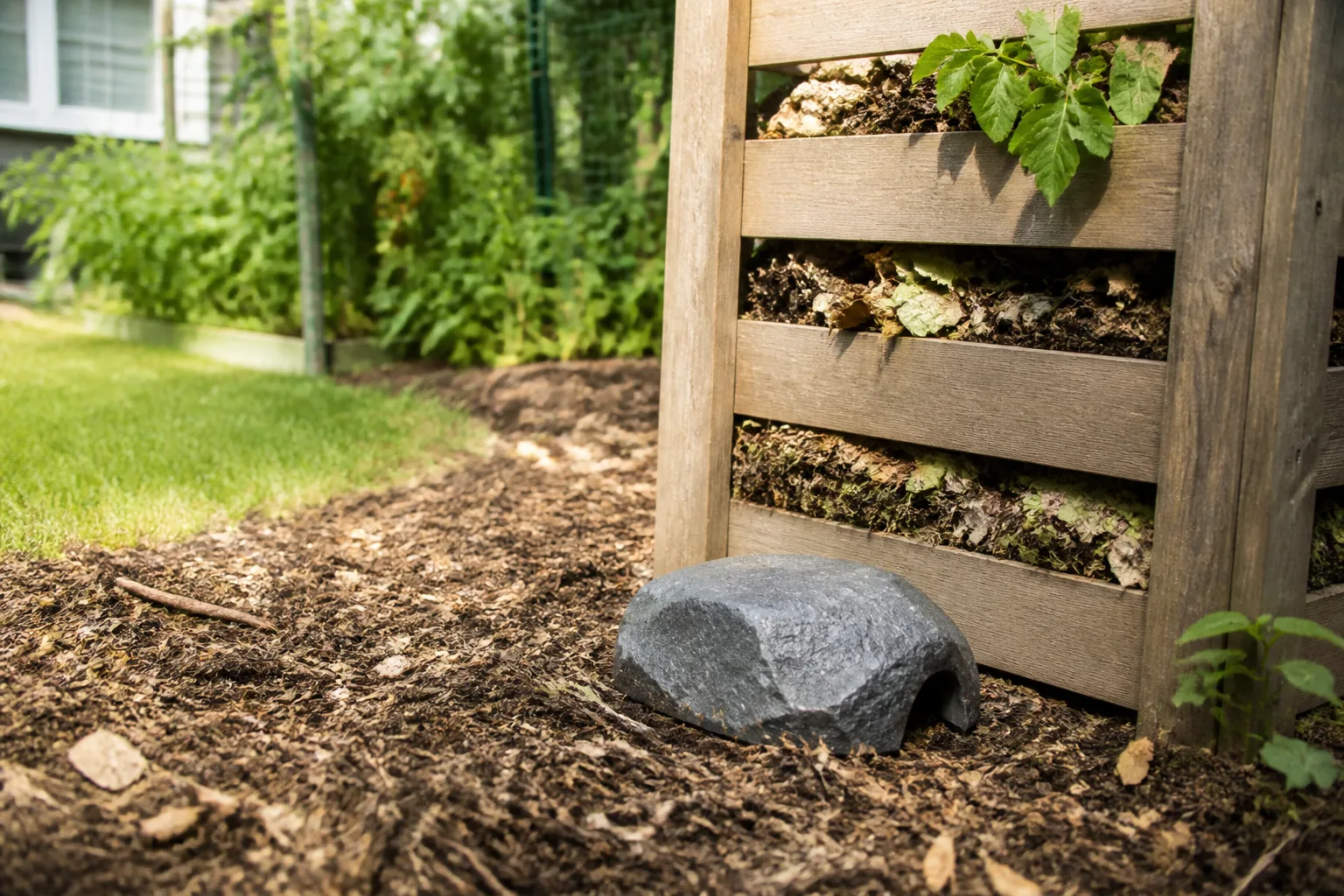
Secondary exposure is another reason to keep bait contained and monitored. A pet or wild predator can be exposed by eating bait directly or, in some cases, a poisoned rodent; extension pest managers warn that rodenticides can harm non-target animals and recommend professional management when bait is needed. If there are pets, children, backyard poultry, owls, hawks, or other wildlife around the property, discuss safer alternatives with a licensed professional before using poison.
Skip scent repellents and other weak shortcuts
Peppermint oil, vinegar, ammonia, mothballs, ultrasonic devices, and “repellent” plants are often presented as easy rat fixes, but they do not remove nesting animals or close entry holes. Odors may cause short-lived avoidance in some situations, yet the scent fades and rats can move around it when food and shelter remain available. The University of Georgia Extension IPM article calls sound and odor repellents generally ineffective; NC State Extension similarly says repellents are not reliable control or prevention.
Use scent products, at most, as a temporary supplement after the real control steps are under way. Do not apply one where pets eat, rest, or live unless its label allows that use; a strong smell is not proof that a rat has left. Ultrasonic devices should not replace trapping, cleanup, or repairs, and an outdoor scented barrier will not stop an animal from using a different route.
Glue boards and live-catch traps also sound simple but are poor routine choices for a household rat problem. Glue boards can leave rats stuck for a prolonged time and may catch non-target animals; live traps require close monitoring and put a person in contact with a live rodent during release. The CDC’s trap guidance advises against glue and live traps in home rodent control, and UC IPM does not recommend live trapping rats for nonprofessionals.
Clean droppings and carcasses safely
Rat urine, droppings, saliva, and nesting material can carry germs, and it is not possible to tell by looking at a rat whether it carries disease. Avoid stirring up contaminated dust: wear rubber or plastic gloves and do not sweep or vacuum dry droppings, urine, or nesting material. If you find heavy contamination, rats in air ducts, or insulation soaked with waste, stop and ask a qualified cleanup or pest professional for help.
For a small amount of waste on a hard surface, ventilate the area before cleaning when appropriate, spray droppings or urine with an EPA-registered disinfectant or bleach solution until very wet, and wait the contact time on the product label; the CDC cleanup instructions say to allow five minutes for its recommended solution or follow the disinfectant label. Wipe with paper towels, discard them in a covered bin, disinfect the surface, then wash gloved hands before removing gloves and wash hands again. Do not mix bleach with other cleaners.
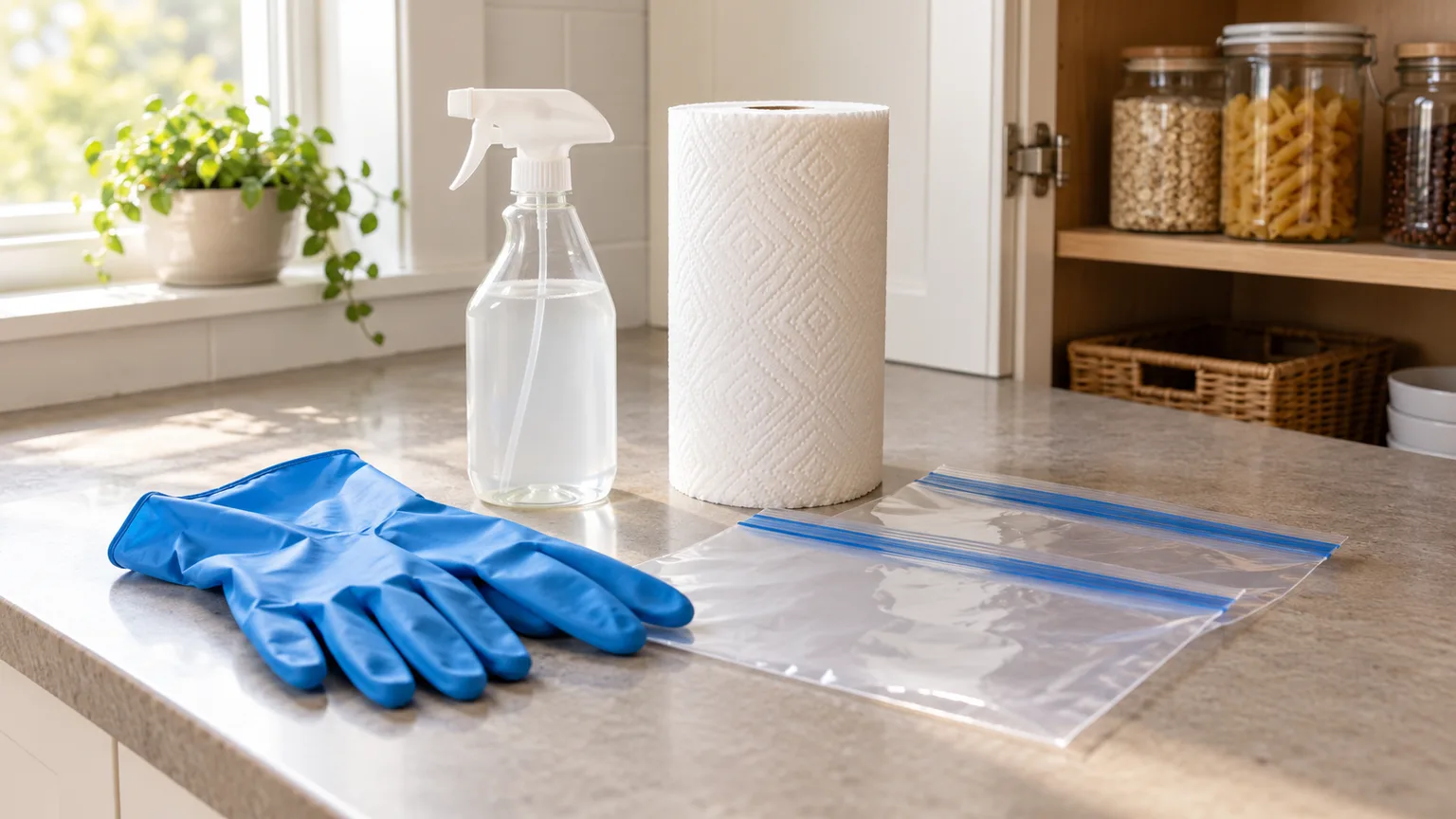
For a dead rat or nest, spray the animal, nest, and surrounding area with disinfectant and let it soak for the label contact time before bagging it. The CDC recommends sealing the carcass and used trap in one plastic bag, placing that inside a second bag, and discarding it in a covered garbage can or following local health-department instructions. Keep pets away during cleanup, and do not handle a live or dead rat with bare hands.
Know when the problem needs a professional
Call a licensed pest-control professional when rats are inside wall voids, ceilings, HVAC ducts, or inaccessible insulation; when electrical wiring or plumbing appears damaged; when there are multiple nests or widespread droppings; or when fresh activity continues after a well-placed trapping and exclusion effort. Professional help is also sensible when poison appears necessary, when a trap could not be made safe around children or pets, or when the building is part of a multi-unit property that needs coordinated control. If rats have entered ventilation ducts, the CDC recommends professional service rather than opening or cleaning the ducts yourself.
Before hiring, ask the company to identify likely species and travel routes, show the suspected entry points, and explain how it will combine trapping, sanitation, exclusion, and monitoring. Ask what products it may use, where stations will be placed, how dead rodents and contaminated materials will be removed, and when it will return to check results. The EPA’s hiring guide recommends checking the company’s license and contacting the state pesticide regulator if you have questions.
A good service visit should leave you with a written plan and specific follow-up actions, not just a box of bait on the patio. Clarify whether repair, attic cleanup, insulation replacement, and sealing are included or handled by another contractor. Keep the dated sign map and photos; they help the technician distinguish a new route from old damage and make the follow-up inspection more useful.
Conclusion
The most dependable way to get rid of rats is to work the problem from both ends: remove the food and shelter that make the property attractive, and trap the animals already using it. Use rat-sized snap traps on confirmed routes, seal gaps with durable materials, and choose poison only with careful label compliance and a clear reason. If signs continue or the nest is out of reach, a professional inspection is the safest route to a lasting fix.



