How to Choose Hydrangea Fertilizer
Learn how to choose hydrangea fertilizer using a soil test, shrub type, and product label. Get timing and application guidance, plus mistakes to avoid.
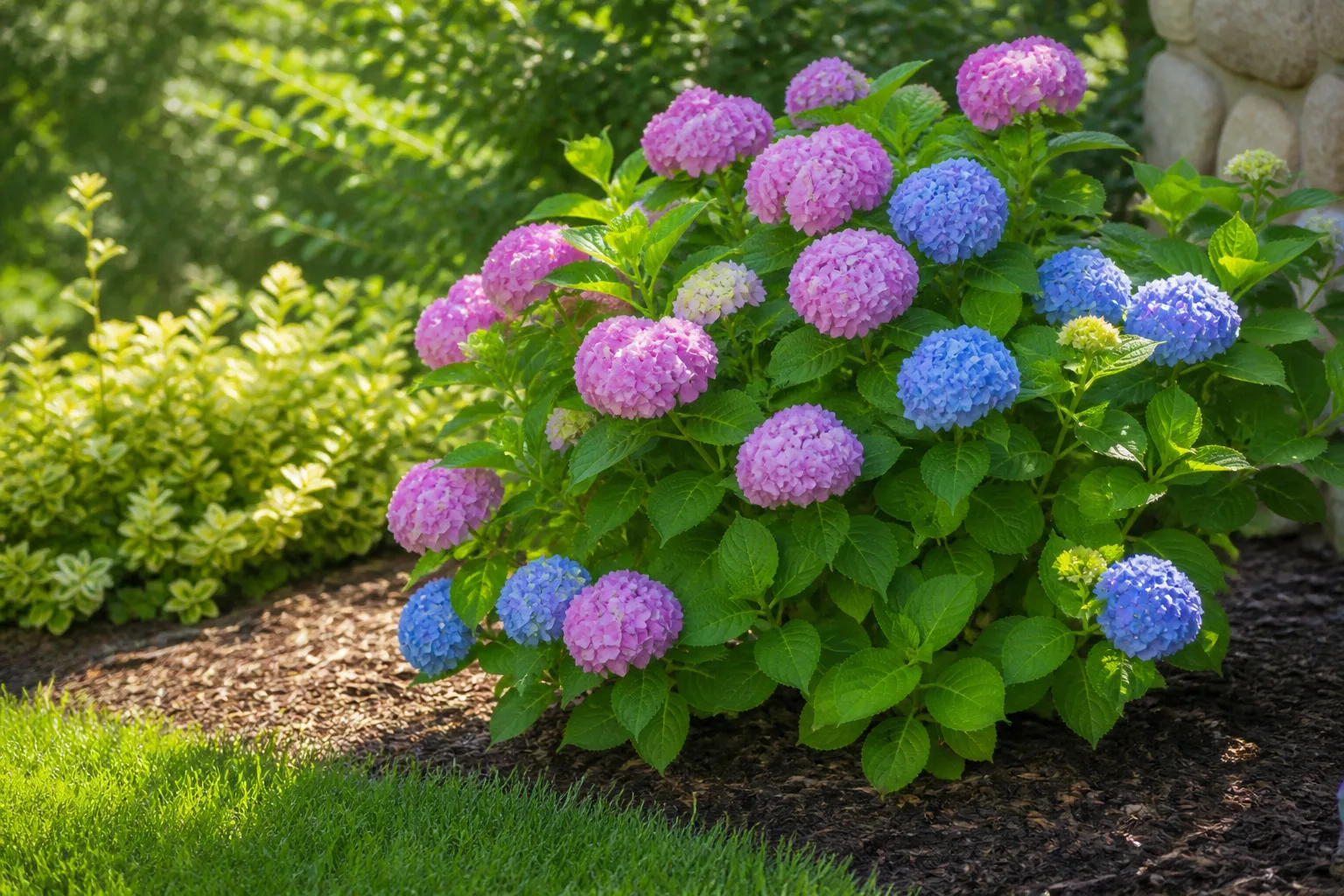
Choosing fertilizer for hydrangeas starts with a question that product labels rarely ask: does this shrub need additional nutrients at all? A healthy, established hydrangea growing in reasonably fertile soil may need no routine fertilizer. Feeding anyway can produce weak, leafy growth, encourage runoff, and make it harder to diagnose the actual reason a plant looks stressed.
If a soil test or clear growth pattern points to a nutrient need, choose a product by its analysis, release rate, and directions—not by a claim that it guarantees huge blooms or changes every hydrangea’s color. The right choice is the one that corrects a real need at a safe rate. This guide explains how to make that choice, when to apply it, and when to leave the fertilizer bag on the shelf.
First decide whether your hydrangea needs fertilizer
Hydrangeas are shrubs, not annual flowers that depend on frequent feeding to keep going. Before buying fertilizer, look at the whole plant and its growing conditions. Is the shrub making normal leaves and stems for its age and cultivar? Does it receive suitable light and steady moisture? Is the soil compacted or waterlogged? Has it been pruned at the wrong time? These factors can affect growth and flowering even when soil nutrients are adequate.
A plant that has grown steadily and flowered as expected is not asking for fertilizer just because spring has arrived. Also, a hydrangea that is growing vigorously but not flowering may have too much nitrogen, too little light, winter bud damage, drought stress, or pruning-related bud loss. Adding more fertilizer can worsen vigorous foliage without fixing any of those causes.
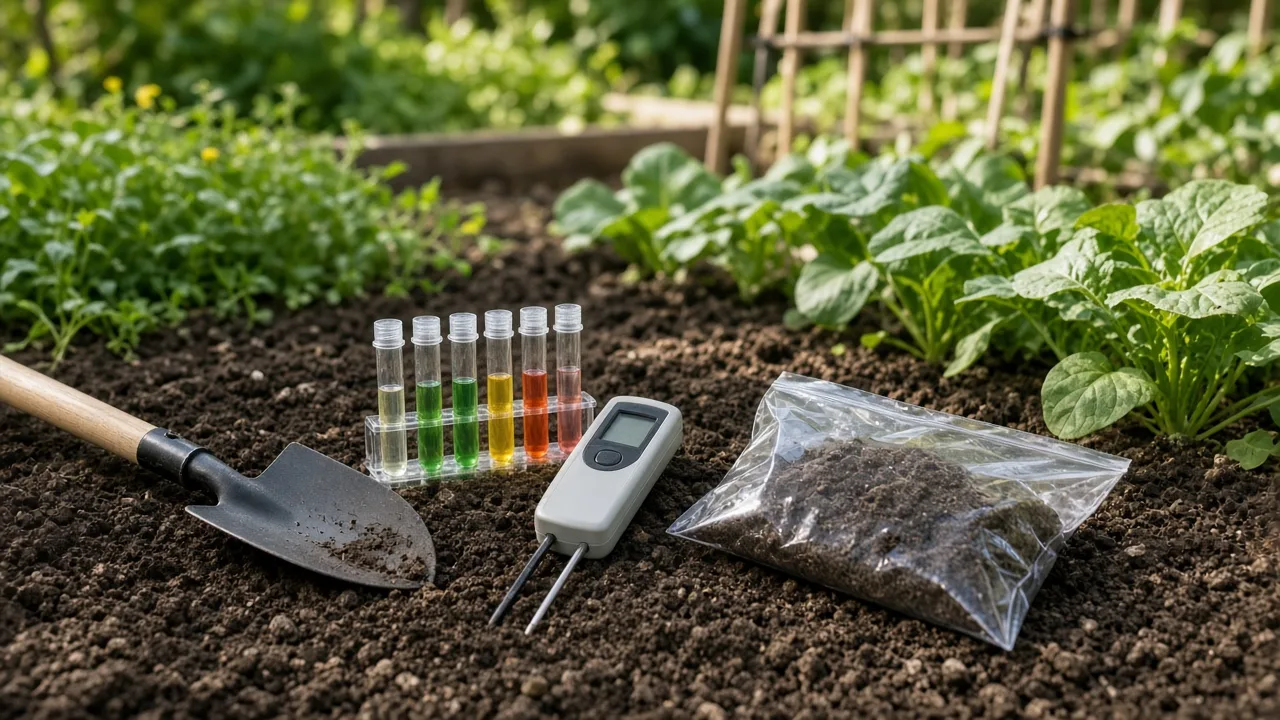
Use a soil test when you need a reliable answer. A laboratory report can show soil pH and nutrient levels, then recommend whether nutrients or lime are needed. Many extension offices explain how to collect a representative sample; follow the instructions for your region and the laboratory you choose. A single handful from beside the trunk is not a useful sample of the entire root area. Test the soil before applying a product, especially if you fertilize regularly, have recently amended the bed, or see a recurring problem.
The practical decision is simple: if the shrub is healthy and no test identifies a deficiency, skip fertilizer and keep observing. If the report recommends a nutrient, choose a product that supplies that nutrient in the amount and form its label supports. If the shrub has symptoms but the test does not show a deficiency, investigate water, roots, light, pests, disease, and pruning before feeding.
Identify the hydrangea before choosing a product
“Hydrangea” covers several species with different habits. Bigleaf hydrangeas (Hydrangea macrophylla) and mountain hydrangeas (H. serrata) include cultivars whose flowers may respond to soil chemistry. Panicle (H. paniculata), smooth (H. arborescens), and oakleaf hydrangeas (H. quercifolia) have different growth and flowering habits, and their flower color is not managed in the same way. NC State Extension’s Hydrangea plant profile describes this range of landscape forms; its bigleaf hydrangea profile also notes that many bigleaf types flower on old growth, which matters when diagnosing a bloom problem.
You usually do not need a different fertilizer just because the plant is a particular hydrangea species. Identification matters because it prevents the wrong diagnosis. For example, a blue-flower product or soil acidifier is irrelevant to a white panicle hydrangea whose flowers do not change to blue with a pH adjustment. Likewise, a shrub that failed to bloom after hard pruning may need a different pruning plan, not a stronger feed.
If the cultivar label is gone, compare leaf shape, flower form, mature size, and growth habit with a trusted regional plant guide. Do not guess from flower color alone: color can vary within a species and can change with conditions for responsive cultivars. Once you know the plant type, use fertilizer to address nutrition and use species-specific care information to address pruning, light, and bloom expectations.
Read the fertilizer label, not the marketing
A package may say “for acid-loving plants,” “bloom formula,” or “hydrangea food,” but those words do not tell you whether your soil needs the nutrients inside. Turn the package over and read its guaranteed analysis, application directions, and cautions. Compare the product to a soil-test recommendation rather than choosing by the picture on the front.
Most complete fertilizers display three numbers representing nitrogen, phosphate, and potash, in that order. Those numbers are percentages by weight of the nutrients in the product, using the standard label conventions. The ratio does not say that one formula is universally best for hydrangeas. A high number is not proof of better results; it simply means the product contains more of a nutrient per unit of product.
What N-P-K tells you
Nitrogen (N) supports leafy, green growth. Phosphorus (P) is involved in energy transfer and root and reproductive processes. Potassium (K) has roles in plant water regulation and many physiological functions. Plants also need secondary and micronutrients, but a complete fertilizer is not a substitute for diagnosis. Adding more of a nutrient that is already sufficient does not guarantee a healthier shrub.
A balanced fertilizer can be reasonable when a test or local guidance supports a general feed, but “balanced” does not mean every garden needs the same number, and equal numbers are not a universal hydrangea rule. A product with a lower concentration may need a different labeled application rate than a concentrated product. Read the full analysis and use the label’s rate for the area or plant size it covers.
Why a bloom booster is not a default choice
Products with a higher middle number are often sold as bloom boosters. Do not assume hydrangeas need extra phosphorus to flower. If the soil already has adequate phosphorus, adding more may not improve blooms and can contribute to nutrient buildup or movement into waterways. Epic Gardening’s hydrangea fertilizing guidance discusses common product types and timing; treat its suggested formulas as general advice, not a substitute for your soil test or the label. A local laboratory recommendation should guide phosphorus additions.
If a label says it is intended for acid-loving plants, ask what that actually means. Some products provide nutrients; others also contain ingredients intended to acidify soil. Neither label category makes the product appropriate for every hydrangea bed. Check the guaranteed analysis and any soil amendment instructions separately.
Test the soil before correcting it
A soil test is useful because pH and nutrient levels affect which interventions make sense. A test can prevent both underfeeding and overapplication, and it provides a baseline for tracking changes. It is especially valuable before using a product intended to acidify soil or alter flower color, because making an unnecessary pH adjustment can create new nutrient availability problems.
Collect the sample from the shrub’s active root area, not from a pile of compost or directly against the crown. If several shrubs share the same bed and appear to grow in similar soil, the lab may permit a combined sample; follow its local directions. Avoid mixing visibly different areas such as a raised bed and lawn edge, since the resulting average may not represent either one.
Follow the laboratory recommendation as written. A fertilizer package gives a general rate for its product, while a soil report addresses your soil’s measured condition. If the two seem to conflict, contact the laboratory or a local extension office before applying both. Do not stack a fertilizer, lime, sulfur, and an aluminum product because each seems to address a different symptom. Soil chemistry changes over time, and correcting pH is not an instant flower-color switch.
Compare fertilizer forms
Once you know a feed is appropriate, choose a form you can apply accurately and maintain safely. Granules, coated controlled-release products, water-soluble powders, and liquids can all supply nutrients. The practical differences are speed, number of applications, ease of measuring, and the risk of placing too much in one spot. No format is automatically safer if it is misused.
Consider your routine. A gardener who can measure a label dose and water it in carefully may prefer granular fertilizer. Someone maintaining a container may find a soluble product easy to mix at the stated concentration. If measuring small amounts is difficult, choose a product with clear directions and a practical package size instead of improvising a scoop. Always keep fertilizer in its original container so the analysis and instructions remain available.
Controlled-release granular products
Controlled-release granules are designed to release nutrients over a period of time, often influenced by moisture and temperature. This can reduce the need for repeated feedings, but it does not mean the product releases a fixed amount on a calendar schedule in every climate. Follow the label about when to apply, whether granules should be incorporated or left on the surface, and how much area one package covers.
Spread granules evenly over the instructed area. A heap near the stems or a ring touching the crown concentrates salts in one place and can injure roots. Do not increase the amount because a shrub is large or has not bloomed; use the product’s size or area calculation. If the package specifies a soil moisture condition or watering step, follow it.
Liquid and quick-release products
Water-soluble and liquid products can deliver nutrients quickly, which can be useful when a test-backed need and label support a short-term application. They also require careful dilution and timing. Too-concentrated solution, repeated applications, or application to dry or stressed roots can damage plants. The label may specify soil drenching or foliar use; do not assume those methods are interchangeable.
Because quick-release products may be applied more frequently than controlled-release products, keep a record of dates and amounts. It is easy to forget a recent application and repeat it. If your schedule becomes complicated, one suitable controlled-release product may be easier to manage, provided its label and your soil needs align. Gardening Know How’s hydrangea fertilizer overview compares common approaches, but use the product directions and local soil-test guidance to set your own schedule.
Choose a sensible feeding time
For an established hydrangea that needs fertilizer, spring is a common time to make a planned application as growth resumes. The exact timing varies with climate, local frost patterns, product release period, and the plant’s growth cycle. Use the label’s timing and your regional extension advice rather than treating one calendar month as correct everywhere.
Avoid late, heavy nitrogen feeding when the shrub is nearing dormancy. A flush of soft new growth may not have time to harden before cold weather. In warm regions the calendar differs from colder areas, so use seasonal cues—new growth, heat, and the local end of active growth—along with product directions. If you use a controlled-release product, its single application may supply nutrients for a longer period than a quick-release liquid; do not add another product on top without reason.
Do not fertilize a drought-stressed, wilted, waterlogged, or recently damaged shrub as an emergency fix. Address the immediate condition first. Fertilizer cannot replace water, oxygen around roots, suitable light, or healthy soil structure. For newly installed shrubs, the planting instructions and nursery or extension recommendations should determine whether any starter product is appropriate.
Calculate the amount from the label
The amount to apply depends on the product concentration, the area being treated, and sometimes the plant’s size. That is why a universal instruction such as “use a handful” is unsafe. Granule size and hand size vary; products differ in concentration. Use the measuring unit and calculation printed on the package.
If the label gives a rate per square foot, estimate the area covered by the shrub’s root zone as the product instructions define it. If it gives a rate per plant, check whether the rate changes by plant diameter or maturity. Use a measuring cup or scale only if the label’s units can be measured that way, and keep that tool separate from kitchen use. For liquid concentrates, measure both the concentrate and dilution water accurately.
When directions are unclear, do not double the dose to compensate. Contact the manufacturer or a local extension service with the product analysis and the soil-test result. Keep a note of what you apply and when. That simple record can prevent accidental overlapping treatments and make it easier to tell whether a later change in growth followed a fertilizer application or a weather event.
Apply fertilizer across the root zone
Hydrangea roots extend outward beneath the shrub, so fertilizer should be placed over the application area specified on the label, not dumped against the trunk. Remove large leaves or debris that would block even distribution if needed, but avoid damaging surface roots. Spread granules evenly, then water according to the package directions and the condition of the soil.
Do not apply granules onto wet foliage or allow concentrated product to collect in leaf joints. Keep fertilizer off paving, storm drains, and bare slopes where rain can wash it away. Sweep any granules off pavement back onto the intended bed only if uncontaminated and if the label permits. Never wash fertilizer into a drain. Applying only the amount needed reduces both plant injury and nutrient runoff.
For liquids, mix precisely and apply at the instructed location. Avoid foliar feeding unless the label specifically allows it for hydrangeas; a soil drench and leaf spray have different concentrations and purposes. If the root area is very dry, water the soil first when the label recommends it, then apply fertilizer. Do not apply during extreme heat if the product cautions against it or the plant is visibly stressed.
Treat bloom color as a separate soil-chemistry question
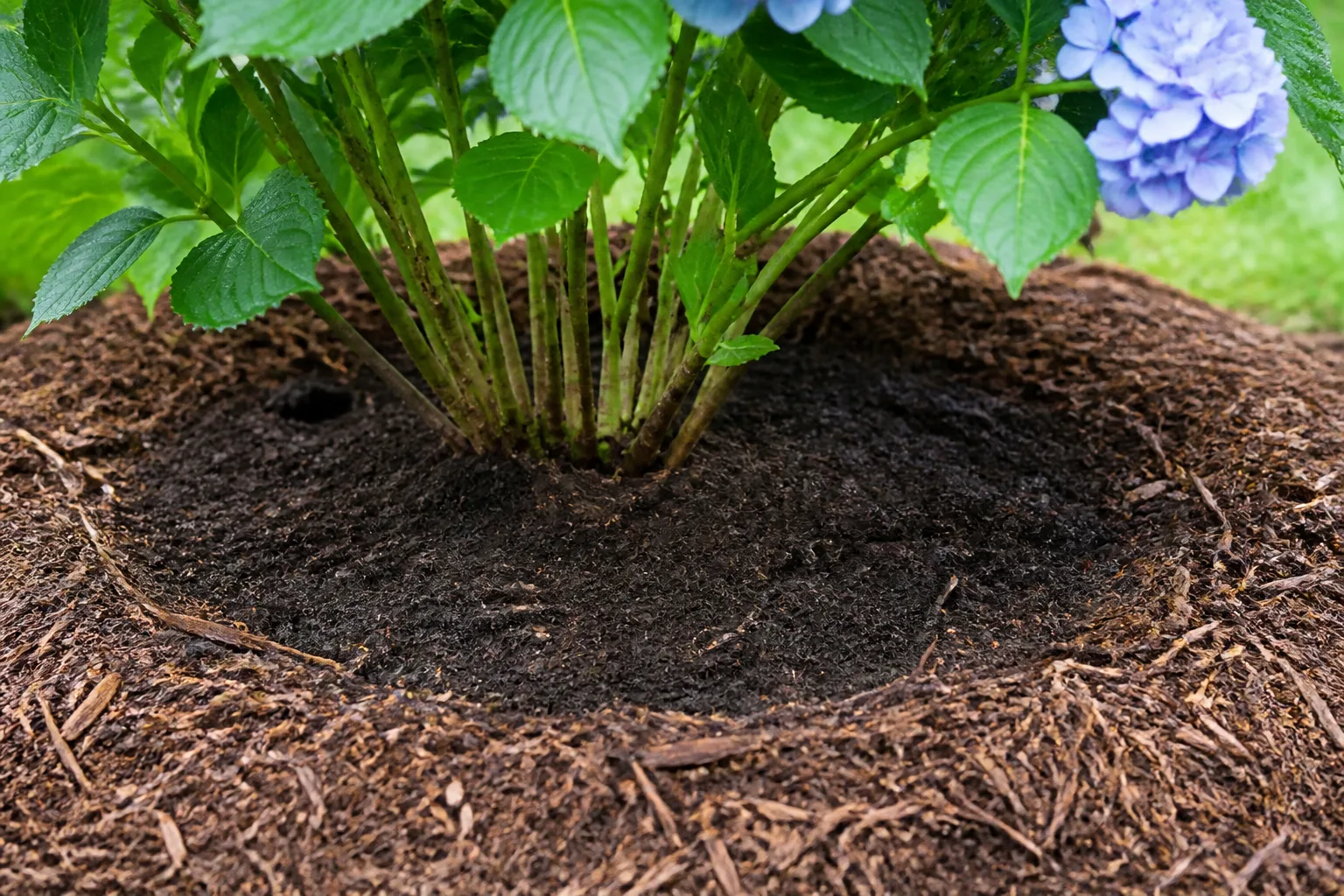
Ordinary fertilizer is not a reliable way to turn every hydrangea blue or pink. Color response is associated with soil pH and aluminum availability in many bigleaf and mountain cultivars, and some cultivars are not responsive. White-flowered types generally do not become blue through fertilizer. The first step is identifying a responsive hydrangea and testing the soil.
For responsive varieties, lower pH can make aluminum more available to the plant; higher pH tends to limit aluminum availability, influencing blue versus pink tones. Soil pH is only part of the picture: cultivar, existing soil chemistry, water, and the time available for a change also matter. The response may be gradual and uneven, especially when soil conditions vary around the roots. Do not promise yourself a precise shade from one application.
Use a soil amendment intended for the specific adjustment only when a soil test and product directions support it. A fertilizer’s phosphorus content does not by itself set bloom color. Coffee grounds and citrus peels are not measured, dependable acidifiers, and adding them directly does not give a reliable pH dose. Compost can improve soil structure and organic matter, but it is not a predictable substitute for a tested pH amendment.
Avoid common overfertilizing mistakes
More fertilizer is not a shortcut to more flowers. Too much nitrogen can favor leafy growth at the expense of a balanced shrub, while excess soluble salts can damage roots and scorch foliage. Applying fertilizer to dry soil, repeating applications too soon, or using several products with overlapping nutrients all increase risk. The product label is the maximum direction for that use, not an invitation to add extra.
Another common mistake is treating every pale or yellow leaf as proof of nitrogen deficiency. Yellowing may be related to water stress, root damage, unsuitable pH, iron availability, natural leaf aging, pests, or disease. If new leaves yellow between green veins, for example, high pH and iron availability may be relevant; adding nitrogen would not solve that. Diagnose the pattern and check soil before choosing a nutrient.
Do not combine lawn fertilizer and shrub fertilizer in the same root area without calculating the total. A hydrangea planted beside turf may receive nutrients from lawn applications, runoff, or overspray. Keep lawn product away from the shrub unless its label permits that use. If a child or pet is present, follow all storage and re-entry directions on the label and keep granules and concentrates inaccessible.
Adjust the plan for new shrubs and containers
A new hydrangea needs time to establish roots. Choose the planting site and prepare the soil as recommended locally; do not assume fertilizer in the planting hole is necessary. Some concentrated products can injure new roots if they are placed directly against them. Follow the nursery label or regional extension guidance for any starter product, and water the plant consistently during establishment.
Container hydrangeas need a different calculation because the pot contains a limited volume of growing medium, and nutrients can leach out during watering. Use a fertilizer labeled for container ornamentals or hydrangeas, if its analysis suits the plant’s needs. Follow the container rate carefully and do not use a landscape per-area rate in a pot. Avoid routine feeding when the potting mix already includes a controlled-release charge, unless the mix or fertilizer label recommends supplemental feeding.
Check drainage and watering before increasing feed. A container that dries rapidly may wilt or develop leaf-edge damage; a waterlogged pot may have oxygen-starved roots. Neither issue is fixed by adding stronger fertilizer. If the plant has been in the same potting mix for a long time, repotting or refreshing the medium may be more useful than repeated feeding.
Troubleshoot yellow leaves and sparse flowers
Work through observations before applying fertilizer. Note whether symptoms affect old leaves, new leaves, or the whole shrub. Check the moisture several inches into the root area, inspect drainage, and look for pests or physical damage. Compare the shrub’s light and pruning history with the needs of its species and cultivar. Then use a soil test to determine whether nutrients or pH need correction.
Sparse flowers are especially easy to misdiagnose. Some hydrangeas set flower buds on old wood, so pruning at the wrong time can remove the next season’s buds. Others flower on new growth, and winter damage, late frost, shade, drought, or cultivar maturity may influence bloom count. NC State Extension’s bigleaf profile describes old-growth flowering for many bigleaf hydrangeas; verify the exact cultivar before pruning or changing its feeding routine.
If a test identifies a nutrient deficiency, apply only that nutrient at the recommended rate and reassess after the time period the lab or product indicates. Do not expect a damaged leaf to turn green again; judge new growth and overall plant health. If the test is adequate, stop adding fertilizer and investigate other causes. A careful diagnosis is often the fastest route to recovery.
Support roots with water, mulch, and soil care
Fertilizer works best as one small part of care, not as a replacement for favorable growing conditions. Hydrangeas generally do better when the root zone has consistent moisture and drains well. A layer of organic mulch can reduce moisture swings and moderate soil temperature; keep mulch a little away from the stems instead of piling it against the crown. Water deeply enough to wet the root area, then let drainage and weather guide the next watering.
Compost can contribute organic matter and improve soil structure when used appropriately, but do not treat it as a precise fertilizer dose. Its nutrient content varies. If you topdress with compost every year, mention that practice when submitting soil for testing, because organic additions can affect nutrient levels. Avoid working amendments deeply through established roots.
Keep leaves, flowers, and plant debris managed according to local disease guidance, and maintain pruning practices suited to the species. Better light, moisture, and pruning can make the shrub look healthier without any fertilizer at all. If you are unsure which issue is limiting it, correct one well-understood problem at a time and observe the response.
A quick decision guide
Use this sequence before you buy a product:
- Identify the plant. Confirm whether it is bigleaf, mountain, panicle, smooth, oakleaf, or another hydrangea, and find cultivar-specific care notes if possible.
- Look for a demonstrated need. Healthy growth is not a reason to feed. For recurring symptoms or routine applications, submit a soil sample.
- Read the result. Select a product that supplies the nutrient the test recommends. Do not select high-phosphorus or acidifying products simply because they are marketed for blooms.
- Compare format and label. Choose controlled-release granules or a liquid that fits your maintenance routine, then follow its exact rate, timing, placement, and watering directions.
- Apply once and keep records. Avoid overlapping feeds, observe new growth, and reassess before another application.
- Treat color separately. Only consider pH and aluminum adjustments for a responsive bigleaf or mountain cultivar, and base any amendment on a soil test.
If the first two steps do not show a need, the right fertilizer choice may be no fertilizer. That is a positive decision: it avoids unnecessary nutrients while directing your attention to water, soil structure, light, pruning, or pests—the factors that may actually be limiting the shrub.
Conclusion
The best hydrangea fertilizer is not a magic formula; it is a product that matches a measured soil need, is suitable for the shrub, and can be applied exactly as directed. Start by identifying your hydrangea and checking its health. Use a soil test when symptoms persist or you are considering repeated feeding, then compare the fertilizer analysis and release rate with the recommendation.
Apply at an appropriate growth stage, keep the dose within the label, distribute it across the root zone, and avoid late or overlapping applications. Treat bloom color as a separate soil-chemistry issue that applies only to responsive cultivars. When the plant is healthy or the evidence points to another cause, skip fertilizer. Thoughtful restraint gives you healthier roots, fewer avoidable problems, and a clearer path to solving the issue your hydrangea actually has.



