Faded Flowers on African Violet: Causes, Checks & Fixes
Quick answer
Faded flowers on African violet usually mean normal bloom aging—each blossom stays vivid for about one to three weeks before petals pale at the edges—or premature stress from ethylene, drafts, or drought. First step: remove ripening fruit and gas-appliance exhaust from the room, leave the pot in one stable bright indirect spot, and deadhead spent blooms at the peduncle base with dry fingers or snips.
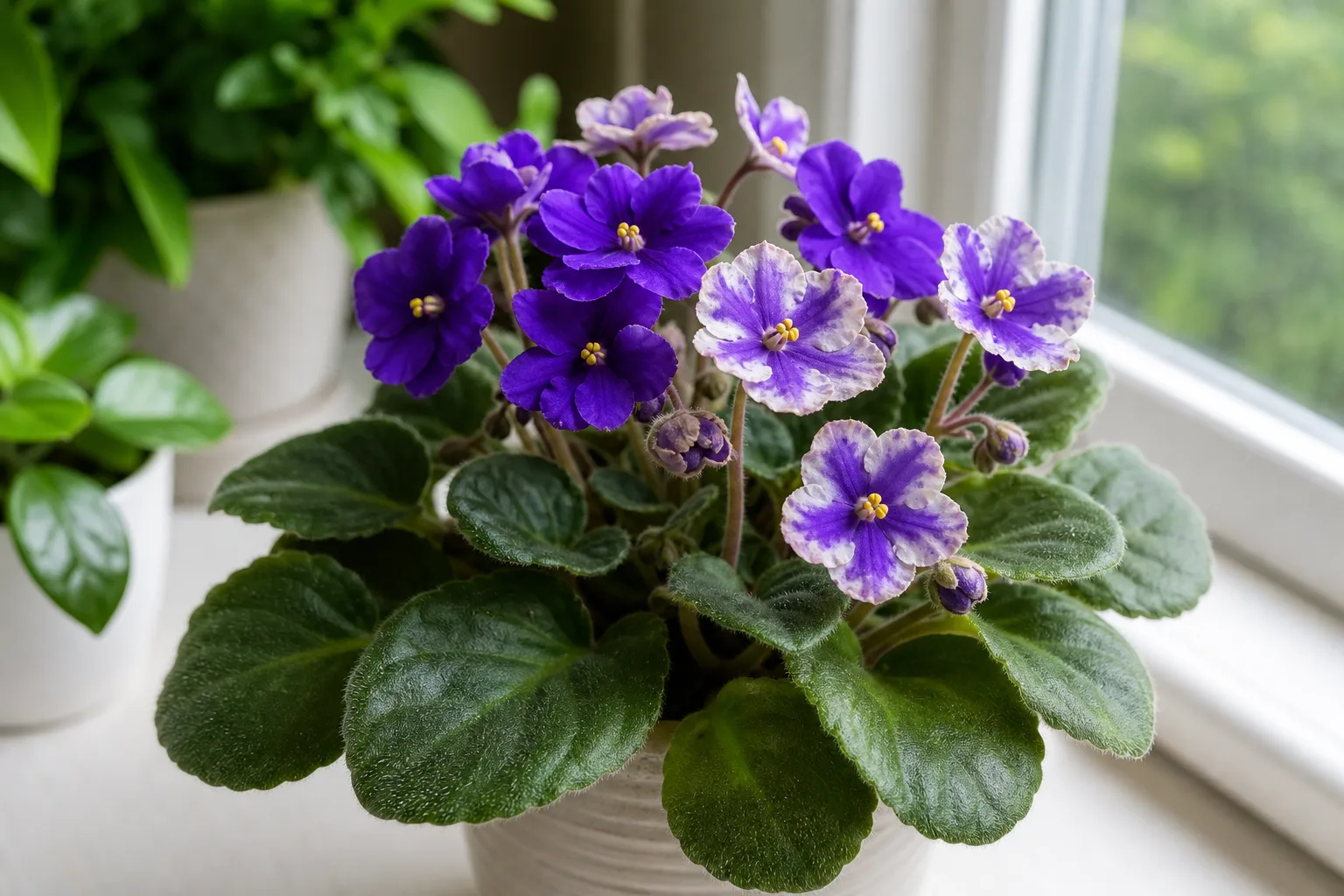
Faded Flowers on African Violet: Causes, Checks & Fixes
This guide covers faded flowers on African Violet. See also the general Faded Flowers guide, watering, and light pages for this plant.
Faded Flowers on African Violet: Causes, Checks & Fixes
Quick answer
Faded flowers on Saintpaulia (African violet) fall into two buckets: normal bloom aging or premature stress fade. Healthy individual blooms stay vivid for roughly one to three weeks, then lose color gradually from petal edges inward while the rosette looks firm and new center leaves open cleanly. When every open flower dulls overnight, wilts while still attached, or loses color days after you moved the pot, suspect ethylene exposure, temperature swings, drought between bottom-waters, or light shock—not ordinary senescence.
For how open blooms lose color on houseplants in general, see our faded flowers symptom guide. On African violet, the tell is petal color draining on velvety rosette-form blooms carried on thin peduncles from the crown—while fuzzy leaves stay green unless light or root stress is also involved.
First step: scan the room for ethylene sources—ripening fruit on a nearby counter, cigarette smoke, gas stoves, or exhaust from attached garages—and move the plant to one stable bright indirect spot. Then deadhead each spent bloom at the stalk base with dry fingers or small snips, keeping water off fuzzy leaves. Do not fertilize, repot, or rotate the plant until you know whether fading was normal aging or environmental stress.
What faded flowers look like on African violet
African violet blooms sit on slender peduncles (flower stalks) rising from the rosette crown. Each stalk carries multiple pedicels—individual flower stems—with five-petaled blossoms in cultivar colors from deep purple to pink, white, or bicolor. Fading usually starts at petal margins and moves inward; on multiflorescent lines you may always see some pale blooms beside fresh buds even when culture is correct.
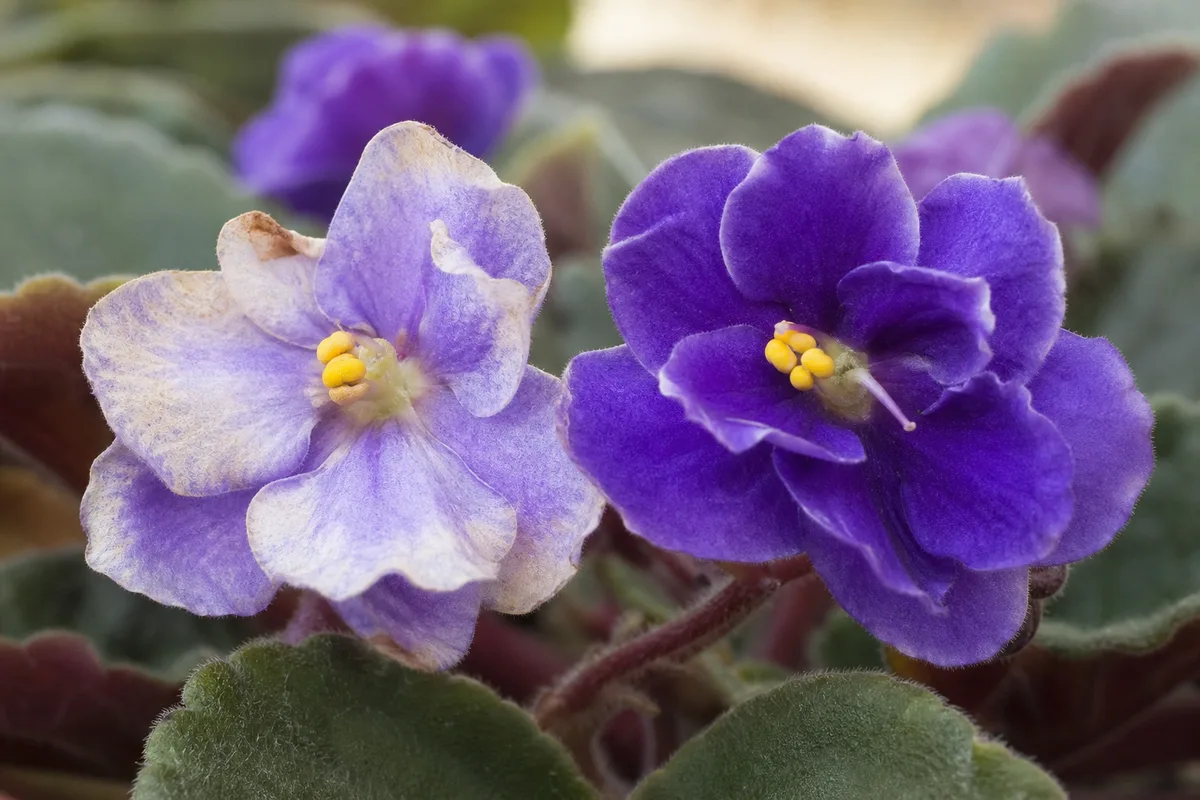
Pale bleached petal margins on one open bloom while neighboring flowers still hold vivid color—normal aging fades gradually from edges inward.
Normal aging (expected):
- One or two older blooms on a multi-flower stalk turn pale at the margins while neighboring buds stay plump
- The leaf rosette stays firm; pot weight changes on your usual bottom-watering rhythm
- Fading progresses over several days to a week, not overnight
Problem fade (needs a fix):
- Every open bloom on a stalk wilts within 24 to 48 hours after you moved the plant, repotted it, or placed it beside a fruit bowl
- Petals look water-soaked before color drains; buds about to open abort instead of fade—a sign closer to bud drop
- Fading comes with yellow lower leaves on wet mix or a soft crown—shift to root-stress diagnosis before treating blooms alone
Why African violet flowers fade
Normal bloom aging on gesneriad cycles
African violets bloom in repeating cycles from the crown. Each individual flower has a finite display life—commonly one to three weeks of strong color before petals bleach, curl, or dry at the edges. Standard varieties may show five to seven open blooms at once; multiflorescent cultivars carry more simultaneous flowers, so you will always see some fading petals on a well-grown plant. That is expected grooming work, not a care failure.
Ethylene gas—fastest premature fade trigger
African violets are moderately sensitive to ethylene, which accelerates flower wilting and shortens bloom life. Indoor ethylene sources include ripening apples and bananas, gas ovens, cigarette smoke, automobile exhaust near open windows, and poorly vented heating systems. Even brief exposure can dull every open flower while leaves look untouched—making ethylene one of the fastest whole-stalk collapse triggers on this plant.
Temperature swings, drafts, and sudden moves
African violets prefer night temperatures around 65–70°F and grow satisfactorily between 60 and 80°F. Prolonged heat above the upper range reduces flowering and can drain petal color quickly. Cold drafts from winter windows or air-conditioning vents have a similar effect. Moving or rotating a pot during active bloom disrupts the steady conditions gesneriads need—many growers see fade within days of relocation even when light and water were otherwise fine.
Light changes during active bloom
Bright, indirect light supports vivid blooms; too much direct sun bleaches leaves and stresses flowers, while too little light produces thin, dark leaves and short-lived, pale blooms. Sudden shifts—pulling sheer curtains, moving from a grow shelf to a dim corner, or adding harsh afternoon sun—can fade open flowers before the plant adjusts. See the light guide if blooms look washed out alongside leggy or pale foliage.
Water and root-zone stress on shallow roots
Inconsistent moisture fades blooms on shallow-rooted African violets faster than on many houseplants. Bone-dry mix between bottom-watering sessions forces the plant to sacrifice flowers first. Chronic overwatering and poor drainage weaken roots; fading petals plus limp leaves on wet soil point away from ethylene and toward overwatering or root trouble.
Over-fertilization and bloom quality
Heavy nitrogen or concentrated fertilizer can push leaf growth at the expense of bloom quality. Over-fertilized African violets develop tight centers and rusty new leaves, and open flowers may look smaller or fade faster than on moderately fed plants. If you recently doubled fertilizer strength, flush the pot with plain water at the next watering cycle before changing anything else.
How to confirm what’s causing fade
Work through this numbered check before stacking fixes:
- Timeline — Did one or two older blooms fade over a week while buds stayed plump? Normal aging. Did every open flower dull within 48 hours? Suspect ethylene or shock.
- Room scan — Note fruit bowls, gas appliances, smokers, and draft paths within six feet of the pot.
- Recent moves — Repotting, rotating for even growth, or shifting windows in the last two weeks often explains sudden fade.
- Temperature — Hold a thermometer near the plant during day and night; target 65–75°F for steady bloom.
- Light — Confirm bright indirect exposure for 12 to 16 hours daily without hot direct sun on leaves.
- Pot weight and roots — Lift the pot. Unexpected lightness suggests drought fade; heaviness with yellow lower leaves suggests root stress.
- Stalk inspection — Tap blooms over white paper. Fine yellow pollen dust with silvery streaks on petals points to thrips, not fade from aging alone.
Faded flowers vs lookalike problems
| What you see | Likely cause | Key difference from normal fade |
|---|---|---|
| Petals pale slowly at edges; other buds fresh | Normal aging | Gradual, one bloom at a time |
| All open flowers wilt overnight; leaves fine | Ethylene or temperature shock | Sudden, whole-stalk collapse |
| Buds shrivel before opening | Bud drop / stress | Buds abort, not just pale petals |
| Petals brown with gray fuzz | Botrytis on wet spent blooms | Fuzzy mold on dead tissue |
| Silvery streaks, pollen dust on petals | Thrips | Insects or streaks, not even color loss |
| Pale blooms + bleached, tight leaves | Too much light | Foliage symptoms accompany flowers |
If buds drop while petals still look bright, read bud drop instead of treating this as fade alone.
First fix for African violet
Remove ethylene sources and stabilize placement. Move the plant away from ripening fruit, vented gas ranges, and drafty sills. Leave it in one bright indirect spot for at least two weeks—no repotting or rotating during recovery.
Deadhead spent tissue dry. Pinch or snip faded petals with their pedicels; when an entire stalk finishes, remove the peduncle at the rosette base with tweezers or small snips—never wet fingers on the crown. Prompt removal of spent flowers helps prevent disease and redirects energy toward new stalks.
Correct moisture only if checks confirm it. Bottom-water with room-temperature water when the top inch of mix dries—never let the pot sit in standing water. Skip fertilizer until a new bud stalk holds for two weeks.
If ethylene was the culprit, color on remaining buds often stabilizes once the source is gone. If drought triggered fade, the next open blooms should look fuller after two consistent watering cycles.
Recovery and rebloom timeline
Individual faded petals do not re-darken—remove them and wait for fresh blooms on new stalks. After environmental correction, expect a new flower stalk in four to eight weeks on a healthy plant, similar to recovery from bud drop. Slightly root-bound plants in fresh, airy mix often rebloom sooner than freshly repotted ones.
Judge success by new bud stalks forming, firm center growth, and vivid color on the next open flowers—not by reviving old petals. If no new stalks appear after eight weeks despite stable care, review no flowers troubleshooting for light and feeding gaps.
What not to do
Do not mist blooms or splash water on the crown when removing spent flowers—wet fuzzy leaves invite spotting and rot. Do not place the plant beside ripening fruit hoping humidity will help; ethylene will shorten bloom life further. Do not fertilize a stressed plant to “boost” color; fix environment first per the fertilizer guide. Do not repot during active bloom unless mix is failing or roots are rotting. Do not assume every faded petal means disease—normal aging is common on continuously blooming cultivars.
How to prevent premature fading
Keep the plant in a stable east- or north-facing window—or under consistent grow lights—for 14 to 16 hours of bright indirect light daily. Maintain 40–60% humidity and 65–75°F year-round. Bottom-water when the top inch dries; avoid bone-dry swings and soggy crowns. Remove spent flowers before they rot on the stalk. Keep ripening fruit, smoke, and gas appliances away from blooming plants. Avoid moving or repotting while multiple stalks are in full color—wait until the current cycle finishes.
When to worry
Escalate if fading spreads to unopened buds, the crown softens while soil stays wet, or a second full stalk collapses within two weeks after you removed ethylene sources and stabilized placement. Those patterns overlap bud drop, crown rot, or root rot rather than cosmetic petal aging.
Contact your local cooperative extension office if:
- Every open flower wilts repeatedly despite no fruit bowls, drafts, or recent moves
- Fading comes with twisted center growth and distorted new leaves (possible cyclamen mites—UF/IFAS recommends discarding severely affected plants because control is very difficult)
- Gray fuzzy mold appears on spent blooms and spreads to living tissue
African violet care cross-check
Fade rarely happens in isolation. If blooms dull while the rosette looks weak, cross-check watering, light, and fertilizer routines together rather than tweaking one factor at random. A plant that fades quickly but never reblooms may need brighter light or lighter feeding—not more deadheading alone. For year-round culture, see the African violet care overview.
Related African violet problems
- Bud drop — buds abort before opening, not just pale petals
- No flowers — no stalks form at all
- Small flowers — blooms open but stay undersized
- Thrips — pollen dust and silver streaks on blooms
- Overwatering — fade with limp leaves on wet mix
- Heat stress — washed-out blooms with tight, bleached foliage
When to use this page vs other African Violet guides
- African Violet watering guide — Use for routine moisture checks before assuming faded flowers is the main issue.
- Bud drop — Use when buds shrivel before opening, not when open petals simply pale.
- No flowers — Use when no peduncles form at all.
- African Violet problems hub — Browse all common issues on this species.
Related African Violet guides
- African Violet overview
- African Violet watering
- African Violet light
- African Violet soil
- African Violet problems
- Aphids on African Violet
- Black Spots on African Violet
- Blight on African Violet
Related tool
Use the Plant Problem Diagnosis Tool to narrow causes for faded flowers on this plant before changing multiple variables at once.