Holes in Leaves on African Violet: Causes, Checks & Fixes
Quick answer
Holes in African Violet leaves are irregular chew marks or tears in velvety foliage—not natural fenestrations. First step: search for slug slime on pot rims if the plant was outdoors, check for dark frass in the crown, and decide whether damage is fresh (wet green edges) or old (brown dry margins).
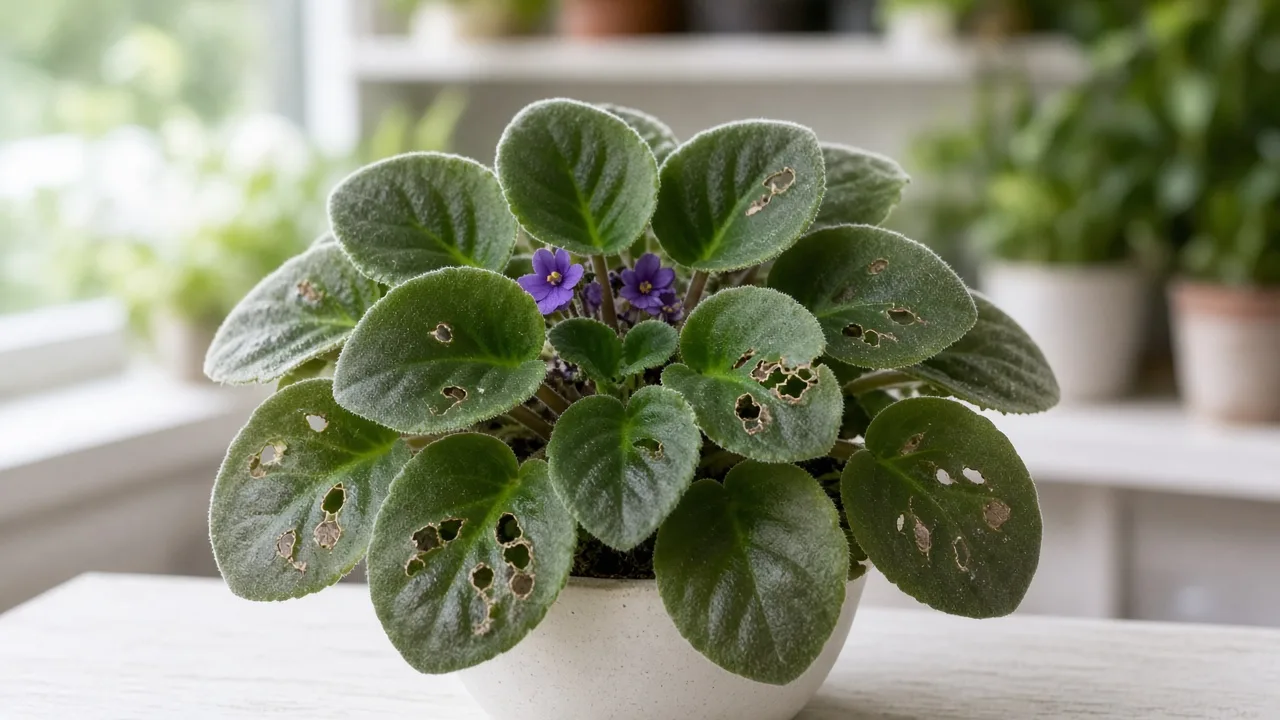
Holes in Leaves on African Violet: Causes, Checks & Fixes
This guide covers holes in leaves on African Violet. See also the general Holes in Leaves guide, watering, and light pages for this plant.
Holes in Leaves on African Violet: Causes, Checks & Fixes
Quick answer
Holes in African Violet leaves mean tissue was removed or torn—chewing insects, slugs, mechanical damage, or old disease scars—not natural leaf fenestrations like on a monstera. African violets carry soft, velvety blades in a tight rosette that show damage clearly once it happens.
First step: check for shiny slime on the pot rim (slugs), dark frass pellets in the crown (caterpillars), and whether edges are fresh green chew marks or dry brown old tears. For how open holes differ from internal tunnels in general, see our holes in leaves guide. On African violets, slugs at the soil line outdoors and mechanical tears indoors are the usual causes—not mysterious leaf miners.
When to use this page vs other African Violet guides
| Pattern | Start here | Or route to… |
|---|---|---|
| Open chewed holes with dark pellets in crown | This page | Caterpillars |
| Pale winding trails inside the blade | Leaf miners | This page if holes are full-thickness |
| Irregular holes + slime on pot rim outdoors | This page (slugs) | Elevate pots; night patrol |
| Peanut-shaped spots that later fall through | Black spots | Treat disease, not chewers |
| Silver streaks, no eaten sections | Thrips | — |
| Single clean tear after moving pots | Mechanical—this page | No spray needed |
This page is the symptom-first entry for open holes on velvety African violet foliage. Use it to decide what removed tissue and which single action comes first.
What holes look like on African Violet
African violet leaves are rounded, overlapping, and fuzzy. Holes stand out against that velvety surface—especially when backlit.
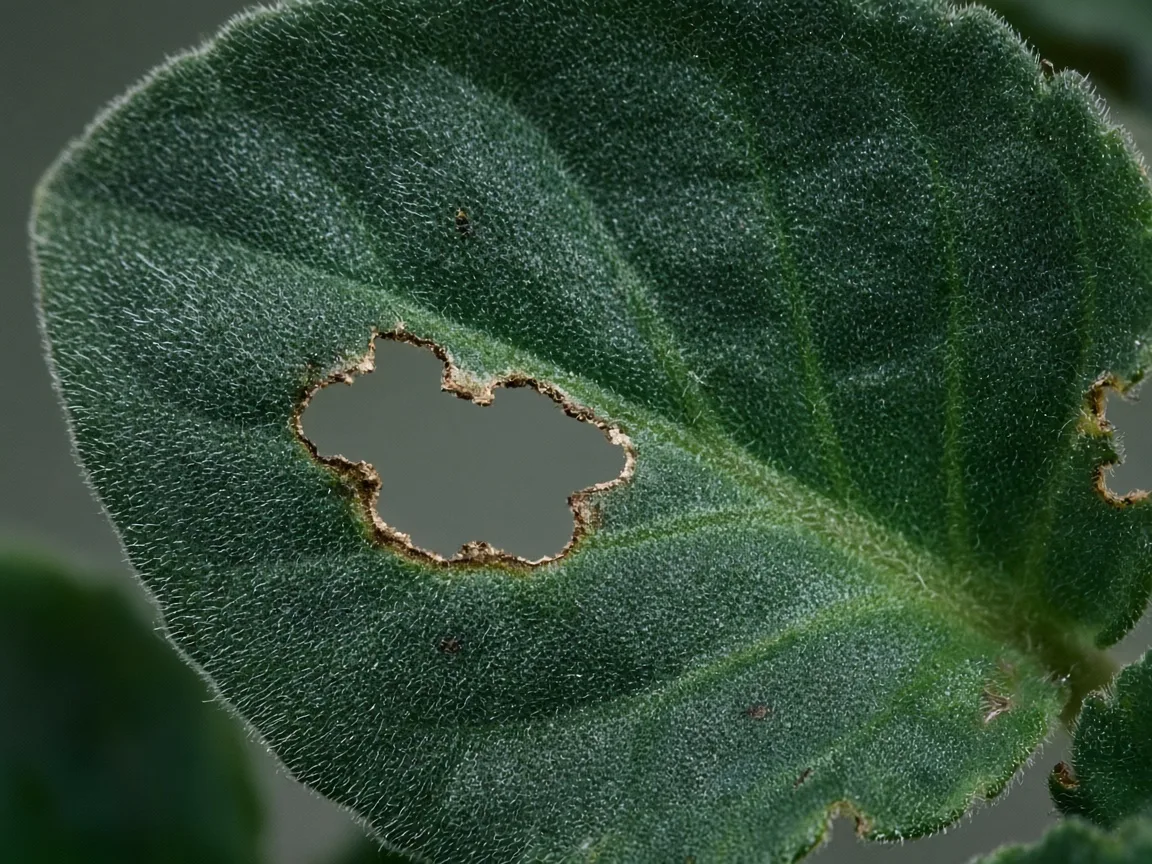
Holes in leaves on African violet—compare irregular chew margins with intact velvety tissue on the same rosette.
Slug or snail feeding (outdoor benches, floor-level pots): Irregular holes with smooth edges on lower leaves and pot rims, often with shiny slime trails. Slugs feed at night and hide under flowerpots during the day—damage may look sudden even from one mollusk.
Caterpillar chewing (after porch summer or open windows): Ragged margin bites with dark pellet-like frass tucked in leaf axils or the crown. Leaves appear eaten, not spotted. Buds and center leaves can be scarred when larvae feed before you notice from above.
Mechanical tears: Clean splits on one leaf after shifting pots on a crowded shelf, snagging velvety tissue against a wire stand, or brushing past a sharp tray edge. No frass, no slime, no repeat pattern on neighboring leaves.
Secondary holes after disease necrosis: Oval or peanut-shaped leaf spot lesions dry out and sometimes fall through, leaving a hole bordered by old brown scar tissue—not fresh green chew marks. Route to black spots when spots preceded the gap.
What holes are not on African violet:
- Leaf miner trails — pale serpentine lines inside the blade; larvae feed between surfaces, so sprays miss them and open holes are uncommon.
- Cold-water ring injury — white to yellow rings, lines, or arcs on the leaf surface from cold splash, not punched-out tissue.
- Thrips or mite stippling — silver flecking and distortion without large eaten sections; see thrips or spider mites.
Rosette crown flashlight pass (African violet only)
The compact rosette hides chewers between overlapping leaf rows—exactly where new growth and buds form. This inspection is violet-specific because misting or hosing the crown to “wash off” pests causes worse problems than the holes themselves.
- Spread outer leaves gently with one hand and aim a flashlight into the center.
- Scan each leaf axil for dark frass pellets or a tucked larva.
- Check the soil line under the lowest leaves—slugs feed here on outdoor benches.
- Tap the pot rim over white paper to dislodge hiding larvae (shake test).
- Do not wet foliage during inspection—cold or standing water on velvety leaves causes permanent spotting.
Run this pass at night if you suspect slugs; mollusks are most active after dark.
Soil-line slug patrol on outdoor violet benches
African violets on summer patios sit low and close to soil—ideal slug territory. Unlike tall floor plants, the entire rosette is within mollusk reach.
- Elevate pots on stands or feet—not directly on soil, decks with leaf litter, or shaded ground where slugs hide under boards and flowerpots.
- Water in the morning and inspect pot feet, saucers, and tray edges the same day.
- Run a flashlight patrol after dark for one week when holes first appear—hand-pick slugs into soapy water.
- When bringing plants inside for winter, rinse pots, discard chewed leaves touching the crown, and quarantine for two weeks before returning to the gesneriad shelf.
- Clean shared trays before setting multiple violets back together—slugs travel between pots on the same surface.
Why African Violet gets holes
Slugs and snails on outdoor collections. Snails and slugs chew holes in leaves and flowers at night. African violets summered outdoors or kept on shaded ground-level benches are common targets. Slime on the pot confirms mollusks over caterpillars.
Caterpillars after porch season. Many caterpillar species will feed on African violet when preferred hosts are scarce. Armyworms, loopers, and fruitworms are reported on violets. Eggs hitchhike on plants moved indoors, through open windows, or on clothing after outdoor gardening. See caterpillars when frass is present.
Mechanical damage on velvety, overlapping leaves. African violet rosettes crowd on windowsills and light stands. A single snag during repotting, shelf adjustment, or pet brush-by can tear one velvety blade. The fuzzy surface does not heal over—edges may brown but the hole remains.
Secondary holes from leaf spot necrosis. Fungal leaf spot diseases on African violet produce defined lesions; as necrotic tissue dries, it can fall out and mimic chewing. Penn State Extension notes several fungal and nematode diseases that scar foliage—treat the disease pattern, not a phantom chewer.
Pet nibbling. African violet is relatively pet-safe compared with many ornamentals, but cats and dogs may still bite soft leaves. Crush marks and torn sections at pet height suggest this over insects.
Confirm the cause in five checks
Work through these before spraying anything on fuzzy foliage:
- Slime test: Shiny trails on pot rim or leaves → slugs. None → rule out mollusks first.
- Frass search: Dark pellets in crown or axils → caterpillars. See caterpillars.
- Fresh vs old edges: Wet green chew margins = active pest. Dry brown borders = old damage; focus on preventing new holes.
- Backlight the leaf: Internal pale tunnels → leaf miners, not this page. Open gap through both surfaces → chewer or mechanical.
- Collection context: Multiple gesneriads on one tray with holes → isolate and inspect neighbors; diseases and pests spread easily on shared stands.
Confirmed chewing requires frass, slime, or a visible pest plus fresh damage—not a single old hole on one lower leaf.
Holes vs miners vs spots on velvety leaves
| Sign | Slugs/snails | Caterpillars | Leaf miners | Leaf spot (secondary hole) |
|---|---|---|---|---|
| Hole type | Irregular, smooth edges | Ragged margin bites | Internal trail; rare open hole | Hole after dry spot fell out |
| Trail evidence | Slime on pot/leaves | Dark frass pellets | Serpentine pale line inside | Prior oval/peanut lesion scar |
| Timing | Night feeders outdoors | After porch summer | Any season; quarantine plant | Follows wet foliage/humidity |
| First fix | Hand-pick; elevate pot | Hand-pick larva | Remove mined leaves | Black spots protocol |
First fix by confirmed cause
One action first—do not mist, shower, or stack pesticide on the same day.
| Confirmed cause | First fix | Follow-up |
|---|---|---|
| Slug/snail found | Hand-pick at night; clean slime from pot rim | Elevate pot; patrol one week |
| Caterpillar + frass | Hand-pick every larva; isolate from gesneriad shelf | Caterpillars if chewing continues |
| Mechanical tear only | Leave green tissue; move pot away from snag point | Trim if leaf touches wet crown |
| Old disease scar hole | No pest treatment | Black spots if spots spread |
| Pet chewing | Relocate plant out of reach | Monitor for repeat bites |
For slugs: remove active mollusks by hand and elevate the pot off soil-level hiding spots. For caterpillars: pick larvae from the crown without wetting velvety leaves. For indoor mechanical holes only—trim a torn leaf if it folds into the crown; otherwise monitor.
Do not mist chewed leaves or shower the rosette—keep velvety foliage dry and water from below per African violet culture.
Recovery timeline
| Phase | Timing | Improvement sign | Worsening sign |
|---|---|---|---|
| After pest removal | Days 1–3 | No new holes overnight | Fresh green chew on center leaves |
| New growth | Weeks 2–4 | Clean new rosette leaves emerge | Frass or slime returns |
| Cosmetic | Ongoing | Old holed leaves remain; plant blooms | Crown softens; multiple plants affected |
Holes do not close—chewed or torn tissue does not regenerate. Recovery means new leaves open clean for two to three weeks after the last chewer is gone. Blooming may pause if buds were eaten; new buds should form once the crown stays pest-free.
What not to do
- Do not hose down or mist fuzzy leaves to knock off pests—moisture in the crown invites rot and cold-water spotting.
- Do not fungicide open chew holes without confirming leaf spot—irregular fresh bites are pest or mechanical.
- Do not ignore outdoor bench placement—slugs under pots are the top outdoor cause.
- Do not compost infested leaves indoors—seal and discard.
- Do not change watering, fertilizer, and light all at once because leaves look damaged—confirm chewers first.
How to prevent holes on African Violet
- Elevate outdoor pots off soil and leaf litter; slugs hide under flowerpots and boards by day.
- Quarantine porch returns for two weeks; run the crown flashlight pass daily.
- Change clothes after outdoor gardening before tending indoor violets—caterpillars can hitchhike on fabric.
- Space rosettes on the shelf so velvety leaves do not snag on neighbors or wire stands.
- Bottom-water on a stable schedule—see watering and light guides for baseline care that supports recovery after damage.
- Remove spotted lower leaves promptly before necrotic tissue falls through—see black spots.
Related African Violet guides
- Overview — baseline rosette care and pet-aware placement
- Caterpillars — frass, hand-pick, and Btk on fuzzy leaves
- Leaf miners — internal trails vs open holes
- Black spots — spots that can leave secondary holes
- Thrips — silver streaks without large eaten sections
- Distorted leaves — unfurl damage without full holes
- Problems hub — full symptom index
Conclusion
Holes in African violet leaves are a find-the-remover problem—slugs outdoors, caterpillars after porch season, mechanical tears on velvety blades, or old disease scars indoors. Inspect the soil line and crown with a flashlight, confirm slime or frass, remove active chewers by hand, and watch new rosette leaves emerge clean for two weeks. Route to leaf miner or black spot guides when internal trails or spotted lesions fit better than open chewing.
Related tool
Use the Plant Problem Diagnosis Tool to narrow causes for holes in leaves on this plant before changing multiple variables at once.