Distorted Leaves on Aglaonema Cutlass: Crown Pest Checks
Quick answer
Distorted leaves on Aglaonema Cutlass—puckered, twisted, fishhooked, or undersized narrow lance blades—usually mean aphids, spider mites, bent-tip from care swings, or etiolation in very low light—not fertilizer deficiency. First step: magnify the newest silver-veined lance leaves emerging from the crown before feeding or repotting.
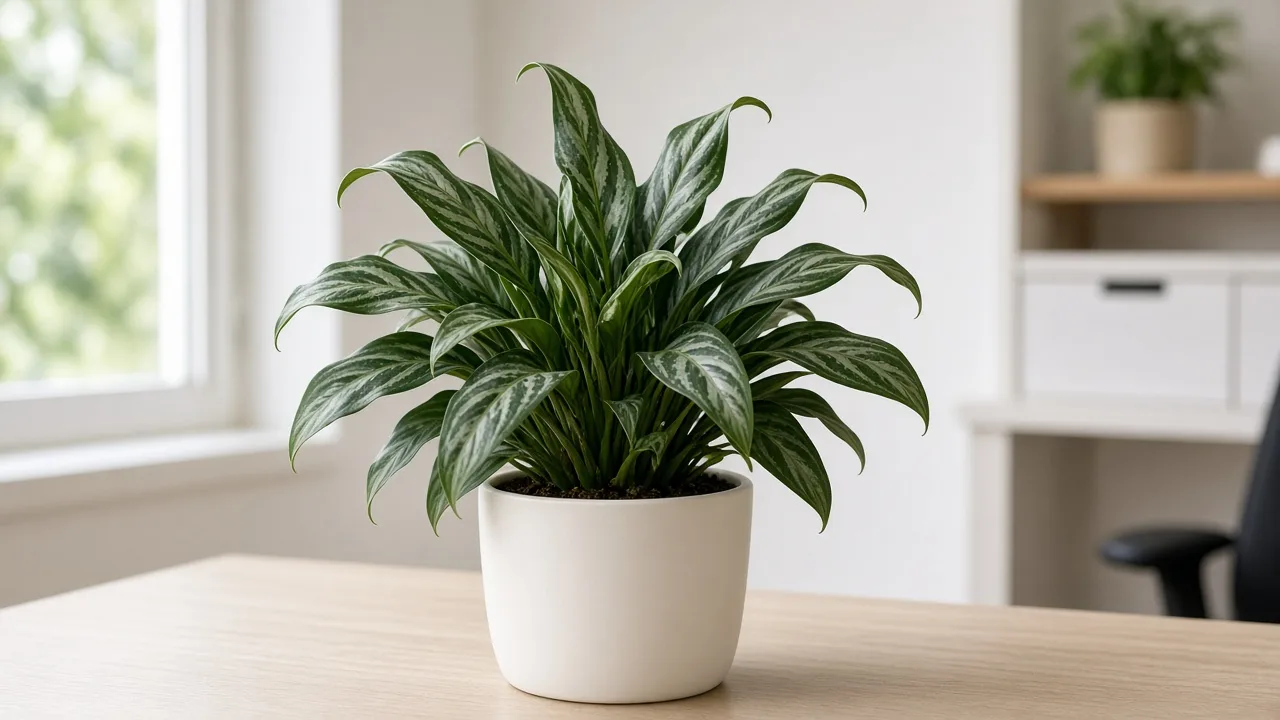
Distorted Leaves on Aglaonema Cutlass: Causes, Checks & Fixes
This guide covers distorted leaves on Aglaonema Cutlass. See also the general Distorted Leaves guide, watering, and light pages for this plant.
Distorted Leaves on Aglaonema Cutlass: Causes, Checks & Fixes
Quick answer
Distorted leaves on Aglaonema ‘Cutlass’ are puckered, twisted, fishhooked, or undersized narrow lance blades on the ribbon-type Chinese evergreen. The symptom almost always starts on new crown flush, not mature lower foliage. Top causes are aphids and spider mites on tender lance tips, bent-tip from care swings, etiolation in very dim corners, and salt stress after heavy feed.
First step: inspect the newest silver-veined lance leaves at the crown center with a magnifier—undersides included.
For how leaf distortion forms during expansion in general, see our distorted leaves guide. On Cutlass, the diagnostic zone is the dense clump crown where narrow blades unfurl slowly—mature lower lances can look fine while the softest new tips distort.
Route to curling leaves for inward cupping on open dry blades, and leggy growth when tiny twisted leaves ride on long bare petioles.
When to use this page vs other Cutlass guides
| Pattern | Start here | Or route to… |
|---|---|---|
| Twist, puckering, or fishhook on new lance tips | This page | Aphids, Spider mites |
| Inward cup on dry, light pot | Curling leaves | Underwatering |
| Tiny leaves on stretched stems | Leggy growth | Not enough light |
| Sticky residue on soft new growth | Aphids | Mealybugs |
| Fine webbing and stippling | Spider mites | Low humidity |
| Yellow lower leaves on wet mix | Overwatering | Root rot |
What distorted leaves look like on Aglaonema Cutlass
Cutlass carries long, narrow lance-shaped leaves marbled silver along the veins on a dark green base. Healthy new blades emerge upright from a tight crown with crisp veining. Distortion shows when that expansion goes wrong:
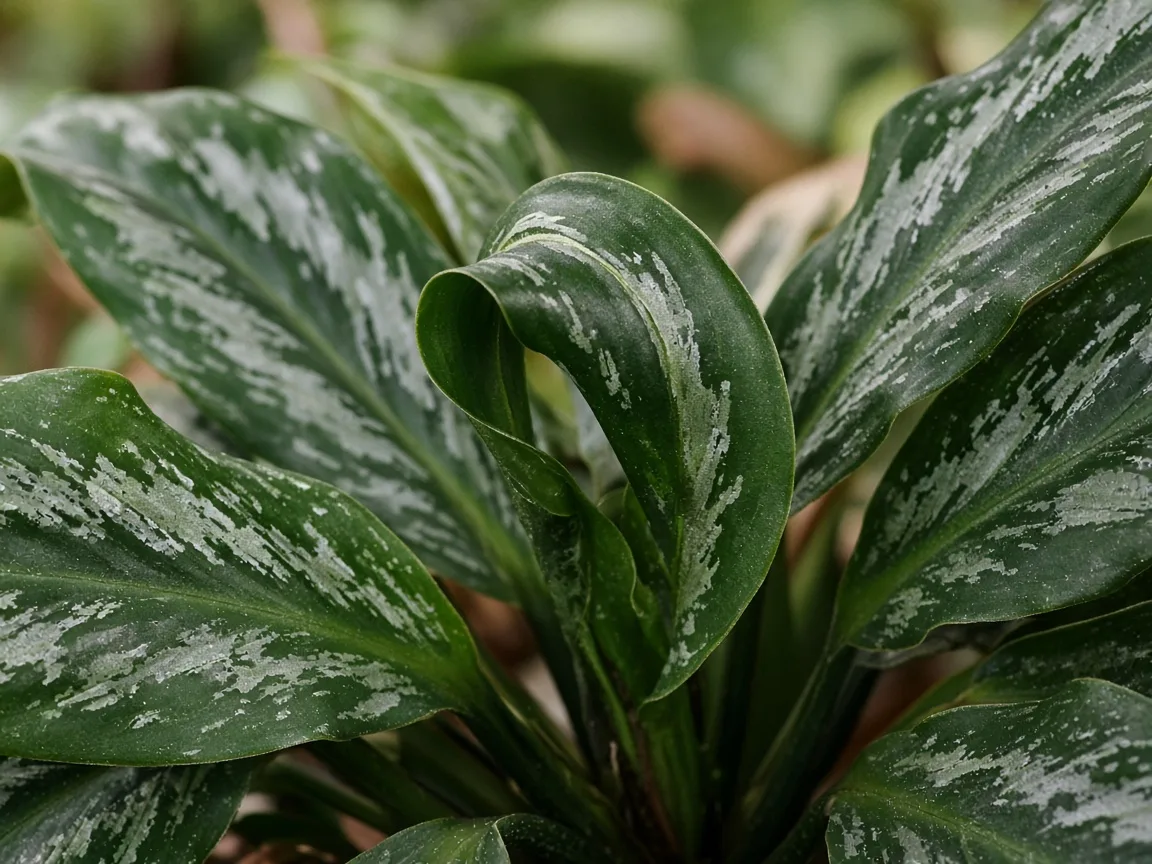
Twisted puckered new lance at the crown flush—magnify the softest emerging blades before repotting or feeding.
Spider mite damage — Fine pale stippling, puckered new lance tips, and sometimes faint webbing between the narrow blade and petiole. NC State lists spider mites among common Aglaonema pests, and Missouri Botanical Garden notes mites on indoor Chinese evergreens. Mites favor the softest crown flush in dry heated air while older lower lances still look acceptable.
Aphid clustering — Twisted, puckered soft new growth with sticky honeydew on tender shoots. Aphids feed on new growth on many houseplants; Clemson HGIC lists aphids and mites among common Chinese evergreen pests.
Bent-tip (fishhook) — The emerging terminal lance leaf hooks backward and may catch on the leaf below, leaving a permanent kink. UF/IFAS describes bent-tip on Aglaonema when light, water, fertilizer, or temperature fluctuate—not a pest, but it locks distortion into the blade as it hardens.
Etiolation stunting — Very small, narrow, sometimes twisted leaves spaced along elongated petioles in a dim corner. Cutlass tolerates low indoor light better than pale-variegated hybrids, but extreme shade still produces weak structure—see not enough light.
Salt or fertilizer stress — Crinkled or narrow new leaves after heavy feed on dry or stressed roots. UF/IFAS warns that over-fertilization indoors causes soluble salt buildup and leaf margin injury on Aglaonema; Clemson notes excessive fertilizer can burn leaf edges.
The crown-flush window (Cutlass only)
Ribbon-type aglaonemas like Cutlass grow slowly from a dense basal clump. New lance blades take days to expand from a soft spear at the crown center. Pests, bent-tip stress, or extreme dim light during that window permanently shape the mature leaf. Owners who only scan open lower foliage miss aphids and mites on the tightest unopened lance tips—the species-specific place to look is the silver-veined spear before it fully lengthens.
Why Aglaonema Cutlass leaves distort
Pests target soft new tissue because cell walls are thin during expansion. Cutlass concentrates new growth in one crown zone, so a small aphid or mite colony can distort every emerging lance while the rest of the clump looks fine.
Care swings trigger bent-tip on Aglaonema specifically. A sudden move to brighter light, a missed watering cycle followed by a heavy soak, or a cold draft after a warm week can produce a fishhooked terminal leaf per UF/IFAS bent-tip guidance.
Very low light shrinks new blades without killing the plant. NC State notes Aglaonema tends to get leggy with age as stems elongate; in a dark closet, that legginess shows up as undersized twisted lance leaves rather than the broad paddle distortion you would see on a peace lily.
Dry winter air favors mites on narrow leaves that hold little moisture. Cutlass does not need rainforest humidity, but heated indoor air stresses foliage plants and speeds mite reproduction when crown inspection slips.
Confirm the cause in five checks
- Newest crown spear: Part foliage gently at the center. Look for insects, silver stippling, sticky residue, or a hooked tip caught on the leaf below.
- Underside of the softest lance: Mites and aphids hide on tender tissue before the blade fully opens.
- Care history: Recent repot, feed, move, or temperature swing in the last two weeks? Bent-tip becomes likely.
- Light level: Long bare petioles with tiny new blades point to etiolation—compare your spot to the light guide.
- Pattern spread: Every new lance distorted → pests or repeated stress. One fishhooked leaf after a single event → wait for the next flush before treating.
If soil stays wet and lower leaves yellow without stippling, check roots per watering before assuming pests alone.
First fix for Aglaonema Cutlass
Rinse the undersides of the newest lance leaves and crown flush with lukewarm water; re-inspect in three days with a magnifier.
That single action clears surface aphids, dislodges early mites, and gives you a clean read before sprays. If you confirm active pests after the rinse, follow aphids or spider mites protocols. If the only issue is one bent-tip leaf after a care swing, hold care steady and watch the next emergence—do not repot and fertilize on the same day.
For etiolated plants with tiny twisted blades on long stems, move gradually to brighter filtered light over one to two weeks—never direct sun on Cutlass, which scorches narrow foliage.
Do not fertilize a stressed or pest-affected Cutlass to “fix” leaf shape.
Step-by-step recovery by cause
| Confirmed cause | First fix | Follow-up |
|---|---|---|
| Spider mites | Crown rinse; isolate from neighbors | Spider mites; raise humidity slightly if air is very dry |
| Aphids | Rinse tender shoots; isolate | Aphids |
| Bent-tip | Stable light, water, and temperature | Remove only if fishhook blocks new flush |
| Etiolation | Brighter filtered light gradually | Leggy growth if stems are bare |
| Salt stress | Hold feed; flush only if label-safe and roots are healthy | Fertilizer when new growth firms up |
Recovery timeline
| Phase | Timing | Improvement sign | Worsening sign |
|---|---|---|---|
| Post-rinse (pests) | Days 3–7 | Next lance straighter, no new stippling | Each new crown leaf still puckered |
| Post-care stabilization | Weeks 2–4 | Clean unfurl after one bent-tip event | Repeated fishhooks every flush |
| Light correction | Weeks 3–6 | Wider firm lance leaves on shorter petioles | Continued tiny twisted tips in same dark spot |
| Cosmetic | Ongoing | Old twisted blades unchanged | Crown softness or yellow spread |
Distorted open lance leaves do not straighten once hardened. Recovery means the next one to two crown flushes emerge with normal narrow shape and crisp silver veining.
Lookalike symptoms on Aglaonema Cutlass
| What you see | Often confused with | How to tell them apart |
|---|---|---|
| Inward cup on dry, light pot | Curling leaves | Cupping on mature open blades, not twist on new tips |
| Long stems, small leaves | Leggy growth | Stretch between leaves; distortion may be size more than puckering |
| Yellow lower leaves, wet mix | Overwatering | Limp foliage, sour soil—new tips may be fine |
| Silvery streaks on new lance | Thrips | Scraped tissue and brown streaks in crown |
| White cottony patches | Mealybugs | Axils and soil line, not just new blade surface |
What not to do
- Do not pull a stuck fishhook spear—tear the crown. Free it gently or wait for the next leaf.
- Do not mist narrow wet foliage to “fix” shape—promotes leaf spot and spreads pests.
- Do not fertilize distorted active growth before confirming pests and root health.
- Do not assume every twist is viral—pests, bent-tip, and dim light account for most indoor Cutlass cases.
How to prevent distorted leaves on Aglaonema Cutlass
- Inspect the crown flush weekly during winter heat when mites peak.
- Keep watering steady—water when the top half of mix dries, not on a blind calendar.
- Avoid stacking repotting, moving, and feeding in the same week after purchase.
- Place Cutlass in low to medium filtered indirect light—office fluorescents work, but a dark back room produces stunted lance tips.
- Quarantine new aglaonemas before adding them to a desk cluster.
See the Aglaonema Cutlass overview and problems hub.
Related Aglaonema Cutlass guides
- Overview — ribbon-type low-light tolerance and crown structure
- Light — when dim corners cause stunted lance tips
- Watering — half-pot dry-down without crown swings
- Aphids — sticky puckered new growth
- Spider mites — stippling on narrow crown flush
- Leggy growth — tiny leaves on long petioles
- Problems hub
Conclusion
Distorted Cutlass leaves are a crown inspection problem first. Magnify the newest silver-veined lance flush for mites and aphids, note any fishhook after a care swing, and separate etiolation stunting from pest puckering before repotting or feeding. One bent-tip leaf after a single stress event may be followed by a perfect next lance; every new spear scarred means pests or unstable care. Judge recovery by clean crown flush, not old twisted blades.
Related tool
Use the Plant Problem Diagnosis Tool to narrow causes for distorted leaves on this plant before changing multiple variables at once.