Black Spots on Aglaonema Maria: Disease Checks
Quick answer
Black spots on Aglaonema Maria are dark lesions on dark green and silver marbled blades—usually bacterial or fungal leaf spot from wet foliage in stagnant air, or scale honeydew stains. First step: stop overhead watering, dry the leaves, and check whether spots are water-soaked and spreading or dry with raised bumps underneath.
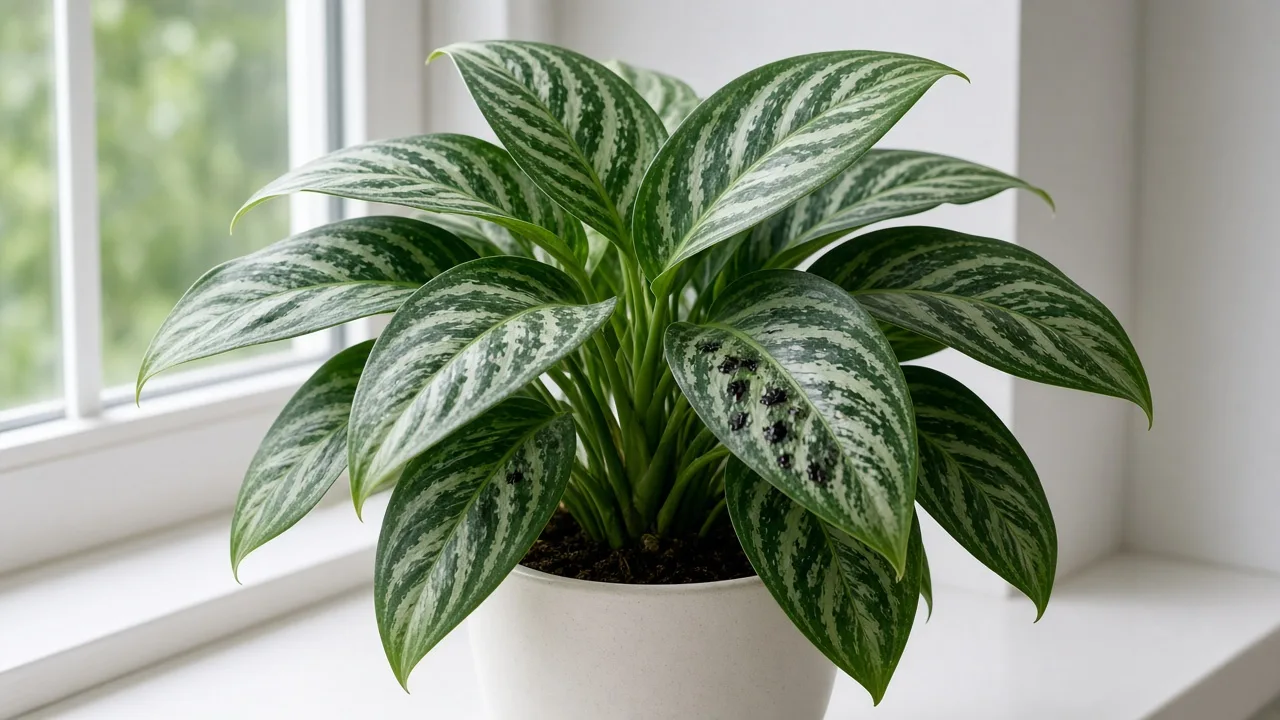
Black Spots on Aglaonema Maria: Causes, Checks & Fixes
This guide covers black spots on Aglaonema Maria. See also the general Black Spots guide, watering, and light pages for this plant.
Black Spots on Aglaonema Maria: Causes, Checks & Fixes
Quick answer
Black spots on Aglaonema ‘Maria’ are dark lesions on dark green and silver marbled blades. For how leaf spot spreads in general, see our black spots guide. On Maria, wet marbled foliage in stagnant office air spreads spot faster than on drought-tolerant succulents—dry the blades before you reach for fungicide.
First step: stop misting and overhead watering, wipe leaves dry, and inspect undersides for raised scale bumps vs water-soaked enlarging lesions.
When to use this page vs other Maria guides
| Pattern | Read next |
|---|---|
| Wet soil, yellow lowers | Overwatering |
| Dry bumps on veins | Scale insects |
| Brown tips only | Brown tips |
| Holes after spots die | Holes in leaves |
| Mushy crown | Root rot |
What black spots look like on Aglaonema Maria
Maria’s broad silver-marbled blades show spots clearly against pale silver zones—but dark lesions on green tissue can be easy to miss until they enlarge.
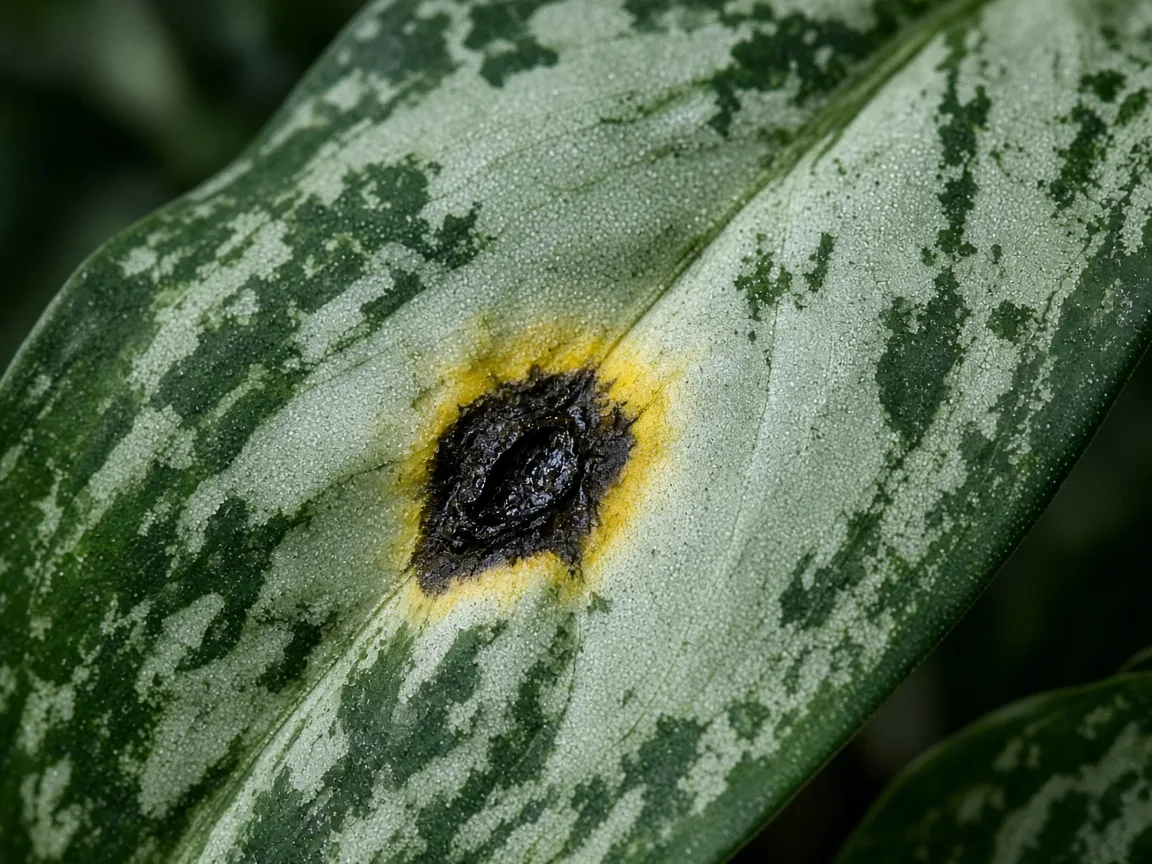
Leaf spot on Maria silver zone—note water-soaked margin vs dry scale speck.
Leaf spot (most common indoors):
- Water-soaked dark spots that enlarge on lower marbled blades
- Yellow halos may appear before tissue turns black
- Often follows misting, overhead watering, or wet leaves in stagnant air
- Bacterial and fungal leaf spots spread on wet foliage
Scale specks:
- Dry black or brown specks with raised bumps along midribs and veins
- Wipe does not remove the bump—see scale insects
- Honeydew may accompany bumps; spots do not enlarge like true leaf spot
Fluoride and tip burn:
- Small dry dots at margins that crisp—not water-soaked centers
- See brown tips if margins brown before spots spread inward
Mechanical entry:
- Single spot where water splash or pest damage broke the cuticle—monitor only if no spread in a week
Check newest leaves—spots on fresh crown growth mean active spread and urgent culture change.
Why Aglaonema Maria gets black spots
Maria’s broad leaves hold moisture in vein grooves. Silver marbling creates texture where water sits after misting. In low-airflow offices, wet blades stay damp for hours—long enough for leaf spot pathogens to colonize tissue.
Dim light slows drying without stopping misting habits. Maria tolerates low to medium indirect light but the mix and foliage must still dry between water events. Chronically wet culture in dark corners spots lowers first while the crown looks fine.
Overhead watering wets the crown. Pouring water over marbled blades instead of soaking soil directly leaves the center damp—exactly where new leaves emerge. Spots on crown flush often trace to watering technique, not mysterious disease.
Scale is a lookalike, not true spot. Scale insects on houseplants leave immobile bumps and sooty mold specks that resemble black spots but do not show water-soaked enlargement.
Maria office spot pattern
Maria-specific pattern recognition:
- Spots begin on oldest lower silver-marbled blades after misting or wet foliage.
- Vein grooves on marbled tissue hold water longer than smooth green cultivars.
- Spots that spread to new crown leaves within a week mean culture is still too wet—remove worst leaves and fix airflow.
- Healed spots necrose and fall out—leaving holes per holes in leaves.
Maria does not need high humidity misting—average household humidity is sufficient.
Lookalike symptoms
| What you see | Often confused with | How to tell them apart |
|---|---|---|
| Dry speck + raised bump | Leaf spot | Bump does not enlarge; scrapes off scale body |
| Water-soaked enlarging spot | Scale | No bump; yellow halo may appear |
| Brown tip dots | Black spot | Margins only, dry not soggy |
| Single splash spot | Epidemic | No spread in 7 days |
| Black soot on sticky leaves | Disease | Honeydew underneath—scale or aphids |
How to confirm
- Texture — Water-soaked and enlarging vs dry with raised bump?
- Pattern — Lowers only, or crown flush too?
- Culture — Misting habit? Overhead water? Wet saucer?
- Soil moisture — Top half dry-down per watering guide.
- Progress — Photo spots in three days; enlargement = active spot.
First fix for Aglaonema Maria
Remove the worst spotted leaves with sterile shears; water soil only when the top half of mix dries per watering guide.
Stop misting immediately. Improve airflow between plants. Wipe remaining blades dry. Never mist aglaonema foliage when spot is active.
If scale bumps are confirmed—see scale insects instead of fungicide.
Do not fertilize spotted stressed Maria. Do not repot on day one unless crown is mushy.
Mistakes to avoid
- Misting to “prevent” spot while leaves are already spotted
- Fungicide before confirming spot vs scale
- Keeping spotted wet lowers that touch the crown
- Overhead watering that wets marbled blades every week
- Ignoring wet heavy pot in dim corner—root stress weakens spot resistance
Recovery timeline
Dry culture shows clean new marbled leaves in two to four weeks. Heavy spot outbreaks may require removing several lower leaves—judge success on unstained crown flush, not old spotted blades.
When to worry on Maria
Treat as urgent when:
- Spots reach new crown leaves within a week—active pathogen or culture still too wet.
- Petiole bases turn mushy at the soil line—possible crown involvement beyond leaf spot alone; see root rot.
- Half the plant shows spots after misting or grouping plants tightly on a shelf—improve airflow and separate pots immediately.
- Black specks wipe off as soot but bumps remain—scale is active; honeydew will fuel more soot and fungal growth.
Stable single spots on one old lower leaf with a dry crown and no enlargement in seven days is usually not urgent—monitor only.
Prevention
- Water soil when top half dries—never wet foliage on purpose.
- Use low to medium indirect light so mix dries predictably—see light guide.
- Space plants for airflow; avoid crowding Maria on shelves.
- Empty saucers within 30 minutes.
- Inspect lowers weekly; treat scale before sooty specks spread.
- Wipe dust from marbled blades with a dry cloth instead of misting for “cleaning.”
Related Aglaonema Maria guides
Conclusion
Black spots on Maria are wet-leaf and airflow problems first—dry the compact marbled foliage, fix watering rhythm, and let new leaves emerge clean.