Brown Leaves on Aglaonema: Water & Light Checks
Quick answer
Brown leaves on Aglaonema usually mean opposite moisture problems—crispy brown on dry soil is thirst or low humidity; soft brown on wet mix is root stress. First step: probe whether the top 2 inches of soil are dry or wet, then note whether brown tissue is crispy or mushy.
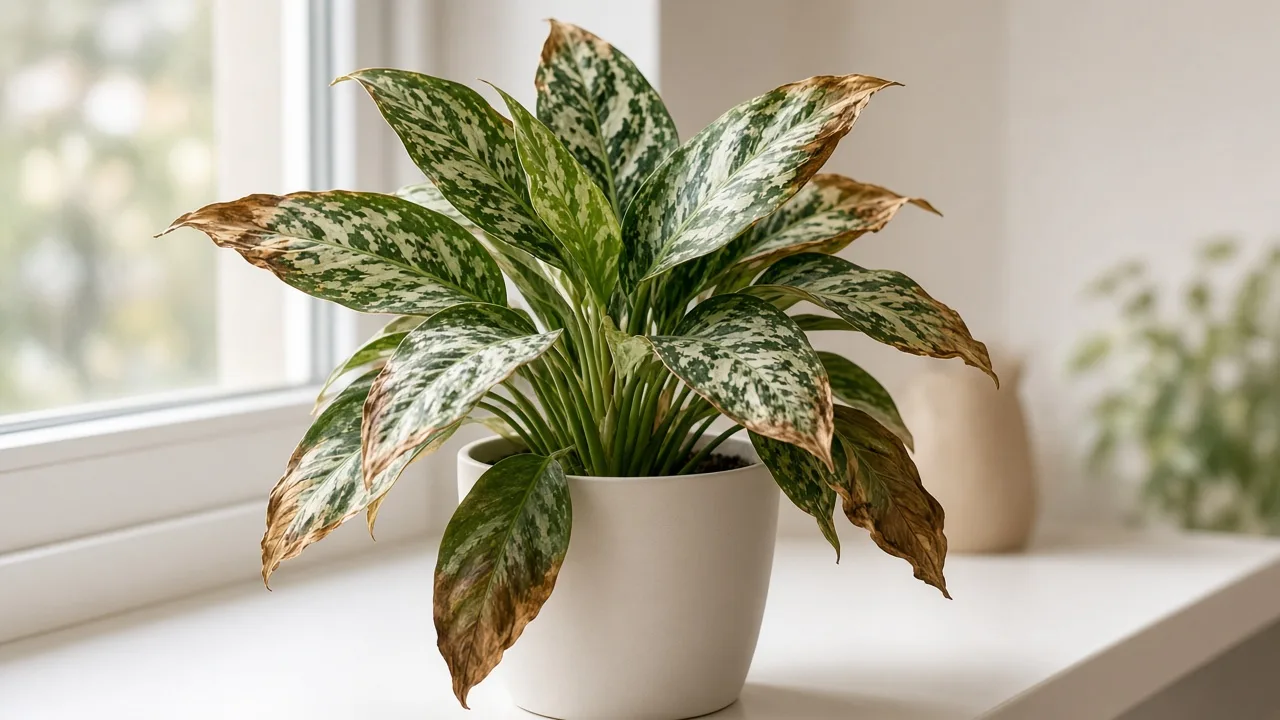
Brown Leaves on Aglaonema: Causes, Checks & Fixes
This guide covers brown leaves on Aglaonema. See also the general Brown Leaves guide, watering, and light pages for this plant.
Brown Leaves on Aglaonema: Causes, Checks & Fixes
Quick answer
Brown leaves on your Chinese evergreen (Aglaonema commutatum) are rarely one mystery cause. On this shade-tolerant Araceae with broad, patterned blades, brown necrosis almost always comes down to moisture mismatch, fluoride in tap water, or direct sun scorch. For general brown-leaf causes, see our brown leaves guide—on Aglaonema, texture and soil moisture tell you which branch to follow.
First step: touch the brown tissue and probe soil. Crispy brown on a light dry pot means thirst or dry air. Soft brown on a heavy wet pot means root stress. Brown from tips inward on municipal water points to fluoride—see brown tips.
When to use this page vs other Chinese evergreen guides
| What you see | Read next |
|---|---|
| Brown tips only, margins crisp inward | Brown tips |
| Wet soil, yellow lower leaves, mushy base | Overwatering |
| Dry light pot, wilted stems | Underwatering |
| Tan patches on window-facing side only | Direct sun scorch—move back from glass |
| Dark spots with yellow halo, not full brown | Black spots |
This page covers brown or tan necrosis on whole leaves or large sections. If only tips are affected, start with brown tips.
What brown leaves look like on Chinese evergreen
Aglaonema carries lance-shaped leaves patterned in green, silver, and red. Brown damage shows up differently on that broad surface than on narrow grass-like leaves or thick succulents.
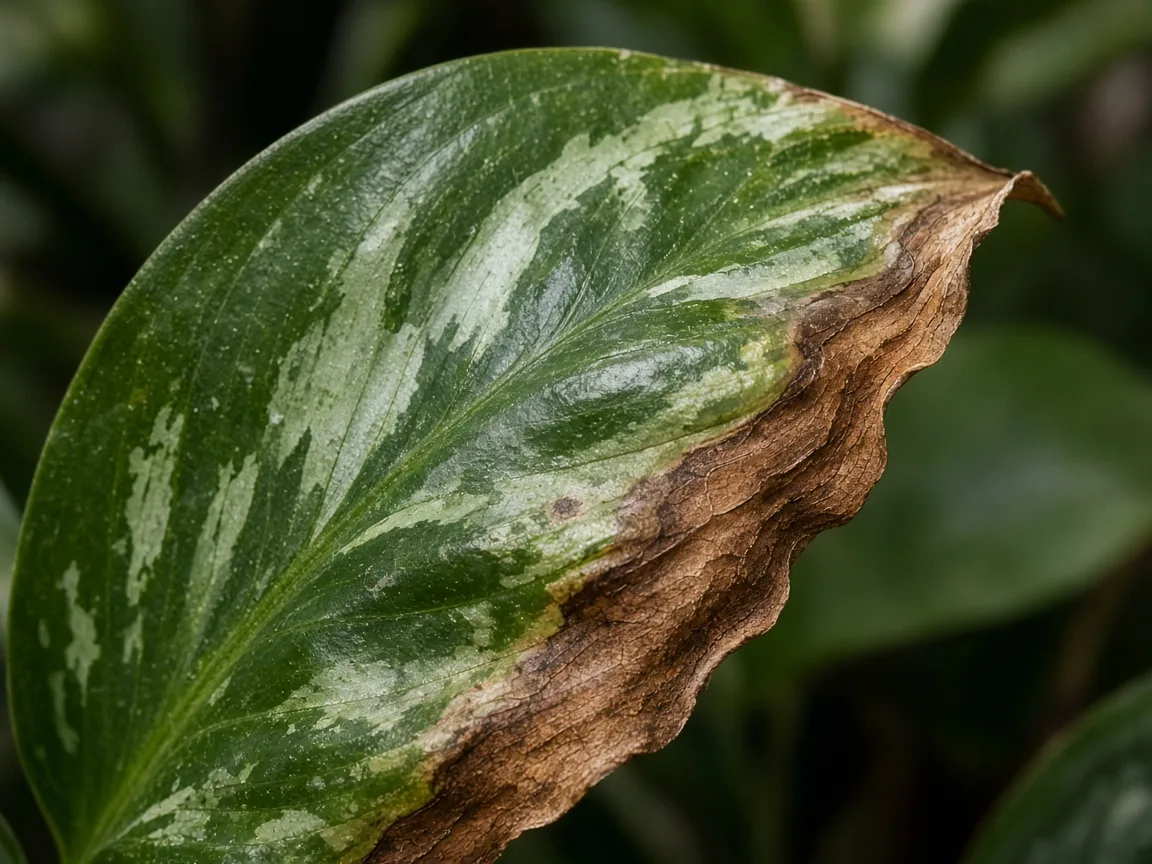
Crispy brown margin on a Chinese evergreen leaf—compare with soft brown lower leaves on a wet pot.
Underwatering and low humidity (crispy brown):
- Crispy brown margins and edges on a light, dry pot
- Leaves may curl slightly inward; soil top 2 inches bone dry
- Often near HVAC vents or in winter when heating dries air
- Lower leaves affected first if drought is prolonged
- Pot feels noticeably lighter than after a thorough soak
Overwatering and root stress (soft brown):
- Soft brown lower leaves on chronically wet mix
- Yellowing may accompany brown; petioles feel limp
- Soil stays wet for days; sour smell possible in advanced cases
- Common in dim offices where owners water on a calendar
- Crown may stay green briefly while lowers die
Fluoride and salt burn:
- Brown progresses from tips and margins inward
- Often on municipal tap water without resting or filtering
- Crispy texture, not mushy—may start as brown tips first
- Affects silver-patterned margins visibly
Direct sun scorch:
- Tan to brown patches on the window-facing side of blades only
- Occurs after moving from deep shade to harsh afternoon sun
- Aglaonema scorches in direct sun—patterned tissue burns before green
Natural senescence:
- One or two oldest lower leaves brown fully and dry at the base
- Rest of plant healthy; no spread to new growth
- Normal on mature multi-stem plants—remove when fully dry
Check newest crown leaves first. Brown on fresh unfurling tissue means active stress and needs faster action than one old leaf aging out.
Why Chinese evergreen gets brown leaves
Chinese evergreens prefer evenly moist, well-drained soil and tolerate low indoor light—a combination that makes brown leaves easy to misdiagnose. Owners often add water when leaves brown, worsening root stress, or withhold water when the real issue is fluoride.
Opposite moisture traps. Crispy brown means the plant needed water days ago. Soft brown on wet soil means it needed less water weeks ago. The same symptom color points opposite directions—soil probe is mandatory.
Low-light slow dry-down. In a dark corner, mix stays wet longer. Owners who water weekly year-round cause soft brown lower leaves while thinking the plant is “thirsty” because margins look dry.
Fluoride sensitivity. Like many Araceae houseplants, Aglaonema shows tip and marginal burn from fluoride in tap water. Brown spreads inward on patterned silver tissue.
Winter heating stress. Dry forced air near vents pulls moisture from broad blades faster than roots replace it—crispy margins on an otherwise watered plant.
How to confirm the cause
Work through these checks in order before repotting or fertilizing:
- Texture test. Crispy and papery = dry stress or fluoride. Soft and limp = wet roots.
- Pot weight and soil probe. Lift the pot; probe top 2 inches. Light and dry = underwatering. Heavy and wet = overwatering.
- Pattern on the plant. Window-side tan patches only = sun scorch. Tips and margins = fluoride or drought. Lower leaves only on wet soil = root stress.
- Water source. Municipal tap with no resting period—fluoride likely if tips were brown first.
- Spread speed. One old leaf browning slowly = senescence. Multiple leaves softening in a week = urgent moisture or root check.
Patterned leaf brown-out on Aglaonema blades
Three details matter on this species:
Silver margins show burn first. Fluoride and drought crisp the pale pattern edges before the green center—owners notice “brown tips” that become whole-margin brown.
Broad blades dry unevenly. The side nearest a heating vent browns while the rest stays green—rotate the pot and check placement.
Never soak a soft brown wet plant. Adding water to already saturated mix accelerates root rot. Stop watering until top 2 inches dry.
First fix for Chinese evergreen
Match one correction to soil moisture—do not water and repot on the same day.
If top 2 inches are dry and leaves are crispy: soak thoroughly until water drains; empty saucer within 30 minutes. See underwatering if wilting persists.
If soil is wet and lower leaves are soft brown: stop watering until top 2 inches dry. Improve light slightly so mix dries faster. See overwatering if yellowing spreads.
If tips browned first on tap water: switch to filtered or overnight-rested water; see brown tips.
If window-side tan patches: move back from glass to bright indirect light—never direct afternoon sun.
Step-by-step recovery
After the first fix:
- Stabilize watering rhythm. Water when top 2 inches dry—adjust for season and room temperature.
- Remove fully brown leaves with sterile shears once cause is fixed—keep partially green blades for photosynthesis.
- Watch new growth for three to four weeks. Clean emerging crown leaves mean the environment is corrected.
- Do not fertilize until new leaves look firm for two weeks—feeding stressed roots worsens soft brown growth.
- Repot only if soil smells sour, roots are mushy, or mix never dries—see root rot and soil guide.
Lookalike symptoms
| Pattern | Texture | Likely cause |
|---|---|---|
| Crispy margins, dry pot | Papery | Underwatering / low humidity |
| Soft brown lowers, wet pot | Mushy | Overwatering |
| Tips inward, tap water | Crispy | Fluoride / brown tips |
| Window-side tan only | Dry scorch | Direct sun—move plant |
| Dark spots with halo | Soft spots | Black spots |
Mistakes to avoid
- Do not water on a calendar without checking soil—winter needs less in dim rooms.
- Do not remove every brown leaf at once if more than half the plant is affected—strip gradually.
- Do not assume brown means fertilizer—nutrient issues rarely cause sudden whole-leaf brown indoors.
- Do not place in direct sun to “fix” low light—scorch worsens brown patches.
- Do not ignore saucer water—standing water keeps roots anaerobic.
Recovery timeline
Brown necrotic tissue does not turn green again—judge success by new leaves. After corrected moisture or water quality, expect clean crown leaves within two to four weeks in warm indoor conditions. Severe root stress from chronic overwatering may need six to eight weeks once dry-down stabilizes.
If brown keeps spreading to new growth after four weeks of correct care, re-check roots and inspect for scale honeydew causing secondary issues.
How to prevent brown leaves next time
- Water when top 2 inches of soil dry—not on a fixed schedule
- Use filtered or rested tap water if tips brown repeatedly
- Keep in low to bright indirect light—away from hot windows and vents
- Empty saucers within 30 minutes after every watering
- Use well-draining mix with perlite
When to worry
Treat as urgent when:
- Multiple crown leaves brown and soften within one week
- Mushy stem base or sour soil smell—possible root rot
- Brown spreads despite correct dry-down—inspect roots
- Wilting with wet soil—advanced root failure
Related Chinese evergreen guides
- Overview — culture baseline for this species
- Watering — top 2 inches dry-down rhythm
- Light — placement to balance growth and dry-down
- Problems hub — full symptom index
Conclusion
Brown leaves on Chinese evergreen are moisture and water-quality problems first, with sun scorch and senescence as lookalikes. Touch the tissue, probe the soil, fix watering rhythm, and let clean new leaves tell you whether you solved it.