Black Spots on Aglaonema: Disease Checks
Quick answer
Black spots on Aglaonema usually mean wet foliage leaf spot, scale insects, or fluoride burn—not a mystery disease. First step: feel whether spots are water-soaked and spreading, or dry and raised, then check whether the top 2 inches of soil are dry or wet.
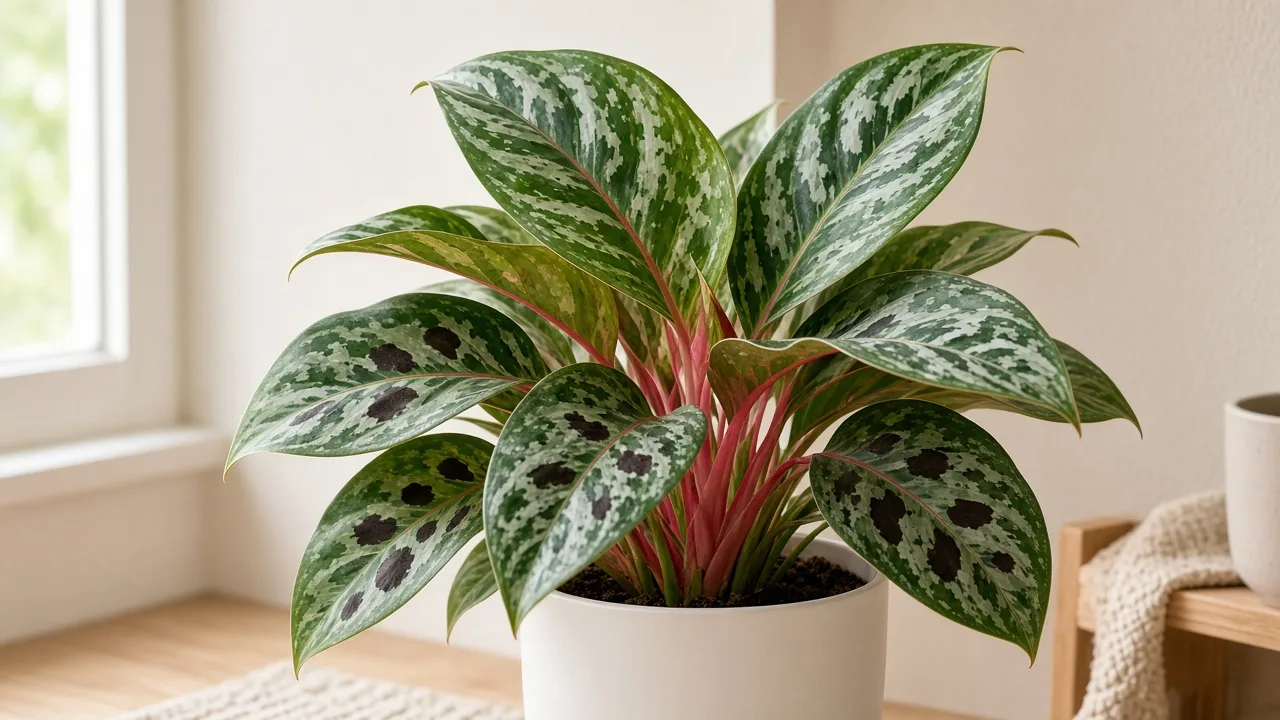
Black Spots on Aglaonema: Causes, Checks & Fixes
This guide covers black spots on Aglaonema. See also the general Black Spots guide, watering, and light pages for this plant.
Black Spots on Aglaonema: Causes, Checks & Fixes
Quick answer
Black spots on your Chinese evergreen (Aglaonema commutatum) are rarely a single mystery disease. On this shade-tolerant Araceae with broad, patterned blades, the pattern almost always comes down to wet foliage, hidden scale, or water-quality burn. For how fungal and bacterial leaf spot spreads in general, see our black spots guide—on Aglaonema, texture and placement on the leaf tell you which branch to follow.
First step: touch a spot. Water-soaked dark patches that enlarge on lower leaves point to leaf spot after wet leaves sat too long. Dry, raised black specks glued to veins point to scale insects. Do not reach for fungicide until you know which you have.
When to use this page vs other Chinese evergreen guides
| What you see | Read next |
|---|---|
| Wet soil, yellow lower leaves, mushy base | Overwatering |
| Dry bumps along midribs, sticky residue | Scale insects |
| Brown tips only, margins crisp inward | Brown tips |
| Soft crown, sour soil smell | Root rot |
| Spots with chewing, not blotches | Holes in leaves |
This page covers black or dark blotches and specks on existing foliage. If only new growth is twisted, start with distorted leaves.
What black spots look like on Chinese evergreen
Aglaonema carries lance-shaped leaves patterned in green, silver, and red. Spots show up differently on that broad surface than on narrow grass-like leaves or thick succulents.
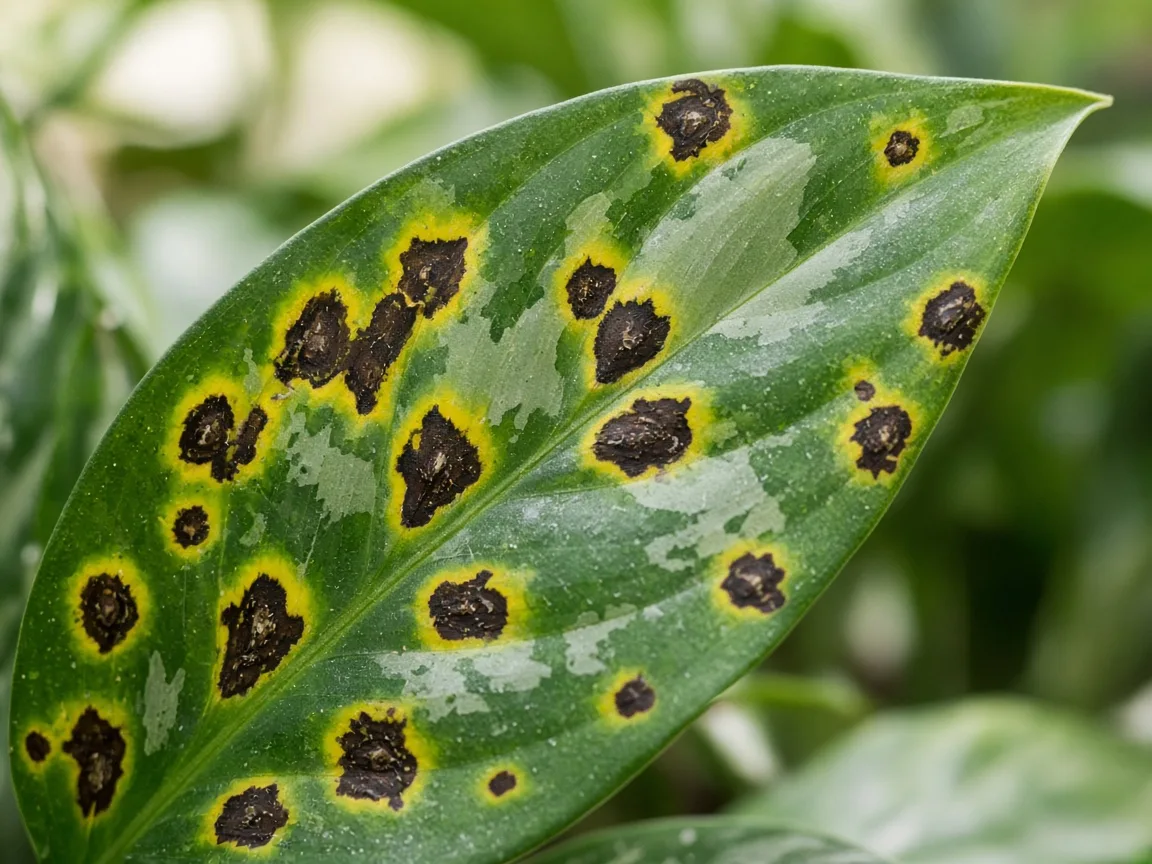
Water-soaked dark spots on a Chinese evergreen leaf—compare texture with dry scale specks along the midrib.
Fungal or bacterial leaf spot (most common indoors):
- Dark brown to black spots that start water-soaked, then dry with a tan or yellow halo
- Lower, older leaves affected first where splash and condensation collect
- Spots enlarge and merge when leaves stay wet overnight in dim corners
- Often follows misting, overhead watering, or a plant crowded against a wall with poor airflow
Scale insects (often mistaken for disease):
- Dry black or brown specks that do not wipe off—hard or soft scale on houseplants sit on veins and petioles
- Spots feel raised; scraping reveals a bump underneath
- Honeydew or sooty mold may appear on leaves below a heavy infestation
- Newest leaves can stay clean while older blades collect specks
Fluoride or salt burn:
- Small dry black dots at leaf tips or along margins, not random blotches in the leaf center
- Progresses from tips inward on municipal tap water—see brown tips
- Often paired with crispy margins rather than soft rot
Mechanical or single-spot entry:
- One isolated dark mark where water splashed soil onto a leaf or a stem rubbed the blade
- Does not spread if cause is removed—monitor only
Check newest crown leaves first. Spots on fresh unfurling tissue mean active spread and need faster action than old lower leaves shedding naturally.
Why Chinese evergreen gets black spots
Chinese evergreens prefer evenly moist, well-drained soil and tolerate low indoor light—a combination that slows leaf drying. Broad patterned blades hold water on the surface longer than narrow leaves, which is why Aglaonema is prone to leaf spot diseases on houseplants when owners mist foliage or water from above.
Wet foliage in stagnant air. Misting, pebble trays splashing upward, and overhead watering leave droplets in the silver pattern grooves. In a dim office or bathroom with poor airflow, those droplets stay hours—long enough for fungal spores already in potting mix or on leaf surfaces to germinate.
Low-light overwatering trap. Aglaonema in a dark corner with wet peat mix grows slowly and uses little water. Chronically damp soil raises humidity around the crown and keeps lower leaves from drying. That same wet root zone can progress to overwatering—black spots on leaves sometimes appear before yellowing if leaf spot hits first.
Scale hiding on patterned tissue. Green and silver mottling camouflages small scale bumps along midribs. Owners treat “fungus” repeatedly while insects keep reinfecting leaves with dry black specks.
Fluoride sensitivity. Like many Araceae houseplants, Aglaonema can show tip burn from fluoride in tap water. Marginal blackening is a water-quality issue, not a pathogen—treating with fungicide wastes time.
How to confirm the cause
Work through these checks in order before buying sprays:
- Texture test. Rub a spot gently. Water-soaked blotches smear or feel flat in the leaf tissue. Scale specks stay raised and may come off with a fingernail.
- Pattern on the plant. Lower leaves only with enlarging halos suggests leaf spot. Specks along veins on many leaves suggest scale. Tips and margins only suggest fluoride—match watering and water source.
- Moisture at depth. Probe the top 2 inches of soil. Soggy mix plus lower-leaf spots means fix drainage and dry-down, not more misting.
- Underside inspection. Scale, mealybugs, and early fungal fruiting show on undersides and petiole axils—flip the worst leaves toward a window.
- Spread speed. Leaf spot that jumps to new crown leaves within a week is urgent. A single stable spot on one old leaf may be mechanical.
Wet-leaf spot on patterned Aglaonema blades
Three details matter on this species and would mislead you on a snake plant or fern:
Silver grooves hold water. The pale pattern channels droplets toward the midrib. Spots often start along the green-silver boundary where water sits longest—not random across the blade.
Crown density traps humidity. Mature Aglaonema bushes multiple stems from one pot. Inner leaves stay shaded and slow to dry. Removing the worst spotted lower leaves improves airflow to the crown without stripping the whole plant.
Never mist to “fix” humidity. Clemson Extension notes that wet foliage promotes leaf spot on many houseplants. Aglaonema tolerates average household humidity—dry leaves beat damp leaves in a dim room.
First fix for Chinese evergreen
Remove the worst spotted leaves with sterile shears and stop wetting foliage. Cut at the base of the petiole, wipe blades with alcohol between cuts, and water the soil only when the top 2 inches dry per the watering guide. Pour at the soil line—never over the crown.
That single action addresses the most common indoor cause without stacking fungicide, repotting, and fertilizer on the same day.
If spots are dry and raised: switch to scale insect treatment—isolate the plant, scrape or dab visible bumps, and inspect neighbors.
If only tips are black and crisp: use filtered or overnight-rested tap water; see brown tips.
Step-by-step recovery
After the first fix:
- Improve airflow. Space plants, open a door occasionally, or run a fan on low nearby—not directly on leaves. Move the pot a foot back from a stagnant corner if light allows.
- Let the pot dry correctly. Aglaonema stores little water in thin stems compared to succulents. Wait for the top 2 inches to dry, then water until a little drains—empty the saucer within 30 minutes.
- Watch new growth for two weeks. Clean emerging leaves from the crown mean the environment is fixed. New spots on fresh leaves mean leaf spot is still active—consider a copper or bicarbonate fungicide labeled for ornamentals, applied to dry leaves per label rates.
- Do not fertilize until new leaves look firm and green for two weeks. Feeding stressed roots can push soft, spot-prone growth.
- Repot only if soil smells sour, roots are mushy, or mix never dries—see root rot and soil guide.
Lookalike symptoms
| Pattern | Texture | Likely cause |
|---|---|---|
| Water-soaked spots with yellow halo | Soft, enlarging | Fungal/bacterial leaf spot |
| Dry specks on veins | Raised bumps | Scale |
| Tip blackening only | Crispy margin | Fluoride / brown tips |
| Yellow patches, not black | Chlorotic | Not enough light or nitrogen deficiency |
| Irregular holes with frass | Chewed tissue | Holes in leaves / caterpillars |
Mistakes to avoid
- Do not mist spotted Aglaonema to “help humidity”—you extend leaf wetness.
- Do not apply horticultural oil or soap on leaves still wet from watering—burn risk on variegated tissue.
- Do not remove every spotted leaf at once if more than half the plant is affected—strip gradually so enough foliage remains to recover.
- Do not assume black spots mean root rot without checking roots—leaf spot can occur with otherwise firm roots in wet air.
- Do not use leaf shine products on infected foliage—they trap moisture and block stomata.
Recovery timeline
Spotted tissue does not turn green again—judge success by new leaves. After you dry the care routine, expect clean crown leaves within two to four weeks in warm indoor conditions. Severe leaf spot on a plant that was also overwatered may need six to eight weeks once roots stabilize.
If spots keep appearing on new growth after four weeks of dry foliage and corrected watering, re-check for scale or consider disposing of a heavily infected plant before it spreads to collection neighbors.
How to prevent black spots next time
- Water soil only—see watering guide
- Give low to bright indirect light so the mix dries predictably between drinks
- Quarantine new plants two weeks; inspect undersides before shelf placement
- Use well-draining mix with perlite—avoid dense peat that stays wet at the surface
- Wipe dust from broad leaves monthly with a damp cloth, then let them dry fully—do not leave them wet overnight
When to worry
Treat as urgent when:
- Multiple new crown leaves show spots within one week
- Tissue turns mushy or smells sour at the stem base
- Black spots coincide with yellowing, wilting, and a heavy wet pot—possible root rot
- Scale or mealybugs have spread to nearby plants—isolate and treat the collection
Related Chinese evergreen guides
- Overview — culture baseline for this species
- Watering — top 2 inches dry-down rhythm
- Light — placement to balance growth and dry-down
- Problems hub — full symptom index
Conclusion
Black spots on Chinese evergreen are wet-leaf and airflow problems first, with scale and fluoride as the main lookalikes. Touch the spot, dry the blades, fix the watering rhythm, and let clean new leaves tell you whether you solved it.