Holes in Leaves on Chinese evergreen Aglaonema: Pest &
Quick answer
Holes in Aglaonema leaves are almost never a disease on indoor pots—they mean chewing insects, snails on outdoor summer placements, or mechanical scrapes against a wall or shelf. First step: check leaf margins and undersides at night for caterpillars or slime trails.
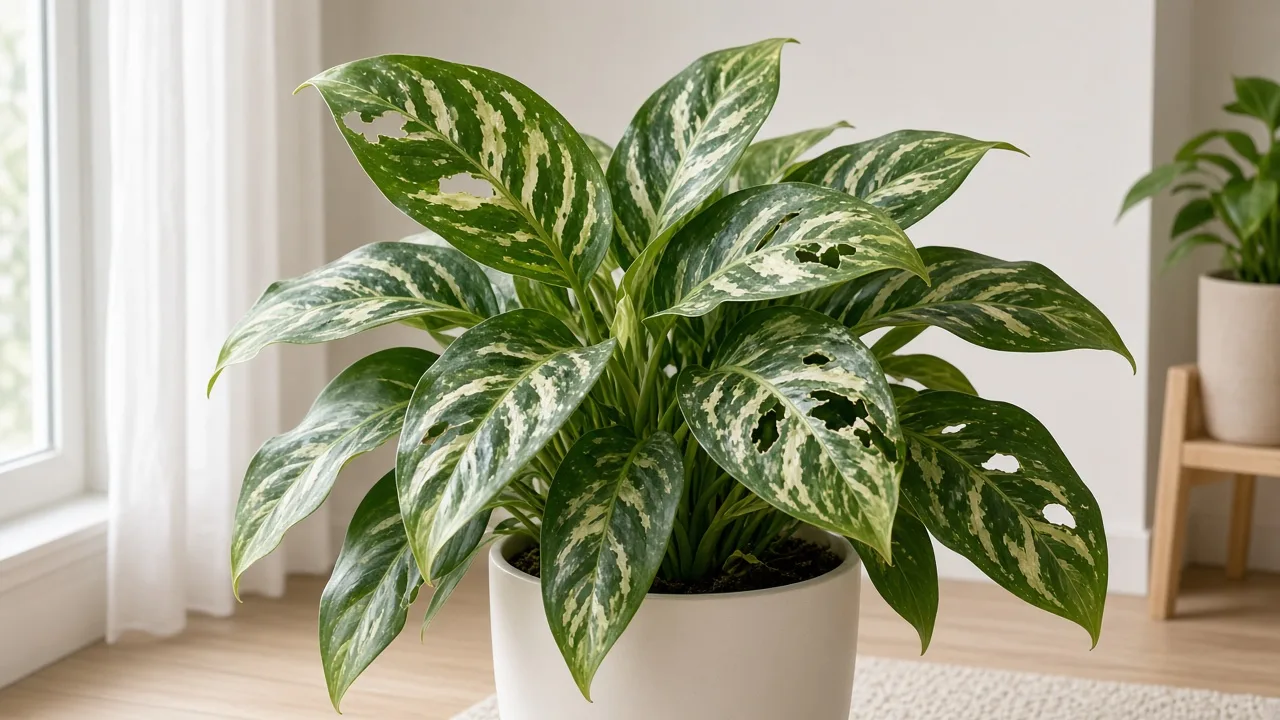
Holes in Leaves on Aglaonema: Causes, Checks & Fixes
This guide covers holes in leaves on Aglaonema. See also the general Holes in Leaves guide, watering, and light pages for this plant.
Holes in Leaves on Aglaonema: Causes, Checks & Fixes
Quick answer
Holes in Chinese evergreen (Aglaonema commutatum) foliage are almost always chewing damage or mechanical scrapes—not indoor fungal leaf spot. On this shade-tolerant Araceae with broad, patterned blades, soft tissue tears easily against furniture. See our holes in leaves guide for general causes—on Aglaonema, frass, slime trails, and one-sided damage tell you which branch to follow.
First step: inspect margins and undersides at night with a flashlight. Caterpillars feed after dark. Clean tears on one side of the pot point to placement, not pests.
When to use this page vs other Chinese evergreen guides
| What you see | Read next |
|---|---|
| Irregular chew + dark frass | Caterpillars |
| Fine stippling, no holes | Spider mites |
| Brown spots with yellow halo, not holes | Black spots |
| Twisted or puckered new growth | Distorted leaves |
| Serpentine trails inside leaf | Leaf miners |
This page covers holes, tears, and chewed windows in existing foliage. If new growth is crinkled without holes, start with distorted leaves.
What holes look like on Chinese evergreen
Aglaonema carries lance-shaped leaves patterned in green, silver, and red. Holes show up differently on that broad arching surface than on narrow or thick-leaved houseplants.
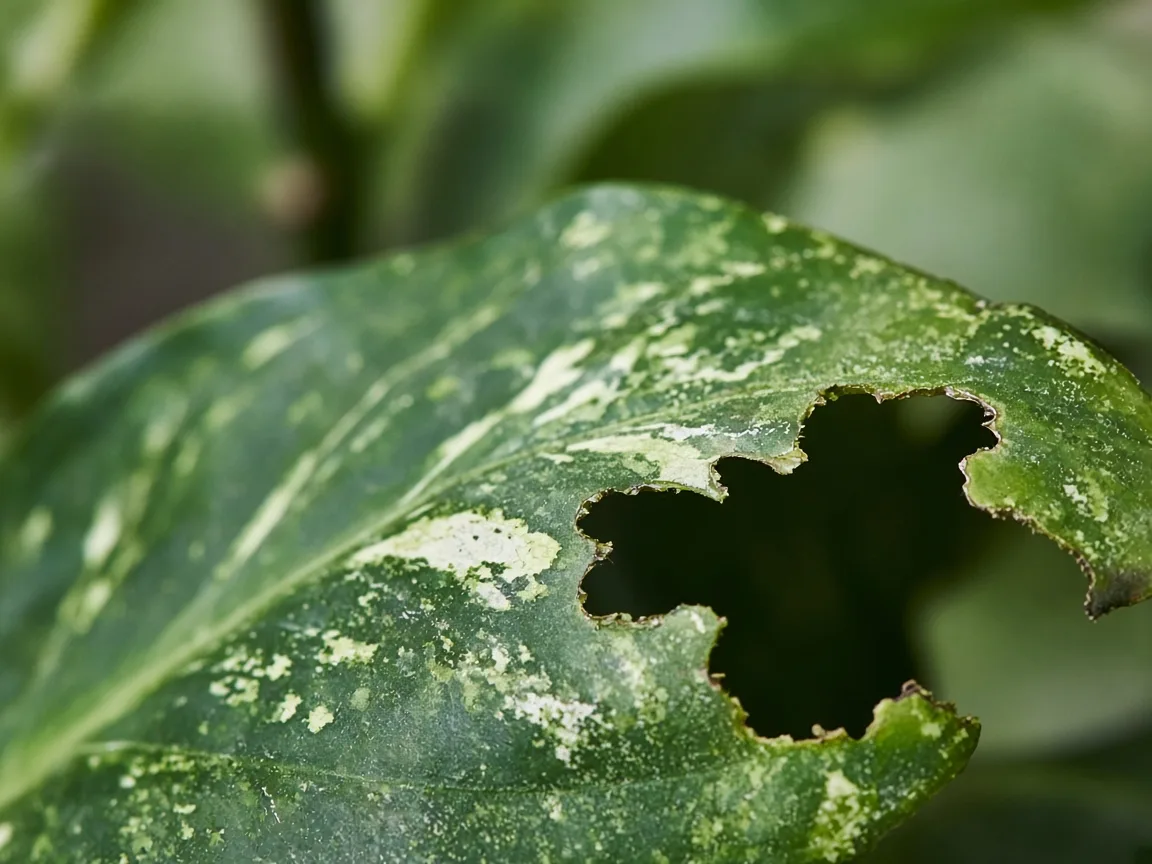
Chewed margin on Chinese evergreen foliage—note whether damage is on one side against a wall or scattered across the plant.
Caterpillar chew (most common with active pests):
- Irregular holes and notched margins, often on lower arching leaves
- Dark frass pellets on leaves or soil surface beneath chewed blades
- Caterpillars on houseplants hide on undersides and in the crown by day
- Damage may appear overnight on multiple leaves
- Newest leaves can be chewed if infestation is heavy
Mechanical scrape (common indoors):
- Clean tears or punctures on one side of the pot nearest a wall, shelf, or tight corner
- No frass, no slime, no spread to other plants
- Broad lance-shaped blades arch outward and catch on furniture when the stem leans
- Often after moving or bumping the pot
Outdoor summer pests:
- Slug or snail slime trails on pot rim after patio time
- Round “window” holes without frass—slugs feed at night
- Beetle chew on plants briefly moved outdoors in warm weather
Thrips scarring (lookalike—not true holes):
- Western flower thrips cause silvery scars and stippling that can look like tiny perforations
- Distorts new growth more than mature blades—see thrips and distorted leaves
Leaf miners (rare indoors):
- Serpentine brown trails inside the leaf, not clean round holes
- See leaf miners if trails are present
Check newest crown leaves first. Fresh chew on emerging tissue means active pests and needs faster action than one old torn leaf from placement.
Why Chinese evergreen gets holes
Caterpillars and occasional beetles feed at night on Aglaonema foliage. Indoor collections rarely see disease-related shot holes—chewing and scrapes dominate.
Soft broad tissue tears easily. Mature Chinese evergreen bushes arch long patterned blades outward. A pot pushed against a wall scrapes the outer leaves every time the stem shifts. Owners blame “bugs” when placement caused clean tears.
Hitchhikers on new plants. Caterpillar eggs on nursery stock hatch weeks after purchase. Quarantine failures spread chew damage across a shelf.
Summer patio exposure. Aglaonema tolerates warm indoor temperatures but outdoor moves invite slugs, snails, and beetles that indoor pots never see.
Pet and child contact. Cats and dogs may chew toxic foliage—look for teeth marks on lowest accessible leaves. Aglaonema is toxic if ingested—relocate if pets target it.
Dropped objects. Vacuum hoses, falling books, and moving boxes punch clean holes in outer arching leaves without frass.
How to confirm the cause
Work through these checks in order before spraying:
- Night inspection with flashlight. Caterpillars feed after dark on lower leaves and crown—hand-pick any you find.
- Frass test. Dark pellets on leaves or soil confirm chewing insects. No frass means mechanical or slug—check slime.
- One-sided damage check. All holes on the wall-facing side = scrape. Scattered damage = pests.
- Recent outdoor time. Summer patio moves invite slugs—look for slime on pot rim and saucer.
- Tap test over white paper. Tiny thrips fall out—stippling without true holes points to thrips, not caterpillars.
- Neighbor plants. Frass on shelf mates means isolate and inspect the whole collection.
Caterpillar and scrape checks on patterned Aglaonema blades
Three details matter on this species:
Crown density hides caterpillars. Multi-stem Aglaonema bushes trap pests in inner leaves. Part foliage gently and inspect the crown, not just outer arching blades.
Patterned tissue shows damage visibly. Silver and red blocks make chew marks obvious—do not assume heavier damage than a green cultivar would show.
Do not mist holey leaves. Wet foliage promotes leaf spot on houseplants—holes are not a reason to increase humidity on leaves.
First fix for Chinese evergreen
Hand-pick any visible caterpillars and wipe slime trails, then isolate the plant if chew marks are spreading. Move the pot away from walls and tight shelves that scrape soft tissue.
If caterpillars confirmed: see caterpillars. Bt (Bacillus thuringiensis) on chewed margins is safer than broad sprays on variegated tissue—see UMN Extension on indoor pests.
If mechanical tears only: reposition with clearance on all sides. No pesticide needed—monitor for secondary black spots if torn edges stay wet.
If slugs after outdoor time: remove slugs, clean pot rim, keep indoors. Do not return to patio until issue is resolved.
Step-by-step recovery
After the first fix:
- Isolate if frass appears on multiple plants—inspect neighbors for two weeks.
- Repeat night inspections for five to seven days until no new chew appears.
- Remove only leaves that are mostly destroyed—partially green holey leaves still photosynthesize.
- Watch new growth for two to four weeks. Clean emerging crown leaves mean pests are controlled.
- Do not fertilize until new leaves look firm—stressed plants do not need feeding during pest recovery.
Lookalike symptoms
| Pattern | Check | Likely cause |
|---|---|---|
| Irregular chew + frass | Caterpillar at night | Caterpillars |
| Round windows, slime trail | Pot rim at dawn | Slugs (outdoor summer) |
| One-sided clean tear | Wall-facing leaves only | Mechanical scrape |
| Fine stippling, no holes | Paper tap test | Spider mites / thrips |
| Brown spots with yellow halo | Spreads slowly | Black spots |
Mistakes to avoid
- Do not spray fungicide on chew holes—this is not leaf spot.
- Do not remove every holey leaf; green tissue still supports recovery.
- Do not ignore new plants on the same shelf—inspect neighbors for frass.
- Do not use horticultural oil on stressed variegated foliage without pest confirmation.
- Do not return to patio without checking pot rim for slug slime.
Recovery timeline
Hole tissue does not fill in—judge success by new leaves. After pest removal or repositioning, expect clean crown leaves within two to four weeks in warm indoor conditions. Chinese evergreen pushes new foliage slowly—allow one full flush before judging.
If new chew appears after hand-picking, escalate to Bt or professional identification—some caterpillars need repeated treatment.
How to prevent holes next time
- Quarantine new plants two weeks before shelf placement
- Night inspections during summer outdoor moves
- Keep pots away from walls, tight shelves, and pet reach
- Rotate the pot quarterly so outer blades do not lean against furniture
- Maintain even moisture at the soil line—stressed plants recover slower from pest damage
When to worry
Treat as urgent when:
- Chew spreads to multiple new crown leaves within days—heavy infestation
- Pet ingested foliage—Aglaonema is toxic; contact a veterinarian
- Frass on many collection plants—isolate and treat the shelf
- Holes coincide with wilting and wet soil—separate issue; check overwatering
Related Chinese evergreen guides
- Overview — culture baseline for this species
- Caterpillars — chew pest treatment
- Watering — top 2 inches dry-down rhythm
- Problems hub — full symptom index
Conclusion
Holes on Chinese evergreen mean identify the chewer or the scrape first—hand-pick, reposition, and let clean new leaves confirm recovery before reaching for broad sprays.