Iron Deficiency on Aglaonema: Causes, Checks & Fixes
Quick answer
Iron deficiency on Aglaonema shows as yellow or pale new lance-shaped leaves with dark green veins at the crown flush, while older lower blades may stay normally silver-green. First step: confirm interveinal chlorosis is on new growth only—not washed-out silver fading from dim light—then check whether mix stays too wet or depleted for iron uptake before applying chelated iron.
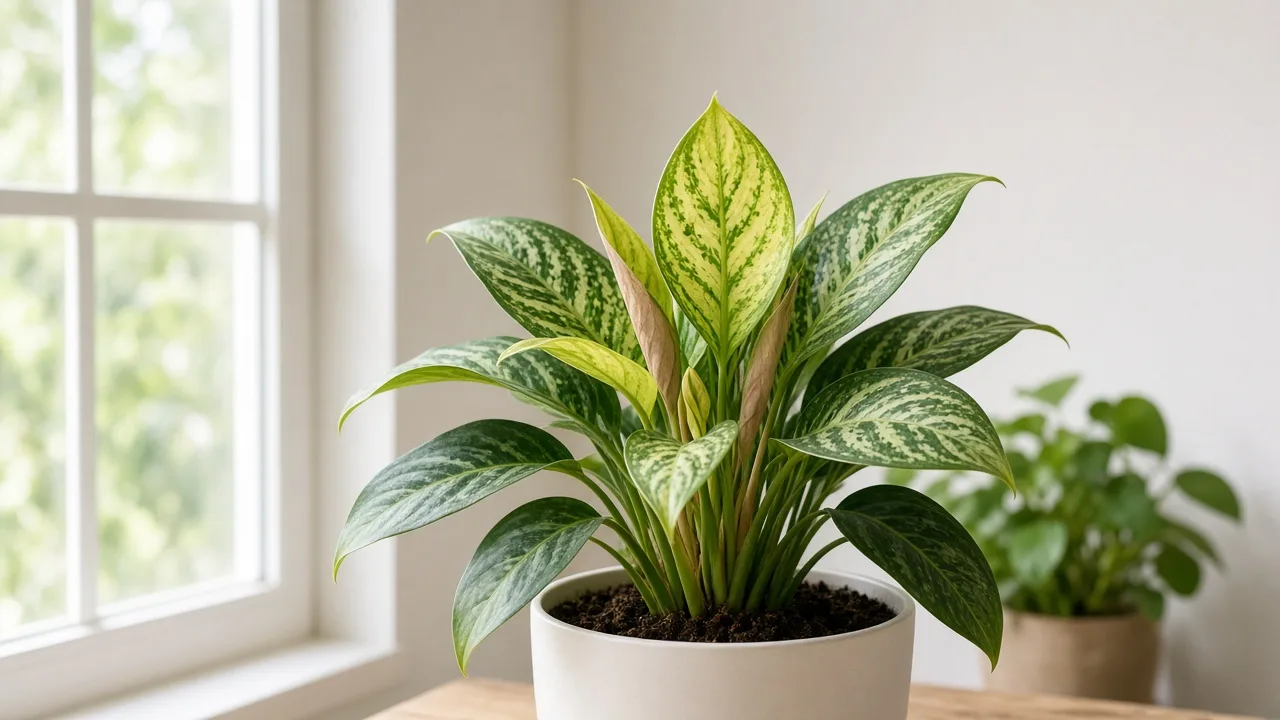
Iron Deficiency on Aglaonema: Causes, Checks & Fixes
This guide covers iron deficiency on Aglaonema. See also the general Iron Deficiency guide, watering, and light pages for this plant.
Iron Deficiency on Aglaonema: Causes, Checks & Fixes
Quick answer
Iron deficiency on Aglaonema (Chinese evergreen) shows as yellow or pale new lance-shaped leaves with dark green veins (interveinal chlorosis) on the newest foliage at the crown flush, while older lower blades on the same clump may keep normal silver-green mottling. Iron is immobile in plants, so chlorosis appears on young expanding tissue first—not on the lowest old leaves the way nitrogen deficiency does.
See our iron deficiency guide for general chlorosis mechanics. On Aglaonema, inspect the lance-shaped leaf still unfurling from the crown—veins stay green while tissue between them yellows on the green zones, not the natural silver splash pattern alone.
First step: confirm new-growth chlorosis with green veins on green tissue, then check root health and whether peat-coco mix stays too wet or nutrient-depleted before applying chelated iron.
When to use this page vs other Aglaonema guides
| Pattern | Read next |
|---|---|
| New crown leaf yellow with green veins on green tissue | Iron deficiency (this page) |
| Silver-green wash fading across many blades in a dim room | Not enough light or Pale leaves |
| Pale lower old leaves without green-vein pattern | Nitrogen deficiency |
| Interveinal yellowing on older mid-clump leaves | Magnesium deficiency |
| Cupped or margin-burned new crown leaf | Calcium deficiency |
| Yellow lower leaves on wet mix | Overwatering or Root rot |
| Brown scorched leaf tips on mature blades | Brown tips or Potassium deficiency |
| General yellowing with multiple causes | Yellow leaves |
What iron deficiency looks like on Aglaonema
Chinese evergreen carries broad lance-shaped leaves mottled green and silver on an upright bushy crown. Healthy new blades emerge from the center with firm petioles and crisp silver-green patterning. Iron stress breaks that pattern at the active crown growing point, not across the whole clump at once.
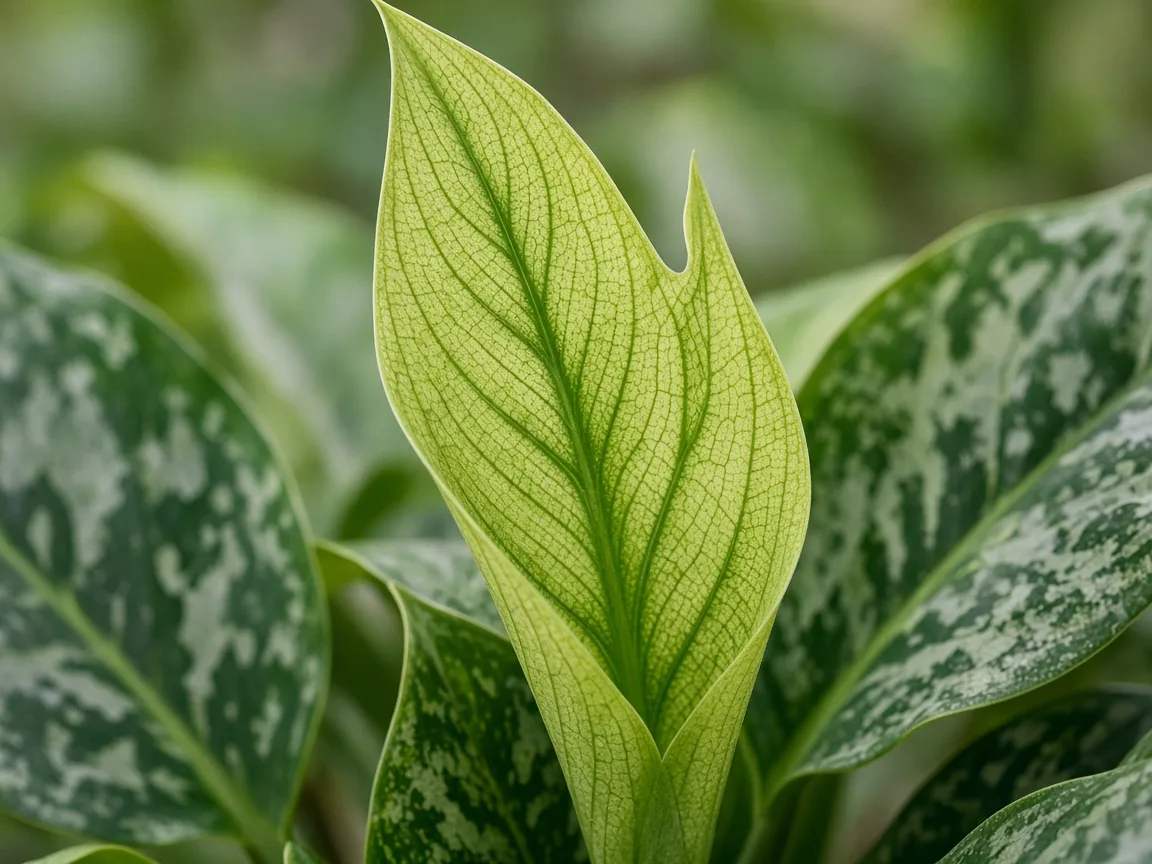
Newest lance-shaped leaf at the crown flush with pale yellow tissue between darker green veins on the green zones—older silver-green blades below may look normal.
Typical signs:
- Yellow or pale new lance-shaped leaves at the crown with veins remaining darker green on the green tissue
- Successively paler crown leaves on the same plant if untreated
- Older lower leaves may stay normally silver-green while only new growth looks chlorotic
- Smaller or thinner new blades when chlorosis is severe
- Firm crown and white roots if the root zone is healthy—soft base on wet mix points to overwatering instead
Not iron deficiency:
- Uniform silver-to-green wash across many open blades in a dim hallway — pale leaves or not enough light
- Uniform pale older leaves first — nitrogen deficiency
- Interveinal yellowing on oldest mid-clump leaves — magnesium deficiency
- Fine speckles with webbing on undersides — spider mites before assuming chlorosis
- All leaves yellow on persistently wet soil — root rot overlap
- Crispy brown tips without veining pattern — brown tips from fluoride or dry air, not crown-tip chlorosis
The classic symptom of iron deficiency is interveinal chlorosis where leaf tissue yellows while veins stay green. On Aglaonema, that pattern is easiest to read on the green zones of the blade still opening at the crown—not on the natural silver splash patches that can look pale even when iron is adequate.
Why Aglaonema gets iron deficiency
Chinese evergreen is a slow-growing shade-tolerant aroid that tolerates low to medium indirect light indoors—yet each new crown leaf still demands iron for chlorophyll in the green tissue. Iron chlorosis often results when roots cannot absorb iron even when it is present in fertilizer—high pH, waterlogged peat-coco mix, compacted soil, or salt crust block uptake while the plant keeps pushing new lance-shaped leaves slowly.
Aglaonema-specific causes:
- Depleted peat-coco mix — A clump in the same container two to three years without feeding exhausts available micronutrients; slow Chinese evergreens outgrow their nutrient reserve even when they look glossy. UF/IFAS notes most Aglaonema cultivars are prone to micronutrient deficiencies and recommends monitoring soluble salts—skipped seasons matter on slow feeders.
- Overwatering in acceptable but dim light — Heavy wet mix reduces root oxygen and micronutrient uptake; symptoms worsen in poorly drained soils. A pot sitting wet for weeks in filtered light is a primary indoor killer on Chinese evergreens per NC State.
- Alkaline tap water or lime-heavy components — Raises pot pH over time and locks iron chemically even when you feed; high pH makes iron unavailable to plants.
- Salt buildup from excess fertilizer or hard water — White crust on the pot rim injures roots and blocks micronutrient absorption; UF/IFAS warns over-fertilization indoors causes soluble salt buildup and leaf margin injury on Aglaonema.
- Incomplete micronutrient fertilizer — Nitrogen-heavy products expand leaf area without supplying available iron for chlorophyll in new crown tissue.
- Misread low-light paleness — Silver fading in deep shade looks washed-out but lacks the green-vein chlorosis pattern on new crown leaves.
Do not diagnose iron deficiency on sour wet soil with soft stems at the soil line—that is root failure from chronic saturation until you unpot and see mostly white firm roots.
Reading chlorosis on silver vs green zones
Aglaonema’s silver splash is lighter pigmented leaf tissue, not a separate pigment band like pink anthocyanin on some cultivars. Iron chlorosis shows on the green portions of new crown leaves: tissue between veins turns yellow while veins stay dark green.
That split-zone reading matters because silver patches can look pale even on healthy plants. Worry when every new crown leaf shows green-vein yellowing on the green tissue for weeks after hardening, not when silver simply dulls in a dark corner.
Compare two or three consecutive crown unfurls rather than one pale opener after a long dry spell. One briefly lighter green blade differs from two successive lance-shaped leaves with persistent green-vein chlorosis on stable care. If the whole plant—including older leaves—looks uniformly washed out without veining, start with the light guide and pale leaves page before iron drenches.
Low-light tolerance and slow crown flush
Aglaonema tolerates low to medium indirect light better than most houseplants, yet grows slowly in realistic home conditions. In filtered light the plant may produce only one or two new crown leaves per warm season—so iron problems surface on isolated new blades rather than across the whole clump at once, and each chlorotic leaf represents weeks of missed uptake.
A plant in enough filtered light for healthy foliage still needs consistent complete feeding during active growth per the Aglaonema fertilizer guide. Skipping feed because growth looks slow, then dumping full-strength fertilizer after damage appears, often burns margins without fixing chlorophyll formation in the next crown leaf.
Closing the gap means stable top 2-inch dry-down per the watering guide and quarter-strength complete fertilizer with micronutrients during active growth, not more nitrogen to force wider leaves the chlorophyll cannot support.
Fluoride-sensitive water and micronutrient uptake
Aglaonema is fluoride-sensitive—brown crispy tips from municipal tap water are a separate issue from iron chlorosis. Still, chronic salt and fluoride buildup in peat-coco mix can stress roots and compound micronutrient uptake failure at the crown.
Filtered or rested tap water per the watering guide reduces tip burn. If you see green-vein chlorosis on new crown leaves and white salt crust on the pot rim, flush the mix before chelated iron—not more hard-water drinks that raise pH and lock iron.
Bottom-heavy wet mix: In plastic pots without drainage discipline, the lower third of peat-perlite mix often stays damp while the surface dries. Chlorosis at the crown with a heavy pot, fungus gnats, and pale lower leaves is often wet depleted mix, not simple iron starvation. Cross-check with Aglaonema watering and probe halfway down, not surface crust alone.
Compacted old peat: Aglaonema tolerates staying root-bound, but peat and coco break down after one to two years. What started as airy well-draining Aglaonema soil becomes a water-holding sponge that limits oxygen and micronutrient uptake.
Lookalike symptoms
| Pattern | Check | Likely cause |
|---|---|---|
| New crown leaf yellow, green veins on green tissue | New vs old tissue | Iron deficiency (this page) |
| Silver fading across many blades | Light level | Not enough light or Pale leaves |
| Old lower leaves pale first | Leaf position | Nitrogen deficiency |
| Interveinal yellow on old leaves | Mid-clump pattern | Magnesium deficiency |
| Cupped new crown leaf | Margin shape | Calcium deficiency |
| Fine webbing on crown undersides | Magnifier | Spider mites |
| Soft stems, wet soil, mushy base | Root feel | Overwatering |
How to confirm
Work through this checklist before iron drenches, repotting, and fertilizer changes in the same week:
- New vs old leaf pattern — Chlorosis on newest crown lance-shaped leaves with green veins on green tissue; older blades on the same plant still normally silver-green.
- Silver fade ruled out — Whole plant washed out in a dim room without green-vein pattern points to light, not iron.
- Root inspection — White firm roots support micronutrient fixes; brown mushy roots need drainage first.
- Soil moisture halfway down — Wet many days after watering on a heavy pot in filtered light?
- Salt crust — White rim suggests flush before iron.
- Complete fertilizer history — Chlorosis despite feeding points to uptake block, not starvation.
- Growing medium age — Same peat-coco mix two to three years without repot or feed?
RHS notes that interveinal chlorosis is usually indicative of iron, manganese, or magnesium deficiency, with iron affecting the youngest leaves first. If soil is wet throughout, stems soften at the soil line, and roots are mostly mushy, treat as confirmed overwatering or root rot overlapping with chlorosis—not a mild iron-only case.
First fix for Aglaonema
Correct watering so the top 2 inches of mix dry between drinks, then apply one chelated iron drench at label rate for houseplants only if roots are healthy.
Do not iron-feed waterlogged roots. Chelated iron is absorbed more readily than non-chelated forms in pot culture when pH or salts have limited uptake. One corrected watering rhythm plus one iron application is the first fix—not repotting, heavy pruning, and triple fertilizer the same day.
Step-by-step recovery
- Adjust watering per Aglaonema watering guide; empty saucer standing water within 30 minutes after each drink.
- Flush soil if white salt crust rings the pot rim—leach salts before micronutrient drenches.
- Apply chelated iron once at label rate; repeat only per label if new crown leaves still chlorotic after six weeks.
- Repot into fresh peat-coco-perlite mix if roots fill the pot and old peat has compacted—see Aglaonema soil for ratios.
- Use complete balanced fertilizer with micronutrients during active growth per the Aglaonema fertilizer guide—not nitrogen-only feeds.
- Monitor the next two crown leaves for greener tissue between veins on the green zones.
- Confirm bright indirect light if every new blade stays tiny and pale without veining—see light guide without jumping to direct sun that scorches silver-green foliage.
Recovery timeline
The currently chlorotic lance-shaped leaf rarely re-greens once it hardens. The next one or two crown leaves after corrected watering and one chelated iron drench usually emerge with cleaner veining within six to ten weeks on firm roots—slower than fast-growing pothos because Aglaonema pushes new tissue less often in home light.
Severe root damage from chronic overwatering in dim corners may delay recovery a full growing season. If successive crown leaves stay chlorotic despite complete feed and stable care, inspect roots for rot before repeating iron or repotting again.
Mistakes to avoid
- Do not confuse silver fading in dim rooms with iron chlorosis—check for the green-vein pattern on new crown leaves first.
- Do not iron-feed a plant on wet soil in low light—fix drainage before micronutrient drenches.
- Do not expect the current pale blade to re-green—judge the next crown leaf unfurl.
- Do not stack repotting, division, and full-strength feed the same week on a stressed plant.
- Do not skip feeding for years then dump full-strength fertilizer on a pale clump—that path burns margins without fixing chlorophyll in the next leaf.
- Do not treat every yellow lower leaf as iron—old-leaf yellowing on wet mix is usually overwatering, not crown-tip chlorosis.
Prevention
- Feed lightly with complete balanced fertilizer including micronutrients during active growth per the Aglaonema fertilizer guide—UF/IFAS recommends balanced feed at modest ppm under interior conditions.
- Maintain consistent top 2-inch dry-down per the watering guide.
- Refresh depleted peat-coco mix every one to two years when roots crowd the pot per repotting guide.
- Flush white salt crust periodically if you use hard tap water or feed heavily.
- Inspect new crown leaves monthly during spring and summer—early green-vein chlorosis is easier to correct than a stunted crown.
- Keep the plant in enough bright indirect light for firm lance-shaped leaves with crisp silver-green patterning—not a dark hallway where every new blade stays tiny.
Related Aglaonema guides
- Aglaonema overview
- Aglaonema problems hub
- Aglaonema fertilizer
- Aglaonema watering
- Aglaonema soil
- Nitrogen deficiency — old leaves pale first
- Magnesium deficiency — interveinal yellow on older leaves
- Pale leaves — washed-out silver in dim light
- Calcium deficiency — cupped new crown leaf
Use the Fertilizer Dilution Calculator to work out a safe quarter-strength dose before changing multiple variables at once.
Conclusion
Yellow new lance-shaped leaves with dark green veins at the Aglaonema crown point to iron uptake failure on expanding tissue—confirm the new-vs-old leaf pattern, distinguish silver fade from chlorosis, stabilize top 2-inch dry-down watering and root health, apply chelated iron once on firm roots, and judge recovery by the next crown leaf unfurling with greener tissue between veins.