Scale Insects on Ajwain Plant: Causes, Checks & Fixes
Quick answer
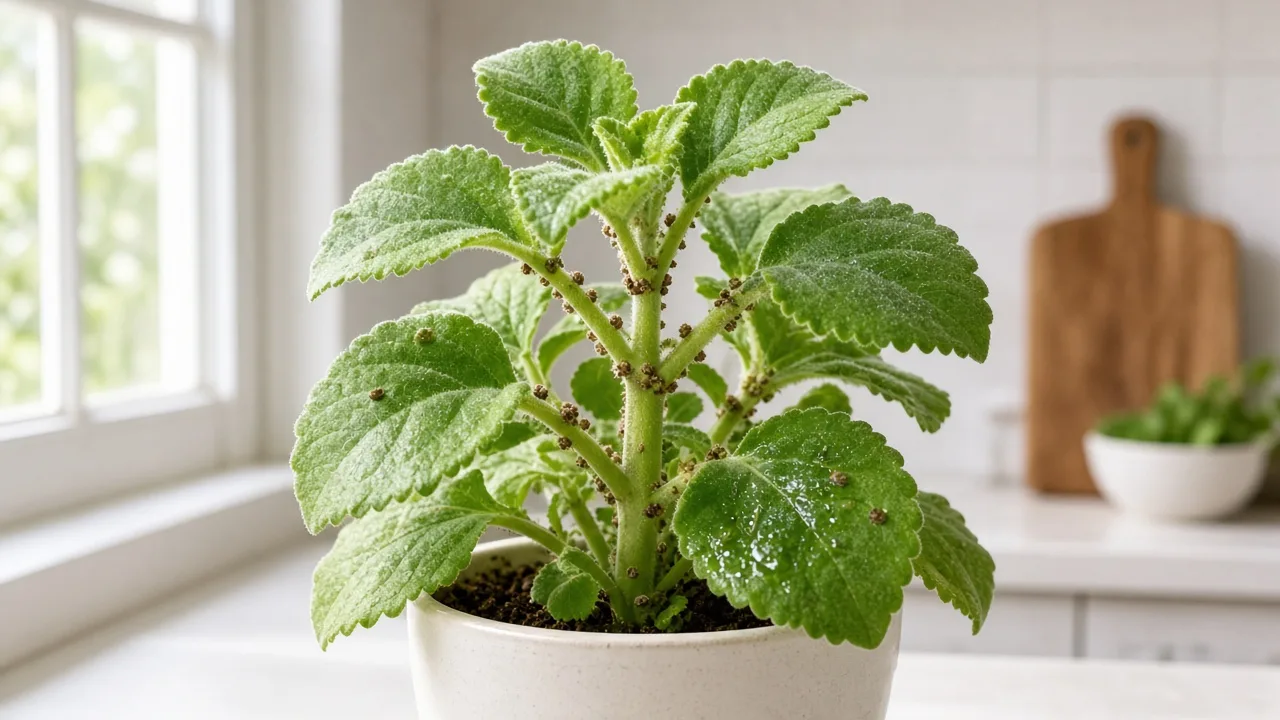
Scale insects on Ajwain Plant look like flat tan or brown bumps glued along square stems and in opposite fuzzy leaf pairs—not the even velvety texture across a healthy leaf blade. First step: isolate the pot and scrape every visible bump with a cotton swab dipped in 70% isopropyl alcohol after the fingernail flick test confirms a hard shell.
Scale Insects on Ajwain Plant: Causes, Checks & Fixes
This guide covers scale insects on Ajwain Plant. See also the general Scale Insects guide, watering, and light pages for this plant.
Scale Insects on Ajwain Plant: Causes, Checks & Fixes
Quick answer
Scale insects on Ajwain Plant (Plectranthus amboinicus, also called Indian Borage or Cuban oregano) are small, immobile sap feeders protected by a waxy or shell-like cover that look like flat tan or brown bumps glued along square stems and in opposite fuzzy leaf pairs—not the even velvety texture across a healthy leaf blade. They pierce tissue, drain sap, and—on soft scale species—leave sticky honeydew that can feed sooty mold on thick aromatic leaves.
For how scale life cycles work indoors in general, see our scale insects guide. On Ajwain, the practical pattern is firm disks along square semi-woody stems and in harvest-regrowth leaf pairs, sticky shine on fuzzy foliage you were about to cook with, and extra caution because this kitchen herb cannot use soil-applied systemics labeled only for ornamentals.
First step: isolate the pot away from curry leaf, mint, and other kitchen herbs, then scrape every visible bump with a cotton swab dipped in 70% isopropyl alcohol after the fingernail flick test confirms a hard shell—not cottony mealybugs.
When to use this page vs other Ajwain Plant guides
This page is the pest-first entry for immobile tan or brown bumps on square stems and fuzzy leaf pairs.
| Pattern | Read next |
|---|---|
| White cottony tufts in leaf-pair crotches | Mealybugs |
| Soft pear-shaped insects on new harvest shoots | Aphids |
| Fine webbing and yellow stippling on older leaves | Spider mites |
| Tiny white insects flying when disturbed | Whiteflies |
| Black coating that wipes off with sticky residue | Black spots (often sooty mold from sap feeders) |
| Yellow lower leaves, wet heavy soil, soft stems | Overwatering or root rot |
What scale insects look like on Ajwain Plant
Scale insects are protected by a waxy or shell-like cover that makes adults essentially immobile once they settle. On Ajwain they are easy to mistake for dried sap, stem texture, or natural leaf fuzz until colonies build:
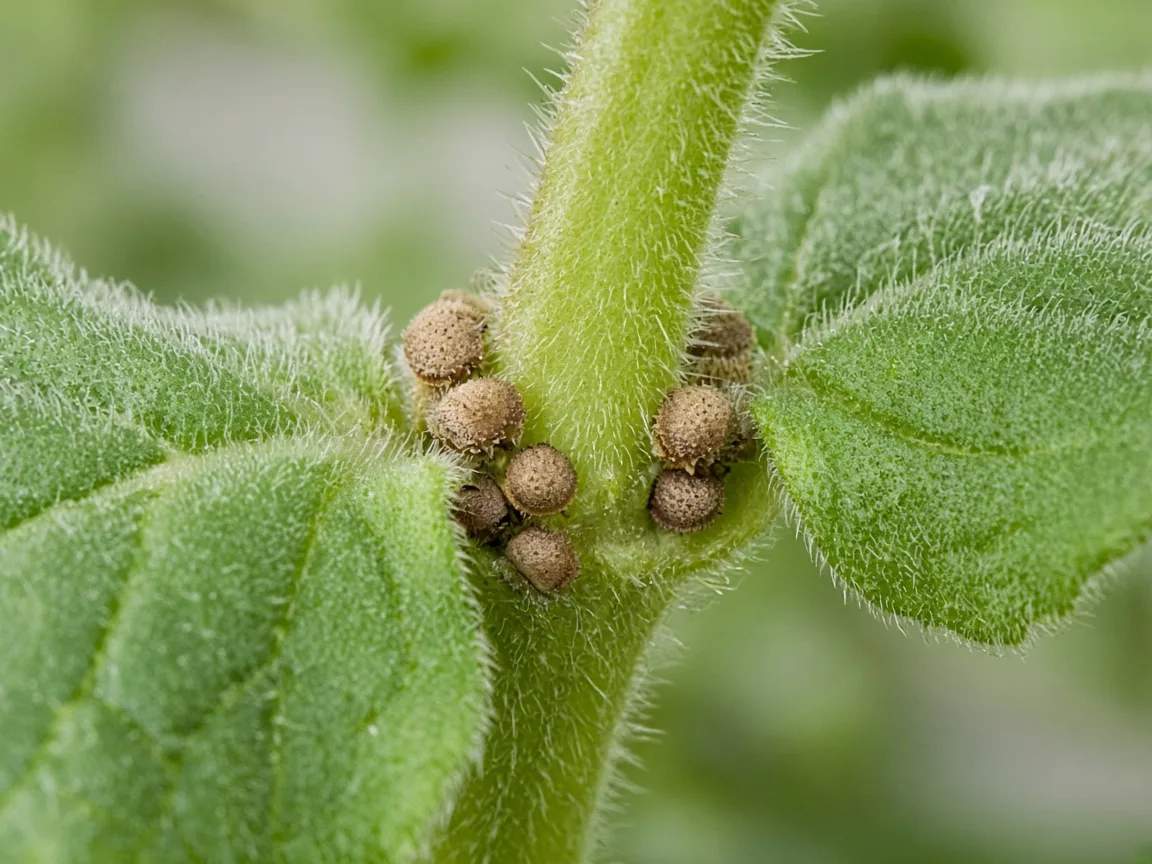
Flat tan scale shells tucked where opposite thick fuzzy leaves meet the square stem—compare with the even velvety texture across a healthy leaf blade.
Typical signs:
- Flat or dome-shaped tan, brown, or gray bumps along square stems, in opposite leaf-pair crotches, and on semi-woody lower stem sections
- Disks that do not wipe away with a dry cloth—unlike mineral deposits or perlite splash on fuzzy leaves
- Sticky shine on thick aromatic leaves — Honeydew from soft scale can coat foliage and pot rims
- Black sooty mold on fuzzy foliage — fungus growing on dried honeydew, not leaf spot disease; see black spots when the coating wipes off
- Ant trails on the saucer or kitchen shelf — ants harvest honeydew and protect scale colonies
- Yellowing or stunted newest leaves on infested stem sections while older thick leaves below stay firm
- Pale crawlers before shells harden — Mobile first-stage nymphs settle on new growth and stems before growing armor
Healthy Ajwain leaves are thick, fleshy, and evenly velvety when mature—that natural fuzz is what makes harvest-day confusion so common. Scale forms discrete firm bumps clustered along stems and in leaf pairs, not a uniform texture across the blade. The square succulent stems and opposite leaf pairs give pests dozens of hiding spots along one sprawling pot while upper growth still looks clean from across the kitchen.
Honeydew and follow-on problems: Soft scale excretes sugary honeydew as they feed. On fuzzy Ajwain leaves, stickiness collects dust and can turn into black sooty mold—the same secondary chain described on our aphids guide and mealybugs guide. Ants sometimes arrive to harvest honeydew and will protect scale colonies; if you see ant trails on a shared herb shelf, inspect stem joints immediately.
Where scale hides on square stems and harvest regrowth
Ajwain Plant grows as a sprawling Lamiaceae herb with thick square stems—not tight rosettes. Scale follows the protected joints along each opposite leaf pair, not the broad velvety leaf faces owners see before harvest.
Scale often concentrates in somewhat protected areas such as stem joints and along petioles. On Ajwain, the equivalent hot zones are:
- Opposite leaf-pair crotches — Where each fuzzy leaf meets the square stem; the main feeding zone after every harvest pinch
- Semi-woody lower stem sections — Tan shells blend with green-brown stem texture casual glances miss
- Soft harvest regrowth tips — Crawlers settle on new growth and stems where sap is easiest to reach
- Underside petioles — Lift thick fuzzy leaves and check where each blade attaches—not just the broad surface
- Soil line and pot rim — Crawlers travel between nearby kitchen herbs on shared shelves
This stem-joint inspection pattern is plant-specific. A Monstera guide tells you to search leaf axils on fenestrated blades; on Ajwain you are tracing each square stem from soil line to tip with a swab or lens, spreading opposite leaves to see inner crotches you were about to harvest.
Why Ajwain Plant gets scale insects
Scale insects are common sap-sucking pests on houseplants that arrive on nursery stock, shared benches, or nearby infested specimens. What makes Ajwain vulnerable is its harvest architecture and kitchen placement, not weak culture alone.
Square stems create long feeding highways. P. amboinicus sprawls with thick square stems that mealybugs and scale both colonize. Adult scales are relatively protected from contact sprays by their waxy covering, so disks along lower woody sections survive one casual wipe while you focus on leaf tips for cooking.
Harvest regrowth is the main settlement zone. Ajwain Plant is grown for frequent leaf harvest, and each pinching event per the pruning guide sends out tender shoots. Scale females and crawlers gather on soft stem tips and unopened leaf pairs where sap is easiest to reach—exactly the tissue you want for the kitchen.
Fuzzy cuticle hides early colonies. The velvety leaf surface that gives Ajwain its oregano-like aroma also makes tan shells harder to spot until numbers build. A colony can coat three leaf pairs along one square stem before you notice a single speck from across the room.
Warm kitchen and balcony rooms favor overlapping generations. Indoor-grown plants commonly host brown soft scale year-round because mild temperatures let generations overlap with no distinct crawler peak—one missed disk can repopulate a windowsill mat of stems within weeks during monsoon-active growth.
Crowded herb shelves and skipped quarantine. Scale spreads when pots touch on a windowsill, when sprawling stems bridge between curry leaf and mint, or when you handle multiple kitchen herbs without washing hands between them. Skipping a two-week quarantine on a new purchase is the most common way they enter a home.
NC State Extension notes that spider mites and mealybugs can damage P. amboinicus—the same sheltered stem joints that host mealybugs also suit scale once crawlers arrive from a nursery bench or infested neighbor.
How to confirm the cause
Work through these checks before you treat. The goal is to confirm live scale—not to guess from one brown speck on a fuzzy leaf you were about to harvest.
- Isolate first — Move the pot away from other kitchen herbs before handling so crawlers do not walk to neighboring plants.
- Stem trace — Follow each square stem from soil line to newest tip; scale clusters on semi-woody sections before spreading to soft regrowth.
- Leaf-pair scan — Spread opposite leaves gently and inspect where they meet the square stem.
- Regrowth tips — Check any shoots you pinched in the last two weeks; soft harvest regrowth is the first feeding zone.
- Honeydew check — Fresh sticky shine on leaves or pot rims confirms active sap feeding even when shells are small.
- Fingernail flick test — Pry a bump gently. Firm disk lifts or flakes = scale. Pink smear beneath cottony wax = mealybugs per the mealybugs guide.
- Neighbor check — Inspect herbs that shared a windowsill, balcony rail, or kitchen shelf for stem bumps or honeydew.
Fingernail flick confirmation test
This is the fastest way to settle harvest-day panic. Slide a fingernail under a suspicious bump on the square stem. Hard shell lifts as a discrete disk; no pink smear means scale. Cottony wax with pink residue when crushed points to mealybugs—not scale. Even velvety texture across the whole leaf blade with no clustering at stem joints is natural Ajwain fuzz.
Confirmed diagnosis requires immobile bumps plus stickiness or live insects along square stems and in leaf pairs. A single yellow lower leaf on an otherwise firm plant is not enough.
Lookalike symptoms
| What you see | Likely cause | Quick check |
|---|---|---|
| Flat tan or brown bumps on square stems | Scale insects | Fingernail lifts firm disk; may have honeydew |
| White cottony tufts in leaf pairs at stems | Mealybugs | Smears pink when crushed; see mealybugs guide |
| Small green or black soft-bodied clusters on new shoots | Aphids | Pear-shaped insects that move; see aphids guide |
| Even velvety texture across entire leaf blade | Natural Ajwain fuzz | No clustering at stem joints; no firm disk |
| Chalky white crust on leaf tops | Mineral or hard-water deposits | Dry scrape; no firm shell on stem |
| Fine webbing and yellow stippling on older leaves | Spider mites | See spider mites guide—no immobile bumps |
| Black coating that wipes off to green leaf | Sooty mold from sap feeders | Inspect for scale, aphids, or whiteflies underneath |
| Yellow lower leaves, wet heavy soil | Overwatering stress | Check moisture per watering guide—no shells on stems |
First fix for Ajwain Plant
Isolate the pot and scrape every visible bump with a cotton swab dipped in 70% isopropyl alcohol.
That single action removes adults you can reach and confirms the pest is a hard-shelled scale—not dust, dried sap, or natural fuzz—before you commit to sprays. Manual removal with alcohol swabs is a standard first step for houseplant scale; on Ajwain’s fuzzy semi-succulent leaves, spot-test one hidden leaf first and wait 24 hours before treating the whole plant. Alcohol can burn sensitive tissue—especially on sun-stressed foliage moved suddenly to harsh balcony sun per our light guide.
Once isolated and scraped:
- Work stem section by stem section along each square stem rather than spraying the whole plant on day one
- Reach tight leaf-pair crotches with a fine brush dipped in alcohol when a swab cannot fit between opposite leaves
- Wipe honeydew off thick fuzzy leaves below colonies with a damp cloth
- Check neighboring kitchen herbs you have not yet isolated
Do not reach for soil-applied systemic insecticides on day one—and never use imidacloprid soil drenches on Ajwain grown for cooking. CSU Extension notes that imidacloprid products labeled for houseplants do not allow use on indoor food crops such as herbs; horticultural oils and insecticidal soaps remain the appropriate options for edible windowsill herbs. Do not fertilize a pest-hit Ajwain hoping to push harvest regrowth—that produces more tender tissue pests prefer.
Pet and kitchen safety note: Indian Borage is toxic to cats and dogs if chewed. Wear gloves when scraping and pruning, keep pets away from the treatment area until alcohol dries, and do not harvest treated leaves for cooking until foliage is fully dry and any spray re-entry interval has passed.
Step-by-step recovery
After the initial alcohol scrape, follow this sequence based on severity:
Light infestation (a few bumps on one lower stem section):
- One thorough scrape pass may be enough.
- Recheck in five to seven days.
- Wipe honeydew off mature fuzzy leaves with a damp cloth so sooty mold does not spread.
Moderate infestation (multiple leaf pairs or stem sections coated):
- Scrape every visible disk, then repeat every five to seven days for at least three cycles to catch newly hatched crawlers before they settle and grow armor.
- Apply horticultural oil or insecticidal soap if colonies persist after several scrape rounds. Cover leaf pairs, stem joints, and leaf undersides thoroughly; repeat at label intervals. Oils suffocate insects they coat directly but miss protected crawlers under mother shells—repeat sprays are required.
- Because leaves are edible, do not harvest treated foliage until the product label’s re-entry interval has passed.
- Keep the plant isolated until you have two clean weekly checks.
Heavy infestation (bumps across most stems, ants present, sooty mold on several leaves):
- Scrape aggressively, then begin horticultural oil or insecticidal soap sprays immediately on areas alcohol cannot reach.
- Pinch off heavily coated stem tips if spray cannot reach every hiding spot in dense sprawling growth. Ajwain Plant roots easily from cuttings—follow the propagation guide and sacrifice coated shoots rather than nursing a colony deep inside a mat of stems.
- Inspect every herb on the same kitchen shelf and treat any that show honeydew or stem bumps.
- Consider repotting only if root-zone scale is confirmed at drainage holes: unpot, rinse roots gently, trim badly infested sections, and repot in fresh mix. Discard old soil.
Throughout recovery, maintain normal Ajwain care: bright light, let the top inch of mix dry before watering per the watering guide, and avoid fertilizing until new harvest shoots emerge clean. Feeding a pest-stressed plant pushes more soft tissue before the colony is gone.
Recovery timeline for fast-regrowing Ajwain
Expect visible improvement within one to two treatment cycles if you are consistent. Ajwain regrows faster than most houseplants in warm weather—recovery is often measured in clean new shoots, not repaired old leaves.
- Days 1–3: Most adult scales gone after a thorough scrape pass; honeydew may still feel sticky until you wipe it away. Empty shells may remain glued to stems—that is normal.
- Week 1: Crawlers from eggs you missed may hatch and settle—this is normal and why one treatment is rarely enough.
- Weeks 2–3: With repeated alcohol scrapes or oil sprays every five to seven days, colonies should collapse.
- Week 4+: Call the plant clear when two weekly inspections of stem joints find zero live bumps or fresh honeydew.
What can recover: New shoots that emerge after treatment should open clean and usable for harvest within two to four weeks during active warm-season growth. Stems you pinched away can be replaced by rooting healthy cuttings in moist soil within one to two weeks.
What may not recover: Leaves that already yellowed, developed sooty mold, or tore while infested often stay cosmetically damaged. They still photosynthesize, but they will not fully green up. Remove them only if they are mostly destroyed—otherwise let the plant shed them naturally.
Signs treatment is working: Fewer bumps at each check, no fresh honeydew on new tissue, ants disappearing, and clean fuzzy regrowth at pinched stem tips.
Signs the problem is worsening: Bumps spreading to additional leaf pairs, sooty mold covering most fuzzy foliage despite treatment, or new disks appearing at drainage holes after shoot treatment.
Harvest and kitchen safety after treatment
Because Ajwain leaves are edible, treatment timing matters as much as pest removal.
- After alcohol scrapes alone: Wait until treated foliage is fully dry—typically 24 to 48 hours—before harvesting those leaves for cooking.
- After insecticidal soap or horticultural oil: Follow the product label re-entry interval before any harvest. Do not cook with leaves sprayed the same day.
- Pinch strategy: When in doubt, harvest only from upper stems that were never coated in shell or spray, and pinch away infested sections for propagation rather than trying to clean every fuzzy crotch before dinner.
- Wash before use: Rinse harvest leaves under cool running water even from clean regrowth, especially if any honeydew was present nearby.
Soil-applied imidacloprid is not an option for indoor-grown food crops—on a kitchen herb, stick to contact treatments (alcohol scrape, insecticidal soap, horticultural oil) rather than soil drenches you might use on ornamental houseplants.
Mistakes to avoid
- One-and-done treatment. Scale eggs hatch on a staggered schedule indoors. A single scrape leaves crawlers that rebuild the colony within a week.
- Scraping alcohol on sun-stressed fuzzy leaves in hot direct balcony light. Test alcohol on a small area first and treat in morning or evening, or move the plant out of direct rays until foliage dries.
- Harvesting the same day you spray oil or soap. Edible-leaf re-entry intervals exist for a reason.
- Using dish soap instead of labeled insecticidal soap. Household detergents can burn fuzzy Lamiaceae foliage.
- Applying soil systemics to a cooking herb. Imidacloprid houseplant products are not labeled for indoor food crops.
- Returning the plant to the herb shelf too soon. Two clean weekly inspections beat guessing.
- Ignoring ants. Ants protect scale from predators. If ants are present, address honeydew sources on the shared windowsill.
- Assuming natural leaf fuzz means the plant is pest-free. Even velvety P. amboinicus leaves get scale on square stems—the texture that causes misidentification is the same texture that hides bumps in leaf pairs.
Ajwain care cross-check
While treating scale, keep baseline care steady. Swinging watering, light, or fertilizer in multiple directions makes it harder to judge recovery.
- Light: Maintain bright indirect to partial sun—the herb needs light to push healthy harvest regrowth after damage. See the light guide.
- Water: Let the top inch dry between waterings per the watering guide. Soggy mix weakens square stems and does not deter scale.
- Soil: Well-draining mix per the soil guide keeps stems firm; chronic wet mix invites other problems that mimic pest stress.
- Humidity: Average household humidity is fine; scale is not cured by misting alone. Monsoon balcony humidity can speed outbreaks—inspect stem joints more often during wet seasons.
- Fertilizer: Hold off until two weeks after the last live bump is gone, then resume lightly during active growth per the fertilizer guide.
- Airflow: Space sprawling stems so you can inspect both sides of leaf pairs without stems touching neighboring herb pots.
How to prevent scale insects on Ajwain Plant
Prevention is mostly about early detection along square stems and leaf-pair zones, not pesticides.
- Quarantine every new Ajwain Plant for two weeks before it joins your kitchen herb collection.
- Inspect opposite leaf pairs and square stem joints weekly—especially during spring and monsoon growth spurts.
- Use a hand lens during watering; thirty seconds at each stem joint beats three weeks of treatment.
- Avoid overfeeding with nitrogen during peak growth if you have had repeat scale issues.
- Check plants after any outdoor balcony stay before bringing them indoors.
- Inspect plants every one to two weeks for fresh honeydew on new growth and stems—the earliest reliable sign before shells are obvious on fuzzy foliage.
A healthy Ajwain Plant in strong light will still get scale if they are introduced—but you will catch them at one stem joint instead of an entire sprawling mat of stems on harvest day.
When to worry
Most scale problems on Ajwain Plant are manageable with isolation, alcohol scrapes, and repeated contact sprays. Escalate your response if:
- Tan bumps coat most leaf pairs along multiple square stems before a harvest flush
- Sooty mold blocks light on more than a few fuzzy leaves and is not washing off
- Ants farm honeydew across curry leaf, mint, and Ajwain on the same shelf at the same time
- Immobile disks appear at drainage holes after shoot treatment—suggesting root-zone infestation
- You have completed four weekly treatment cycles and still find live bumps on every new regrowth tip
- The plant was already weak from root rot, severe underwatering, or recent repot shock before scale arrived
Heavy scale infestations may require discarding the plant to protect a kitchen herb collection—reserve that option for specimens so heavily infested that treatment cannot reach every crotch along sprawling stems, and only after you have protected neighboring pots.
Related Ajwain Plant guides
- Overview — Indian borage culture and pet toxicity
- Watering — firm-leaf checks during recovery
- Light — harvest regrowth after pest damage
- Mealybugs — cottony wax in the same leaf-pair zones
- Aphids — soft insects on harvest regrowth
- Spider mites — webbing and stippling on fuzzy leaves
- Problems hub — full symptom index
Conclusion
Scale insects on Ajwain Plant hide along the square stems and opposite fuzzy leaf pairs that make this kitchen herb productive—thick velvety foliage, fast harvest regrowth, and sheltered crevices along sprawling stems. Confirm firm disks with the fingernail flick test, isolate the pot, and scrape visible bumps with alcohol after spot-testing one fuzzy leaf. Repeat treatment until new harvest shoots stay clean for two weeks, withhold cooking harvest until treated foliage is fully dry, and inspect stem joints weekly. Caught early at one stem section, scale is a nuisance; left across a windowsill mat of stems on harvest day, it can ruin a cooking flush and spread to every Lamiaceae herb nearby.