Black Spots on Ajwain Plant (Indian Borage): Causes & Fixes
Quick answer
Black spots on ajwain (Indian borage, Plectranthus amboinicus) are usually fungal or bacterial leaf spot after fuzzy foliage stays wet from misting, monsoon splash, or overhead watering—not a mysterious herb disease. First step: stop wetting leaves, move the pot to brighter airflow, and check whether spots are dry circles with yellow halos or wipe-off sooty mold from aphids.
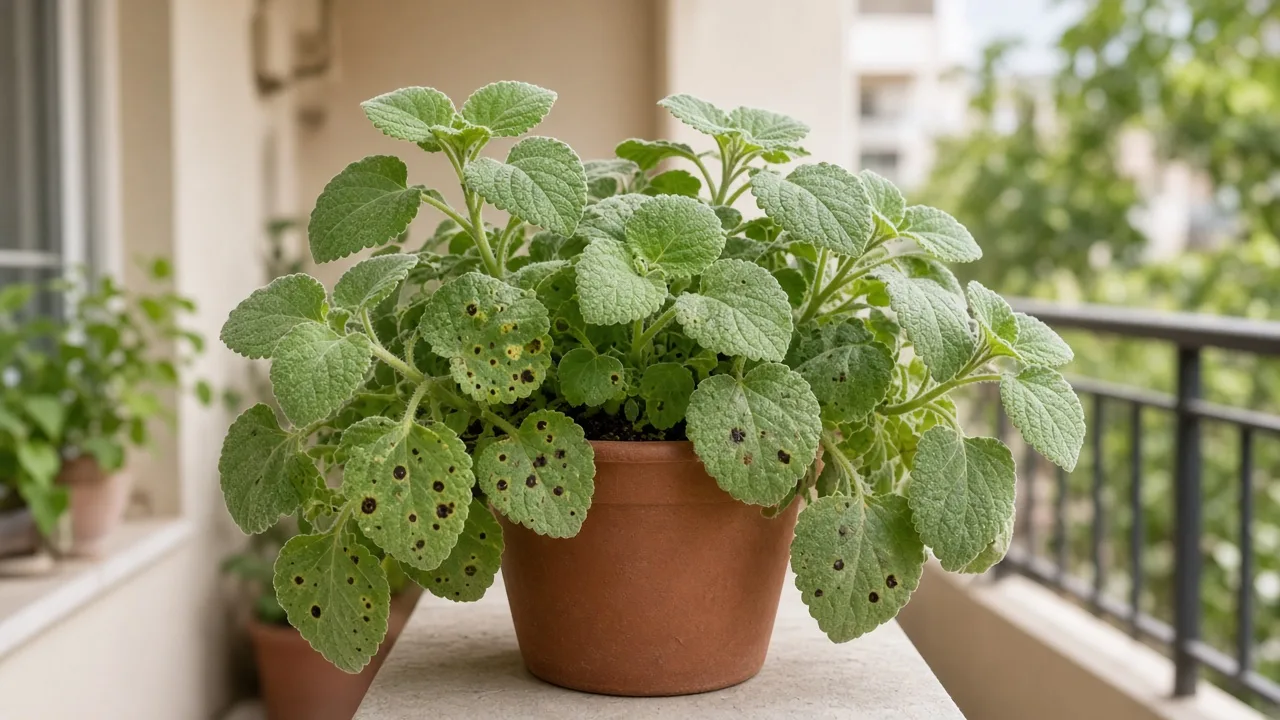
Black Spots on Ajwain Plant: Causes, Checks & Fixes
This guide covers black spots on Ajwain Plant. See also the general Black Spots guide, watering, and light pages for this plant.
Black Spots on Ajwain Plant: Causes, Checks & Fixes
Quick answer
Black spots on ajwain (Indian borage, Cuban oregano, Plectranthus amboinicus) are usually fungal or bacterial leaf spot after the plant’s thick, fuzzy leaves stay wet in humid, stagnant air—not a mysterious herb-only disease. Ajwain Plant overview is a semi-succulent mint-family herb with velvety scalloped blades and square stems; trichomes that make the leaf aromatic also hold dew, mist, and splash water longer than smooth basil or mint. See our black spots guide for general symptom science; on ajwain, spots often follow monsoon rain, balcony misting, or rinsing harvest leaves at night.
First step: stop wetting foliage immediately. Move the pot to brighter airflow, confirm square stems at the soil line are still firm, and check whether spots are dry circles with yellow halos (leaf spot) or black coating that wipes off (sooty mold from aphids or whiteflies).
When to use this page vs other Ajwain Plant guides
| Pattern | Read next |
|---|---|
| Wet soil, yellow lower leaves, limp on heavy pot | Overwatering |
| Soft square stems, sour smell | Root rot |
| Black coating wipes off; sticky residue | Aphids or scale insects |
| Corky bumps on leaf undersides, firm stems | Overwatering edema overlap |
| Chewed holes with caterpillars visible | Holes in leaves or caterpillars |
| Uniform brown dry edges after harsh sun move | Brown leaves |
This page covers dark spot lesions on foliage. If the whole plant is yellowing from wet soil, start with yellow leaves and watering. If only tips are crisp, see brown tips.
What black spots look like on ajwain
On ajwain, leaf spot starts as small dark brown to black dots on the fuzzy upper surface of thick, heart-shaped leaves—often on lower, inner leaves where sprawling stems overlap and airflow is weakest. As infection advances, spots enlarge into irregular black patches, sometimes with faint yellow halos around the lesion edge. Multiple spots on one blade may merge before the leaf yellows and drops.
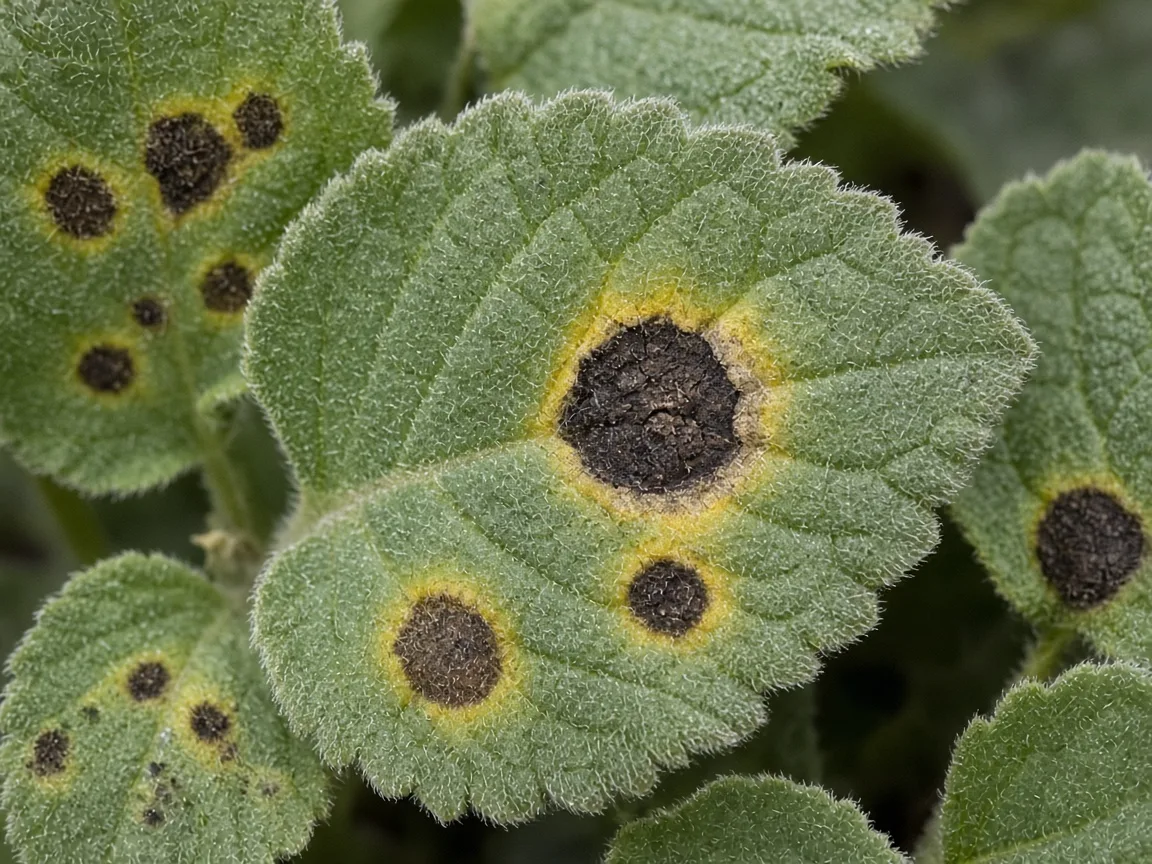
Fungal leaf spot on ajwain—note dry papery lesions on velvety foliage, not mushy water-soaked rot.
Details that help separate true leaf spot from lookalikes:
- Texture: spots are dry and papery, not water-soaked or mushy (mushy black tissue suggests bacterial issues or advancing root rot).
- Location: lower leaves and stem axils first, where dew and splash collect on fuzzy trichomes.
- Stem check: square stems stay firm at the soil line during pure leaf spot. Soft, blackening base tissue means switch to rot protocol.
- Spread: new spots on fresh tip growth over several days confirm active disease; one static old spot on a bottom leaf may be leftover damage after you fixed moisture.
Ajwain leaves are thick and semi-succulent compared to true oregano. Spots can look like dark oil blotches on the gray-green velvet before the whole leaf yellows. Heavy defoliation during warm monsoon growth—with a still-firm stem base—is a strong leaf-spot signal.
Why ajwain gets black spots
Ajwain is a frost-tender tropical herb that prefers a hot, bright location with good drainage and only occasional irrigation. Fungal leaf spot pathogens are common in gardens and often live on leaf surfaces without causing disease until moisture and poor airflow shift the balance. Several ajwain-specific factors make black spots likely indoors and on Indian balconies:
The fuzzy-leaf wetness trap. Velvety trichomes that release ajwain’s oregano-like aroma also slow evaporation. Misting, overhead watering, or monsoon splash keeps foliage damp for hours—exactly when leaf spot fungi become active during wet periods. Smooth-leaf herbs dry faster; ajwain does not.
Monsoon balcony microclimate. Growers in humid tropical cities often cluster pots under eaves where rain blows sideways and trailing ajwain stems pile on each other. Inner leaves never dry. Pair spot correction with soil drainage review if the mix stays heavy after rain.
Harvest rinse habit. Rinsing whole sprigs for the kitchen at evening leaves water sitting in leaf cups and axils overnight. Harvest in morning, shake dry, or strip leaves without soaking the whole plant.
Overhead watering overlap. Watering like basil—frequent shallow splashes on leaves—combines with ajwain’s moderate dry-down rhythm. Chronic damp foliage on a pot that is also staying wet invites both fungus gnats and leaf spot. Overwatering and leaf spot can share wet conditions but need different first fixes; firm stems favor leaf-focused drying first.
Crowded propagation benches. Ajwain roots from stem cuttings in days. Dense trays of clones in humid shade spread spores stem to stem when leaves touch and stay wet.
Cold snap on outdoor pots. Frost-tender ajwain blackens tender tips after exposure below about 10°C (50°F). That damage is weather-linked and uniform, not splash-linked spot enlargement.
How to confirm the cause
Work through these checks before treating. The goal is to confirm fungal or bacterial leaf spot—not rot, edema, pests, or sunburn.
- Wet-leaf history. Did spots appear after rain, misting, evening harvest rinse, or overhead watering? Timing that matches wet foliage supports leaf spot.
- Spot appearance. Round to irregular black lesions with yellow halos fit typical leaf spot patterns. Corky raised bumps on undersides without halos suggest oedema from overwatering. Crispy tan margins without halos suggest sun scorch after a harsh move.
- Stem feel. Pinch the square stem at the soil line. Firm: continue leaf diagnosis. Soft, mushy, or malodorous: assess root rot.
- Wipe test. Rub a damp cloth on a black area. If residue wipes off to reveal green leaf underneath, suspect sooty mold from sap feeders—inspect for aphids, whiteflies, or scale.
- Soil moisture. Stick a finger 2–3 cm into the mix. Soggy soil plus spots may mean overlapping issues; very dry soil with spots still points to humidity on leaves, not drought.
- Spread speed. New spots on the newest leaves over a week confirm active disease. Static old spots on a few bottom leaves after corrected airflow may be leftover damage only.
If most checks align with wet fuzzy foliage and dry papery lesions on firm square stems, leaf spot is the working diagnosis.
The first fix to try
Stop all foliage wetting and move the plant where leaves will dry within a few hours.
That single step removes the condition leaf spot needs to keep spreading. Specifically:
- Stop misting, showering, and overhead watering immediately.
- Pull outdoor pots out of driving monsoon rain or under an eave with airflow on both sides.
- Space trailing stems so inner leaves are not stacked wet against each other.
- Water at soil level with a narrow spout or bottom saucer fill so no splash hits fuzzy blades.
- Run a fan on low nearby to move air across leaves—not blasting directly on tender tips in harsh midday sun. NC State notes full summer sun can burn ajwain leaves; aim for bright indirect to partial sun with drying airflow.
Wait two to three days after the move before removing spotted leaves or considering fungicide. Cultural correction—dry leaves, bright air, no splash—is the foundation.
Step-by-step recovery
Once the plant is in a dry, airy, bright spot, proceed in order:
Remove heavily spotted leaves. Pinch or cut leaves that are more than half black or yellow. Bag and discard them—do not compost near other herbs. Sterilize scissors between plants if you move to healthy tissue.
Pet safety when pruning: Indian borage is toxic to cats and dogs. Wear gloves if you have sensitive skin; the aromatic oils irritate some people. Keep cuttings away from chewing pets.
Adjust watering. Follow the ajwain watering guide—let the top 2–3 cm dry between soakings. Do not water more because leaves dropped; defoliation from fungus is not thirst.
Monitor new tip growth weekly. The next flush of leaves at stem ends should emerge without spots. If clean leaves appear within two to three weeks, cultural correction was enough.
Escalate to fungicide only if spots keep appearing on new leaves after two weeks of dry culture. Missouri Botanical Garden notes cultural practices usually suffice for ornamental leaf spot; fungicides protect healthy tissue, not tissue already blackened. Neem oil or copper products labeled for ornamentals may help when applied per label in early morning so leaves dry before strong sun. Test one leaf and wait 48 hours—fuzzy ajwain foliage can react to sprays in harsh light.
Salvage with cuttings if needed. Ajwain roots easily from firm 10–15 cm tip cuttings in moist mix. If the mother plant is mostly spotted but upper stems are firm, start clean clones rather than fighting advanced infection on a sprawling base.
Do not repot on day one unless soil is waterlogged and smelling sour. Fix dryness first; repot in spring with well-draining mix only if drainage is clearly failing.
Recovery timeline
| Phase | What to expect |
|---|---|
| Days 1–3 | No new wetting; existing spots may darken as tissue dies. Some leaf drop from already-infected blades. |
| Week 1–2 | Shedding slows. Square stems stay firm. No new spots on the newest tip leaves is the first positive sign. |
| Week 2–3 | Clean new growth along sprawling stems. Plant may look thin until fresh shoots fill in. If every new leaf still spots after three weeks of dry culture, escalate to labeled fungicide or take tip cuttings. |
| Month 2+ | Normal warm-season growth if light and dry-down watering hold. Old scarred lower leaves can be harvested or pruned when you need fresh sprigs. |
Leaf spot rarely kills a mature ajwain with firm stems and sound roots. Failure looks like continued spotting on every new leaf despite dry culture, or a softening stem base—switch focus to rot rescue if that happens.
Lookalike symptoms
| Symptom pattern | Likely cause | Key differentiator |
|---|---|---|
| Dry black circles with yellow halos, firm square stems | Fungal or bacterial leaf spot | Follows wet fuzzy foliage; spreads leaf to leaf |
| Corky tan bumps on leaf undersides | Oedema from overwatering | Blisters on thick leaves; firm stems; heavy wet pot |
| Black coating wipes off; sticky residue | Sooty mold from sap feeders | Insects or honeydew present—not enlarging dry lesions |
| Crispy tan tips/margins, no halos | Sun scorch | After sudden move to harsh midday sun |
| Chewed ragged holes | Caterpillars or mechanical damage | Holes in leaves—feeding pattern, not fungal circles |
| Yellow leaves, soft stems, sour soil | Root rot or severe overwatering | Base tissue fails before isolated dry spots |
| Fluffy white on soil only | Mold on soil | Foliage firm; surface mold—not black leaf lesions |
Edema from overwatering shows as corky raised bumps on fuzzy undersides when roots outpace transpiration—common on thick-leaved ajwain in cool, wet mix. Fix watering rhythm; do not spray fungicide on edema bumps.
Sooty mold grows on honeydew from aphids and whiteflies. Wipe tests positive; treat the insect, not the fungus alone.
Mistakes to avoid
- Misting or showering ajwain to “raise humidity”—fuzzy leaves stay wet and spread spores.
- Rinsing whole plants at night before kitchen use—harvest dry sprigs in morning instead.
- Watering more because leaves dropped—defoliation from fungus is not drought.
- Immediate fungicide without drying the environment—chemicals cannot substitute for dry-leaf culture on this herb.
- Stacking repot, prune, feed, and spray on one day—fix moisture first, then add one intervention at a time.
- Composting infected leaves near other pots—spores survive on debris.
- Treating cold-damaged black tips as disease—after frost, wait for warm growth; do not spray.
How to prevent black spots next time
Prevention on ajwain is mostly keeping fuzzy foliage dry while honoring its tropical herb biology:
- Grow in bright indirect to partial sun with airflow—see the light guide.
- Use well-draining mix and let the top 2–3 cm dry between waterings per the watering guide.
- Never mist on purpose; ajwain tolerates moderate humidity without foliar wetting.
- Shelter from monsoon driving rain on balconies; space pots so trailing stems do not pile wet.
- Water soil only in morning so incidental moisture dries before evening.
- Quarantine new plants two weeks before mixing with harvest pots.
- Pinch regularly for bushier growth and better airflow through the mound—see pruning.
For full species context, see the Ajwain Plant overview and problems hub.
When to worry
Treat black spots as urgent if:
- Square stems soften or smell unpleasant at the soil line—shift to root rot protocol.
- Every new leaf spots within days despite two weeks of dry, bright culture—escalate to labeled fungicide or restart from tip cuttings.
- The plant loses most foliage during peak growth and shows no clean replacement shoots after a month.
- Black lesions climb stems above leaf blades with mushy tissue—advanced infection or rot overlap.
Leaf spot alone on firm ajwain stems is manageable and common in humid climates. The combination of wet leaves and wet soil is what turns a cosmetic leaf issue into a stem-rot emergency—watch the base as closely as you watch the spots.