Holes in Ajwain Plant Leaves (Indian Borage): Causes & Fixes
Quick answer
Holes in ajwain (Indian borage, Plectranthus amboinicus) leaves almost always mean something chewed the tissue—usually caterpillars on soft spring and monsoon shoots, or slugs climbing pots at night. First step: inspect fuzzy leaf undersides and sprawling stems at dusk with a flashlight and hand-pick any chewer you find.
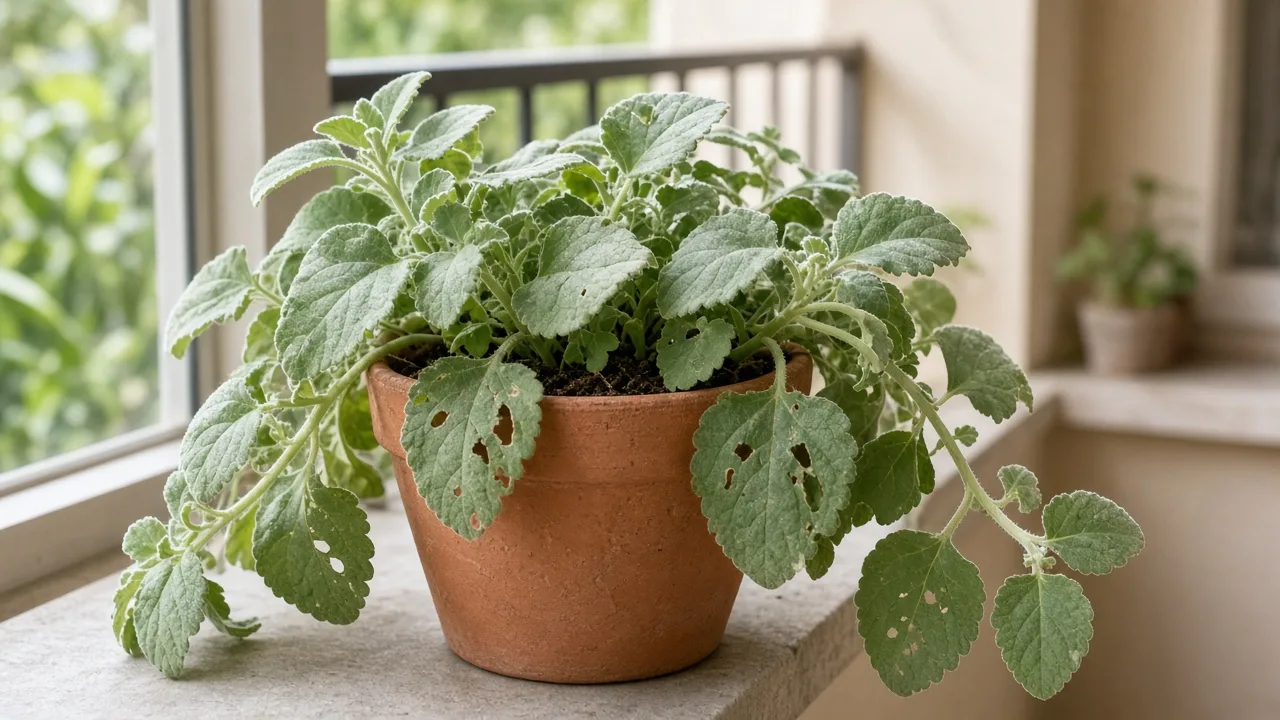
Holes in Leaves on Ajwain Plant: Causes, Checks & Fixes
This guide covers holes in leaves on Ajwain Plant. See also the general Holes in Leaves guide, watering, and light pages for this plant.
Holes in Leaves on Ajwain Plant: Causes, Checks & Fixes
Quick answer
Holes in ajwain (Indian borage, Cuban oregano, Plectranthus amboinicus) leaves are chewing damage, not a fungal leaf disease. Something physically removed tissue—most often caterpillars on tender monsoon and spring shoots, or slugs and snails climbing pots at night. Indoor ajwain rarely holes unless pests came in on an outdoor summer move or a new cutting from an infested parent.
See our holes in leaves guide for general chewing-damage science; on ajwain, holes usually follow fast warm-season growth on fuzzy, aromatic leaves that caterpillars prefer—and they hide in velvety leaf axils where frass is easy to miss.
First step: inspect damaged leaves at dusk. Take a flashlight, flip fuzzy undersides, trace square mint-family stems where they trail over the pot rim, and hand-pick any caterpillar, slug, or beetle into soapy water. Catching the chewer confirms the cause and stops further damage in one pass.
When to use this page vs other Ajwain Plant guides
| Pattern | Read next |
|---|---|
| Dry black circles with yellow halos, firm square stems | Black spots—fungal leaf spot, not chewing |
| Pale winding trails inside the leaf blade | Leaf miners—not random missing chunks |
| Stippling, webbing, no distinct bite holes | Spider mites or thrips |
| Visible green or brown larvae, silk webbing | Caterpillars—dedicated pest page |
| Yellow leaves, soft stems, sour soil | Overwatering or root rot |
| Crispy tan margins after harsh sun move | Brown leaves or brown tips |
This page covers missing or chewed tissue on foliage. If spots are dark and dry with halos, start with black spots. If the whole plant is yellowing from wet soil, see yellow leaves and watering first.
What holes in leaves look like on ajwain
Pattern matters more than a single blemish. On ajwain’s thick, velvety, scalloped leaves, the most common hole types are:
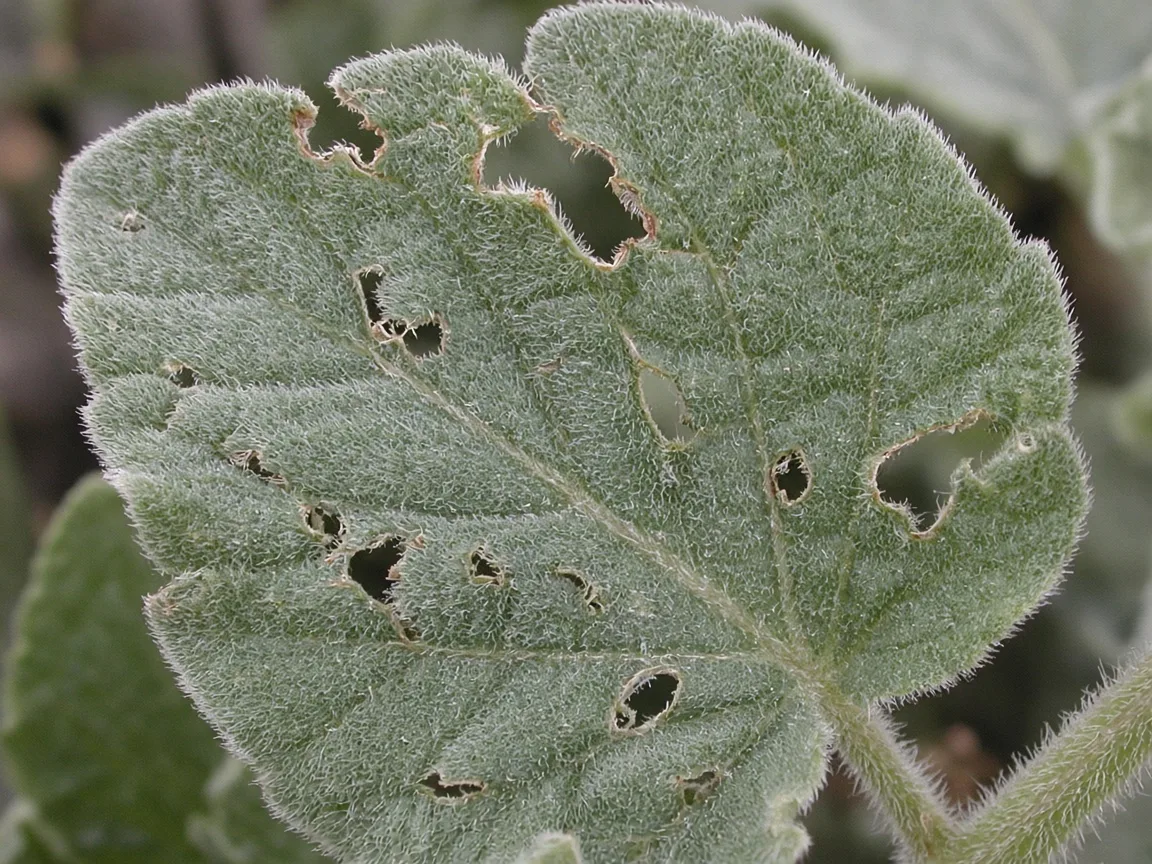
Irregular chew holes on ajwain—compare ragged missing tissue with intact fuzzy leaf nearby.
Caterpillar feeding — Irregular holes, often starting as small windows between veins and expanding as larvae grow. You may see green or dark pellet frass (droppings) stuck to fuzzy leaf undersides or square stems. Leaf-feeding caterpillars chew leaves, flowers, and shoots and often hide in rolled edges or among overlapping stems on sprawling herbs.
Slug and snail damage — Smooth, irregular edge notches, often on lower leaves touching mulch, saucers, or balcony rails. Silvery slime trails on leaves or the pot surface are a strong clue. Slugs feed primarily at night in moist, shady spots under trailing ajwain stems.
Leaf miner lookalike — Serpentine pale trails inside the leaf, not random holes punched through both layers. Hold a leaf to light; internal squiggles mean switch to the leaf miners guide.
Harvest-tear damage — Ragged splits where a sprig was pulled instead of pinched. No frass, no slime, and damage appears right after kitchen harvest—not slowly spreading over days.
Mechanical tears — Sudden splits after wind on a balcony, stems rubbing a railing, or a heavy monsoon downpour hitting soft growth. Usually hits one side of the pot.
What holes are not — Spider mites and mealybugs stipple, yellow, or coat foliage; they rarely punch large holes. Black spots are dry lesions with halos—they do not look cleanly eaten.
Where caterpillars hide on ajwain’s fuzzy foliage
Ajwain is a rapid-growing tropical herb with velvety trichomes that release oregano-like aroma when crushed—the same texture that makes leaves aromatic also gives caterpillars grip and cover. Unlike smooth basil, ajwain larvae tuck into:
- Leaf axils where square stems meet fuzzy blades—lift each joint with your flashlight
- Overlapping trailing stems piled on pot rims during monsoon growth
- Inner leaves of a dense mound after infrequent pinching—airflow is weakest here
- Propagation trays where soft new cuttings root in humid shade—often the first place an outbreak shows
If you inspect only the top of the mound in daylight, you can miss the chewer entirely. Dusk checks on undersides are non-negotiable for this species.
Why ajwain gets holes in leaves
Ajwain is an edible mint-family herb that pushes soft new shoots quickly in warm, humid weather—the same tissue caterpillars prefer. Most leaf-feeding caterpillars can be tolerated in small numbers, but ajwain growers often notice holes fast because they harvest leaves weekly and expect clean sprigs.
Several ajwain-specific factors make holes likely at certain times:
Monsoon flush on Indian balconies. Warm rain triggers a growth spurt. Moths already visiting nearby herbs lay eggs on tender tips. Trailing stems over wet rails create slug highways at night.
Harvest culture. Because leaves are picked for tea and cooking, even light cosmetic holes feel like a failed crop—even when the plant is otherwise healthy.
Outdoor summer moves. Ajwain often spends monsoon outdoors for brighter light, then returns inside. Caterpillar eggs on fuzzy stems can produce holes weeks later in a warm room.
Dense propagation from cuttings. Ajwain roots from 10–15 cm stem cuttings in one to two weeks. Dense trays in humid shade concentrate caterpillars on the softest tissue before stems toughen.
Low indoor pest pressure. When ajwain stays inside year-round in dry air, holes are uncommon. If they appear without an outdoor stint, check new purchases or open windows near outdoor herbs.
How to confirm the cause
Work through these checks in order. You are looking for the chewer or its sign, not guessing from hole shape alone.
- Time your inspection — Go out at dusk or after dark with a flashlight. Slugs and many caterpillars feed at night and hide in fuzzy axils by day.
- Flip damaged leaves — Look for live larvae, slime trails, or frass pellets on velvety undersides. Follow frass to the nearest caterpillar on the square stem.
- Trace trailing stems — Run fingers gently along leaf joints and stems draped over the pot rim. Small green or brown caterpillars blend with gray-green ajwain foliage.
- Check the pot base — Lift lower leaves and inspect mulch, saucers, and wall crevices. Slugs shelter in damp debris under sprawling ajwain.
- Note hole pattern and timing — Sudden ragged tears after harvest point to mechanical damage. Slow spread of holes with frass points to caterpillars. Internal squiggles only mean leaf miners.
- Rule out disease — Dry black circles with halos on firm stems point to black spots, not chewers.
If you find no pest after two dusk inspections but holes keep appearing on new leaves, widen the search to adjacent pots—chewers often move along a balcony railing or shared herb bench.
The first fix to try
Inspect at dusk and hand-pick every chewer you find.
This single step confirms the diagnosis and stops active feeding without spraying an edible herb. Drop caterpillars, slugs, and beetles into soapy water. Crush slug eggs if you see clusters in damp mulch.
After hand-picking:
- Remove only heavily shredded leaves if they are mostly gone—partial holes can stay; ajwain does not need defoliation.
- Brush off frass so you can tell whether new damage appears tomorrow.
- Check again the next evening. One missed caterpillar on a long trailing stem can reopen holes overnight.
Do not reach for fungicide, systemic insecticide, or fertilizer on day one. Holes are not a nutrient problem, and sprays on leaves you plan to harvest within days are a poor trade.
Step-by-step recovery after hand-picking
If holes continue after two nights of thorough picking, escalate based on what you confirmed.
Caterpillars still present
Apply Bacillus thuringiensis (Bt) kurstaki to foliage, covering fuzzy leaf undersides where small larvae feed. Bt targets caterpillars specifically and does not harm bees when used as directed; larvae must eat treated leaves. It works best on small, newly hatched caterpillars, so timing matters—reapply if rain washes it off. Wait at least 48 hours after Bt before harvesting leaves for kitchen use; rinse treated sprigs thoroughly.
Prune out webbed or rolled leaves where caterpillars shelter inside silk, as UC IPM recommends for leaf-feeding caterpillars.
Slugs and snails confirmed
Clear mulch and debris from under the pot. Use copper tape around pot rims or diatomaceous earth on dry surfaces slugs must cross—reapply after rain. Beer traps or hand-picking at night remain effective on container ajwain. Keep trailing stems off damp balcony floors.
Leaf miners suspected
Switch to the leaf miners guide. Squeeze active trails to crush larvae; do not treat serpentine mines with caterpillar Bt.
Mechanical or harvest damage only
No pesticide needed. Pinch stems cleanly next time instead of tearing. New leaves after the event should emerge clean.
Restart from cuttings if caterpillars strip the mound
When upper stems are still firm but lower leaves are mostly holed, take 10–15 cm tip cuttings from clean growth and root in moist well-draining mix in bright indirect light. Ajwain roots quickly—often faster than fighting an advanced caterpillar outbreak on a sprawling base. Discard heavily infested lower stems in sealed bags, not the compost pile near other herbs.
Pet safety when handling: Indian borage is toxic to cats and dogs. Wear gloves if you have sensitive skin; aromatic oils irritate some people. Keep picked larvae and cuttings away from chewing pets.
Recovery timeline and what improvement looks like
Chewed leaf tissue does not heal. Brown edges around holes may dry, but the missing section never fills in. Recovery means new fuzzy leaves stay unchewed, not old ones looking perfect again.
| Timeframe | What to expect |
|---|---|
| 24–48 hours after hand-picking | No new holes or frass if chewers were removed |
| 1–2 weeks | Fresh monsoon or spring shoots emerge clean at stem tips |
| Rest of season | Old scarred leaves remain; you can still harvest undamaged sprigs |
| After heavy defoliation | Plant may pause growth briefly; established pots usually rebound quickly in warm weather |
Signs the problem is getting worse: new holes daily despite picking, increasing frass, webbed leaves spreading along square stems, or a propagation tray losing most soft cuttings within a week. Signs you are winning: clean new growth, no fresh frass, and fewer live larvae on dusk checks.
Lookalike symptoms and causes to rule out
| Symptom pattern | Likely cause | Key differentiator |
|---|---|---|
| Irregular holes with frass on fuzzy undersides | Caterpillars | Live larvae or pellets; spreads to new leaves |
| Smooth edge notches, slime trails | Slugs or snails | Night feeding; damp pot base |
| Pale winding trails inside leaf | Leaf miners | No through-holes; trails visible in backlight |
| Dry black circles with yellow halos | Black spots | Fungal lesions—not cleanly eaten tissue |
| Stippling, webbing, no bite holes | Spider mites | Fine dots; dry indoor air stress |
| Sticky honeydew, no holes | Aphids or whiteflies | Sap feeders; treat insects, not chewers |
| Ragged tear after picking sprigs | Harvest damage | Timing matches kitchen use; no frass |
| Yellow leaves, soft stems, sour soil | Root rot | Base tissue fails before isolated chew holes |
Mistakes to avoid
- Spraying fungicide on chew holes — Fungicides do not stop caterpillars or slugs.
- Harvesting immediately after Bt or neem — Wait and rinse; this is an edible herb.
- Assuming every hole needs insecticide — Light chewing is often cosmetic; established ajwain pots tolerate minor damage.
- Defoliating the whole mound — Removing all holey leaves stresses ajwain more than leaving scarred ones while new growth comes in.
- Ignoring the pot base — Slugs hide under mulch while you only search upper fuzzy leaves.
- Misting fuzzy foliage at night — Wet velvety leaves invite black spots and do not deter chewers.
- Stacking repot, prune, feed, and spray on one day — Confirm the chewer first, then add one intervention at a time.
How to prevent holes next time
- Weekly warm-season checks on outdoor pots when new shoots appear—catch caterpillars while small and Bt would work best.
- Clear debris under trailing stems and balcony rails before monsoon; reduces slug shelter.
- Pinch regularly for bushier growth and better airflow through the mound—see pruning.
- Quarantine new plants two weeks before mixing with harvest pots.
- Water soil only per the watering guide—avoid wetting fuzzy blades when slugs are active below.
- Harvest by pinching dry stems in morning, not tearing wet sprigs at night.
For full species context, see the Ajwain Plant overview and problems hub.
When to worry
Most hole damage on established ajwain is cosmetic. Escalate when:
- Caterpillars strip most new monsoon growth on a young plant or propagation tray within a week
- Holes keep spreading after two rounds of hand-picking and a properly timed Bt application
- Every new leaf gets holed despite clean dusk checks—look for eggs on adjacent balcony herbs
- Soft square stems at the soil line fail—switch focus to root rot if the base is mushy, not just holey leaves
Established sprawling pots usually survive one season of moderate chewing. Repeated complete defoliation on the same small plant three seasons running can weaken stems—rare on a single container but worth preventing with early dusk checks.