Black Spots on Alocasia Amazonica: Disease Checks
Quick answer
Black spots on Alocasia Amazonica are dark lesions on dark glossy arrow-shaped leaves with pale veins—usually bacterial or fungal leaf spot from wet foliage in stagnant air, or scale honeydew stains. First step: stop misting, dry the arrow blades, and check whether spots are water-soaked and spreading or dry with raised bumps underneath.
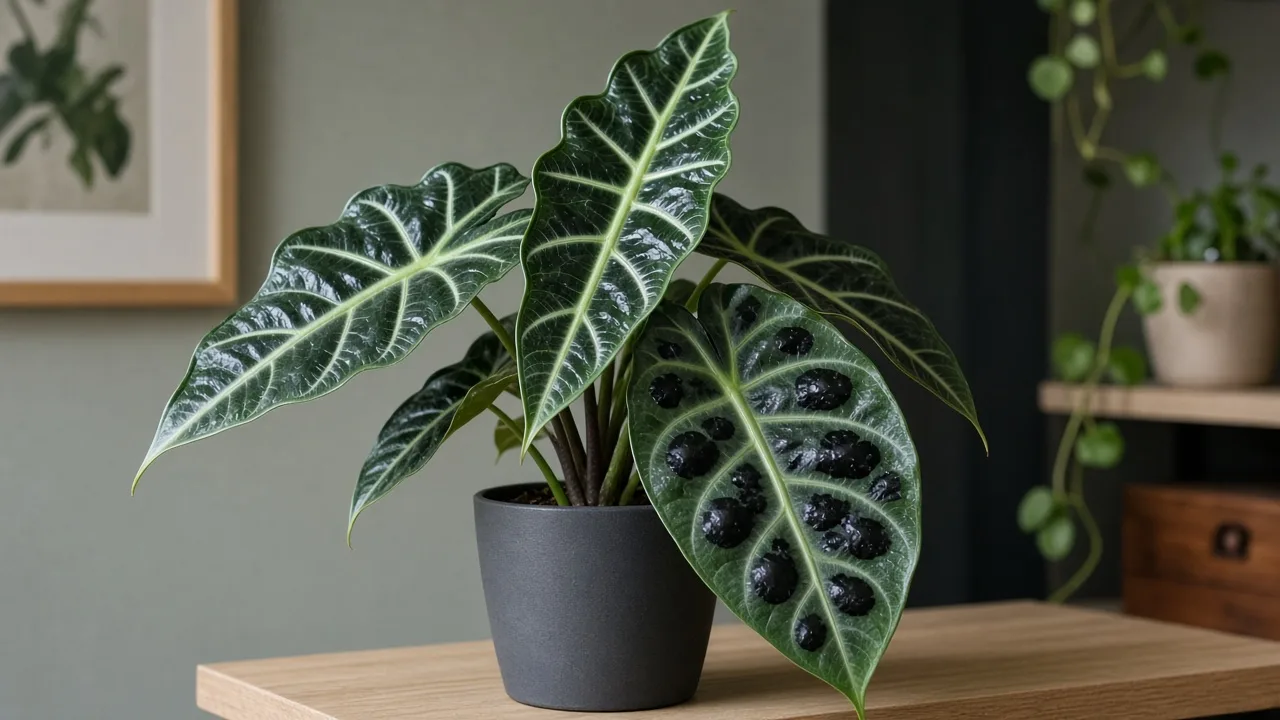
Black Spots on Alocasia Amazonica: Causes, Checks & Fixes
This guide covers black spots on Alocasia Amazonica. See also the general Black Spots guide, watering, and light pages for this plant.
Black Spots on Alocasia Amazonica: Causes, Checks & Fixes
Quick answer
Black spots on Alocasia Amazonica (African Mask plant) are dark lesions on dark glossy arrow-shaped leaves with pale veins. For general spot mechanics, see our black spots guide. On Amazonica, wet arrow foliage in stagnant air spreads spot faster than on drought-tolerant succulents—and mushy petiole bases mean check the corm, not just the leaves.
First step: stop misting and overhead watering, wipe arrow blades dry, and inspect whether spots are water-soaked and enlarging or dry with raised scale bumps.
When to use this page vs other Amazonica guides
| Pattern | Read next |
|---|---|
| Wet soil, yellow lowers | Overwatering |
| Dry bumps on veins | Scale insects |
| Brown tips only | Brown tips |
| Holes after spots die | Holes in leaves |
| Mushy corm | Root rot |
What black spots look like on Alocasia Amazonica
Amazonica carries dark glossy arrow-shaped leaves with pale veins typical of the African Mask group. Spots show as dark lesions against the glossy surface—sometimes hard to see until they enlarge.
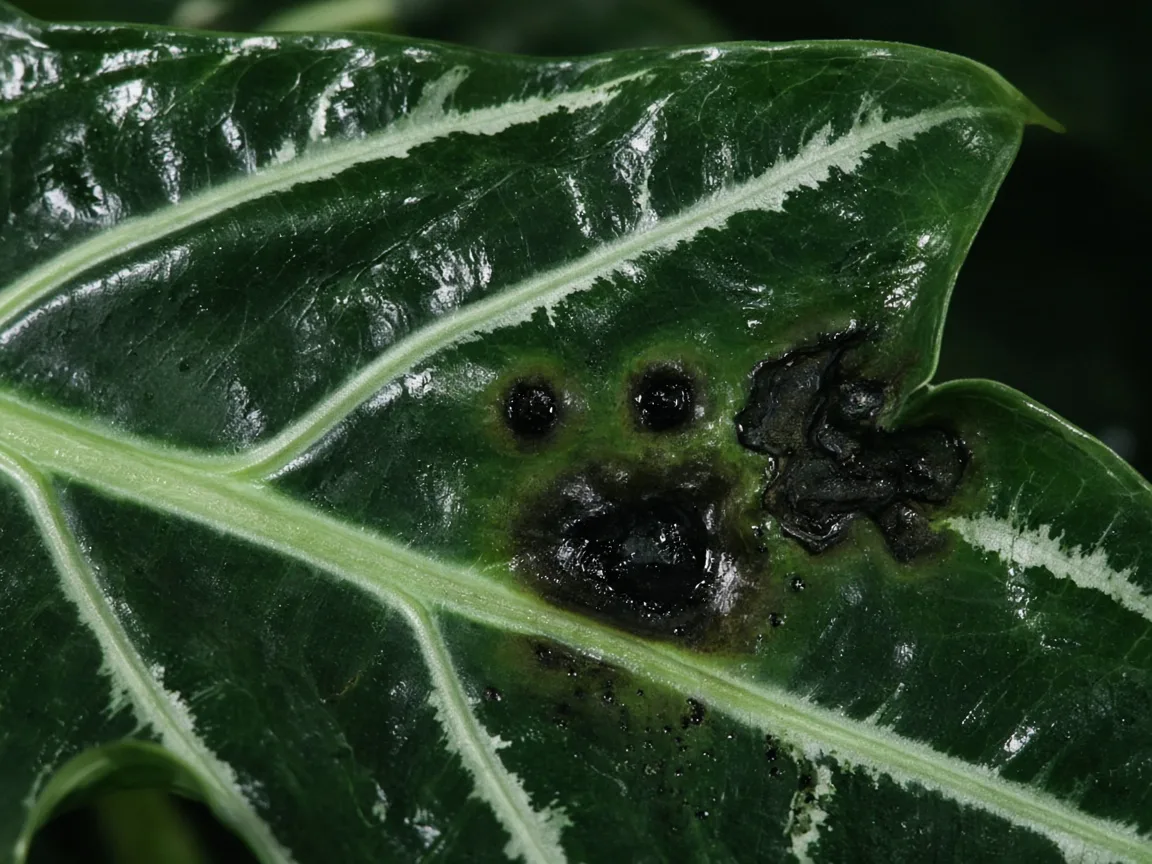
Leaf spot on Amazonica arrow tissue—note water-soaked margin vs dry scale speck on vein.
Leaf spot (most common indoors):
- Water-soaked dark spots enlarging on lower arrow leaves
- Yellow halos may appear before tissue turns black
- Follows misting, overhead watering, or wet foliage in stagnant air
- Wet foliage spreads leaf spot on Alocasia
Advanced spot with rot:
- Spots with mushy petiole base where blade meets stem
- Corm may soften at soil line—unpot and squeeze firmness today
- See root rot if crown collapses
Scale specks:
- Dry black or brown specks with raised bumps along pale veins
- Does not enlarge like water-soaked spot—see scale insects
Mechanical splash spot:
- Single lesion after water splash or pest wound—monitor if no spread in a week
Check newest arrow leaves—spots on fresh crown growth mean active spread and urgent culture change.
Why Alocasia Amazonica gets black spots
Glossy dark arrow blades hold water after misting. Amazonica’s stiff waxy surface sheds water slowly in low airflow. Alocasia are sensitive to wet conditions on both foliage and roots—leaf spot and corm rot often share the same over-wetting habit.
Dim light slows drying without stopping misting. Amazonica needs bright indirect light for healthy growth. In lower light, chunky mix and arrow blades stay wet longer. Spots on lowers while crown looks fine is a common office pattern.
Overhead watering wets the crown. Pouring water over arrow foliage instead of soaking soil leaves overlapping blades damp at the center—where new leaves emerge. Crown spots often trace to watering technique.
Winter dormancy plus wet culture. Amazonica slows growth in cool months. Continuing summer watering while the plant is semi-dormant keeps mix soggy—overwatering while dormant invites spot and corm rot together.
Scale mimics spot. Immobile bumps and sooty mold specks resemble black spots but do not show water-soaked enlargement—scrape test distinguishes them.
Leaf spot on dark arrow foliage
Amazonica-specific pattern:
- Wet arrow leaves in stagnant air develop enlarging dark lesions on lowers first.
- Spots after overhead water on glossy dark tissue—switch to soil drinks only.
- Mushy petiole base with spot means unpot and check corm firmness today—leaf spot and root rot overlap on wet Amazonica.
- Healed spots necrose and fall out—leaving holes per holes in leaves.
Do not mist arrow foliage to raise humidity—use a pebble tray per low humidity guidance.
Lookalike symptoms
| What you see | Often confused with | How to tell them apart |
|---|---|---|
| Dry speck + bump | Leaf spot | Bump stationary; scrapes to scale body |
| Water-soaked enlarging spot | Scale | No bump; may have yellow halo |
| Mushy petiole + spot | Spot only | Corm soft—root issue |
| Single splash lesion | Epidemic | No spread in 7 days |
| Soot on sticky blades | Disease | Honeydew—scale or aphids |
How to confirm
- Texture — Water-soaked enlarging vs dry raised bump?
- Petiole base — Firm or mushy where blade attaches?
- Corm squeeze — Firm at soil line or soft?
- Culture — Misting? Overhead water? Top 1–2 inches dry-down per watering guide?
- Progress — Photo spots in three days; enlargement on new arrows = active.
First fix for Alocasia Amazonica
Remove the worst spotted arrow leaves with sterile shears; water soil only when top 1–2 inches of chunky aroid mix dries per watering guide.
Stop misting. Improve airflow. Wipe remaining blades dry.
If petiole bases soften—unpot and check root rot today.
If scale bumps confirmed—see scale insects instead of fungicide.
Do not fertilize spotted stressed Amazonica. Wet foliage spreads fungal problems—fix culture before chemicals.
Mistakes to avoid
- Misting spotted arrow leaves
- Fungicide before confirming spot vs scale
- Ignoring mushy petiole while trimming spotted lowers
- Overhead watering that wets crown weekly
- Keeping Amazonica in dim wet corner through winter dormancy
Recovery timeline
Dry culture shows clean new arrow leaves in two to four weeks during active growth. Heavy outbreaks may require removing several lowers—judge success on unstained crown flush.
Corm involvement adds weeks to months after dry-down and possible repot.
Prevention
- Water when top 1–2 inches of chunky mix dries—see watering guide.
- Bright indirect light per light guide.
- Never mist arrow foliage; use humidity tray for 60–80% humidity.
- Reduce watering sharply in winter dormancy.
- Space plants for airflow; inspect lowers weekly.
Related Alocasia Amazonica guides
Conclusion
Black spots on Amazonica are wet-leaf and airflow problems first—dry the dark glossy arrow blades, fix watering rhythm, squeeze the corm if petioles mushy, and let new leaves emerge clean.