Distorted Leaves on Alocasia Amazonica: Thrips & Chill
Quick answer
Distorted leaves on Alocasia Amazonica are puckered, twisted, rippled, or asymmetric dark glossy arrow blades with pale veins—usually on the newest crown flush, not mature lower foliage. First step: isolate the plant and inspect the softest unfurling arrow leaf with a magnifier for thrips silver streaks or chill damage before changing water or repotting.
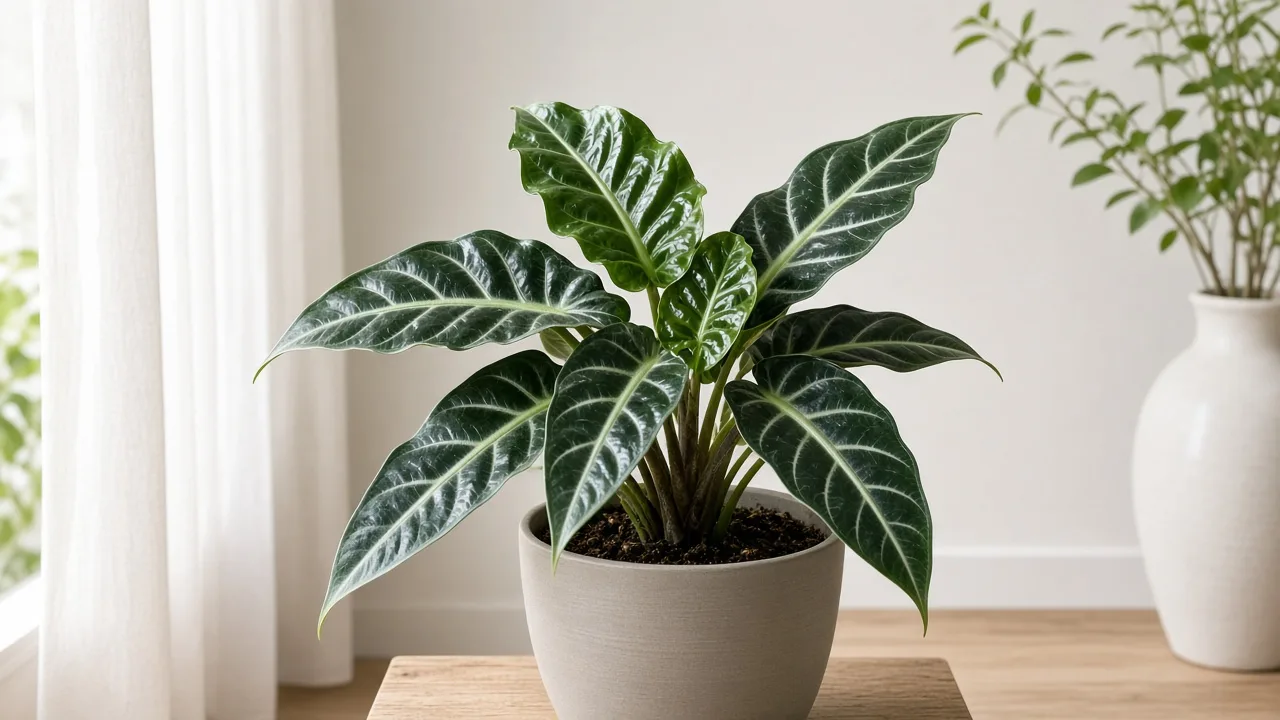
Distorted Leaves on Alocasia Amazonica: Causes, Checks & Fixes
This guide covers distorted leaves on Alocasia Amazonica. See also the general Distorted Leaves guide, watering, and light pages for this plant.
Distorted Leaves on Alocasia Amazonica: Causes, Checks & Fixes
Quick answer
Distorted leaves on Alocasia Amazonica (African Mask plant) are puckered, twisted, rippled, or asymmetric dark glossy arrow blades with pale veins—almost always on the newest crown flush, not random mature foliage below. For general distortion mechanics, see our distorted leaves guide. On Amazonica, thrips scarring pale vein zones on unfurling arrow tissue is the most common urgent cause; cold drafts warping the soft spear and spider mites on overlapping crown leaves are the main mimics.
First step: isolate the plant and magnify the softest unfurling arrow leaf at the corm crown. Tap the blade over white paper for moving specks and look for silver streaks before soaking, fertilizing, or repotting.
Route to curling leaves for lengthwise cupping on open dry blades, and thrips when silver scarring is confirmed.
When to use this page vs other Amazonica guides
| Pattern | Start here | Or route to… |
|---|---|---|
| Twist, puckering, silver scars on new arrow tips | This page | Thrips |
| Lengthwise cup on dry, light pot | Curling leaves | Underwatering |
| Fine stippling, webbing on new flush | Spider mites | Low humidity |
| Stuck dry roll, brown crease | Low humidity | Watering |
| Limp hang, soft corm | Wilting | Root rot |
| Pale flat blades, not twist | Pale leaves | Not enough light |
What distorted leaves look like on Alocasia Amazonica
Amazonica carries dark glossy arrow-shaped leaves with pale or silvery veins typical of the African Mask group. Healthy new blades emerge as a stiff spear from the corm crown and open into flat arrow tissue. Distortion breaks that pattern:
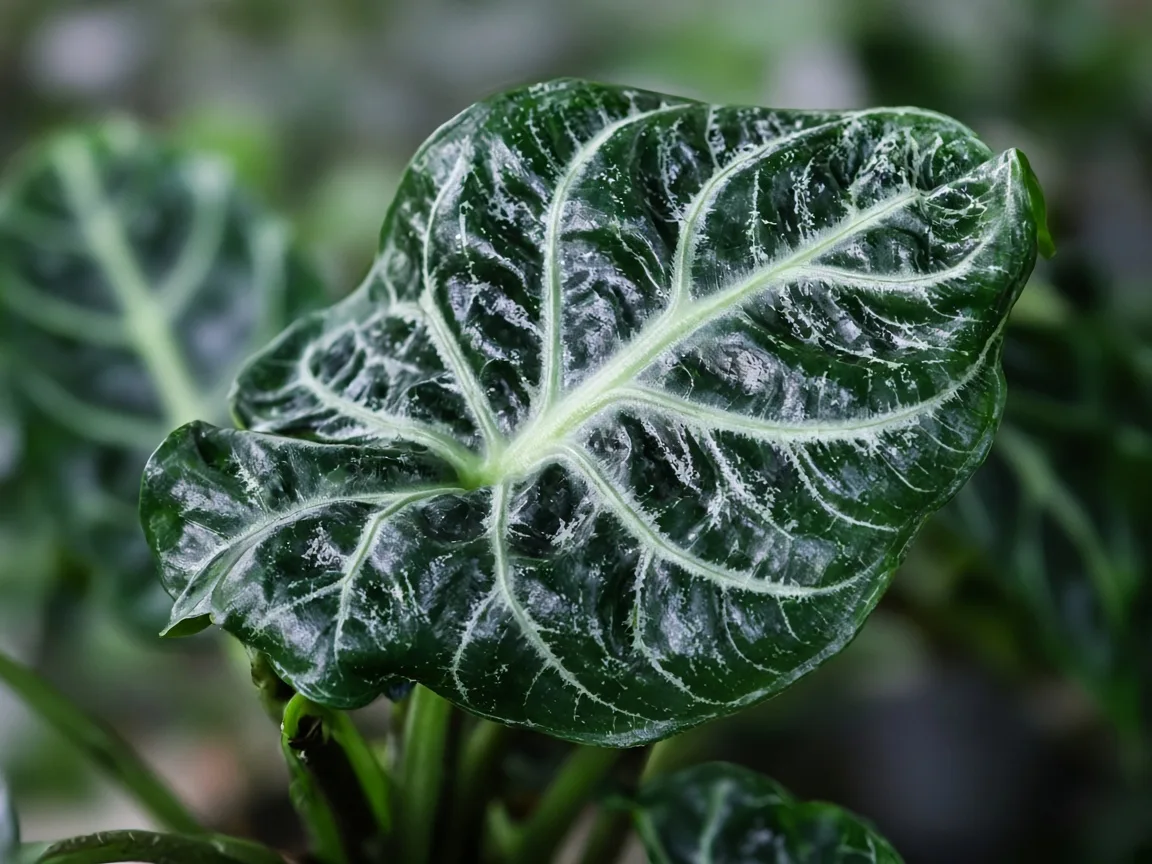
Twisted puckered new arrow at the crown flush—magnify the softest unfurling blade before repotting or feeding.
Thrips scarring on new flush:
- Rippled, puckered, or asymmetric half-blade on the newest unfurling arrow leaf only
- Silvery-white discolouration and tiny black specks along pale vein tracks on dark glossy tissue
- Distorted growth when thrips feed on developing shoot tips—damage locks in as the stiff blade hardens
Cold-draft warp:
- Twisted or crimped new spear after nights on a cold window sill or HVAC blast
- Amazonica dislikes temperatures below 16°C (60°F) and cold draughts in winter
- Often hits the crown flush while soil moisture and corm firmness look normal
Spider mite stipple-distortion:
- Fine pale dots with slight rippling on tender new growth in dry heated indoor air
- Webbing tucked where overlapping arrow blades meet at the crown
Mechanical unfurl snag:
- One permanently kinked arrow blade caught on a neighbor leaf during expansion
- No silver streaks, no spread to the next leaf once the obstacle is cleared
Not distortion: Amazonica does not nyctinastically fold like prayer plants. Persistent twist on new growth is always stress—not a daily rhythm.
The arrow-spear unfurl window (Amazonica only)
As a corm-based aroid, Amazonica pushes stiff arrow blades from a central crown over several days. Thrips, chill, or a physical snag during that soft-spear window permanently shapes the mature leaf. Owners who scan only open lower foliage miss silver streaks on the tightest unopened tip—the species-specific diagnostic zone is the pale-veined spear before it fully lengthens.
Why Amazonica arrow leaves distort
Thrips target soft crown tissue. Thrips rasp developing leaves and shoot tips, leaving silver scars that ripple as the arrow blade opens. Amazonica’s overlapping dark foliage hides insects while pale vein zones show damage first.
Cold stiffens unfurling tissue. Cold draughts, particularly in winter, damage Alocasia. A chill-hit spear opens twisted even when watering was correct—common after moving the pot to a winter window for “more light.”
Mites concentrate on new flush in dry heat. NC State lists Alocasia among plants prone to spider mites, and indoor heating drops humidity where Amazonica’s crown leaves overlap.
Physical snag on stiff blades. Arrow leaves unfurl close together at the corm. One blade scraping a neighbor during expansion leaves a permanent asymmetric scar without pest signs.
Pale-vein silver streak map
On Amazonica, thrips damage often follows the pale vein map on dark glossy blades—silver trails run along white or silvery vein lines while the dark green field stays intact at first. That pattern differs from:
- Uniform cup curl on several open leaves → curling leaves
- Even yellowing on lower foliage → yellow leaves
- Brown crisp edges without twist → brown tips
Shake the softest new blade over white paper. Moving specks confirm thrips; silver without insects may still mean recent feeding—inspect the next unfurling spear daily.
How to confirm the cause
- Magnifier on crown spear: Silver streaks, black specks, insects, or a hooked tip caught on the leaf below.
- Which leaves affected: New crown only = pests, chill, or unfurl snag. Many mature leaves = environmental stress or root failure—not this page’s primary pattern.
- Tap test: Shake newest arrow blade over white paper for thrips.
- Temperature history: Cold window, open door, or AC blast in the last week?
- Humidity and mites: Dry winter heat + stippling on tender growth → spider mites.
- Physical obstacles: Blade scraped against pot rim, shelf, or neighbor during unfurl.
First fix for Alocasia Amazonica
Isolate the plant and inspect the softest unfurling arrow leaf at the corm crown with a magnifier—then rinse leaf undersides and the crown tip thoroughly if thrips or mites are present.
That is the correct first fix when distortion is confined to new growth. Do not fertilize or repot on day one.
- If thrips or mites confirmed: Shower or rinse undersides and crown; apply insecticidal soap or horticultural oil per label on a repeat schedule after confirming live pests.
- If cold-draft warp without pests: Move off the cold sill or vent; hold 60–80% humidity for the next unfurling spear.
- If mechanical snag: Free the petiole; remove only if more than half the blade is destroyed.
- If distortion spreads on wet soil with soft corm: Pause water per overwatering—root stress is layered, not primary twist.
Step-by-step recovery
Thrips recovery
- Isolate from collection.
- Rinse all leaf undersides and the crown spear in shower or with hose.
- Apply labeled treatment; repeat per product interval.
- Read full thrips guide for repeat treatment cycles.
- Judge success by next two arrow leaves unfurling flat.
Mite recovery
- Rinse undersides weekly in dry winter months.
- Raise humidity with a tray—not foliar misting on arrow leaves.
- See spider mites for full protocol.
Chill recovery
- Move to stable 18–27°C (65–80°F) without drafts.
- Do not pull a stuck spear open by force—tear risk on stiff tissue.
- Next flush should open cleaner within two to three weeks.
Recovery timeline
Pests controlled: Next unfurling arrow leaf should show minimal scarring within two to four weeks during active growth. Heavily warped current leaf stays twisted permanently.
Chill corrected: Following spear may take two to three weeks to open cleanly once temperature stabilizes.
Mechanical damage: One scar permanent; subsequent leaves normal immediately if obstacle removed.
Worsening: Every new crown leaf distorted for multiple cycles despite treatment means re-check pest ID, chill exposure, or corm health on wet soil.
Lookalike symptoms
| Pattern | Likely cause | Page |
|---|---|---|
| Twist + silver scars on new tip | Thrips | This page / Thrips |
| Lengthwise cup + dry mix | Thirst | Curling leaves |
| Stippling + webbing | Mites | Spider mites |
| Stuck roll + dry brown edge | Low humidity | Low humidity |
| Limp hang + soft corm | Root failure | Wilting |
Mistakes to avoid
- Do not pull open a stuck unfurling arrow spear by hand—you will tear stiff tissue permanently.
- Do not fertilize distorted growth hoping blades will flatten.
- Do not stop after one pest rinse—eggs hatch on repeat cycles.
- Do not mist arrow foliage for humidity—wet blades spread fungal problems on Alocasia.
- Do not confuse cup curl with twist—see curling leaves for drought cupping.
How to prevent distorted leaves next time
Quarantine new plants two weeks. Inspect the corm crown flush weekly October through March when indoor heating dries leaf surfaces. Keep bright indirect light per the light guide so mix dries predictably. Maintain 60–80% humidity for clean unfurling. Avoid cold window sills below 16°C (60°F). Water when top 1–2 inches of chunky aroid mix dries—see watering guide. Reduce watering sharply when growth slows in winter dormancy.
When to worry
Urgent if distortion spreads to every new crown leaf for multiple weeks, stems soften on wet soil, or several arrow blades fail at once with corm mush. One rippled new leaf after a known thrips exposure is treatable if caught at the soft-spear stage.
Related Alocasia Amazonica guides
Conclusion
Distorted Amazonica arrow leaves are permanent once unfurled—protect the next crown spears at the corm. Magnify the softest new blade, isolate if thrips or mites are present, and move off cold drafts if chill warped the unfurl. Success is flat, full new arrow growth with crisp pale veins—not reshaping old twisted tissue.