Holes in Leaves on Alocasia Dragon Scale: Damage Checks
Quick answer
Holes in Alocasia Dragon Scale leaves are missing tissue in thick quilted blades—not natural splits. First step: inspect the newest unfurling leaf and hole edge color; green moist edges mean fresh mechanical or pest damage, brown dry rims mean healed spot necrosis or old senescence.
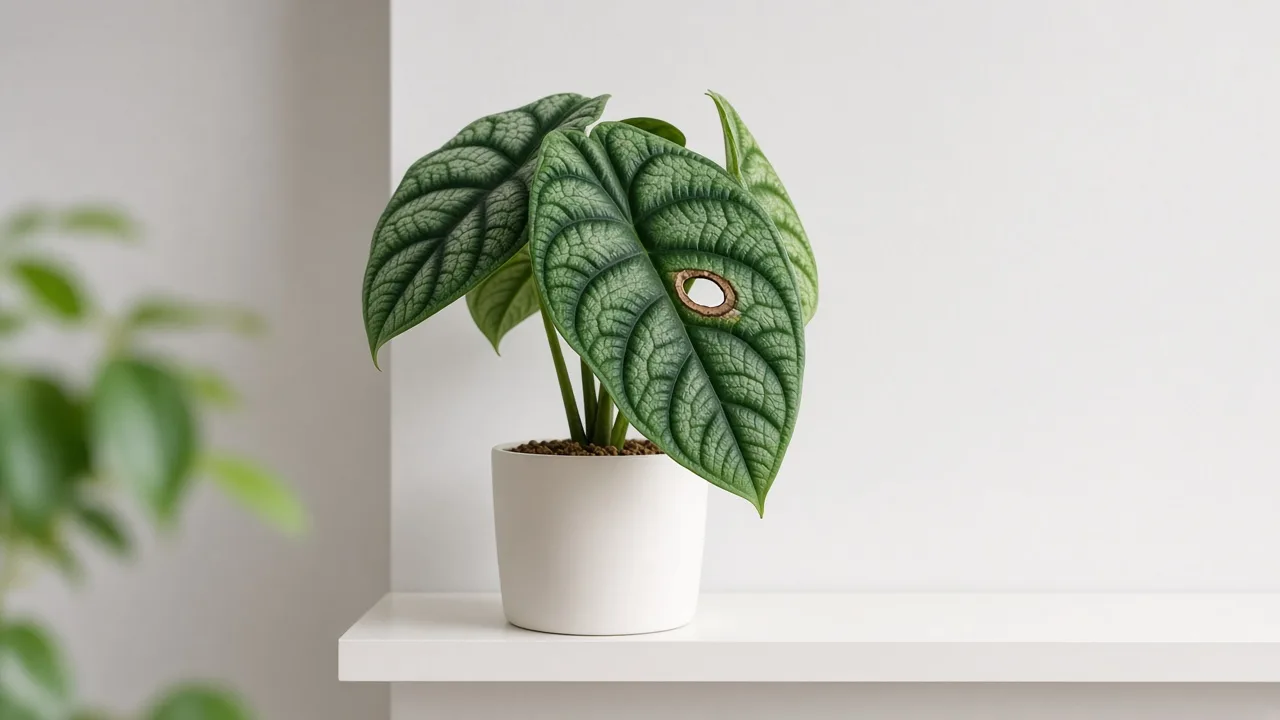
Holes in Leaves on Alocasia Dragon Scale: Causes, Checks & Fixes
This guide covers holes in leaves on Alocasia Dragon Scale. See also the general Holes in Leaves guide, watering, and light pages for this plant.
Holes in Leaves on Alocasia Dragon Scale: Causes, Checks & Fixes
Quick answer
Holes in Alocasia baginda ‘Dragon Scale’ leaves are gaps or tears in thick, quilted foliage—this cultivar does not develop natural fenestrations. See our holes in leaves guide. On indoor Dragon Scale, holes usually follow mechanical snags on rigid scaled blades, unfurling tears in dry air, healed black spots that fell out, or chewing on soft new growth—not mysterious “scale pattern” damage.
First step: inspect the newest unfurling leaf and hole edge color under bright light. Green moist margins mean recent tearing or active feeding. Brown dry rims mean old necrotic tissue after spot or mechanical damage. Dragon Scale maintains only a few leaves at a time, so one holed oldest blade with clean new scaled growth is often historical—not an emergency.
When to use this page vs other Dragon Scale guides
| Pattern | Read next |
|---|---|
| Dark spots before holes appear | Black spots |
| Silvery scars, no full holes yet | Thrips |
| Winding trail inside thick blade | Leaf miners |
| Stuck or shredded unfurling tip only | Low humidity |
| Ragged chew with frass pellets | Caterpillars |
What holes in leaves look like on Dragon Scale
Dragon Scale leaves are thick, rigid, and deeply veined with a raised reptile-scale texture—unlike smooth aroid foliage. Holes read as missing tissue punched or torn through that leathery surface, not smooth oval windows like Monstera.
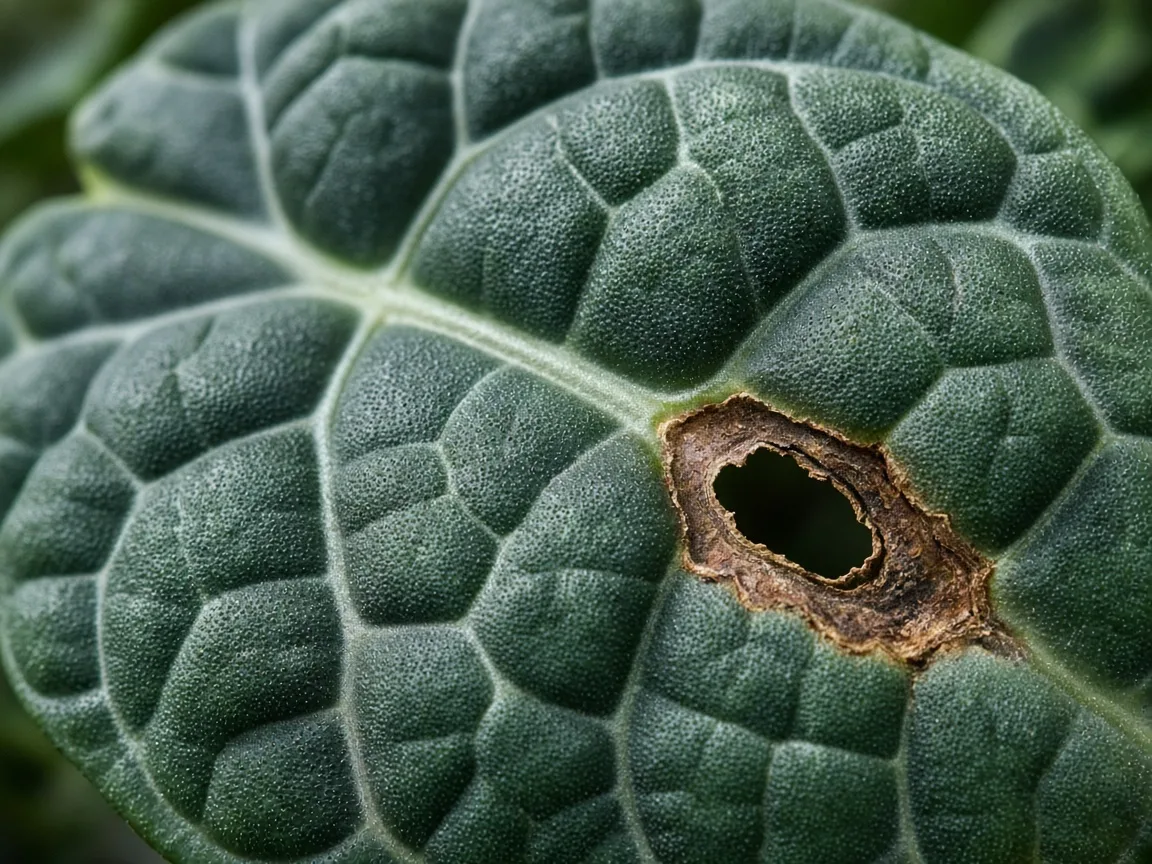
Post-spot hole in a Dragon Scale blade—the thin tissue between scale ridges necrosed before falling out.
Mechanical tears (common indoors):
- Clean or ragged gaps on margins or across scale ridges
- Often one leaf on a display shelf, grow-light edge, or tight plant row
- Fresh tears have green moist edges; rigid blades do not “heal closed”
- Dusty scale valleys can hide the snag point until you wipe the leaf
Unfurling damage (humidity-related):
- Irregular holes or stuck “windows” only on the newest emerging cataphyll leaf
- Tip tears where the rolled blade failed to open in dry air
- Older scaled leaves below look intact—pattern isolates to the unfurl
- Often paired with brown tips on the same new blade
Post-spot shot-holes:
- Irregular holes where fungal leaf spot lesions dried and tissue dropped out
- Brown dry rim; may see faint halo of former spot on adjacent ridges
- More common when foliage stays wet after overhead watering or misting in stagnant air
Chewing and rasping pests:
- Ragged holes with black frass on soft unfurling tips → caterpillars (especially after patio summer)
- Silvery-bronze scars that collapse into holes on new growth → thrips
- Serpentine pale trail inside the thick blade before a pinhole exit → leaf miners (rare indoors)
Old-leaf senescence:
- One lower scaled blade yellowing with a single dry hole while crown pushes clean new leaves
- Normal for a plant that keeps only a handful of leaves at a time
Check newest unfurling growth first—holes on fresh scaled tissue need faster action than one cosmetic tear on the oldest leaf.
Why Dragon Scale gets holes in leaves
Rigid scaled blades snag like armor plates. Dragon Scale’s quilted ridges extend past neighboring pots, curtain rings, and LED bars. A leathery blade that catches on a shelf lip tears cleanly; the damage stays on that leaf forever because mature scaled tissue does not regenerate.
Low humidity tears unfurling cataphylls. Dragon Scale wants 60–80% humidity and struggles when winter heating drops air moisture. The rolled new leaf sticks as it opens; the tip rips, leaving irregular holes that were never insect chewing. This pattern clusters on the newest leaf only and links to low humidity stress rather than random mid-blade feeding.
Wet foliage spots, then drops out. Avoiding water on leaves is critical—fungal leaf spots develop with poor airflow and moisture on foliage. On Dragon Scale, water pools in scale valleys and sits longer than on smooth leaves. Necrotic spots on thin tissue between ridges can fall out and look like chewing. Route active lesions to black spots before holes multiply.
Textured surface hides spider mites—but they rarely punch holes. Spider mites are the most common pest on Dragon Scale, and the textured surface makes them harder to spot. They cause stippling and dulling, not clean punched holes—see spider mites if bronze speckling appears without tears.
Thrips and caterpillars target soft unfurling tissue. Thrips rasp plant surfaces and distort emerging leaves before the scale pattern hardens. Caterpillars chew ragged holes in soft tips—common when a pot returns indoors from summer without inspection.
Aphids on tender shoots can weaken new blades. Aphids colonize soft new growth at petiole bases; heavy feeding distorts unfurling leaves that may tear as they expand. Honeydew in scale valleys can follow—see aphids if sticky residue appears with distortion, not isolated dry holes.
Reading holes in quilted Dragon Scale ridges
Dragon Scale-specific diagnosis:
- Ridge vs valley location — Holes centered in thin tissue between raised scales often follow spot necrosis; tears along a raised ridge edge suggest mechanical snags.
- Edge color — Green moist = fresh; brown dry = healed spot or old tear.
- Leaf age — Only the oldest scaled blade holed with clean crown growth points to senescence, not active crisis.
- Unfurl stage — Damage confined to the rolled tip of the newest leaf signals humidity or stuck cataphyll, not mid-blade miners.
- Keep torn tissue dry — Wet damaged scale valleys invite secondary black spots.
Lookalike symptoms
| What you see | Often confused with | How to tell them apart |
|---|---|---|
| Serpentine trail inside blade | Open hole | Tunnel visible before exit—see leaf miners |
| Silvery streaks, crinkled new tip | Hole | Thrips scars precede tissue collapse |
| Bronze stippling, fine webbing | Chewing | Spider mites—no clean punched holes |
| Shredded unfurl only | Random holes | Low humidity or stuck cataphyll |
| Dark spot halo still spreading | Old hole | Active black spots—culture fix first |
How to confirm
Work through these checks in order before stacking treatments:
- Hole edges — Green moist margins mean recent tear or feeding; brown dry rims mean healed post-spot or old mechanical damage.
- Newest unfurl — Peel back the cataphyll gently with dry hands. Stuck, torn tip only on this leaf points to humidity, not caterpillars across the plant.
- Spot history — Water-soaked dark lesions on the same blade or neighbors? Active black spots need dry foliage culture, not pesticide alone.
- Snag audit — Shelf lips, grow-light edges, hanging tags, and tight shelf rows that brush scaled blades when you water.
- Frass and trails — Black pellets below soft tips suggest caterpillars; winding internal trails suggest miners; silvery scars suggest thrips.
- Soil moisture — Top 2–3 cm dry-down per watering guide; chronically wet mix in dim light spots oldest leaves and worsens fungal shot-holes.
- Light level — Bright indirect per light guide helps mix dry between drinks and supports clean unfurling.
- Progress photo — Same holed leaf in three days; enlarging dark margins around a hole mean active spot, not stable cosmetic tear.
First fix for Alocasia Dragon Scale
Photograph the newest unfurling leaf and hole edges under bright light before treating anything.
If holes are only on the stuck or torn unfurling tip with green moist edges: raise humidity toward 70–80%, keep the cataphyll dry, and wait for the next leaf. Do not mist scaled foliage—see low humidity fixes first.
If holes have brown dry rims after leaf spots: remove the affected blade, stop wetting leaves, improve airflow, and follow black spots culture changes. No fungicide for old dry cosmetic holes alone.
If you find frass, silvery scars, or internal trails: isolate the plant and route to caterpillars, thrips, or leaf miners—hand-pick or remove mined tissue before spraying.
If damage is a single dry tear on one older scaled blade with clean new crown growth: reposition away from snag points; trim only if more than half the blade is destroyed.
Do not spray pesticides when the only issue is one healed brown-rimmed hole on a senescing lower leaf.
Mistakes to avoid
- Spraying for miners without visible internal tunnels
- Misting holed scaled leaves or letting water sit in scale valleys
- Removing every leaf with a small cosmetic tear—Dragon Scale has few leaves to spare
- Ignoring active black spots while trimming holed lowers
- Treating natural Monstera-style fenestrations—Dragon Scale never fenestrates
When to worry on Dragon Scale
Urgent when:
- New scaled crown leaves develop holes weekly—active spot, thrips, or chewing, not old senescence.
- Holes appear with water-soaked dark margins still spreading—see black spots before holes multiply.
- Multiple fresh tears after moving the plant—reassess shelf and grow-light clearance; repeated wounding weakens a plant that keeps only a few blades.
- Unfurling tips shred on successive new leaves despite watering correctly—humidity or pest pressure on soft tissue.
A single brown-rimmed hole on one old lower scaled blade with firm petioles and clean new growth is not urgent.
Recovery timeline
New clean scaled leaves in three to six weeks once snags, dry unfurl culture, or pests are resolved. Holed blades stay holed—judge success on unstained new crown growth and stable soil that drains per the aroid mix guide.
Dragon Scale grows from underground rhizomes and tubers; even if several leaves look rough, firm roots and a new cataphyll mean the plant can push clean foliage once conditions stabilize.
Prevention
- Wipe dust from scale ridges every few weeks—dust blocks light and hides spider mites.
- Never mist quilted foliage; water at the soil line per watering guide.
- Space pots from shelf edges, curtain hardware, and grow lights.
- Treat black spots early before necrotic tissue drops out.
- Quarantine and inspect unfurling tips after any outdoor summer stay.
- Maintain 70–80% humidity during active growth per overview care.
Related Alocasia Dragon Scale guides
Related tool
Use the Plant Problem Diagnosis Tool to narrow causes for holes in leaves on this plant before changing multiple variables at once.
Conclusion
Holes in Dragon Scale leaves are damage to thick scaled blades—snags, unfurl tears, post-spot necrosis, or pest chewing on soft new growth. Protect quilted foliage from snags, keep leaves dry, and read hole edges plus the newest unfurl before spraying.