Nitrogen Deficiency on Alocasia Dragon Scale: Causes
Quick answer
Nitrogen deficiency on Alocasia Dragon Scale shows as pale or yellowing older scaled leaves while new center spears stay small or slow. First step: confirm yellowing starts on the lowest outer leaves—not several leaves yellowing on soggy mix—and review whether fertilizer was skipped through the active growing season.
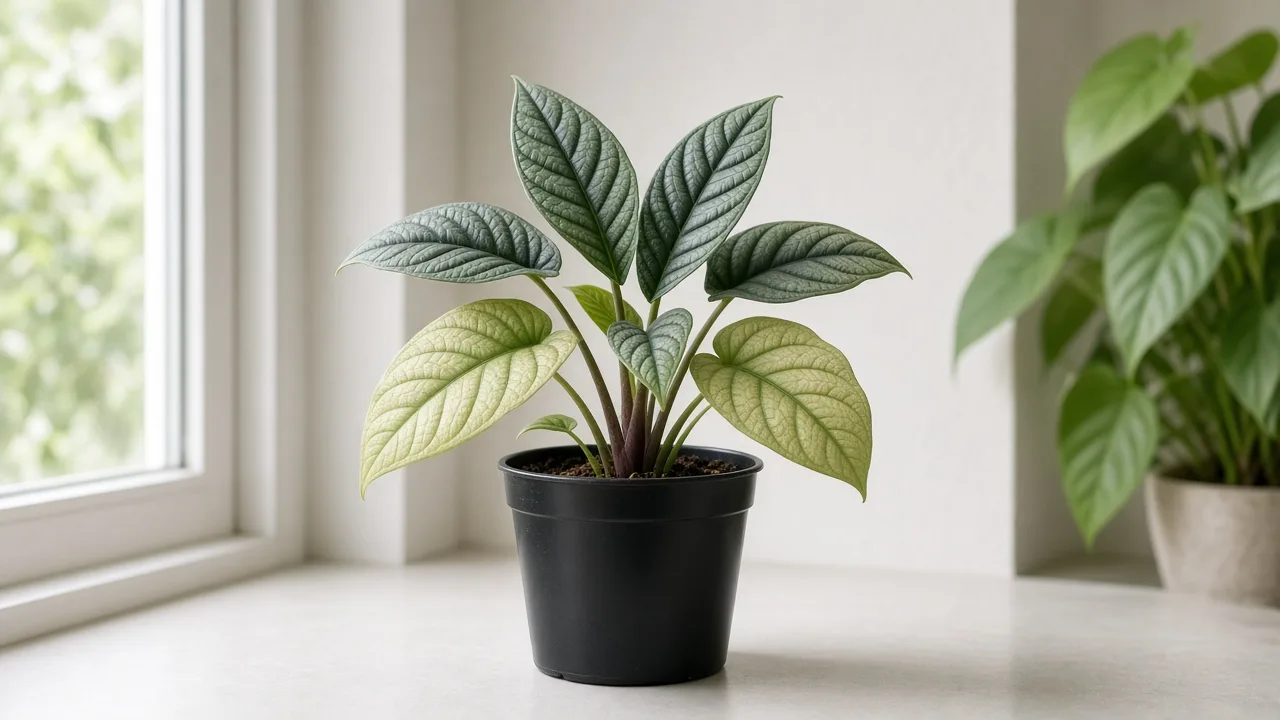
Nitrogen Deficiency on Alocasia Dragon Scale: Causes, Checks & Fixes
This guide covers nitrogen deficiency on Alocasia Dragon Scale. See also the general Nitrogen Deficiency guide, watering, and light pages for this plant.
Nitrogen Deficiency on Alocasia Dragon Scale: Causes, Checks & Fixes
Quick answer
Nitrogen deficiency on Alocasia Dragon Scale (Alocasia baginda ‘Dragon Scale’) shows as pale green to yellow older scaled leaves while new center spears stay small or slow. Nitrogen supports chlorophyll and leafy growth—mobile nitrogen moves from old leaves to new shoots, so the lowest outer blades fade first.
See our nitrogen deficiency guide. On Dragon Scale, watch the lowest outer leaves with quilted metallic scaling—that surface contrast dulls there before the crown stops pushing new spears. That pattern differs from overwatering on Alocasia Dragon Scale, which yellows multiple leaves on soggy mix with a soft corm.
First step: confirm lower old leaves pale first, not several leaves yellowing on wet mix with a soft corm.
When to use this page vs other Dragon Scale guides
| Pattern | Read next |
|---|---|
| Old lower leaves pale, metallic scaling washed out | This page |
| Several leaves yellow on wet heavy pot, sour smell | Overwatering |
| Yellow new leaves with green veins | Iron deficiency |
| Interveinal yellow on middle leaves | Magnesium deficiency |
| General yellowing, mixed causes | Yellow leaves |
| All leaves pale, not just lower ones | Pale leaves |
| Stalled size in dim corner | Not enough light |
What nitrogen deficiency looks like on Dragon Scale
Dragon Scale carries thick, quilted leaves with a distinctive silvery-green scaled surface. When nitrogen runs low, that metallic contrast washes out on oldest lower leaves first—not uniformly across every blade the way chronic wet-root stress can.
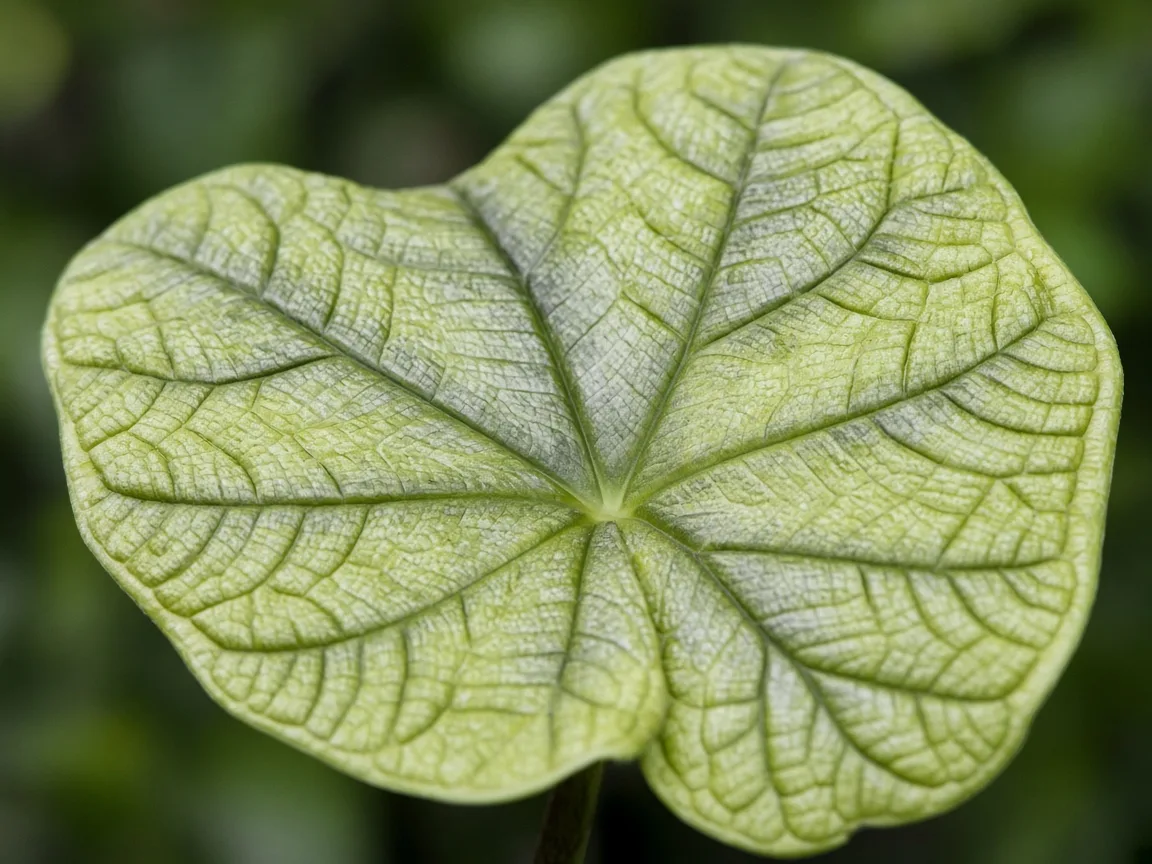
Washed-out scaling on a lower Dragon Scale leaf—compare with stronger metallic contrast on a newer center spear from the same plant.
Typical signs:
- Uniform pale green or yellow on oldest lower scaled leaves (nitrogen-deficient plants show pale older leaves first)
- Dull, flat-looking quilted surface on lower foliage—the silvery scaling loses punch before the center crown stops growing
- Smaller new spears from the crown when nitrogen cannot support full lamina expansion
- Firm corm at the soil line unlike mushy overwatered Dragon Scale with sour smell
- Slow growth despite appropriate light and watering once roots are healthy
- Overall plant height stalls while center spears stay thin and undersized
Not nitrogen deficiency:
- Several leaves yellow at once on constantly wet mix — overwatering / root stress
- Yellow new leaves with green veins — iron deficiency on expanding center tissue
- Crispy brown tips with white crust on pot rim — salt burn from overfeeding; see fertilizer guide
- All leaves drop in cool winter with firm corm — dormancy leaf shed, not nutrient loss
- Leggy pale upper leaves on long weak petioles in shade — not enough light compounding slow growth
Why Alocasia Dragon Scale gets nitrogen deficiency
Alocasias are moderate growers that need nitrogen for foliage in bright filtered light. Dragon Scale is a compact jewel alocasia with fine roots and a small corm—it pushes textured leaves slowly compared with larger Alocasia amazonica hybrids, but each new spear still draws nitrogen from the mix. Months without fertilizer, exhausted fast-draining aroid mix, or leaching from frequent watering depletes nitrogen while the plant still tries to unfurl new scaled leaves from the crown.
Dragon Scale-specific causes:
- Skipped feeds fearing salt burn — Owners under-feed after one fertilizer scare on this salt-sensitive jewel alocasia, even during active spring and summer growth when the corm pushes new spears.
- Winter dormancy pause without spring resume — Alocasias slow or drop leaves in winter; correct to stop feeding, but many owners never resume light monthly feeds when new spring growth appears.
- Depleted aroid mix — Fast-draining bark-perlite blends drain well for rot-prone roots but lose nutrients over 12–18 months in pot culture without replacement feeding.
- Leaching from frequent watering — Dragon Scale prefers evenly moist—not soggy—mix per the watering guide; without dilute feeds during growth, nitrogen washes through the coarse root zone.
- Confusion with yellow leaves — Overwatering yellows multiple leaves with wet mix; nitrogen fades oldest lower blades progressively on firm corm and appropriate moisture.
- Root uptake blocked by salts — Soluble salts from past overfeeding burn fine jewel-alocasia roots and mimic deficiency on new growth until salts are flushed.
Metallic scaling fade on lower jewel-alocasia leaves
Dragon Scale’s quilted silvery surface dulls on oldest lower leaves first when nitrogen runs low—the scaled texture looks flat and washed out before the center crown stops pushing new spears. That differs from tip burn from salt buildup, which crisps margins while mid-blade scaling stays relatively strong, and from iron deficiency, which shows interveinal yellow on new leaves while veins stay green.
Because Dragon Scale evolved on Borneo’s fast-draining limestone understory, it expects steady low-dose nutrient release—not heavy rescue doses. A plant showing both dull lower scaling and crispy edges may need salt flush before nitrogen correction.
If lower leaves pale but new center spears open with strong metallic contrast and normal size, suspect natural aging in dim light rather than active deficiency—compare against feeding history and mix age.
Corm firmness before you feed
Dragon Scale grows from an underground corm that pushes upright spears from a central crown. Before feeding for nitrogen deficiency, confirm:
- Corm is firm when you press gently at the soil line—not brown, mushy, or smelling sour
- Mix is moist but drains within days—not waterlogged for a week after one drink
- No heavy white salt crust rings the pot rim—flush per fertilizer salt guidance before feeding if crust is present
- Plant is in active growth, not winter dormancy with leafless corm
Feeding nitrogen into waterlogged corm tissue burns fine roots and worsens yellowing. Fix drainage and water rhythm first per watering, then apply one dilute balanced fertilizer.
Dormancy vs nitrogen loss in cool months
Many jewel alocasias lose foliage or stop growing in winter when light drops and rooms cool. A Dragon Scale that drops lower leaves with a firm corm in autumn may be entering dormancy—not nitrogen deficiency. Feeding a dormant, leafless corm accumulates salts that damage roots come spring.
Resume light feeding only when:
- New spears appear from the crown in lengthening days
- Corm stays firm and mix is lightly moist, not saturated
- Room temperatures hold above about 18°C (65°F) during the day
Pale lower leaves during active summer growth with skipped feeds point to nitrogen. Pale leaves during cool dormancy with no new spears usually do not.
Lookalike symptoms
| Pattern | Likely cause | Key difference on Dragon Scale |
|---|---|---|
| Old lower leaves pale, scaling washed out | Nitrogen deficiency (this page) | Progressive fade on lowest outer blades; smaller new center spears |
| Several leaves yellow, wet heavy pot, soft corm | Overwatering | Sour smell; yellowing not limited to oldest leaves |
| Yellow new leaves, green veins | Iron deficiency | Interveinal chlorosis on expanding center tissue |
| Crispy tips, white rim crust | Over-fertilization / salt burn | Margins burn; flush before more nitrogen |
| All leaves drop, firm corm, cool season | Dormancy | No feed until spring spears appear |
| Pale upper leaves, long weak petioles | Not enough light | Move plant before heavy fertilizing |
How to confirm
Work through these checks before you feed heavily:
- Leaf age pattern — Lowest outer leaves pale first with washed-out scaling; newer center spears smaller than earlier flushes.
- Feeding history — Skipped months during spring and summer growth when the corm actively pushes spears.
- Corm check — Firm corm vs brown mush on sour wet mix.
- Soil moisture — Appropriate dry-down per watering guide—not chronic saturation.
- Scaling fade vs edge burn — Whole lower blade pale vs tip-only damage with sharp mid-blade texture.
- Salt crust — White rim deposits block uptake; flush before feeding if present.
- Season context — Cool dormancy with leafless firm corm does not need nitrogen rescue.
- Light context — Very dim placement may mimic pale lower leaves; confirm fertilizer history before blaming light alone.
First fix for Alocasia Dragon Scale
One dilute balanced liquid fertilizer at half label strength after confirming a firm corm, appropriate moist—not soggy—mix, and active growing season.
Per the Dragon Scale fertilizer guide. Balanced houseplant fertilizers supply nitrogen for foliage growth when applied at reduced strength on sensitive jewel alocasias. One measured feed on stable humidity and light—not repotting plus triple fertilizer after a recent move.
Do not heavy-feed a waterlogged Dragon Scale. Do not feed a dormant leafless corm in winter. Continue the soil and watering rhythm so new edge crisp is not misread as failed recovery.
Step-by-step recovery
- Confirm corm and roots — Firm corm and appropriate moisture per watering guide.
- Flush salts if white crust rings the pot rim before the first feed.
- Apply half-strength balanced liquid fertilizer once; repeat every 4–6 weeks through active growth per fertilizer guide.
- Keep bright indirect light so the corm can use nitrogen efficiently per light guide.
- Repot into fresh aroid mix if roots fill the pot and pale leaves persist after two measured feeds across eight weeks.
- Monitor new spears for stronger metallic scaling and larger blade size—the success signal is greener, bigger center leaves, not old lower blades re-darkening.
Recovery timeline
Judge recovery on new spears from the crown, not old pale scaled blades:
- 1–2 weeks after first dilute feed: New center spear may still look small—the corm responds slowly on jewel alocasias
- 2–4 weeks: New spears open with stronger quilted contrast and larger blade area—main success signal
- 6+ weeks: Two or three clean new flushes confirm nitrogen is adequate; lower pale leaves may stay washed out permanently
Older pale scaled leaves rarely re-green. Success means unstained new leaves with bold metallic texture unfurling from the crown.
Mistakes to avoid
- Feeding before fixing waterlogged corm. Anaerobic roots cannot take up nitrogen; feeding burns injured tissue.
- Confusing wet-root yellow with nitrogen pale. Several leaves on soggy mix with soft corm is overwatering; progressive lower-leaf washout on firm corm is nitrogen.
- Heavy fertilizer after one pale leaf. Dragon Scale burns easily—half strength every 4–6 weeks beats full strength rescue doses.
- Expecting old lower leaves to re-green. Mobile nitrogen already moved to new shoots; judge the next center spear.
- Feeding through dormancy. Winter salts damage fine roots on leafless corms.
- Ignoring salt buildup. White rim crust blocks uptake; flush before feeding.
Prevention
- Feed lightly with balanced liquid fertilizer during active growth per fertilizer guide
- Stop all feeding through dormancy; resume when spring spears appear
- Refresh depleted aroid mix every 12–18 months before roots circle a nutrient-empty core
- Flush mix occasionally with plain water during the active season to limit salt accumulation on salt-sensitive roots
- Keep humidity at 70–80% and bright filtered light so the corm can use nitrogen efficiently
- Track feeding dates—skipped entire growing seasons deplete coarse mix on moisture-loving jewel alocasias fast
Related Alocasia Dragon Scale guides
Conclusion
Nitrogen deficiency on Alocasia Dragon Scale is a lower-leaf scaling fade—washed-out quilted texture on oldest outer leaves while new crown spears stay small means confirm the corm is firm, wet-root stress is ruled out, then feed once at half strength during active growth. Judge recovery by bold new center leaves with strong metallic contrast, not re-greened lower blades.
Related tool
Use the Fertilizer Dilution Calculator to narrow causes for nitrogen deficiency on this plant before changing multiple variables at once.